CELL CYCLE
 Call Kai
 Learn
 Practice Test
 Spaced Repetition
 Match
 Flashcards
 Knowt Play
1/88

There's no tags or description
Looks like no tags are added yet.
89 Terms
Unicellular organisms
The function of cell division in these organisms is to reproduce the entire organism
Multicellular organisms
THese organisms depend on cell division for reproduction, growth and development, and repair
Prophase
What stage is this in Mitosis

Prometaphase
What stage is this in Mitosis

Metaphase
What stage is this in Mitosis

Anaphase
What stage is this in Mitosis

Telophase
What stage is this in Mitosis
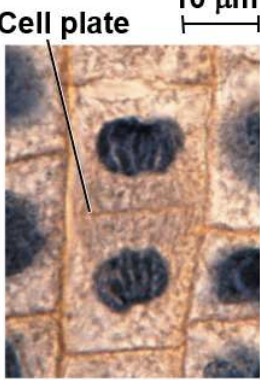
Plant Cell
What type of cell is dividing in the picture

Parent Cell
WHat stage in Binary Fission

Replication of DNA
WHat stage in Binary Fission

Segregation of DNA
WHat stage in Binary Fission
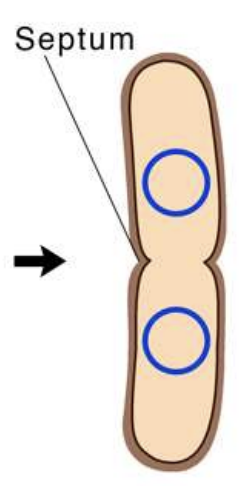
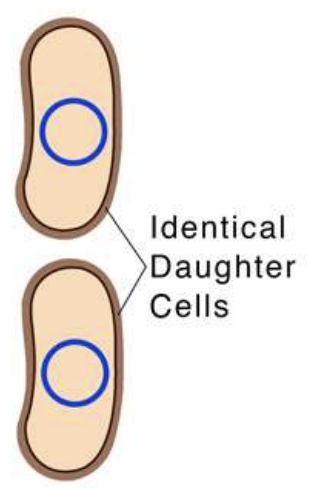
Cell splitting into 2
WHat stage in Binary Fission
Prophase I
What phase in Meiosis I

Metaphase I
What phase in Meiosis I

Anaphase I
What phase in Meiosis I

Telophase I and Cytokinesis
What phase in Meiosis I

genome
All the DNA in a cell constitutes the cell’s ___
prokaryotic
A genome that consists of a single DNA molecule, common in what kind of cells
eukaryotic
A genome that consists of a several DNA molecule, common in what kind of cells
chromatin
a complex of DNA and protein that condenses during cell division
Somatic cells
(nonreproductive cells) have two sets of chromosomes
Gametes
(reproductive cells: sperm and eggs) have half as many chromosomes as somatic cells
Mitosis
the division of the genetic material in the nucleus
Cytokinesis
the division of the cytoplasm
Centromere
The region where sister chromatids are attached.
Kinetochore
A protein structure at the centromere where spindle microtubules attach.
Mitotic phase, interphase
2 phases of cell cycle
Mitosis, cytokinesis
2 phases in M Phase
90%
How many percent is interphase
G1 phase/first gap
The cell is accumulating the building blocks of chromosomal DNA and the associated proteins as well as accumulating sufficient energy reserves to complete the task of replicating each chromosome in the nucleus.
S Phase
This phase is where DNA replication can proceed.
mitotic spindle/spindle fiber
orchestrates the movement of chromosomes during mitosis
Centrioles
help organize cell division.
G2
the cell replenishes its energy stores and synthesizes proteins necessary for chromosome manipulation
G2
There may be additional cell growth during this phase
Prophase
Chromosomes condense and become visible • Spindle fibers emerge from the centrosomes • Nuclear envelope breaks down •Nucleolus disappears
Prometaphase
• Chromosomes continue to condense; kinetochores appear at the centromeres. Mitotic spindle microtubules attach to kinetochores. Centrosomes move toward opposite poles
Metaphase
• Mitotic spindle is fully developed, centrosomes are at opposite poles of the cell, chromosomes are lined up at the metaphase plate, and each sister chromatid is attached to a spindle fiber originating from opposite poles
Anaphase
Cohesin proteins binding the sister chromatids together break down. Sister chromatids (now called chromosomes) are pulled toward opposite poles • Non-kinetochore spindle fibers lengthen, elongating the cell
Telophase
Chromosomes arrive at opposite poles and begin to decondense • Nuclear envelope material surrounds each set of chromosomes • The mitotic spindle breaks down
cleavage furrow
What separates the daughter cells in animal cells
Cell plate
What separates the daughter cells in plant cells
mitotic spindle
structure made of microtubules that controls chromosome movement during mitosis
aster
(a radial array of short microtubules) extends from each centrosome
Kinetochores
are protein complexes associated with centromeres
Metaphase plate
imaginary structure at the midway point between the spindle’s two poles
depolymerizing at their kinetochore ends
How do microtubules shorten
Binary fission
How do prokaryotes (bacteria and archaea) reproduce
origin of replication
Where does binary fission begin
type of cell
How does frequency of cell division vary
cell cycle control system
The sequential events of the cell cycle are directed by ___
checkpoints
where the cell cycle stops until a go-ahead signal is received
G1 Checkpoint
determines whether all conditions are favorable for cell division to proceed
G2 Checkpoint
bars entry into the mitotic phase if certain conditions are not met
M/spindle checkpoint
occurs near the end of the metaphase stage of karyokinesis, determines whether all the sister chromatids are correctly attached to the spindle microtubules
G0 phase
If the cell does not receive the go-ahead signal, it will exit the cycle, switching into a nondividing state called ___
Cyclins, cyclin-dependent kinases (cdks)
Two types of positive regulatory proteins are involved in cell cycle control
Cdks
activity fluctuates during the cell cycle because it is controlled by cyclins, their concentrations vary with the cell cycle
Maturation-promoting factor
is a cyclin-Cdk complex that triggers a cell’s passage past the G2 checkpoint into the M phase
Protooncogenes
The genes that code for these positive regulatory molecules of cell cycle are also called
Phosphorylation
What activates proteins by changing its shape, process cdks does
Negative regulators
Halt the cell cycle
Tumor suppressor genes
genes that code for negative regulator proteins
retinoblastoma protein, p53, p21
negative regulatory molecules that act primarily at the G1 checkpoint
Retinoblastoma protein/pRB
group of tumorsuppressor proteins common in many cells
p53
multi-functional protein that has a major impact on the commitment of a cell to division because it acts when there is damaged DNA in cells that are undergoing the preparatory processes during G1
p21
enforces the halt in the cycle dictated by p53 by binding to and inhibiting the activity of the Cdk/cyclin complexes
elongation factor 2/E2F
What protein determines whether the cell can allow expression of S-phase proteins, pRB binds to this
active/unphosphorylated
What is the state of pRB when it binds to E2F and cannot promote expression of proteins to proceed to S-phase
inactivated/phosphorylated
What is the state of pRB when it is affected by cyclin-CDK complex and frees E2F, allowing expression of S-phase proteins
Cell cycle arrest
WHat process happens when cell accumulates damage or has seen errors in its DNA
Apoptosis
When the damage is too much, p53 can order the cell to undergo programmed cell death
growth factors
proteins released by certain cells that stimulate other cells to divide
platelet-derived growth factor (PDGF)
stimulates the division of human fibroblast cells in culture
density-dependent inhibition
crowded cells stop dividing
anchorage dependence
Most animal cells also exhibit this, in which they must be attached to a substratum in order to divide
cancer cells
What kind of cells exhibit neither ensity-dependent inhibition nor anchorage dependence
Transformation
Process where A normal cell is converted to a cancerous cell
growth factors
What don’t cancer cells need to grow and divide
Benign tumor
If abnormal cells remain only at the original site, the lump is called a
Malignant tumors
invade surrounding tissues and can metastasize
metastasize
exporting cancer cells to other parts of the body, where they may form additional tumors
meiosis I and meiosis II
two sets of cell divisions in meiosis
4 daughter cells
result of meiosis
half of parent cell
how many chromosomes of daughter cells after meiosis
homologous chromosomes
In the first cell division (meiosis I), what separates
reductional division
Meiosis I results in two haploid daughter cells with replicated chromosomes, it is also called ___
sister chromatids
In the second cell division (meiosis II), what separates
equational division
Meiosis II results in four haploid daughter cells with unreplicated chromosomes; it is called ____