VPHY EXAM 3
 Call Kai
 Learn
 Practice Test
 Spaced Repetition
 Match
 Flashcards
 Knowt Play
1/144

There's no tags or description
Looks like no tags are added yet.
145 Terms
hormone released from hypothalamus
GnRH
hormone released from anterior pituitary
FSH and LH
what type of receptors do FSH and LH use?
integral membrane proteins
what type of receptors do estrogens and androgens use?
intracellular receptors
flow of hormones from HPG axis
secrete GnRH
GnRH in hypothalamo-pituitary portal
released to anterior pituitary
releases FSH and LH
FSH and LH to gonads to secrete sex hormones
sex hormones to reproductive tract and the organs
what are the basic feedback patterns in the HPG axis system?
negative feedback from sex hormones to the hypothalamus and anterior pituitary
LH impacts on male cells
leydig cells to produce testosterone
FSH impacts on male cells
sertoli cells to produce androgen binding proteins and inhibin
LH impacts on female cells
theca cells produce progesterone and androgens
FSH impacts on female cells
granulosa cells convert androgens into estrogens and inhibin
what sex hormones cause a negative feedback on the anterior pituitary?
progesterone and testosterone
what causes a negative feedback on FSH?
inhibin from granulosa and sertoli cells
androgen binding proteins
releases in testes
allow testosterone to bind which keeps concentrations high
androgens
sex hormones in highest percentage in males
convert into testosterone and DHT by 5-a-reductase
DHT is the most physiologically active
estrogens
converted from androgens→ testosterone→ estrogens by aromatase
estrone and estradiol
estradiol is 20x more physiologically active
fertility
ability to conceive children
infertility
not being able to achieve pregnancy after 1 year of having regulated unprotected intercourse
or after 6 months if older than 35 years old
fertility in men across life span
fertility starts at puberty
remains fairly constant through life
slight decrease with age
fertility in females over life span
fertility starts at puberty
cycles throughout life depending on ovulation cycle
sharp drop off at 60
3 ways to measure fertility
sperm quality and quantity
regularity of menstrual and ovarian cycle
possibility for implantation in uterus and maintenance of pregnancy over gestation
factors impacting fertility: sex chromosomes and genes
y-chromosome has sry gene that encodes a transcription factor that directs formation of male sex organs overriding female development
primordial gonads to fetal testes
ex: tuner syndrome with one X chromosome → female
ex: klinefelter syndrome: XXY but since Y chromosome is present SRY gene is present, but will have weaker secondary male characteristics, but can have hormonal therapy to enhance
factors impacting fertility: hormonal
HPG axis secretes GnRH from hypothalamus which releases FSH and LH to anterior pituitary to gonads
factors impacting sex determination
sex chromosomes
genes
hormones
sex organs
secondary sec characteristics
sex determination pathway for males
SRY present which interacts with DAX1 inhibiting it
this allows SRY to upregulate the expression of SOX9 and SF1
they bind to anti-mullerian hormone (AMH)
ultimately inhibiting development of female reproductive tract
developing wolffian tubes
sex determination pathway for females
NO SRY gene present to inhibit DAX1
therefore DAX1 suppresses the expression of SOX9 and SF1
NO binding to AMH
ultimately allows development of female reproductive tract, mullerian tubes
XX male
X chromosome picked up SRY gene so able to override default female pathway
XY female
y-chromosome lost SRY gene so not able to override default female development
male reproductive anatomy and pathway
sperm produced in seminiferous tubules in the testes
collect in reet testis and exit to ductules
to epididymis
to ductus deferens
travels over the bladder to posterior side to join with seminal vesicle
joins to the ejaculatory duct in prostate gland that release nutrients for maturation
ejaculatory duct to urethra to exit through penis
female reproductive anatomy
uterus open to pelvic floor cavity
ovary not directly connected to uterus
oocytes in primordial follicles until puberty
once puberty occurs transition into primary follicles
to dominant follicles
one dominant follicle ovulates and the other not ovulated turn into corpus luteum
each month after puberty 10-25 preantral begin to form
meiosis I is paused before meiosis II and completes with fertilization
preantral takes around 9-12 months to develop into dominant cell
external sexual differences
genital tubercule: glands of penis or clitoris
labioscrotal folds: scrotum or labia majora
spermatogenesis
begins are puberty
two meiotic divisions of one spermtogonium turning into 4 sperm
continuous
time to produce to ejaculation is 42-76 days
typical concentration >20 million
<15 million→ infertility
daily spent production of 150-275 million→ lots of storage
Leydig cells produce testosterone but mediated by sertoli cells
What is the effect of ABP on T?
once testosterone is bound to ABP it is less lipophilic which means it stays stuck so higher amounts in testes
testosterone effects before birth
masculine reproductive tract
precursor for DHT→ descent of testes into scrotum
DHT has a higher affinity so more physiologically active
testosterone effects on sex-specific tissues
spermatogenesis and oogenesis
promote growth and maturation of reproduction at birth
precursor for all estrogens
maintain reproductive tract at adulthood
sex drive
feedback on LH and FSH
testosterone effects in secondary sex characteristics
male hair growth pattern
deepening of voice, thickening of vocal cords
protein anabolic effects
muscle growth
bone growth at puberty
aggressive behavior
testosterone clinical trial
NES/T
nesterone suppresses gonadotropins LH and FSH
gel that is applied to upper torso
steroids are easily absorbed through skin
T added for sex drive
pathway for ejaculation
seminiferous tubules
epididymis
ductus deferens
ejaculatory duct
urethra
condoms
barrier to lessen STIs
risk of breakage without lube
risk of slippage and leaking if not properly fitted
87% effectiveness
vasectomy
minimally invasive surgery with localized anesthesia
“reversible” suture or cut to ductus deferens ~70%
99% effective
spermicide
nonoxyl-9
creams or gels
break down acrosome which is the enzyme membrane used to break down the stem cells of oocyte to fertilize
breakdown causes the sperm to lose functionality
use in combination with other contraceptives
copper IUD
~10 years
inhibits motility and acrosomal activation
in uterine cavity
string for insertion
can be removed
not protecting against STIs
97-99%
oogenesis
1-2 million primary oocytes arrest at birth
~300,000 primary oocytes at puberty
only 400-500 ovulate
fertilization completes meiosis
secondary oocyte nucleus fuse with haploid sperm nucleus
polar bodies eliminate one half of the diploid chromosome leaving a haploid cell
follicular phase feedbacks
estradiol has a negative feedback on FSH and LH in the anterior pituitary and GnRH from the hypothalamus
midcycle feedback
estradiol has a positive feedback on FSH and LH from the anterior pituitary and GnRH from the hypothalamus
luteal phase feedback
progesterone has a negative feedback on FSH and LH from anterior pituitary and GnRH from the hypothalamus
what phase is estradiol the most dominant?
follicular and midcycle
what phase is progesterone the most dominant?
luteal phase
early to mid follicular phase
days 1-14
low levels of estrogen have a negative feedback on GnRH, FSH, and LH
estrogen that is produced has a positive feedback on more estrogen secretion
AMH prevents more follicles from forming
LH and FSH at its lowest levels
estrogen starts to rise and progesterone slightly
late follicular phase and ovulation
Day 15
increase in estrogen and rising progesterone cause LH surge→ triggers ovulation
FSH as well but limited because of inhibin
one or more follicles fully develop into a released oocyte
now a positive feedback on GnRH, FSH, and LH
luteal phase
days 16-28
combined estrogen and progesterone shut off FSH and LH
estrogen and progesterone levels fall when the corpus luteum degenerates
gonadotropins start follicular development for new cycle
corpus luteum secrete progesterone and estrogen levels of FSH and LH decline
dominant hormone is progesterone
hormonal control: early follicular phase
theca cells in follicles produce progesterones and androgens by stimulation from LH
androgens are taken up by granulosa cells by stimulation from FSH to produce estrogen via aromatase
estrogen levels are starting to inc→ small positive feedback on granulosa cells to produce more estrogen
BUT overall negative feedback on anterior pituitary to limit FSH and LH
hormonal control: late follicular phase to ovulation
inhibin now starts being released from granulosa cells that has a negative feedback on FSH
right before ovulation there is a high estrogen and rising progesterone enhance pituitary response to GnRH
now positive feedback causes ovulation LH surge
16-24hrs after LH surge is when ovulation occurs
body temp also increases due to progesterone
hormonal control: mid luteal phase
corpus luteum formed from other follicular cells
estrogen and progesterone (highest)
inhibin has a strong negative feedback on GnRH, FSH, LH
prevents ovaries from ovulating another oocyte
hormonal control: late luteal phase
without pregnancy the corpus luteum degenerates
levels of progesterone, estrogen, and inhibin fall to the lowest levels
no negative feedback present allowing the hypothalamus to release GnRH→ FSH and LH to restart the cycle
menstrual phase
days 1-5
lack of ovarian hormones and shed
proliferative phase
days 6-14
estrogen increase by follicles
estrogen binds to endometrium
endometrium thickens
progesterone receptors increase in the cells
secretory phase
days 15-28
after ovulation
during luteal phase
primarily progesterone so receptors respond to progesterone to full maturity
inhibit muscle contraction to not shed potential oocyte
inc blood vessels
secrete nutrients for sperm and embryo
form cervicle plug
hormonal birth control
chemicals: progestin (synthetic progesterone), estrogen
delivery: pill, shot, implant, lube
prevent ovulation
pills
hormones regulate ovarian cycle
estrogen and progestin
pill taken daily to prevent maturation and release of oocyte
stop/reduce ovulation
thicken cervical mucus
thin uterine lining
93% effective
emergency contraceptive
levonorgestral: class of progestin
binds to progesterone and androgen receptors
slow GnRH and suppress LH surge
most effective within 24hrs (94%) and up to 3 days (58%)
ulipristal acetate: prescription only
works in similar way but can delay ovulation even if LH surge has occured
24hrs 98% and 3 days (85%)
shot
contains progestin
every 3 months
stops ovulation
94%
implant
in bicep
steady release of progestin
lasts 5 years
99%
hormonal iud
progestin
3-8 years
99%
benefits beyond contraception
improved cycle control
relief from menstrual symptoms: bleeding, cramps
less acne and hair growth
bone health
prevent ovarian endometrial and colorectal cancer
1/3 of ovarian and 1/5 colorectal
risks of contraceptives
no correlation to weight gain, fertility, or depression
once discontinued ~2 week period before ovulating
0.013% risk of breast cancer and even lower if younger than 35
risk normalizes after 5 years off contraceptive
fertility awareness
tracking menstrual cycle
77% of cycles are not identical so not very effective
permanent contraception
bilateral tubal ligation
clip, cauterize, or ring fallopian tubes
complete removal of uterine tubes
98-100%
what type of response is an erection?
parasympathetic response
ejaculation
release of semen
sympathetic release
may or may not accompany an orgasm
fertilization
secondary oocyte only capable of being fertilized 12-24 hours after ovulation
capacitation of sperm
ejaculated sperm are infertile until inside of the female after 7-10 hours
fallopian tube is site of fertilization
most fertilization occurs within 24hours after ovulation
sperm can be stored fro 6-10 days
blastocyte implants 6-10 days after fertilization
early development
cleavage of zygote 36 hours
16 cell stage 50-60 hours
blastocyst D4
inner cell mass → embryo → fetus after week 8
trophoblasts → form fetal placenta
implantation in uterine wall D 8-9
estrogen and progesterone increase continuously from the corpus luteum
hCG secreted from trophoblast cells as implantation start
allows persistence of corpus luteum and prevents menstrual cycle

superior vena cava

inferior vena cava

right pulmonary artery

right pulmonary veins

right atrium

tricuspid/av valve

right ventricle
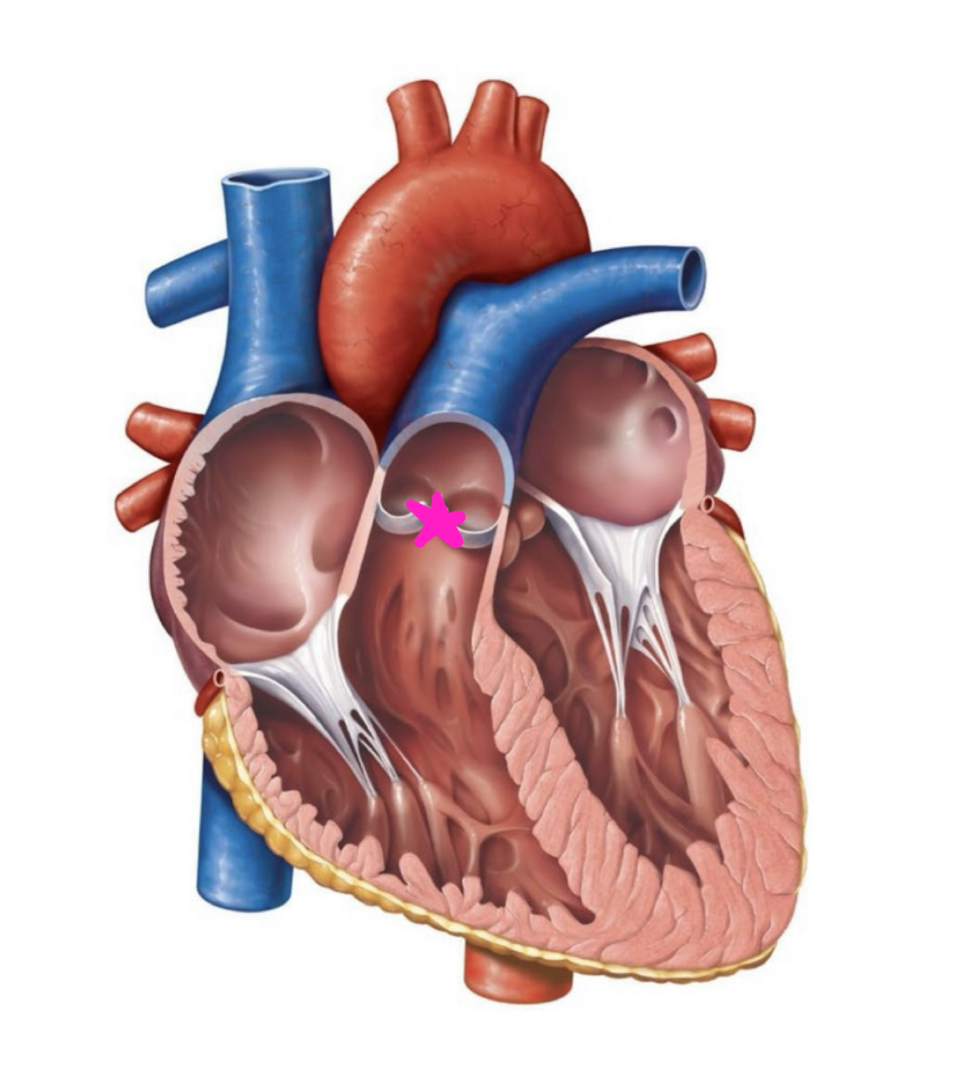
pulmonary/semilunar valve

left pulmonary artery

aorta

left pulmonary veins

left atrium

biscuspid/av valve

left ventricle

aortic/semilunar valve
atria
receiving chambers
ventricles
pumping chambers
atria to ventricle valves (av)
right: tricuspid
left: bicuspid
ventricles to vessel valves (semilunar)
right: pulmonary valve
left: aortic valve
blood flow series of events
blood enters from the inferior and superior vena cava
into the right atrium
passes through the tricuspid valve into the right ventricle
through the pulmonary valve
into right and left pulmonary arteries to go to the lungs
oxygenated blood enters through the right and left pulmonary veins
to left atrium
through the bicuspid valves into the left ventricle
through the aortic valve
aorta to circulation
what is blood flow?
change in pressure/resistance
types of cardiac muscles
myocardial contractile cells: cardiomyocytes
myocardial conducting cells: auto-rhymicity, self-initiating AP, spreads cell to cell, triggers smooth muscle contraction
cardiac contraction series of events
atrial and ventricular diastole
atrial systole
isovolumetric ventricular contraction
ventricular systole
isovolumetric ventricular relaxation
atrial and ventricular diastole
both tricuspid and bicuspid valves are open
atrial systole
blood flows into atria
av valves (tricuspid and bicuspid) are open
atria contract which decreases volume increasing pressure which pushes blood from the heart into the ventricles
semilunar valves are CLOSED
isovolumetric ventricular contraction
EDV: end diastolic volume, amount of blood before ventricles contract
av valves and semilunar valves are CLOSED
ventricular systole
ventricles contract
the volume is decreasing which increases pressure which will burst open the semilunar (pulmonary and aortic) valves pushing blood into the aorta and pulmonary trunk
av valves CLOSED to prevent any flow back
isovolumetric ventricular relaxation
ESV: end systolic volume, amount of blood in ventricles after systole
all valves are closed