IAS
 Call Kai
 Learn
Learn Practice Test
 Spaced Repetition
 Match
Match Flashcards
 Knowt Play
1/112

Earn XP
Description and Tags
Name | Mastery | Learn | Test | Matching | Spaced | Call with Kai | Chat |
|---|
No analytics yet
Send a link to your students to track their progress
113 Terms
Standard
A written set of rules or guidelines for how things should be done. Some are strong and widely accepted, while others just reflect market or vendor influence.
Policy
Created to support the organization’s mission, vision, and goals. To be effective, it must be shared, understood, and accepted by everyone in the organization.
Informal - de facto standards
These are widely used because the market adopts them. They are also known as market-driven standards.
Formal - de jure standards
These are officially approved by a recognized organization through formal procedures, giving them legal or official status.
Mission
Written statement of organizations purpose
Vision
Written statement of organization goals
Strategic Plan
Written statement of moving the organization toward its mission
Enterprise Information Security Policy (EISP)
It is a high-level document that defines the organization’s overall approach to IT security. Created with executive input, it’s usually 2–10 pages long and covers compliance, assigned responsibilities, and enforcement through penalties or disciplinary actions.
Issue Specific Security Policy
It focuses on specific technology areas and is updated regularly. It states the organization’s stance on an issue and includes rules on access, equipment use, system management, violations, updates, and legal limits.
System-Specific Policy
It provides detailed rules and steps for configuring or maintaining systems. They are often written as standards and procedures.
Access Control List
It manage who can access what. They control access based on user, device, time, and location. It regulate actions like reading, writing, modifying, or copying data, and are based on a person’s identity and permissions.
Rule Policies
It defines specific system operations. They may not involve users directly and usually include scripts that tell systems how to handle certain types of information.
Policies
These are living documents that evolve over time. They must be well-managed, shared effectively, and kept up to date. A Policy Administrator oversees this process, often with support from a non-technical champion or manager.
Review
It should be scheduled and happen regularly to keep policies effective in a changing environment. The process should be clearly defined and documented, often starting with one person drafting updates based on current practices and recommendations.
Information Classification
It helps protect sensitive data. Policies are often labeled at least as “internal use only.”
Information Security Blueprint
It is a detailed plan for designing and implementing security policies, training, and technical controls. It expands on the security framework and outlines tasks and their order.
Blueprint of an Information Security System
It is built from analyzing key documents, standards, and resources. It serves as a starting point for learning how to create security plans.
Managerial Control
It guides the overall direction and scope of security operations. They focus on process design, risk management, legal compliance, and are implemented by security administrators to ensure effective security functionality.
Operational Control
It ensures day-to-day security works as planned. They cover disaster recovery, incident response, physical and personnel security, data integrity, system maintenance, and training. They also protect input/output processes and help raise awareness.
Technical Control
It focus on the tools and technologies used to protect systems. They handle identification, authentication, authorization, and accountability. They also include audits, cryptography, and classifying users and assets.
Defense in Depth
It means using multiple layers of security—through policies, training, and technology
Security Perimeter
The point at which an organization’s security protection ends and the outside world begins
Firewall
It is a specially configured device that filters incoming and outgoing information. It’s typically placed at or just behind the gateway router to protect the network perimeter.
Demilitarized Zone
It is a buffer zone between a private network and the outside world. It helps protect against external attacks, and web servers are often placed here for added security.
Proxy Server
It acts on behalf of another system. It’s set up to appear as a web server with its own domain name, retrieves and sends data, and often stores content as a cache to improve performance.
Host-Based Intrusion Detection System
It is installed directly on the machine it protects. It monitors activity on that host to detect suspicious behavior or attacks.
Network-Based Intrustion Detection System
It monitors traffic patterns across the network to detect unusual activity. It relies on a database of past behavior, may use machine learning, and can draw insights from similar networks to improve detection.
Security Education, Training, and Awareness
It addresses employee errors—one of the top threats. Its goals are to raise awareness, build skills, and develop deep knowledge to support, design, or run security programs effectively.
Continuity Strategies
It ensures systems stay available, even during attacks. Since the risk is high, managers must be prepared.
Incident Response Plan
Immediate reaction to incidents
Disaster Recovery Plan
Restores systems after disruption
Business Continuity Plan
Keeps essential functions running, often at an alternate site
Champion
A senior manager who supports and promotes the project.
Project Manager
Oversees planning, ensures a solid plan, and manages resources.
Team Members
Representatives from business, IT, and security—usually managers or their delegates.
Business Impact Analysis
It assesses how different attacks could affect the organization.
Business Unit Analysis
It focuses on identifying and ranking key business functions within each unit.
Incident Response Planning
It involves identifying, classifying, and responding to incidents.
Incident Detection
It involves recognizing signs of a possible attack.
Incident Containment Strategies
It aims to limit damage quickly.
Disaster Recovery Plan
It provides a clear guide during a disaster
Crisis Management
It focuses on people and business viability during and after a disaster.
Continuity Strategies
It offers various options for maintaining operations during disruptions.
Hot site, Warm site, Cold site
Time-share
Shared facility used as needed
Service bureau
Third party handles operations
Mutual Agreement
Partner organizations support each other during crises
Off-Site Disaster Data Storage
It ensures critical data is stored safely away from the main site. This allows quick transfer and setup of systems at a new location to resume operations after a disaster.
Model for a Consolidated Contingency Plan
It combines all response plans into one clear document. It helps streamline planning, especially for smaller organizations, and promotes regular testing and use.
Firewall
It acts as a barrier between trusted and untrusted networks.
Network Firewall
It is placed between trusted and untrusted networks, like internal systems and the internet. It monitors and controls traffic using set rules, checking details like IP addresses, protocols, and ports to block threats and unwanted data.
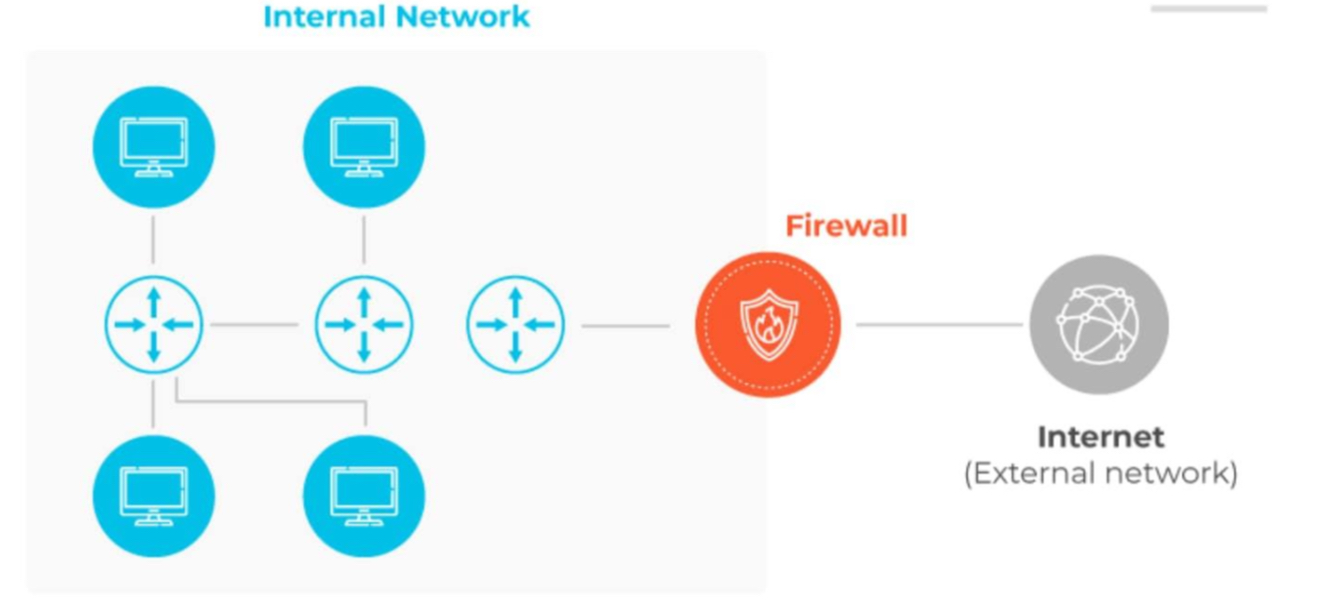
Image Placeholder
Network Firewall
Host-Based Firewall
It is a software installed on a single device within a network. It provides targeted protection by monitoring that device’s traffic, blocking malware, viruses, and other threats from entering or leaving the system.
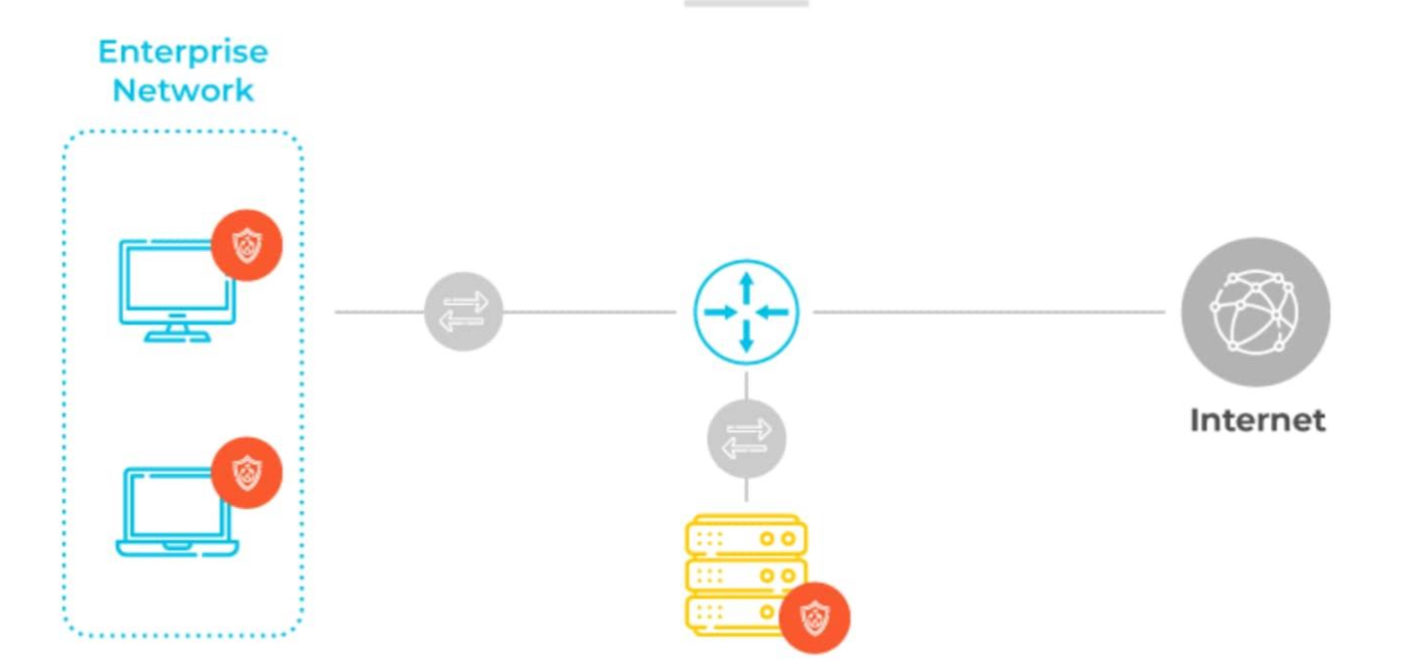
Image Placeholder
Host-Based Firewall
Hardware Firewall
It is a physical device positioned between a computer or network and the internet. It works independently from any host, inspecting all traffic to enforce security rules and block unauthorized access.
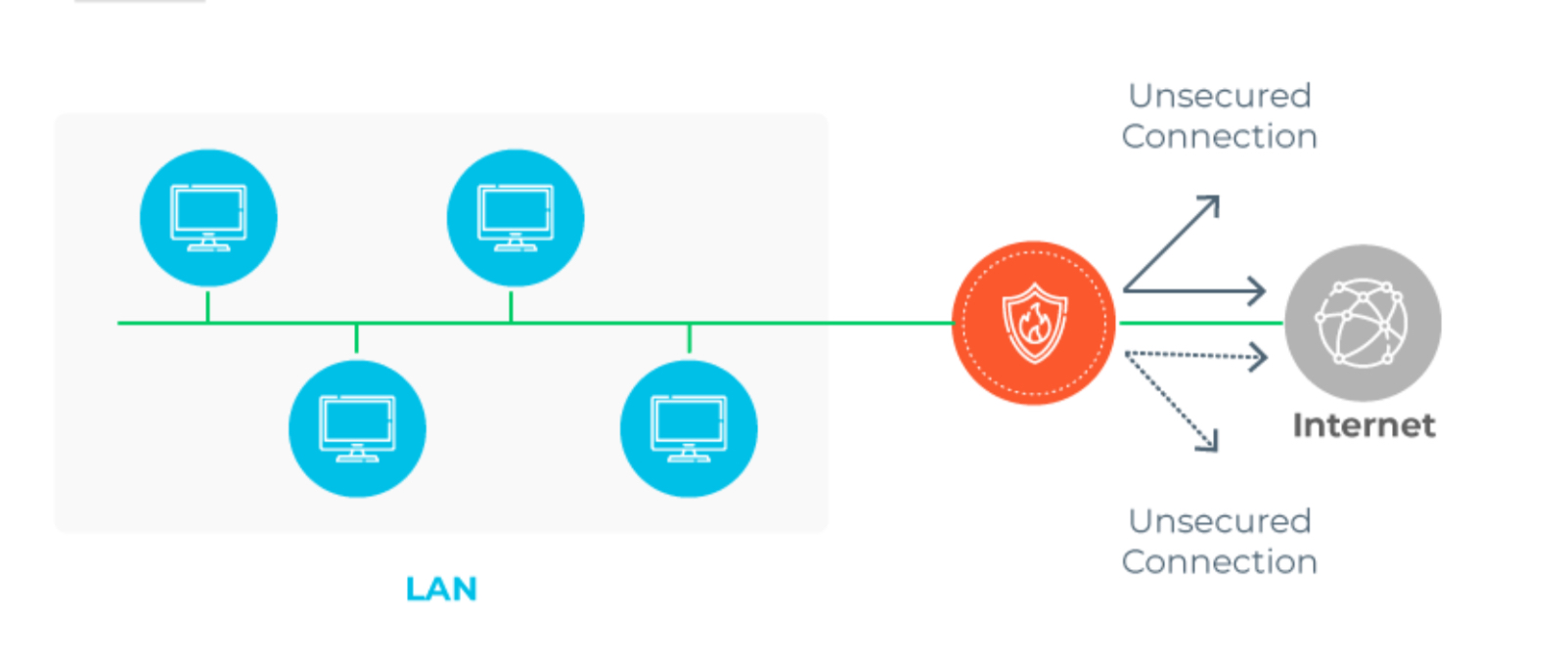
Image Placeholder
Hardware Firewall
Software Firewall
It is a firewall in a software form factor rather than a physical appliance, which can be deployed on servers or virtual machines to secure cloud environments.
Container Firewall
It is a software version of a next-generation firewall that is purpose-built for Kubernetes environments.
Virtual Firewall
It is a software-based firewall used in virtual and cloud environments. It secures both north-south (external) and east-west (internal) traffic. Also known as a “cloud firewall,” it provides advanced threat prevention through features like microsegmentation, helping to isolate and protect workloads within data centers and cloud networks.
Cloud Firewall
These are virtual, software-based firewalls deployed in cloud environments. They filter malicious traffic and are often delivered as Firewall-as-a-Service (FWaaS).
Managed Service Firewall
These are software firewalls offered as a managed service, similar to SaaS. They provide application-level (Layer 7) security and allow organizations to outsource firewall management, reducing the need for in-house oversight while maintaining strong protection.
Internal Firewall
It operates within the network to monitor traffic between internal devices, identifying threats that may have bypassed outer defenses, and follows a Zero Trust approach—assuming nothing inside the network is automatically trusted.
Distributed Firewall
It protects an organization’s infrastructure by operating across the network, using multiple devices to monitor and control both internal and external traffic.
Intern
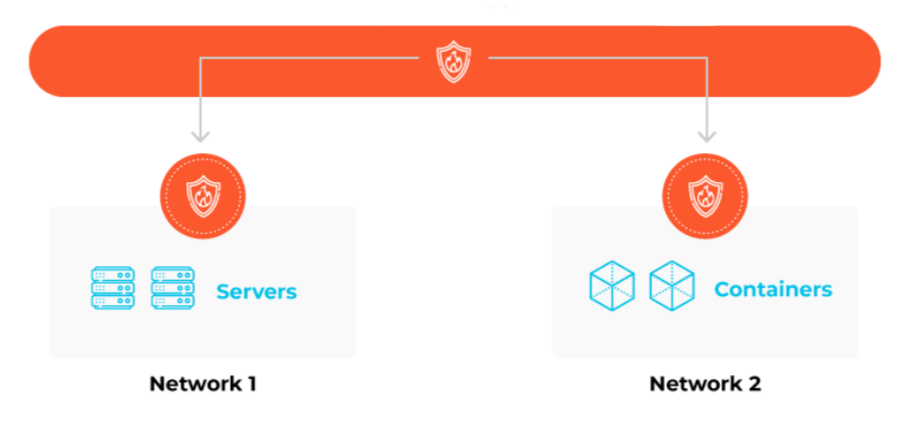
Image Placeholder
Distributed Firewall
Perimeter Fir
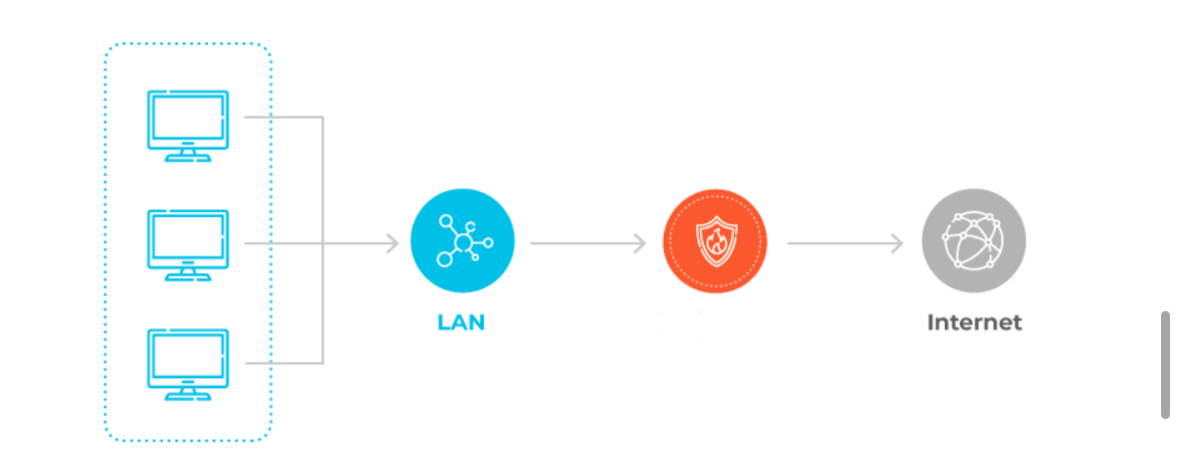
Image Placeholder
Perimeter Firewall
Next Generational Firewall
It builds on traditional firewall functions by adding advanced features like application traffic control, intrusion prevention, and cloud-based threat intelligence to deliver more comprehensive security.
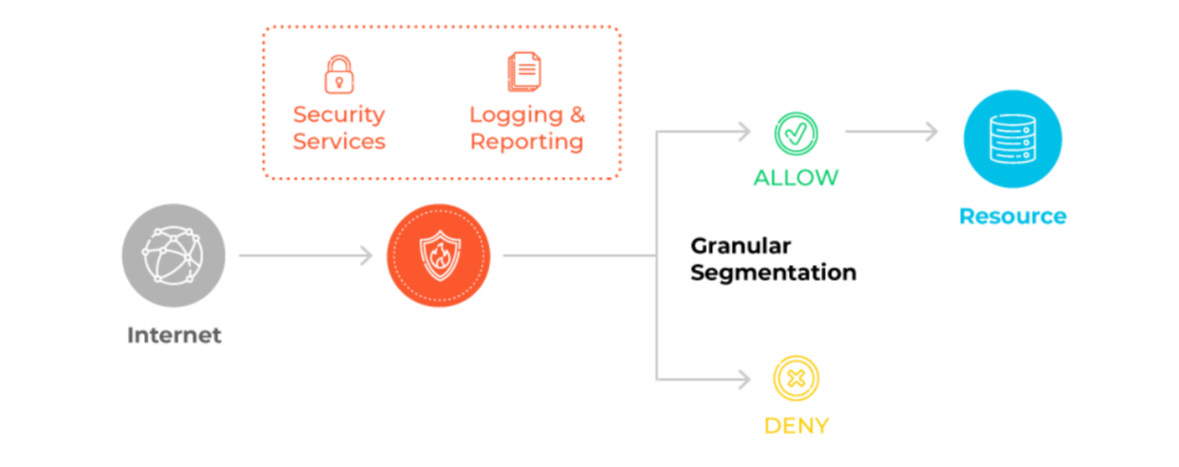
Image Placeholder
Next Generational Firewall
Packet Filtering Firewall
It operates at the network layer, regulating data packet flow between networks. These firewalls rely on pre-defined rules that evaluate specific attributes of the packets, such as source IP, destination IP, ports, and protocols.
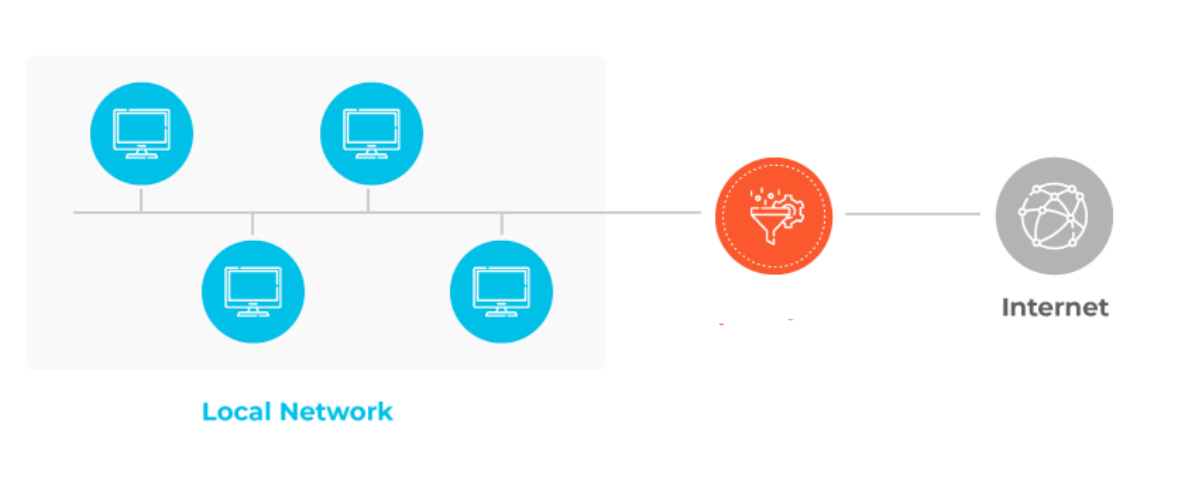
Image Placeholder
Packet Filtering Firewall
Circuit Level Gateway
It operates at the session layer, managing and verifying the handshaking process for TCP and UDP connections to ensure secure communication.
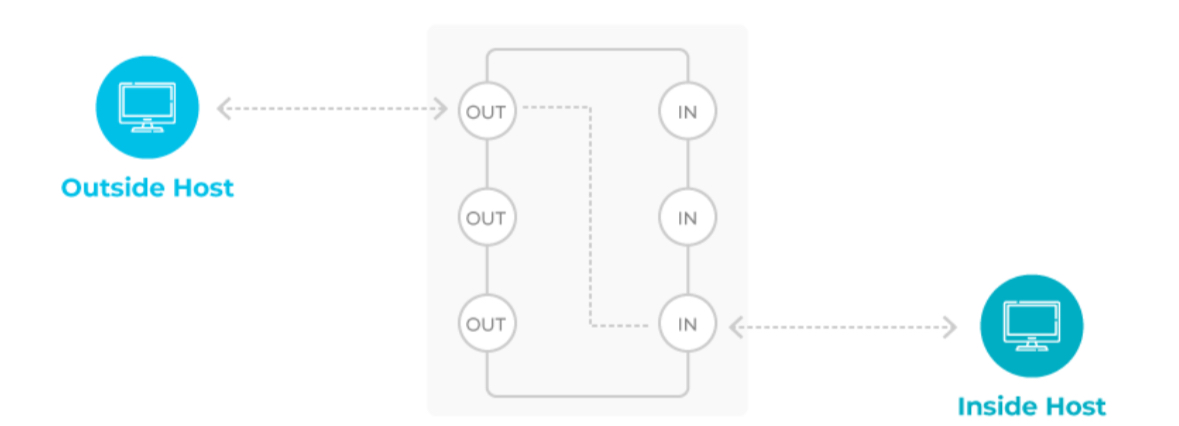
Image Placeholder
Circuit Level Gateway
Web Application Firewall
It serves as a specialized layer of protection for web applications, web servers, and APIs.
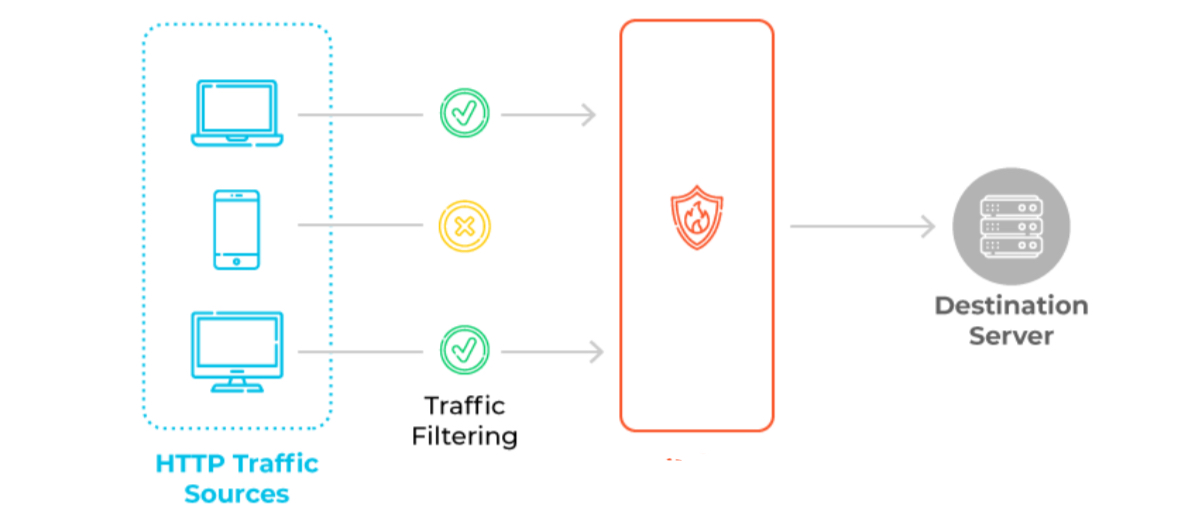
Image Placeholder
Web Application Firewall
Proxy Firewall
It is a vital network defense mechanism, operating at the application layer. Also referred to as an application firewall or gateway firewall, it primarily functions as an intermediary, filtering messages between computer systems and external servers.
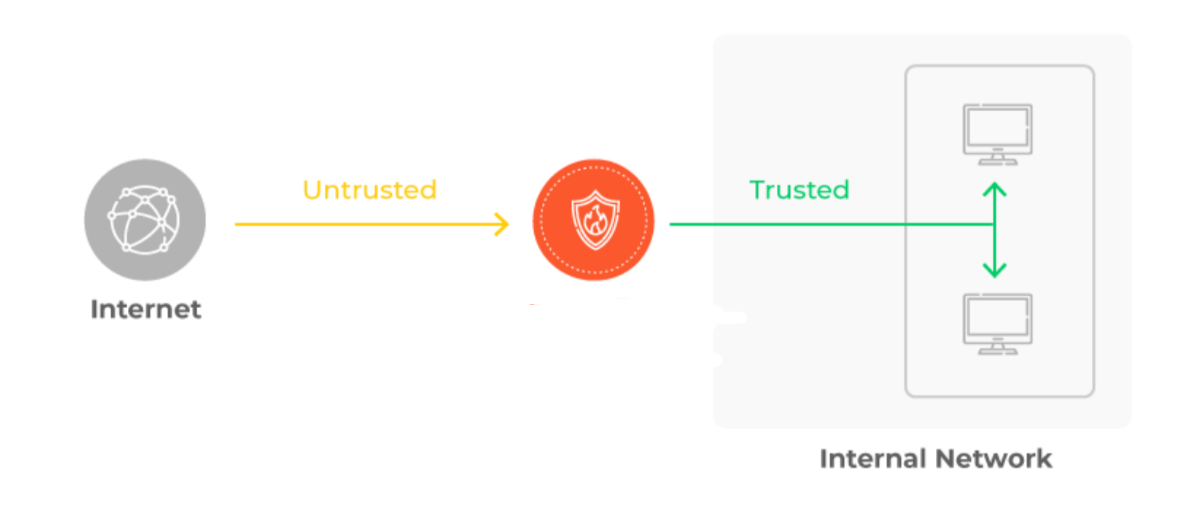
Image Placeholder
Proxy Firewall
Stateful Inspection Firewall
It analyze the context of incoming and outgoing traffic, ensuring only safe data packets traverse the network. Located at Layers 3 and 4 of the Open Systems Interconnection (OSI) model, their primary function is to filter traffic based on its state and context.
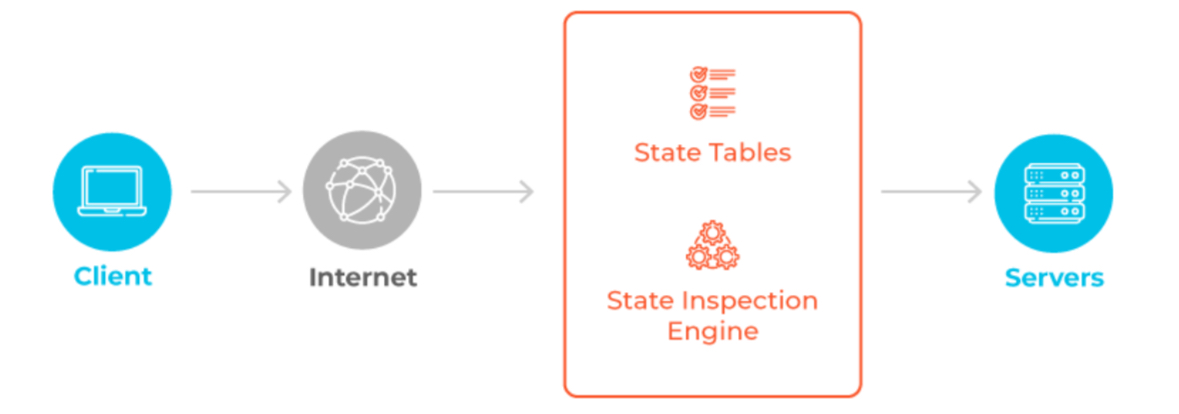
Image Placeholder
Stateful Inspection Firewall
Network Address Translation
It is a method used in networking where private (internal) IP addresses are translated into a public IP address before packets are forwarded to the external network (typically, the internet).
It hides the internal network structure from the outside world and conserves public IP addresses.
Cryptography
It is the study and practice of protecting information through secure communication methods, ensuring that unauthorized parties cannot access the data. It involves creating and analyzing protocols to keep shared information confidential, following key principles of information security.
Secure Communications
It ensures that data shared between two parties remains inaccessible to unauthorized individuals, known as adversaries.
Adversary
a malicious entity, which aims to retrieve precious information or data thereby undermining the principles of information security, data confidentiality, data integrity
Confidentiality
It refers to certain rules and guidelines usually executed under confidentiality agreements which ensure that the information is restricted to certain people or places.
Data Integrity
It ensures that information remains accurate and consistent throughout its entire lifecycle.
Authentication
It confirms that the data or identity being presented truly belongs to the user.
Non-repudiation
It guarantees that a person or party cannot deny the authenticity of their actions, such as sending a message or signing a document.
Symmetric Key Cryptography
It uses a single secret key for both encrypting and decrypting messages.
Data Encryption Standard
It is a symmetric block cipher that encrypts data in fixed-size blocks of 64 bits, producing output of the same size.
Advanced Encryption Standard
It is a widely trusted encryption algorithm developed by NIST in 2001 to secure data by converting it into unreadable form without the correct key.
Blowfish
It is a symmetric block cipher developed by Bruce Schneier in 1993 as a faster and more secure alternative to DES.
Asymmetric Key Cryptography
It is also called public-key cryptography, uses a pair of keys—one public and one private—for encryption and decryption. It solves the key distribution problem but is much slower than symmetric methods, making it less suitable for large amounts of data.
Rivest-Shamir-Adleman
It is a public-key cryptography algorithm developed in 1977 by Ron Rivest, Adi Shamir, and Leonard Adleman. It uses two keys: a public key for encryption and a private key for decryption.
Elliptic Curve Cryptography
It offers the same level of security as RSA but with much shorter key sizes.
ElGamar Encryption Algorithm
It is a public-key encryption algorithm developed by Taher ElGamal in 1985. It uses asymmetric keys for secure communication and is based on the difficulty of solving discrete logarithms in a cyclic group.
Digital Signature Algorithm
It is a federal standard introduced by NIST in 1991 to verify the authenticity and integrity of messages, software, or digital documents.
Hashing
It is the process of converting plain text into a fixed-size value using a hash function.
Hash Function
It is a mathematical algorithm that converts data of any size into a fixed-size output
Message Digest 5
It is a cryptographic hash function algorithm that takes the message as input of any length and changes it into a fixed-length message of 16 bytes.
Secure Hash Algorithm 1
It is a cryptographic hash algorithm developed by the U.S. National Security Agency that generates a 160-bit (20-byte) hash value, often shown as a 40-digit hexadecimal number called a message digest. Once widely used, it has been considered insecure since 2005 due to vulnerabilities.
Secure Hash Algorithm 2
It is a cryptographic hash function that produces 224, 256, 384 or 512 bits hash value