multiple sclerosis (MS)
 Call Kai
 Learn
 Practice Test
 Spaced Repetition
 Match
 Flashcards
 Knowt Play
1/23

There's no tags or description
Looks like no tags are added yet.
24 Terms
MS: a bumpy road from here
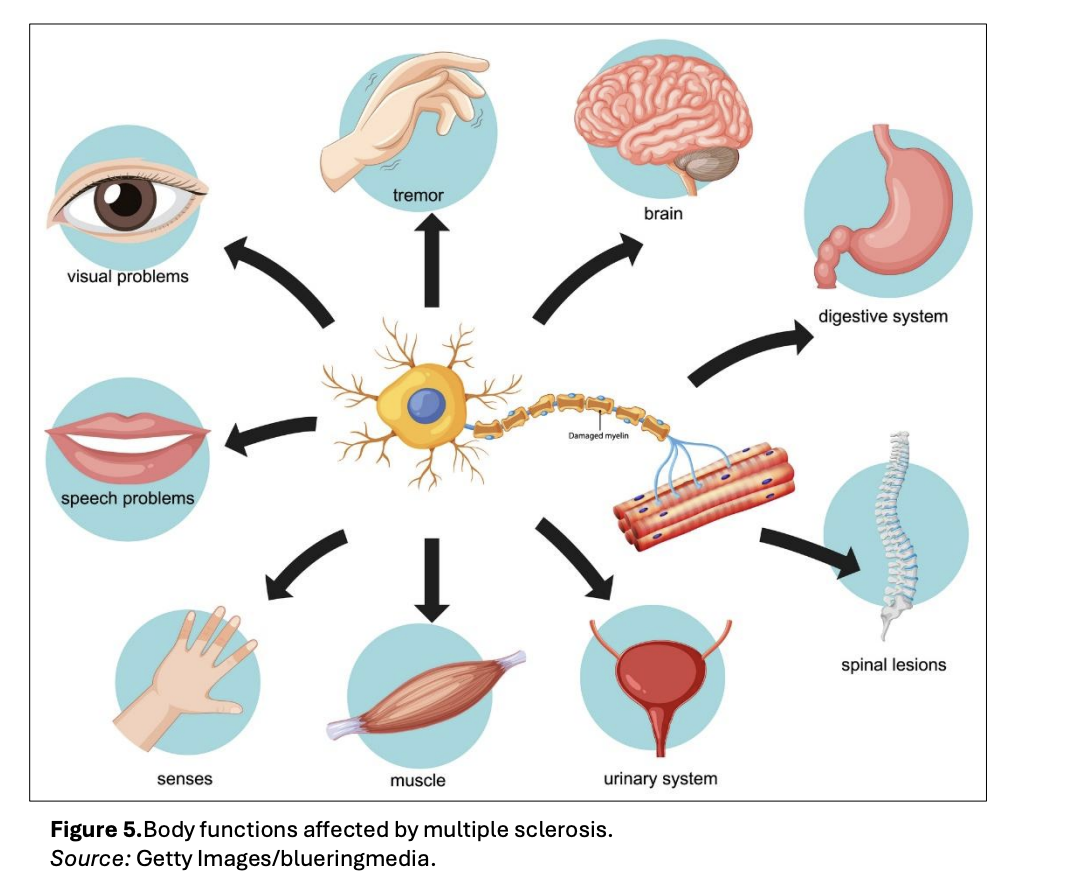
chronic, often progressive, demyelinating disease of the CNS; a person’s body attacks the myelin sheath that covers the neurons of the brain and spinal cord
cause: unknown— research suggests an environmental factor, including decreased exposure to vitamin D, smoking, or viral infection, triggers an autoimmune response in people who are generally susceptible
demyelination produces scar tissue or plaque (sclerosis) on the myelin sheath of nerve fibers that interferes with the axons’ ability to conduct impulses
the result is impaired nerve conduction and inflammation, which causes neurological dysfunction
specific location of demyelination differs with each person and dictates symptoms
MS has a huge variety of symptoms, and each individual is unique
most common kind (relapsing-remitting) has exacerbations and remissions, meaning the symptoms come and go (though— the overall projection IS still a downward slope)
makes it hard to address in real life (but easy on the test 2/2 there are no specific stages!)
unique aspect of MS
heat exacerbates symptoms; avoid hot showers/baths, being outside on a hot day, etc. OR just try to keep them cool if it can’t be avoided!
common problems + solution
fatigue
—> energy conservation
numbness
—> teach safety (with hot/sharp)
weakness
—> compensate/AE
—> gentle, sub-max exercise
dizziness
—> balance training
—> assistive devices
visual changes
—> adapt
—> magnifiers
incontinence
—> bowel program
—> refer to physician
cognitive issues
—> home modifications
—> alarms
—> reminders
—> family support
spasticity
—> ROM
—> stretching
—> weight-bearing

details: types of MS
relapsing/remitting
most common type, characterized by active (often worsening) and nonactive (stable) stages
primary progressive
neurologic function worsens progressively as soon as symptoms appear, with no remissions
secondary progressive
follows the course of relapsing-remitting MS, but in some people neurologic function worsens progressively
clinically isolated syndrome
1st episode of MS symptoms
not everyone at this stage develops MS, but those with brain lesions at this stage have a high likelihood of developing relapsing-remitting MS
MS just Makes Sense
use the interventions that address the client’s deficits in the specific question
early interventions, e.g.,
functional mobility and ADLs
fatigue management
role and routine modifications for delaying and preventing the onset of disability
signs and symptoms:
clinical presentation
often diverse and difficult to predict, with various combinations and patterns
initial complaints: visual disturbances, dizziness, paresthesia, and weakness
with most types, symptoms at times worsen (exacerbation) and at other times improve (remission)
progresses over time and is eventually irreversible
signs and symptoms:
motor symptoms
impaired balance and coordination (ataxia)
partial or complete paralysis of a part of the body; muscle spasticity, especially in LEs
muscle weakness
fatigue (most common complaint and debilitating symptom)
intention tremors, which occur when a person attempts to engage in a meaningful activity, such as reaching for an object
dysphagia
signs and symptoms:
sensory symptoms
paresthesia: numbness or tingling
impaired vibratory, proprioceptive, pain, touch, superficial, and temperature sensations
impaired sensation may affect perceptual skills such as stereognosis, kinesthesia, or body scheme
vertigo
pain (2/2 musculoskeletal causes)
signs and symptoms:
visual symptoms
diplopia (double vision) or blurred or dimmed vision, with or without ocular pain
optic neuritis, which causes sudden loss of vision with pain in or behind the eye, with symptoms possibly subsiding after 3-6 weeks without residual impairments
scotoma (partial loss of vision)
nystagmus
loss of visual acuity in 80% of people with ‘MS
signs and symptoms:
communication symptoms
dysarthria
scanning speech, or slow enunciation with frequent hesitations at the beginnings of words or syllables
signs and symptoms:
bladder and bowel symptoms
incontinence or urinary retention (failure to empty the bladder)
increased urgency or frequency, as well as constipation
signs and symptoms:
sexual symptoms
men
erectile dysfunction
women
decreased libido
lubrication difficulty
inorgasmia
inability to conceive and carry pregnancy to terms remains intact
signs and symptoms:
cognitive symptoms
short-term memory loss
attention deficits
decreased processing speed
impairment in visuospatial ability
impaired executive functioning and judgment
difficulty with attention, conceptualization, memory, or new learning
difficulty with abstract reasoning and problem solving as well as difficulty with tasks that require either rapid or precise motor responses
signs and symptoms:
emotional symptoms
depression (whether it is a manifestation of the neurological condition or a reaction to the disease is uncertain)
inappropriate euphoria
mood swings, irritability, or pseudobulbar affect
diagnosis
physicians consider client history, lab studies, and neurological examination
diagnostic tests may include cerebrospinal fluid analysis, nerve conduction studies, and brain imaging (MRI, CT scans)
result of these procedures ^ help contribute to a diagnosis, but the person must have “episodes of exacerbation and remission and slow or step-by-step progression over 6 months; there must also be evidence of lesions in more than 1 site in the white matter and no other neurological explanation for the clinical picture”
course and prognosis
not a fatal diagnosis, and most people can have a normal life expectancy; treatments can reduce the number and severity of relapses and delay the long-term progression of the disease
interdisciplinary team management of clients with MS:
a. medications
disease-modifying medications can slow progression of the disease, reduce the number of lesions, and reduce the frequency and severity of relapses
interferon beta-1a (avonex), interferon beta-1B (betaseron), interferon beta-1b (extavia), glatiramer acetate (copaxone), and interferon beta- 1a (rebif)
medications to treat symptoms of MS include antispasmodics
Baclofen, tizanidine, botulinum toxin, muscle relaxants, anticonvulsants
neurofunctional modifiers target underlying pathophysiology and can decrease symptoms as a result
dalfampridine has been shown to improve walking with all types of MS
corticosteroids shorten acute attacks, reduce inflammation, and ease symptoms
b. PT focuses on
mobility
muscle strength and tone
physical fitness
c. SLP focuses on
dysphagia and swallowing difficulties
dysarthria or dysphagia symptoms
congnition
d. strong evidence supports mental health counseling and emotional regulation, specifically group therapy and cognitive-behavioral therapy
OT evaluation
a. initial eval and OTPF
elicit client’s goals and hx of symptoms and treatments
assess pain
review medications from the medical record
screen for cognitive deficits during questioning
ask about dizziness, sensation, FM skills, incontinence, fatigue patterns, sleep patterns, msucle cramping, falls, and balance issues
b. gather info about occupational performance during times of fatigue
c. endurance and strength vary throughout the day, depending on participation in occupations and timing of medications; therapy should be scheduled for when the client reports feeling most energized
d. goals should address both the exacerbation and remission stages and should be compensatory because of the progressive nature of MS
OT interventions:
vision
perform home safety assessment; make recommendations to reduce risk of falls and improve occupational performance
AE may include optical devices, large-print reading material, large-button technology, talking watches, raised-dot markings for technology, and audiobooks
refer the client to a low vision specialist, ophthalmologist, or optometrist, as indicated
OT interventions:
sensory disturbances
provide sensory reeducation
introduce compensatory strategies (e.g., relying on visual feedback to observe a desensitized limb; testing water temperature for dishwashing or bathing using an unaffected body part)
OT interventions:
urinary incontinence
provide bladder training and instruction in self-catheterization or use of sanitary pads or absorbent underwear to avoid emabrrassment with accidents
monitor times of days when fluids are consumed to ensure availability of bathrooms to minimize risk of incontinence
OT interventions:
muscle weakness and other motor difficulties
OT interventions:
pain (from spasticity)
OT interventions:
fatigue