Lec 15 Plasma, RBC, hemostasis
 Call Kai
 Learn
 Practice Test
 Spaced Repetition
 Match
 Flashcards
 Knowt Play
1/18

There's no tags or description
Looks like no tags are added yet.
19 Terms
plasma vs serum
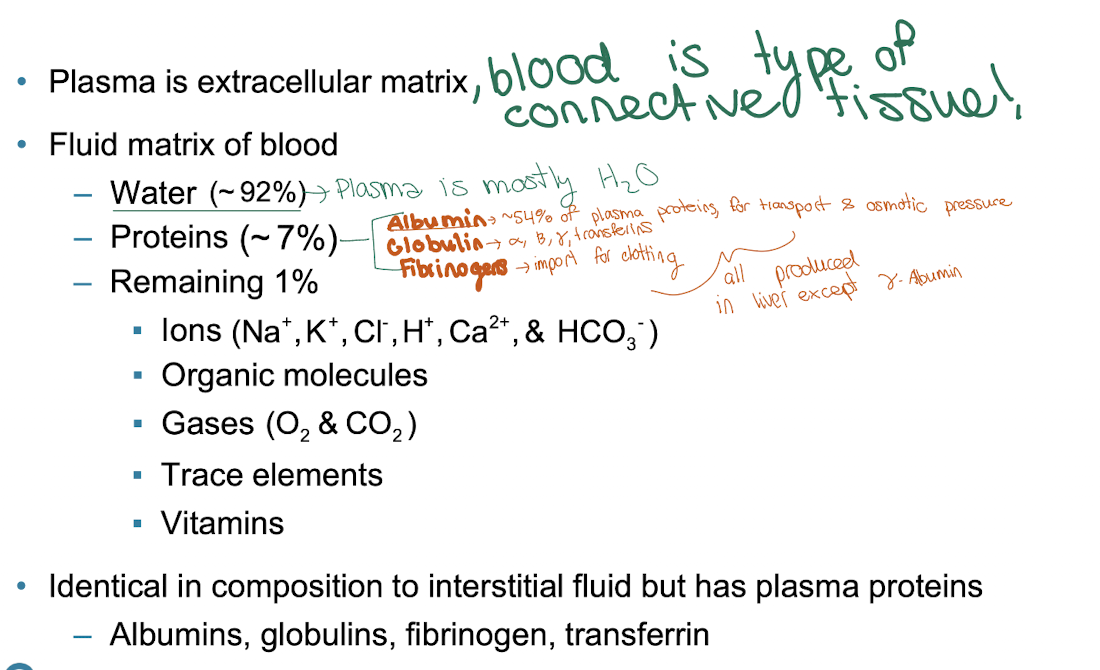
Serum is the liquid that remains after the blood has clotted.
Plasma is the liquid that remains when clotting is prevented with the addition of an anticoagulant.

what is plasma? what is it composed of? what are three main protein?
plasma= liquid extracellular matrix of blood that suspends cells, transports nutrients, hormones, wastes,and proteins, and maintains osmotic pressure.
Proteins dissolved in blood plasma that provide colloid osmotic pressure, act as carriers, function as antibodies, and drive blood clotting.
General Location: Circulating dissolved in the blood plasma (produced primarily in the liver, except for gamma globulins).
PROTEINS:
Albumins, the most abundant, mmajor contributors to colloid osmotic pressure and carriers for various steroid hormones and drugs.
globulins, Plasma proteins split into alpha, beta, and gamma groups; used for clotting factors, enzymes, and immune defense (antibodies).
fibrinogens, A soluble plasma protein that is converted into insoluble fibrin threads during blood clotting.
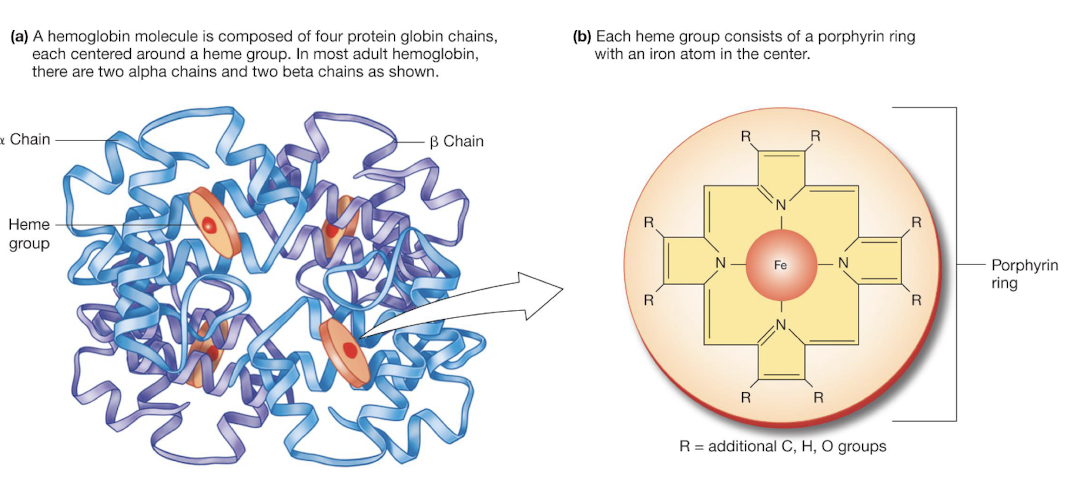
what is hemoglobin, where is it found
An iron-containing protein that binds and transports oxygen (O2O2) and carbon dioxide (CO2CO2) through the body.
General Location: Inside red blood cells (erythrocytes).
1 RBC has 150-300 million hemeglobins, each hb holds 4 o2
what is Erythropoiesis, what does it originate from? what about Erythropoietin (EPO)
The biological process of producing new red blood cells.
General Location: Red bone marrow of large bones.

Erythropoietin (EPO)= peptide hormone that stimulates the bone marrow to increase red blood cell production.
General Location: Secreted primarily by the kidneys into the bloodstream.

what is Hypoxia-Inducible Factor 1 (HIF-1)
transcription factor that senses low oxygen levels and turns on genes (like the gene for EPO) to help the body adapt.
General Location: Inside cells throughout the body (particularly kidney cells).
what is hematocrit ? what is mean corpuscular volume, mean corpuscular hemoglobin, mean corpuscular hemoglobin concentration?
hematocrit= The percentage of total blood volume occupied by packed red blood cells.
The mean corpuscular volume, or MCV blood test, measures red blood cell size, aiding in anemia diagnosis
The mean corpuscular hemoglobin, or MCH blood test, measures the average hemoglobin content in red blood cells,
Mean corpuscular hemoglobin concentration, or MCHC blood test, measures hemoglobin concentration in red blood cells relative to their volume.


what is importance of spleen and bile in blood recycling?

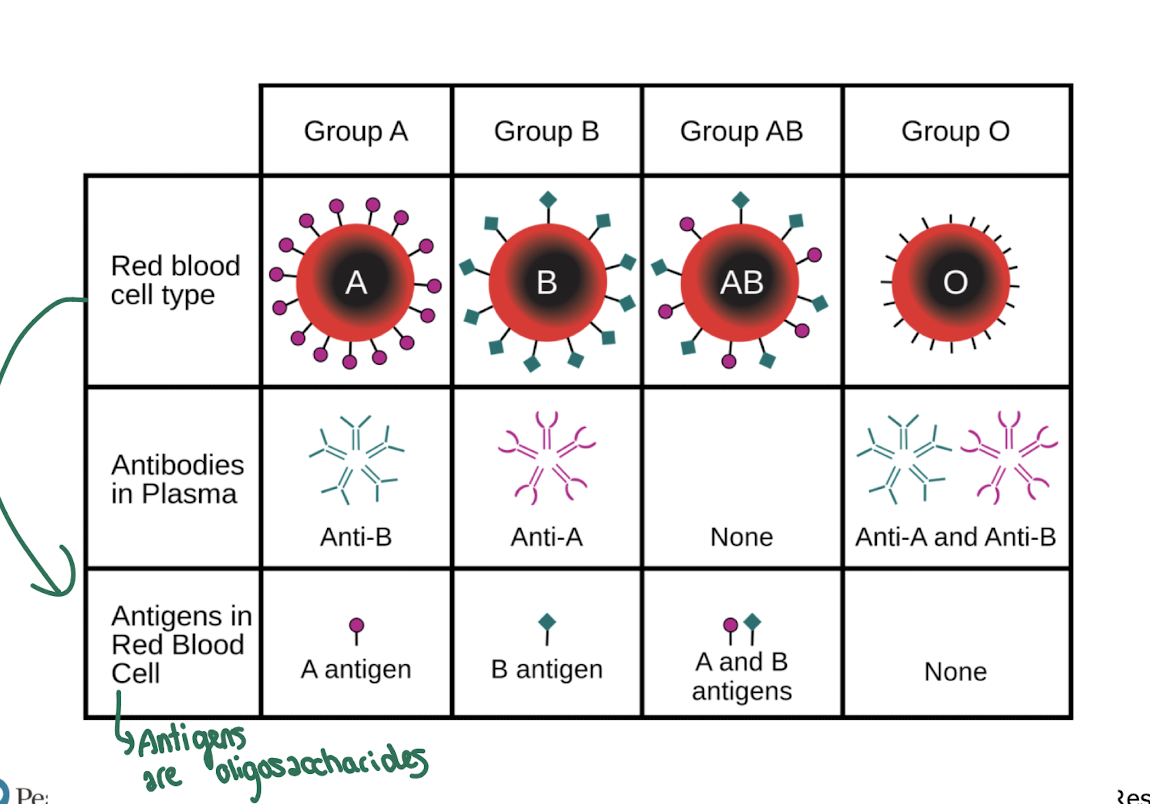
blood types, antigens vs antibodies fro ABO blood types?
what is hemostasis, what are steps
= multi-step physiological process that stops bleeding from damaged blood vessels.
Hemostasis prevents blood loss from damaged vessels
– Vasoconstriction
– Platelet plug begins with platelet adhesion
– Exposed collagen and tissue factor lead to a clot
▪ Coagulation cascade
– Thrombus
• Platelet activation begins the clotting process
– Platelets stick to collagen in damaged vessels
– Release of platelet-activating factor (PAF) →thromboxane A2
– Prostacyclin
Copyrig

what is platelet plug formation steps, what are the 3 PAF. released? prostacyclin?
Platelet Plug= temporary aggregation of platelets that physically seals small breaks in injured blood vessels.
prostacyclin= hormones produced by endothelial to prevent platelet from sticking to blood vessels

what do petelets initially stick to/activated by? what manifests platelet aggregation
circulating platelets stick to exposed subendothelial collagen at the site of a vessel injury.
General Location: Inner lining (subendothelium) of a damaged blood vessel.
Platelet Aggregation
General Function: The clumping together of multiple platelets, stimulated by released factors, to build up the platelet plug
what is Tissue Factor (Tissue Thromboplastin)
protein exposed upon tissue injury that triggers the extrinsic (cell injury) coagulation pathway.
what makes up a blood clot?
= solid meshwork of fibrin fibers, trapped red blood cells, and platelets that permanently seals a vessel wound.
General Location: At the site of blood vessel injury.
Fibrin vs plasmin vs thrombus
Fibrin= insoluble, fibrous protein polymer that weaves together into a tight mesh to reinforce a platelet plug.
General Location: Formed at the site of a blood clot.
Plasmin= active enzyme that breaks down and digests fibrin polymers to dissolve blood clots as tissues heal.
General Location: Inside blood clots during tissue repair.
Thrombus= a blood clot that forms abnormally inside an intact blood vessel and can obstruct blood flow.
General Location: Attached to the interior wall of a blood vessel.
two pathways of clotting: intrinsic vs extrinsic, how do they differ with how theyre triggered? when do they merge?

Intrinsic Pathway (Contact Activation Pathway)= activated when blood comes into contact with exposed collagen or foreign surfaces inside the vessel.
General Location: Initiated within the blood using internal plasma factors.
Extrinsic Pathway (Cell Injury Pathway)= rapid pathway of coagulation triggered by tissue factor released from damaged cells outside the blood vessel.
General Location: Initiated by tissue elements external to the blood vessel endothelium.
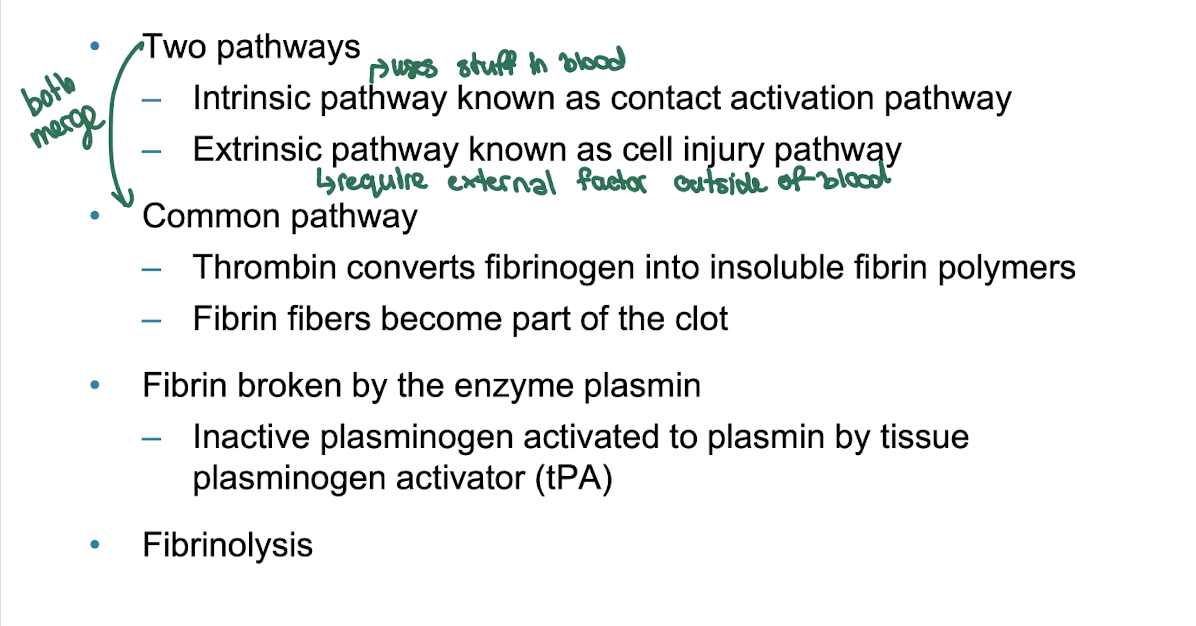
what is the conversion of firinogen into fibrin, then eventually fibrinolysis? what is Fibrinolysis? what is role of thrombin, plasminogen vs plasminogen, tPA? what is thrombus vs embolus?
thrombin= key enzyme in the common pathway that converts soluble fibrinogen into insoluble fibrin threads.
Plasminogen= inactive precursor protein circulating in blood that gets converted into plasmin to dissolve clots.
Tissue Plasminogen Activator (tPA)= An enzyme released by endothelial cells that converts inactive plasminogen into active plasmin to clear away old clots.
FIBRINOLYSIS= physiological process of breaking down and dissolving old, unnecessary blood clots as healing completes

What are all types of white blood cells (and their lifespans), and which are most abundant vs. least? what are RBC and lifespan and where are they found? what are platelets, w

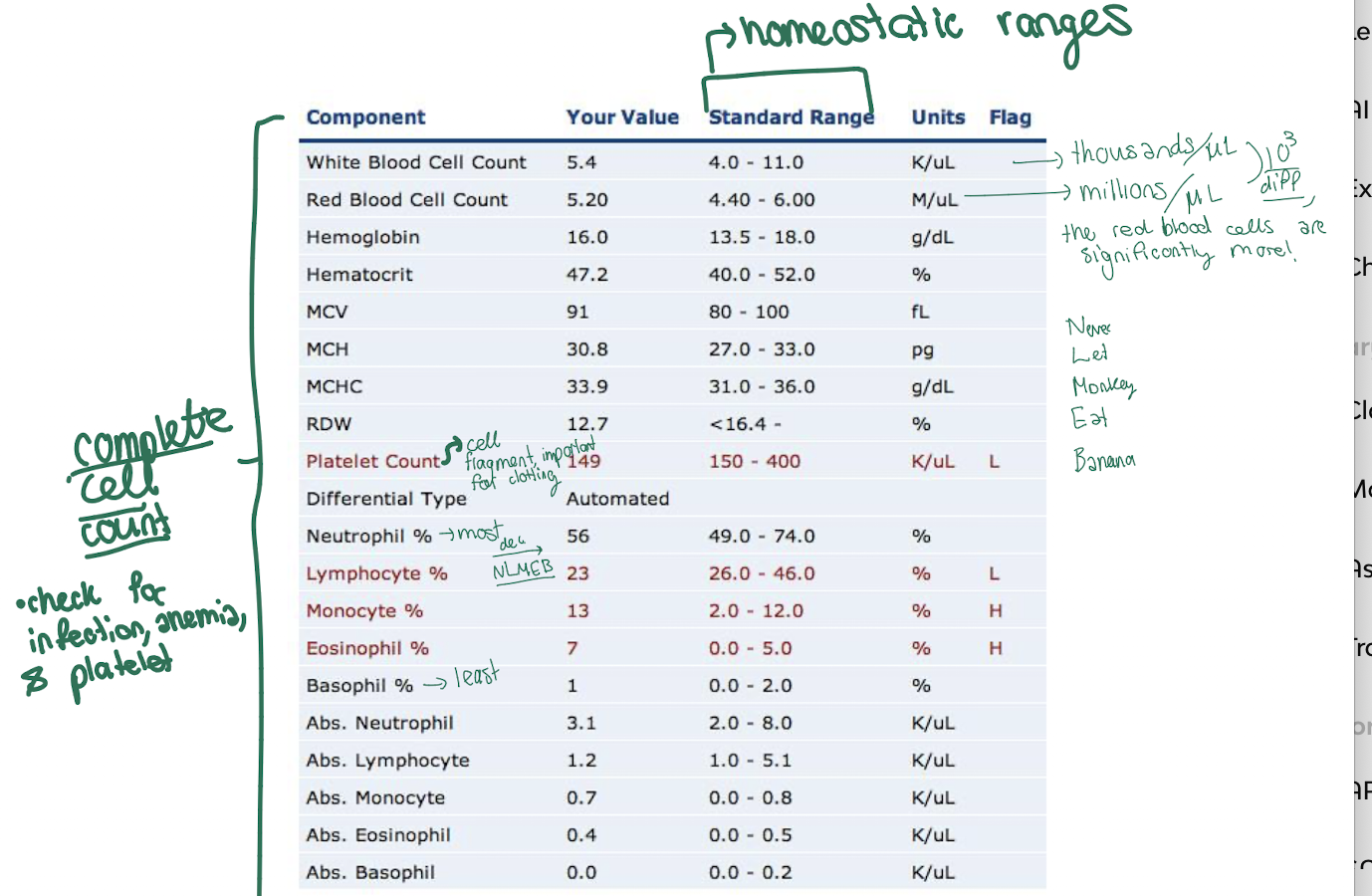
cellular composition of blood vs plasma? what are the two major gases in blood? what about nitrogen?


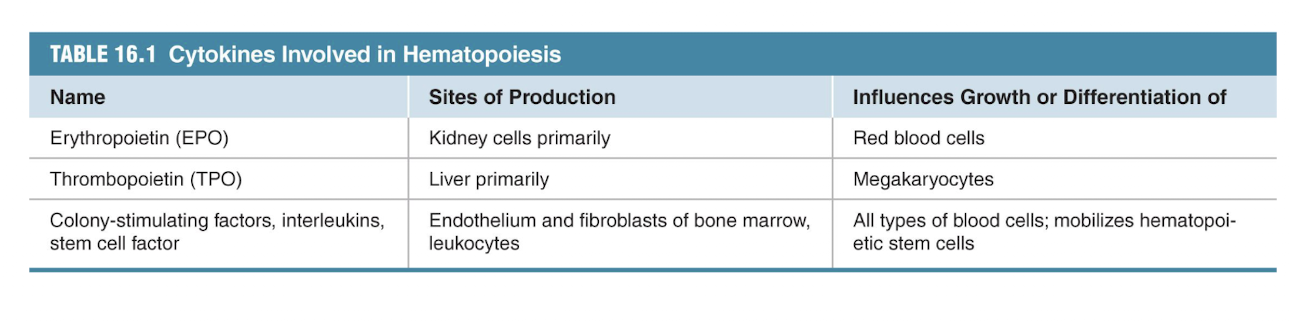
what are 3 main cytokines involved in hematopoiesis?