Chapter 7- Development process
 Call Kai
 Learn
 Practice Test
 Spaced Repetition
 Match
 Flashcards
 Knowt Play
1/28

There's no tags or description
Looks like no tags are added yet.
29 Terms
genotype
genes for traits contained within an individual
Phenotype
Physical characteristics
results as an interaction between genotype and environment
Ex. I have blue eyes
Pre-Nueral development
Initial development occurs in the zygote and embryo
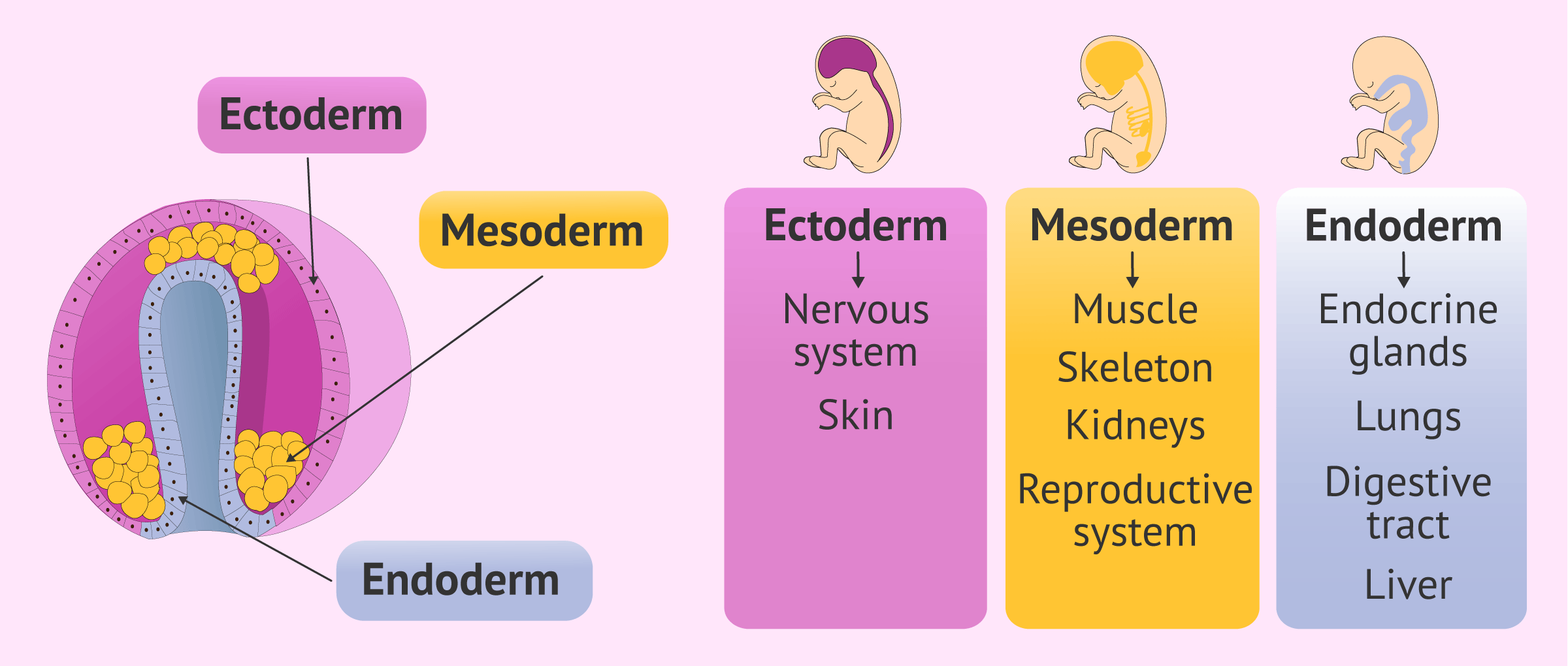
fertilized egg develops in 3 layers
Ectoderm
Mesoderm (muscles, heart, red blood cells)
Endoderm (lung, pancreas, glands)
Ecoderm
Outer layer of egg development, formed during gestation, eventually becomes the nervous system/skin
transcription factors
Proteins that bind DNA and switch genes on/off
Establish body parts/specifc tissue and cell types
Segmenetation
the body’s process of establishing specific parts during genstation
Hox genes
TFs which tell each body segment what to become
Development of the brain
Human CNS forms at 2 weeks
Dorsal surface thickens and forms a neural tube that surrounds a fluid-filled cavity
Anterior to the neural tube becomes the hindbrain, midbrain, and forebrain
rest becomes the spinal cord

Stages of neural development
nuergenesis
cell migration
differentation
synatogenesis
neuronal cell death
synaptic rearrangement
Nuerogenesis
Cells undergo cell division in the ventricular zone; this is the creation of neurons
People are generally born with all the neurons that will ever need
SOME REGIONS THIS STILL OCCURS
Olfactory bulb
granule neurons (hippocampal formation)
Ventricular zone (VZ)
tissue layer that lines ventricular system; general center for creating nuerons

Cell Migration
the movement of newly formed nuerons/glia to their environmental location; 2 types
most cell migration finished by birth
failure = Lissencephaly (“smooth brain”)
Radial migration
occurs on scaffolding cells (radial glia) from the ventricle towards the outer surface

Tangental migration
movement parallel to the brain’s surface

Cell differentaition
process of cells adapting their phenotype appropriate for the particular brain region; axons grow first, then dendrites
Neural Cell Adhesion Molecules (NCAMs)
Proteins on the outer surface of cells that guide cells and grow axons to their targets
Growth cones
tips of the growth axons that act as a “steering apparatus” for the axons; contain Filopodia

Filopodia
detects chemicals and guides growth for growth cones

Chemoattractants/Chemorepellants
Chemical signals that attract/repel growth cones to guide neurons to their correct locations
When guidance fails, corpus callosum fails to form correctly
Synaptogenesis
formation of synaptic connections between neurons during brain development
occurs throughout life, not prenatally exclusive
slows down in later years
Cell death/cell suvival (yes this is a step)
the pruning/keeping of cells after/while diffrentation and synaptogenesis occurs
apoptosis
“programmed” mechanism for implementing cell death
ex. Finger webbing
necrosis
cell death from injury/damange
Ex. whippets, dementia
Neurotrophins
regulates development and matinence of the vertabrae
Nerve Growth Factor (NGF)
Neurotrophins secreted in target organs in the peripheral nervous system; these are types of proteins
Neurotrophin for the peripheral nervous system
Brain-derived neurotrophic factor (BDNF)
A nuerotrophin secreated by target neurons in the neocortex and hippocampus
Synaptic rearrangement
The process where earlier formed synapses are eliminated while others are added; rewiring, NOT killing the wires
if this fucks up we have issues, like a lazy eye
Gliagenesis
the birth/creation of glia cells, occurs throughout prenatal development and is concurrent with neurogenesis
this still occurs after birth and for the rest of your life
myelination
Mainly occurs after birth; increases AP conduction velocity, the creation of the myelin sheath