OCTH 256 - Middle Aged Adults Midterm 1
 Call Kai
 Learn
Learn Practice Test
 Spaced Repetition
 Match
Match Flashcards
 Knowt Play
1/54

There's no tags or description
Looks like no tags are added yet.
Name | Mastery | Learn | Test | Matching | Spaced | Call with Kai | Chat |
|---|
No analytics yet
Send a link to your students to track their progress
55 Terms
rheumatoid arthritis (RA)
a chronic inflammatory condition where the immune system attacks the lining of all joints in the body (autoimmune)
causing synovitis (inflammation of the synovial membrane)
RA joint changes
swan neck deformity
boutonniere deformity
ulnar drift
subluxation by volar or dorsal displacement
osteoarthritis (OA)
a degenerative and non-inflammatory joint disease that causes joints to break down due to “wear and tear”
Herberden’s node
in pt w/ OA
nodule on the DIP joint
Bouchard’s node
in pt w/ OA
nodule on PIP joint
OA joint changes
gelling (stiffness after periods of inactivity)
nodules in DIP, PIP, MCP
bone spurs
cartilage softening
RA symptoms
pain
swelling
morning stiffness > 1hr
symmetrical
OA symptoms
no swelling
morning stiffness < 1hr or from inactivity
nodules are first painful/tender then hard and painless
minimal/local inflammation
crepitus (crackling, popping, clicking sounds)
asymmetrical
RA onset
any time in life and rapid progression (weeks to months)
OA onset
typically later in life and slow progression (years)
RA classification
at least 4
morning stifness
arthritis of 3 or more joints
arthritis of hands joints
symmetrical nodules
rheumatoid nodules
serum rheumatoid factor
radiographic changes
RA functional issues
weak grip
difficulty dressing, meal prep, working, writingOA
OA functional issues
hand pain
reduced ROM
difficulty with stairs
completing household tasks
Acute inflammation treatment objectives
decrease pain and inflammation
maintain ROM, strength, and endurance
Subacute inflammation treatment objectives
reduce pain and inflammation
maintain ROM, strength, endurance
Chronic active inflammation treatment objectives
decrease pain and inflammation
increase or maintain ROM
increase strength and endurance
Chronic inactive inflammatory treatment objectives
decrease pain
increase or maintain ROM
increase strength and endurance
what is joint protection
a self-management approach taught to pt w/ RA or OA
aims to maintain functional ability through changing/adapting work methods and movement patterns of affected joints
changing habits can help reduce pain, inflammation, and stress on joints
principles of joint protection
use in most stable position
avoid external or mechanical stress towards position of deformity
evenly distribute carrying load
use largest joint/muscle for task
avoid stress of small joints
use leverage to gain force with less effort
avoid unnecessary stress
fatigue management/energy conservation
balance rest with activity
plan ahead
set priorities/eliminate unnecessary tasks
pace yourself
learn activity tolerance (optimal duration w/out extreme fatigue, pain, distress)
Arthritis Precautions
respect pain
avoid fatigue
avoid stressing inflamed or unstable joints
use resistive exercise or activity with caution
be aware of sensory impairments
be cautious with fragile skin due to systemic disease or medication side effects
OT interventions include:
therapeutic exercises and activities
ROM, strengthening, endurance
PAMs
hold and cold
splinting
volar resting, wrist support, protective MCP, CMC stabilization
OT evaluation involves for RA/OA?
client Hx
occupational profile
occupational performance
cognitive, psychological, and social status
Reasons for splinting
to prevent, support, and correct
reduce inflammation
decrease pain
preventing overstretching or shortening
supporting unstable joints
promoting rest in functional positions
proper joint positioning
immobilization
limiting undesired motion
increase ROM and strength
dynamic splint
one or more resilient components that produce motion (elastic, rubber bands, springs)
for increasing PROM
ex: spring-coil finger extension splint
static spint
has no moveable components
immobilizes a joint
for resting or protection
to reduce pain
to prevent muscle shortening/contractures
ex: wrist cock up splint
immobilizing splint
a type of supportive splint
for resting and protection
for position and facilitate proper healing after surgery
ex: thumb spica splint
corrective splint
correct deformities
assist and control movement
ex: dynamic ulnar deviation splint
Boutonniere deformity
flexion of the PIP, hyperextension of the DIP
ulnar deviation deformity
MCPS bend towards ulna
swan neck deformity
hyperextension of the PIP, flexion of the DIP
Purpose of PAMs
to produce a response in soft tissue using light, water, temp., sounds, and electricity
to prepare for activities
used before or during functional activity to enhance OT interventions
Advanced practice of PAMs for California
can be performed by OT after 30 contact hours and 240 hours of supervised on-the-job training, clinical internship or affiliation. Must be competent to use.
Superficial PAMs
cryotherapy
cold/hot packs
hydrotherapy
ice
fluidotherapy
paraffin
infrared
water
deep thermal PAMs
ultrasound
phonophoresis
iontophoresis
Purpose of Thermal Modality PAMs
increase motion
make scar tissue more extensible
decrease joint stiffness
relieve muscle spasms
increase blood flow
decrease pain
aid in reabsorption of exudates (mass of cells that seeped out) and edema
praffin bath
conduction = transfer of heat from one object to another through direct contact
for: arthritis
hot packs
conduction
used when not able to submerge in paraffin due to location

fluidotherapy
convection = fluid motion around the tissues
finely ground corn husks particles circulate arms
warms and desensitizes tissue before activity
for: arthritis, carpal tunnel, tendonitis, post-op, raynaud syndrome
cryotherapy
use of cold temperature for vasoconstriction (decrease blood flow)
for: edema, cancer, active bleeding, cardiac insufficiency
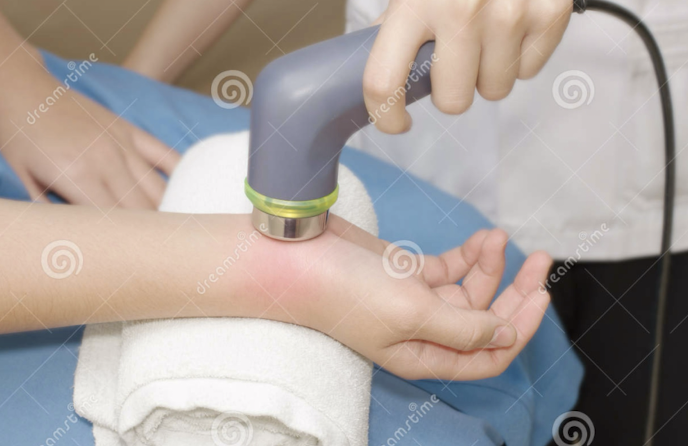
ultrasound
conversion (heat is generated internally by friction)
apply gel and sound waves penetrate tissue, causing vibration (continuous or pulsed)
contrast baths
alternating cold and heat for vasodilationn and vasoconstriction

phonophoresis
use ultrasound to enhance delivery of topical drugs to enhance absorption
for: inflammation/pain
examples of electrical modalities
TENS
interferential
H-wave
Hi-volt
Iontophoresis
NMES
Uses for Electrical Modalities
pain modulation
muscle re-education
edema reduction
scar modalities
increasing ROM
facilitating healing

TENS (transcutaneous electrical nerve stimulation)
to suppress pain by blocking pathways to CNS (electroanalgesia)

Interferential
alternating current for pain modulation
similar to TENS but deeper penetration

H-wave
stimulates muscles and nerves by blocking nerve endings to promote circulation and relieve pain
Hi-volt
pulsing voltage for pain, edema, and wound healing (especially pressure ulcers)

Iontophresis
topically applied medication path with low voltage direct current
for: scar management (DC), pain modulation (AC)

NMES (neuromuscular electrical stimulation)
used to increase muscle strength by stimulating peripheral nerves to achieve muscle contraction
selectively stimulates large muscle fibers, unlike active motion with stimulates small muscle fibers
for: increasing ROM, reduce atrophy, reduce edema
CVA
cerebrovascular accident
stroke
when blood flow to a part of the brain is stopped due to blockage or rupture of blood vessel
risk factors of CVA
high blood pressure (hypertension)
smoking
high cholesterol
obesity
diabetes
warning signs of stroke
sudden numbness in arms, face, or leg