Wildlife Ecology and Conservation Exam Review
 Call Kai
 Learn
Learn Practice Test
 Spaced Repetition
 Match
Match Flashcards
 Knowt Play
1/66

Earn XP
Description and Tags
Vocabulary flashcards covering wildlife ecology, historical conservation eras, leaders, hunting classifications, management components, and deer and bear biology.
Name | Mastery | Learn | Test | Matching | Spaced | Call with Kai | Chat |
|---|
No analytics yet
Send a link to your students to track their progress
67 Terms
Black bear species
The two species of black bear: the American black bear and the Asiatic black bear.
Black bear independence
Cubs split from their mother and become self reliant by their second spring.
Impacts of animal domestication
Led to wild stock being considered undesirable, over grazing, tragedy of the commons, and the eradication of predators.
Market hunting era
Wildlife era spanning 1850 - 1899, defined by the myth of superabundance.
Wildlife impacts of the market hunting era
Extinction of passenger pigeons and the carolina parakeet, and the reduction of bison from 30 million to 150.
Preservation era
Era marked by legal protections, the establishment of the National park service, John Muir, and the creation of the first National wildlife refuge.
John Muir
One of the conservation fathers who advocated for the preservation view.
Theo Roosevelt
One of the conservation fathers who established the first forest preservations.
Gifford Pinchot
One of the conservation fathers who served as the 1st chief of the US forest service in 1905.
Conservation era
Spanned 1930-1965; saw the end of game management, Civilian conservation corp during the great depression, Soil conservation service, Bureau of land management, and The wildlife society.
Ding Darling
Leader of the conservation era; reporter/cartoonist who created the Duck stamp.
Aldo Leopold
Leader of the conservation era who authored 'game management' in 1933.
Environmental era
Spanned 1966-1984; driven by environmentalists and marked by the Endangered species act of 1973, Environmental protection agency, and National environmental policy act of 1970.
Rachel Carson
Brought in the environmental era by exposing the impacts of DDT and bioaccumulation.
Present era (wildlife conservation)
Spanning the 1990s-present; focused on conservation biology, biodiversity, animal rights, human dimensions, ecosystem services, and environmental justice.
Wildlife management
The application of scientific knowledge and technical skills to protect, conserve, limit, or enhance wildlife populations.
Components of effective wildlife management
The three integrated elements: Biota, Habitat, and People.
Direct wildlife management
Population monitering to increase, maintain, or decrease wildlife numbers.
Indirect wildlife management
Management conducted through habitat alteration, humans, and prey manipulation.
Game vs. non-game species
Game refers to harvested wildlife, whereas non-game refers to non-harvested species.
Trophy hunting
Hunting of wild animals for sport rather than food, where the animal is usually stuffed and displayed.
Sport hunting
Hunting pursued for personal reasons and fun, rather than for profit.
Subsistence hunting
Hunting for food out of necessity.
Big game
Wildlife harvest primarily consisting of deer, characterized by differing cultural, economic, and recreational values.
Mule deer antler characteristic
Antlers with branches coming off of forks, distinguishing them from white-tailed deer.
Bucks and does
The respective terms for male mule deer (bucks) and female mule deer (does).
Fawns and herds
The respective terms for young mule deer (fawns) and groups of mule deer (herds).
Big game management complexities
Disease
Over population
Human wildlife interaction
Car collisions
Furbearers
Any mammal that is or was traditionally trapped or hunted
Umbrella species
The protection for them extends to other species that their habitat is shared with and helps them as well
Small game and upland birds
birds and small mammals regularly hunted for sport that are NOT classified as furbearers or waterfowl
Unprotected species
A gray zone; includes non-natives, pests, and insects
Common errors of game management
Small scale, Closed system way of thinking, oversimplification, doesnt evaluate impacts
Fishery
aquatic biota interacting with the environment
includes crustaceans and marine mammals
Greenback cutthroat trout prefer…
cold, clear headwater streams and mountain lakes
What is the greatest threat to our state fish?
competition with nonnative trout
State fish was thought to be extinct ___ but was found in____
1937, 1950s
What fraction of the world relies on fish for food?
1/3
Gill nets
Passive sampling
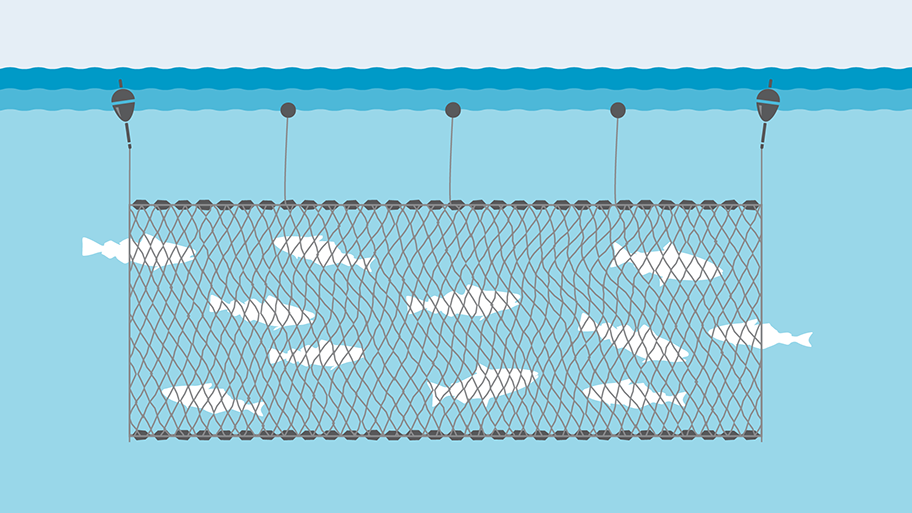
Trap nets
Passive sampling

Long lines
Passive

Pots and traps
Passive

Purse seining
Active

Trawling
Active

Electrofishing
Active sampling
Temporarily stun fish
Non capture sampling methods
Observation and sonar
Barriers to fish
Dams, culvert pipes, low water levels
Institutional animal care and use committees (IACUC)
exists for all entities doing vertebrate research
Invasive techniques of collecting data
trapping, netting, darting
non-invasive techniques of collecting data
observation, camera traps, hair snares, scat, acoustics, radar, eDNA, drones
Temporary marking
dyes, hair/toenail clipping, drop off collars
Permanenet marking
tags, collars, tattoos, bands, radio-telemetry
Bird banding has special rules because…
international protocals and data bases
need a lisence to do so
Take definition
Harm, kill or destroy wildlife and other like words
Lacey Act
1900
First fed law protecting wildlife
if a fish or wildlife species or plant was obtained illegally anywhere, its illegal to trade or transport further
Migratory birds act
1918
made it illegal to posess, sell, trade, import, export, etc birds including eggs and nests
Pittman-Robertson Act
1937
places taxes on hunting equipment and uses those funds for restoration and management/development of habitats
Bald and golden eagle protection act
1940
protects them from taking, posession and commerce
Dingell-Johnson Act
1950
pittman-robertson act for fish
taxes on fishing equipment and small engine fuel
National environmental policy act (NEPA)
1970
assures that all branches of government give proper consideration to the environment prior to taking federal action
Marine mammal protection act
1972
prohibits take of marine mammals in US waters
lots of exceptions for by-catch
Endangered species act
1973
allows protection for all species and habitats except pests and non-natives
IUCN red list
catalogs and highlights plants, fungi, and animals facing risk of global extinction
Convention on international trade in endangered species
CITES
international agreement between governments to ensure international trade in specimens of wild animals and plants doesnt threaten their survival
ESA delisting process
fed register notice published
public comment sought on
recovered species are monitered for 5 years5