bio 205 exam #2 (kriska)
 Call Kai
 Learn
 Practice Test
 Spaced Repetition
 Match
 Flashcards
 Knowt Play
1/106

There's no tags or description
Looks like no tags are added yet.
107 Terms
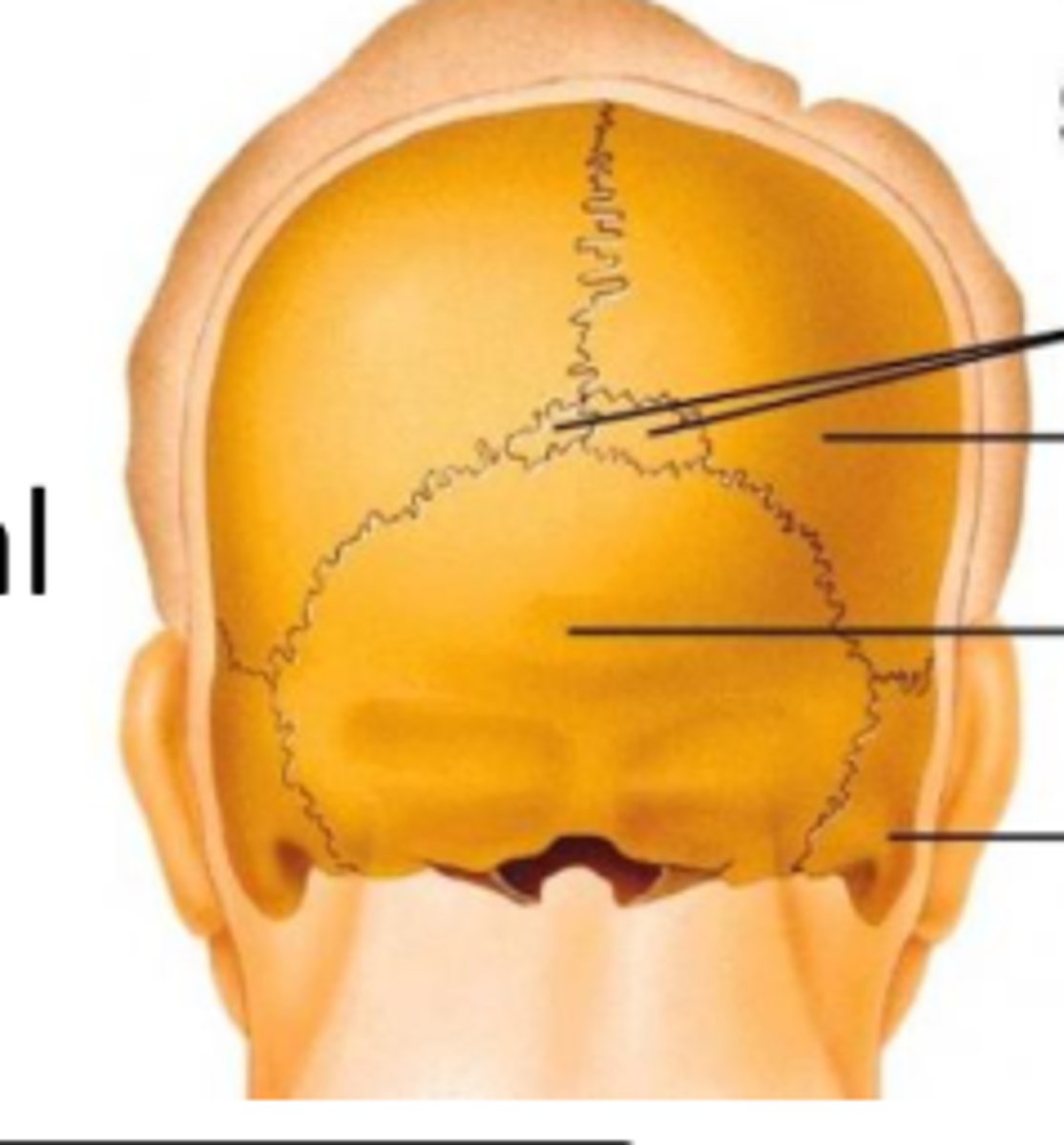
sutral
-irregular bones, flat bones of the cranium
-occur during development
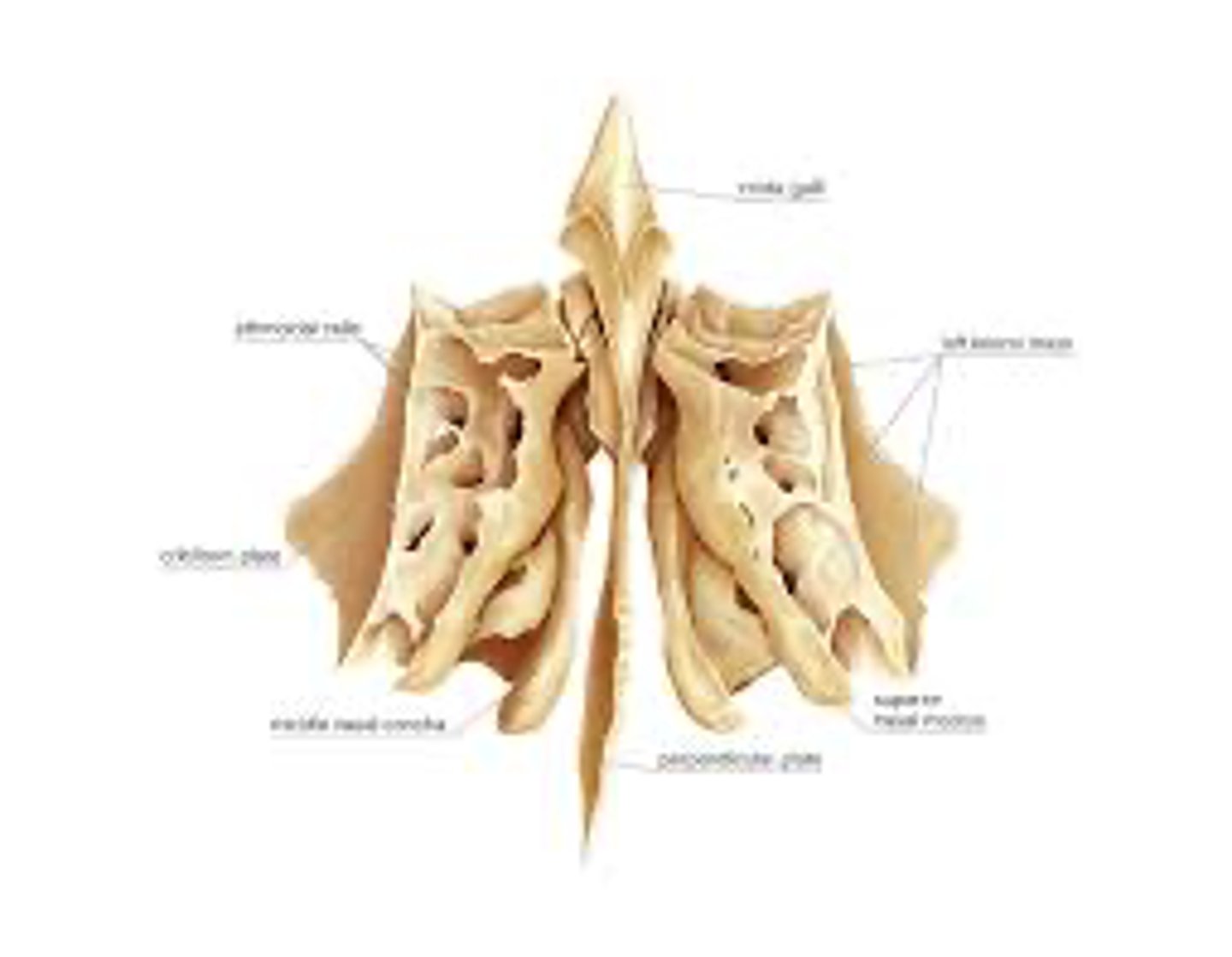
pneumatized bones
Bones that are hollow or contain numerous pockets (ex: ethmoid bone)
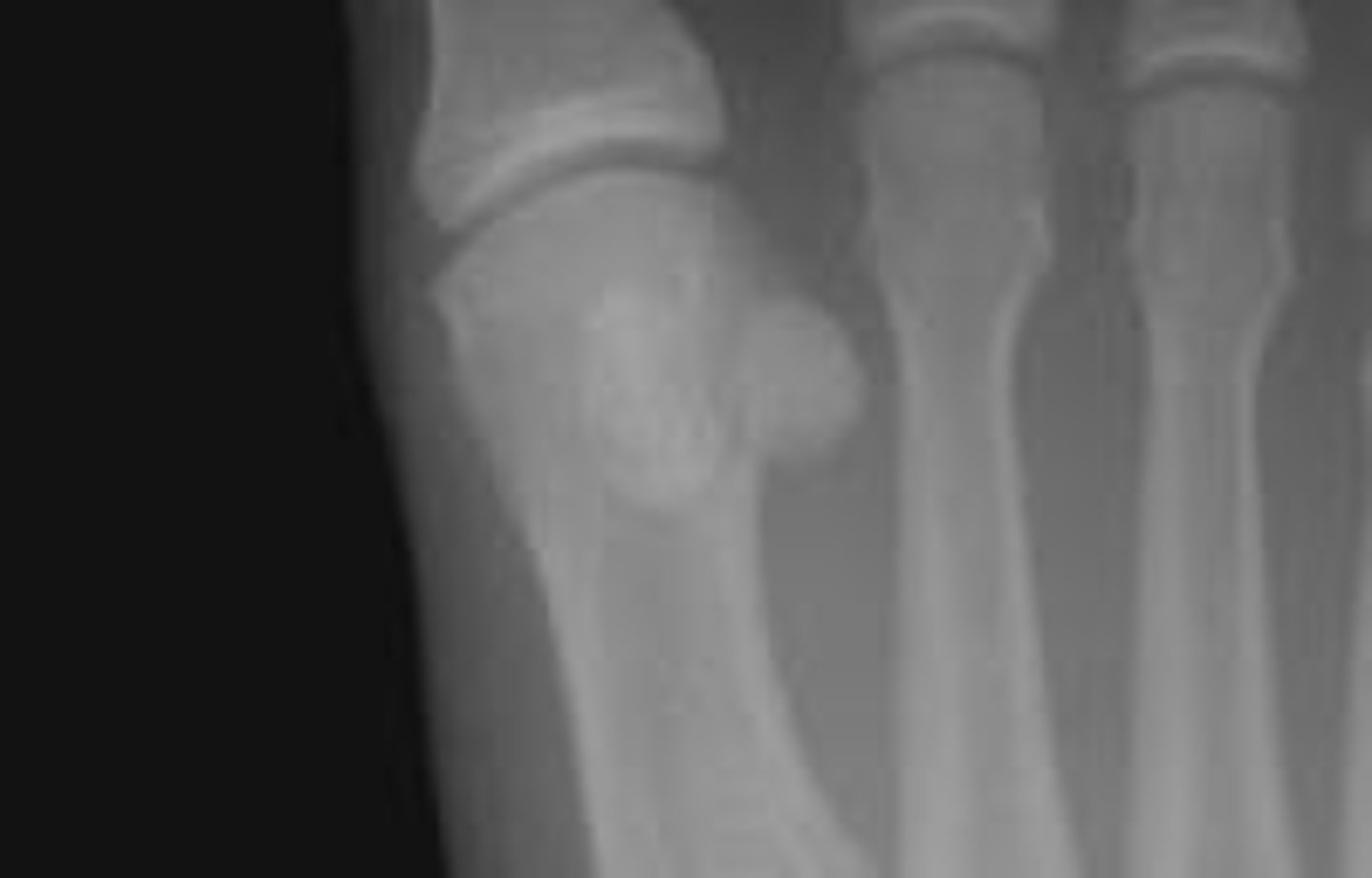
sesamoid bones
vary widely from person to person
- develop in places with high friction, tension, or physical stress
- protects tendons
- improves joint movements
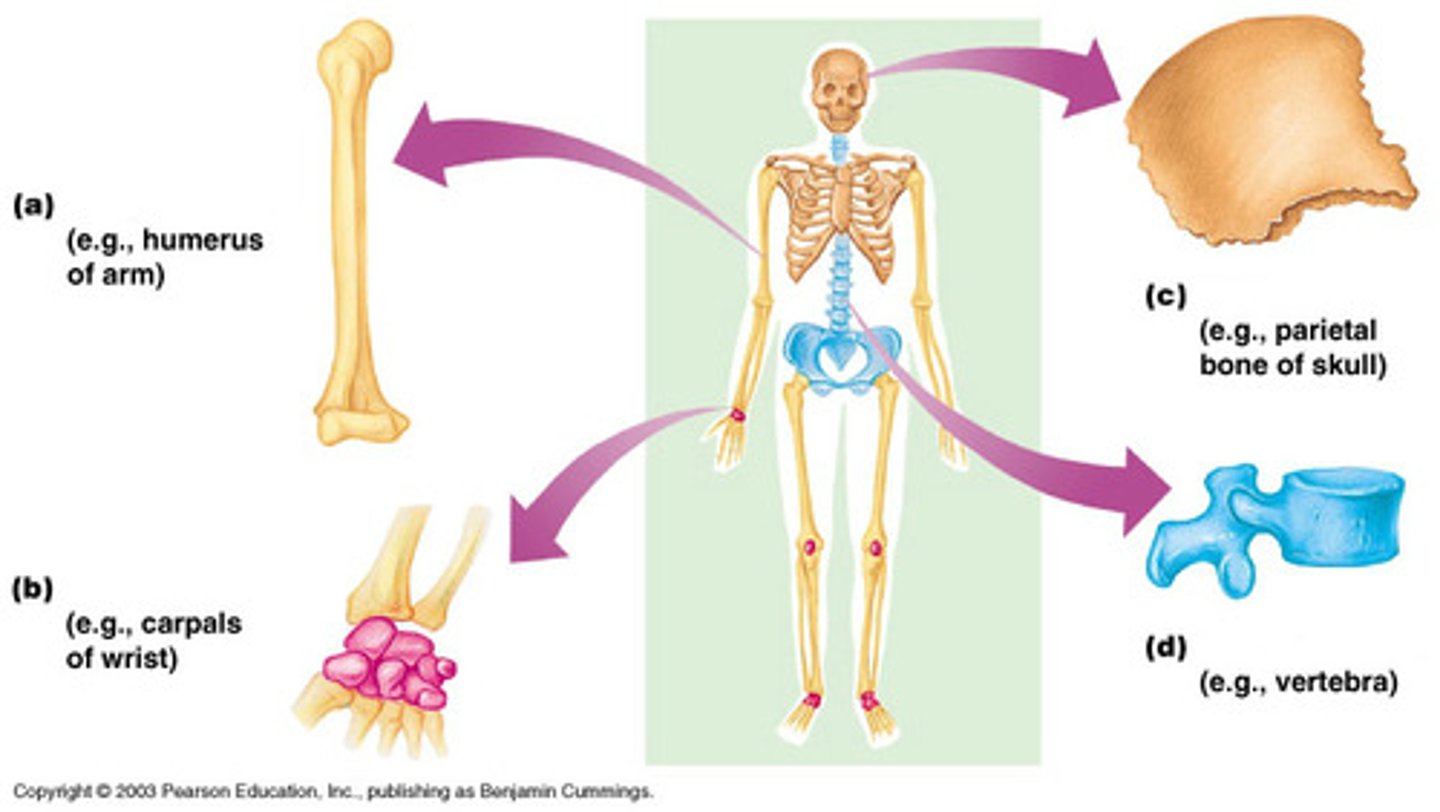
irregular bones
cannot be grouped into a regular category
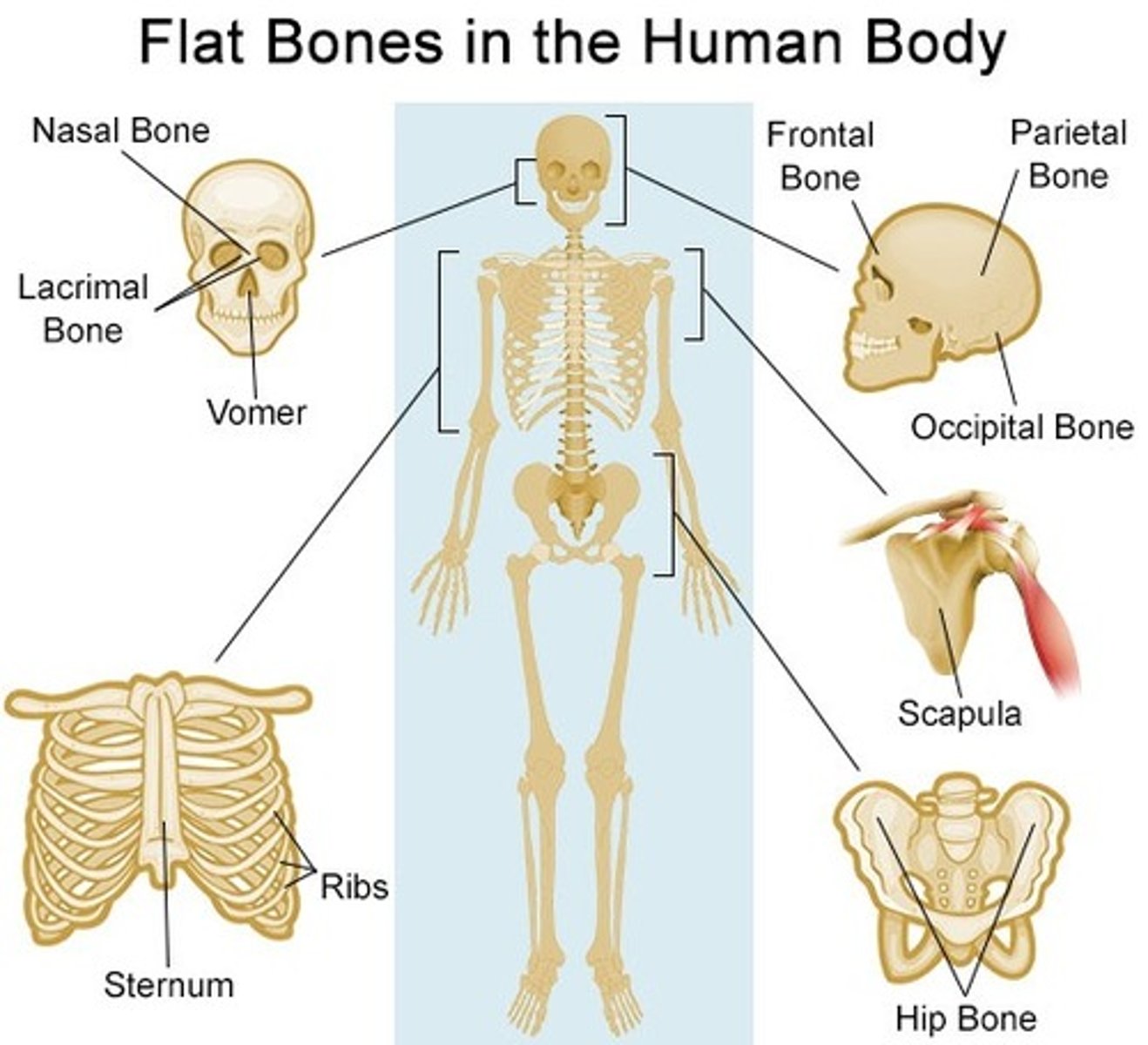
flat bones
thin & flat
- protective function & increased surface area for muscle attachment
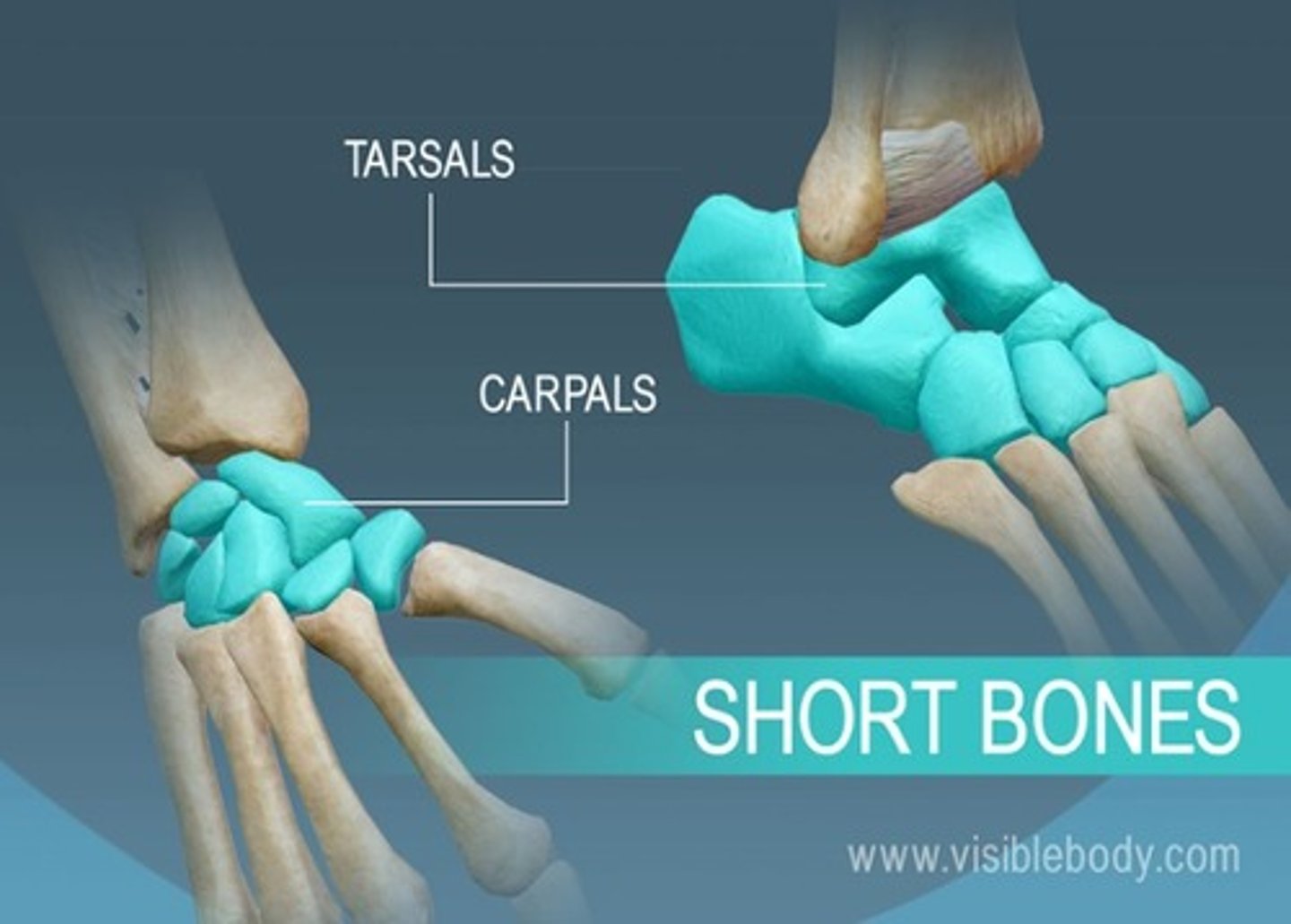
short bones
roughly equal in length & width (cube shaped)
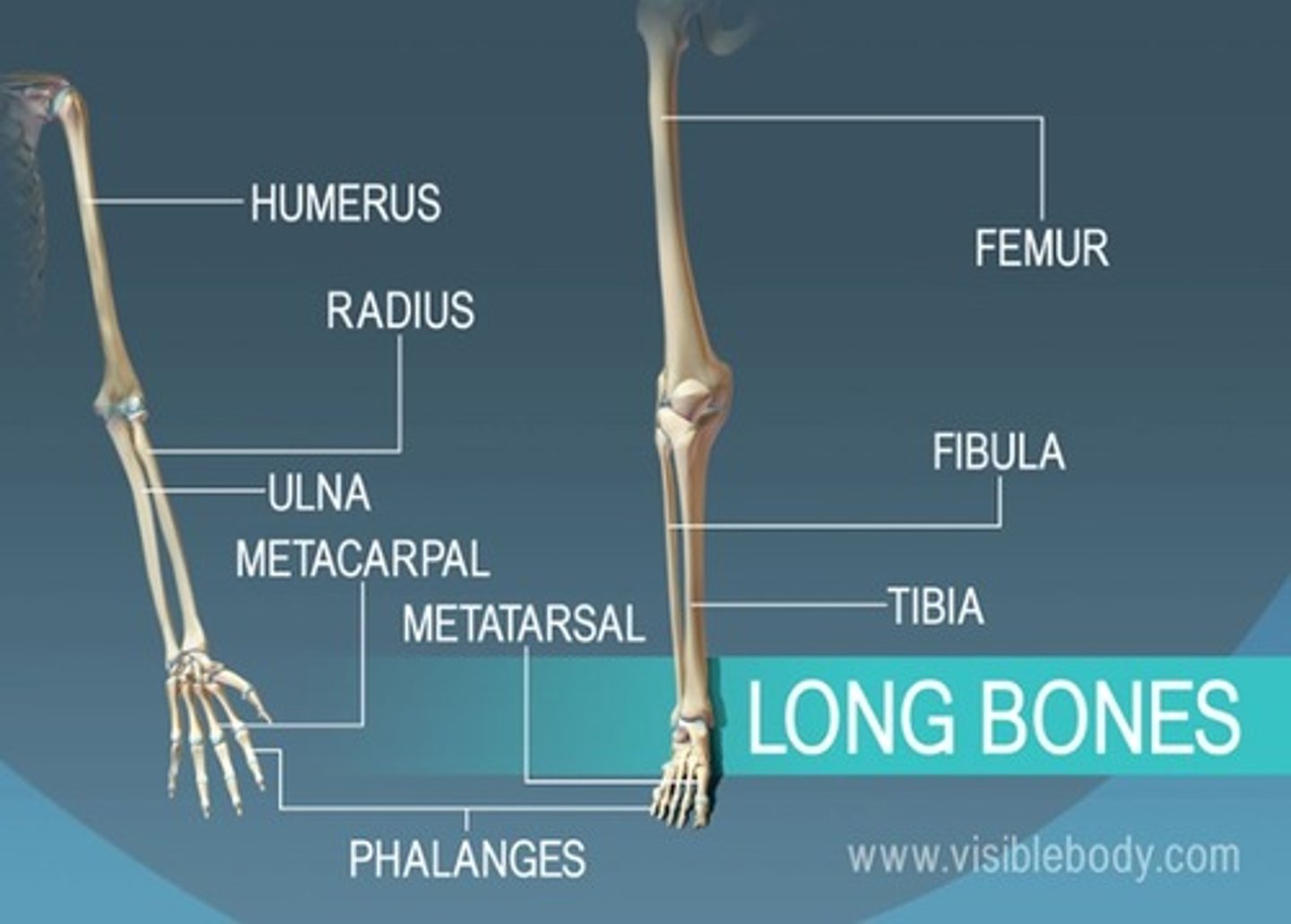
long bones
longer than they are wide
- slightly curves for strength & shatter resistance
compact bone
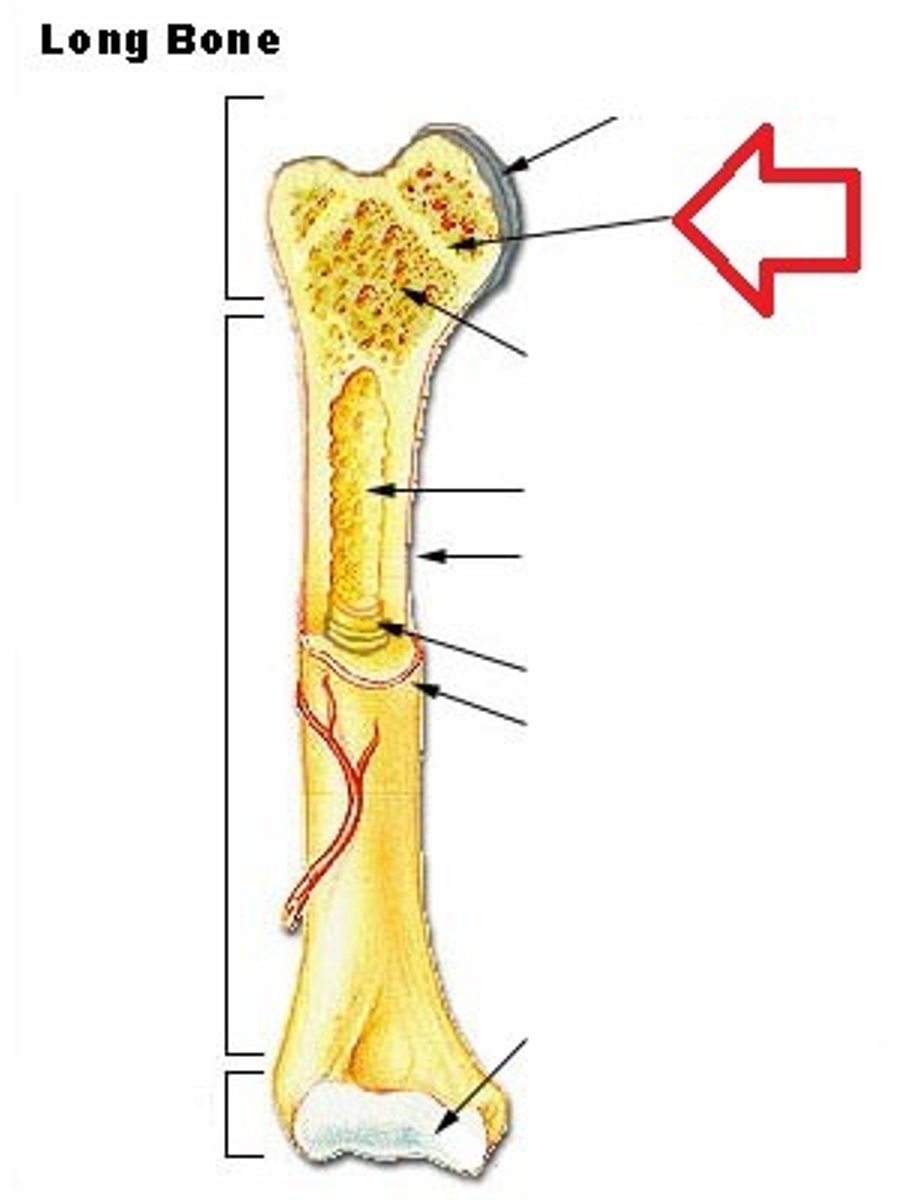
dense & hard bone tissue
- THICK on outside of diaphysis
- THIN layer on epiphysis
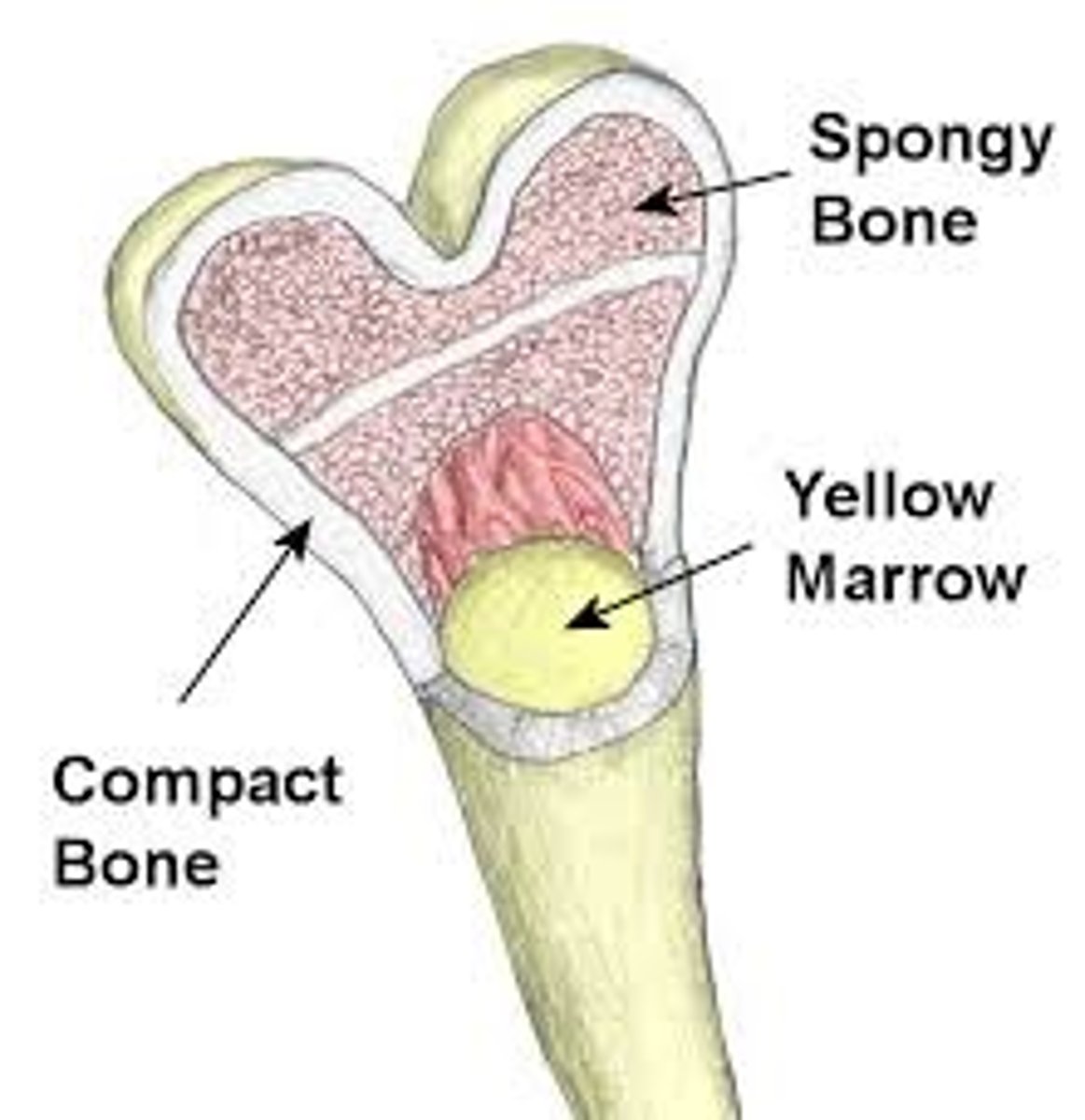
osteons
repeating units that make up compact bone
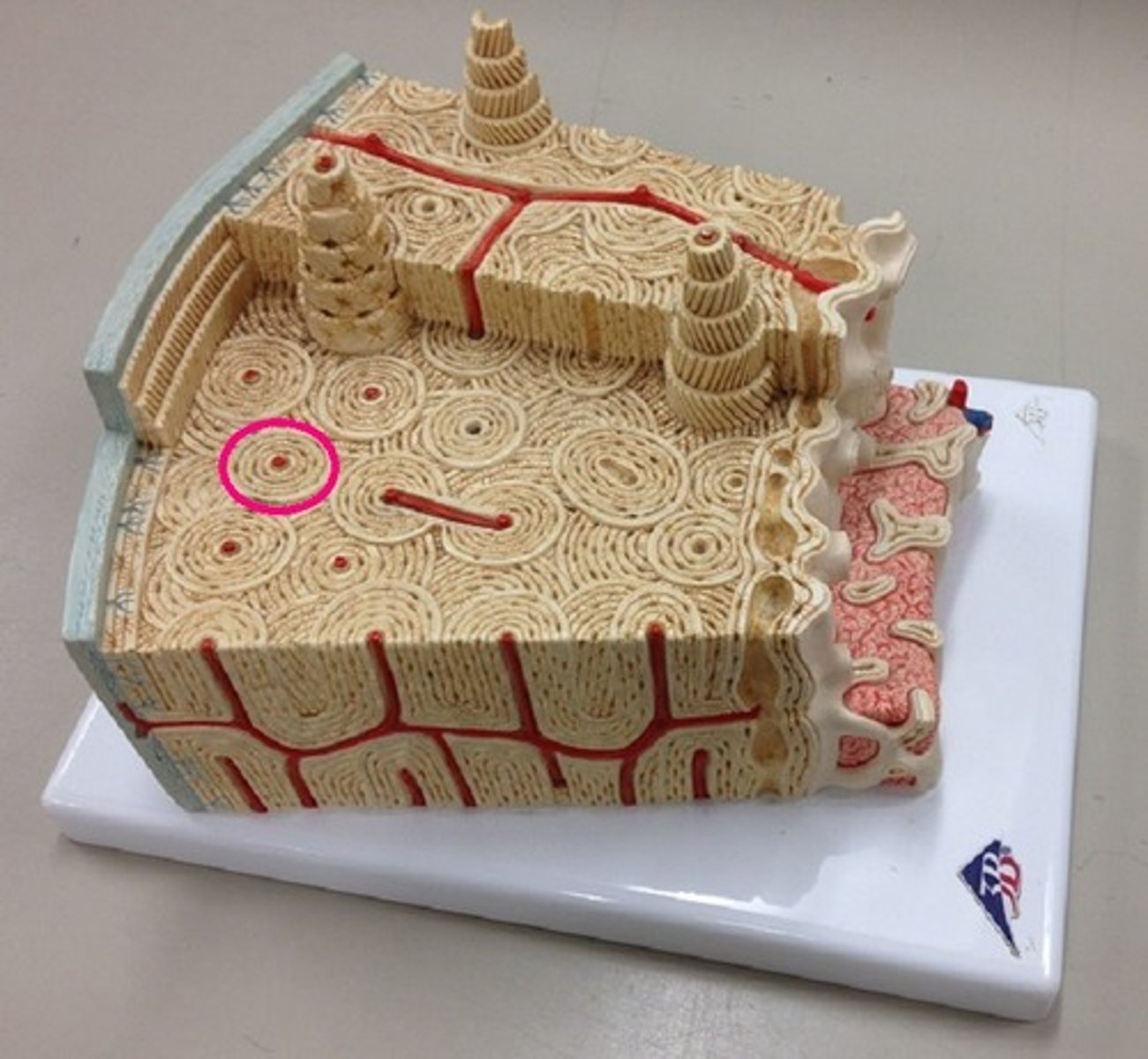
central canal
contains blood vessels in osteon
- waste & nutrients
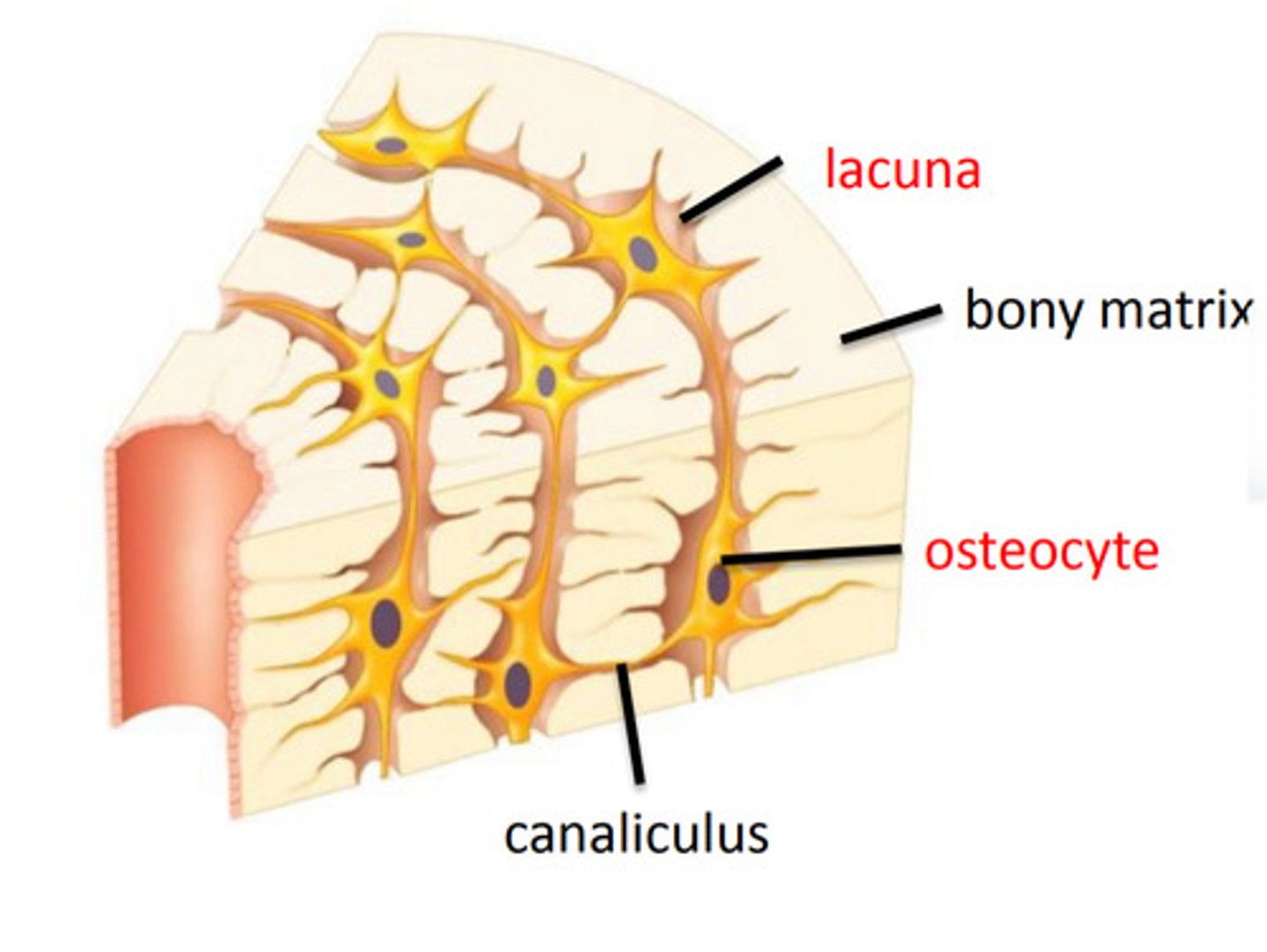
osteocytes
bone cells
- mature cells
- surrounded by calcium mixture
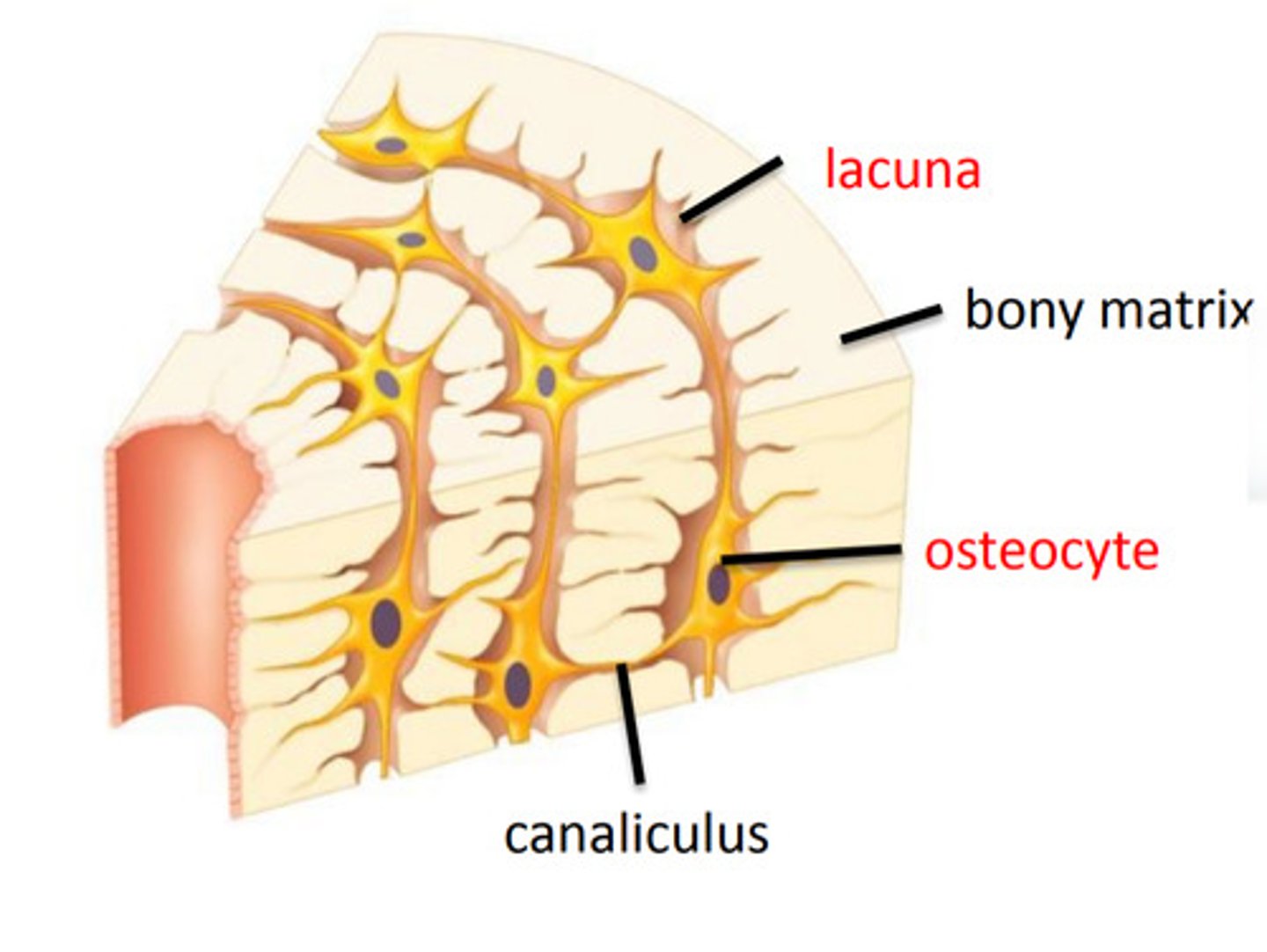
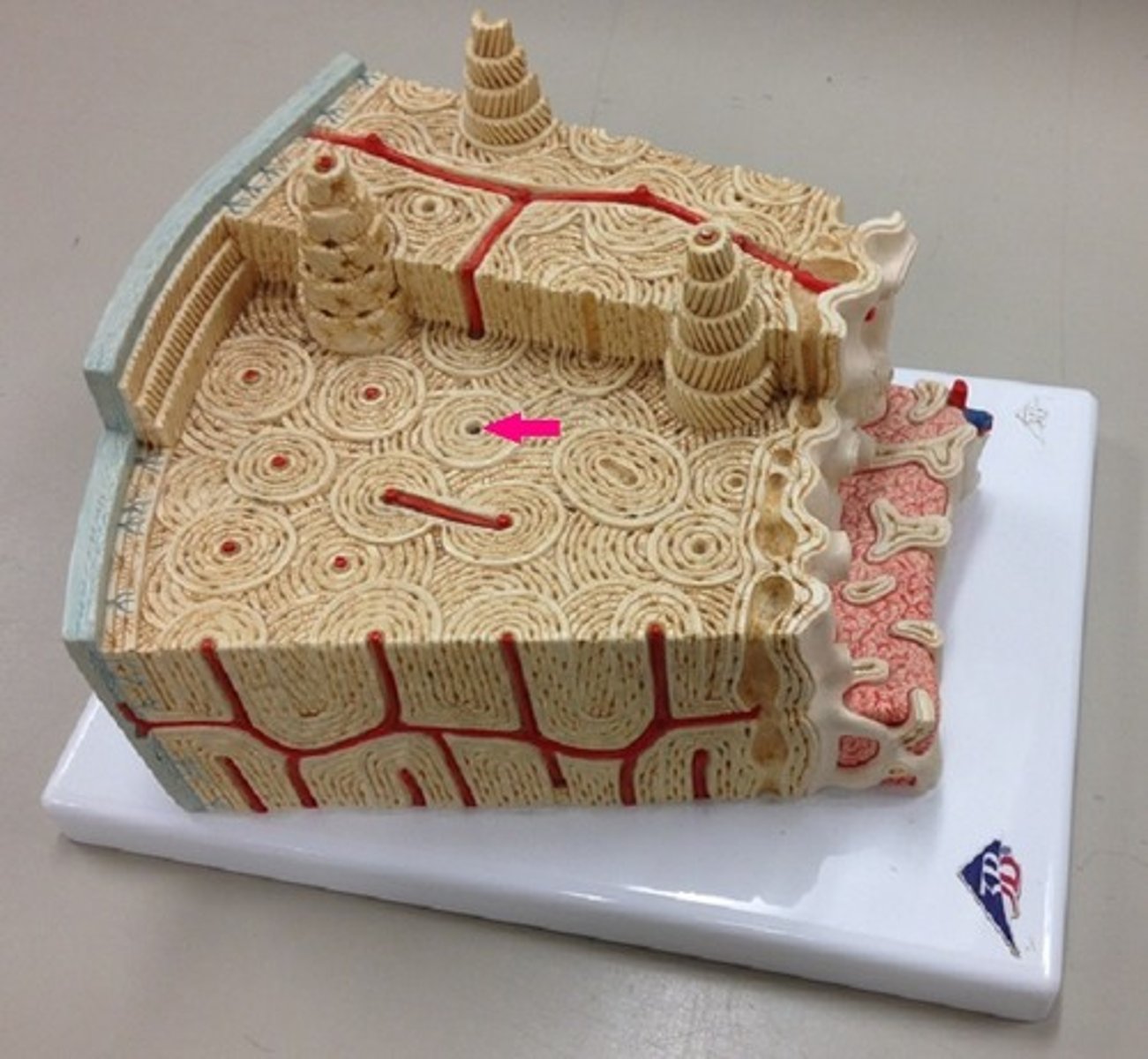
lacunae
space where osteocytes live
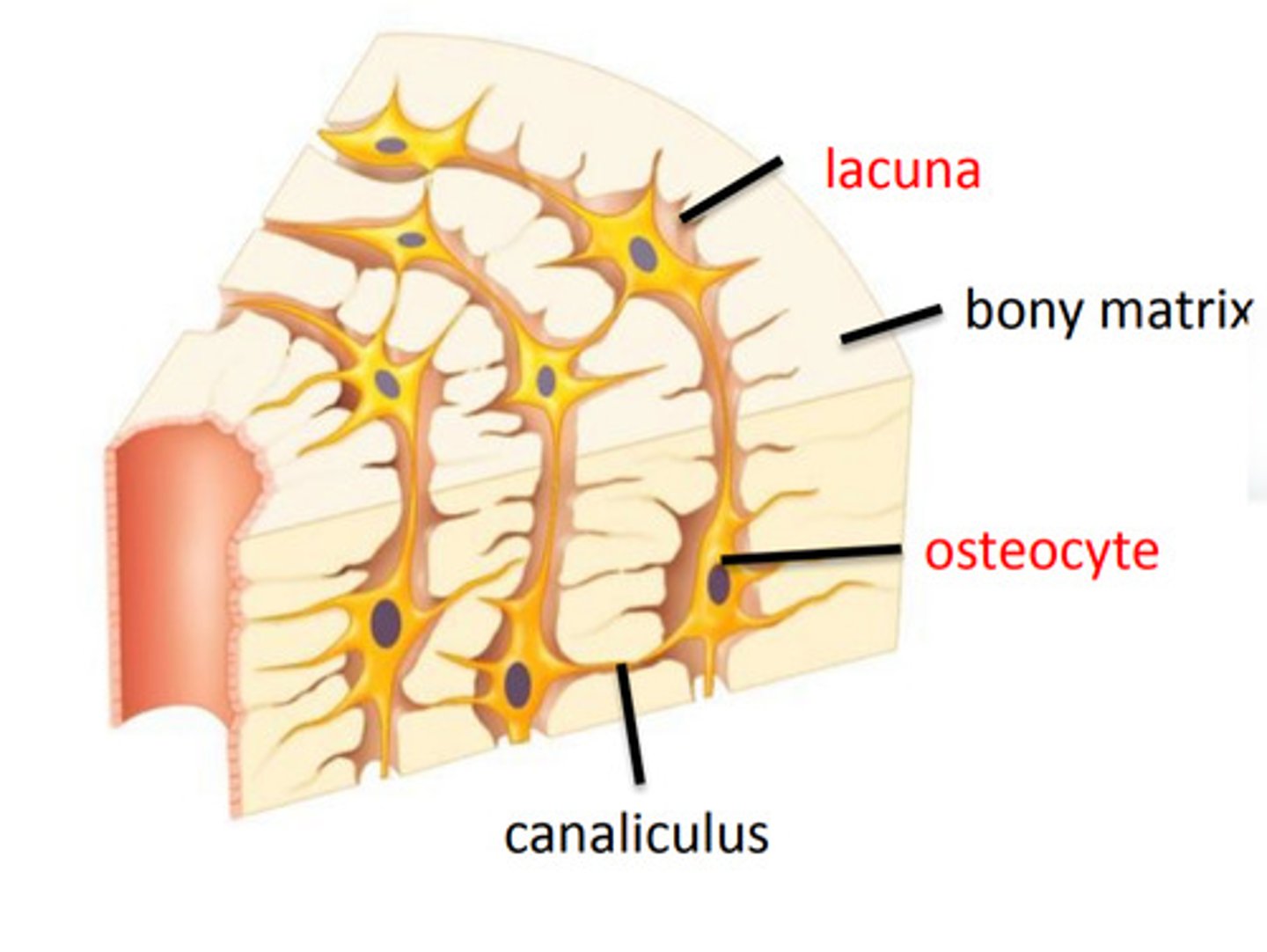
canaliculi
small channels that connect lacunae w/ each other AND to the central canal
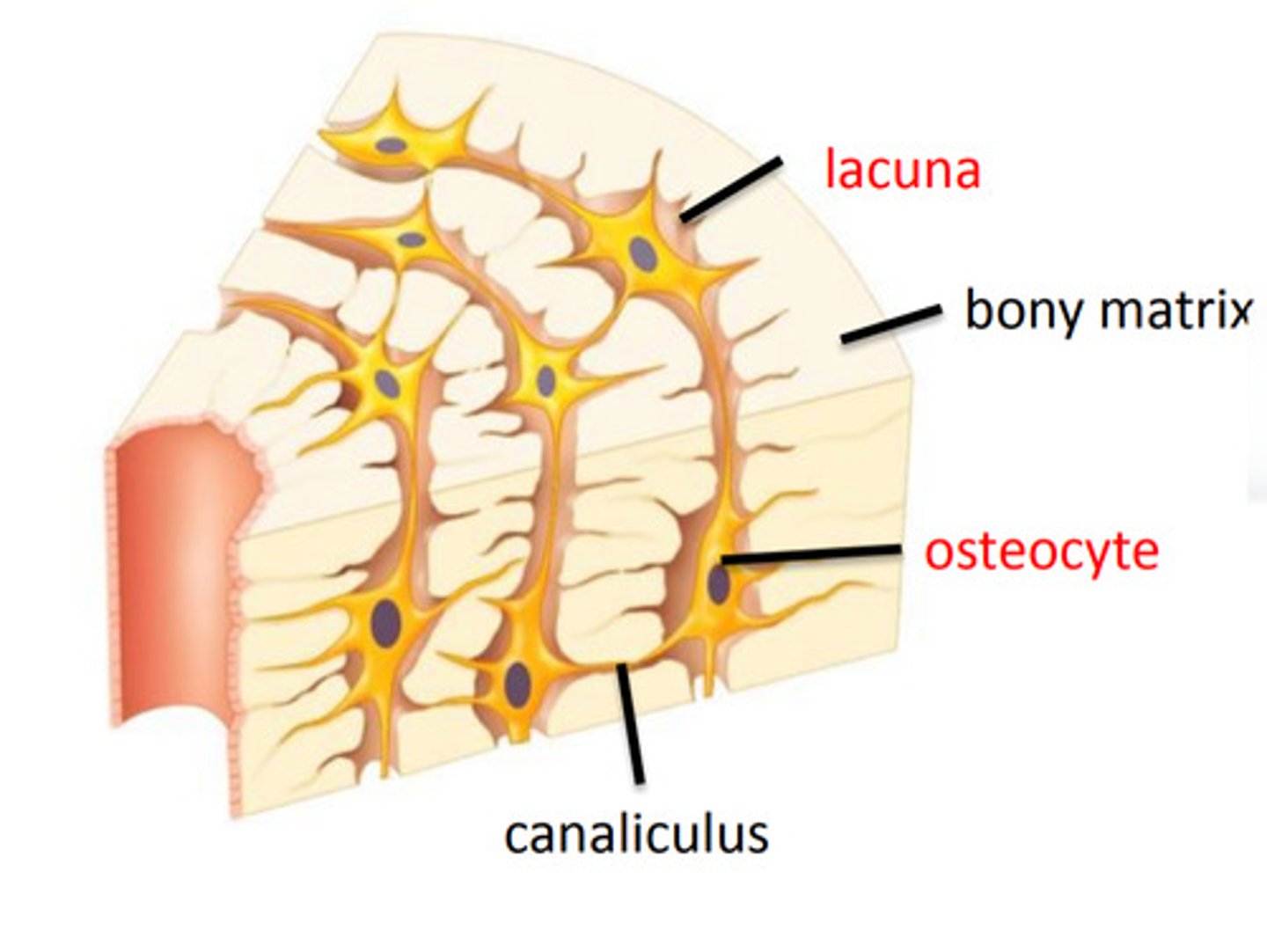
bony matrix
fills in space between rows of lacunae
- minerals & proteins
- not solid, webbed
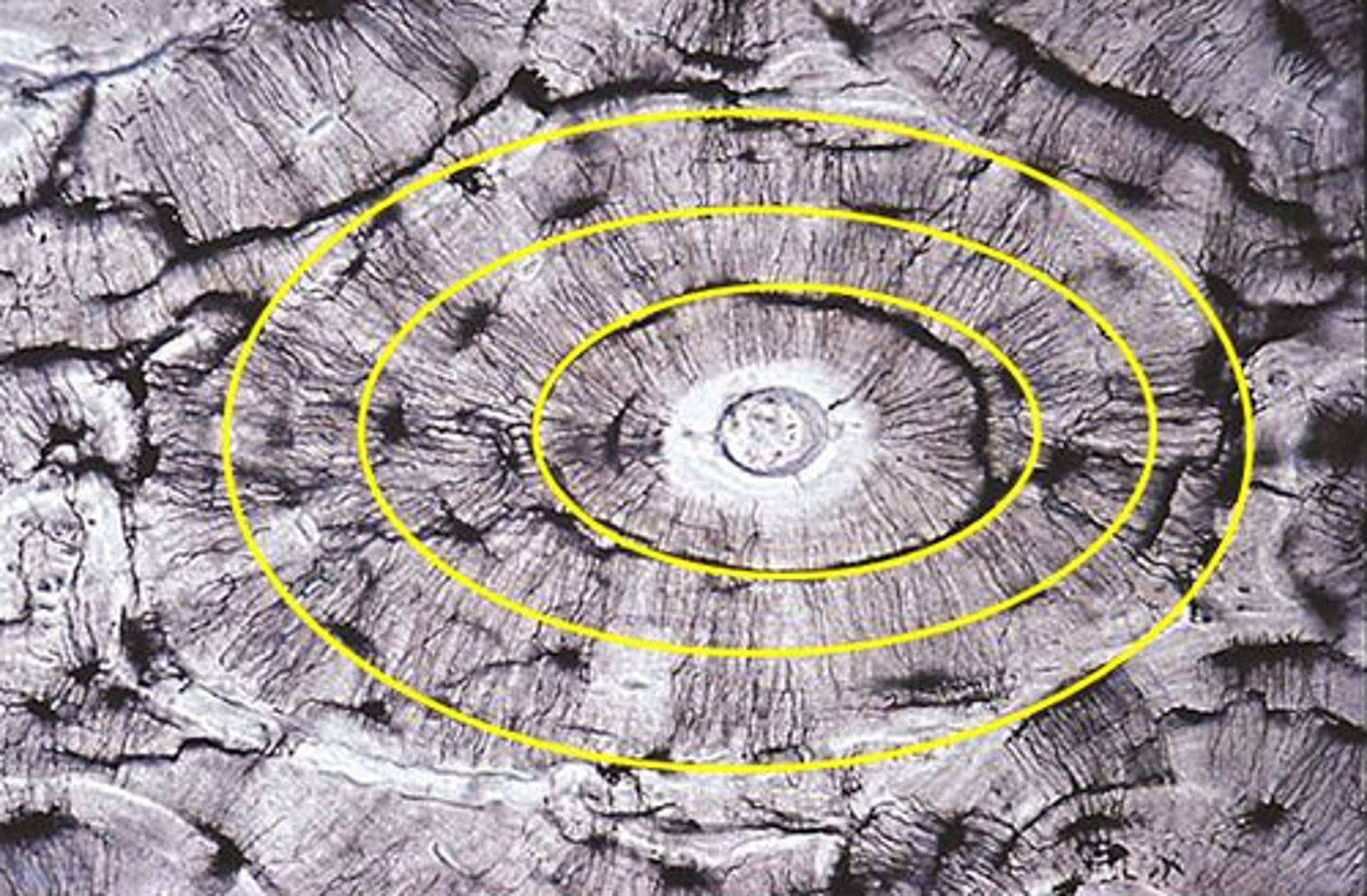
lamella
the concentric rings of an osteon
- how osteon is organized
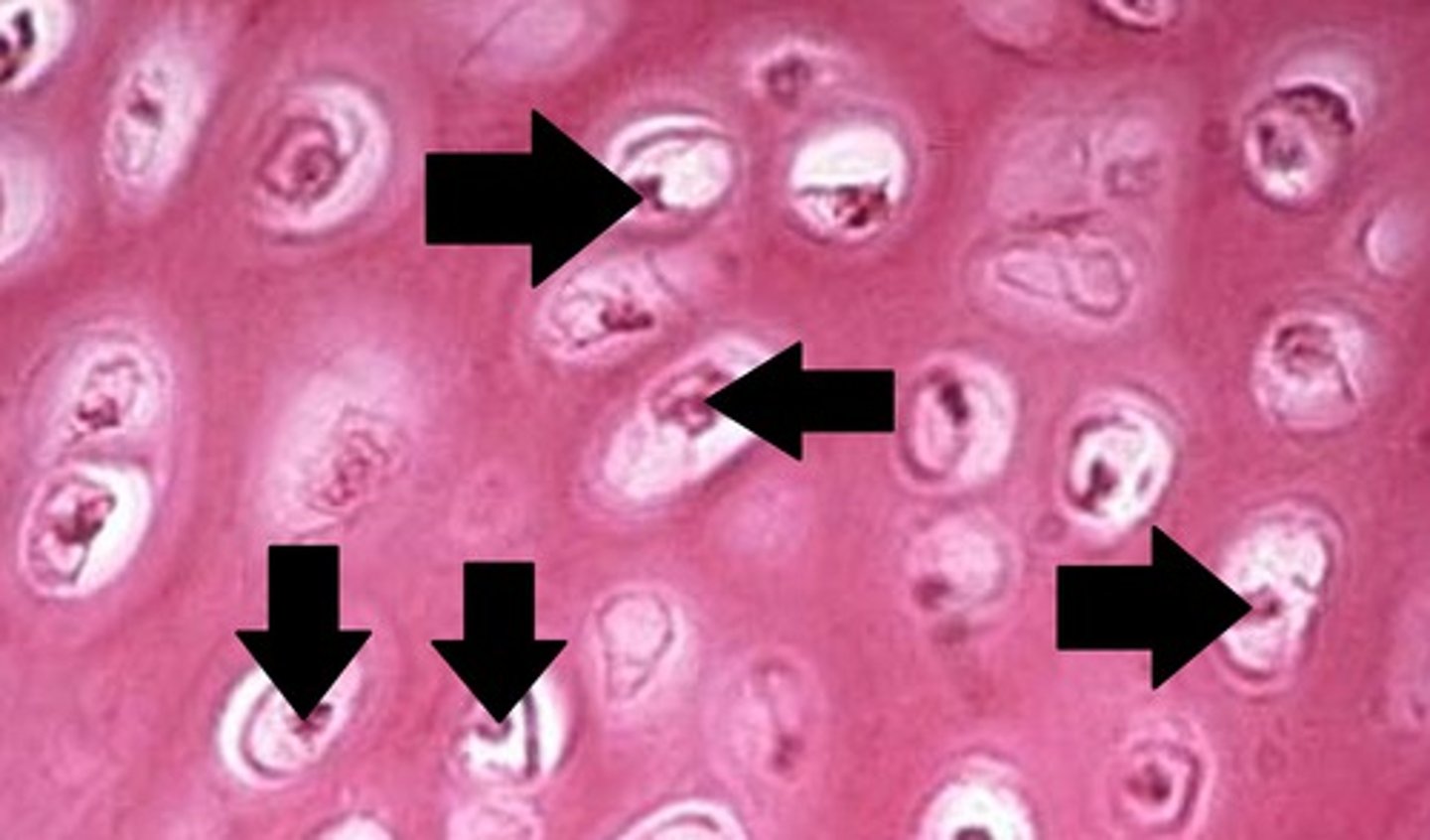
chondrocytes
cartilage cells
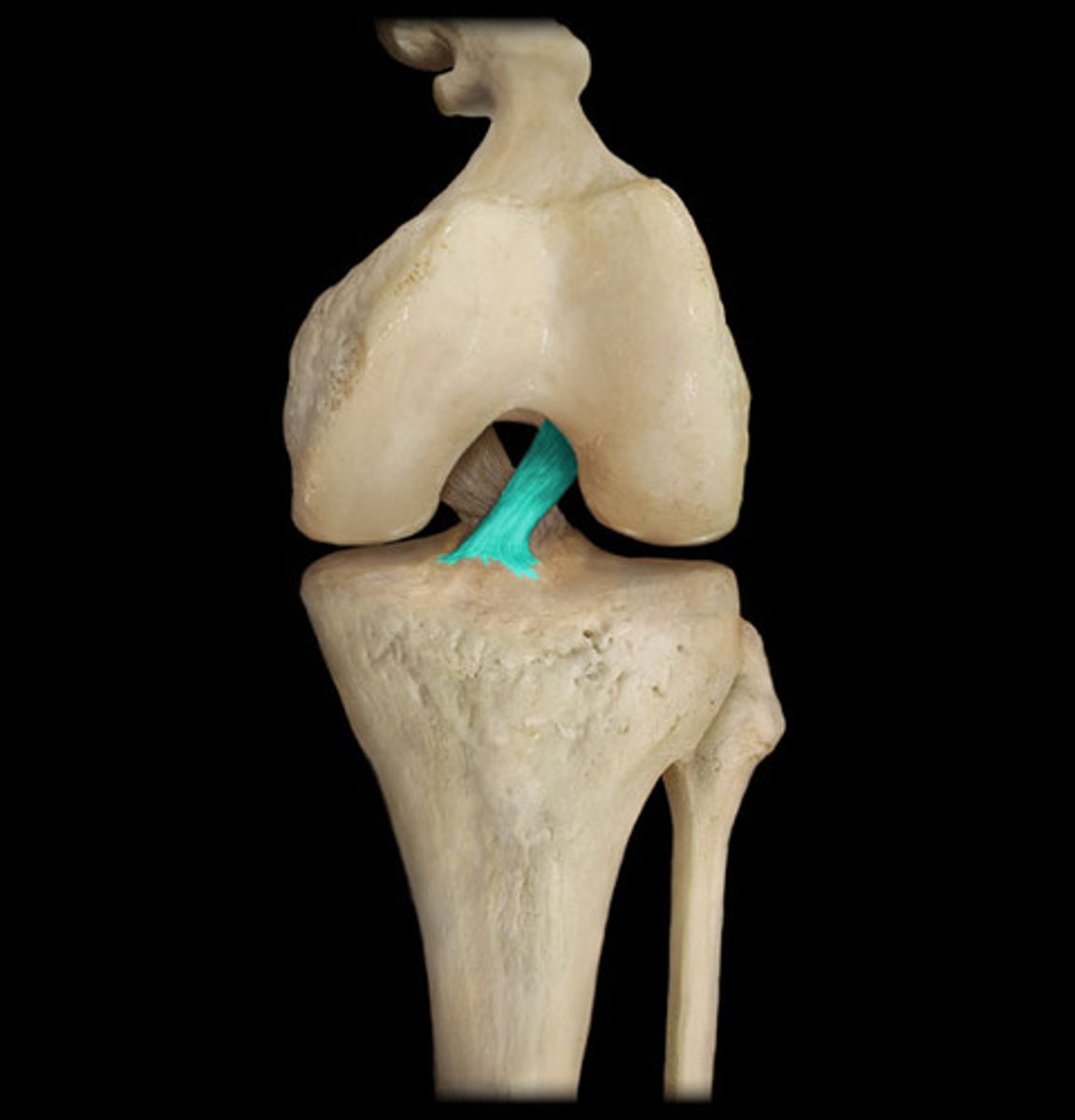
ligaments
connect bone to bone
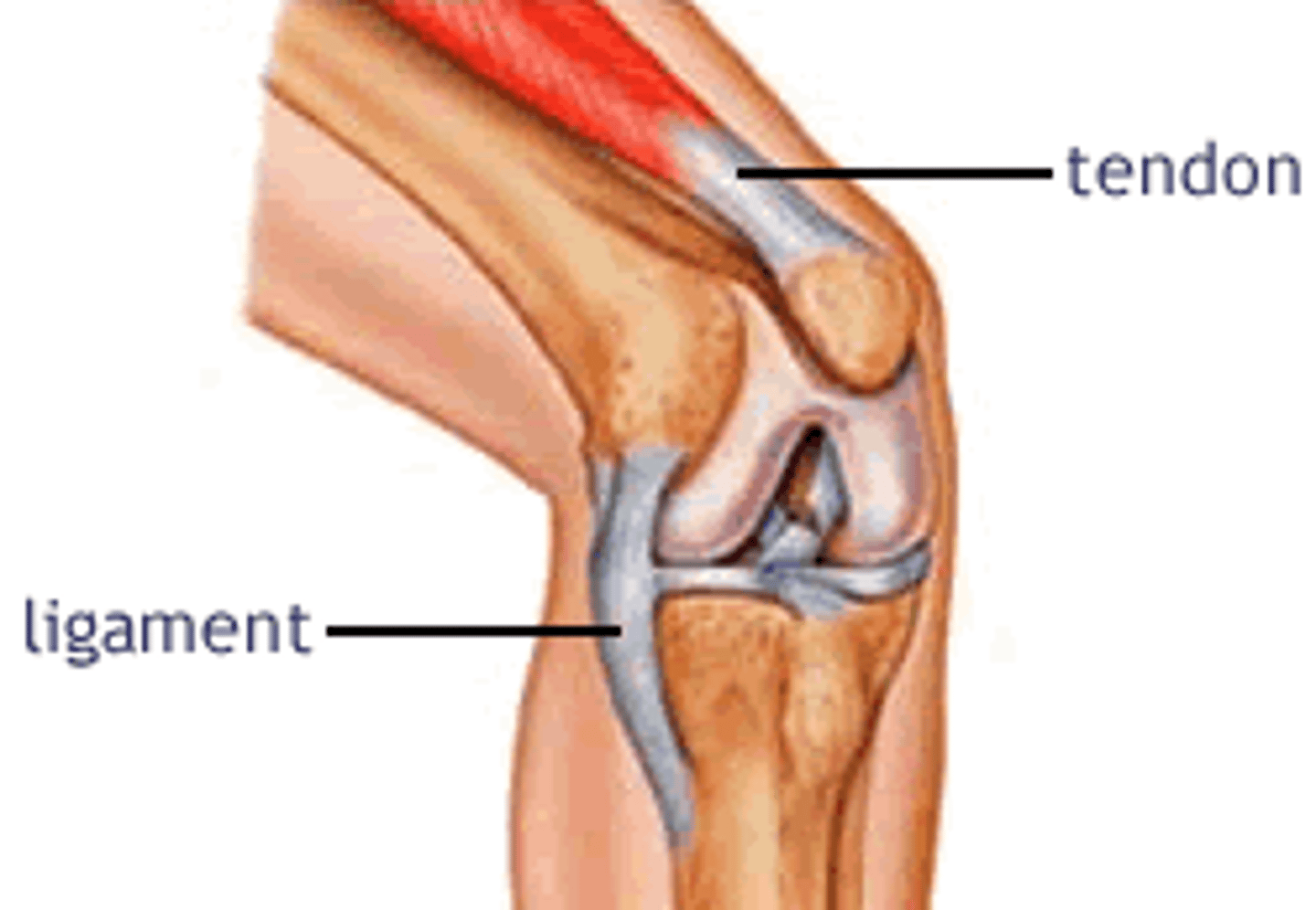
tendons
connect muscle to bone
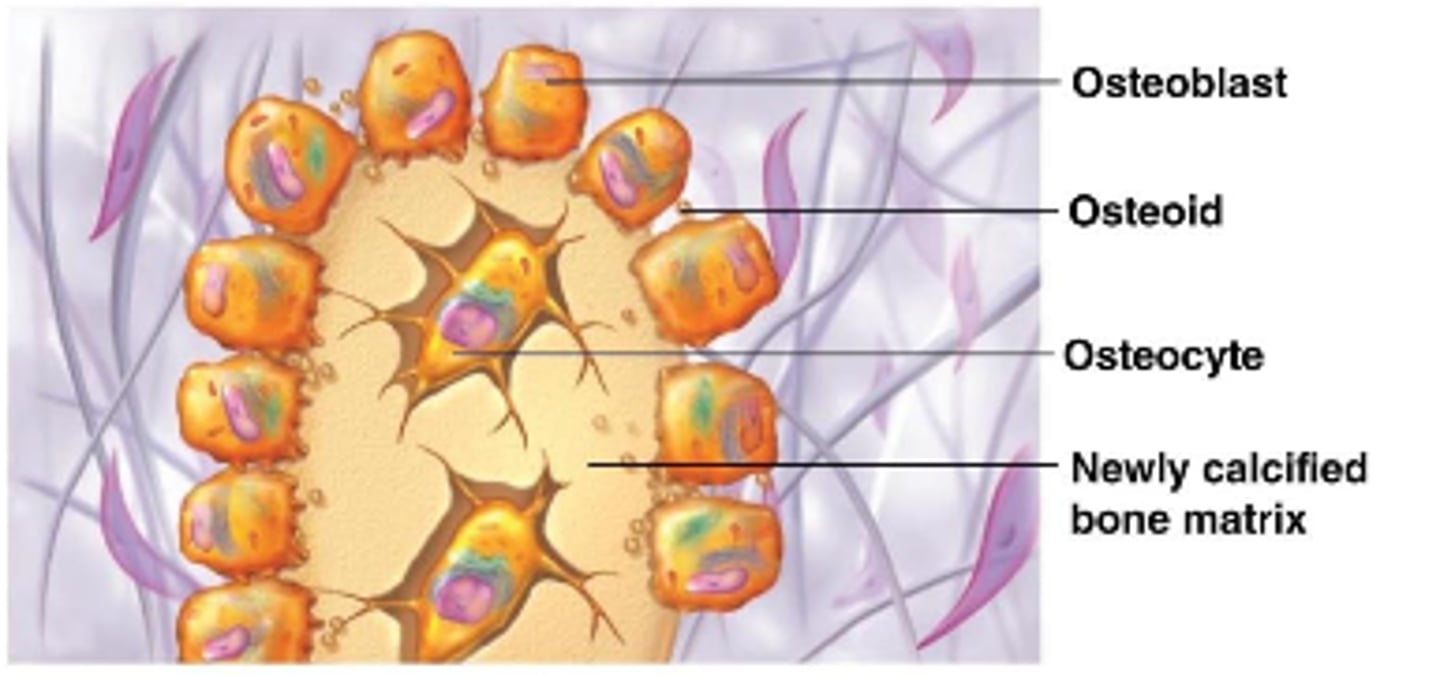
osteoblasts
cells that secrete calcium mixture
- become osteocytes
- bone builders
- secrete organic mix of bone
- grab calc & phos from blood
osteoclasts
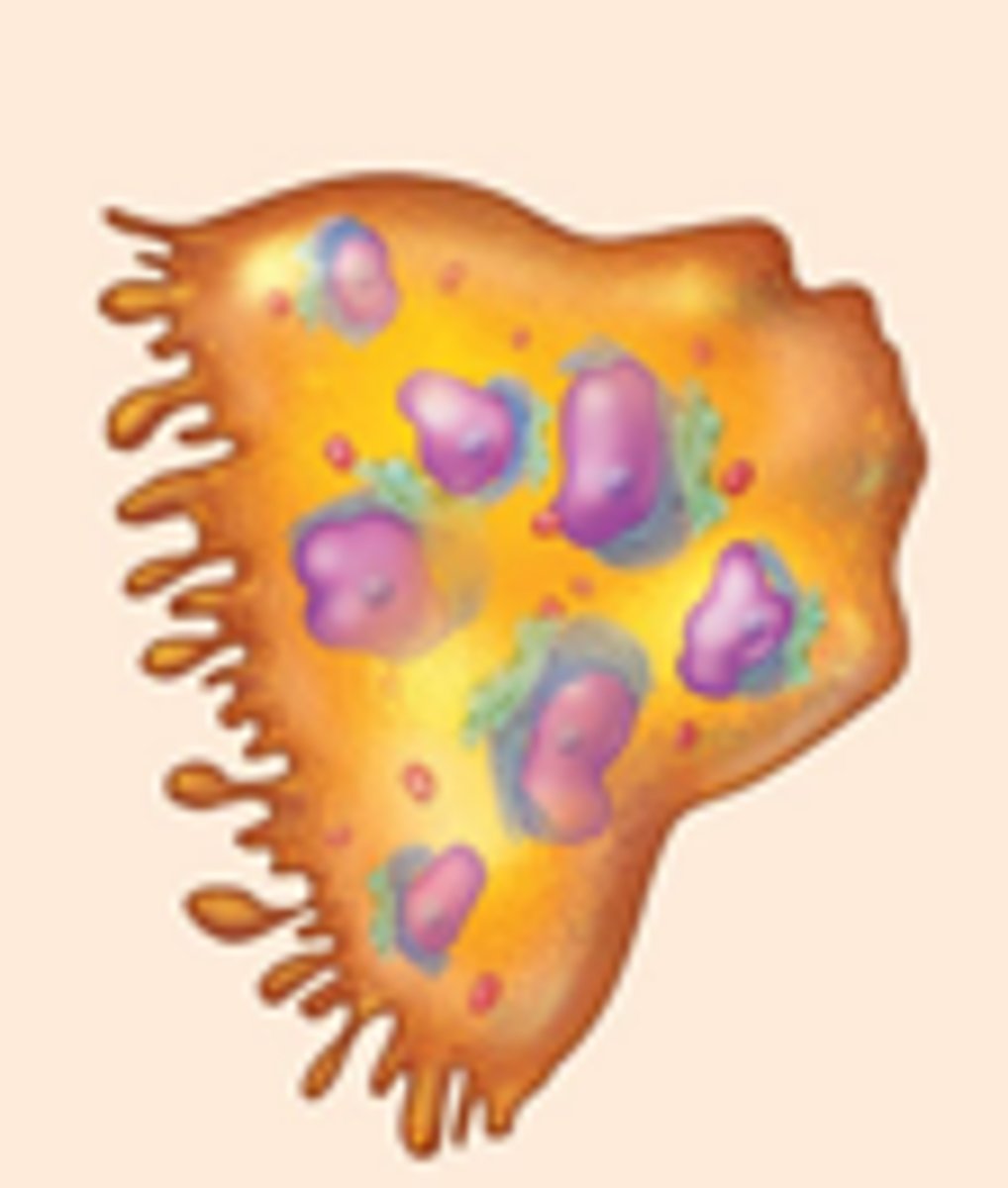
multinucleate bone eating cells
- bone chewers
- secret acid
- send cal and phos into blood
ossification
formation of bone
- intramembranous ossification (night before)
- endochondral ossification (rough draft)
epiphyseal (growth) plate
- band of cartilage
- how long bones grow
hormone
internal chemical messenger
- how organs communicate with each other
growth hormone
- stimulates growth plate & general bone growth
- gigantism & acromegaly
- dwarfism
parathyroid hormone
- from parathyroid
- increased osteoclast activity
- increased blood cal levels
calcitonin
- from thyroid
- increased osteoblast activity
- decreased blood cal levels
remodeling
changes to bone based on stress
- size, shape, strength
osteroporosis
-bone density increases until 20-30s
- stays the same between 40-50s
- after 50s decreases in bone density (brittle bones)
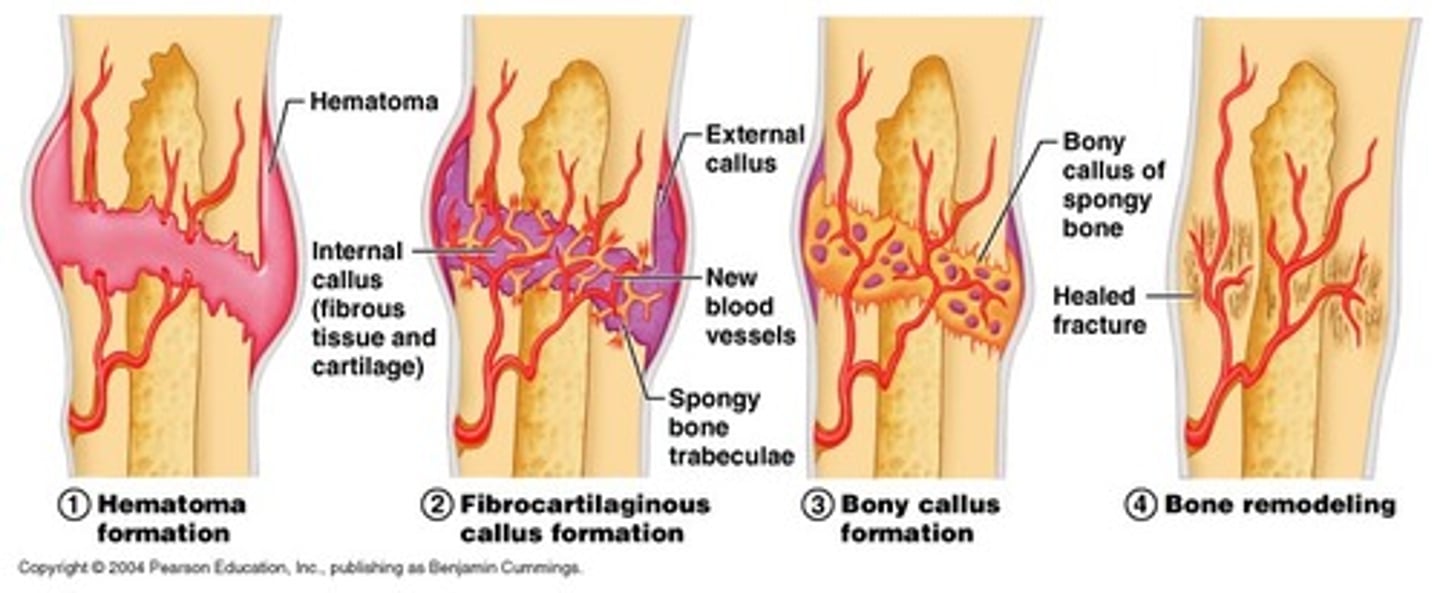
bone repair
the repair process of a fractured bone
origin
more fixed/stationary point of bony attachment
- start of the muscle
insertion
more moveable point of attachment to bone
- the end of muscle
- OVER A JOINT
prime mover
the one muscle that does most of the work
synergist
helps the prime mover
- making it more effective
antagonist
has actions that oppose the prime mover
- can only pull on a bone
- NO PUSHING
DOMS
delayed onset muscle soreness
- soreness/stiffness 12-72 hrs after exercise
- cause is micrometers in muscle fiber
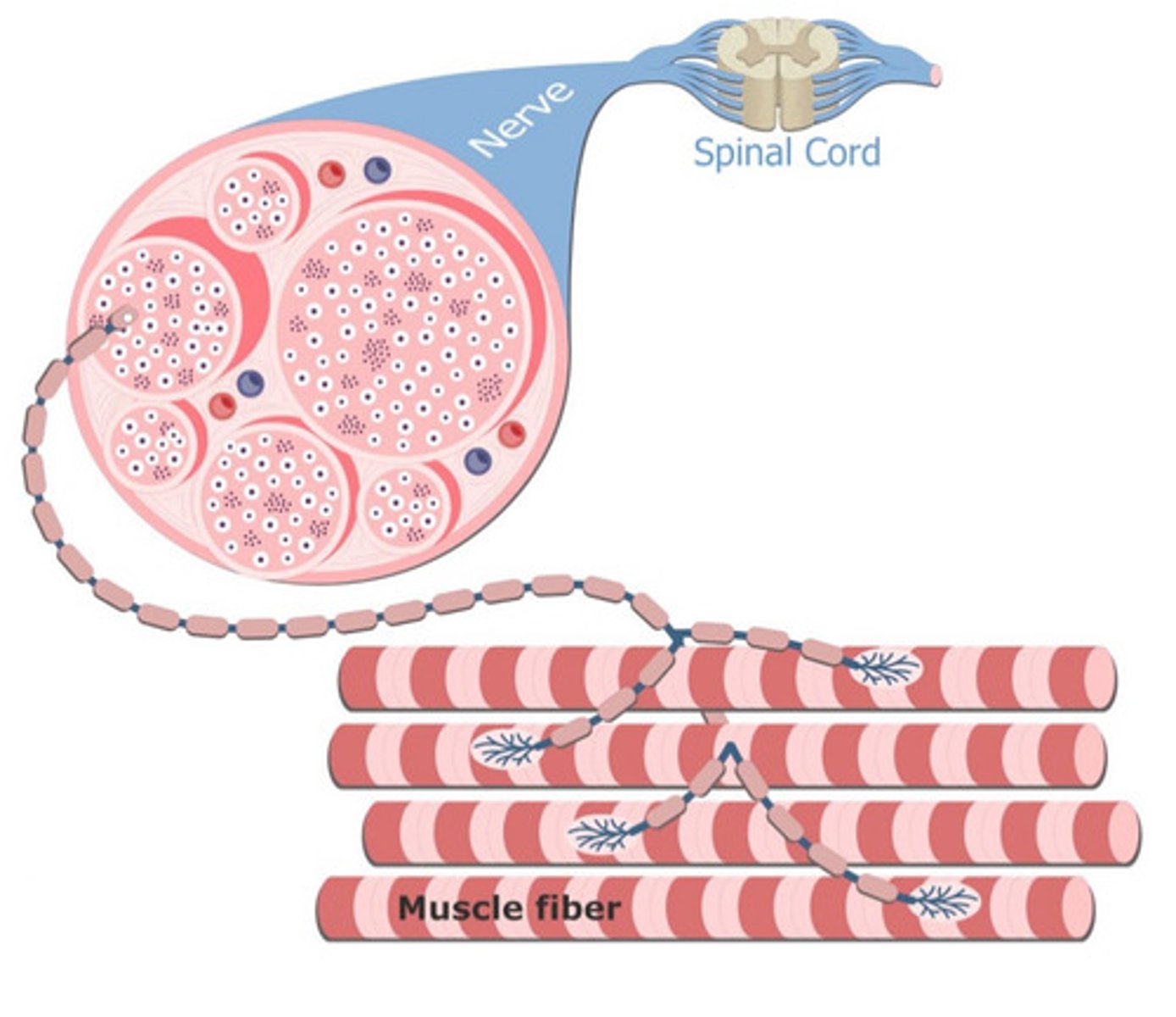
motor neuron
a neuron that specializes in movement commands
-attached to muscles & glands
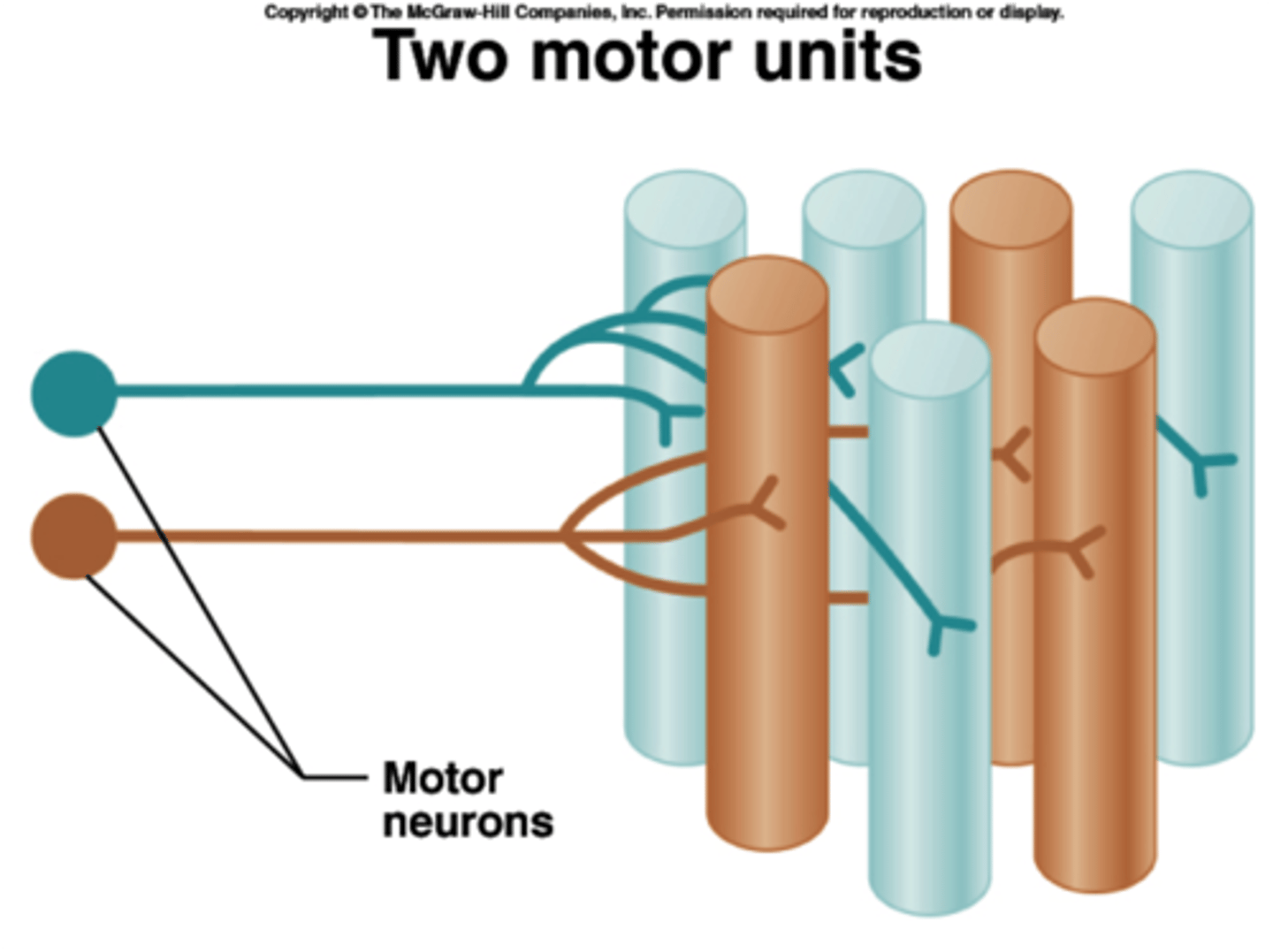
motor units
motor neuron + all muscle fibers in control
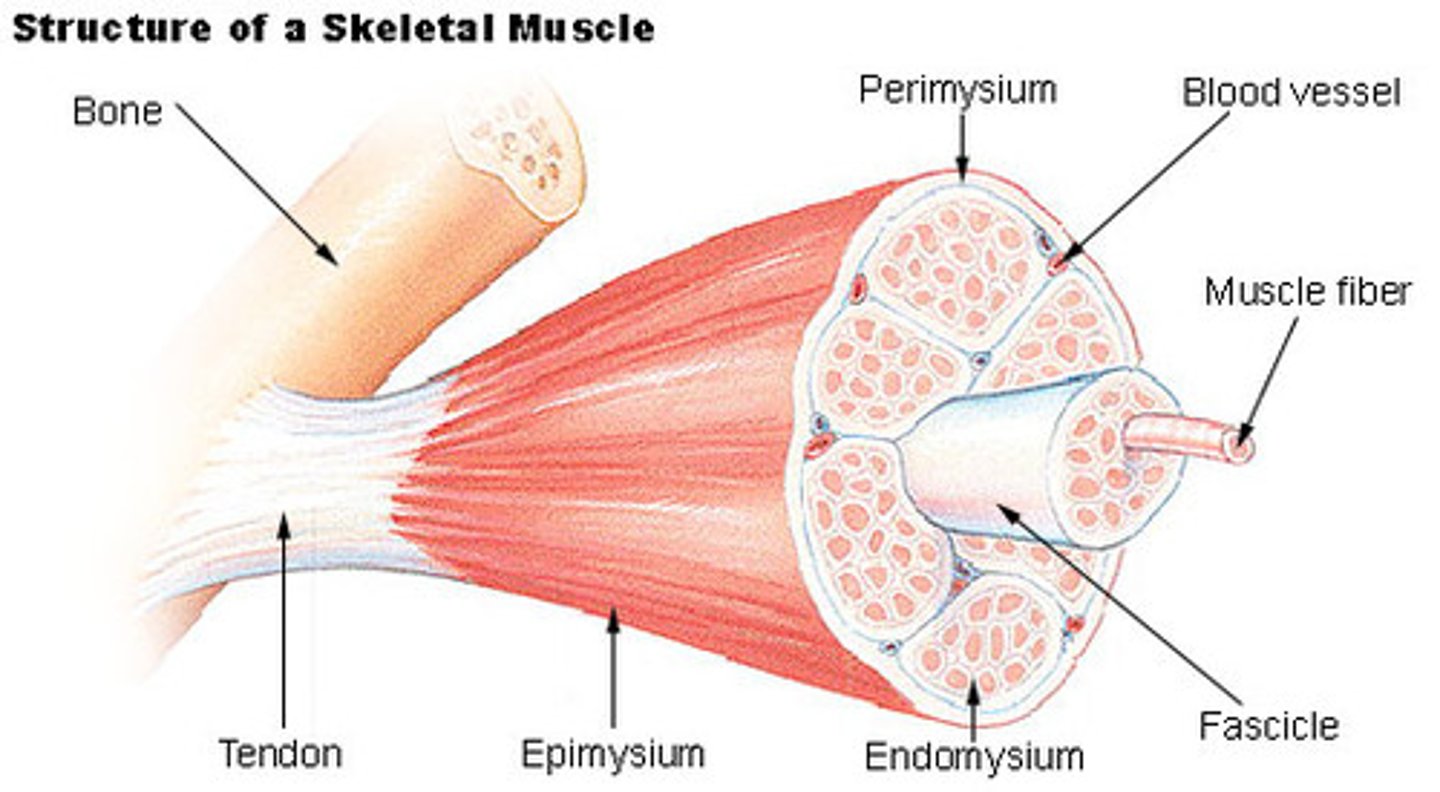
fascicle
one bundle of muscle fibers
- becomes tendon
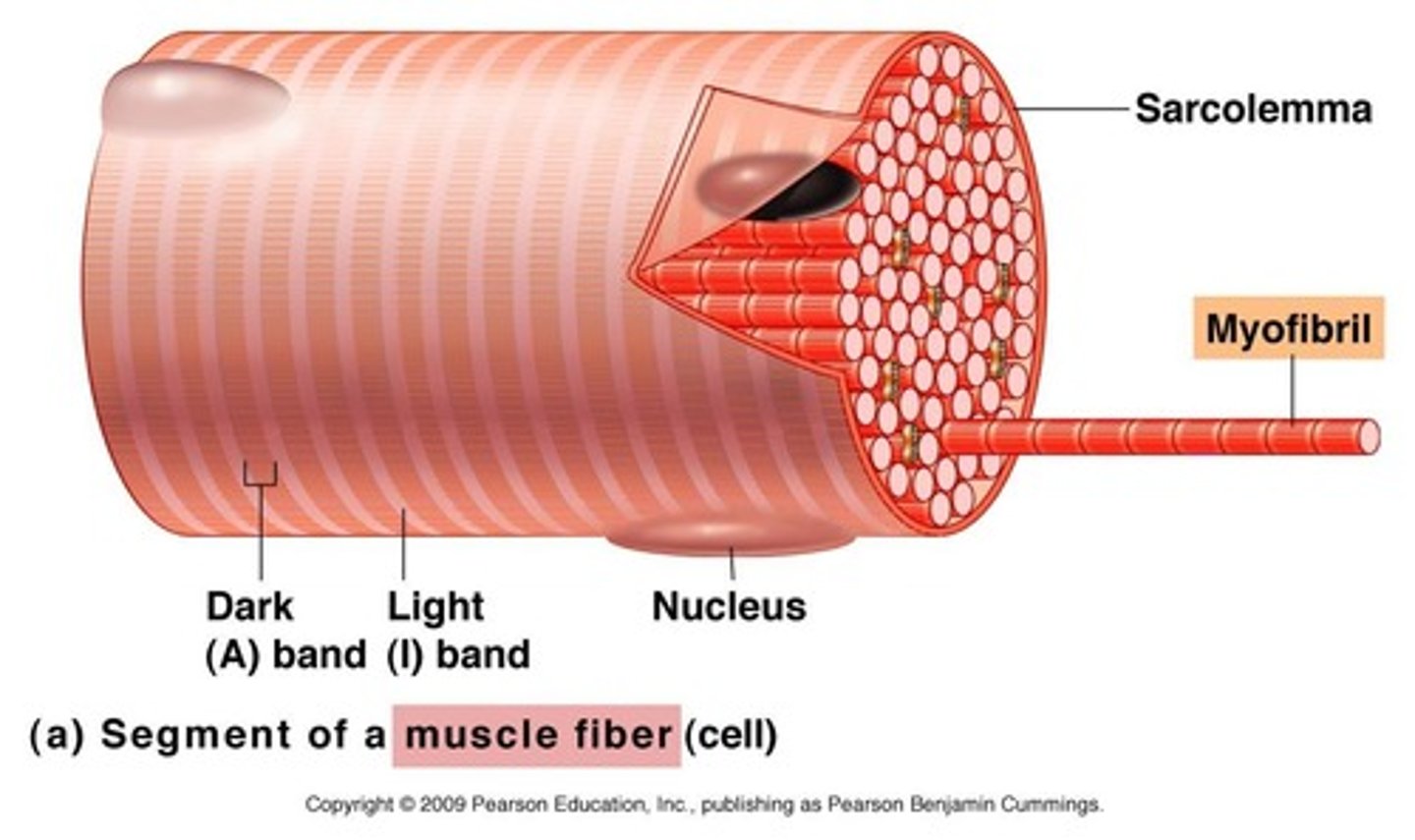
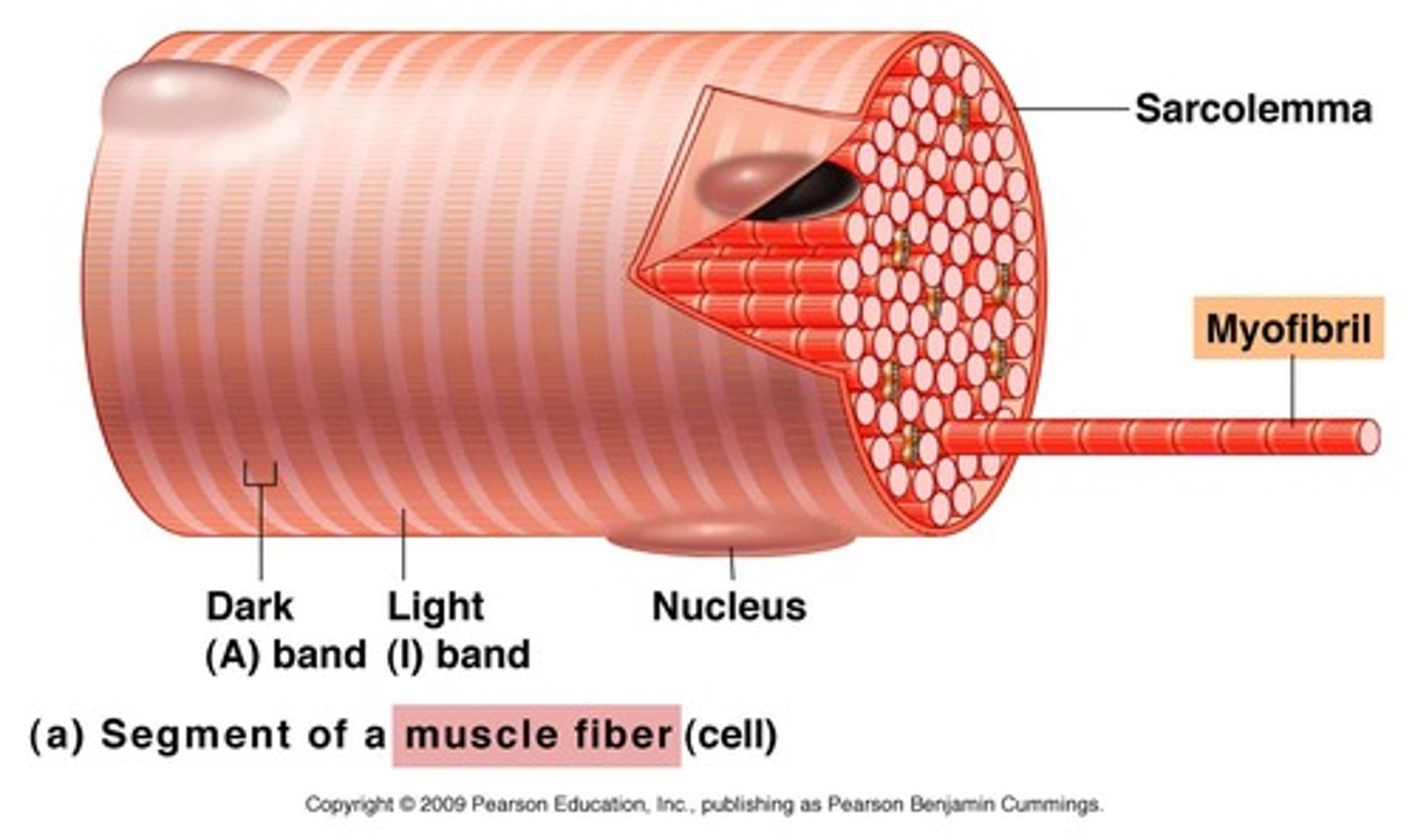
muscle fiber
muscle cell
sarcolemma
plasma membrane
sarcoplasm
cytoplasm
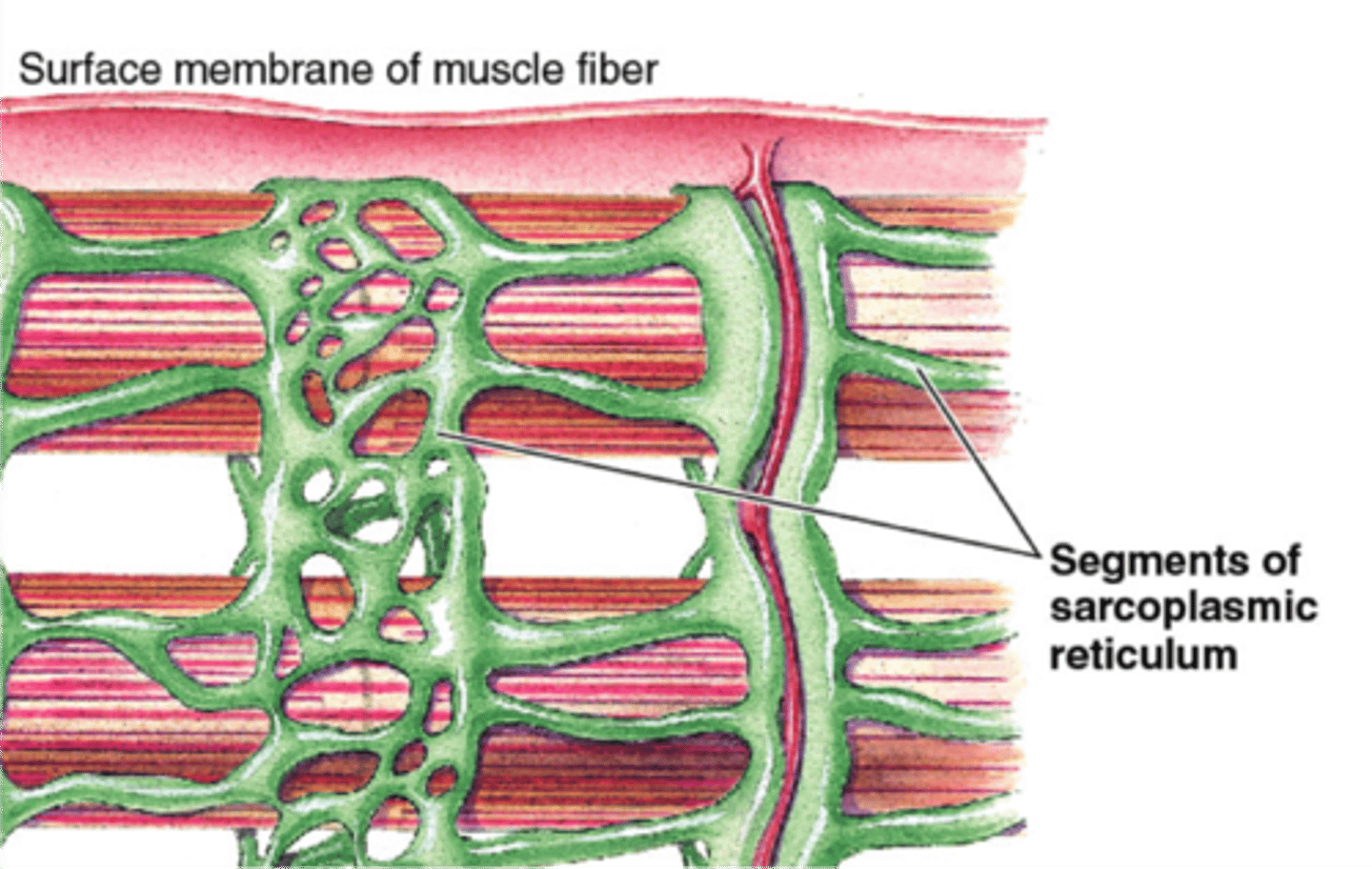
sarcoplasmic reticulum
endoplasmic reticulum
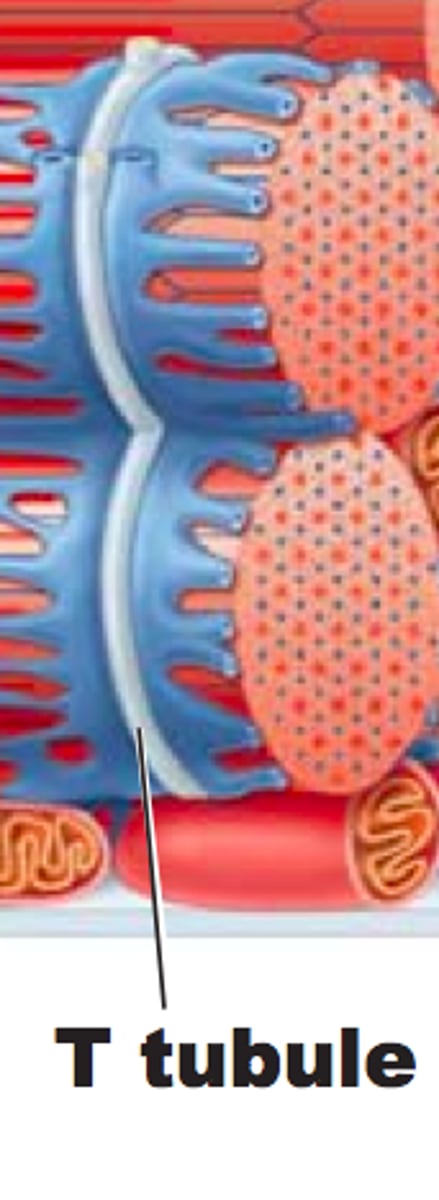
T tubules
a deep invagination sarcolemma (plasma membrane)
- helps spread electrical signal
myofibril
chain of muscle cells (fibers)
- striated
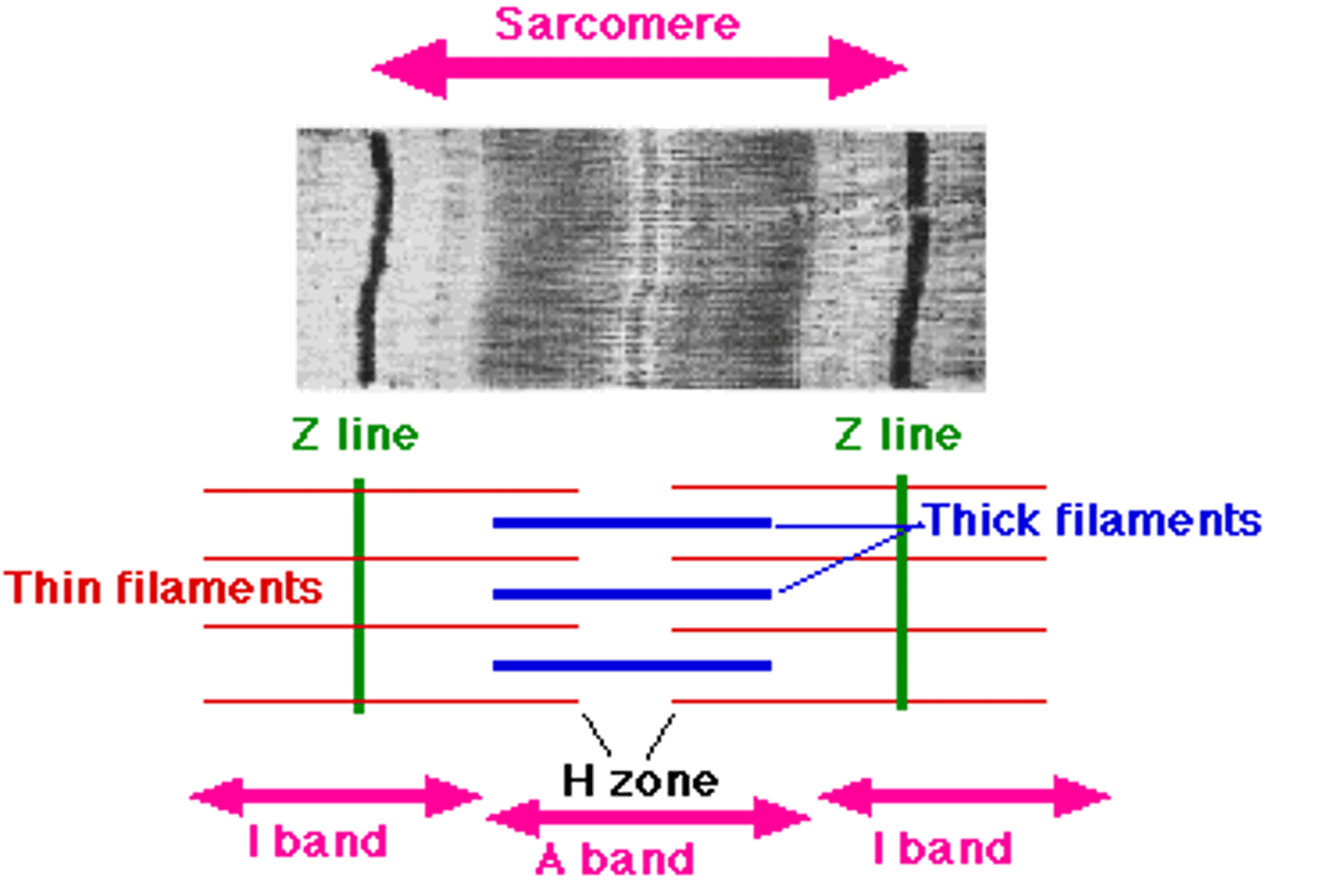
sarcomere
functional unit of skeletal muscle
- z line to z line
- when muscle contracts, sarcomere length shortens
myofilaments
proteins that make up the sarcomere
- made up of myofibrils
- actin & myosin
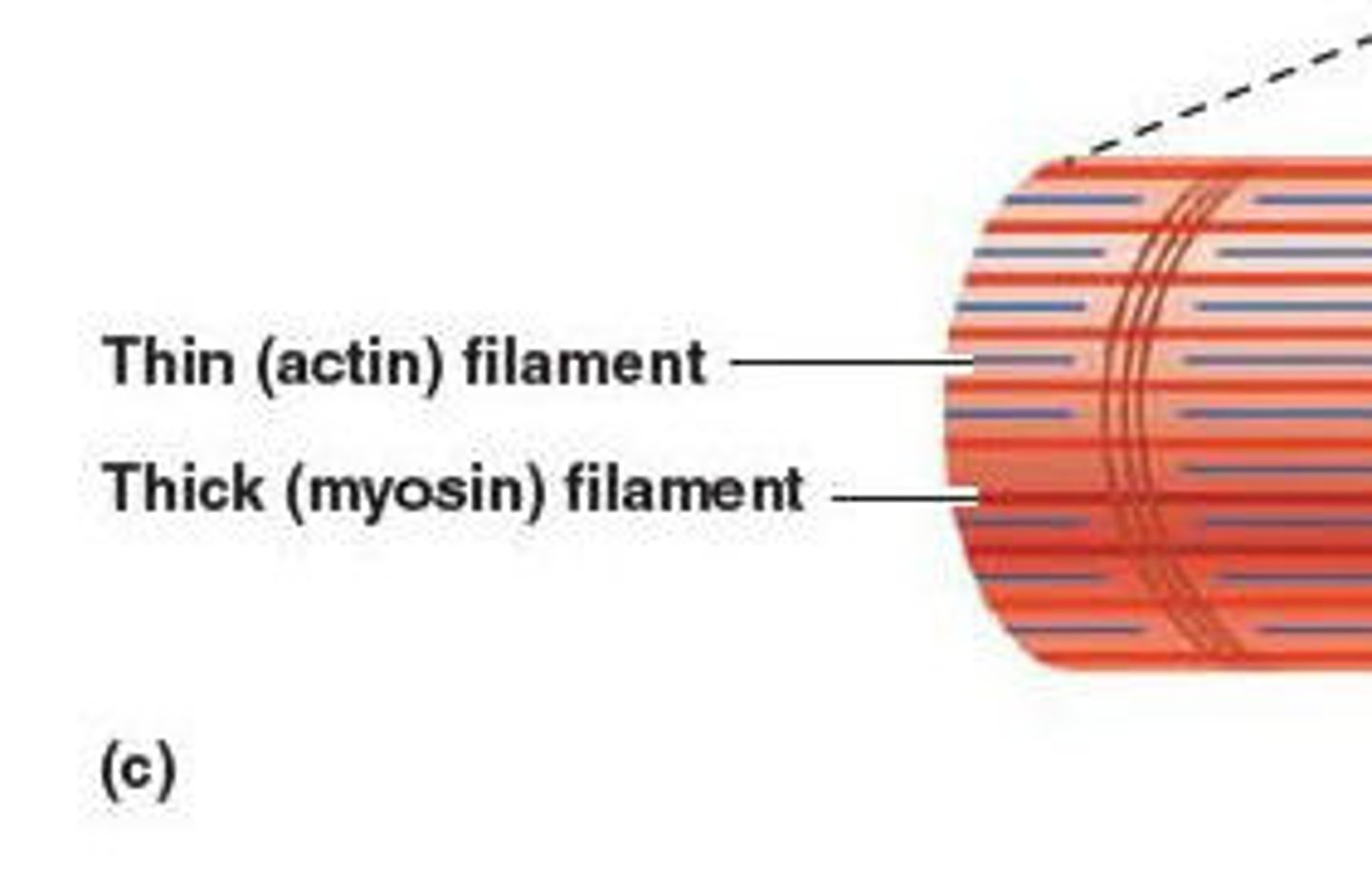
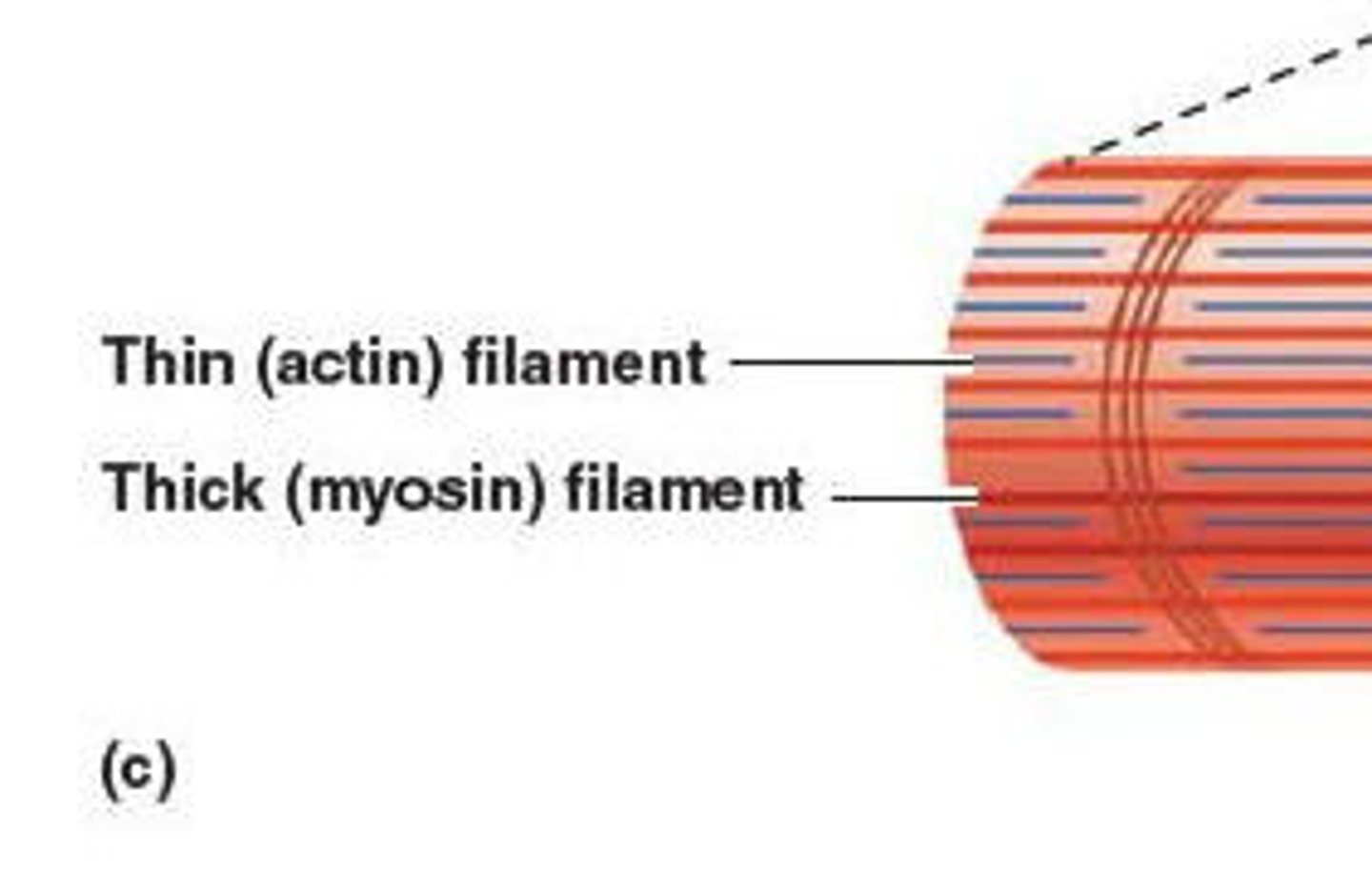
myosin
thick filaments
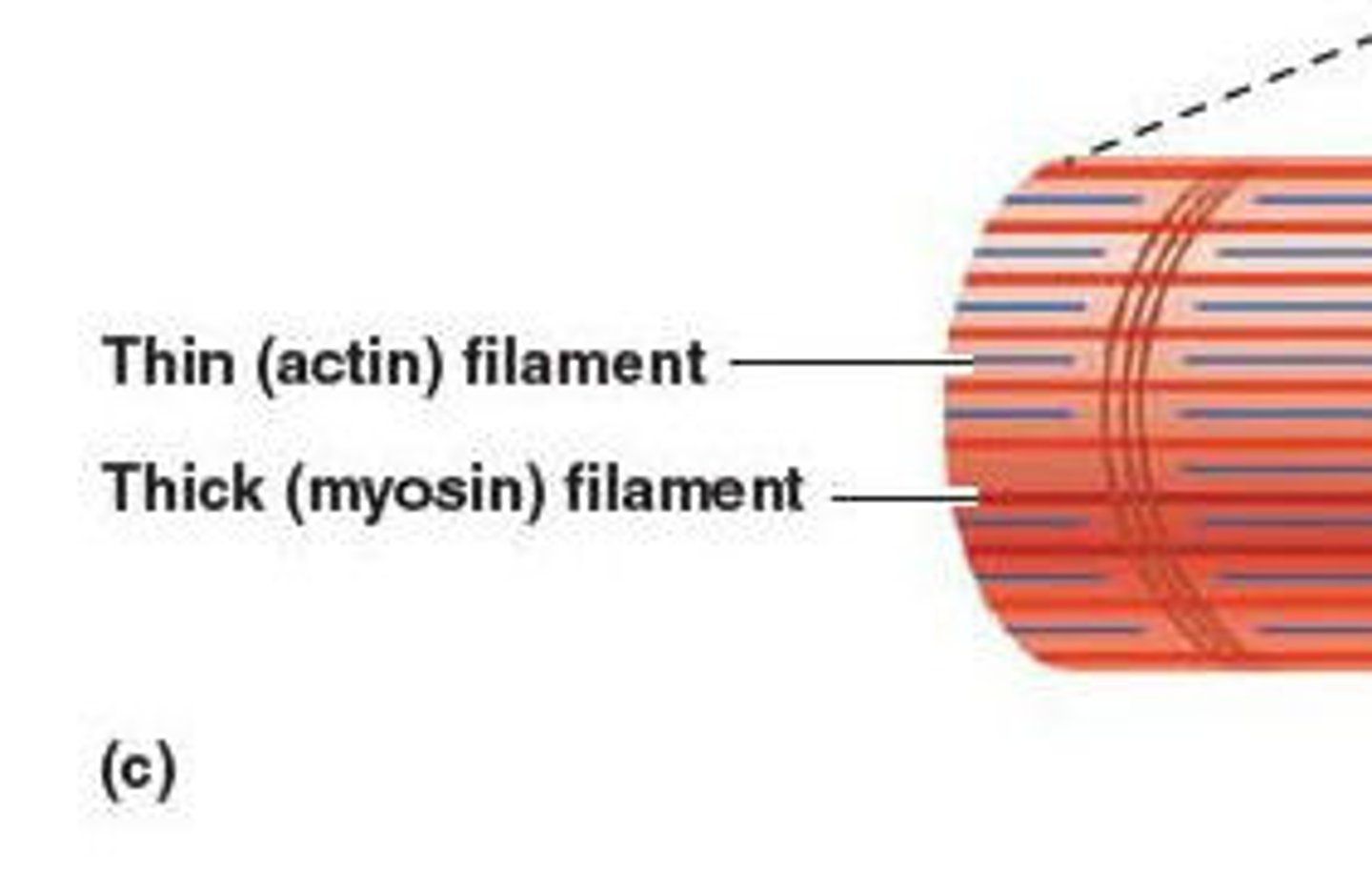
actin
thin filament
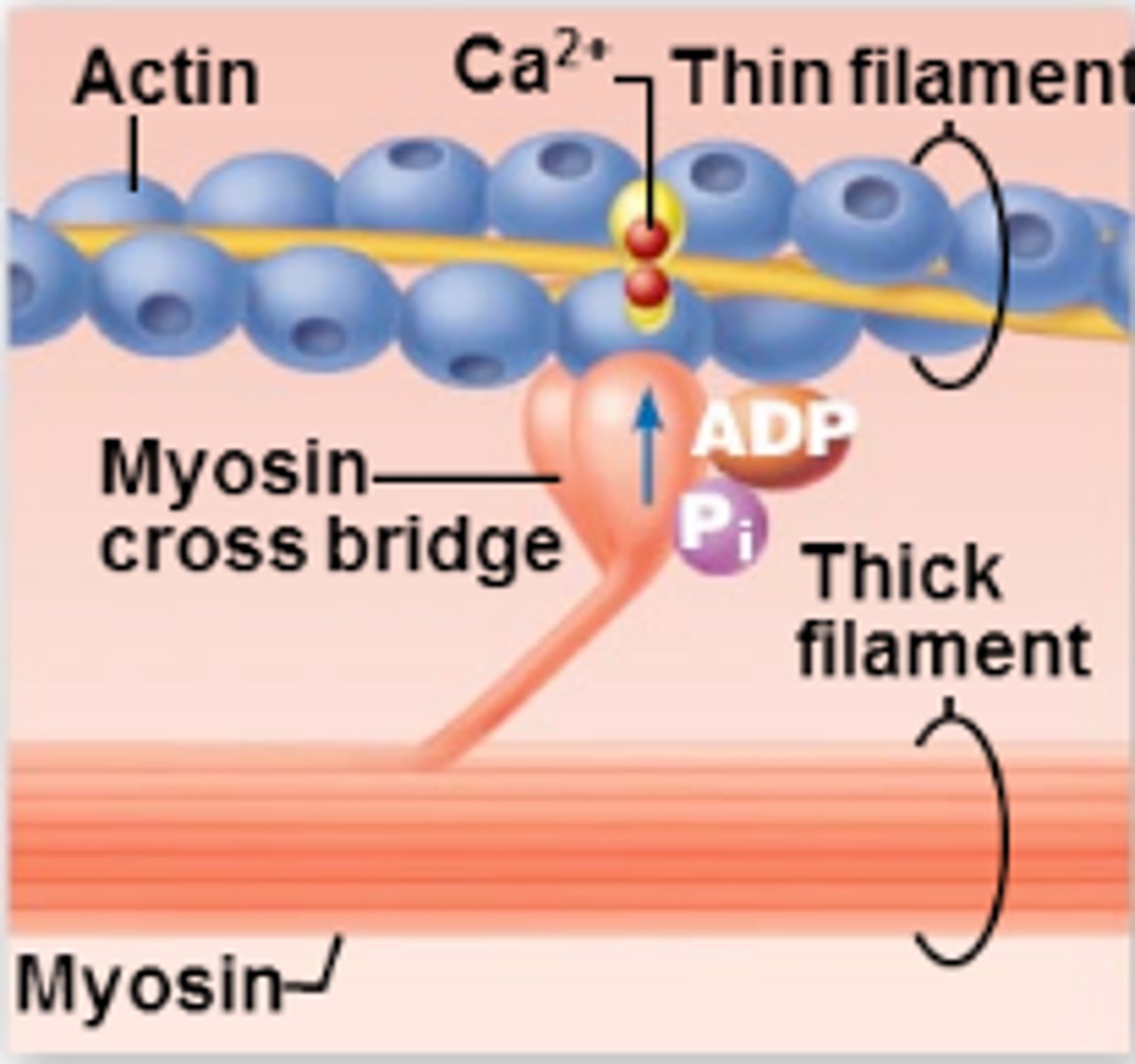
cross-bridge
when the myosin head attaches to the actin
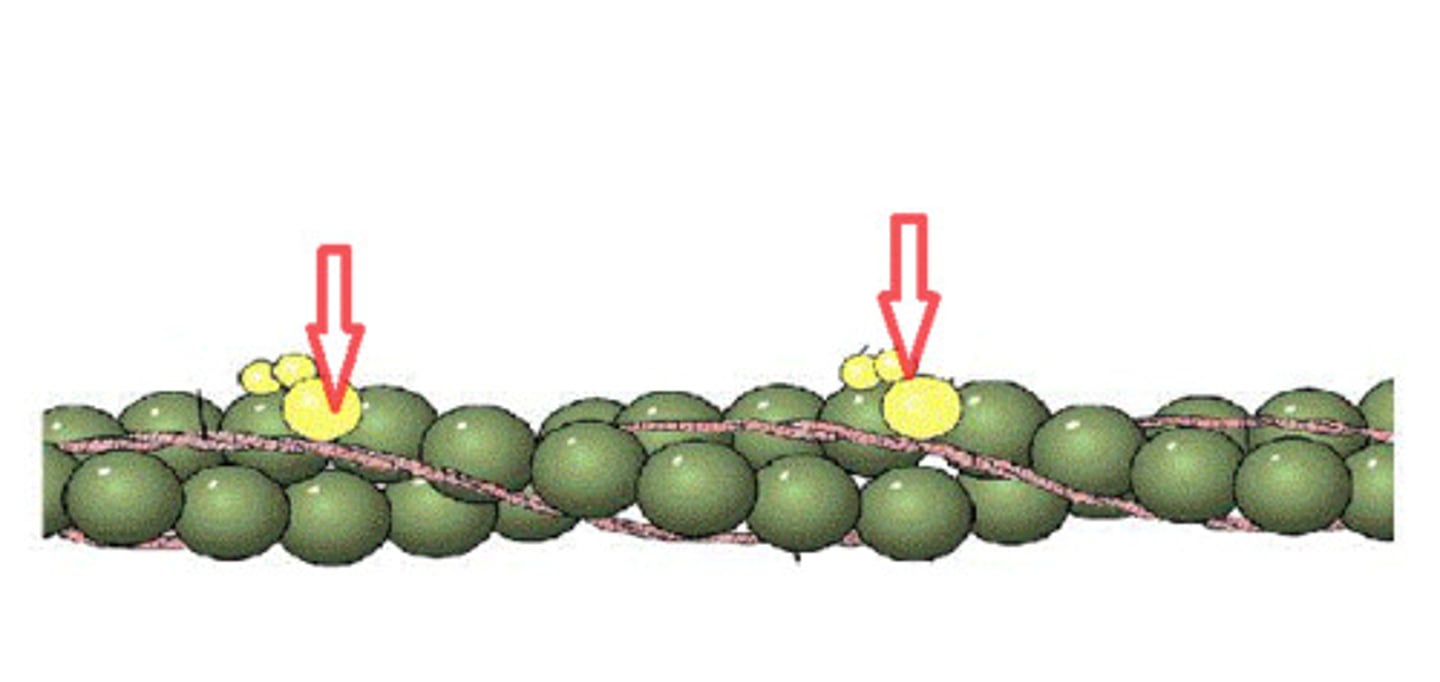
tropomyosin
thin looking protein attached to actin
- prevents myosin from attaching
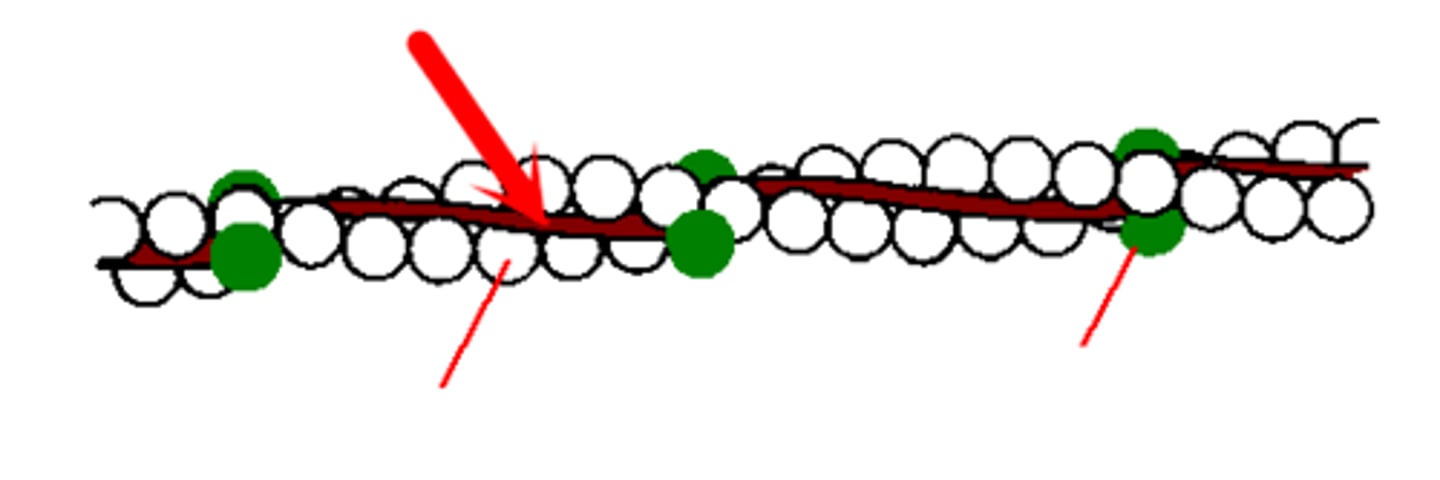
troponin
protein that attaches to the tropomyosin
-has binding site for cal
cramps
painful, involuntary contraction of muscle(s)
- usually caused by fatigue or low electrolytes
rigor mortis
a stiffening of the body caused by chemical changes to the muscle after death
- muscle gets stuck in the "on" or contracted position
- not permanent

fast twitch fibers
capable of 30 to 70 contractions/sec
- "white meat" (low myoglobin)
- explosive short-term energy (weightlifting)
- fatigues easily
slow twitch fibers
capable of 10 to 30 contractions/sec
- "dark meat" (high myoglobin)
- long endurance (marathons)
- doesn't fatigue easily
CNS (central nervous system)
brain and spinal cord
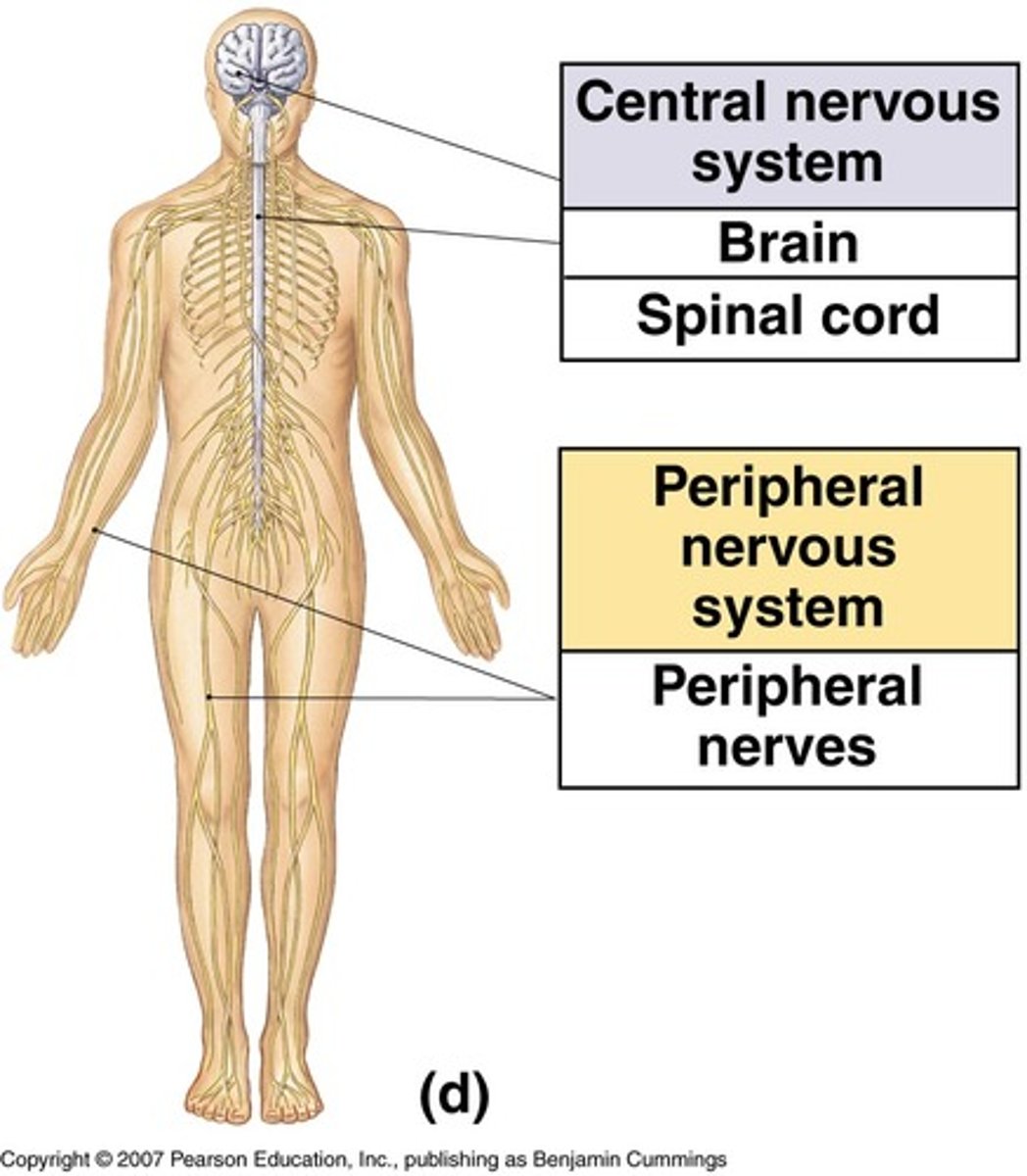
PNS (peripheral nervous system)
nerves
- sensory division
- motor division
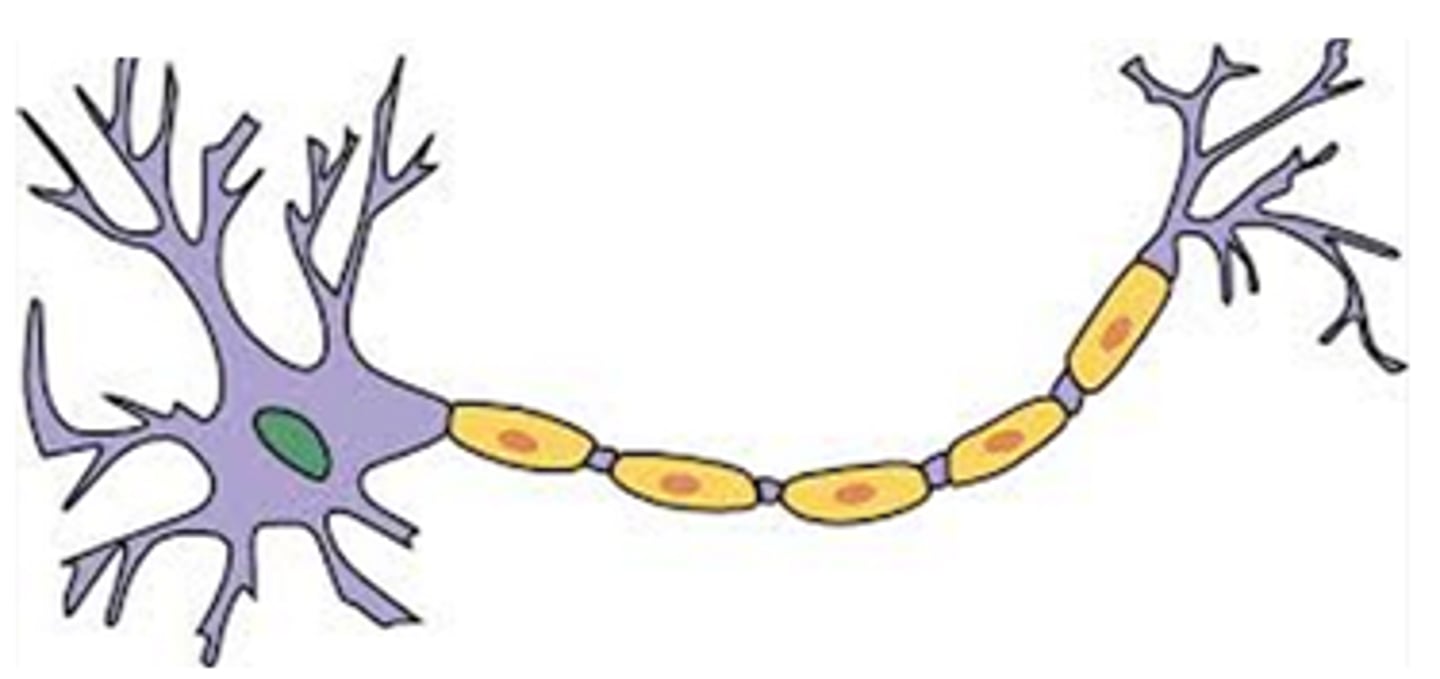
neuron
nerve cell
- transmits impulses
- ~20% of nervous system
neuroglia
supportive cells
- supports & protects neurons
- NO TRASMITTING
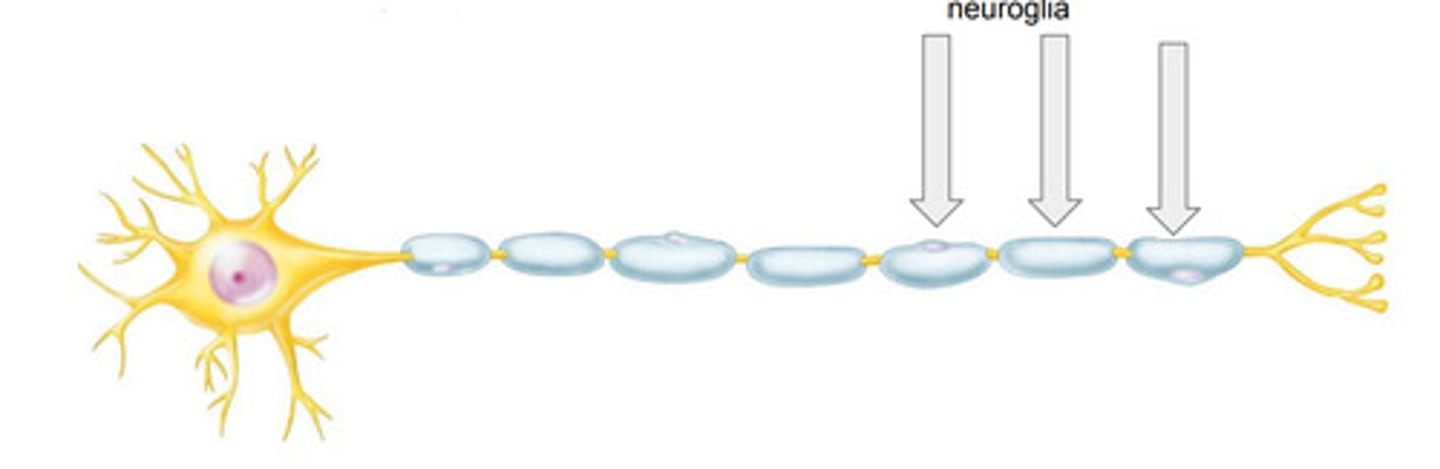
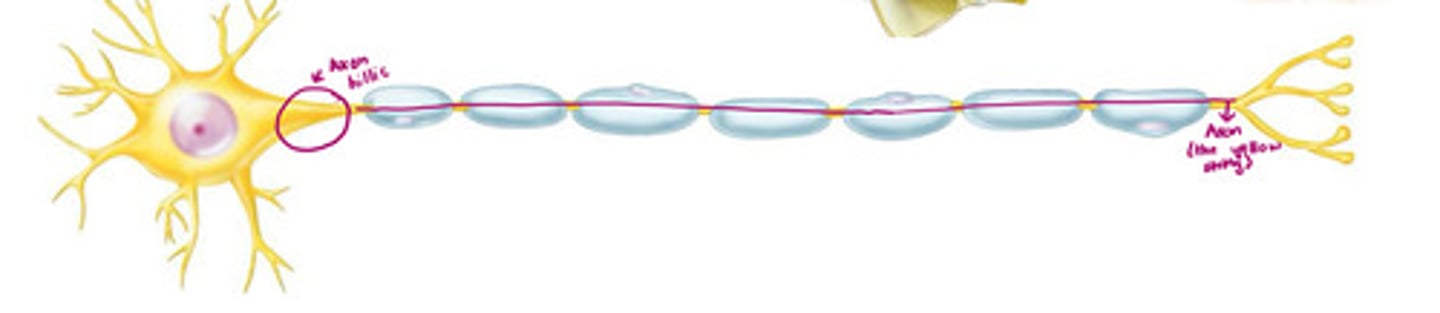
axon
extension that is specialized for conducting electrical impulses
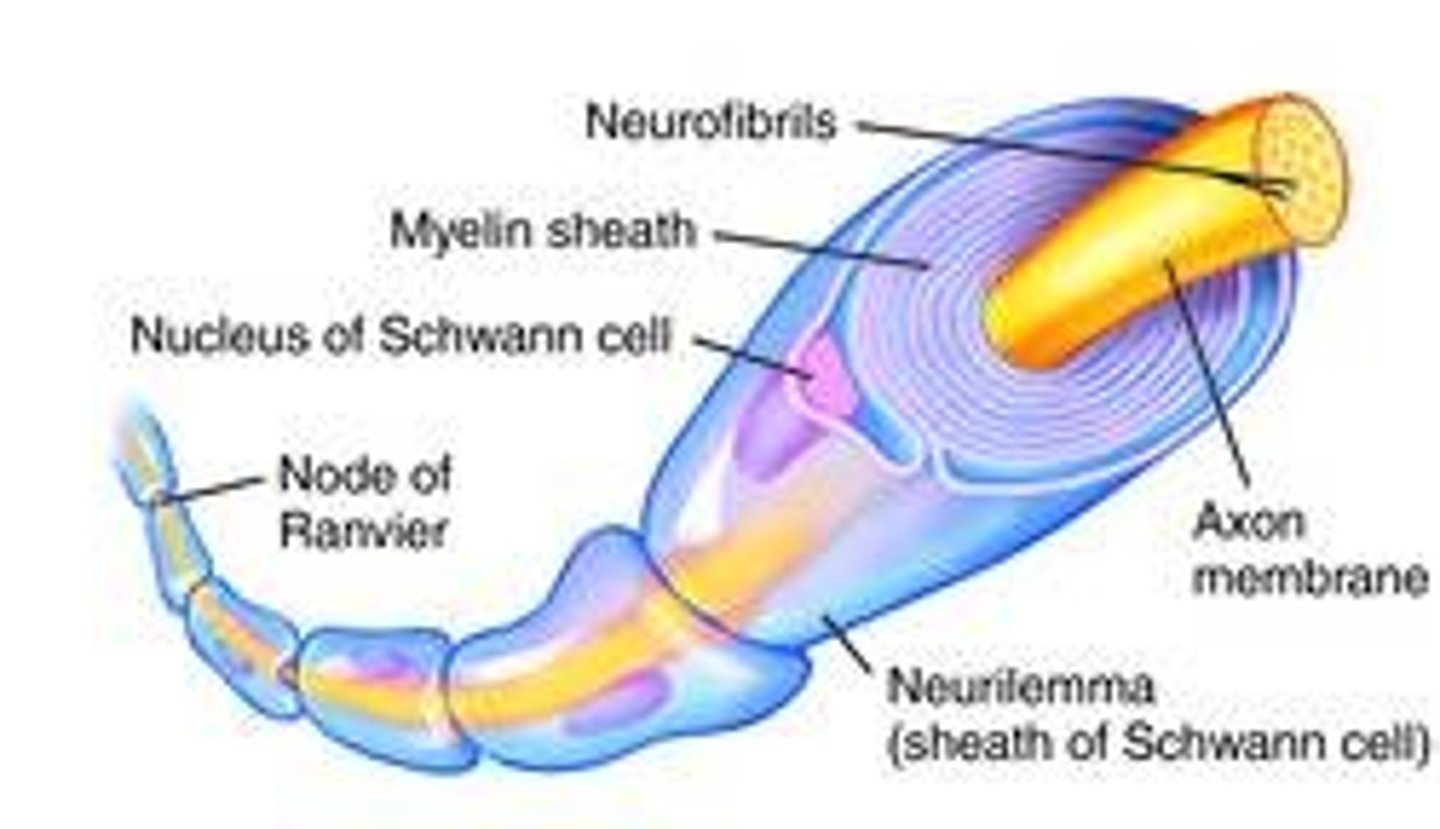
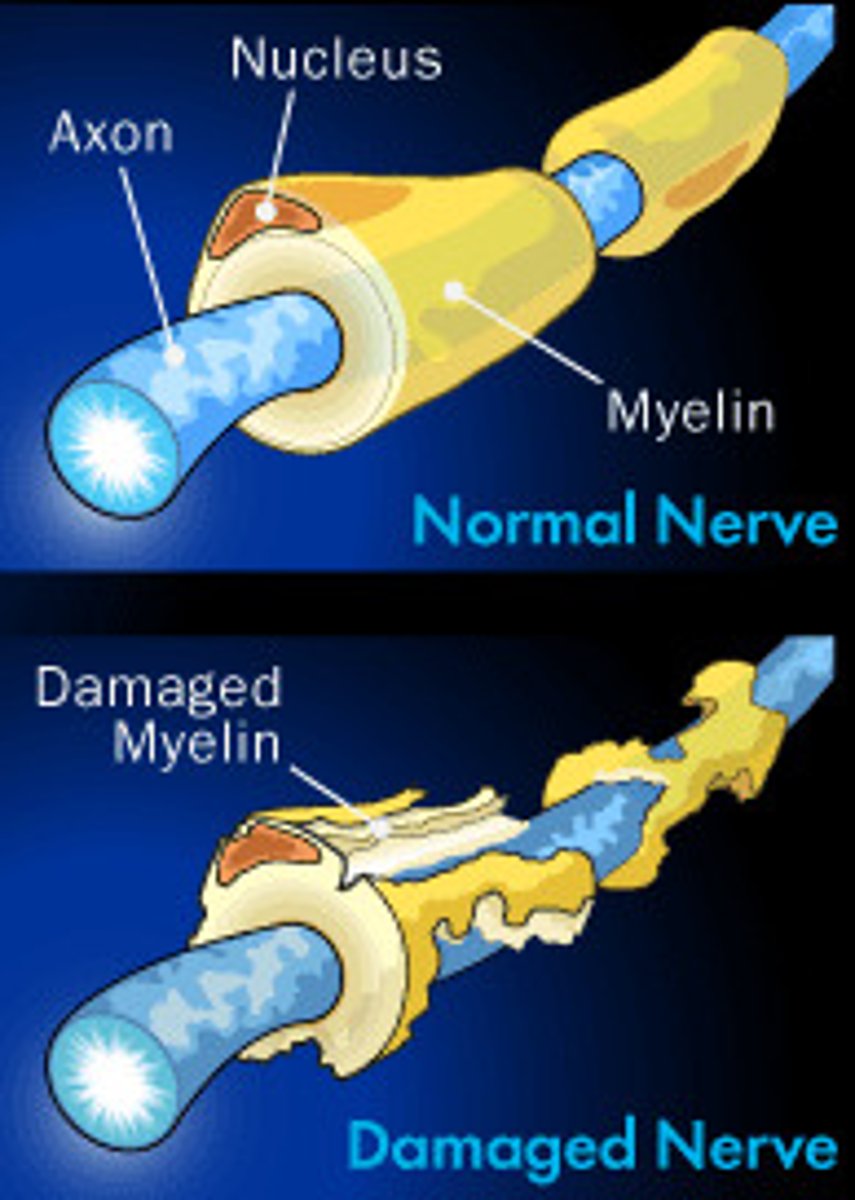
myelin sheath
fatty substance that covers the axon
- protects & insulates
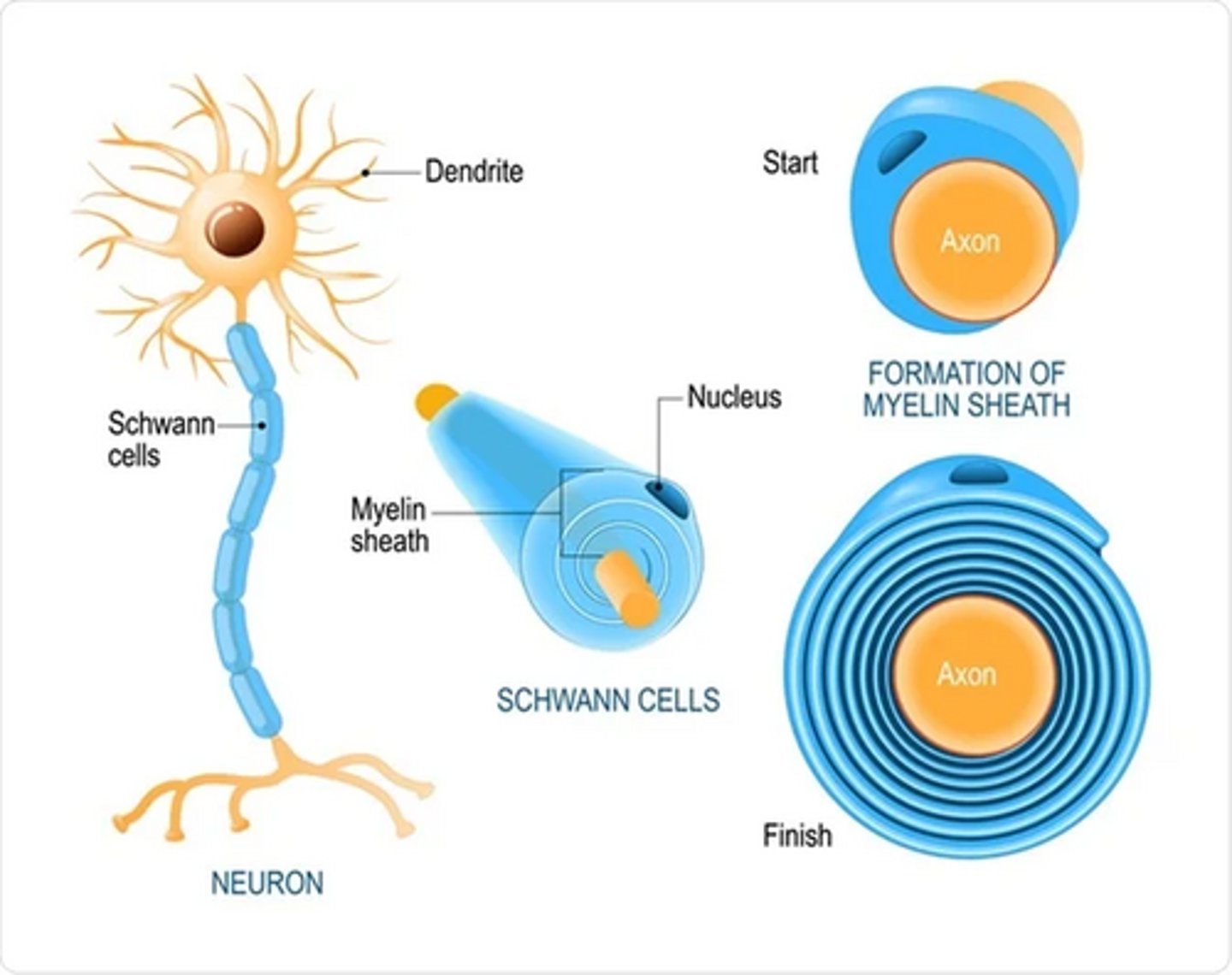
Schwann cell
a supportive (neuroglial) found in the peripheral nervous system
- makes up myelinated sheath
multiple sclerosis
- immune system attacks myelin sheaths in the CNS
- sclerosi interfere with nerve impulses
- paralysis & loss of sensation
- comes in waves, or "attacks", but gets worse
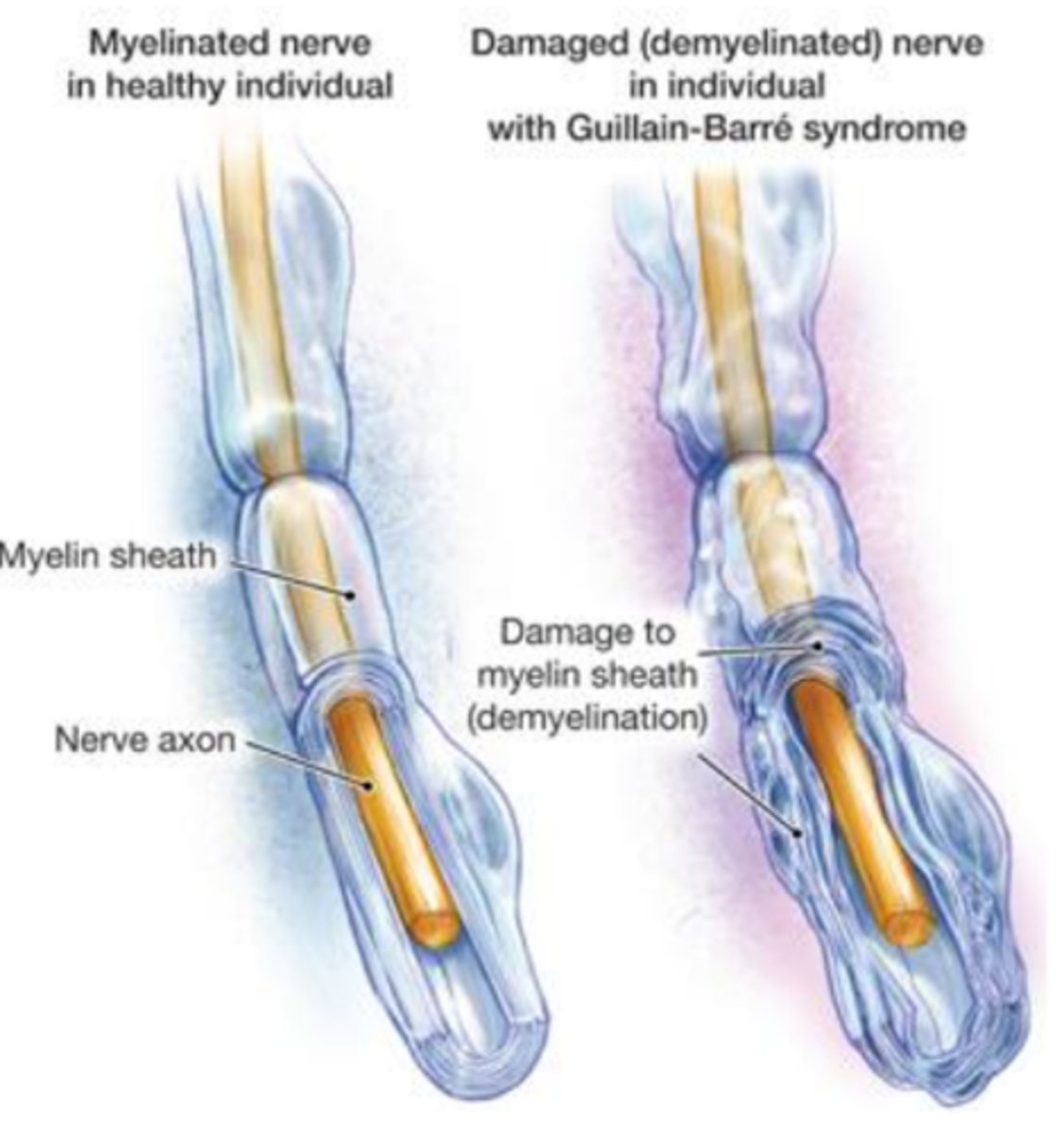
guillain-barre syndrome
- immune system attacks Schwann cells
- pain with muscle weakness
- start in feet & hands
- often spread to lungs & heart
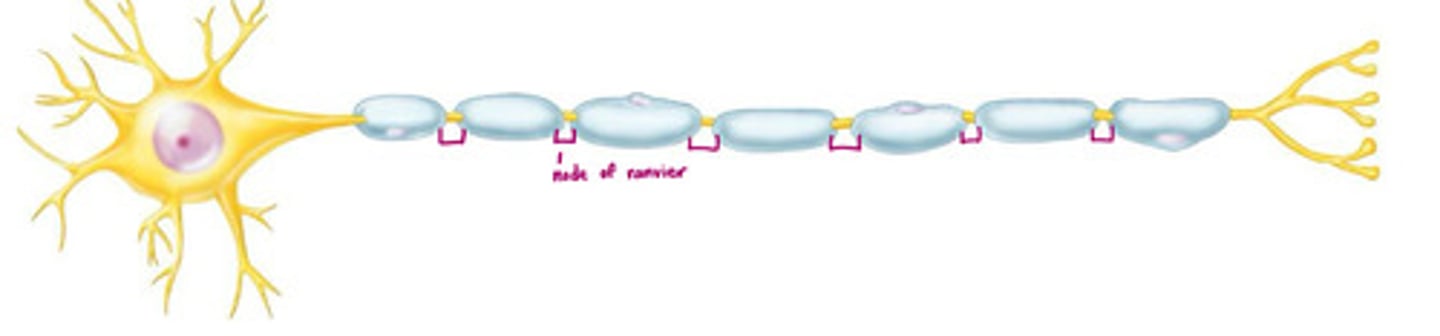
node of ranvier
gaps between Schwann cells
- filled with protein gates & pumps
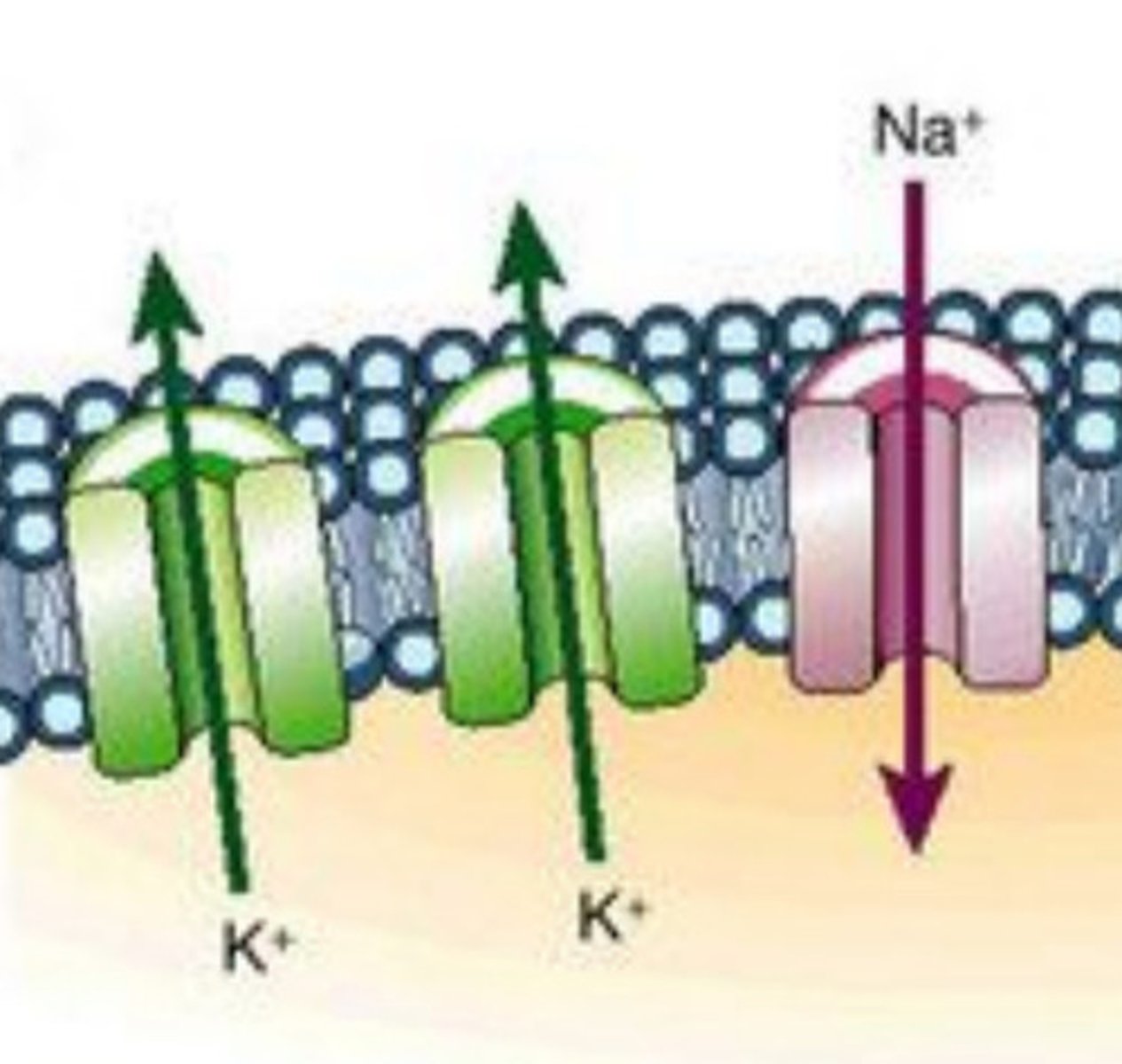
Na+/K+ ion channels
protein gates that help Na+ and/or K+ FLOW down their gradient
Na+/K+ PUMPS
uses active transport to move
- Na+ OUT of the axon
- K+ INTO the axon
- Na+, K+, or both
(think of drake pump)
saltatory conductions
impulses jump from gap to gap
- super fast conduction (250 mph)
- 5 mph with non-insulated neurons
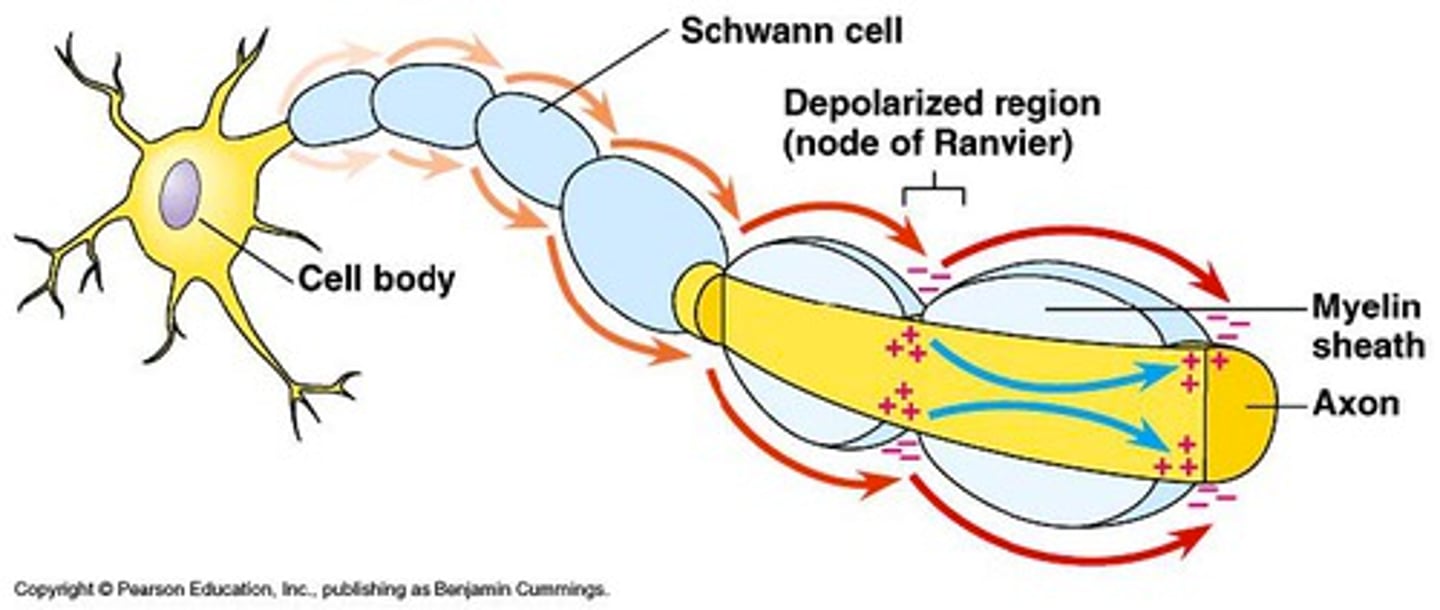
polarized
inside of axon is more negative than outside cell
action potential
an electrical impulse that is carried along neurons
- the flip flop between +/-
depolarized
no major difference in charge
hyperpolarized
membrane potential becomes more negative
refractory period
the unresponsive reset phase
- Na+ gates are unable to open
- can't go backward impulse
synapse
the junction of a neuron and another cell
- electrical (muscle!) vs chemistry (another neuron)
neurotransmitters
chemicals that carry impulses across synapses
- electric to chemical
- from a neuron to a target cell
- in axon terminal
- pre made & ready to go
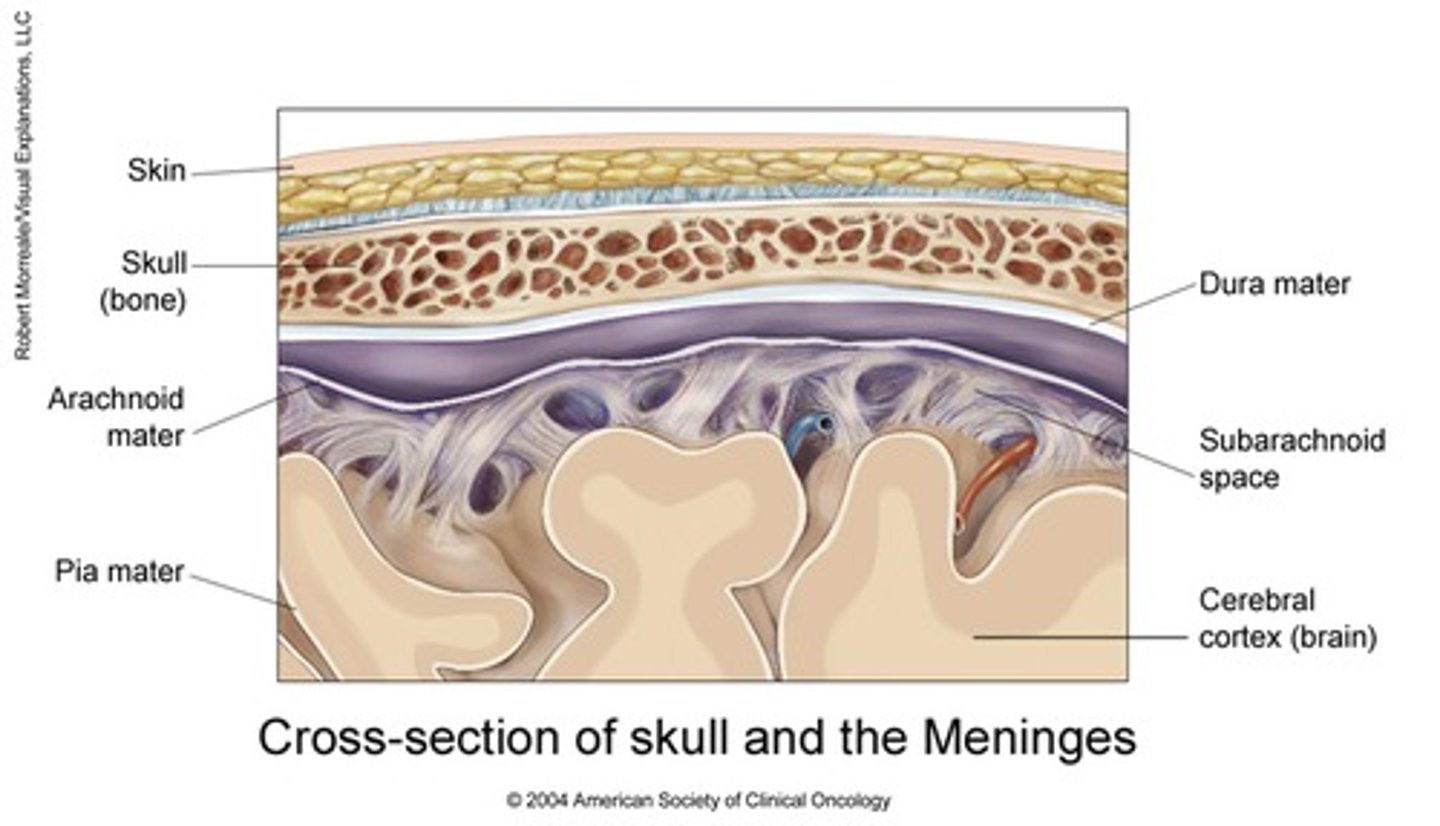
meninges
protective layer of CNS
- 3 layers
- CSF (cerebrospinal fluid) between layers
meningitis
an acute inflammation of the meninges
- HIGH fever, severe headache & neck stiffness
- deafness, epilepsy, hydrocephalus, or cognitive deficits
-death
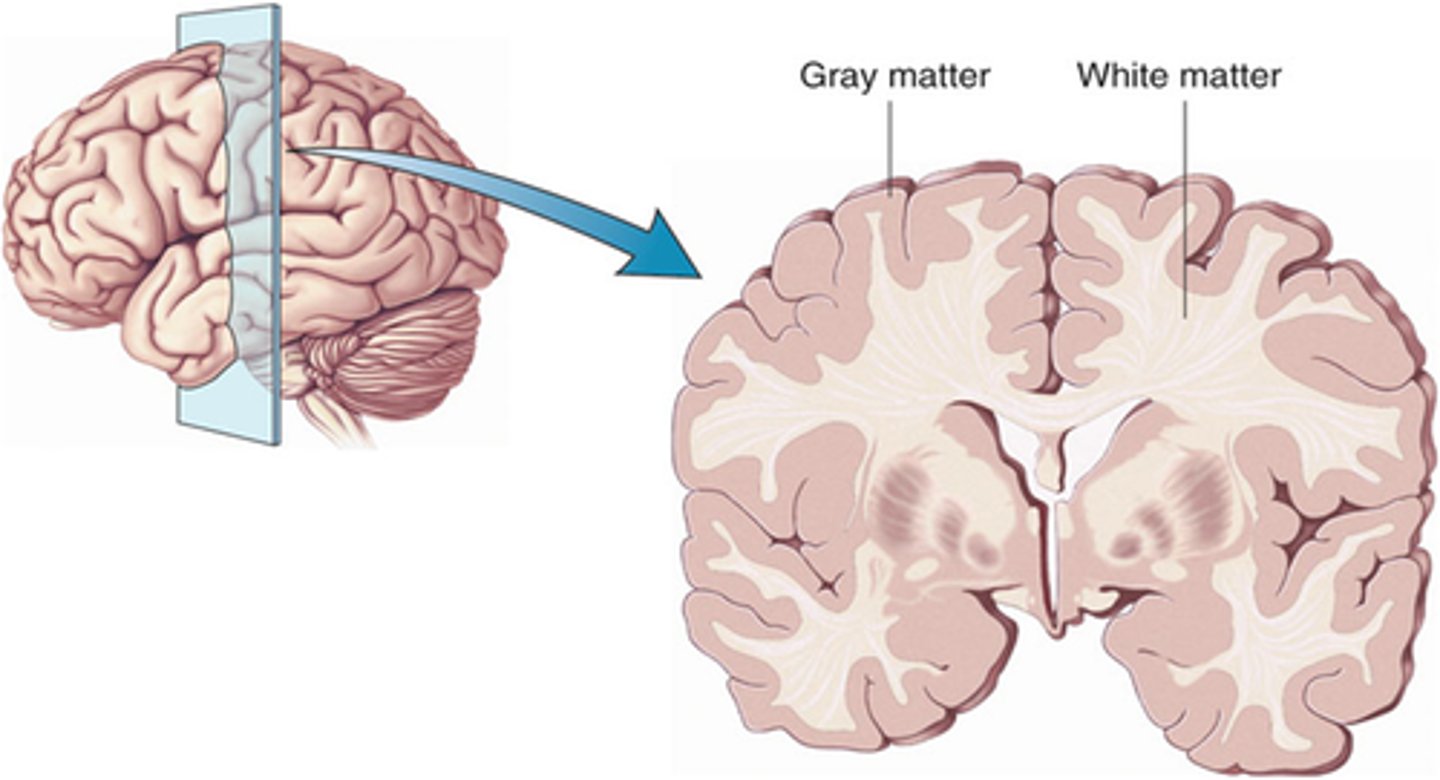
gray matter
cell bodies & some short unmyelinated axons
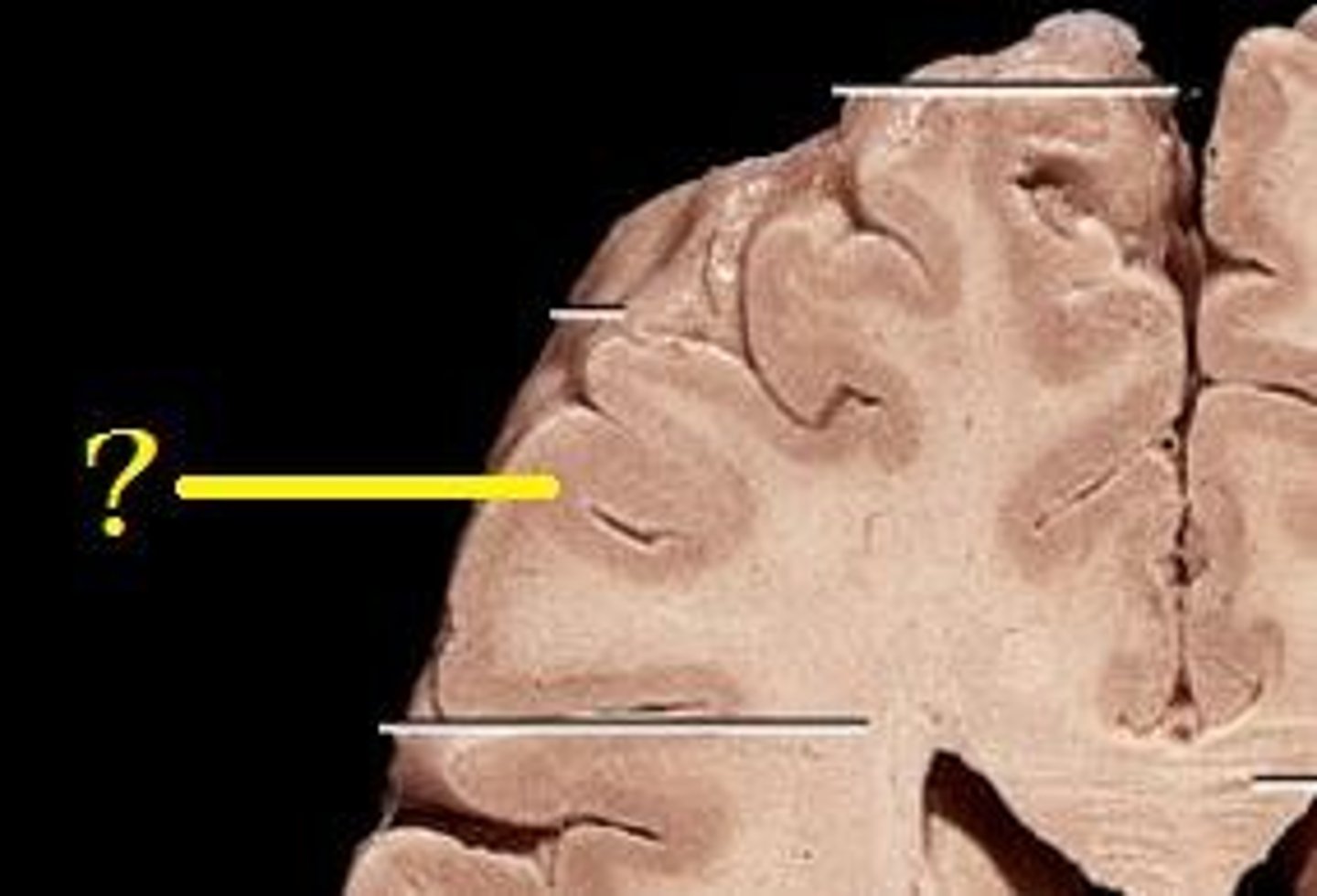
white matter
myelinated axons
- white & greasy
rapid eye movement (REM) sleep
dream sleep
a. name for eye movement
b. increased heart rate: & metabolism & neuron activity & memory systems
c. ~90 minutes
non REM sleep
everything else
a. probably still dreaming
b. decreased heart rate: & metabolism & neuron activity & memory systems
c. 4 different stages
d. ~90 mintes
cerebral lateralization
- compartments of brain
- right vs left symmetry
- left side of the brain controls the right side of the body & vise versa
corpus callosum
- connects the two hemispheres
- larger in musicians, left handed/ ambidextrous people
memory
- storage of acquired information to be recalled later
- involves A LOT of brain regions
- amnesia studies showed showed to separate memory systems
short-term memory
- amount of neuro transmitter released
- pr-existing neurons
memory consolidation
from short term to long term
- usually while sleeping
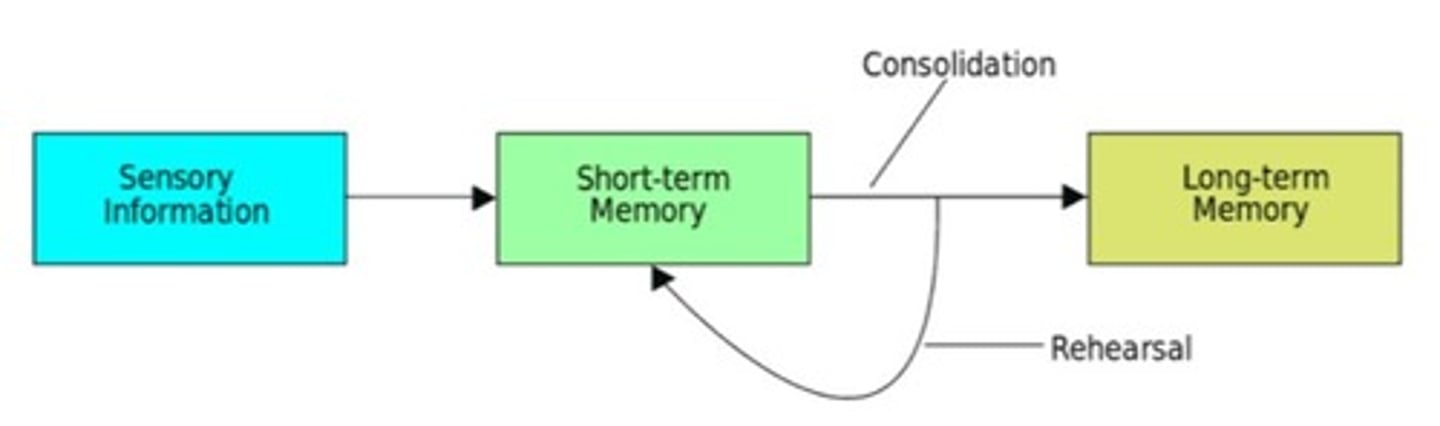
long-term memory
- permanent structural & functional changes
- new synapses established
long-term potentiation
repeated stimulation increases excitability
sensory division
relays sensory info to the CNS
- external
- internal
somatic nervous system
- part of motor division
- all voluntary muscle actions
- reflexes
reflexes
automatic response to a stimuli
interneuron
a neuron that lives in CNS
- only talks to other neurons
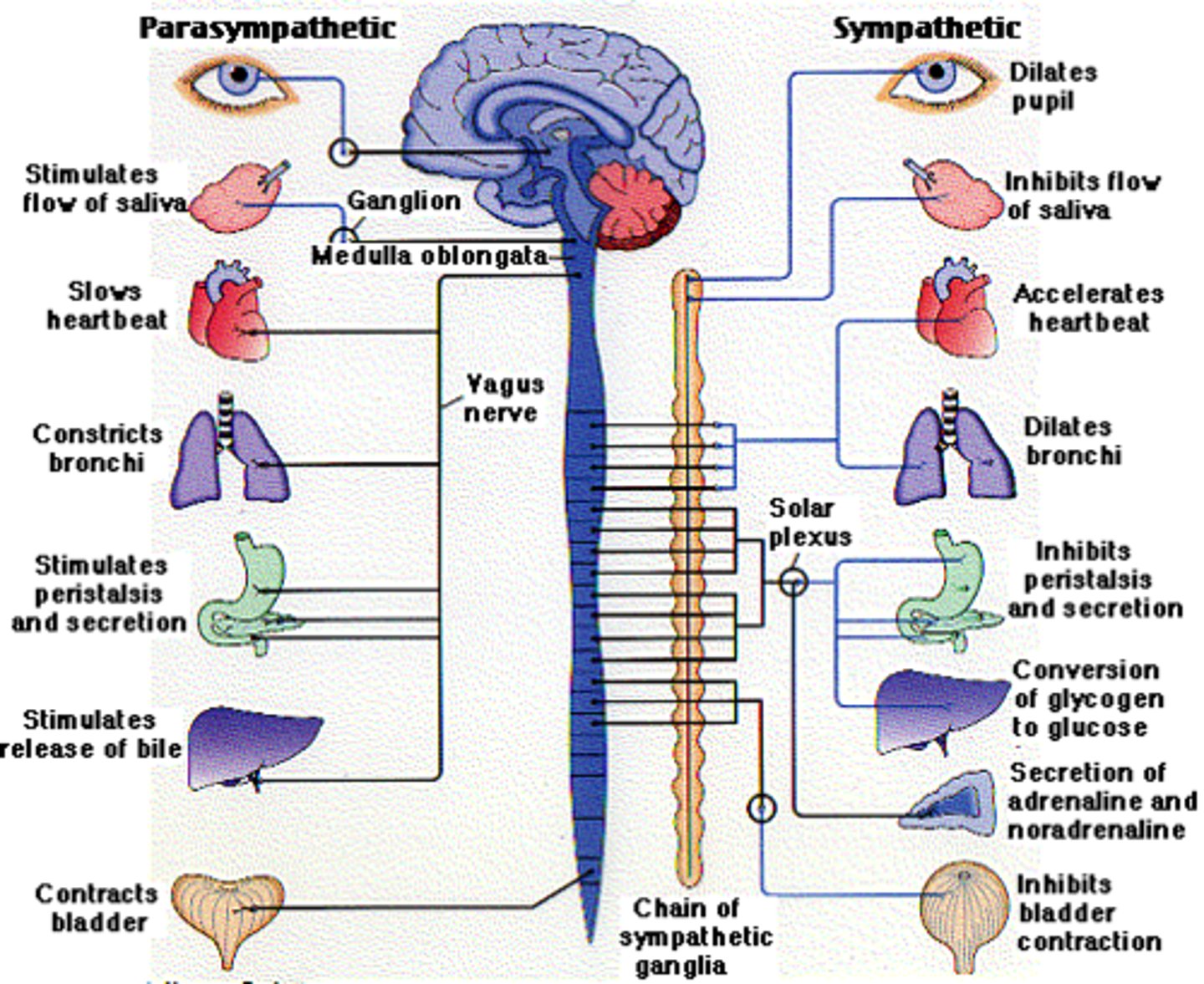
autonomic system
- organs, glands & hearts
- automatically & involuntary
- bodily functions
ganglia
clusters of cell bodies
- millions of synapses
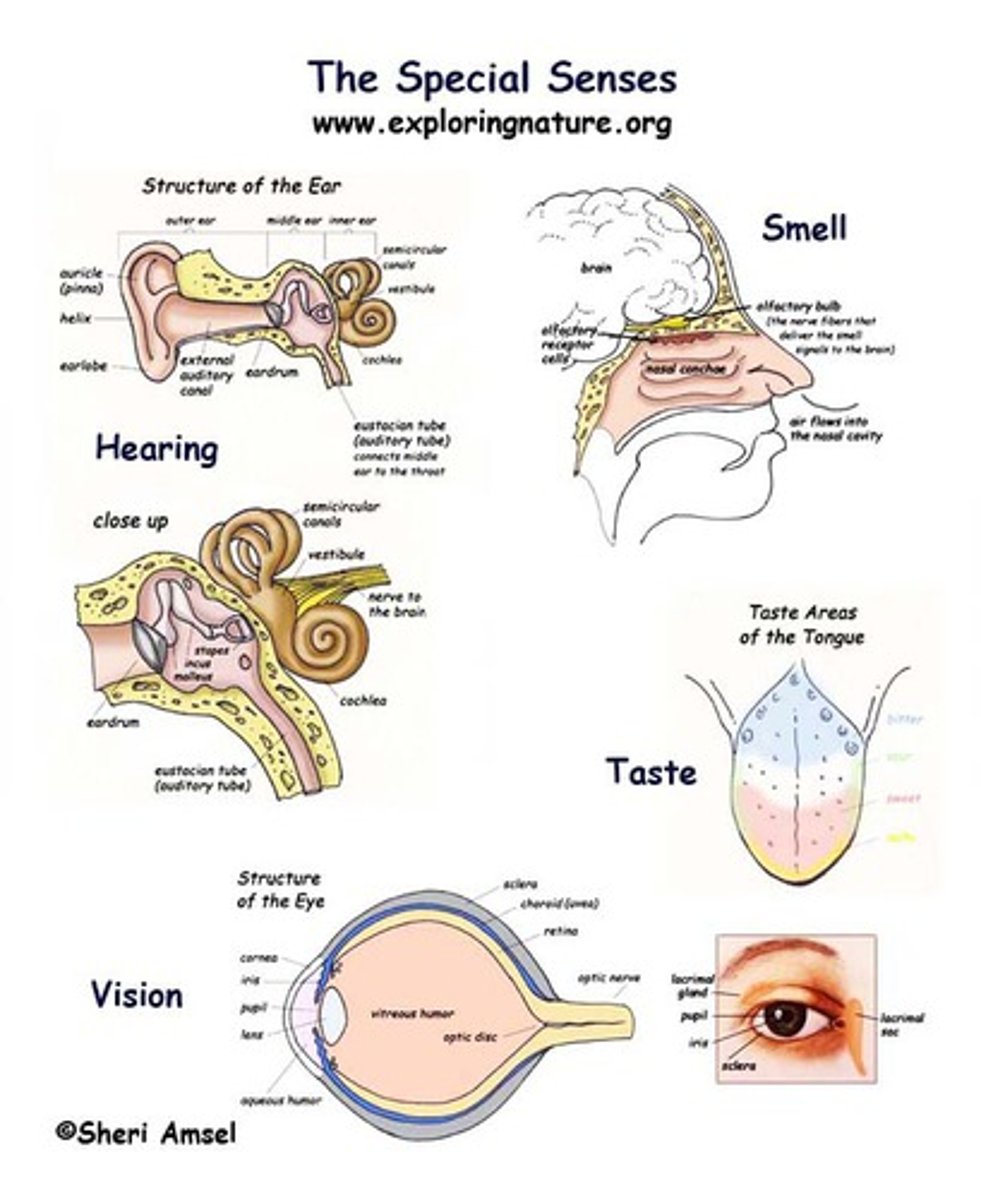
special senses
senses that have specialized organs devoted to them
phasic receptors
firing rate slows down overtime
sensory adaptation
ex: smell, touch
tonic receptors
firing rate does not change
- ex: pain
chemoreceptors
detect specific chemical stimuli
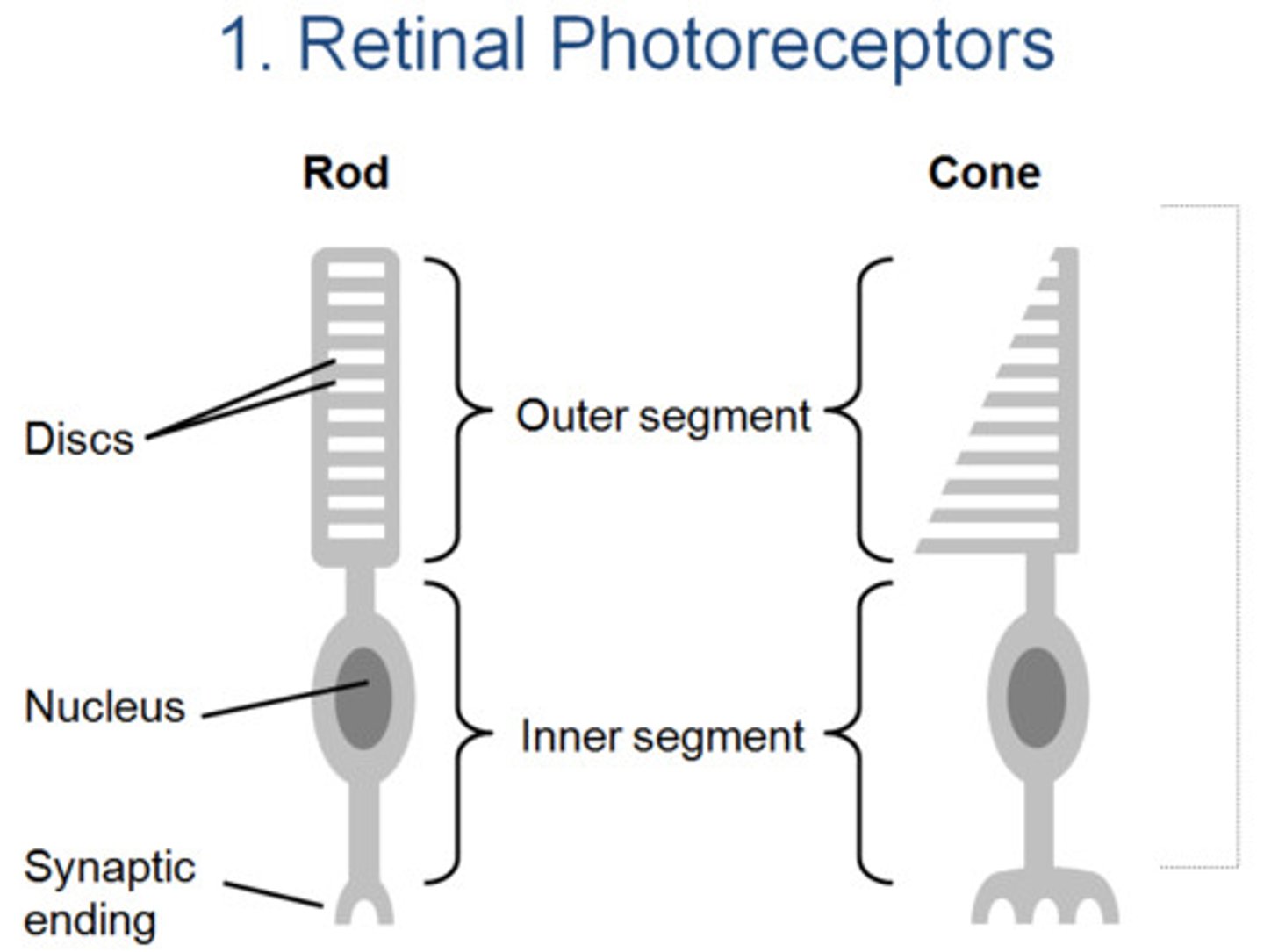
photoreceptors
detects light energy
- rods = black/white vision
- cones = color vision