Toxicity related to drug metabolism
 Call Kai
 Learn
 Practice Test
 Spaced Repetition
 Match
 Flashcards
 Knowt Play
1/18

There's no tags or description
Looks like no tags are added yet.
19 Terms
What are the 2 types of ADRs?
Predictable - reversible
A1 → Linked to pharmacological action
A2 → Off target effected unrelated to drug action
A3 → Overdose and predictable toxicity/injury
Unpredictable - irreversible and toxic
B1 → Direct necrotic injury
B2 → Immune mediated toxicity
B3 → Cancer
What is toxicity?
Irreversible change in cellular structure leading to change to change in cellular function
Usually overdose eg paracetamol
What can necrotic injury result from?
Oxidation to reactive species → troglitazone removed as diabetic medication due to severe liver toxicity
Tacrine causes hepatocellular necrosis (liver cell death) primarily through toxic liver metabolism, severe oxidative stress, and direct damage to cellular energy structures
What are the 2 species paracetamol gets cleared to?
50% to glucuronide
45% to a sulfate
5% to a N-acetyl, p-benzoquinoneimine (NAPQI) → toxic in high levels
What is the threshold for a paracetamol overdose and what happens in the body to cause liver toxicity?
>12g in adults
GSH (glutathione) is an antioxidant in liver cells that neutralises NAPQI
Normal pathways become overwhelmed and more NAPQI forms. Intrahepatic GSH stores are rapidly used up and depleted.
How quickly do paracetamol overdoses happen and what are the symptoms?
Phase I, 0-24 hrs - ok, but feeling a bit rough, vomiting
Phase II, 24-48 hrs - pain in abdomen, HR rises, BP falls, transaminases rise to 30-50 times normal
Phase III, 48-72 hrs - Jaundice, GI bleeding, pain, organ failure, death
What types of people are at an enhanced risk of paracetamol overdose?
Alcoholics
Malnourised
HIV+
People on inducers
What is the antidote for a paracetamol overdose?
N-acetylcysteine (NAC)
Supplies the building blocks (cysteine/thiol groups) to rapidly rebuild glutathione levels.
NAC binds directly to NAPQI and converts it into harmless substances
Nearly 100% effective at preventing serious liver damage and failure if given within 8 hours of ingesting paracetamol
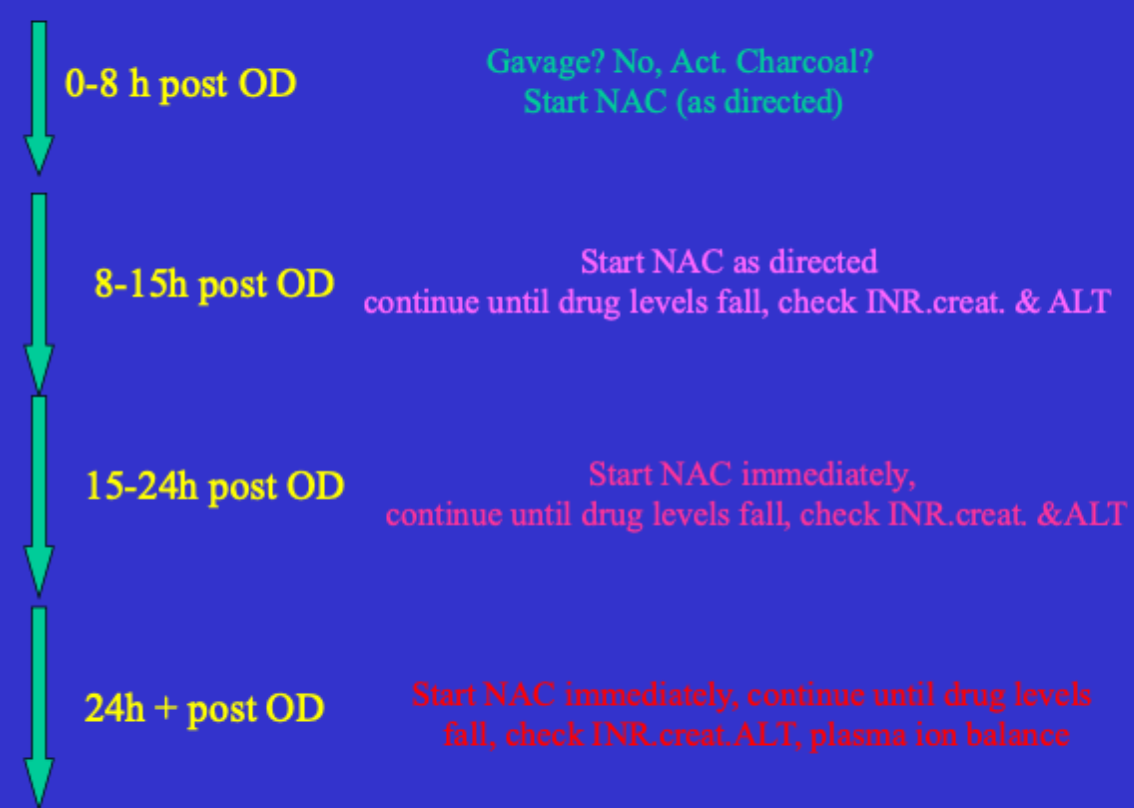
What is the timeline for giving NAC during a paracetamol overdose?
What is the differences between the innate and adaptive immunity?
Innate - rapid response, phagocytic engulfment, complement, NK cells
Adaptive - slower response, T cells, B cells, ABs
What are DAMPS/PAMPS?
PAMPs (Pathogen-Associated Molecular Patterns)
DAMPs (Damage-Associated Molecular Patterns)
Molecular warning signals that trigger the innate immune system to spark inflammation
What is the process of intracellular and extracellular antigen detection?

Examples of drugs that cause B2 ADRs
NSAIDs, penicillins, cephalosporins - haemolytic anaemia
Chloramphenicol, chlorpromazine, antineoplastic agents - aplastic anaemia (destruction of bone marrow)
Sulphonamides - cutaneous toxicity
Statins, halothane, INH, phenytoin - hepatoxicity
Clozapine, sulphones, chlorpromazine, antithyroid agents - agranulocytosis
What are the 2 issues with agranulocytosis?
Neutrophils need to be made
Turns sepsis in a couple weeks
What are the common features of B2 ADRs?
Syndromes occur at least 6 maybe 10 weeks after therapy begins (change in therapy)
Progression is very rapid and diseminated
Fever, rashes, hepatotoxicity - signs of infection so treated with antibiotics first
Treatment…steroids
Re-challenge-effect occurs within days or hours
Structurally unrelated drug must be used to maintain therapy
What are the 3 hypothesis’ drugs/toxins initiate an immune response?
Hapten
Pharmacological interaction
Danger signal
What is the hapten hypothesis?
Immune response to LMW agents in certain circumstances
Haptens are a reactive species that bind to macromolecules
This combo is what the immune system responds to
What is the pharmacological interaction hypothesis?
When antigen presentation couldn’t have happened due to speed of immune response
Drug/metabolite binds direct to MHC molecules and triggers effects
What is the danger signal hypothesis?
IS receives chemical and protein signals
Drug/metabolite may stimulate appearance of danger signal molecules