Ecology and Biology Test Review
 Call Kai
 Learn
 Practice Test
 Spaced Repetition
 Match
 Flashcards
 Knowt Play
1/44

There's no tags or description
Looks like no tags are added yet.
45 Terms
individual
one organism of one species
population
group of organisms of the same species living in the same place at the same time
community
groups of populations of different species living in the same area, interacting
ecosystem
all biotic and abiotic factors in a given are interacting with each other
autotroph
another name for a producer (can produce their own food)
heterotroph
another name for a consumer (cannot make their own food)
habitat
a place or environment where a plant or animal naturally lives
commensalism
a relationship where one species obtain food or shelter from the other species (does not harm or help the other species)
mutualism
a relationship where both species benefit from relationship
parasitism
a relationship between two species in which one species (the host)
pH scale
0-14
acid
0-6
neutral
6-8
base
8-14
biotic
a living organism
abiotic
a non-living organism
food chain starts with
sun/sunlight
first level of the energy pyramid
producers
second level of the energy pyramid
primary consumers
third level of the energy pyramid
secondary consumers
fourth level of the energy pyramid
tertiary consumers
complete metamorphosis
egg - larva - pupa - adult
incomplete metamorphosis
egg - nymph - adult
energy is the ability to do ____
work
8 biomes
tundra, grassland, deciduous forest, marine, desert, tropical rainforest, freshwater, taiga
tundra
consists of very cold climates either Arctic or Alpine; plants and animals have adapted to very cold climate, little rainfall, and very little sunlight
grassland
found on every continent except Antarctica; also called Prairie, Steppe and Savanna
deciduous forest
broad leaves that shed each fall; contains ferns, snakes, chipmunks, wolves, flowers, deer to name a few
marine
largest Biome in the world; Contains mollusks, sea turtles, sea snakes, starfish, sea urchins, lobsters, and crabs
desert
harsh for humans because of very little rainfall; categorized as arid, semi-arid, coastal, and cold deserts
tropical rainforest
90% of plants and animals live there; covers 6% of Earth and consist of Forest Floor, Understory, Canopy, and Emergent layers
freshwater
contains less than 1% salt; can be rivers, streams, ponds, lakes, and wetlands
taiga
cone-shaped coniferous trees are dominant; animals have shorter ears, snouts, legs and tails, grow thick coats of fur, and may hibernate
formula for photosynthesis
CO2 + H2O + sunlight → C6H12O6 (Glucose) + O2
formula for cellular respiration
O2 + C6H12O6 (Glucose) → energy (work) + H2O + CO2

part B
leaf: take in sunlight and CO2 , release O2 and H2O

part C
roots: take in water and nutrients

Part E
Xylem: moves water up the plant

part G
phloem: traports food/sugar from leaves to plant
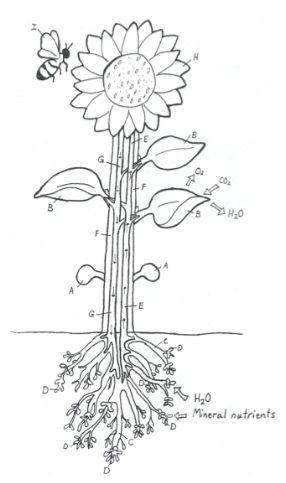
part H
flower: attracts pollinators for reproduction
what chemical do plant take in?
carbon dioxide
what chemical do plants give off?
oxygen
which is an correct food chain?