Science Unit Test
 Call Kai
 Learn
 Practice Test
 Spaced Repetition
 Match
 Flashcards
 Knowt Play
1/34

There's no tags or description
Looks like no tags are added yet.
35 Terms
study of matter and how it changes
chemistry
particles that make up all matter
atoms and molecules
structure that is made up of two or more atoms
molecule
why do they combine immediately and become one drop?
the molecules are attracted
the molecules of a substance when it is heated…
move faster and further from each other
form of matter has a definite volume and takes the shape of its container
liquid
the density of a liquid when it is heated…
it decreases because the faster motion of the molecules causes them to move away from each other, which increases the volume
the names of the process in which energy is added or removed from a substance…(occurs when faster-moving molecules come in contact with slower-moving molecules)
Conduction
The measure of the average kinetic energy of a substance
temperature
the transfer of energy from a substance at a higher temperature to a substance at a lower temperature…
heat
1. two examples of evaporation. 2. two examples of evaporation
boiling water, a puddle shrinking dew, clouds
two things will cause the rate of condensation to increase
more water vapor and cooler tempature
why a carrot sinks in fresh water and floats in salt water
the carrot is more dense than fresh water. Adding salt INcreases the density of the water, so the carrot becomes LESS dense than the water
the name of the proces in which a solid changes directly to a gas
sublimation
an example of a substance that will do this at room temperature
dry ice
a substance becomes cooler..
transfers its energy to something cooler
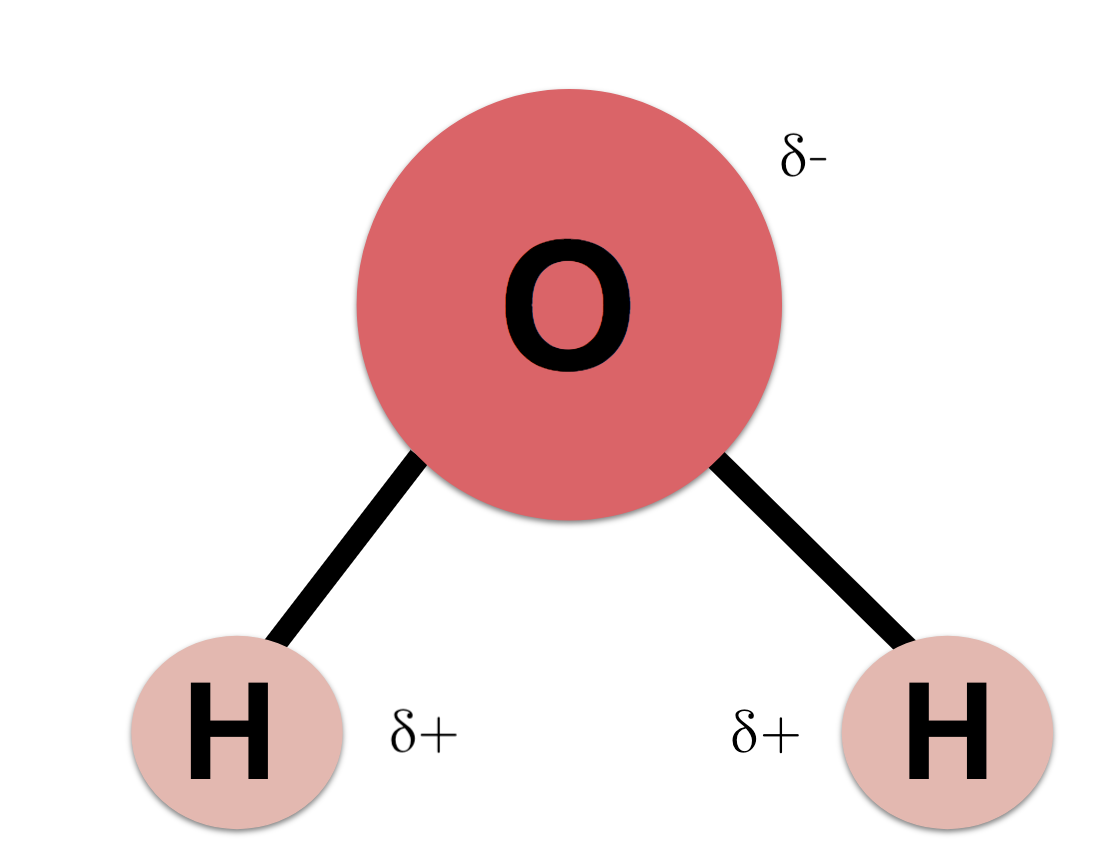
diagram of a single water molecule and labeld with each atom
H2O 2 Hs and 1 O.
The kinetic energy of a substance when it changes from a gas to a liquid…
DEcreases
process causes frost to form
deposition
the name of the tool that is used to measure liquid volume in a laboratory
graduated cylinder
name of the tool that is used to measure the mass
triple beam balance
the part of an experiment that does not change and is used for comparison
a control
characteristic property of a substance will determine whether or not it sinks or floats in another substance
density
the density of a substance calculated
D=M/V
the density of water at room temperature
1 g/cm3
two objects that have the same volume but different masses, which substance will have the greater density
the one with the greater mass
what would happen to density of piece of aluminum that is split into four smaller pieces
it would not change because it is still aluminum, made up of the same atoms arranged in the same way
method is used to find the volume of irregular shaped object, such as a rock
water displacement method
the volume of a rock that made the water level rise in a graduated cylinder from 50mL to 59mL
59 mL - 50 mL = 9mL = 9 cm3
if an object that has density of 0.86 g/cm3 is placed in water, will in sink or float
It will float because it has a density 10 were than 1 g/c,m3
if a 50 mL sample of water has a mass of 50 g, what would the mass of a 25mL sample of water be
25g because 25g/25mL = 1g/cm3
density is a characteristic property of a substance
It means it stays the same no matter what site the sample is
glass jars are much more dense than plastic jars. what can you guess about the mass, size, and arrangement of the molecules that make up glass compared to the molecules that make up plastics
glass could be made up with smaller, more massive atoms that are close together
You could use a graduated cylinder and a triple beam balance to find the denisty of a liquid…
Measure the mass of the empty graduated cylinder with a balance
Measure a volume of liquid in the graduated cylinder and find its mass with a balance.
subtract the mass with a balance
use D=M/V to calculate the density
for example- if the mass is 50g and the volume is 25 ml, the density is 2g/cm3
the molecular level why hot water floats on cold water
when the water molecules are heated their motion increases. this causes them to move away from each other, which causes an increase in volume. Since the volume increases and the mass stays the same, the density decreases. less dense substances float on more dense substances float on more dense substances. So, the less dense hot water floats on top of the more dense cold water.