Anemia decreased production

0.0(0)
Studied by 0 people
call kaiCall Kai
learnLearn
examPractice Test
spaced repetitionSpaced Repetition
heart puzzleMatch
flashcardsFlashcards
GameKnowt Play
Card Sorting

1/30

encourage image

There's no tags or description

Looks like no tags are added yet.

31 Terms
1
New cards
term image

microcytic

2
New cards
term image

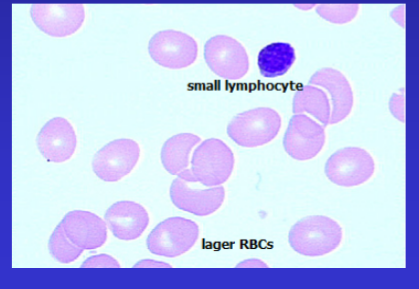
macrocytic

3
New cards
term image
knowt flashcard image
4
New cards

Who gets Fe-deficiency and why?

  • Infants

    • growth spurt

    • milk = poor source 

  • Adolescents

    • growth spurt

  • Malabsorption

    • stomach (resection; cancer; H. pylori ; autoimmune)

    • ileum (celiac disease, resection)

  • Blood loss

    • gastritis, tumors, NSAIDs, menstrual


5
New cards

What is the function of Hepcidin?

Hepcidin 

  • High levels block iron absorption

  • Low levels increase absorption

    • Levels low in Fe deficiency


6
New cards

Describe the function of:

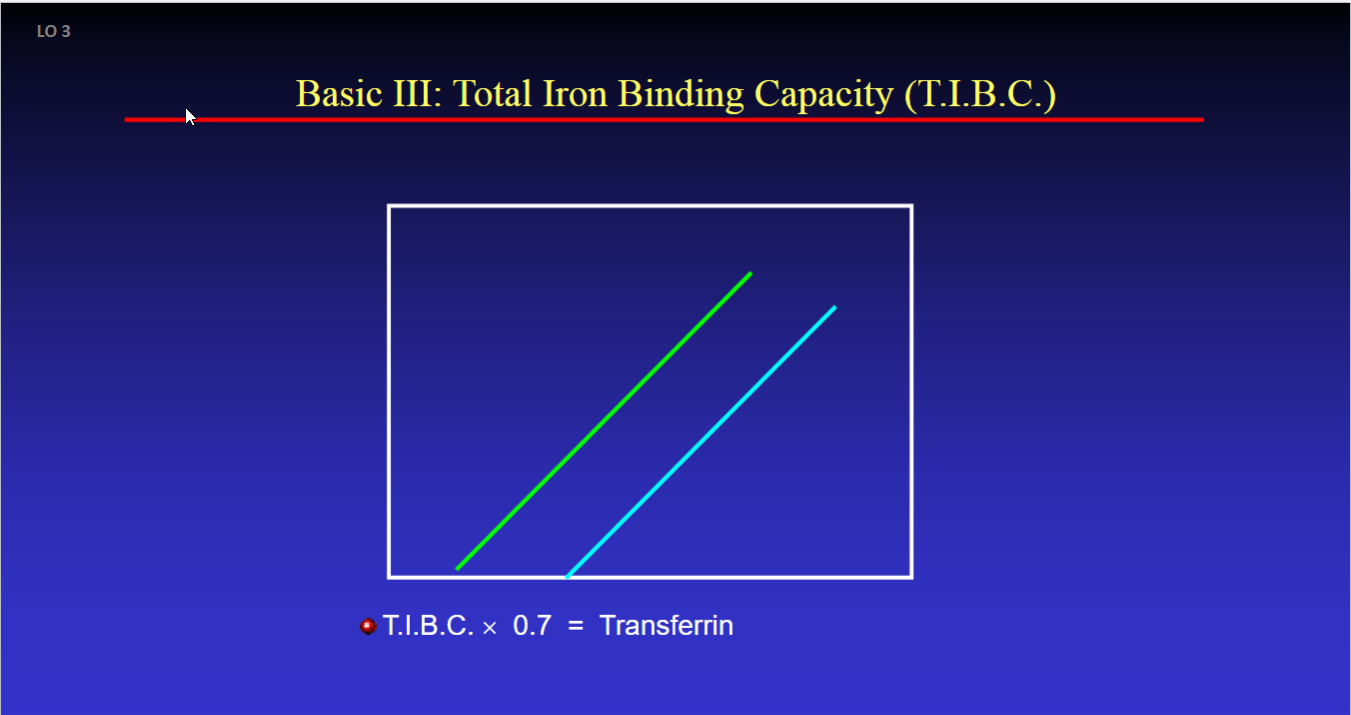
  • Transferrin 

  • Ferritin

  • Hemosiderin 


Iron Transfer Proteins

  • Transferrin 

    • Iron transport protein

  • Ferritin

    • Storage protein in cells

      • (Some ferritin leaks into blood)

  • Hemosiderin 

    • Excess iron in lysosomes

      • (Fe+++ + Lipid + Protein)


7
New cards

Fe 2+ vs 3+?

Fe 2+ vs 3+

  • Iron is absorbed as Fe++

  • Iron is present as Fe+++ in the body


8
New cards
term image
knowt flashcard image
9
New cards

What does the Lab test for Fe deficiency anemia (laboratory) look like?

knowt flashcard image
10
New cards
term image
knowt flashcard image
11
New cards

Causes of Macrocytosis?

Macrocytosis: causes

  • Vitamin B-12/Folate

  • deficiency

  • Alcohol abuse

  • Drugs (anticonvulsants)

  • Liver disease

  • Hypothyroidism

  • Hemolysis

  • Hemorrhage

  • Splenectomy


12
New cards
term image

Normal Bone Marrow

13
New cards
<p></p>


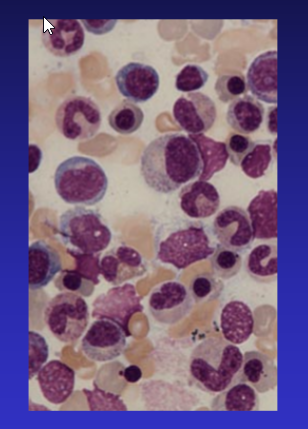
Megaloblastic bone marrow

14
New cards

Describe Megaloblastic anemia

  • What is it?

  • Causes 


Megaloblastic anemia

  • What is it?

    • Anemia due to defect in DNA synthesis

      • Vit B12 / Folate deficiency (commonest)

  • Causes 

    • Folate deficiency

      • Dietary

      • Malabsorption

    • B12 deficiency

      • Dietary

      • Fish tapeworm (D latum)

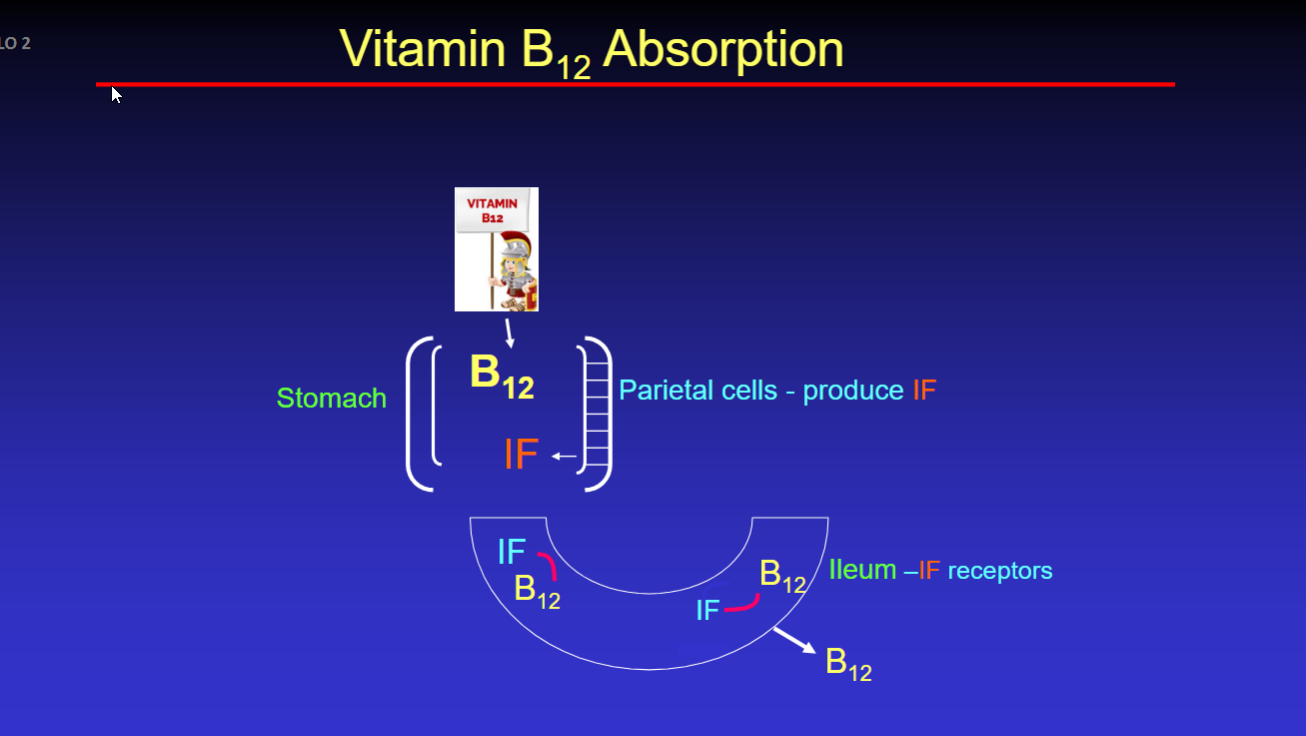
    • Pernicious anemia

      • Lack of gastric intrinsic factor (IF) for absorption


15
New cards

Describe Folic Acid:

  • Fx

  • Causes of Deficiency:


Folic Acid:

  • Fx

    • Transfers one carbon groups

    • Formation of purines/methionine

  • Causes of Deficiency:

    • Dec. Intake

      • Alcoholics

    • Inc. Need

      • Pregnancy

      • Inc. Growth

    • Poor Absorption

    • Drugs

      • Methotrexate, Phenytoin


16
New cards

Draw out the Folate-B12 interaction

knowt flashcard image
17
New cards
term image
knowt flashcard image
18
New cards
  1. Describe the Causes of Vit. B12 deficiency

  2. Describe the Consequences: Folate/B12 deficiency

  3. Describe the Neurologic Symptoms of B12 Deficiency


  • Causes of Vit. B12 deficiency

    • Dec Absorption (intrinsic factor problems)

      • Pernicious anemia

      • Gastrectomy

      • Terminal Ileum disease

      • Fish tapeworm

    • Dec. Intake

      • Vegans

  • Consequences: Folate/B12 deficiency

    • Megaloblastic anemia

    • Neural tube defects

    • Cardiovascular disease

      • Homocysteine increase

    • Malignancy

      • Folate supplement reduces

    • Neurological disturbances

  • Neurologic Symptoms of B12 Deficiency

    • Myelination defect

      • Paresthesia

      • Memory loss

      • Weakness

      • Symmetric neuropathy legs>arms

    • Due to accumulation of s-adenosylhomocysteine


19
New cards

Describe Pernicious (“harmful”) anemia

  • Epi:

  • Patho:


Pernicious (“harmful”) anemia

  • Epi:

    • MC cause of megaloblastic anemia

    • Increased in Afro-Americans, North Europeans

    • Often with other autoimmune conditions

  • Patho:

    • Autoimmune:

      • Abs against IF (type 1) (Blocking)

      • Abs against IF-B12 complex (Type 2) (Binding)

      • Abs against parietal Cells (dec. HCl production)


20
New cards

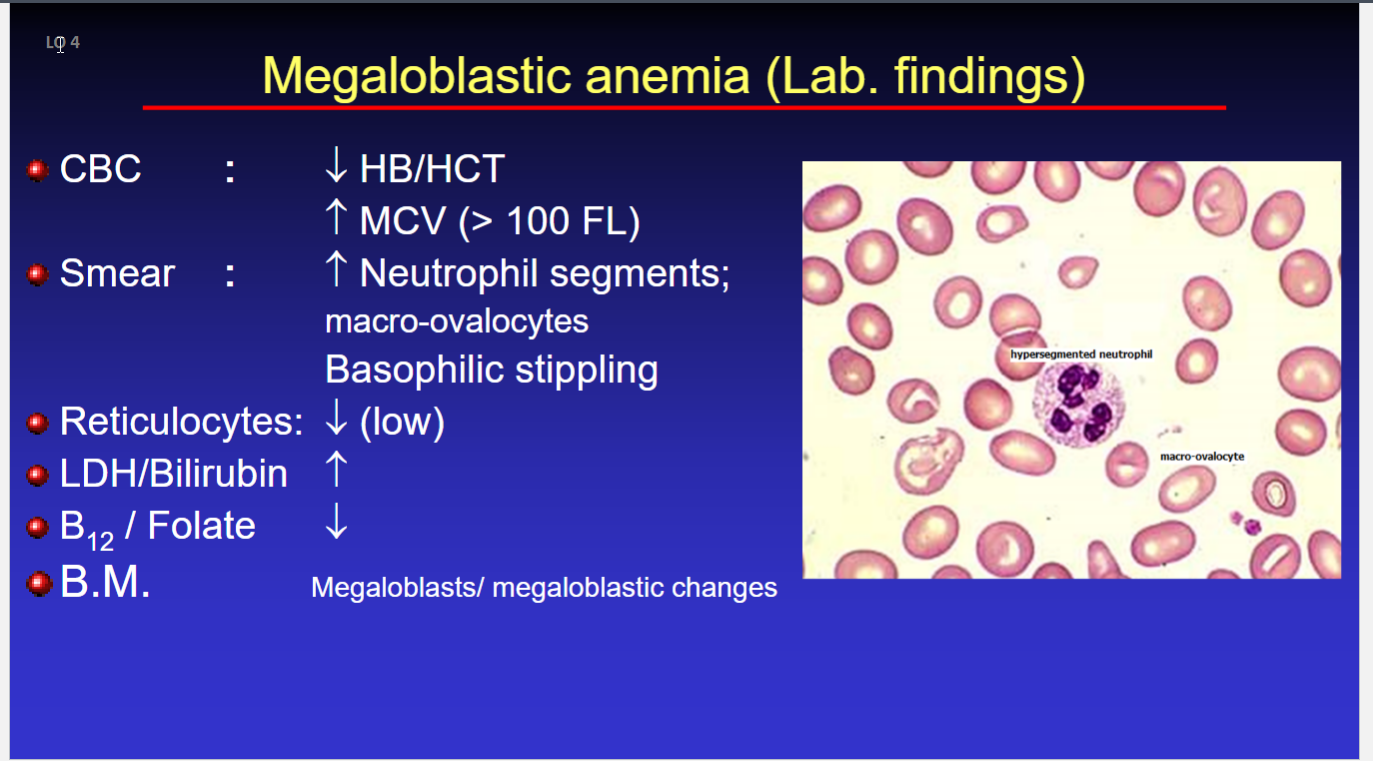
List the Megaloblastic anemia (Lab. findings)
knowt flashcard image
21
New cards

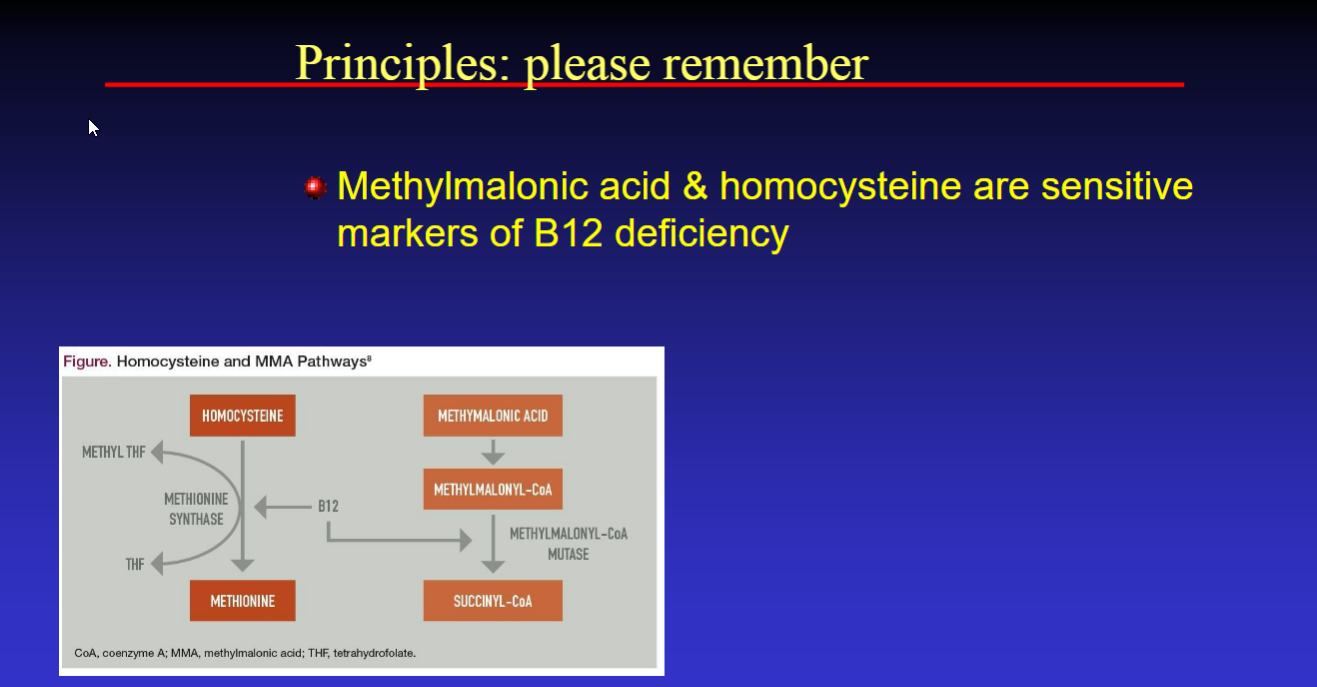
What are sensitive markers of B12 deficiency
knowt flashcard image
22
New cards

Describe Anemia of chronic disease

  • Etiology 

  • MOA


Anemia of chronic disease

  • Etiology 

    • Chronic microbiologic infections 

      • Lung infections/Bacterial Endocarditis

      • Tuberculosis/Osteomyelitis

    • Chronic immune infections

      • Rheumatoid arthritis

      • Ulcerative colitis

    • Malignancies

      • Carcinomas/lymphomas

      • Myeloma/leukemias

  • MOA

    • Cytokines  (TNF, IL-1, interferon) -> 

      • dec. erythroblast response to erythropoietin

      • Release of Hepcidin -> 

        • Dec. Fe release from GI to plasma

        • Inc. synthesis of apoferritin in macrophages and Ferritin

        • Dec. serum Fe

      • Shortened red-blood cell survival

        • Activated macrophages


23
New cards

Describe the labs for anemia of chronic disease

knowt flashcard image
24
New cards

Describe Anemia of bone marrow failure

  • Features 

  • Causes of Hypo vs Hypercellular marrow


Anemia of bone marrow failure

  • Features 

    • Bone marrow failure: pancytopenia + low reticulocyte count

    • Hypoproliferative anemia

    • Anemia often not a major finding

  • Causes of Hypo vs Hypercellular marrow

    • Hypo:

      • Aplastic anemia acquired

    • Hyper:

      • Primary

        • Myelodysplasia

        • Paroxysmal N Hemooglobinuria

        • Myelofibrosis

      • Secondary

        • Hyperspleenism

        • Systemic lupus

        • Overwhelming infection


25
New cards

What does a hypo/hyper cell. bm look like?

knowt flashcard image
26
New cards

Describe Aplastic anemia:

  • Epi

  • Etiology

  • Pathogenesis


Aplastic anemia:

  • Epi

    • Incidence 2 per million-USA; 14 in Japan. Increased far East

    • B=W; M=F

    • All ages

    • A small peak in incidence in childhood

    • Peaks at aged 20-25 years and over 60 years

  • Etiology

    • Idiopathic (70%)

    • Drugs

      • Chemotherapeutic drugs

      • Chloramphenicol

    • Viruses

      • Hepatitis, CMV,E-B virus

    • Radiation

    • Immune

      • Thymoma

  • Pathogenesis

    • Soil-seed hypothesis

      • Is is the bone marrow (env) or the cell itself that is defective 

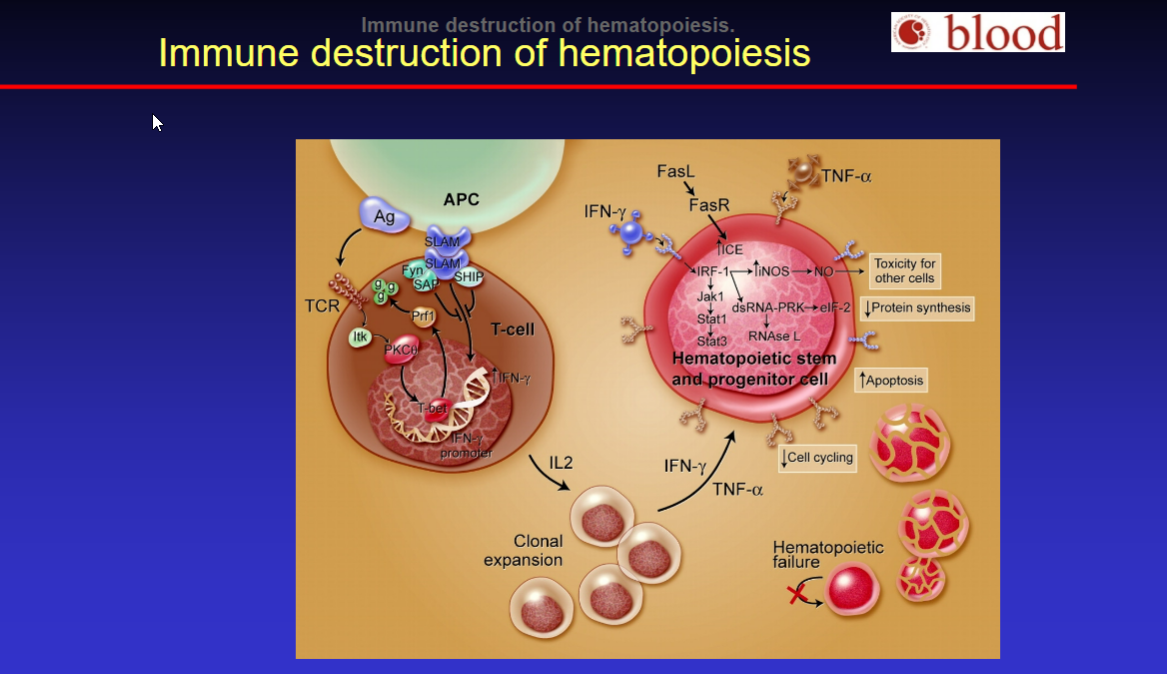
    • Immune mediated

    • Intrinsic abnormality


27
New cards
term image
knowt flashcard image
28
New cards

Describe Aplastic Anemia: 

  • Clinical Features

  • Laboratory:

  • Dx Criteria:

  • Prognosis


Aplastic Anemia: 

  • Clinical Features

    • Onset insidious or sudden

    • Bleeding = MC early symptom; 

      • massive hemorrhage unusual

    • Infection = uncommon first symptom

    • Anemia Symptoms infrequent

    • Patients feel remarkably well despite low counts

  • Laboratory:

    • Pancytopenia

    • Inc. MCV; Dec. Reticulocytes

    • BM:

      • readily aspirated

      • Dilute on smear

      • Fatty biopsy

    • “Pancytopenia with fatty marrow”

  • Dx Criteria:

    • (2/3): per x109/L

      • Neutrophils <0.5, 

      • Platelets <20, 

      • Reticulocyte count <60.

  • Prognosis

    • Poor without treatment

    • Best indicator is blood count


<p><span style="background-color: transparent;">Aplastic Anemia:&nbsp;</span></p><ul><li><p><span style="background-color: transparent;">Clinical Features</span></p><ul><li><p><span style="background-color: transparent;">Onset insidious or sudden</span></p></li><li><p><span style="background-color: transparent;">Bleeding = MC early symptom;&nbsp;</span></p><ul><li><p><span style="background-color: transparent;">massive hemorrhage unusual</span></p></li></ul></li><li><p><span style="background-color: transparent;">Infection = uncommon first symptom</span></p></li><li><p><span style="background-color: transparent;">Anemia Symptoms infrequent</span></p></li><li><p><span style="background-color: transparent;">Patients feel remarkably well despite low counts</span></p></li></ul></li><li><p><span style="background-color: transparent;">Laboratory:</span></p><ul><li><p><span style="background-color: transparent;">Pancytopenia</span></p></li><li><p><span style="background-color: transparent;">Inc. MCV; Dec. Reticulocytes</span></p></li><li><p><span style="background-color: transparent;">BM:</span></p><ul><li><p><span style="background-color: transparent;">readily aspirated</span></p></li><li><p><span style="background-color: transparent;">Dilute on smear</span></p></li><li><p><span style="background-color: transparent;">Fatty biopsy</span></p></li></ul></li><li><p><span style="background-color: transparent;">“Pancytopenia with fatty marrow”</span></p></li></ul></li><li><p><span style="background-color: transparent;">Dx Criteria:</span></p><ul><li><p><span style="background-color: transparent;">(2/3): per x109/L</span></p><ul><li><p><span style="background-color: transparent;">Neutrophils &lt;0.5,&nbsp;</span></p></li><li><p><span style="background-color: transparent;">Platelets &lt;20,&nbsp;</span></p></li><li><p><span style="background-color: transparent;">Reticulocyte count &lt;60.</span></p></li></ul></li></ul></li><li><p><span style="background-color: transparent;">Prognosis</span></p><ul><li><p><span style="background-color: transparent;">Poor without treatment</span></p></li><li><p><span style="background-color: transparent;">Best indicator is blood count</span></p></li></ul></li></ul><p></p>
29
New cards
term image
knowt flashcard image
30
New cards

Describe Pure red cell aplasia (PRCA)

  • What is it?

  • Classifications?

    • Congenital?

    • Acquired?


Pure red cell aplasia (PRCA)

  • What is it?

    • Marrow = cellular but devoid of erythroblasts

      • Occurs in the absence of abnormalities in the leukopoietic or thrombocytopoietic systems

    • Anemia = primary problem in PRCA

  • Classification

    • Congenital

      • Diamond-Blackfan syndrome

    • Acquired Acute or chronic

      • Hemolytic Disorders (aplastic crisis)

      • Infection parvovirus B19 and others

      • Malnutrition

      • Drug therapy

      • Thymoma

      • Immunoglobulin inhibitors (cytotoxic for RBCs)


<p><span style="background-color: transparent;">Pure red cell aplasia (PRCA)</span></p><ul><li><p><span style="background-color: transparent;">What is it?</span></p><ul><li><p><span style="background-color: transparent;">Marrow = cellular but devoid of erythroblasts</span></p><ul><li><p><span style="background-color: transparent;">Occurs in the absence of abnormalities in the leukopoietic or thrombocytopoietic systems</span></p></li></ul></li><li><p><span style="background-color: transparent;">Anemia = primary problem in PRCA</span></p></li></ul></li><li><p><span style="background-color: transparent;">Classification</span></p><ul><li><p><span style="background-color: transparent;">Congenital</span></p><ul><li><p><span style="background-color: transparent;">Diamond-Blackfan syndrome</span></p></li></ul></li><li><p><span style="background-color: transparent;">Acquired Acute or chronic</span></p><ul><li><p><span style="background-color: transparent;">Hemolytic Disorders (aplastic crisis)</span></p></li><li><p><span style="background-color: transparent;">Infection parvovirus B19 and others</span></p></li><li><p><span style="background-color: transparent;">Malnutrition</span></p></li><li><p><span style="background-color: transparent;">Drug therapy</span></p></li><li><p><span style="background-color: transparent;">Thymoma</span></p></li><li><p><span style="background-color: transparent;">Immunoglobulin inhibitors (cytotoxic for RBCs)</span></p></li></ul></li></ul></li></ul><p></p>
31
New cards

Describe Diamond Blackfan anemia

  • Epi:

  • Patho:

  • Symptoms:

  • Histology:

  • Prognosis:


Diamond Blackfan anemia

  • Epi:

    • Usually autosomal dominant/ autosomal recessive (some) ;75% sporadic

    • Incidence 5 /100,000 live births

    • Typically presents at birth or early infancy

  • Patho:

    • Ribosomal protein RPS19 at 19q13.2 mutated (25%)

  • Symptoms:

    • Skeletal defects (upper limb, other), 

    • Short stature, 

    • Eye abnormalities (40%)

    • Low reticulocyte count

  • Histology:

    • BM: severe erythroid hypoplasia

  • Prognosis:

    • Median survival 40-50 years; 

    • 20-25% may spontaneously remit


<p><span style="background-color: transparent;">Diamond Blackfan anemia</span></p><ul><li><p><span style="background-color: transparent;">Epi:</span></p><ul><li><p><span style="background-color: transparent;">Usually autosomal dominant/ autosomal recessive (some) ;75% sporadic</span></p></li><li><p><span style="background-color: transparent;">Incidence 5 /100,000 live births</span></p></li><li><p><span style="background-color: transparent;">Typically presents at birth or early infancy</span></p></li></ul></li><li><p><span style="background-color: transparent;">Patho:</span></p><ul><li><p><span style="background-color: transparent;">Ribosomal protein RPS19 at 19q13.2 mutated (25%)</span></p></li></ul></li><li><p><span style="background-color: transparent;">Symptoms:</span></p><ul><li><p><span style="background-color: transparent;">Skeletal defects (upper limb, other),&nbsp;</span></p></li><li><p><span style="background-color: transparent;">Short stature,&nbsp;</span></p></li><li><p><span style="background-color: transparent;">Eye abnormalities (40%)</span></p></li><li><p><span style="background-color: transparent;">Low reticulocyte count</span></p></li></ul></li><li><p><span style="background-color: transparent;">Histology:</span></p><ul><li><p><span style="background-color: transparent;">BM: severe erythroid hypoplasia</span></p></li></ul></li><li><p><span style="background-color: transparent;">Prognosis:</span></p><ul><li><p><span style="background-color: transparent;">Median survival 40-50 years;&nbsp;</span></p></li><li><p><span style="background-color: transparent;">20-25% may spontaneously remit</span></p></li></ul></li></ul><p></p>