Bio Lab 18
 Call Kai
 Learn
 Practice Test
 Spaced Repetition
 Match
 Flashcards
 Knowt Play
1/32

There's no tags or description
Looks like no tags are added yet.
33 Terms
Kingdom Animalia: Vertebrates: Clade Deuterostomia: Phylum Chordata: Subphylum Vertebrata
Class Agnatha
Class Chondrichthyes
Class Osteichthyes
Class Amphibia
Class Reptilia
Class Aves
Class Mammalia

Kingdom Animalia: Vertebrates: Clade Deuterostomia: Phylum Chordata: Subphylum Vertebrata: Class Agnatha (Jawless fishes)
aka jawless fishes
lack jaws
paired fins are absent
early species had heavy bony scales and plates in skin
not present in current species
skeleton is cartilaginaous
embryonic notochord remain in adult
7+ paired gill pouches present
lacks a stomach
e.g. Lampreys and Hagfishes

Kingdom Animalia: Vertebrates: Clade Deuterostomia: Phylum Chordata: Subphylum Vertebrata: Class Chondrichthyes (Cartilaginous Fishes)
aka cartilaginous fishes
mostly marine fishes
have one pair of powerful jaws
have cartilaginous endoskeleton
embryonic notochord present always
skin covered by placoid scales
5-7 pairs of gills
lack air bladders so they swim actively to avoid sinking
e.g. Sharks and Rays
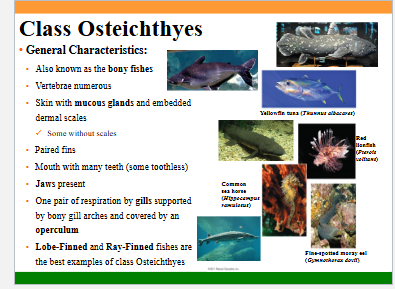
Kingdom Animalia: Vertebrates: Clade Deuterostomia: Phylum Chordata: Subphylum Vertebrata: Class Osteichthyes (Bony Fishes)
aka bony fishes
many vertebrae
skin w/ mucous glands and embedded dermal scales
paired fins
many teeth (some toothless)
jaws present
one pair of gills for respiration, supported by bony gill arches, covered by an operculum
e.g. Lobe Finned and Ray finned fishes
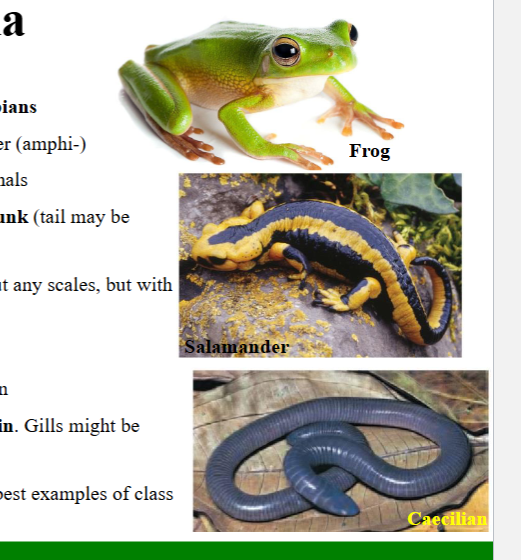
Kingdom Animalia: Vertebrates: Clade Deuterostomia: Phylum Chordata: Subphylum Vertebrata: Class Amphibia (Amphibians)
aka amphibians
live on both land and water
ectothermic (cold-blooded animals)
body is divided into head and trunk
skin is smooth and rough w/o scales. w/ glands that make it moist
unpaired fins might be present
2 pairs of limbs for locomotion
respire via lungs and skin; gills may be present externally in some adults
e.g. frogs and salamanders

Kingdom Animalia: Vertebrates: Clade Deuterostomia: Phylum Chordata: Subphylum Vertebrata: Class Reptilia (Reptilians)
aka reptiles
creeping and burrowing terrestrial animals
have backbones
bodies completely covered with scales or scutes
ectothermic (cold-blooded)
produce hard/soft shelled eggs (oviparous) / bear live young
all have at least one lung
four legs
wide range of habitats e.g. snakes and turtles

Kingdom Animalia: Vertebrates: Clade Deuterostomia: Phylum Chordata: Subphylum Vertebrata: Class Aves (Birds)
aka birds
homoethermous (warm blooded) animals
backbones, beaks, sharp eyesight
forelimbs = wings
hindlimbs are adapted walking, hopping. perching, grasping, wading, and swimming
epidermal scales on legs
endoskeleton bony w/ long hollow bones filled w/ air cavities
spindle-shaped body minimizes resistance to wind
e.g. Archaeopteryx (extinct), Eagles and Herons

Kingdom Animalia: Vertebrates: Clade Deuterostomia: Phylum Chordata: Subphylum Vertebrata: Class Mammalia (Mammals)
aka mammals
homothermous (warm blooded); most viviparous
backbones, skulls, and mammary glands
oil glands (sebaceous), and sweat glands (sudoriferous) present in skin
teeth of different types (heterodont) enbedded in sockets of jaws
respiration via lungs
have a muscular diaphragm dividing trunk into thorax and abdomen
coelom is divided into 4 cavities
e.g. Humans, Lions, Whales

Kingdom Animalia: Vertebrates: Clade Deuterostomia: Phylum Chordata: Subphylum Vertebrata: Class Amphibia: Frog Anatomy
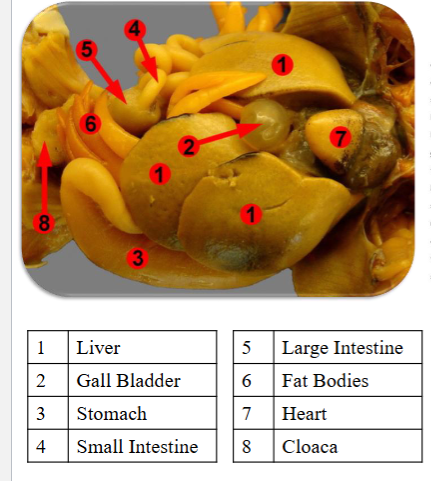
Kingdom Animalia: Vertebrates: Clade Deuterostomia: Phylum Chordata: Subphylum Vertebrata: Class Amphibia: Frog Anatomy
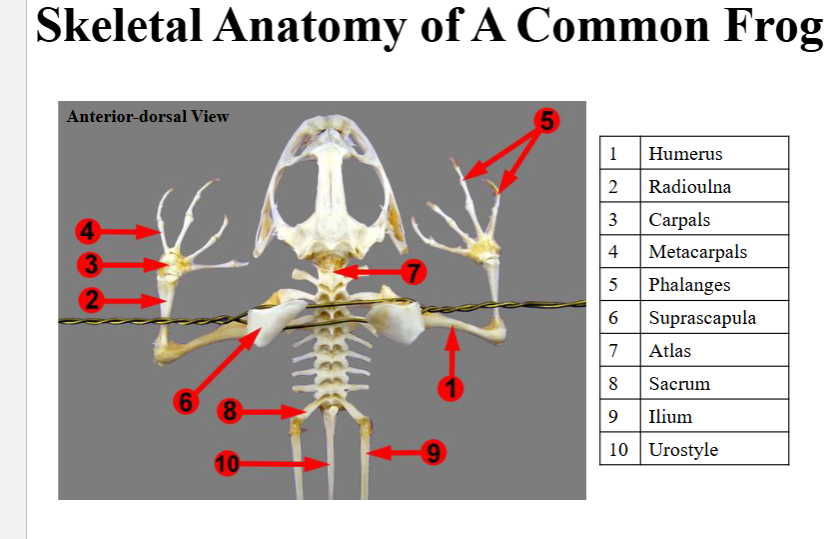
Kingdom Animalia: Vertebrates: Clade Deuterostomia: Phylum Chordata: Subphylum Vertebrata: Class Amphibia: Frog Anatomy

Kingdom Animalia: Vertebrates: Clade Deuterostomia: Phylum Chordata: Subphylum Vertebrata: Class Amphibia: Frog Anatomy

Kingdom Animalia: Vertebrates: Clade Deuterostomia: Phylum Chordata: Subphylum Vertebrata: Class Amphibia: Frog Anatomy

Kingdom Animalia: Vertebrates: Clade Deuterostomia: Phylum Chordata: Subphylum Vertebrata: Class Amphibia: Frog Anatomy
Kingdom Animalia: Vertebrates: Clade Deuterostomia: Phylum Chordata: Subphylum Vertebrata: Class Agnatha
Petromyzon (Lamprey

Kingdom Animalia: Vertebrates: Clade Deuterostomia: Phylum Chordata: Subphylum Vertebrata: Class Agnatha
Mixinidae (Hagfish)

Kingdom Animalia: Vertebrates: Clade Deuterostomia: Phylum Chordata: Subphylum Vertebrata: Class Chondrichthyes
Dasyatis (Stingray)

Kingdom Animalia: Vertebrates: Clade Deuterostomia: Phylum Chordata: Subphylum Vertebrata: Class Osteichthyes
Micropterus (Largemouth Bass)
Kingdom Animalia: Vertebrates: Clade Deuterostomia: Phylum Chordata: Subphylum Vertebrata: Class Osteichthyes
Paralichthys (Flounder)
Kingdom Animalia: Vertebrates: Clade Deuterostomia: Phylum Chordata: Subphylum Vertebrata: Class Amphibia
Ambystoma (Salamander)
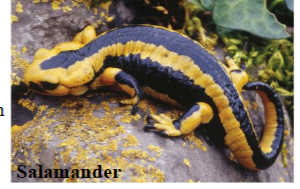
Kingdom Animalia: Vertebrates: Clade Deuterostomia: Phylum Chordata: Subphylum Vertebrata: Class Amphibia
Caecilian (Legless Salamander)

Kingdom Animalia: Vertebrates: Clade Deuterostomia: Phylum Chordata: Subphylum Vertebrata: Class Amphibia
Rana temporaria (Frog)

Kingdom Animalia: Vertebrates: Clade Deuterostomia: Phylum Chordata: Subphylum Vertebrata: Class Reptilia
Ophisaurus (Glass Snake)
Kingdom Animalia: Vertebrates: Clade Deuterostomia: Phylum Chordata: Subphylum Vertebrata: Class Amphibia
Anolis (Green Anole)
Kingdom Animalia: Vertebrates: Clade Deuterostomia: Phylum Chordata: Subphylum Vertebrata: Class Amphibia
Pseudemys (Turtle)
Kingdom Animalia: Vertebrates: Clade Deuterostomia: Phylum Chordata: Subphylum Vertebrata: Class Aves
Columba (Pigeon)
Kingdom Animalia: Vertebrates: Clade Deuterostomia: Phylum Chordata: Subphylum Vertebrata: Class Mammalia
Scalopus (Mole)
Kingdom Animalia: Vertebrates: Clade Deuterostomia: Phylum Chordata: Subphylum Vertebrata: Class Mammalia
Homo sapiens (Human)