Week 3 MA 114 In Person Quiz
 Call Kai
 Learn
Learn Practice Test
 Spaced Repetition
 Match
Match Flashcards
 Knowt Play
1/25

There's no tags or description
Looks like no tags are added yet.
Name | Mastery | Learn | Test | Matching | Spaced | Call with Kai | Chat |
|---|
No analytics yet
Send a link to your students to track their progress
26 Terms
normal blood pressure range
less than 120/less than 80
both systolic & diastolic numbers must be in this range to be considered “normal”
elevated blood pressure range
120-129/less than 80
both systolic & diastolic numbers must be in this range to be considered “elevated”
hypertension stage 1 range
130-139/80-89
only the systolic OR diastolic number must be in this range to be considered “stage 1”
hypertension stage 2 range
140 or higher/90 or higher
only the systolic OR diastolic number must be in this range to be considered “stage 2”
hypertensive crisis range
higher than 180/higher than 120
only the systolic OR diastolic number is needed in this range to be considered “hypertensive crisis”
If a reading of 140/90 or higher is obtained
it is often indicated to take another reading a bit later before leaving, to have two measurements for accuracy and to see if any change occurred
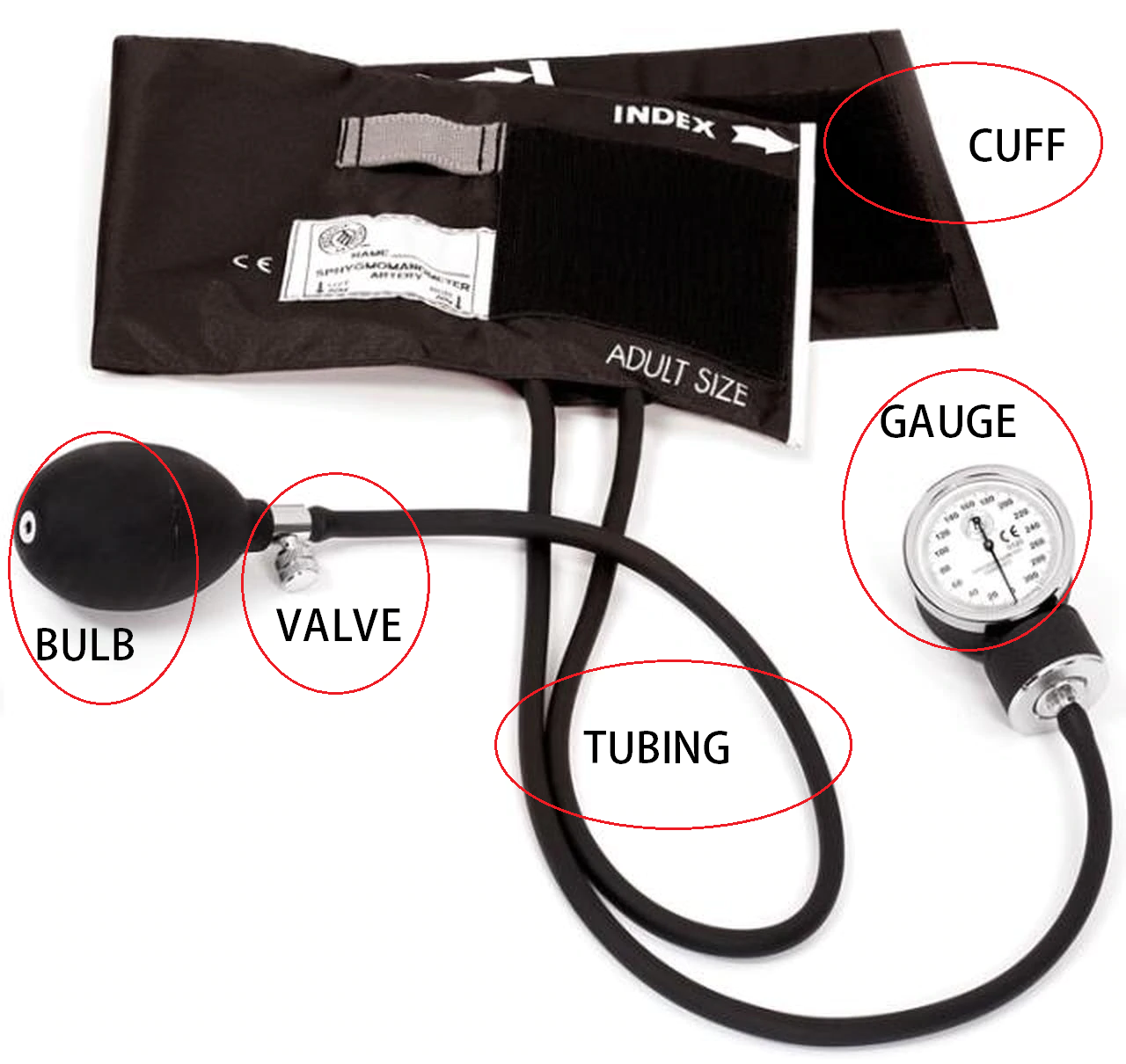
blood pressure cuff
comes in different sizes
includes the:
cuff
bulb
valve
tubing
sphygmomanometer (gauge)
stethoscope
instrument used to hear sounds in the patient’s body, this examination technique is called auscultation
parts include:
earpieces
binaural tubes
rubber or plastic tubing
chestpiece (bell & diaphragm)

equipment needed to take blood pressure
blood pressure cuff
stethoscope
how should a patient be sitting when taking blood pressure
sitting comfortably, with their feet flat and supported, and arm resting at heart level
and ideally their upper and lower arm should be bare, having removed or lifted clothing out of the way
cuff placement
at least 1 inch above the elbow crease
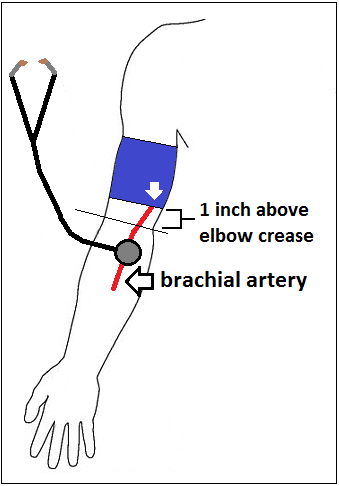
stethoscope bell placement
over the brachial artery at the elbow crease
should be placed over bare skin and not underneath any part of the cuff
how much should you initially fill the cuff
30 mmHg above what the patient’s anticipated systolic reading will be
how fast should the needle fall when the valve is being slowly released
2 mmHg per second
how long should you release the air after the last sound heard
at least 10 mmHg
systolic number
the top number
the first audible heartbeat heard
diastolic number
the bottom number
the last audible heartbeat sound heard
pulse obliteration
gives the anticipated systolic range
the five phases of korotkoff sounds
phase 1: the first tapping sound you hear represents the systolic pressure
phase 2: a string heartbeat changes to a softer, swishing sound
phase 3: a crisp, tapping sound resumes
phase 4: sounds become muffled
phase 5: the point at which the sound disappears; this represents the diastolic pressure
how should aneroid sphygmomanometers be read
as even numbers only
non-disease related blood pressure variance factors
age (down in children, up in elderly, opposite of age pulse relation)
recent activity (up)
anxiety, stress, pain (up)
fitness level (resting pulse rates down with prolonged physical fitness)
caffeine (up)
smoking (up)
disease related blood pressure variance factors
many diseases can cause temporary increase in blood pressure
diagnosis of hypertension cannot be made by just one reading
hypertension along with its partner atherosclerosis, are silent killers. together they are the precursor for chronic vascular and heart disease, which is the number 1 killer in the USA and the world, per the WHO.
medical assistant controlled factors
improper cuff size
poor cuff positioning on upper arm
arm not at heart level
feet not supported
patient silence
needle fall rate
blood pressure should not be taken on an arm
that is on the same side as a mastectomy (breast removal)
that has an injury
a blocked artery
or a device under the skin (implant) at the site
some patient’s arms are too large for large cuffs, which may lead to taking blood pressure on the forearm, thigh, or calf
steps of taking orthostatic blood pressure
Have the patient lie down for 5 minutes (minimum of 3 minutes required)
Measure blood pressure and pulse
Have the patient stand (assistance may be needed as patients can feel lightheaded or dizzy)
Note any symptoms the patient may be experiencing
Measure blood pressure and pulse after 1 minute of standing
Measure blood pressure and pulse after 3 minutes of standing

abnormal orthostatic blood pressure drop
Any drop in blood pressure of 20 mmHg or greater would be considered abnormal.
A drop in diastolic blood pressure of 10 mmHg or greater would be considered abnormal.
Symptoms of lightheadedness or dizziness would also indicate an abnormal test.