life 120 exam 3
 Call Kai
 Learn
 Practice Test
 Spaced Repetition
 Match
 Flashcards
 Knowt Play
1/116

There's no tags or description
Looks like no tags are added yet.
117 Terms
cell division purpose
it supports organism reproduction
asexual reproduction
in unicellular organisms, cellular division reproduces the entire organism
sexual reproduction
in multicellular organisms, cellular division creates germ cells that reproduce by combining with other germ cells
tissue growth in multicellular organisms
division of a single cell can turn into multicellular tissues
cell division allows damaged tissues to reform/be repaired
the big picture of cell division
duplicate cell components
chromosomes
organelles
separate material into two daughter cells
chromosomes
organelles
challenges of cell division
you need enough materials to create two different cells and those cells must be functional
you need to duplicate cell components, DNA copying and passing must have exquisite fidelity
you need to segregate cell components, including ribosomes and other organelles
you need to do this a billion times, and it must respond effectively to outside signals and timing events
genome
all of the cell’s information (DNA)
chromosome
a DNA double helix wrapped around proteins
chromatin
substance that makes up eukaryotic cells
consists of DNA and proteins
each eukaryotic species has it’s own characteristic number of chromosomes
human genome
has 46 total chromomsomes
somatic cells
cells that aren’t involved in reproduction
skin cells, brain cells, muscle cells, etc
46 chromosomes with 23 homologous pairs
germ cells
cells that are involved in reproduction
eggs and sperm
23 chromosomes that come from each individual homologous pairs
karyotype
a display of the chromosomes in a cell
chromosome structure before division
prior to cell division, the entire chromosome replicates
duplicated chromosome
has two identical copies of the same information
condense prior to replication
consists of sister chromatids that are joined by centromeres
cell division separates sister chromatids

interphase
90% of the cell cycle
g1 (first gap): longest
g0: cell division does not occur, cell leaves cell cycle
s (synthesis: reduplication
g2 (second gap): ready for duplication
mitotic phase
10% of cycle
mitosis: nuclear division
cytokinesis: cytoplasm division
g2 of interphase
centrosomes have duplicated
nuclear envelope surrounds the nucleus
duplicated chromosomes have not yet condensed
prophase
chromosomes and centrosomes have duplicated
mitotic spindle forms, pushing the two centrosomes away from each other
chromosomes condense, duplicated chromosomes appear to have two sister chromatids
prometaphase
nuclear envelope starts to dissolve
microtubules invade nuclear envelope area and attach to chromatids through kinetochores
chromosomes are pulled back and forth by microtubules
non-kinetochore microtubules interact with each other
metaphase
chromosomes align in the middle in the metaphase plate
centrosomes are at opposite ends of the cell
microtubules are attached to the chromatids from opposite poles through kinetichores
anaphase
sister chromatids are separated and are pulled to opposite poles
cell begins to elongate as nonkinetochore microtubules lengthen
two ends of the cell gain a full set of chromosomes
telophase/cytokinesis
nuclear envelope reforms
chromosomes become less condensed
spindle depolymerizes
cell membrane divides cytoplasm at cleavage furrow
mitotic spindle
made up of microtubules and associated proteins
controls chromosome movement during mitosis
in animal cells, spindle microtubule assembly begins at the centrosomes
microtubules reorganize to form the mitotic spindle and segregate chromosomes
microtubule structure
narrow tubes that are made of tubulin proteins
they are oriented
plus end and minus end
they are dynamic
they grow by adding tubulin to the plus end
they shrink by losing tubulin from the minus end
microtubule length is dictated by the adding and subtracting of subunits from each end
dyenin
moves to the minus end
kinesin
moves to the plus end
centrosome formation and movement
prophase: microtubules elongate from centrosomes, push centrosomes apart
prometaphase: centrosomes at opposite ends of cell, microtubules attach to chromosome kinetichores
centrosome
microtubule organizing centers, duplicate prior to cell division
chromosome movement
prometaphase: microtubules pull chromosomes towards cell pole, movement opposed by pull from other pole
metaphase: the chromosomes have been aligned along the metaphase plate
anaphase: cohesion proteins are digested, allow sister chromatids to separate, pulled towards each pole
how do chromosomes pull apart?
they are pulled apart by motor proteins through the mitotic spindle
chromosomes can be “reeled in” by motor proteins that are anchored at the centrosome
chromosomes can be “walked in” by motor proteins anchored at the chromosome
photobleaching experiment
microtubules are coupled to a fluorescent marker
a region of the microtubule is photobleached
cytokinesis is driven by:
actin-based cell body contraction
actin-based cell body contraction
actin forms long filaments
antiparallel myosin motors move these filaments
actin-myosin complexes make up contractile ring
myosin activity causes ring to contract, form cleavage furrow
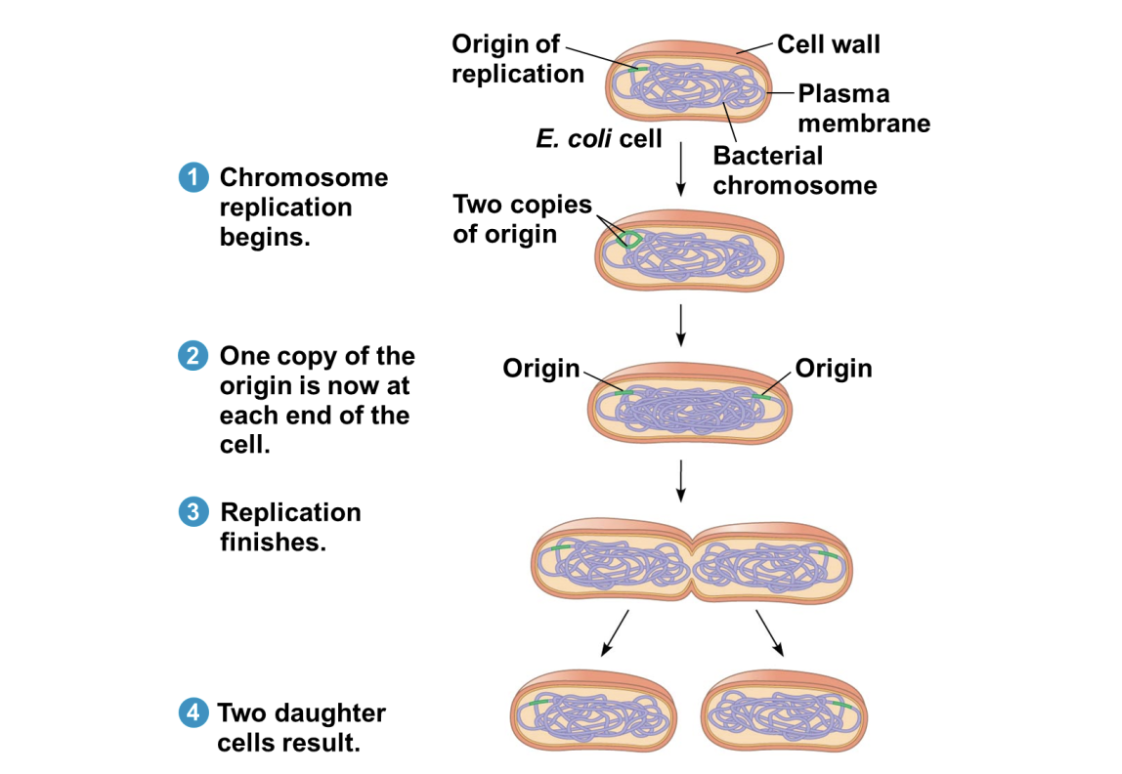
cell division in bacteria
prokaryotes reproduce through binary fission
in e.coli, the single chromosome replicates, beginning at the origin of replication
the two daughter chromosomes actively move apart while the cell elongates
the plasma membrane pinches inward, dividing the cell
growth factors
proteins released by other cells that stimulate cell growth
PDGF
pdgf
released by platelets, stimulate fibroblast division and wound healing
density-dependent inhibition
cells in contact with other layers will stop dividing and create a monolayer
cell cycle control system
the cell has a series of checkpoints where various signals determine whether a cell can proceed through the cell cycle
these checkpoints register signals from inside and outside the cell
cancer
results from unchecked cell division
does not respond well to cell cycle checkpoints or control mechanisms
mitosis for homologous chromosomes

genetic inheritance
genetic information is passed down from generation to generation
key to natural selection
heredity
transmission of traits from one generation to another, genetic factors cause offspring to resemble their parents
variation
differences in appearance that offspring show from parents, siblings, and others
genetic information: more than appearances
most characteristics of organisms are influenced by environmental and genetic factors
affects outward appearances
genetic factors regulate many different traits
homeostasis
performance
disease susceptibility
genes
units of heredity, represent a particular region of DNA
genes are passed from one generation to the next as part of chromosomes
alleles
variants of a given gene, due to slight differences in DNA sequence
locus
the position of a gene within a chromosome
homologous chromosomes
same size
same banding pattern
same genes in the same loci
may have different alleles
DNA sequences are nearly identical, but may have important differences that give rise to alleles
sex chromosomes
chromosomes that determine the genetic sex of an organism
women = homologous pair of XX
men = x and y chromosome
autosomes
the remaining 22 chromosomes
more about somatic cells
one set from mother, one set from father
each pair of homologous chromosomes include one chromosome from each parent
more about gametes
produced by germ cells in reproductive organs (ovaries and testes)
each chromosome is either maternally or paternally derived
ploidy
number of sets of chromosomes
n = number of chromosomes in single set
humans: n = 23 chromosomes
diploid
having two sets of chromosomes
human somatic cell: 2n = 46
haploid
one set of chromosomes
gamete: n = 23
asexual reproduction
a single individual passes genes to its offspring without the fusion of gametes
clones
a group of genetically identical individuals
sexual reproduction
two individuals give rise to offspring that have unique combinations of genes inherited from the two parents
life cycle
the generation-to-generation sequence of stages in the reproductive history of an organism
human life cycle
multicellular diploid adults produce haploid gametes in reproductive organs by meiosis
resulting sperm and egg cells have one chromosome from each homologous pair
haploid gametes fuse during fertilization, creating a zygote
the zygote produces somatic cells by mitosis, develops a mature organism
zygote
resulting fertilized egg, contains one set of chromosomes from each parent
alternation of generations life cycle
includes multicellular diploid and haploid stages
plants and algae
sporophyte: diploid organism that creates haploid spores through meiosis
each spore grows by mitosis and creates a haploid organism called the gametophyte
gametophyte: make haploid gametes by mitosis
fertilization of gametes results in a diploid sporophyte, which grows by mitosis into multicellular sporophyte
meiosis
preceded by replication of chromosomes like mitosis
takes place in two sets of cell divisions: meiosis i and ii
two cell divisions result in four daughter cells
each daughter cell has only half as many chromosomes as the parent cell
meiotic divisions
first meiotic division: homologous pairs of chromosomes pair and separate
second meiotic division: sister chromatids of each chromosome separate
four new haploid cells are produced as a result
independent assortment of chromosomes
homologous pairs are oriented randomly during metaphase i of meiosis
homologous pairs sort maternal and paternal homologs into daughter cells independently of other pairs
the number of combinations possible when chromosomes assort independently into games is 2^n, where n is the haploid number
for humans, there are more than 8 million (2²³) possible combinations of chromosomes for gametes
crossing over
produces recombinant chromosomes, which combine DNA inherited from each parent
begins very early in prophase i
homologous portions of two nonsister chromatids trade places
crossing over contributes to genetic variation by combining DNA, producing chromosomes with new combos of maternal and paternal alleles
random fertilization
adds to genetic variation because any sperm can fuse with any ovum
fusion of two gametes produces a zygote with any of about 70 trillion diploid combinations
character
heritable feature that varies among individuals
trait
variant of a particular character
blending hypothesis
initial ideas on genetic inheritance were that genetic material tended to blend during successive generations
particulate hypothesis
parents pass on discrete heritable units (genes) that remain intact across generations
model organisms
non-human species that is studied to understand basic biological processes
benefits of snow peas
they have many characters with traits that are visually discernable
they can be grown in large enough numbers that overall patterns can be determined by statistics
matings can be controlled between plants
snow peas normally ______
self-fertilize
controlled matings
1) remove stamens from purple flowers
2) transfer sperm-bearing pollen from stamens of another flower
3) pollinated carpel matures into a pea pod
4) plant seeds fro pods
5) offspring develop
keys to mendel’s experimental design
chose to study only characters that occured in two distinct alternative forms
used plants that were true-breeding for many generations
tracked plants through three generations
true breeding
produce offspring with the same trait when they self-pollinate
mendel’s mating strategy
cross 1: hybridization = mated two contrasting, true breeding plants
true breeding parents are the p generation
hybrid offspring of the p generation are called the f1 generation
cross 2: allows f1 individuals to self-pollinate or cross pollinate with other f1 hybrids
offspring of the f1 generation are the f2 generation
mendel’s model of genetic inheritance
1) alternative versions of genes account fr variations in inherited characters
2) for each character, an organism inherits two alleles, one from each parent
3) if the two alleles at a locus differ, then one (dominant) determines the organism’s appearance, and the other (recessive) has no noticeable effect on appearance
4) the two alleles for a heritable character separate during game formation and end up in different gametes
1) alternative versions of genes account fr variations in inherited characters
alleles
each gene resides at a specific locus on a chromosome
2) for each character, an organism inherits two alleles, one from each parent
mendel made this deduction without knowing th existence of chromosomes
two alleles at a particular locus may be identical, p1 generation
two alleles at a particular locus may differ, f1 generation
4) the two alleles for a heritable character separate during game formation and end up in different gametes
law of segregation
an egg or sperm gets only one of the two alleles
segregation of alleles corresponds to distribution of homologs to different gametes in meiosis
phenotype
organism’s physical makeup
beacuse of dominant and recessive allels, an organism’s traits don’t always reveal genetic composition
genotype
organism’s genetic makeup
homozygous
having two identical alleles for a gene
heterozygous
having two different alleles for a gene
punnet squares
1) different possible gametes are placed on each axis
2) potential fertilization events are represented by gamete combinations in the center squares
3) genotypes for each offspring converted to phenotypes
testcross
used to determine genotype of individual w/ dominant phenotype
cross with homozygous recessive
if any offspring display recessive phenotype, then original must have been heterozygous
p generation
consists of plants that are true-breeding for both characters
f1 generation
will be heterozygous for both genes
law of independent assortment
states that each pair of alelles segregates independently of each other pair of alleles during gamete formation
applies to genes on different chromsomes or those far apart on the same chromosome
genes located near each other on the same chromosome are inherited together
genetic inheritance and probability
mendel’s law of segregation and independent assortment reflect the rules of probability
mutliplication rule
probaiblity of two or more independent events occur together due to the product of their individual probabilities
addition rule
probaiblity that two or more mutually exclusive events will occur
beyond mendelian genetics
not all heritable characters are determined as simply as the traits mendel studies
basic principles of segregation and independent assortment still apply ot the inheritance of chromosomes/genes for complex characters
these genes have more complicated ways of expressing phenotype instead of dominant-recessive relationships
incomplete dominance
the phenotype of the heterozygote is between homozygote recessive and dominant
due to the biochemical actions of the underlying alleles/proteins
codominance
two dominant alleles affect the phenotype in separate, distinguishable ways
multiple alleles/blood type
most genes have more than two alleles in nature
blood type: a, b, ab, o
three blood alleles: a, b, o
alleles code for different enzymes that adds carbohydrates to the surface of blood cells
the enzyme encoded a adds a carb, enzyme for b adds b card, enzyme for o adds neither