Innovation management
 Call Kai
 Learn
 Practice Test
 Spaced Repetition
 Match
 Flashcards
 Knowt Play
1/9

There's no tags or description
Looks like no tags are added yet.
10 Terms
innovation
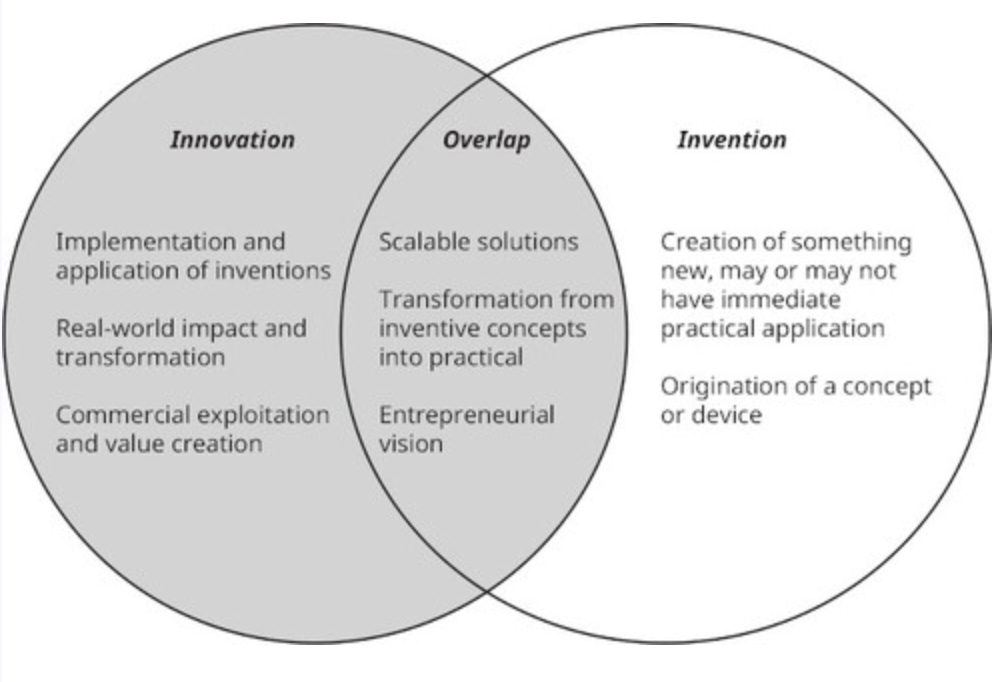
Innovation is distinguished from mere invention or novelty.
a continuous and purposeful process that involves turning original ideas or solutions into practical outcomes that address specific needs and deliver value to the intended users or stakeholders.
The Innovation Formula
A key framework introduced is
Innovation = Originality + Value Creation + Diffusion.
Success of innovation depends on the interplay of three elements:
Strategic Importance: Innovation is presented as a critical driver for individual growth, organizational performance, and national competitiveness.
Management Roles: Innovation management is split into two primary focus areas:
Solution Development: Converting ideas into practical, market-ready products or services.
Strategic Leadership: Guiding organization-wide innovation strategies, culture, and long-term goals.
Evolutionary Context: Innovation is an evolving process, increasingly focused on sustainability, digital transformation, and social responsibility.
innovation ←→ invention
Distinguishing Real Innovations
Copying or Minor Modifications
Misleading Marketing Tactics
product identical to previous versions
using marketing to create a false perception of innovation
Aesthetic Changes Without Improved Functionality
Market Expansion Without Innovation
Technology Adoption Without Innovation
an organisation incorporating a readily available technology, such as a new software, without contributing to its innovation.
Innovation management roles fall into two groups
one group focuses on creating and applying solutions at the product, service, or technology level
the other group works at the top management level, usually with C-suite or Director roles, to guide an organisation-wide innovation strategy
Roles Focused on Strategic Leadership and Organisational Innovation require:
effective resource management
creating an innovation-friendly environment
addressing challenges such as resistance to change and integrating innovation with ongoing business operations
History of Innovation Management
The First Wave (late 18th century): Fuelled by the mechanisation of the textile industry and the advent of the water wheel and steam engine.
The Second Wave (mid-19th century): Driven by the expansion of railroads and the steel industry.
The Third Wave (late 19th to early 20th century): Catalysed by electricity, chemicals, and the internal combustion engine.
The Fourth Wave (mid-20th century): Powered by petrochemicals, electronics, and aviation.
The Fifth Wave (late 20th century): Dominated by digital networks, software, and new media.
Entering the 21st century, there is growing discussion about the potential “Sixth Wave” of Kondratieff, which could be significantly influenced by sustainable innovations and technological megatrends.
Contemporary Innovation Management
Customer-Centric and Agile Methodologies
Collaborative Ecosystems
Digital Transformation and Technology Integration
Sustainability and Social Responsibility