Biodiversity Unit 2 - Frazier
 Call Kai
 Learn
Learn Practice Test
 Spaced Repetition
 Match
Match Flashcards
 Knowt Play
1/122

There's no tags or description
Looks like no tags are added yet.
Name | Mastery | Learn | Test | Matching | Spaced | Call with Kai | Chat |
|---|
No analytics yet
Send a link to your students to track their progress
123 Terms
Ploidy
the number of sets of chromosomes in a cell
Haploid (n)
one set of chromosomes
Diploid (2n)
two sets of chromosomes in pairs
Mitosis
nuclear division which produces two cells of identical number of chromosomes
Cytokinesis
when the cytoplasms of a cell splits to make two separate cells
What does mitosis followed by cytokinesis create?
two identical daughter cells
Meiosis
diploid cell makes 4 genetically different haploid daughter cells
What organisms reproduce zygotically?
fungi, algae
What organisms reproduce gametically?
animals
What organisms reproduce sporically?
plants and some algae
How do fungi feed?
extracellular digestion and nutrient absorption
saprobe (decomposer)
breaks down dead organic material into simple organic compounds
Mutualism
interaction between two or more species in which both species benefit from the interaction
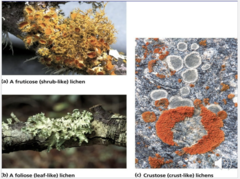
Lichens
algae/cyanobacteria living together with fungus (asco/basidiomycota)
Types of lichens
fruticose (shrub-like), foliose (leaf-like), crustose (crust-like)
Mycorrhizae
mutualistic relationship between fungi and plant roots that help a plant get nutrients
Commensalism
an interaction between two or more species where one benefits and the other is not affected
Parasitism
interaction between two or more species where one species is harmed while the other benefits
Fungi body structure
cell wall made of chitin, various ploidy of hyphae, fruiting body, mycelium

Septate hyphae
hyphae with cells divided by cell walls
Coenocytic hyphae
hyphae with no cell walls (multi-nucleated)
Haustorium hyphae
hyphae that inserts itself inside the host cell and injects haustorium (septate)
Fungi spend most of their life in which ploidy
haploid
Heterokaryotic (n+n)
fusion of two haploid hyphae
What is the ploidy in fungi asexual reproduction
Only haploid
When do spores germinate
when conditions are favorable
Plasmogamy
when the plasma membranes of hyphae fuse
Karyogamy
when genetically different nuclei within the same hyphae cell fuse
Generalized life cycle of fungi

Phylogeny of Fungi
Chytridiomycota, Zygomycota, Ascomycota, Basidiomycota

Phylum Chytridiomycota
- "chytrids"
- aquatic with flagellated zoospores
- possible ancestor of terrestrial multicellular fungi
- some are parasites of algae, plants, animals
- chytridimycosis - disease in frogs caused by a chytrid
Phylum Zygomycota
- "zygote fungi"
- mostly terrestrial
- spores dispersed by air
- coenocytic hyphae
- zygosporangia - fruiting body
- zygospores - sexual spores
- sporangiospores - asexual spores
- ex: rhizopus - black bread mold
Phylum Zygomycota Life Cycle
Asexual: Dispersal and germination of spores from sporangium, then it becomes mycelium and then back to the sporangia to produce more spores
Sexual: Dispersal and germination of spores from sporangium, then mating type (+) and mating type (-) connect and become gametangia with haploid nuclei, then plasmogamy to make young zygosporangium (heterokaryotic), then through karyogamy to make diploid nuclei, then through meiosis to start the process over again

Phylum Ascomycota
- "sac fungi"
- most diverse group
- live in marine, freshwater, or terrestrial environments
- free-living, parasites, or symbiotic
- unicellular (yeast) to large fungus
- spores dispersed by air
- ascus- spore producing structure (spore sac)
- ascocarp - fruiting body made of asci
- conidia - asexual spores
- conidiophore - specializes stalks that release conidia
Phylum Ascomycota Life Cycle
Asexual: Condidiophore disperses conidia (spores)and germinates to make mycelium, then cycle starts over
Sexual: Two genetically different mycelia (antheridium and ascogonium) undergo plasmogamy, then the antheridium's nuclei go into the ascogonium (like fertilization) and grows hyphae. A cell grows off from the hyphae called an ascus (n+n), which then undergoes karyogamy , forming a zygote (2n) that immediately undergoes meiosis to form 4 nuclei in the ascus. The 4 nuclei undergo mitosis and form eight ascospores, which are then dispersed and make mycelia

Asexual reproduction in ascomycetes
Asexual spore production, budding (yeast), hypha fragmentation
Budding
the pinching off of an offspring from the parent cell (yeast)
Hypha fragmentation
fragments of hyphae that can separate and grow into new colonies
Asexual spore formation
a haploid cell produces by mitosis from a haploid parent cell
Phylum Basidiomycota
- "club fungi"
- mushrooms, shelf fungi, puffballs, rusts
- major decomposers of wood (lignin)
- mycelia formed by haploid septate hyphae
- only sexual reproduction
- basidium - spore producing structure
- basidiocarp - fruiting body (dikaryotic mycelia)
Phylum Deuteromycota
- "imperfect fungi"
- septate hyphae
- sexual reproduction is absent
- only asexual reproduction through conidia (spores) on conidiophores (spore producing structures)
- ex: athlete's foot, ringworm
Phylum Basidiomycota Life Cycle
- only sexual
- two genetically different mycelia (n) undergo plasmogamy and form a dikaryotic mycelium (n+n), forming individual basidia that create a larger basidiocarp (fruiting body). The basidia undergo karyogamy to form a diploid nuclei (2n), then meiosis to form a basidium with four haploid nuclei. The basidium then releases basidiospores which are then dispersed and grow into mycelia (n)

Where did plants evolve from?
Phylum Chlorophyta (Kingdom protista), Class Charophycea
What do charophytes and land plants have in common?
Intracellular structures, structure of flagellated sperm, structures that synthesize cellulose, presence of chloroplasts, chlorophylls A and B
What life cycle type do plants have?
Sporic type
General Characteristics of Plants
- sporic life cycle
- multicellular
- photosynthetic autotrophs
- chlorophylls A and B
- monophyletic kingdom
- cellulose based cell wall
- reproduce by alternation of generations (gametophyte and sporophyte)
gametophyte
the phase in a plant life cycle where gametes are produced
sporophyte
the phase in a plant life cycle where spores are produced
Haploid spores are released and grow into...
haploid gametophytes
What does the diploid sporophyte produce?
haploid spores via meiosis
what does the haploid gametophyte produce?
haploid gametes via mitosis
Syngamy
fusion of gametes
Isogamy
sexual reproduction by the fusion of similar gametes
Anisogamy
sexual reproduction by the fusion of dissimilar gametes
Oogamy
sexual reproduction in which one of the gametes (the egg) is large and nonmotile and the other gamete (the sperm) is smaller and motile
Plants colonized land around
400 mya
Physical characteristics of plants
- root system
- conduction tissue
- cuticle (wax surface)
- stomata
- support tissue
- gametes protected within gametangia
- apical meristems
- starch storage
- chlorophylls A and B
Bryophytes
nonvascular plants
Characteristics of Bryophytes
- lack vascular tissue
- gametophyte is dominant
- sporophyte is ephemeral and dependent on the gametophyte
- have cuticle on their simple leaf-like structures
- found in moist areas
- flagellated sperm cells
- dependent on water for fertilization
- have rhizoids
- have a cuticle and stomata
cuticle
a waxy covering on leaves and stems that prevents water loss
stomata
pores on a leaf that allow for oxygen and carbon dioxide exchange
ephermeal
short-lived
rhizoids
root-like structures used for anchorage (not true roots)
Phylum Bryophyta
- "mosses"
- most advanced of the bryophytes
- have conducting cells (not tissues)
- have rhizoids
- have protonemata
- have cuticle and stomata
Phylum Bryophyta Life Cycle
spores are released from the sporangium, which then grow through mitosis into a protenemata, then a bud, and form a male and female gametophyte. The male gametophyte, called an antheridium, produces sperm. The female gametophyte, called an archegonium, produces eggs. The sperm fertilizes the egg in a raindrop within the archegonium. The zygote grows into an embryo, then a sporophyte with a sporangium on top. The sporangium undergoes meiosis and releases spores.

Phylum Hepatophyta
- "liverworts"
- simplest of all the bryophytes
- lack cuticle and stomata
- ex: marchantia

Phylum Anthocerophyta
- "hornworts"
- closely related to green algae
- have stomata
- tall, narrow sporophyte attached to gametophyte

Characteristics of seedless vascular plants
- have a vascular system made of xylem and phloem
- sporophyte is dominant stage
- gametophyte is ephemeral
- branching made possible for more sporangia to be produced
- sporangia are arranged in strobili
- posses true roots
- posses true leaves (mircophylls and megaphylls)
Xylem
vascular tissue that transports water and nutrients
Phloem
vascular tissue that moves sugars and hormone throughout the plant
Strobili
groups of sporophylls in cone-like, helical structures
Hypothesis for the evolution of leaves
Microphylls came from green tissue (photosynthetic cells) that experienced invaginations and made one "branch"
Megaphylls came from microphylls that continued to branch out and eventually began developing green tissues that evolved into leaves

Bisexual (in plants)
plants with both male and female reproductive structures
Monoecious
plant that contains male and female reproductive organism in one organism
Dioecious
contains male and female reproductive organs on separate organisms
Phylum Lycophyta
- "club mosses"
- extinct and extant species
- microphylls
- ephemerous gametophyte is unisexual or bisexual
- sporophyte is dominant
- sporphylls arranged in strobili
- Major group in forming coal
- ex: lycopodium, selaginella, isoetes
Phylum Sphenophyta
- "horse tails"
- extinct and extant species
- stems contain silica
- scale-like leaves and nodes
- may have separate vegetative and reproductive shoots
- bisexual ephemerous gametophyte
- sporophyte is dominant
- ex: equestrium
Phylum Psilophyta
- "whisk ferns"
- extinct and extant species
- no roots or leaves
- dichotomous (two) branching stems
- fused sporangia as the "yellow ball"
- sporophyte is dominant
- ephemerous gametophyte is bisexual
- "naked" seeds
- ex: psilotum

Phylum Pterodophyta
- "ferns"
- extinct and extant species
- possess roots, fronds (megaphylls), fiddleheads, and sori
- sporophyte is dominant
- emphermous gametophyte is mostly bisexual
sporangium
contains haploid spores that grow into gametophyte
antheridium
male sex organ which contains sperm
archegonium
female sex organ which contains eggs
Life Cycle of a Fern
Sporangia release spores, which develops into a bisexual photosynthetic gametophyte. Each gametophyte (archegonium - female; antheridium - sperm) releases gametes. The sperm fertilizes the egg within water (rain, soil, etc), forming a zygote. The zygote grows into a sporophyte on top of the gametophyte, and has sacs containing sporangium (sori), which release spores.

Homosporous spore production
sporangium in sporophyll --> single type of spore --> bisexual gametophyte --> eggs/sperm
Heterosporous spore production (female)
Megaporangium in megasporophyll --> megaspore --> female gametophyte --> egg
Heterosporous spore production (male)
Microsporangium in a microsporophyll --> microspores --> male gametophyte --> sperm
Gametophyte is dominant in
bryophytes only
Sporophyte is dependent on gametophyte in
bryophytes (nonvascular)
Sporophyte and gametophyte are independent of each other in
ferns (seedless vascular plants)
Gametophyte is dependent on sporophyte in
seed plants (gymnosperms, angiosperms)
Terrestrial Adaptations of Seed Plants
- reduced gametophytes (ovules and pollen grains) retained and protected in moist sporophytic reproductive tissue
- heterospory - male and female spores are produced in different structures
- Pollination
- The seed (mature fertilized ovule)
- Secondary compounds
seed development
Female gametophyte is fertilized by a male gametophyte and develops into a young sporophyte inside a seed coat made of integument

Gymnosperms
- "naked seeds"
- do not produce flowers
- seeds exposed within cone
Phylum Cycadophyta
- "cycads"
- 320 mya
- palm-like leaves
- highly toxic compounds
- reproduce through cones
- dioecious
- beetles are important pollinating agents
- Only North American cycad: coontie (releases cicasin, a toxic alkaloid)

Phylum Ginkgophyta
- Mostly extinct
- Only surviving species: Ginkgo biloba
- Fan-like leaves
- Dioecious

Phylum Gnetophyta
- has characteristics of both gymnosperms and angiosperms
- fleshy leaves
- strobili similar to some inflorescence
- 3 genera: gnetum (tropical), ephedra (Arizona), welwitschia (Africa)

Phylum Coniferophyta
- "conifers," "evergreens"
- oldest, tallest, largest trees
- needles adapted to drought conditions (dry winters)
- important for lumber, paper, etc.
- Ex: sequoia (redwood), pines, junipers, bald cypress,

Ovulate cone
-megastrobilus with megasporophylls (scales)
Staminate cone
microstrobilus with microsporophylls (pollen cones)
Sporogenesis
formation of spores