Safavids: Political History and Notable Figures
 Call Kai
 Learn
 Practice Test
 Spaced Repetition
 Match
 Flashcards
 Knowt Play
1/10

There's no tags or description
Looks like no tags are added yet.
11 Terms
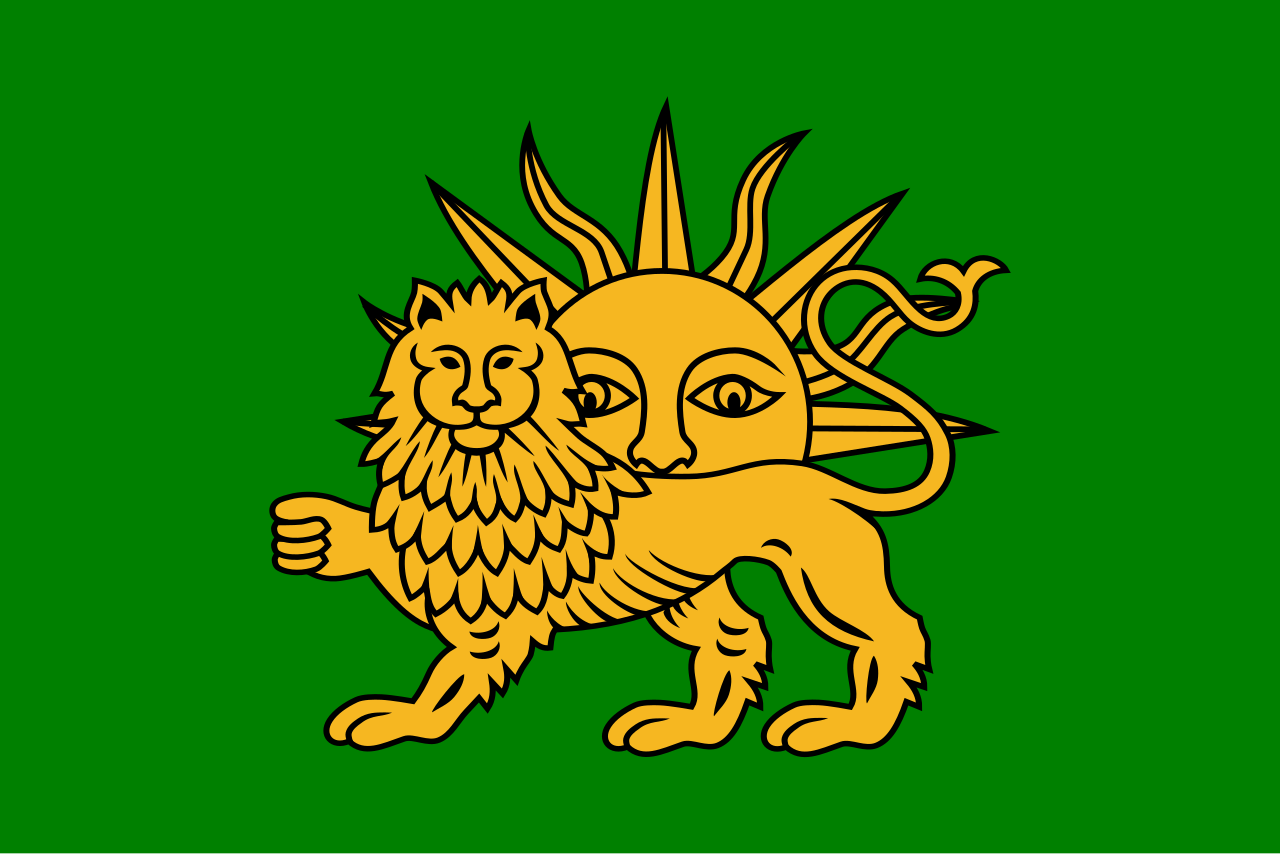
1501 - 1736 - Safavid Dynasty (All Facts)
They were originally founded as a religious order in 1301 by Safi al-Din, and established themselves in eastern modern-day Azerbaijan over the next 200 years, making alliances and then falling out with the Aq Qoyunlu confederation, which had previously dominated Persia
They were Shia
Apparently, they were originally Sunni but moved towards militant Shia under their family leader Khwaja Ali
They were of the “Twelver Shia” denomination of Shia, which believed in a succession of twelve divinely appointed leaders known as the “Imams”
They were natives of Iran (Persia)
They claimed to be descendants of the Great Prophet

1501 - 1524 - Ismail (All Facts)
First Shah and Founder of the Safavid Empire and Dynasty of Persia (Iran)
He came to power after he and his forces defeated 30K forces in the Aq Qoyunlu confederation in the Battle of Sharur and after he and his forces marched into Tabriz following the battle
Prior to his rule, the Safavid Order had still existed and many of its leaders were killed
Although his predecessors Juayd, Haydar, and Ali all died by the Aq Qoyunlu confederation, Ali’s son, the namesake, eluded the Aq Qoyunlu and lived in hiding before leading a successful military revolution
The vital military factor in the namesake’s success was the loyalty of the fierce Turkoman tribesmen called the Qizilbash
However, upon his rule, he had a successful propaganda operation in which its creators worked from their base in Ardabil, east of Azerbaijan and kept alive a distinctive faith designed to attract non-Ottomans
He unified the Iranian peoples again to rule for the first time in Iran since the days before the Rashidun Caliphate
During his reign,
his administration pursued the conversion of the Iranian peoples to Shia Islam with ruthless dedication
They believed in Twelver Shia, that there was a line of 12 infallible “imams” from Ali to Mohammed
he ordered Sunni dissenters to be executed
he imported “ulama” from Arab lands including Bahrain, Hilla in Mesopotamia, and Jabal Amil in Lebanon
he installed Babur in Samarkand
he dismissed Turkoman wakil with Persians, reducing Qizilbash influence in the government
He
eliminated the Aq Qoyunlu confederation
He and his forces defeated the remainder of the Aq Qoyunlu confederation in the Battle of Hamadan
From there, he and his forces gained control of central and southern Persia
conquered the Khurasan region
He and his forces defeated Muhammad Shaybani and his forces of the Bukhara Khanate in the Battle of Merv
He and his forces then seized Herat, Bactria, and Khiva
subdued the Caspian provinces of Mazandaran and Gurgan
captured Yazd
annexed Diyar Bakr
pacified the western frontier
seized Baghdad (modern-day Iraq)
thus
conquered central, southern, and southwestern Persia
expanded the Safavid Empire from the Tigris River in the West to the Oxus River in the East (where the Uzbeks roamed)
He made it so that the Safavid Empire rivalled the Ottoman Empire
helped Humayun and his Mughal forces capture Kandahar
He died and was succeeded by his son
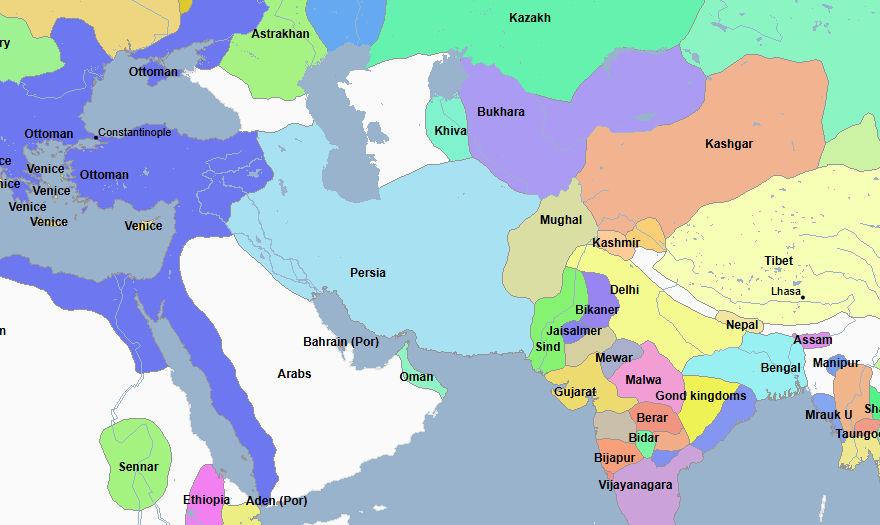

1524 - 1576 - Tahmasp (All Facts)
2nd Shah of the Safavid Empire
He ruled for 43 years
He had executed Husayn Khan, the head of the Shamlu tribe at the time, and assumed power in-person, consolidating his power
He worked to keep Safavid Persia’s boundaries intact and keep peace within its boundaries by
avoiding pitched battles with the Ottoman Empire
taking decisive action when necessary against the Ozbegs (Uzbeks) in the East
This occurred when the tyranny of the Qizilbash tribe in the east prompted a section of the native Persian population to seek the help of the Ozbeg (Uzbek) ruler, Ubayd Allah, and seize Herat; but the namesake responded by approaching and the Ozbegs (Uzbeks) simply retreated and Khurasan was not threatened thereafter during his reign
He and his Safavid forces
were defeated by
Suleiman and his Ottoman forces in the Second Ottoman-Persian War
They gave up Baghdad (in the southwest) to the Ottomans
They gave up Tabriz (to the northwest), which used to be the Safavid capital, to the Ottomans, twice
However, the namesake’s scorched-earth policy was effective in preventing any other takeovers by Suleiman and his Ottoman forces
He signed the
Peace of Amasya with Suleiman of the Ottoman Empire, ending the Second Ottoman-Persian War
He moved the Safavid capital from Tabriz to Qazvin
During his reign,
the tensions between the Ottoman military class, the tyrannical Qizilbash tribesmen, and the Safavid bureaucracy was kept well under control
slaves from the Caucasus Mountains region became integrated into the Persian population
He died and was succeeded by his son, who had to outcompete his brotherly rival Haydar for the throne


1576 - 1577 - Ismail II (All Facts)
3rd Shah of the Safavid Empire
He died and was succeeded by his brother

1578 - 1587 - Mohammad Khodabanda (All Facts)
4th Shah of the Safavid Empire
His reign was dominated by rival tribal leaders
He and his Safavid forces
were defeated by Murad III and his Ottoman forces in the Third Ottoman-Persian War
He abdicated and was succeeded by his son

1587 - 1629 - Abbas (All Facts)
5th Shah of the Safavid Empire
He was nicknamed “The Great”
He was born in Herat, having survived the murderous intentions of his uncle
He assumed the throne at the age of 17 after the abdication of his predecessor
He ruled for 42 years
He embarked on an ambitious scheme of urbanization, in which he would make Isfahan one of the most beautiful cities in the world
He had constructed his Royal Mosque or “Masjid-i-Shah,” today known as the “Shah Mosque”
He
eliminated potential opponents of his with extreme cruelty and considerable skill having
had executed many important tribal leaders (having diminished the power of the Quizilbash tribesman by forming new crack units of Caucasian slave-warriors)
had ordered for his own father and brothers to be blinded
had executed two of his five sons
had overseen two of his sons die of natural causes
had ordered two of his five sons to be blinded (for their plan to rebel against him)
During his reign, he
had powerfully centralized his empire, restoring it to the boundaries of his distant predecessors
oversaw his empire becoming internally stable and economically prosperous
He and his Safavid forces
defeated Sultan Ahmed and his Ottoman forces in the Battle of Sufiyan and the Fourth Ottoman-Persian War, retaking Tabriz from the Ottoman Empire
defeated Sultans Ahmed, Mustafa, and Osman II and their Ottoman forces in the Fifth Ottoman-Persian War, in which they recognized the namesake’s reconquest of Persia
took Baghdad, Mosul, and the whole of Mesopotamia to begin the Sixth Ottoman-Persian War
defeated Emperor Jahangir and his Mughal forces in the Third Mughal-Safavid War, taking Kandahar from the Mughal Empire
He signed
The Treaty of Constantinople (with Sultan Murad III of the Ottoman Empire), ending the Third Ottoman-Persian War
He drove back the Turkish Ozbegs (Uzbeks) beyond the Amudarja, having secured his empire’s borders against them
He drove back the Portuguese out of Hormuz Island (with help from England)
He died in Isfahan and was succeeded by his grandson

1629 - 1642 - Safi (All Facts)
6th Shah of the Safavid Empire
He was the grandson of his predecessor
He and his Safavid forces
were defeated by Sultan Murad IV and his Ottoman forces in the Sixth Ottoman-Persian War
Under his reign,
Safavid forces were defeated by Sultan Murad IV and his Ottoman forces in the Siege of Erivan / Yerevan during the Sixth Ottoman-Persian War
Safavid forces were defeated by Sultan Murad IV and his Ottoman forces in the Siege of Baghdad during the Sixth Ottoman-Persian War

1642 - 1666 - Abbas II (All Facts)
7th Shah of the Safavid Empire
He and his Safavid forces defeated Shah Jahan and his Mughal forces in the Fifth Mughal-Safavid War, successfully and successively defending Kandahar from Mughal sieges on it three times in four years
Under his reign,
The Safavids rudely treated Russian traders and ambassadors when they came on a diplomatic mission to Safavid Persia with 800 followers, having been resentful of the Russians when they had discovered that the Russians had come to evade duty on large quantities of merchandise which they had brought with them

1666 - 1694 - Suleiman (All Facts)
8th Shah of the Safavid Empire
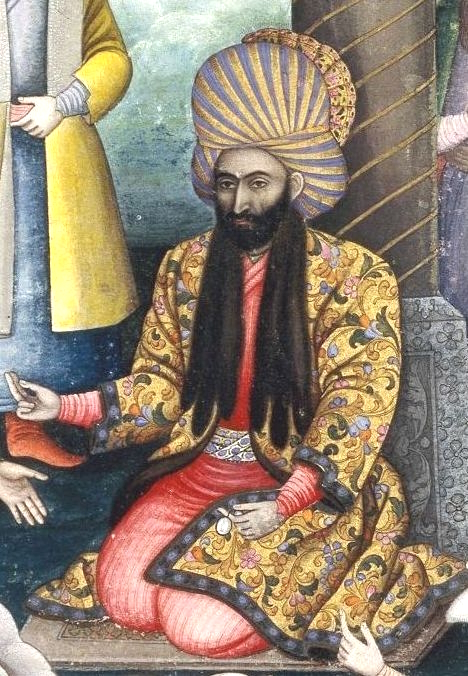
1694 - 1722 - Soltan Hoseyn (All Facts)
9th Shah of the Safavid Empire
He was a devout Shia
He was a weak man, dominated by mullahs whose determination to force Shia Islam on a reluctant population encouraged rebellion
One of his court favorites was Mirwais Hotak, who was initially to his court as a prisoner
During his reign,
He had constructed his Chaharbagh School / Temple (his Madrasha, in Isfahan)
Under his reign,
Mirwais Hotak and his Afghani forces revolted and eventually declared independence from Safavid Persia (Iran)
He thus surrendered Isfahan to Afghan rebels after their seven-month siege in which 80K people died of famine
The surrender of Isfahan represented the collapse of the Safavid Empire
1722 - 1789 - Intermediate Period (All Facts)