1.3-1.6 Heme
 Call Kai
 Learn
Learn Practice Test
 Spaced Repetition
 Match
Match Flashcards
 Knowt Play
1/90

There's no tags or description
Looks like no tags are added yet.
Name | Mastery | Learn | Test | Matching | Spaced | Call with Kai | Chat |
|---|
No analytics yet
Send a link to your students to track their progress
91 Terms
Formula for manual RBC hemacytometer count
(Avg # RBC count dilution 10)/ (length*width) (# squares counted)
RBC count
whole blood (WB) diluted w/ an isotonic diluting fluid and then RBCs counted
RBC count Normal range
4-6 million (10^6) mm³
Reticulocyte count
supravital staining then count retic
Retic normal range
0.5-1.5%
Microhematocrit (hematocrit)
WB spun down in 2 microhematocrit tubes, hematocrit determined by reader
Packed cell volume
Normal Hematocrit range
Men: 42-54%
Women: 36-48%
Hemoglobin
WB diluted w/ reagent containing lysing agent
Normal hemoglobin range
Men: 16 ± 2
Women: 14 ± 2
Erythrocyte Sedimentation Rate (ESR)
allow specific amount of blood to sit in vertical position for one hour
Normal ESR range
Men: 0-20 mm/hr
Women: 0-15mm/hr
Retic Staining
supravital staining
New methylene blue
Brilliant cresyl blue
Composition of reticulum
RNA
Uncorrected retic count
(# of retic /1000 RBCs ) * 100 = reported value (%)
Corrected retic count
Observed RC * (patient HCT/ normal HCT)
*Normal HCT:
Men: 45
Women: 42
RPI
Corrected RC/ 2
only divide by two if there are nRBCs and/ or shift/stress retics on smear
Absolute Retic count
(% retic (uncorrected) * RBC count ) / 100
Form of hemoglobin that cannot be measured by cyanmethemoglobin method?
sulfhemoglobin
4 causes for falsely elevated hemoglobin determination
High WBC count
High Platelet count
Lipemia
RBCs resistant to hemolysis
Rule of “3”
RBC * 3 = ~HGB (hemoglobin)
HGB * 3 = ~HCT (hematocrit) ± 3
if HGB and HCT don’t agree DO NOT report out results
What are the 4 ways microhematocrit are affected?
under centrifugation
not evenly separated
Decreased blood: anticoagulant ratio (“short draw”)
not enough blood to determine ratio
EDTA sit out overnight at room temp
blood expands and unclear reading
Buffy coat read
will cause the reading to be off
3 stages of ESR
Rouleaux ~10 mins
Rapid Falling ~40 mins
Packing ~10 mins
How do plasma proteins impact ESR?
Increase proteins leads to decrease zeta potential which increases rouleaux leading to bigger mass = bigger fall. All together increasing ESR
Which plasma protein has the greatest affect on ESR?
fibrinogen
4 ways ESR affected
Decreases blood: anticoagulant ration “short draw “
did not put enough blood in the tube
EDTA sit overnight at room temp
RBCs expand = false reading
Sedimentation tube not perpendicular
will cause RBCs to packed wrong
Rack holding ESRs placed next to centrifuge
vibrations will cause ESR to fall faster
Mean corpuscular Volume (MCV)
Indicates average VOLUME (size) of RBCs
MCV= (HCT *10) /RBC count
Normal Range for MCV
Normal: 80-100 fL
Micro: <80 fL
Macro > 100 fL
Mean corpuscular hemoglobin (MCH)
indicates average WEIGHT of hemoglobin in RBCs
MCH = (HGB* 10) / RBC count
not really used that often in labs
Normal Ranges for MCH
27-31pg
Mean corpuscular hemoglobin concentration (MCHC)
average CONCENTRATION of hemoglobin in RBCs
MCHC = (HGB * 100) / HCT
Normal range for MCHC
Normal 32-36%
<32% = hypochromia
36-38% = look for spherocytes
No such thing as hyperchromia
Technique to determine RBC size
RBC should be the size of nucleus of lymph or 2/3 size of lymph itself
Anisocytosis
“size variation”
Micro = decrease MCV
Macro = increase MCV
expect RDW >14.5%
Poikilocytosis
shape variations
decrease RBC survival (hemolytic state)
Hypochromia
less color due to less hemoglobin (still red though)
polychromia
Reticulocytes
young non-nucleated RBC
Purple/blue color
microcytosis
RBCs smaller than normal <6um
extra cell division = smaller cell
MCV <80 fL
Macrocytosis
RBCs larger than normal
less cell division
MCV >100 fL

What is this RBC shape?
Acanthocyte
Acanthocyte Morphology and diseases
Morphology
irregular projections
usually no central pallor
Disease(s)
Alcoholic liver Disease
Abetalipoproteinemia

What is this RBC shape?
Bister cells
Blister cells
Morphology
inclusions pitted out by healthy spleen and memb. healed back around creating ‘hole’
Disease(s)
any condition with inclusion bodies

What is this RBC shape?
Burr Cell
Burr Cell
Morphology
uniform projections around cell
central pallor
Disease(s)
due to body change in tonicity
Cancer of stomach, Hemolytic uremic syndrome (HUS), PK, hemolytic anemias
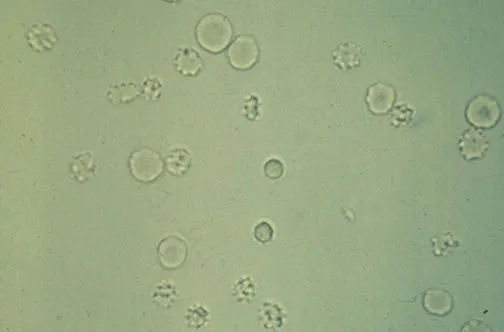
What is this RBC shape?
Crenation
Crenation
Morphology
more spiky than burr cell
drying artifact
drying too fast or making slide
Disease(s)
sometimes severe electrolyte imbalance

What is this RBC shape?
Elliptocytes
Elliptocytes
Morphology
cigar shaped
elongated
Disease(s)
hereditary elliptocytes

What is this RBC shape?
Hemoglobin C crystals
Hemoglobin C crystals
Morphology
“gold bar”
intracellular
Disease(s)
hemoglobin C disease

What is this RBC shape?
Hemoglobin S-C crystals
Hemoglobin S-C crystals
Morphology
“jut” out of cell/ “glove/mitten” shape
Disease(s)
two different mutations
S: changes Gln to Valine
C: changes Gln to lysine
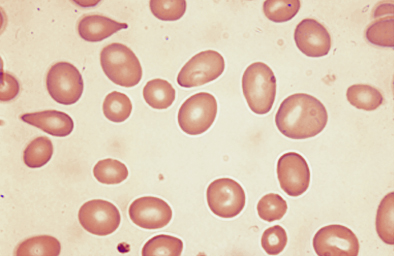
What is this RBC shape?
Macro-ovalocyte
Macro-ovalocyte
Morphology
big oval egg shape
less cell division
Disease(s)
megaloblastic anemia
Pernicious anemia

What is this RBC shape?
Round Macrocytes
Round Macrocytes
Morphology
very round
central pallor
Disease(s)
liver disease
reticulocytotic

What is this RBC shape?
RBC clumps (autoagglutination)
RBC clumps
Morphology
RBC getting stuck together
Disease(s)
cold agglutinin antibody
autoimmune processes

What is this RBC shape?
Rouleaux
Rouleaux
Morphology
stacking of RBC in a line
Disease(s)
multiple myeloma
Waldenstrom’s Macroglobulinemia

What is this RBC shape?
Schistocytes (fragments)
Schistocytes
Morphology
fragments of RBC
Disease(s)
Burn patients
Hallmark of hemolytic anemia

What is this RBC shape?
Sickle Cell
Sickle Cell
Morphology
Pointed and/or folded ends
Disease(s)
Hemoglobin S mutation: gln to Valine

What is this RBC shape?
Spherocytes
Spherocytes
Morphology
dark/dense + small
no pallor
Disease(s)
hereditary spherocytosis
Transfusion of blood
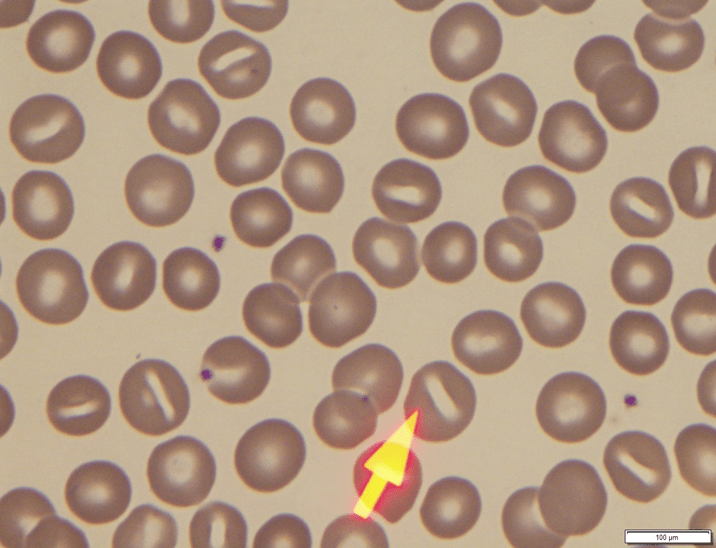
What is this RBC shape?
Stomatocytes
Stomatocytes
Morphology
“coin slot”
drying artifact
Disease(s)
hereditary stomatocytosis
Rn null disease
liver disease
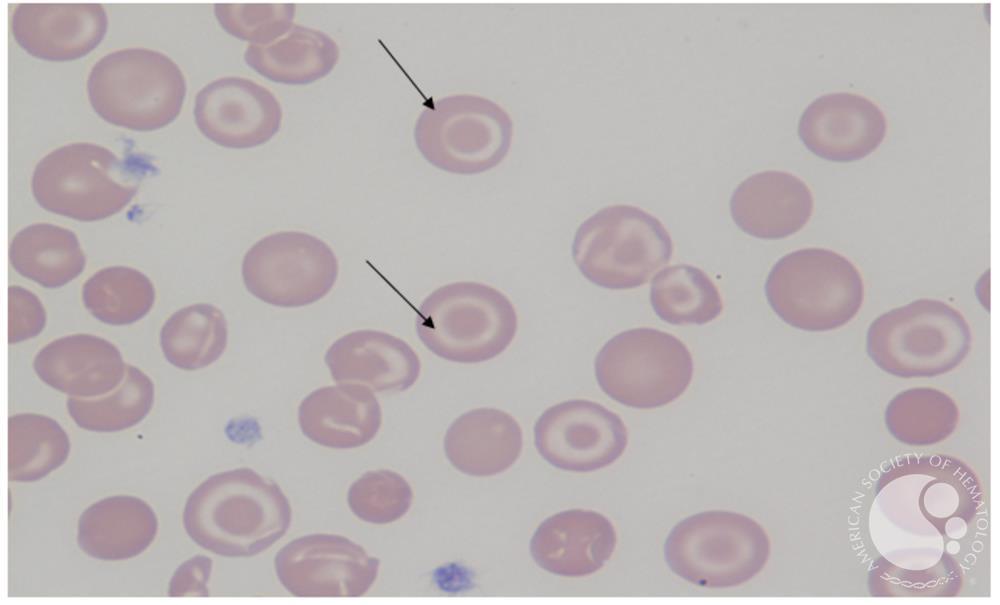
What is this RBC shape?
Target cells
Target Cells
Morphology
most common
“target” look
hemoglobin centered or outside of cell (creates ring)
Disease(s)
hemoglobinopathies
liver disease
thalassemias
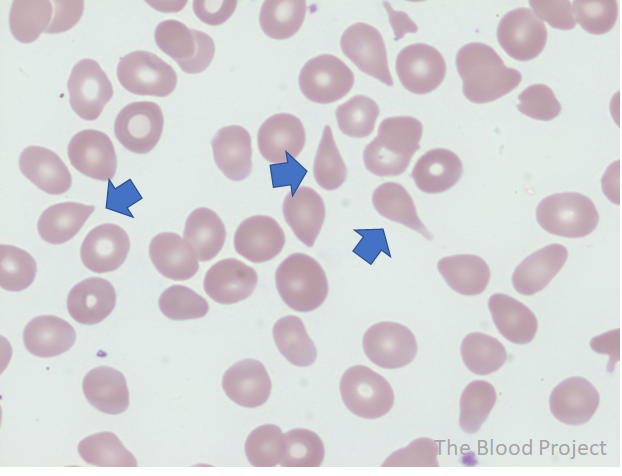
What is this RBC shape?
Teardrops
Teardrops
Morphology
teardrop shape
red cells get squeezed coming out of BM
Disease(s)
megaloblastic anemia
myelofibrosis
tumor in BM

What is this RBC shape?
Mixed cell population
Mixed cell population
Morphology
2 distinct RBC populations
Disease(s)
transfusion therapy
sideroblastic anemia

What is this RBC inclusion?
Basophilic Stippling
Basophilic Stippling
Morphology
purple/blue dots on wright stain
Altered RNA
Disease(s)
lead poisoning
Thalassemia

What is this RBC inclusion?
Howell-jolly bodies
Howell-jolly Bodies
Morphology
round purple/black dot
“mole”
DNA nuclear remnants
Disease(s)
Sickle cell
Megaloblastic anemia
post-splenectomy
anemias
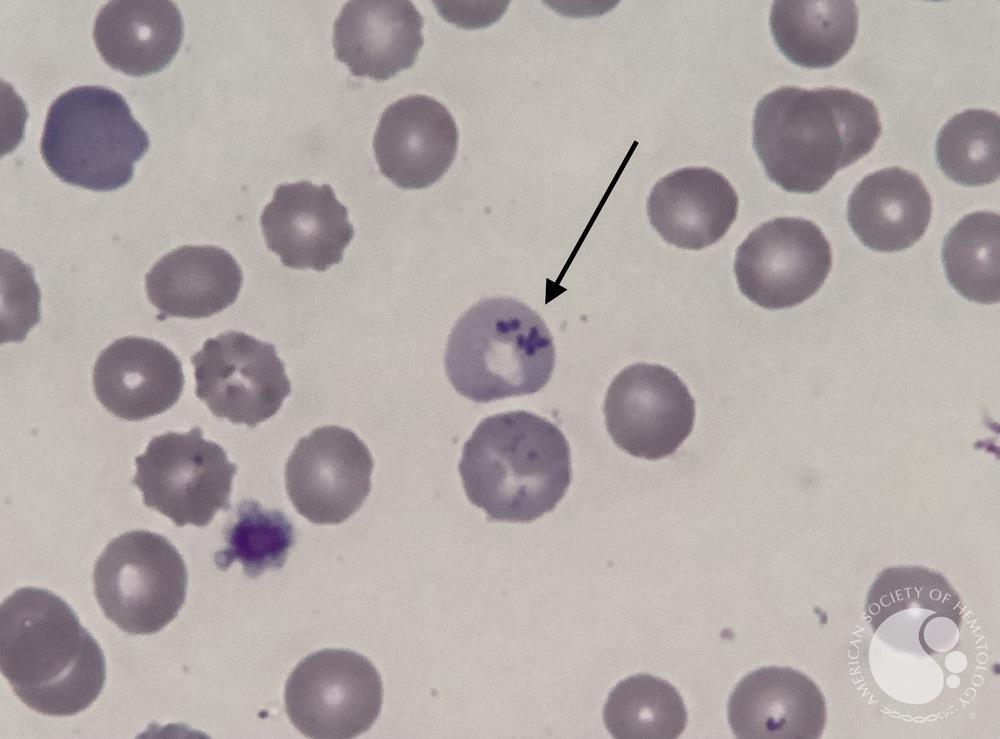
What is this RBC inclusion?
Pappenheimer bodies
Pappenheimer bodies
Morphology
Clumps/cluster
“bomb”
non-heme iron
Prussian blue and Wright stain
Disease(s)
sideroblastic anemia
thalassemia
hemolytic anemias

What is this RBC inclusion?
Heniz Bodies
Heniz bodies
Morphology
cannot see on wright stain ONLY supravital
precipitated HGB
Disease(s)
G-6-PD

What is this RBC inclusion?
Cabot Ring
Cabot Ring
Morphology
ring form
mitotic spindle remnant
Disease(s)
lead poisoning
pernicious anemia

What is this RBC inclusion?
Malarial Parasite
Malarial Parasite
Morphology
ring form
parasite in RBC
Disease(s)
parasitemia
4 RBC morphologies that can be artifactually made
Crenation (drying artifacts)
Rouleaux (sit too long on slide)
Teardrop (too much pressure)
Schistocytes (too much pressure)
Define isotonic:
Solutions that are categorized as having equivalent or identical osmotic pressure
Define RPI
reticulocyte production index
corrects for shifts/stress retics or nRBCs in RBC count
Define RDW
reflects the variability og red cell size (width)
normal range: 11.5-14.5%
increased correlates with anisocytosis
Define siderotic granules
another name for pappenheimer bodies