ACCT - Test 3 (11/9)
 Call Kai
 Learn
 Practice Test
 Spaced Repetition
 Match
 Flashcards
 Knowt Play
1/137

There's no tags or description
Looks like no tags are added yet.
138 Terms
fraud
fraud is an intentional act of deception committed to obtain an unfair or illegal financial benefit. (Ex: a bookkeepers transfers company money into their personal bank account)
what are the parts of the fraud triangle
opportunity, rationalization, pressure
opportunity
ability to commit fraud without being caught
raltionalization
justifying dishonest behavior
pressure
financial or personal motivation
what is internal control
are procedures businesses use to:
reduce errors
prevent fraud
protect company assets
promote effective operations
as a company grows, internal controls become more important
because managers cannot supervise every employee or transaction
four primary objectives of internal records
safeguard assets
ensure reliable financial reporting
promote efficient operations
ensure compliance with laws and regulations
safeguard assets
protect company property (i.e. locking cash in register)
ensure reliable financial reporting
keep accurate recording (i.e. monthly bank reconciliation)
promote efficient operations
make work more effectrive (i.e. inventory tracking)
ensure compliance with laws and regulations
follow the law (i.e. following payroll tax regulations)
Sarbanes-Oxley Act of 2022 (SOX)
is a federal law created to improve financial reporting, strengthen corporate accountability, and protect investors
key requirements of the Sarbanes-Oxley Act (SOX)
internal controls
independent audits
executive accountability
six principles of internal control activities
establishment of responsibility
segregation of duties
documentation procedures
physical controls
independent internal verification
human resource controls
establishment of responsibility
assign specific duties to individual employees (i.e. each cashier has their own cash drawer)
it makes employees accountable and helps identify who made an error
segregation of duties
divide related responsibilities among different employees. no single employee should control every part of a transaction (i.e. one employee approves, another receives, and another authorizes purchases).
reduces opportunities for fraud
three functions that should generally be separated:
authorization - approving a transaction
custody - having physical control of assets
recordkeeping - recording transactions in accounting records
documentation procedures
use properly numbered documents and record transactions promptly (i.e. prenumbered invoice, checks, receipts).
keeps tracks of duplicates
physical control
protect company assets and restrict unauthorized access (i.e. safes and locked storage, security camera)
reduces theft, loss, unauthored access, and inaccurate records
independent internal verification
an independent employee reviews accounting records and transactions to verify their accuracy (i.e. an employee who does not handle cash prepares the bank reconciliation)
detects errors and possible frauds
human resource controls
these are procedures involving employees (i.e. bond employees, rotate duties and require vacation, conduct background checks)
limitations of internal controls
human factors:
human error - employees making mistakes; poor judgment
collusion - two or more employees work together to approve a fraudulent payment
cost benefit constraint - benefits of I.C. should justify their costs; may not have enough resources to separate every employee’s duties
blockchain
a shared digital ledger that records transactions in a secure, chronological, and tamper-resistant manner
how blockchain supports internal controls:
transaction history
data integrity
auditing
cash controls
an effective system of internal control that protects cash and cash equivalents
3 basic guidelines for cash controls:
handling cash is separate from recordkeeping for cash
cash receipts are promptly deposited in a bank
cash payments are made by check or EFT
what is considered cash
currency
coins
customer, cashier, and certified checks
money orders
cash equivalents
short term, highly liquid investments that are:
readily convertible to a known cash amount
close to maturity date and not sensitive to changes
(i.e. U.S. treasury bills)
liquidity
are assets that can be readily be used to pay current liabilities
EFT
(electronic fluid transfer) the electronic transfer of money from one party to another (i.e. online bill payments)
fast and convenient
check receipts
when checks are received at the point of sale, they are included in the daily cash reconciliation
cash shortages and overages
the difference (-) between actual cash and the amount reported on the cash register tape recorded in the Cash Over and Short account
shortage
actual cash is less than recorded sales (short = missing money)

overage
actual cash is more than recorded sales (over = extra money)

cash dosbusements
payments made by a company
voucher system
system of procedures as a way to control cash payments
the voucher process
authorize the expense (prepare voucher)
record the liability (accts. payable)
issue the check and mark the voucher “paid”
record the payment in the check register
(authorize → record liability → pay → record payment)
petty cash
is a small amount of money kept by a company for minor everyday expenses (i.e. small office purchases, minor supplies)
the imprest system (for petty cash)
a fixed amount is established
money is used for small expenses
receipts are collected for every payment
the fund is replenished back to its original amount
bank accounts (bank service)
provide a secure place for money
signature cards (bank service)
identify authorized signatures
deposit tickets (bank service)
support deposits
check (bank service)
authorize paayments
EFT (bank service)
transfer cash electronically
bank statements (bank service)
help identify unusual unauthorized activity
why use a bank
strengthens internal control over cash
safeguards cash
reduces cash kept on hand
creates two sets of records (company and bank)
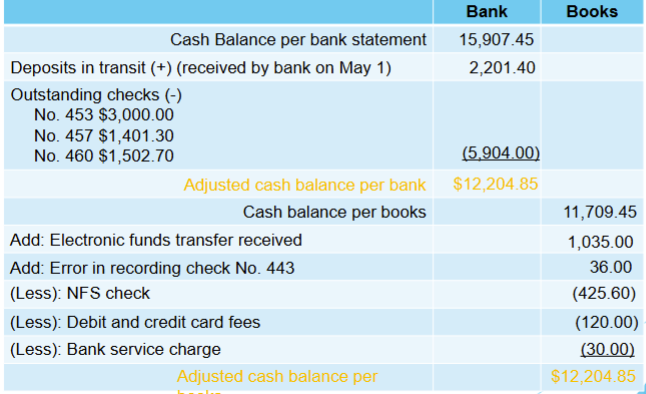
bank reconcilication
compares the company’s book balance with the bank statement balance
bank balance (bank side)
the amount shown on the bank statement
book balance (book side)
the amount recorded in the company’s accounting records
bank side adjustments
deposits in transit (+)
outstanding checks (-)
bank errors (-,+)

book side adjustments
interest earned (+)
unrecorded cash receipts (+)
bank fees (-)
NSF checks (-)
book errors (-,+)
NSF
(not sufficient funds) a customer writes a check, but their bank returns it because they do not have enough money
a receivable
is an amount of money owed to a company’s by a customer or another party
are expected to be collected in cash
among a company’s most liquid assets
each customer has separate purchases, payments, and the balance owed
types of receivables
accounts
notes
other
accounts receivables (A/R)
amounts customers owe for goods or services sold on account
usually collected within 30-60 days
most common type of receivable
(i.e. a business sells 2,000 of merchandise to a customer on credit)
notes receivable
a formal written promise to pay a specific amount
generally includes interest, specified maturity date, and can be long or short term
(i.e. a customer signs a 90-day, 6% note promising to pay 5,000)
other receivables
amounts owed that do not come formal normal business operations
interest, employees advances, and tax refunds - reported separately
(i.e. an employee owes the company 500 for an advance)
trade receivables
result from normal business operations
bad debts
are amounts customers owe that are unlikely to be collected
are a normal risk of selling goods and services on credit
why do bad debts happen
may run out of money
may refuse to pay
may go out of business
simply fail to pay their bills
accts. receivable is a current asset, but..
companies should not overstate the amount they expect to collect
requirement for the direct write off method
timing - when account is written off
matching - does NOT match expense with revenue
GAAP - not allowed
focus - actual losses
requirements for the allowance method
timing - when sale occurs
matching - DOES match expense with revenue
GAAP - required
focus - estimated losses
direct write off method
the company records bad debt expense only when it determines that a customer’s account cannot be collected
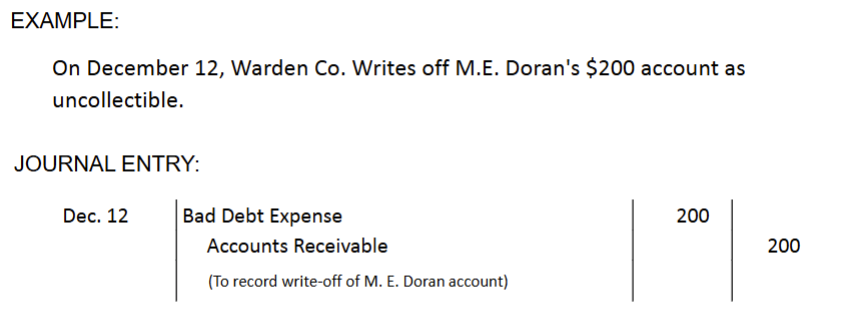
allowance method
this method estimates how much money the company will not collect; instead of waiting until a customer fails to pay, the company estimates bad debts each accounting period

NRV
(net realizable value) is the the amount of accounts receivable the company expects to actually collect
= accounts receivable - allowance for doubtful accounts
write-off
happens when the company determines that a customer’s account is no longer collectible

a write off under the allowance method affects only…
balance sheet accounts. it does not create another bad debt expense because the expense was already estimated and recorded earlier

internal controls for uncollectible accounts.. why
prevent fraud and ensure write-offs are legitimate
management approval requires
segregation of duties - person approving write-offs should NOT handle cash or accounts receivable
percentage of receivables method
management estimates bad debts based on a % of accounts receivable
two approaches:
single % of total receivables
aging of receivables (different % to older accounts)
single % method
calculate desired balance = A/R x estimated uncollected %
determine adjustment = desired balance - existing credit

aging of accounts receivable method
separates customer balances based on how long they have been outstanding
older accounts are more likely to become uncollectable

the older the account..
the higher the estimated % of uncollectible accounts
promissory note (notes receivable)
a written promise to pay a specific amount at a specific time
key features of a promissory note (N/R)
formal credit instrument
stronger legal claim than A/R
negotiable (can be transferred)
when are notes receivable used
lending or borrowing money
large or long term credit
replacing accounts receivable
what is the difference between accts. receivable and notes receivable
A/R = informal; N/R = formal, written document with interest
maker (party to a notes)
the party making promise to pay
refers to the note as a note payable
THINK: makes the promise
payee (party to a notes)
the party receiving the payment
refers to the note as a note receivable
THINK: gets paid
computing interest
interest = face value of note x annual interest rate x time in terms of 1 year
days = fraction of 360
months = fraction of 12
initial note/entry
journal entry: note is recorded at face value
interest is earned over time

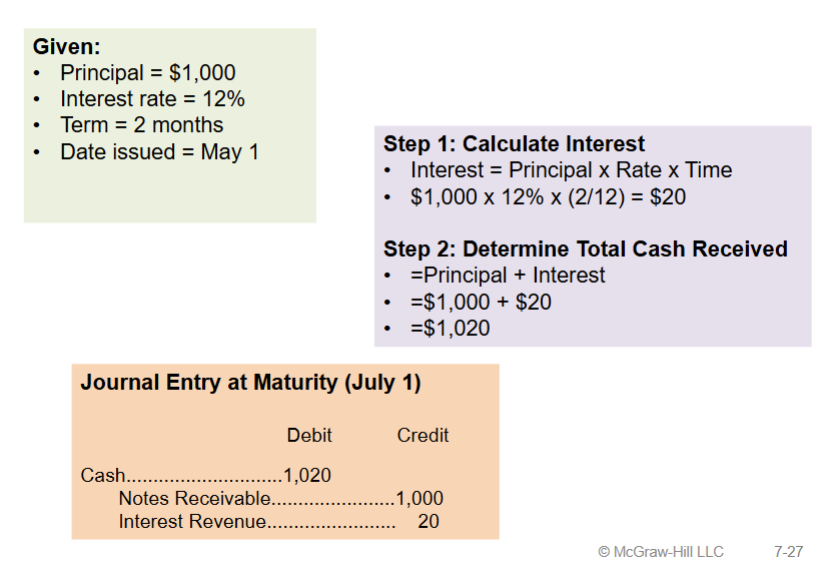
notes receivable honored at maturity
calculate interest = principal x rate x time
determine total cash received = principal + interest
accrual of interest receivable
interest is earned over time, even if the company has not received the cash yet
companies must record accrue interest earned by the end of the accounting period. from note date → financial statement date
disposal of receivables
companies sometimes need cash immediately instead of waiting for customers to pay, so… you do..
selling receivables (factoring) - form of disposal
occurs when a company sells its receivables to a factor, usually a bank or finance company

pledging receivables - form of disposal
means a company borrows money using its receivables as collateral

A/R turnover
ratio measures how quickly a company collects its receivables
= net credit sales / average net accounts receivable
higher turnover =
faster collection of cash
lower turnover =
slower collection of cash
plant assets
tangible assets used in a company’s operations that have a useful like of more than one accounting period
plant assets generally lose service potential except…
for land
historical cost principle
requires that companies record plant assets at cost
acquisition cost
includes all expenditures necessary to get the asset in place and ready for use
= purchase price + all necessary costs to get the asset ready for use
land
includes all necessary costs incurred to make the land ready for its intended use
Land is NOT depreciated because it has an indefinite useful life
true
land improvements
structural additions made to land that have limited useful like (I.e. parking lots, fences, driveways, sidewalks, etc.)
land improvements ARE depreciated because they eventually need replacement
true
costs included in land
purchase price
accrued property taxes paid by purchaser
title insurance premiums
real estate commissions
legal, surveying fees
clearing, grading, and draining
removing unwanted structures ( - salvage proceeds)
cost included in land improvements
purchase or construction fees
title, architecture, attorney, brokerage fees
building permits
remodeling costs
taxes
interest costs on construction loans (during construction)