Texts and Ideas first hourly
 Call Kai
 Learn
 Practice Test
 Spaced Repetition
 Match
 Flashcards
 Knowt Play
1/38

There's no tags or description
Looks like no tags are added yet.
39 Terms
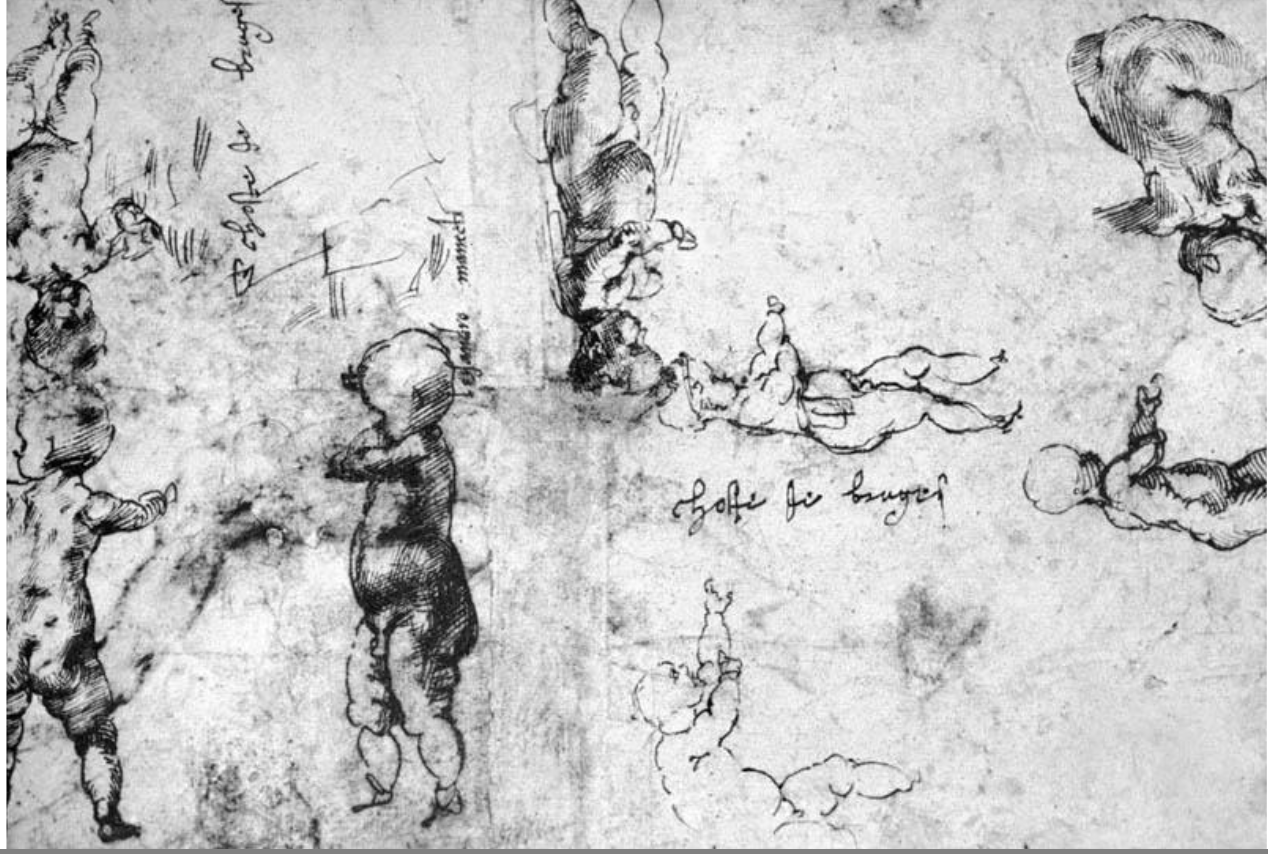
Michelangelo’s baby sketches
michelangelo was an Italian Renaissance artist (discovery of childhood). His baby sketches shows how proportions of children are different rather than just being small adults
The Nativity
Fra Angelico’s painting shows birth of Jesus in a barn. shows adult proportions on Jesus’s body, making it inaccurate. The baby is also in an odd position (not fetal position)
Artist is a monk—> not around babies much.
Pre-renaissance, so culture in general doesn’t care abt babies in this time

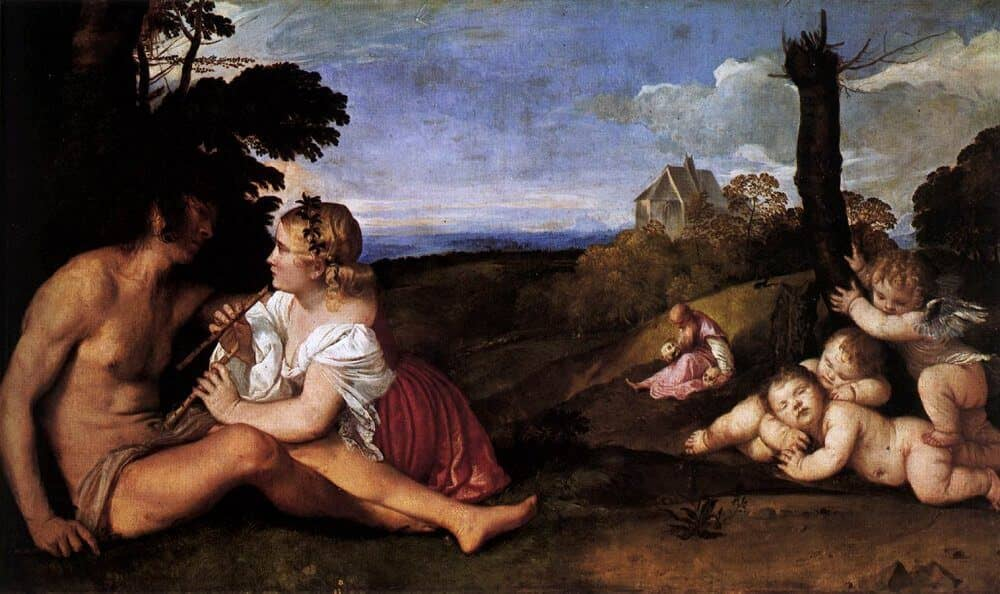
Three ages of man
Titian’s painting about three stages of life.
Babies (sleep) are close to the spiritual world—> cherub imagery. Young adulthood (Romance and relationships). Old age (death, mourning).
Painting’s focus is on young adulthood and old age rather than babies. While the babies are accurate, they are not the focus.
1510 (renaissance)
Portrait of Giovanni de Medici
Bronzino’s makes a baby painting, but it’s not Jesus! He specializes in painting real babies, and gives them personalities (he finds babies interesting for once).
Giovanni the baby is painted with a personality and with age accuracy
Implies both a supply and demand for baby paintings to see what the babies looked liked.
1545 (late renaissance)

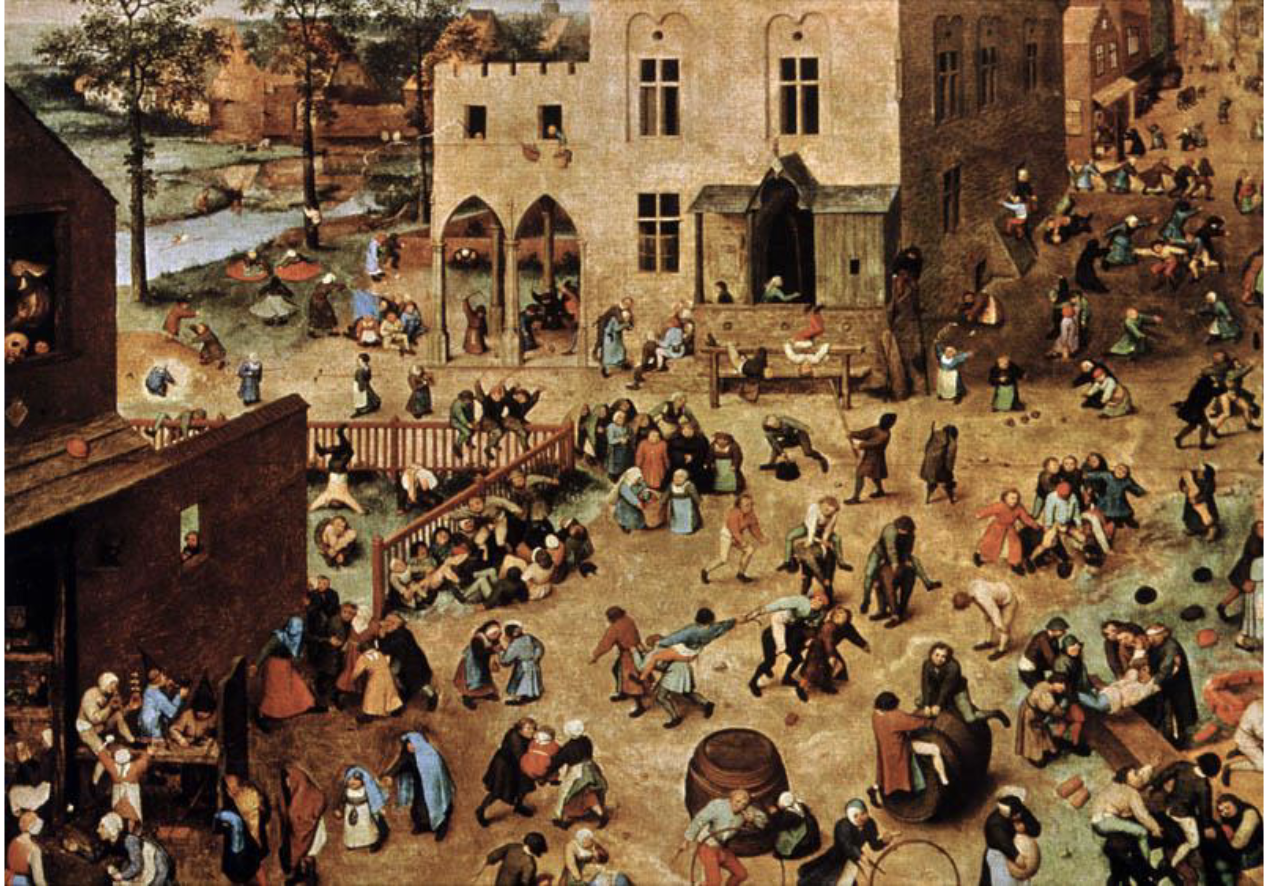
Children’s games
Breughel’s painting.
very unique for its time. Shows children playing various games, and features no adults. Displays the distinctive character of babies rather than adults, centralizing play as an essential.
16th century Dutch
a peasant family at meal-time (grace before meat)
Steen’s painting shows the young girl saying grace before eating, showing the expectation of the daughter to carry on the tradition
17th century Dutch (golden age)


Stearns “Children in World History” textbook. children become assets to farming families rather than a liability. birth rates go up, and children’s role becomes to help with the familiy

Chinese Classic of Filial Piety
4th Century BCE
children need to be obedient to family ideas, and the principle of filial piety is strong to both parents and the ruler
Economy around parents/family, society around ruler

Alberti’s books of the family
Written 15th century
shows the responsibility of fathers

Watson 1928
Shows that babies should not be babied, but rather treated as small adults

Spock 1946
Baby and Childcare book was insanely popular. Focuses on reassuring parents and tells them to trust themselves
Dr. Spock was a famous pediatrician, but also a Black activist and protested against Vietnam war → he was blamed for the generation of rebellious, protesting teens

Ratio Studiorum 1599: created by St. Ignatius (great defender of jesuits)
Creates an order of study (division by grades/knowledge), a time schedule, demerits for misbehaving
Education=crucial to spread jesuit ideas → many jesuit schools
St. Ignatius: educate to indoctrinate with jesuit ideas
Schools before: different ages+self studying
Schools after: organized education+age divisions
Tension between child’s role: playing vs learning

John Locke 1689: tabula rasa (An Essay Concerning Human Understanding)
Opportunity for parents to shape child into “masterpiece”

Love childhood, indulge its sports, its pleasures, its delightful instincts. Who has not sometimes regretted that age when laughter was ever on the lips, and when the heart was ever at peace? Why rob these innocents of the joys which pass so quickly, of that precious gift which they cannot abuse? Why fill with bitterness the fleeting days of early childhood, days which will no more return for them than for you? Fathers, can you tell when death will call your children to him? Do not lay up sorrow for yourselves by robbing them of the short span which nature has allotted to them. As soon as they are aware of the joy of life, let them rejoice in it, so that whenever God calls them they may not die without having tasted the joy of life.
Jean-Jacques Rousseau, 1712-1778 (the enlightenment)
portrays education as evil, trapping children into overly rigid schedules
redefines children’s role as play rather than learning
Young children shouldn’t be tormented with school, esp when they might die later
Appeals to people by making their childhood nostalgic
First to confront social inequality: we’re born free, but society chains everyone
Idea of social contract for government (everyone must agree)
First modern autobiography: idea that story behind one’s childhood is important as context for one’s adulthood
nature toughen up child, so expose them to outside play
Strongly disliked wet nurses, mothers should feed themselves

Luther German Bible 1534: translation of the bible → more people can read it
New urgency to be literate (so people can read bible+find god)
His big idea: the Pope isn’t necessary to achieve salvation: every human has a direct relationship with god
Schools before: different ages+self studying
Schools after: organized education+age divisions
Tension between child’s role: playing vs learning
Peter Stearns: Childhood in World History
children’s role shifts from working to education
birth rate declines as children stop being as useful for work

Maria Montessori (1870-1952)
house of children (not like school → Rousseauist)
Children play and explore with no formal lessons → experiential learning
Education is not something the teacher does, but instead a natural process
Individual play stimulates development most

Neill,1883-1973
Summerhill 1921
alternative British education. Lessons are optional, tests are avoided

Canfield translates Montessori's book and brings it to US (early 1900s)
She later writes a children’s book about the power of experiential learning
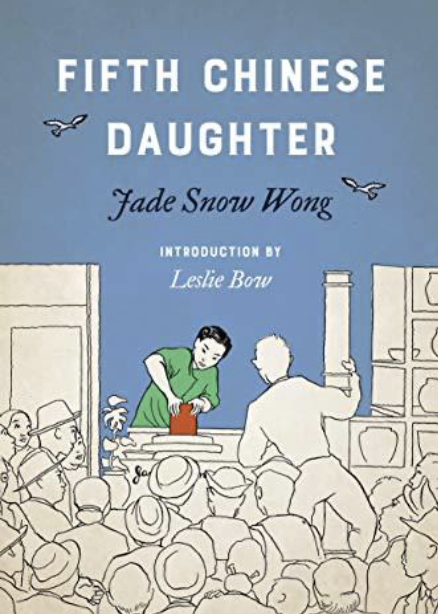
Jade Snow Wong 1950
first book about Chinese immigrant children and their education
Two types of education present: traditional education from teachers, and lessons of filial piety for society

Song Dynasty (10th-13th century): creation of competitive, national exams (imperial examination) → revival of filial piety
Super traditional, with emperor presiding over final stage
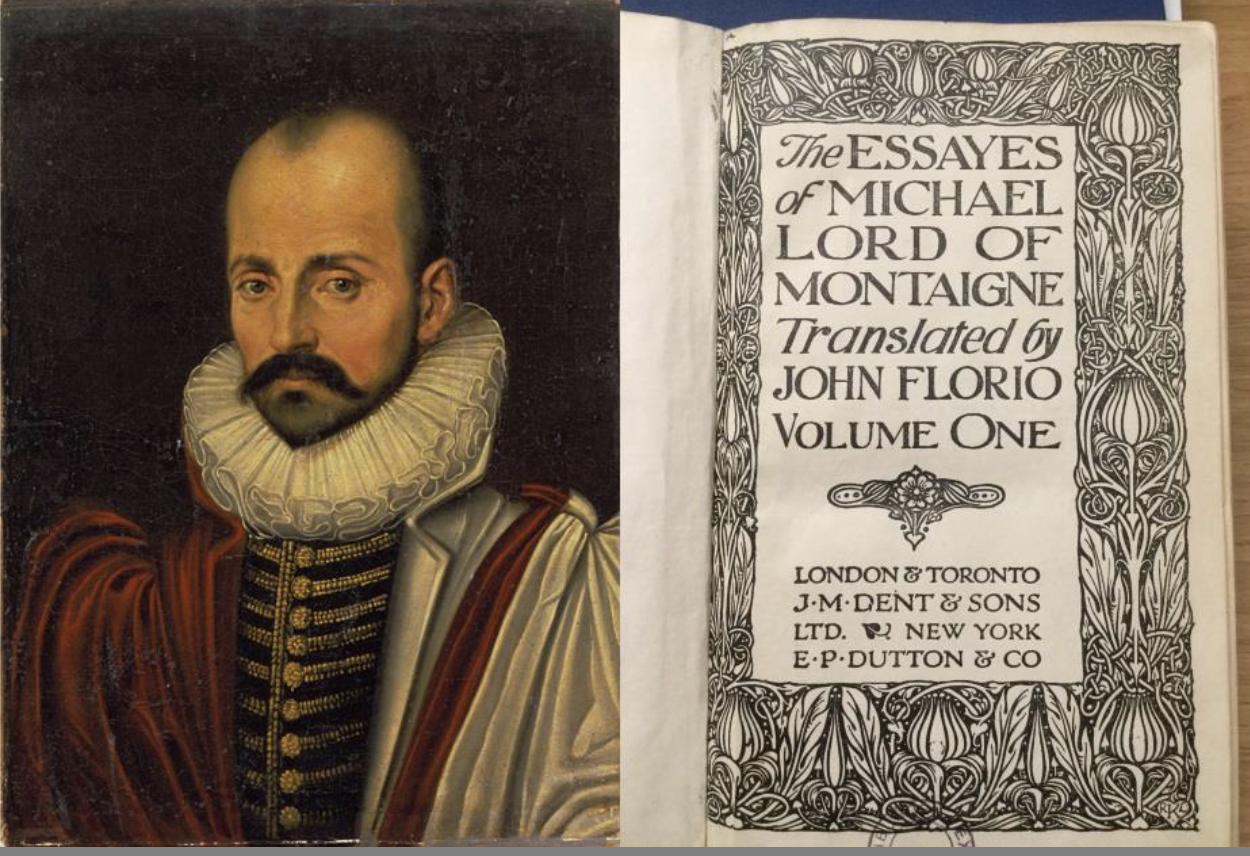
Montaigne: french from 16th century (renaissance, during “discovery” of children)
Invents essays → one on fathers and children, despite not caring for them much
For parents, children are a creative work and not deserving of the love they get
No reason to fuss over babies (like pets), wait until they have knowledge
Portrait of a family
by Johann Friedrich August Tischbein 18th century
paints ideal family portrait (mother nursing infant)
Modern connection: nannies watching kids despite having their own kids

Portrait of Penelope Boothby
Penelope Boothby, 1785-1791
Painted by Sir Joshua Reynolds, 1788
Penelope died, and father commissioned the painting —> shows the desire to memorialize kids


Abraham Jacobi (19th century CE): founder of American pediatrics (treating babies as distinct)
Guidelines on how to treat babies in physicals and founded pediatric care somehow
Still had most of his children die young, even with his third wife (very celebrated doctor)
Sickly as a child

Riis (journalist+photographer): exposes bad conditions for families in tenement houses+streets, despite living in a rich city

Newman publishes to urge social solutions
established that high infant death rates were not a natural or biological inevitability, but a direct consequence of social and economic inequality

Josephine Baker, Fighting for Life, 1939: director of NYC Bureau of Child Hygiene (first such program in US)
Talks about being woman doctor in male-dominated field
Prioritized preventing illnesses to help children
Creates the idea of school nurses who also help during summer

Children’s Year campaign 1918 worked to:
-Keep children in school, out of workforce
-More recreation and activities
-Educate parents about children’s health and nutritio
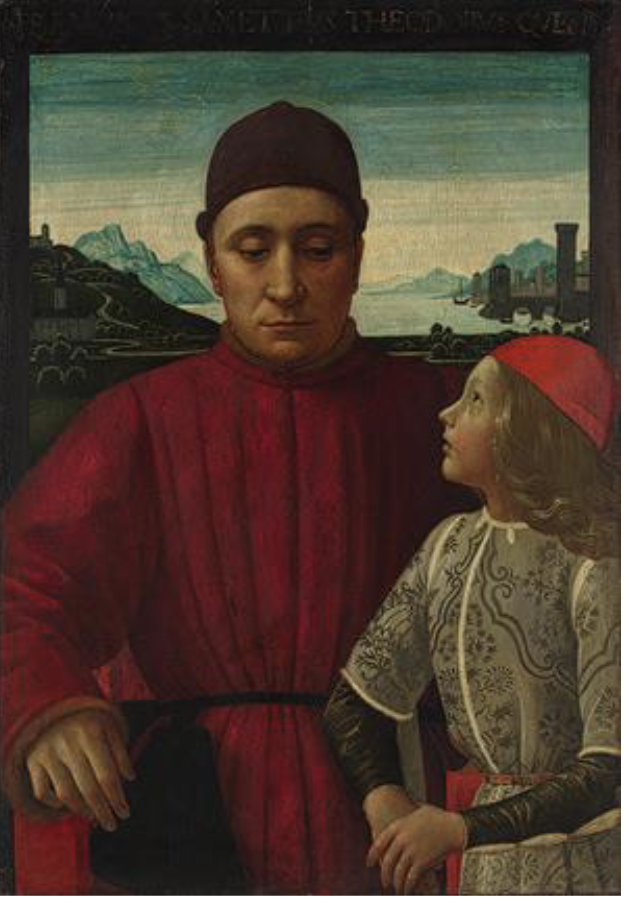
francesco sassetti and his son teodoro
Domenico Ghirlandaio paints portrait of father and son (innovative)
Son admires father, but father is indifferent (contradicts Alberti)
Florence 1480s (renaissance)

German Protestant preacher, 16th century
Las Meninas
Velazquez 1656
painting of princess, but Velazquez includes himself in it
Through the mirror in the painting, we can see the king and queen
The princess does not play, is treated as a little adult


Puritan Protestant catechism, England, mid-17th century
Catechism: protestant questions that kids are meant to memorize/answer
Pushes idea of pious and disciplined kids
Sacrifice of Isaac
Caravaggio 1603 Italy: Abraham’s sacrifice of his son to prove his love for God

Duchess of Devonshire and her daughter
Reynolds 1785
Shows the duchess playfully bouncing the daughter on her knee
Hands on motherhood (rather than wet nurses), natural affection

The cradle
Berth Morisot France 1872
motherhood as a quiet, psychologically complex bond rather than an idealized religious or sentimental fantasy
Jean-Jacques Rousseau (1771)
Rousseau says babies should be born knowing about their country (strong sense of nationalism)
Contrast with dangerous French revolution later

MULBERRY CHILD By Jian Ping
autobiographical book during China's tumultuous Cultural Revolution (1966–1976)
Admiration for leader, involvement in politics
“We were torn between our loyalty to Mao and our parents.
any Madonna and Child painting
Botticelli: better at drawing in baby style, but still awkward drawing due to lack of practice
Shows fairly universal baby features (finger grip, fat on thighs, grasping, etc)
early renaissance