Chapter 9: Reagents + Ingredients….what are products
 Call Kai
 Learn
 Practice Test
 Spaced Repetition
 Match
 Flashcards
 Knowt Play
1/16

There's no tags or description
Looks like no tags are added yet.
17 Terms

Reduction
Makes pi bonds disappear


Reduction
Turns alkyne into a trans alkene

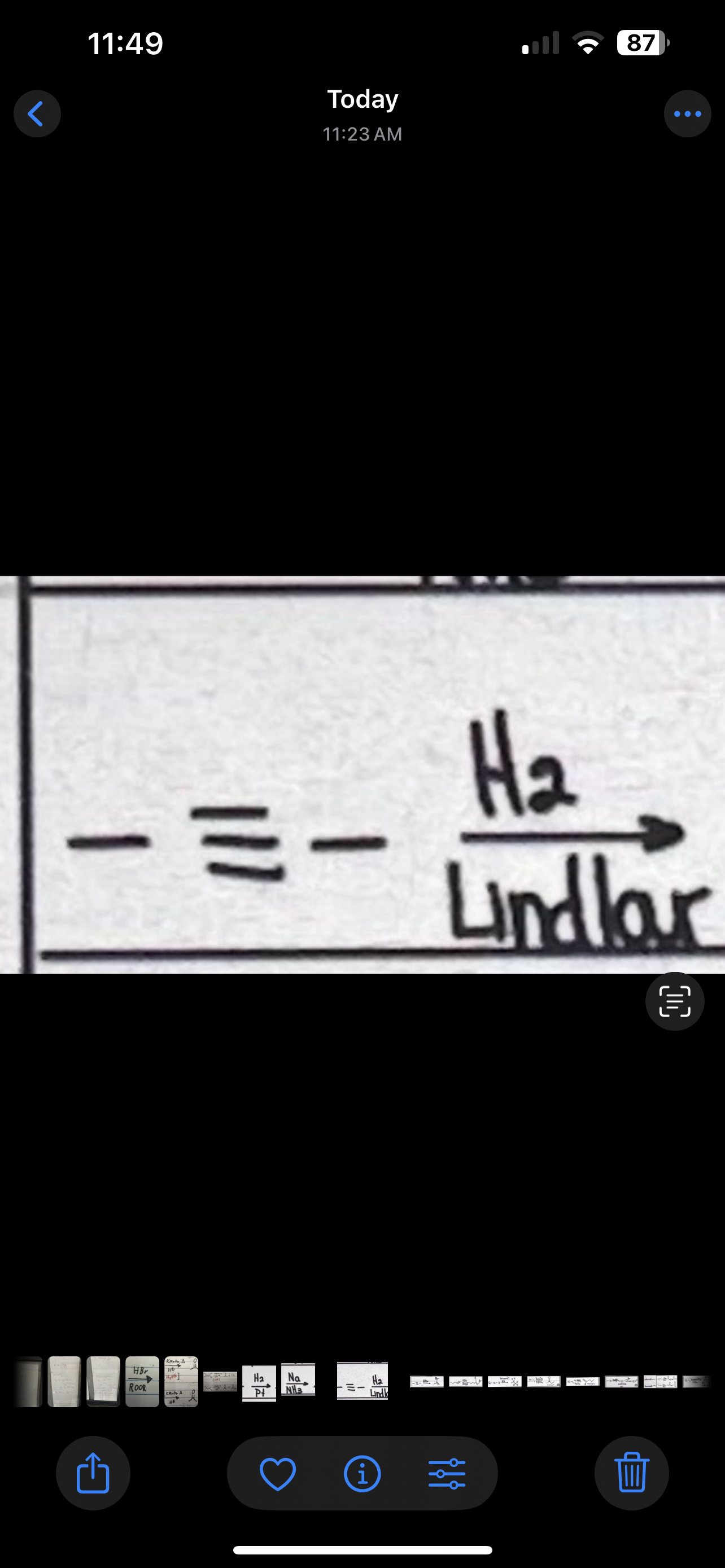
Reduction
Turns alkyne into a cis alkene

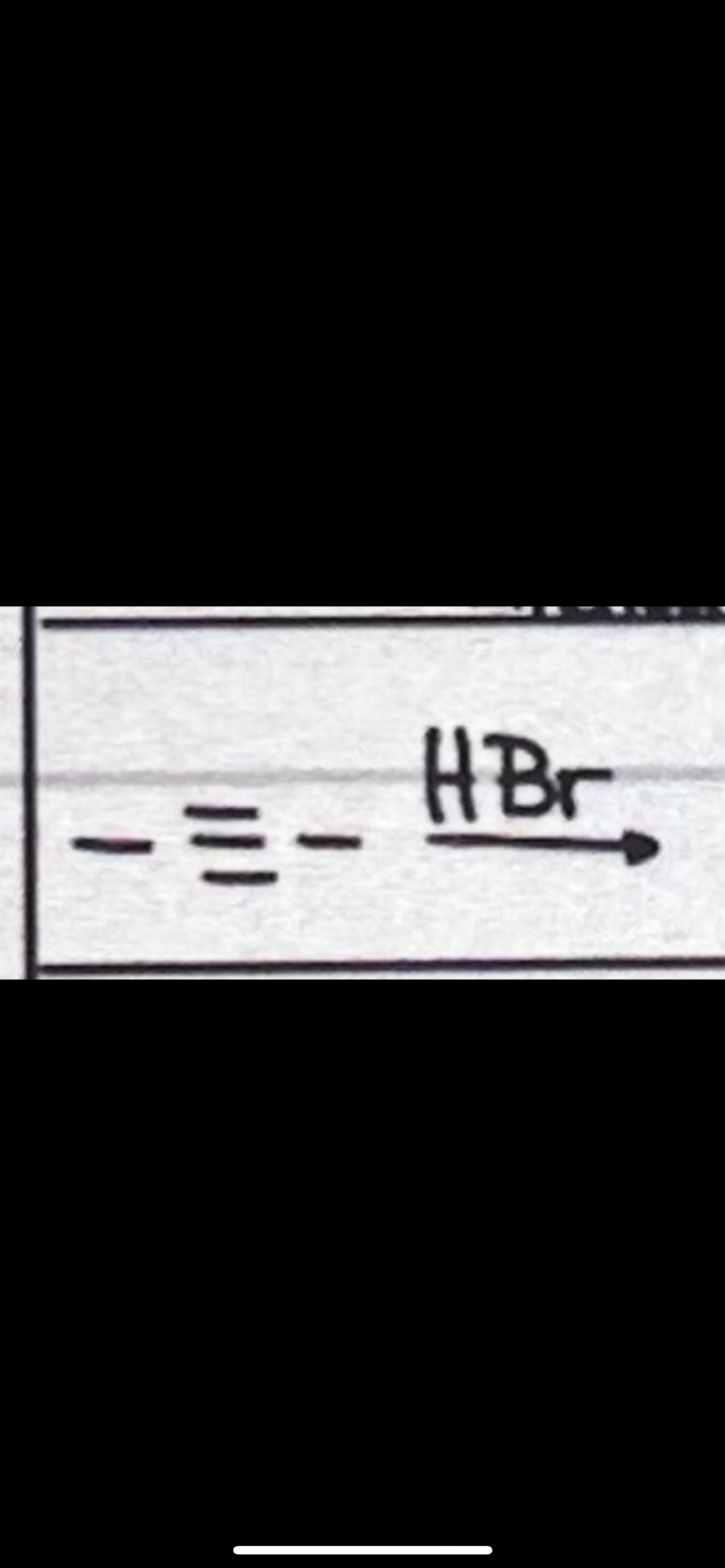
Bromine ends up on the more substituted side


bromine is on the LEAST substituted side of the alkene


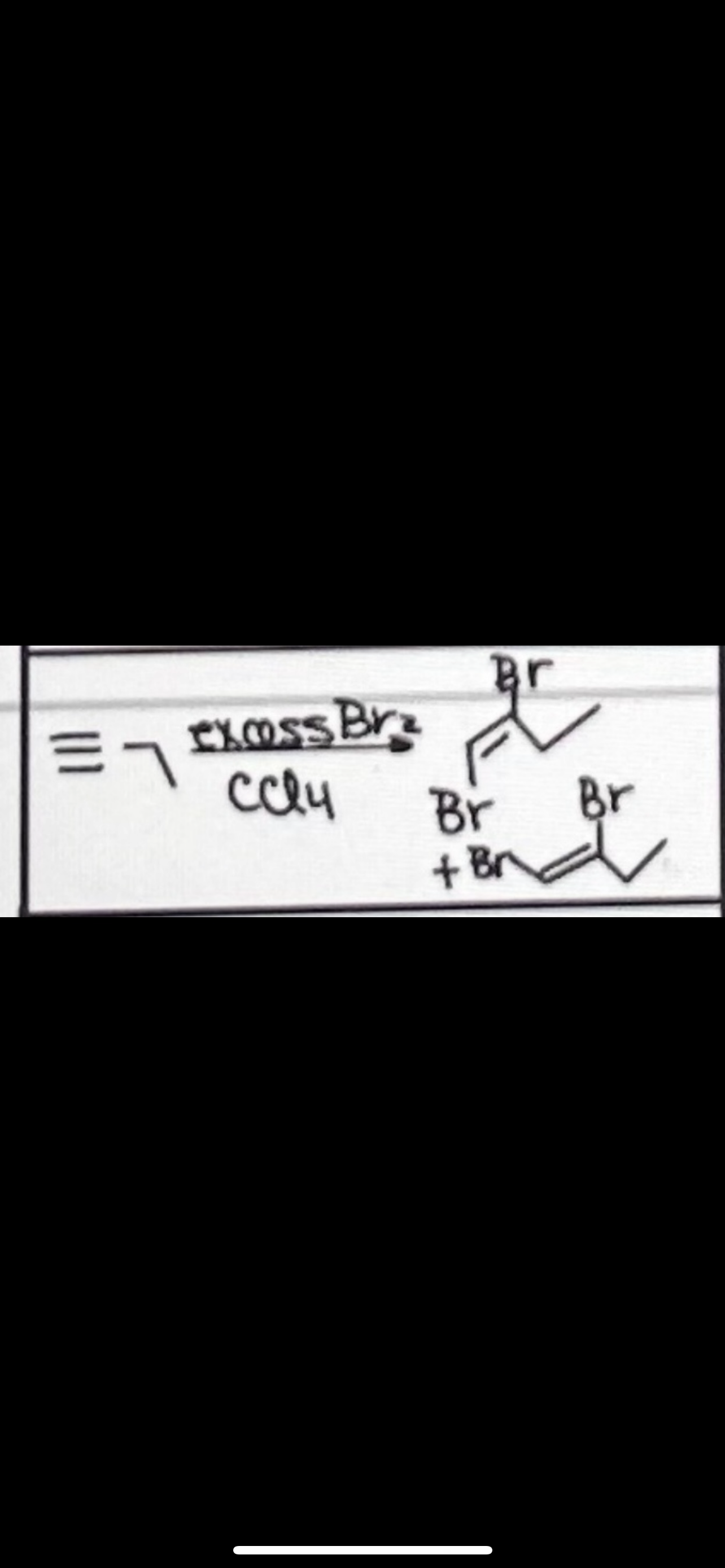
Excess Halogenation
Two Halogenated substitutents on the more substituted side


Acid Catalyzed Hydration
Turns alkyne into ketone ( whether the alkyne is internal or terminal) with middle carbon forming the double bond with oxygen


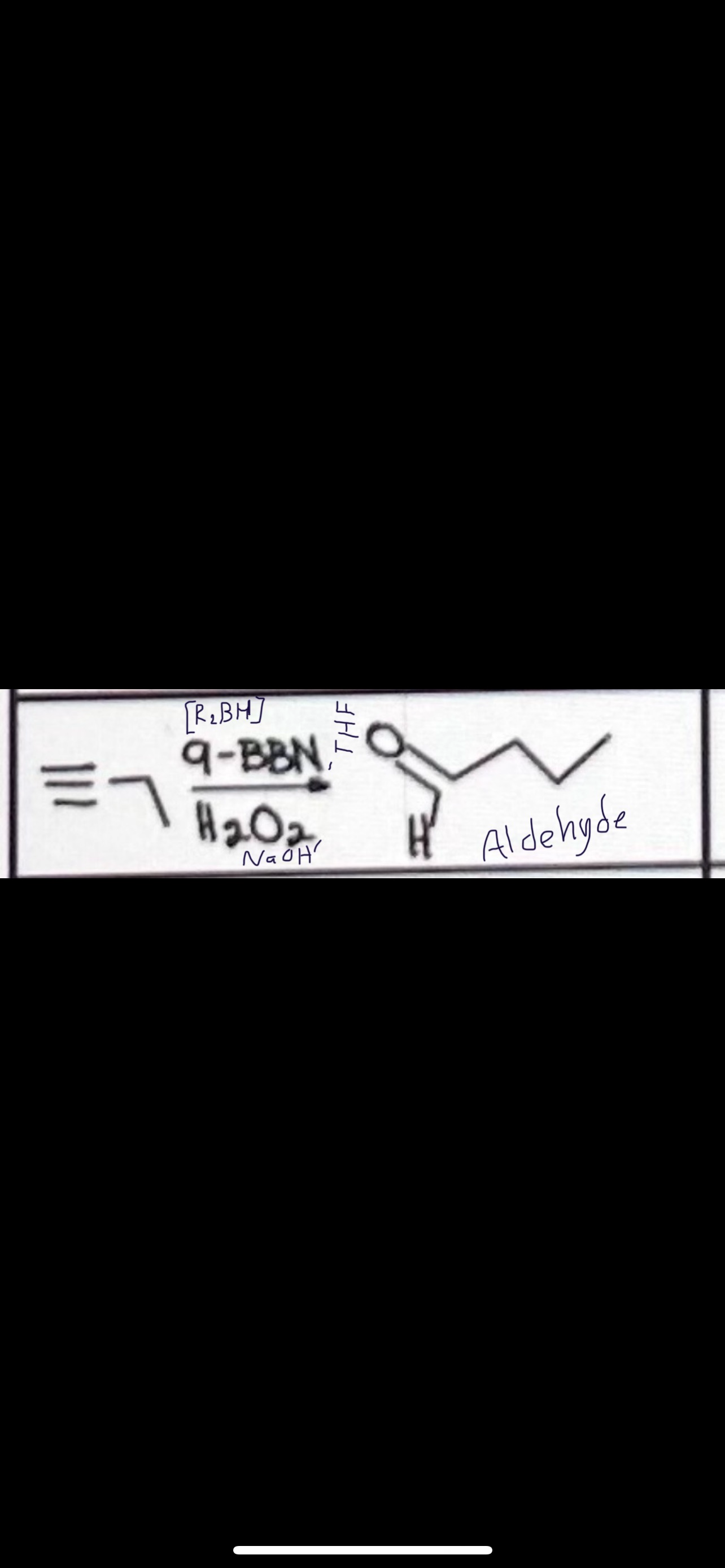
Hydroboration Oxydation
Forms aldehyde if alkyne is terminal, or formed ketone if alkyne is internal, with same number of carbons
Can also use ingredients R2OH with same result
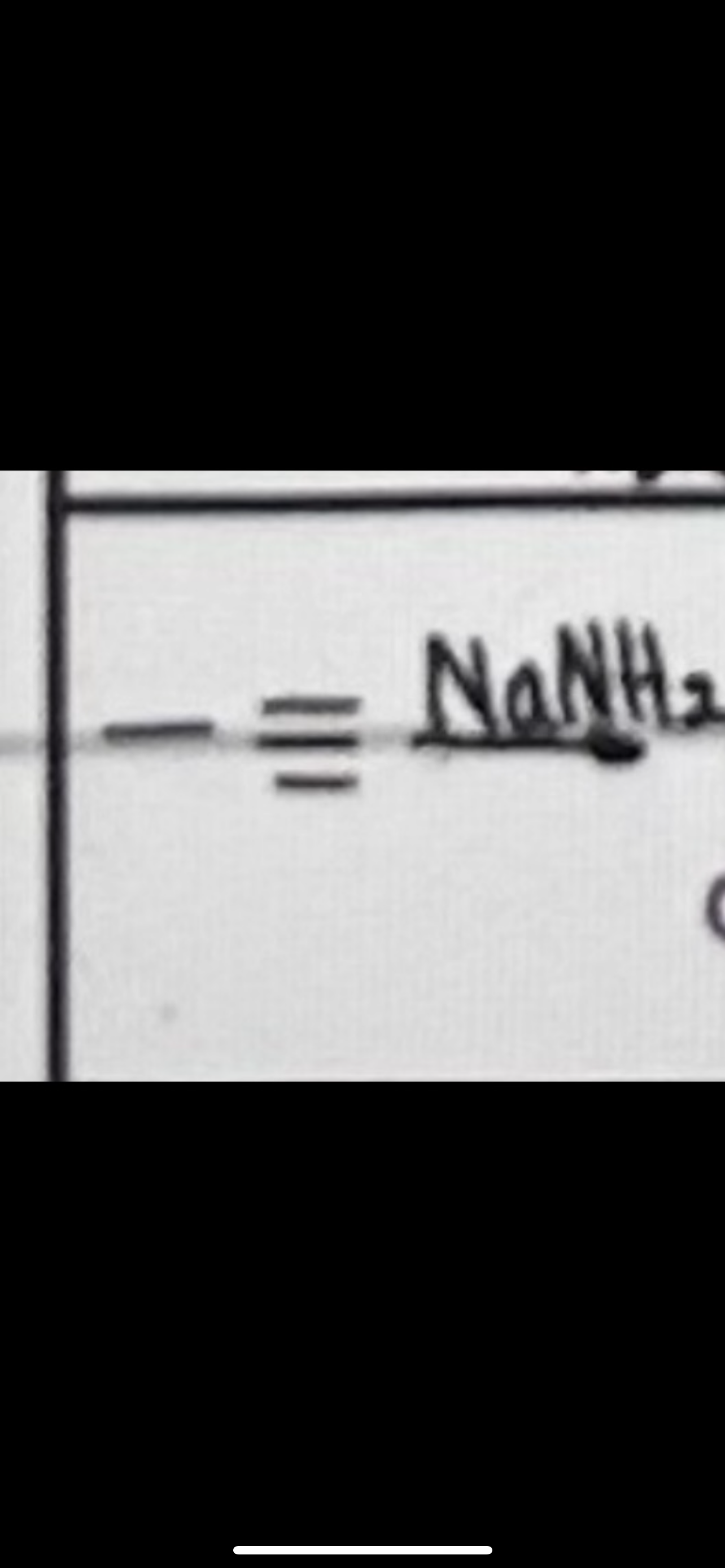
First turns the alkyne into an alkyne with a negative charge at the terminal end, which can serve as a nucleophile


Ozonolysis
If internal, then 2 carboxylic acids form. If terminal then one carboxylic acid and a CO2 form


Racemic mixture that gives you trans and cis alkenes

Also works of halogens are separated by a carbon, the alkyne would form in between


