Human Circulatory and Respiratory System Anatomy (copy)
 Call Kai
 Learn
 Practice Test
 Spaced Repetition
 Match
 Flashcards
 Knowt Play
1/61

Earn XP
Description and Tags
62 Terms
Is a masterpiece of design for its job
of carrying oxygen
Red blood cells
Helping the body to fight disease-causing organisms
White blood cells
Tiny disk-shaped cell fragments produced in the bone marrow to serve as patch kits
Platelets
Regulates the amount of water in the blood, the most plentiful of blood proteins
Albumin
Help transport fats throughout the body and help fight infections.
Globulins
Blood proteins made in the liver help in the clotting of blood.
Fibrinogen
If a person loses too much blood or plasma
Circulatory shock
A special iron-containing blood protein that binds easily to oxygen and gives blood its characteristic red color
Hemoglobin
Unique disease that makes them clump together into elongated crystals under certain conditions
Sickle cell anemia
Where are all blood cells made
red bone marrow
Where are blood cells stored
spleen
Inherited disease results in the partial or complete inability to form blood clots.
Hemophilia
An inherited protein found on the surface of red blood cells. The positive or negative part of the blood type of an individual
Rh factor
The heart is encased within a tough white sac called
Pericardium
What contains the muscles of the heart
Myocardium
The outside of the heart is coated with a layer of slippery tissue
Epicardium
What provides a smooth coating for the heart's interior
Endocardium
A thick vertical wall that divides the left and right sides of the heart
Septum
Blood is distributed to the cardiac muscle cells, which branch from the base of the aorta.
Coronary ateries
The master control unit and the pacemaker of the heart.
Sinoatrial node
The contracting and pumping phase of heart action is called
Systole
while the relaxing and filling phase is known as
Diastole
An abnormal rushing or blowing sound produced by valve damage is called
Heart murmur
A type of heart failure caused by a blockage of blood flow to the heart muscles
Heart attack
Which brings blood to the heart
Veins
Which carry blood away from the heart
arteries
The tiny blood vessels that link arteries and veins
Capillaries
The flow of blood to the heart muscle through the coronary arteries and back to the right atrium
Coronary circulation
The movement of blood from these organs to the liver is
Portal circulation
The movement of blood through the kidneys
renal circulation
The movement of blood between the heart and the lungs is known as
Pulmonary circulation
Is known as the body's chemical factory
Liver
The buildup of fatty deposits
and fibrous tissue in the liver.
Cirrhosis
High blood pressure, known medically as
Hypertension
Irregularly shaped pockets, or air spaces, in the nasal cavity
Nasal meatuses
What is the windpipe
Trachea
The flap of tissue that covers the opening of the trachea and opens when breathing but closes when swallowing is called
Epiglottis
The trachea divides into two branches called the
Bronchi
The secondary bronchi branch many times to form still smaller tubes
Bronchioles
The smallest bronchioles end in small sac-like structures called
Alveoli
A bacterial or viral infection of the linings in the lungs that causes the lungs to secrete large quantities of fluid.
Pneumonia
An allergic condition characterized by spasms of the bronchial tube muscles; the tubes suddenly constrict, making breathing difficult
Bronchial Asthma
What is a thick sheet of muscle that separates the thoracic cavity from the abdominopelvic cavity
Diaphragm
What is the voicebox
larynx
When these muscles are tightened, the WHAT are pulled tight and the pitch of the sound is raised.
Vocal cords
When a person inhales, muscles attached to the ribs and breastbone the WHAT contract and lift the ribs and breastbone up and out
Intercostal muscles
What part of the brain controls breathing
Medulla oblongata
The maximum volume you can inhale and exhale is your
Vital capacity
The normal amount you breath is your
Tidal volume
Main cause of lung cancer
smoking
Explain why a person dies when ventricular fibrillation happens, while also explaining the blood flow in the heart
Ventricular fibrillation occurs when the heart stops beating normally and instead twitches randomly. Normally, blood enters the right atrium from the body, passes into the right ventricle, and is pumped to the lungs for oxygen. It then returns to the left atrium, moves into the left ventricle, and is pumped through the aorta to the rest of the body. During ventricular fibrillation, the ventricles cannot pump blood properly, stopping oxygen from reaching vital organs, which can cause death if not treated immediately.
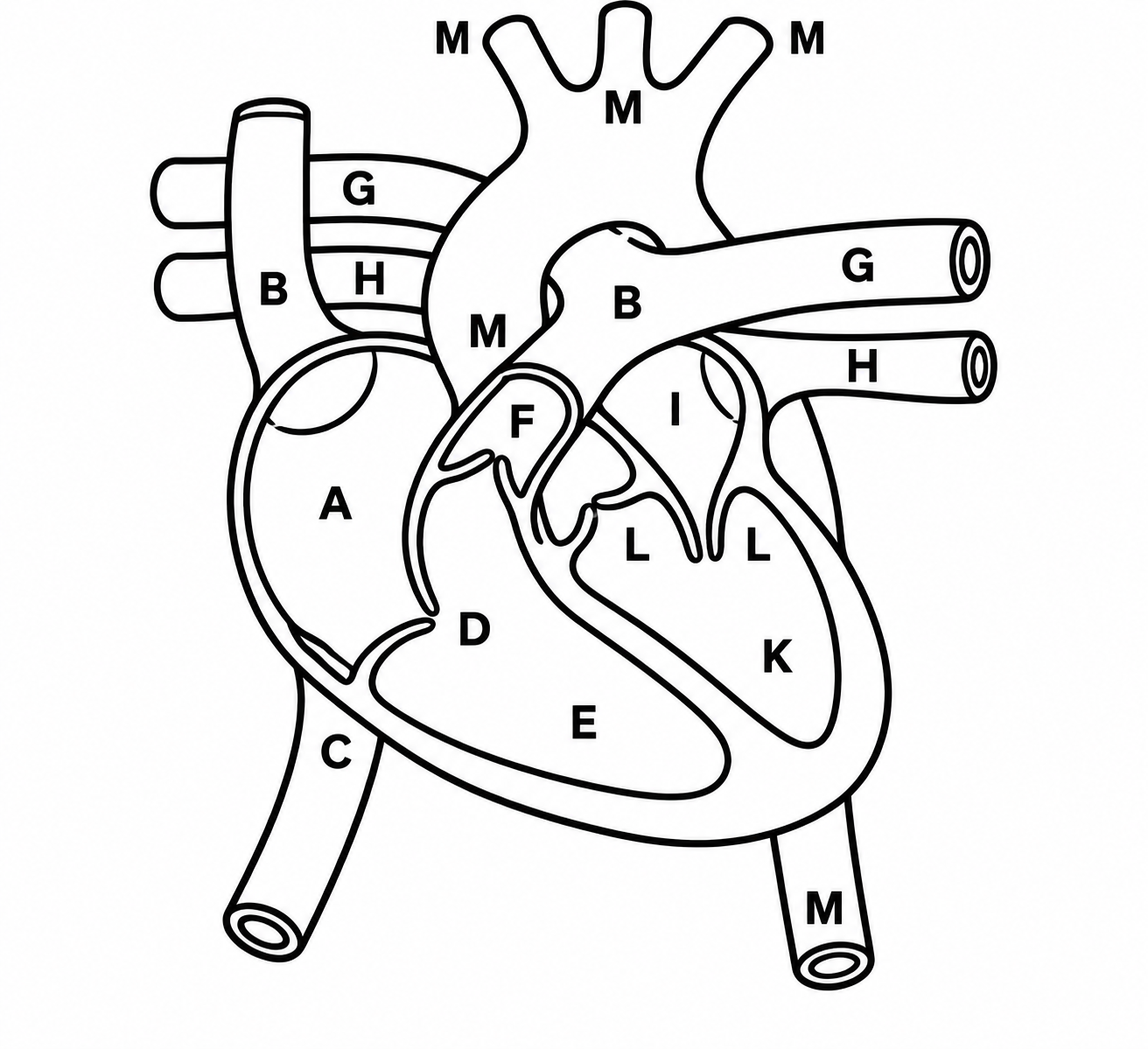
What is A?
Right atrium
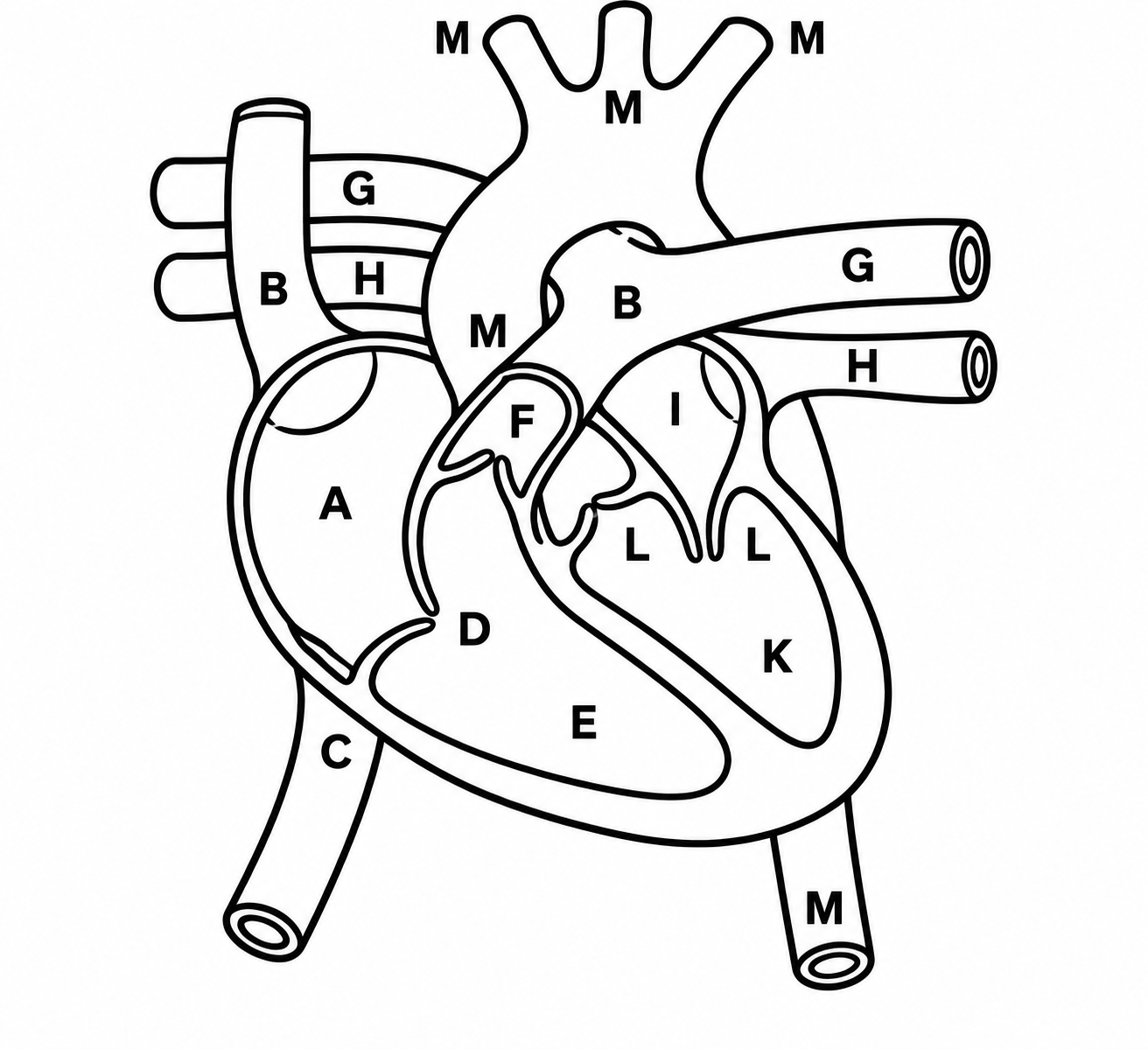
What is B? (Ignoring the one in the center that is falsely put there and is actual an G)
Superior vena cava
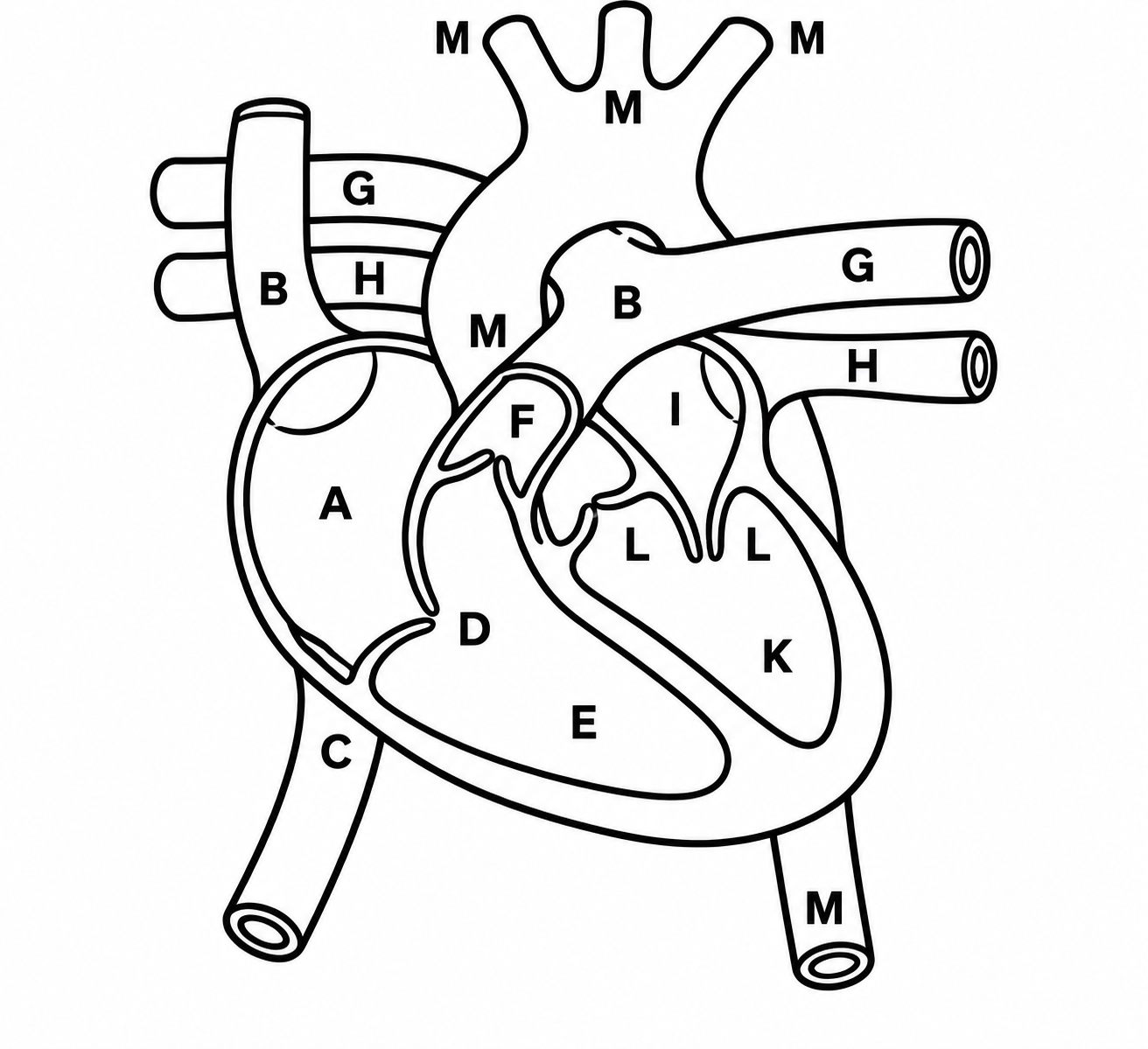
What is C?
Inferior vena cava

What is D?
Tricuspid valve

What is E?
Right ventricle

What is F?
Pulmonary semilunar valve

What is G (all of them)
Pulmonary arteries

What is H (both)
Pulmonary veins
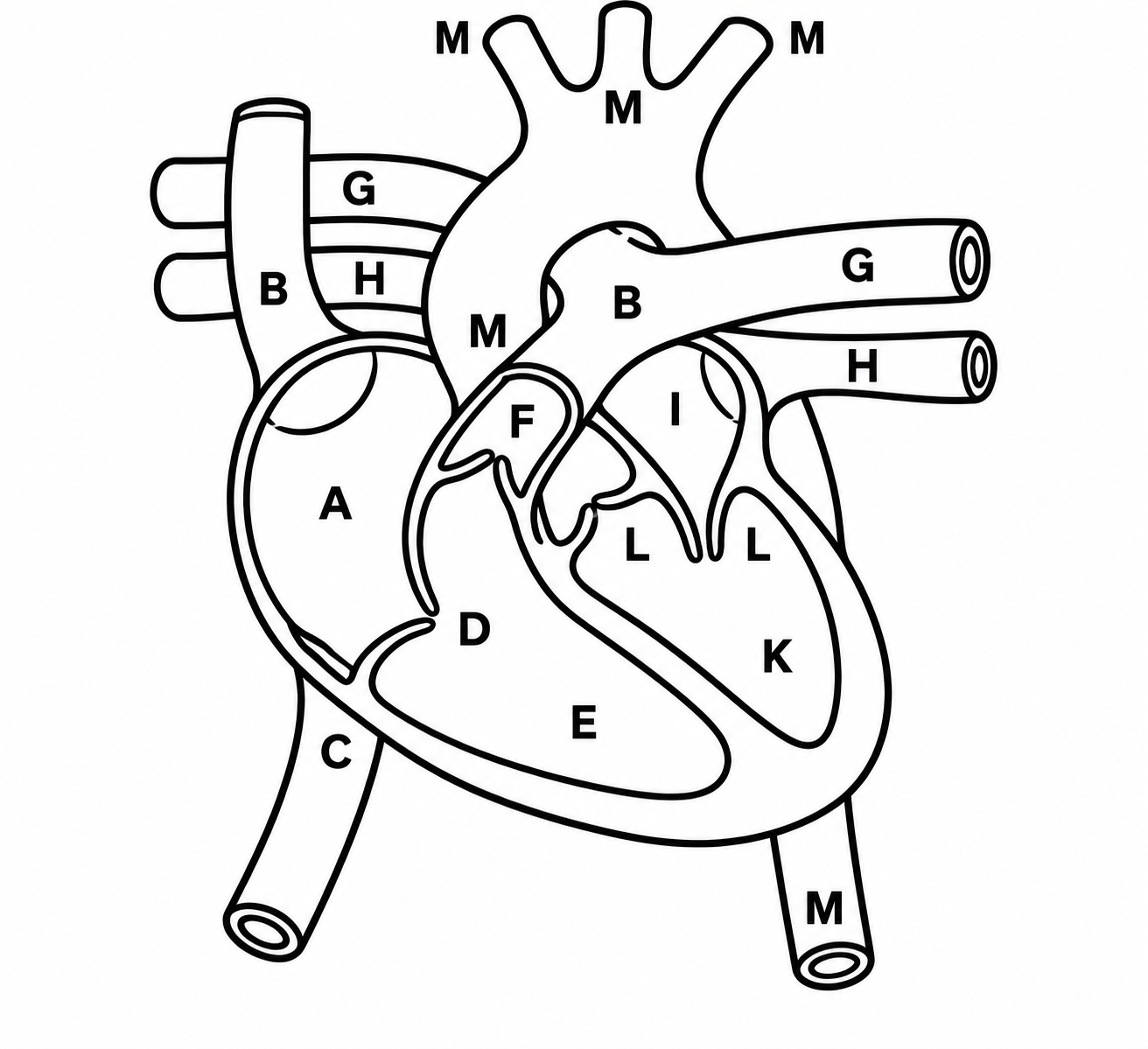
What is I
Left atrium

What is L
Left ventricle
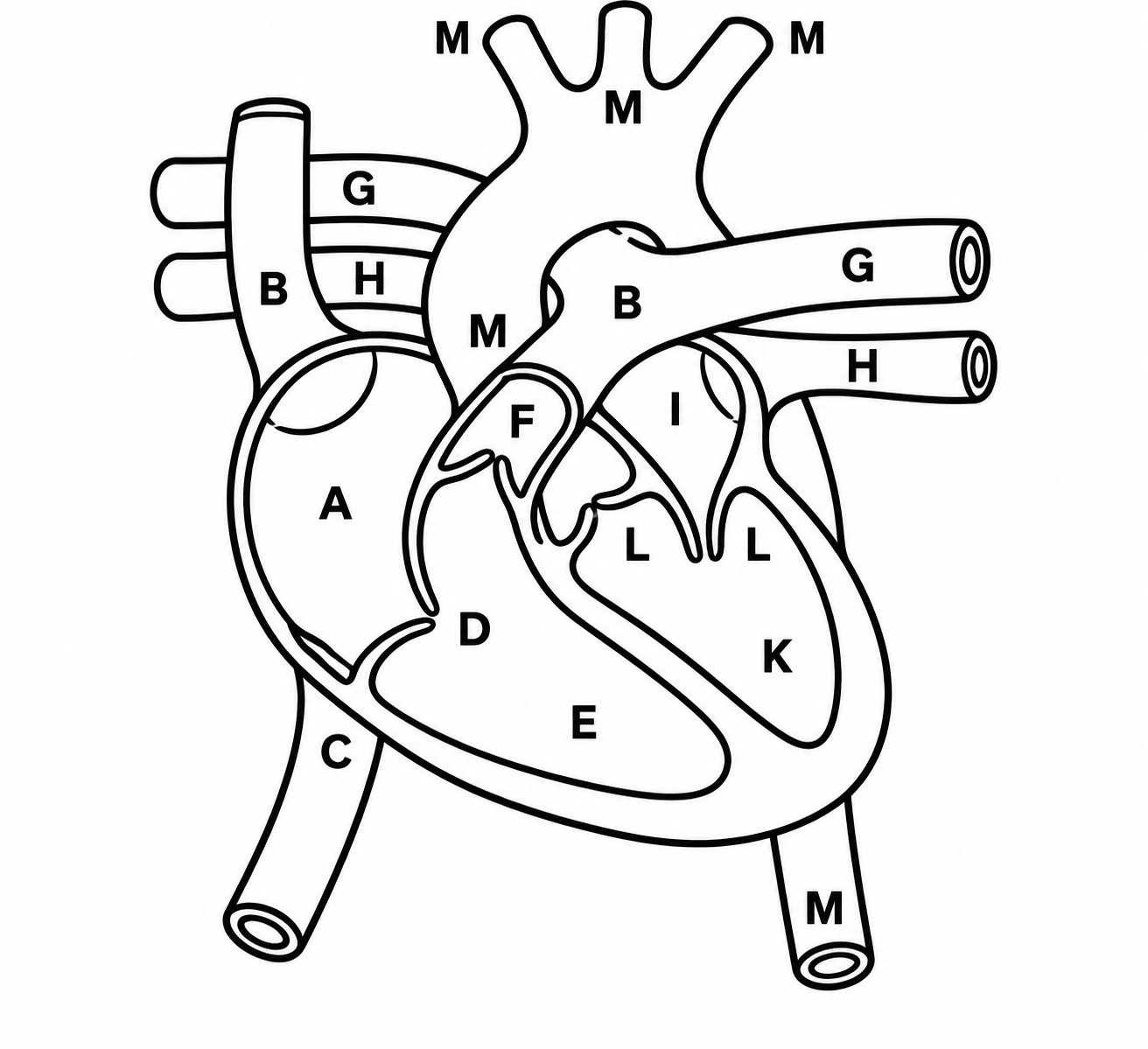
What is M (all five)
Aorta