3.3 Macroeconomic Objectives- Unemployment
 Call Kai
 Learn
 Practice Test
 Spaced Repetition
 Match
 Flashcards
 Knowt Play
1/20

21 Terms
What are the 3 main objectives of an economy?
Economic Growth
Low Unemployment Rate
Slow and Stable Inflation
Possible additional goals: Sustainable Debt, Equity, and Income Distribution
Define the term “Unemployment”
People who are willing, able, and actively seeking employment, but are unable to find it.
Define the term “Discouraged Workers”
People who are of working age but have been unemployed and are not currently looking for a job. They are not included in the workforce.
Define what is meant by Labour Force/ Work Force
People of working age (18-65) who are employed, or unemployed and SEEKING work.
What are the 3 criteria that must be met to be considered in the labour force.
Willing to work
Able to work
Seeking employment
Define what is meant by Unemployment Rate
The number of unemployed workers expressed as a percentage of the total workforce /labour force.
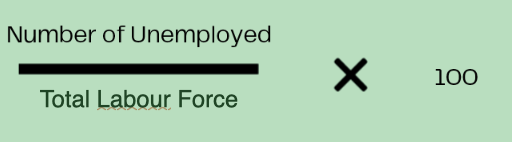
How is Unemployment Rate calculated?
Number of Unemployed/ Total Labour force x 100
List (4 bullet points) the Difficulties in Measuring Unemployment
Hidden Unemployment → This includes individuals who work fewer hours than they desire, or those working jobs in below their skill level (*also known as underemployed*)
Discouraged Workers → Workers that have stopped looking for employment (how does it become known?)
Issues with race, age, and gender info → Race, age and gender gaps in unemployment are not typically calculated
Informal Jobs → People employed as unregistered workers, or those in illegal jobs
What are the types of Unemployment
Cyclical (Demand-Deficient)
Frictional Unemployment
Seasonal Unemployment
Structural Unemployment
Describe the type of Unemployment: Cyclical
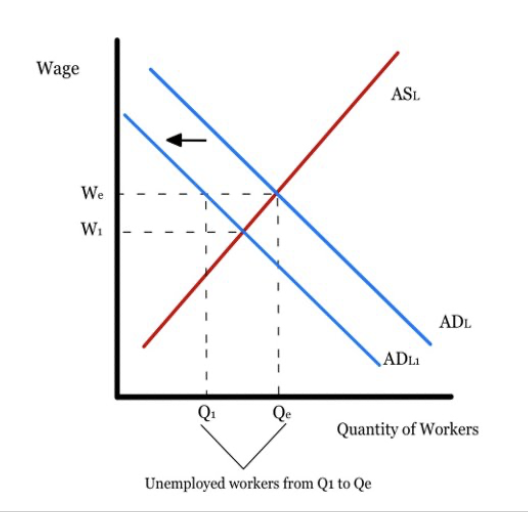
Unemployment occurs due to a recession or a reduction in aggregate demand. Think: Cyclical= downturn in the Business Cycle
Describe the type of Unemployment: Frictional
People who are between jobs or have recently left education
Describe the type of Unemployment: Seasonal
Occurs when specific jobs are only offered periodically, during certain times in the year.
Describe the type of Unemployment: Structural
Occurs when there is a change in demand for particular skills in the labour market, such as technological changes, geographical changes, or changes in patterns of demand for particular skills.
Define the natural Rate of Unemployment
The percentage of people structurally, frictionally, and seasonally unemployed. There will always be changes in skills desired by businesses, people switching careers, and seasonal jobs.
This is why governments do not strive for zero unemployment, but rather a low rate (4-6 percent typically).
What are the 3 categories of Costs of Unemployment
Economic Costs
Personal Costs
Social Costs
Describe the Economic Costs of Unemployment
Lost of GDP
Loss of Tax Revenue
Increased Unemployment Benefit Cost
Lost of Income for Individuals
Greater Income Inequality
Describe the Personal Costs of Unemployment
Increased Debt (e.g. Credit Card)
Increased stress, anxiety, and depression
Describe the Social Costs of Unemployment
Increased Crime Rate
Loss of Access to Healthcare
How to fix Cyclical Unemployment
The economy needs to increase AD to combat the recession.
How to fix Structural Unemployment
The economy needs to implement policies aimed at increasing education and flexibility in the labor market.
How to fix General Unemployment
An effective welfare system allows those who are unemployed to stay out of poverty and find new employment.