APES - 1.2 Terrestrial biomes
 Call Kai
 Learn
Learn Practice Test
 Spaced Repetition
 Match
Match Flashcards
 Knowt Play
1/12

There's no tags or description
Looks like no tags are added yet.
Name | Mastery | Learn | Test | Matching | Spaced | Call with Kai | Chat |
|---|
No analytics yet
Send a link to your students to track their progress
13 Terms
Levels of organization: population
Definition: A group of individuals of the same species living in a specific area at the same time.
APES Example: All of the gray wolves (Canis lupus) living in Yellowstone National Park
Levels of organization: community
Definition: All the different populations of various species living and interacting in a defined area. It includes only living (biotic) components.
APES Example: The wolves, elk, aspen trees, ravens, and grass in Yellowstone National Park
Levels of organization: ecosystem
Definition: A biological community plus all the non-living (abiotic) components—such as water, soil, and temperature—interacting as a system. [1]
APES Example: The entire forest and river network of Yellowstone, including the living wolves and elk interacting with the non-living soil minerals, thermal springs, and weather patterns.
Levels of organization: biome
Definition: A large, global-scale geographic area defined by its shared climate (temperature and rainfall patterns) and characteristic plant and animal communities.
APES Example: The temperate deciduous forest biome or the taiga (boreal forest) biome
Terrestrial
land-based, referring to ecosystems and biomes located on solid ground rather than in water

Weather vs. Climate
is what happens in the atmosphere day-to-day
is the long-term average of those conditions over 30 years or more
Taiga (boreal forest, northern coniferous forest)
a cold biome dominated by evergreen needle-leaved trees like pine, fir, and spruce

Tundra
a cold, treeless biome defined by extremely low temperatures, little precipitation (similar to a desert), and a layer of permanently frozen soil called permafrost

Temperate
a region with moderate temperatures and distinct seasonal changes, sitting between the polar and tropical zones

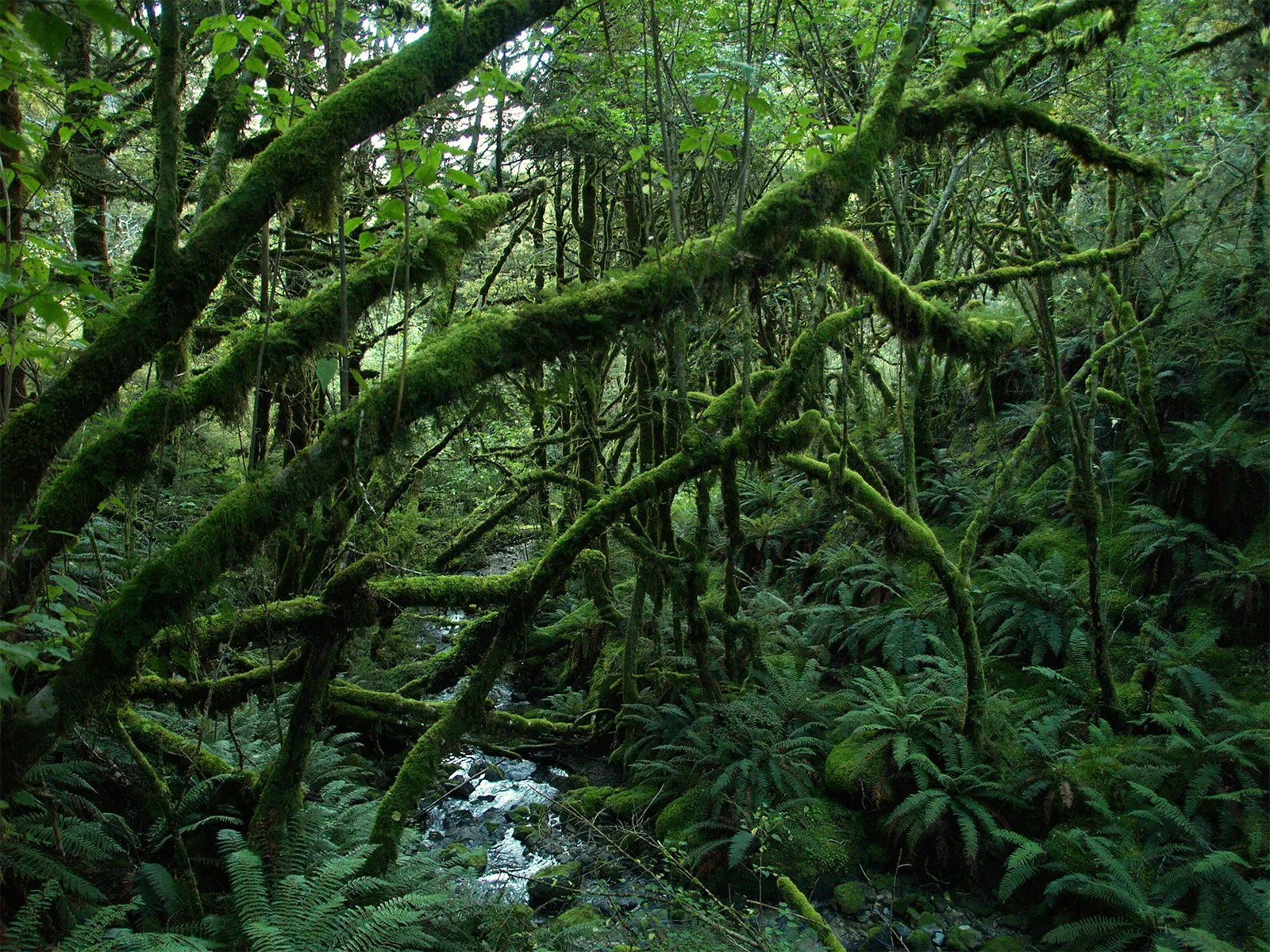
Temperate rainforest
a coastal biome with high annual rainfall and mild, cool temperatures rather than extreme heat
Temperature
a measure of the average kinetic energy—or speed—of the atoms and molecules in a substance, reflecting how warm or cool that environment is
Seasonal forests
a terrestrial biome defined by distinct temperature changes, moderate and steady precipitation, and dominant broadleaf deciduous trees that lose their leaves every year

Tropical