p5 electricity
 Call Kai
 Learn
 Practice Test
 Spaced Repetition
 Match
 Flashcards
 Knowt Play
1/43

There's no tags or description
Looks like no tags are added yet.
44 Terms
how do charges interact with each other
like charges repel and opposites attract
what is the unit for measuring charge
it is coulombs(C) and one coulomb is equivalent to the charge of 6.24 × 10^18 electrons
what is electrostatic electricity
when certain materials are rubbed together one deposits electrons onto the other, but the electrons are stuck in place rather then free moving causing a build up of charge
what materials are rubbed together in order to produce negative/positive charge
when you run a cloth duster onto a polythene rod the electrons get transferred from the cloth to the polythene. when you rub a cloth duster and a acetate rod, the electrons get deposited on the cloth duster
what is an electric field
the area where a force acts on an electric charge
how do you draw electric field lines
they always go from positive to negative and are at a right angle to the charged object
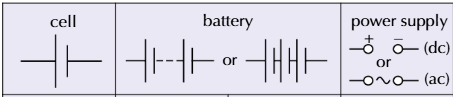
circuit diagram for cell and battery or power supply
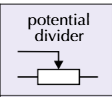
what is a variable potential divider called and how do you draw it
it is called a potentiometer
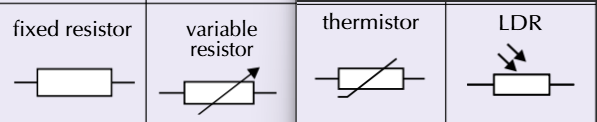
what are the 4 main types of resistors and how do you draw them
fixed resistors, variable resistors, thermistors, light dependent resistors
how do you draw a switch

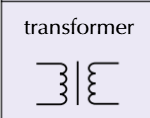
how do you draw a transformer
how do you draw a heater

how do you draw a ammeter and voltmeter

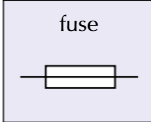
how do you draw a fuse
how do you draw and what are magnetizing or relay coils used for
they are used to create electromagnets which in the case of the relay coil, closes another curcuit

how do you draw a generator and motor

how do you draw an electric bell

what are and how do you draw diodes and LEDs s
they only allow one way current and emit light in the case of LEDs

conventional current vs electron flow
conventional current goes from positive to negative while electron flow is from negative to positive
what is electromagnetic force
it is the amount of work done when moving a unit of charge around a circuit. measured in volts
what is potential difference
it is the amount of work a charge does on the components of a circuit. measured in volts
what is one volt mean
it means that 1 joule of energy is supplied to 1 coulomb of charge
what does 1 amp mean
1 amp means that 1 coulomb of charge flows past a point in 1 second
what is and what is the formula for resistance
resistance is the force that opposes charge as it flows though the circuit(gets worked on by the charge) it is measured in ohms and resistance = potential difference / current
what does the resistance of a wire depend on
the resistance increases with distance but decreases with cross sectional length. they are directly proportional
what are LDRs and thermistors used for
then can measure light levels and temperature since their resistance changes based on environmental factors. resistance follows a graph similar to the positive 1/x graph
how to properly measure amperage and voltage
amperage is the same everywhere in the circuit so adding an ammeter anywhere will get you the correct reading. voltage is split across components so you need to connect the voltmeter in parallel to the components youre checking
what does the resistance graph of a constant resistor look like and why
because the resistance doesnt change so it follows a strait line graph

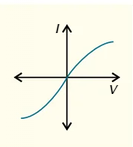
what does the resistance graph of a filament lamp look like and why
because as the current increases the lamp gets hotter and the hotter it gets the less resistance it has
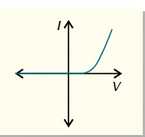
what is the resistance graph of a diode and why
because they have very high resistance in the reverse direction and therefore they only allow current in one way
how is energy transferred in a circuit
energy is transferred from the store of the supply to the store of the components via the electrical charge
what is Wh measuring and what does it mean
Wh is a measure of energy and it is the amount of energy that can be transferred at a constant rate for 1h
what is the formula for wattage in terms of current and voltage
electrical power(W) = voltage(V) * current(A)
what is the formula for total amount of energy transferred in a circuit
energy(J) = power(W) * time(s)
how does resistance voltage and current behave is a series circuit
resistance is the total of all the components added up, current is the same all the way though the circuit, and voltage is split among the components and adds up to the emf of the power source
how does voltage and current work in a parallel circuit
voltage is the same as the emf of the source across every branch of the circuit, current is split up across branches proportionally based on the resistance of each branch, with the greater proportion going to the branch with less current(I1 x R1 = I2 x R2)
how is resistance of a parallel circuit calculated
1/Rtotal = 1/R1 + 1/R2
what are the 4 main electrical hazards
damaged insulation causing shocks, heating of cables due to insufficient width causing fire, damp conditions allowing electricity to flow outside the wire, overloading causing cables to overheat and could lead to fires
what are the 3 main wires in the UK plug and their purposes
there is the live wire that provides alternating current at 230V(in the UK) from mains supply, the neutral wire that completes the circuit when the appliance is running properly and is at 0V, and the ground wire that protects the wiring and stops the casing from becoming live and carries 0V
what is the purpose of a fuse
to prevent damage to a circuit by having a wire that melts and breaks the circuit when voltage exceeds the one the circuit is prepared to accept
what is the purpose of a potential divider
it splits up the voltage across a circuit by using 2 resistors with to divide the pd of the power source amongs them
how can you use a potential divider
a potential divider uses 2 resistors to split the voltage in proportion to the resistance of the resistors by connecting a circuit parallel to one of the resistors
how does a potential divider work with a variable resistor
one of the 2 resistors in the circuit is a variable resistor meaning that by changing the resistance of the resistor you can change the output voltage of the circuit
what is a variable potential meter sometimes called
it can becalled a potentiometer and usually has a knob or slider to control the amount voltage outputted