Bone Tissue (pt.1)
 Call Kai
 Learn
Learn Practice Test
 Spaced Repetition
 Match
Match Flashcards
 Knowt Play
1/38

There's no tags or description
Looks like no tags are added yet.
Name | Mastery | Learn | Test | Matching | Spaced | Call with Kai | Chat |
|---|
No analytics yet
Send a link to your students to track their progress
39 Terms
Bone Tissue: Overview
connective tissue
dynamic and alive
capable of change in response to different stimuli or external mechanical forces
Bone Remodeling
building of new bone
breakdown of old bone
Bone: Function
support
protection
assistance in movement
mineral homeostasis
blood cell production: red bone marrow
triglyceride storage: yellow bone marrow
Bone Structure: Long Bones
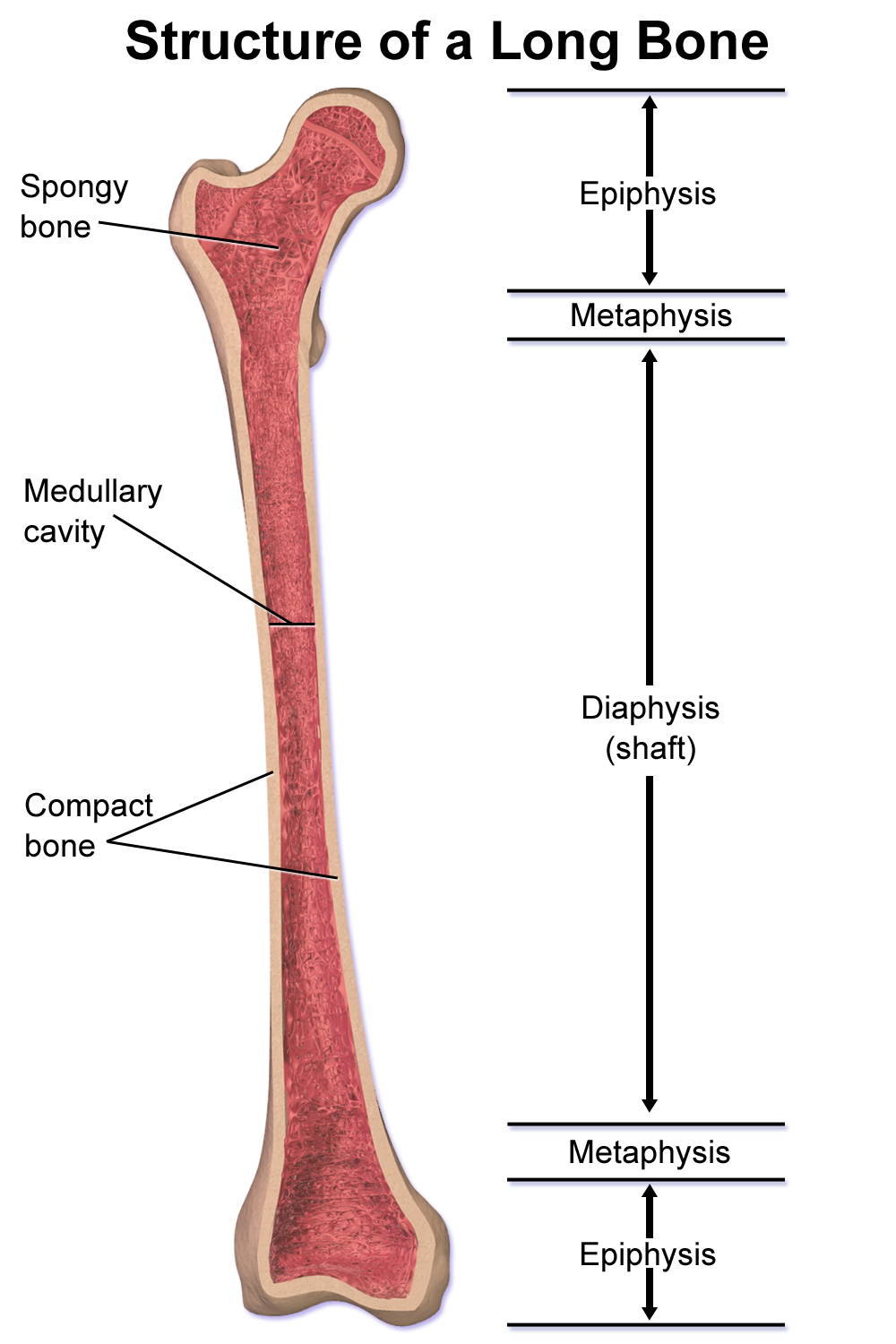
Diaphysis
Epiphysis
Metaphysis
Epiphyseal Plate
Epiphyseal Line
Articular Cartilage
Periosteum
Medullary Cavity
Endosteum

Diaphysis
Bone Structure;
body or shaft of the bone

Epiphysis
Bone Structure;
the proximal and distal ends of bones
Metaphysis
Bone Structure;
region between the diaphysis and epiphysis
where growth can occur

Epiphyseal Plate
Bone Structure;
growth plate, area of active growth
located in metaphysal area

Epiphyseal Line
Bone Structure;
bone growth has ceased

Articular Cartilage
Bone Structure;
cartilage covering epiphysis at a joint
reduces friction, absorbs shock, avascular

Periosteum
Bone Structure;
tough connective tissue surrounding bone where cartilage is absent

Medullary Cavitty
Bone Structure;
hollow space within the diaphysis of long bones containing fatty yellow marrow and blood vessels
decreases bone mass

Endosteum
Bone Structure;
connective tissue membrane that lines the medullary cavity and the internal spaces of spongy bone
single layer of osteoprogenitor cells and connective tissue
What is bone tissue made of?
15% water
30% collagen fibers
55% crystallized mineral salts
Calcification
mineral salts are deposited and crystallize along the collagen and extracellular matrix material
hardness depends on the crystallized inorganic mineral salts
flexibility depends on the collagen fibers
Osteoprogenitor Cells
stem cells of the bone
the only bone cells that divide and produce osteoblasts
found in the periosteum, endosteum, and canals containing blood vessels within the bone
Osteoblasts
build bone, synthesize and secrete collagen fibers and organic compounds that build the ECM
trapped in ECM and transition to osteocytes
-BLAST
means it secretes/creates ECM
Osteocytes
mature bone cells
maintain daily metabolism
trapped in ECM
-CYTE
mean the cell that maintains or monitors the tissue
Osteoclasts
huge cells from fusion of multiple monocytes
concentrated in the endosteum
release lysosomal enzymes and acids that digest the protein and mineral components of the bone’s ECM
Bone Resorption
part of normal development, maintenance, and repair of bone
helps regulate blood calcium
-CLAST
in bone means cells that breakdown ECM
Compact Bone
strongest type of bone
dense with few spaces
beneath periosteum of all bones
bulk of the diaphysis of long bones
provides protection, support, and resists strains from weight and movement
Osteons (Haversian Systems)
Compact Bone;
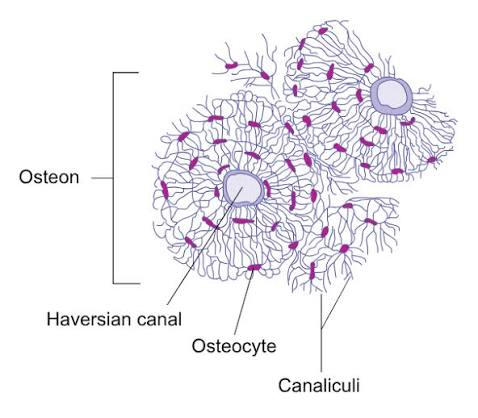
repeating structural units of concentric bone lamellae arranged around a osteogenic canal

Concentric Bone Lamellae
Compact Bone;
circular plates of mineralized ECM surrounding the osteonic canal containing blood vessels and nerves

Bone Lacunae
Compact Bone;
small spaces between concentric bone lamellae containing osteocytes

Bone Canaliculi
Compact Bone;
small channels radiating from the bone lacunae filled with extracellular fluid/interstitial fluid
connects bone lacunae
contain finger-like projections of osteocytes
interconnected system of canals throughout the bone creating a route for nutrients oxygen to reach osteocytes and for waste removal

Interstitial Bone Lamellae
Compact Bone;
areas of bone between osteons
remnants of older bone lamellae that have been partially destroyed during bone rebuilding and growth

Perforating Canals
Compact Bone;
transverse through compact bone bringing blood vessels and nerves from the periosteum to the osteonic canals and bone surrounding the medullary cavity

External Circumferential Bone Lamellae
Compact Bone;
arranged around the entire outer circumference of the diaphysis deep to the periosteum

Internal Circumferential Bone Lamellae
arranged around the inner circumference of the compact bone around the medullary cavity
Organization of Osteons
Compact Bone;
dynamic
change overtime due to stresses applied to the bone such as walking, strenuous physical activity, previous bone injuries or fractures
Spongy Bone (Trabecular Bone): Overview
made up of bone trabeculae: bone lamellae in irregular pattens of thin columns
no osteons present
lots of open space between trabeculla
located in the interior of a bone and projecting into the medullary cavity
protected by an outer layer of compact bone
Bone Trabeculae
Spongy Bone;
consists of: bone lamellae, osteocytes in lacunae, canaliculi
lined by endosteum in medullary cavity
oriented along lines of strain
trabeculae are not random
orientation is dynamic
bone marrow fills the space between trabeculae
What is in the bone marrow?
red marrow = produce RBC
yellow marrow = adipose tissue (primarily)
many blood vessels that nourish the osteocytes
Where is spongy bone found?
found in all types of bone
makes up the interior of short, flat, sesamoid, and irregular bone
in long bones = make up interior of the epiphysis and a narrow rim bordering the medullary cavity
Spongy Bone: Functions
decreased weight/mass of bone improving movement
protects red marrow for blood cell production (Hemopoiesis)
Hemopoiesis
process by which the body creates all of its mature blood cells and blood components
occurs in pelvic bones, ribs, sternum, vertebrae, skull, proximal ends of long bones such as the femur and humerus