Surface - coatings, cleaning and heat treatment
 Call Kai
 Learn
 Practice Test
 Spaced Repetition
 Match
 Flashcards
 Knowt Play
1/37

There's no tags or description
Looks like no tags are added yet.
38 Terms
Surface Coatings
an application of a thin film of protective material to the surface of an object
Purposes of surface coatings
Provide corrosion protection
Enhance product appearance
increase wear resistance and/or reduce friction of
there surface.increase electrical conductivity
increase electrical resistance
prepare a metallic surface for subsequent processing
rebuild surfaces worn or eroded during service
Types of Coatings
Electroplating (electrochemical plating)
Anodizing
Porcelain enameling
Hot dipping
Painting
Electroplating
process of covering the surface of an object with metal
(plating)
Electroplating terms - Electric current
transfer ions of one metal on to the surface of
another material
Electroplating terms - anode
is generally made of the metal being plated
Electroplating terms - cathode
is the work part.
Electroplating terms - direct current
from an external power supply is passed between
the anode and the cathode
• Improve Appearance
• Increase Corrosion Protection
• Increase Wear Protection
Purposes of Electroplating
Anodizing
process to increase the thickness of a metal’s natural oxide surface
It works best on Aluminum metal.
1. The aluminum is put into an acid electrolyte bath.
2. An electric current through the medium.
3. Oxygen ions from the electrolyte combine with the aluminum atoms
at the surface creating a protective layer of Al2O3
Increased resistance to corrosion
Increased resistance to wear
Increased surface toughness
Improved surface appearance
Improved painting results
Anodizing Advantages
Porcelain Enameling
is a material made by melting powdered glass on to a surface
Powered glass is applied to a surface and then fired
until the powder melts and then hardens to a smooth,
durable coating (750 - 850 °C)Enamel can be used on metal and ceramics or any
material that will withstand the melting temperature

1. Corrosion
2. chemical attack
3. physical damage
4. improve the appearance of the product.
Purpose of Porcelain Enameling
Hot Dipping
process in which a metal substrate is immersed in a molten bath of a second meta
The primary purpose of hot dipping is corrosion resistance.
Coating thickness is typically 0.04 to 0.09 mm (0.0016–0.0035
in)Bath temperature is maintained at around 450C (850F).
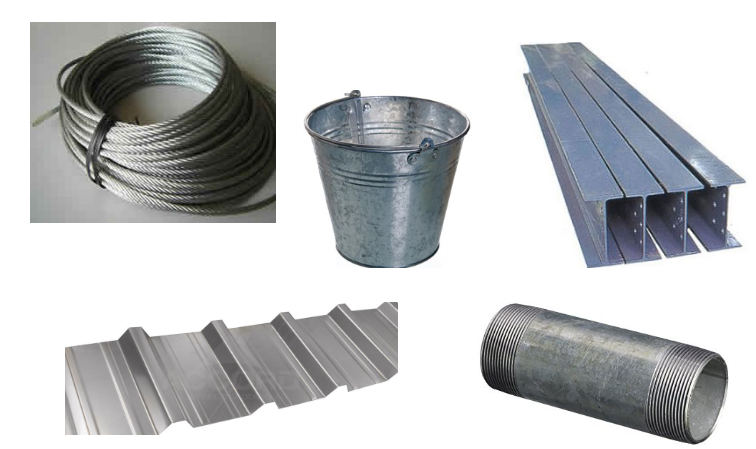

Even if the zinc coating is scratched, the exposed steel will still
be protected from corrosion by zinc forming a coating of zinc
oxide.
This makes galvanization better than paint and powder coating
Advantages of Hot Dipping
1. Prevents corrosion
2. Low cost
3. Easy application
4. Long maintenance-free service life
Advantages of hot dipping (list)
Painting
decorative
corrosion resistance
Organic coatings
are polymers and resins, produced either naturally or synthetically, usually formulated to be applied as liquids that dry or harden as thin surface films on substrate materials
binders
are polymers and resins that determine the solid-state properties of the coating, such as strength, physical properties, and adhesion to the substrate surface most common binders are natural oils, resins polyurethan, epoxies, acrylic, and cellulosic.
Dyes
are soluble chemicals that color the coating liquid but do not conceal the surface beneath
Pigments
are solid particles of uniform, microscopic size that are dispersed in the coating liquid but insoluble in it. They not only color the coating; they also hide the surface below
Solvents
are used to dissolve the binder and certain other ingredients in the liquid coating composition
Additives
in organic coatings include surfactants (to facilitate spreading on the surface), biocides and fungicides, thickeners, freeze/thaw stabilizers, heat and light stabilizers, coalescing agents,
plasticizers, defoamers, and catalysts to promote cross-linking.
1. Dip coating (liquid)
2. Spray coating (liquid)
3. Powder coating (powder)
4. Applicator coating – brushes or rollers
Methods of paint application
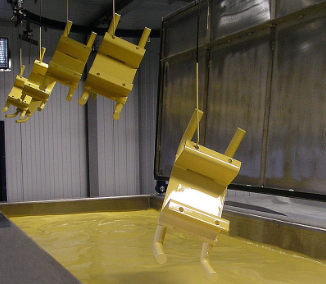
Dip coating
Submerges the whole part in the paint to form a thin uniform layer coat on all surfaces.
Used more used for a protective coat than decorative.
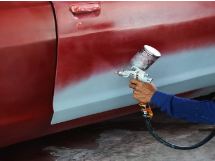
Spray painting
is a painting technique where a device sprays a coating of paint through the air onto a surface.
Powder coating
is a coating that is applied as a dry powder.
1. The powder is applied and is cured under heat to allow
it to flow and form a "skin".
2. The powder may be a thermoplastic or a thermoset
polymer.
3. It makes a hard finish that is tougher than conventional
paint.
mainly used for coating of metals, such
as appliances, hardware, automobile and bicycle parts

Surface cleaning
Almost all parts must be cleaned one or more times during manufacturing.
Processes used to clean the work surfaces:
1.Chemical cleaning methods: Use chemicals to remove unwanted contaminants from the work surface
2.Mechanical cleaning: Involves removal of contaminants by various mechanical operations
1.Prepare surface for processing, such as applying a coating or adhesive
2.Remove contaminants that might react with the surface
3.Improve appearance of the product
Reasons Why Parts Must be Cleaned
Chemical Cleaning Processes
1.Solvent cleaning
2.Alkaline cleaning
3.Emulsion cleaning
4.Acid cleaning
5. Ultrasonic cleaning
Solvent Cleaning
1.Oil and grease are removed from a metallic surface by chemicals that dissolves them.
Common application techniques:
1.hand‑wiping
2.immersion
3.Spraying
4. Vapor degreasing.
Alkaline Cleaning
Alkaline cleaners contain strong bases like sodium hydroxide or potassium hydroxide.
Uses an alkali solvent to remove:
1.Oils
2.Grease
3.Wax
4.Metal chips
Acid Pickling
is a heavy duty metal surface treatment used to remove oxides, rusts, and scale.
Acid pickling is a deeper removal process compared to acid cleaning

Mechanical Surface Cleaning
Mechanical cleaning is the removal of soils, scales, or films from surfaces by using abrasives or similar mechanical action
Mechanical cleaning processes:
1.Blast finishing and shot peening
2.Mass finishing processes
Blast Finishing
•Is the high velocity impact of particles to clean a surface.
•The particles are projected at the target surface by pressurized air or centrifugal force.
•Well known is sand blasting using SiO2
•Alumina, and silicon carbide, nylon, and crushed nut shell can be used.
•In shot peening: Small cast steel balls
Are used.
•Shot peening is used to improve
fatigue strength

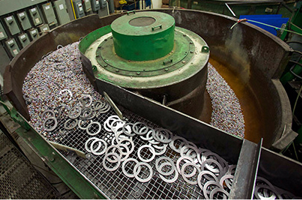
Mass Finishing
Many parts in are put in a container with an abrasive media
Mixing causes parts to rub against media and each other to achieve desired finishing action
Good for cleaning small parts