Plane Anatomy and Abbreviations
 Call Kai
 Learn
Learn Practice Test
 Spaced Repetition
 Match
Match Flashcards
 Knowt Play
1/81

There's no tags or description
Looks like no tags are added yet.
Name | Mastery | Learn | Test | Matching | Spaced | Call with Kai | Chat |
|---|
No analytics yet
Send a link to your students to track their progress
82 Terms
ELT
Emergency Locator transmitter (found in tail section)
CFR
The regs, PPL operate under Title 14- Aeronautics and airspace
Fuselage
Wings attach to this, the main body
Airfoil
Shape of the wing, manipulates air to generate lift
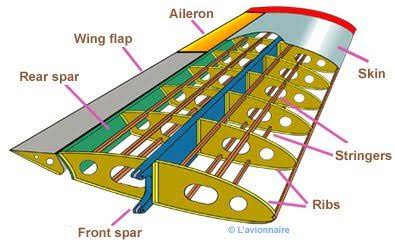
Spar
Long bar that holds wing together (2)
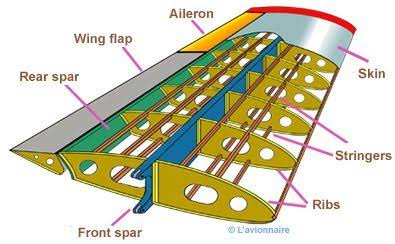
Ribs
Spacers that hold shape of Airfoil
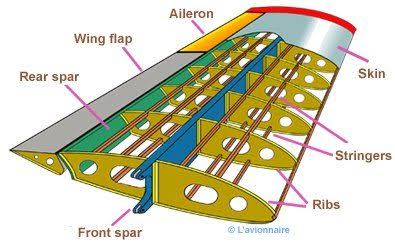
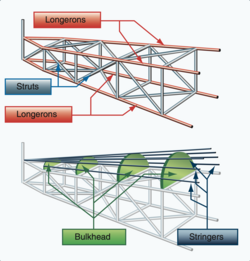
Stringer
Cords running lengthwise along wing and empennage, reinforce the skin and prevent it from buckling
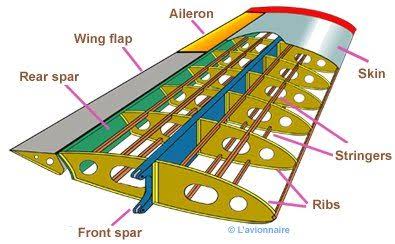
Wing flap
Secondary control surface that increases lift and drag, allows plane to descend at steeper angles and fly slower without stalling
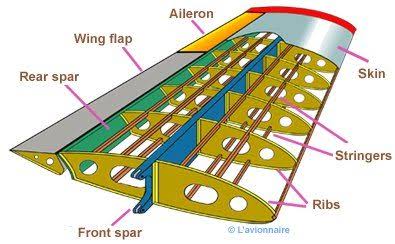
Aileron
Primary control surface, affects the roll of the plane
Empennage
Tail section, attached to fuselage
Longerons
Long horizontal bars throughout tail
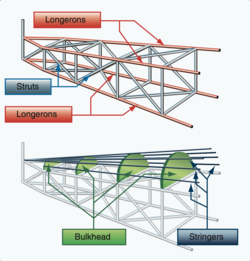
Struts
Connect Longerons
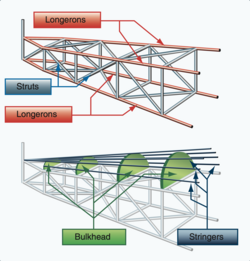
Bulkhead
Keeps shape for fuselage
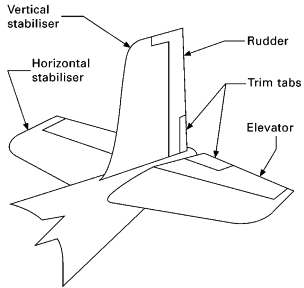
Rudder
Primary control surface on tail section, connected to vertical stabilizer, controls Yaw
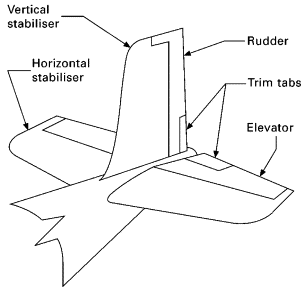
Elevator
Primary control surface, controls pitch attached to horizontal stabilizer
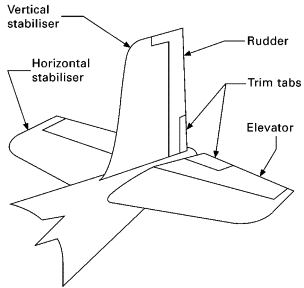
Trim Tabs
Secondary Control surface, reduces pressure on yoke during sustained ascent / descent
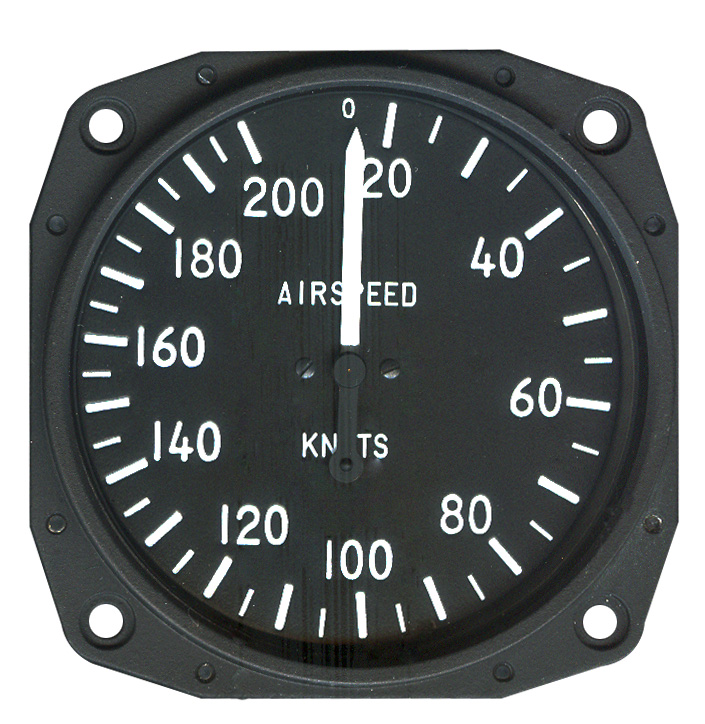
Airspeed Indicator
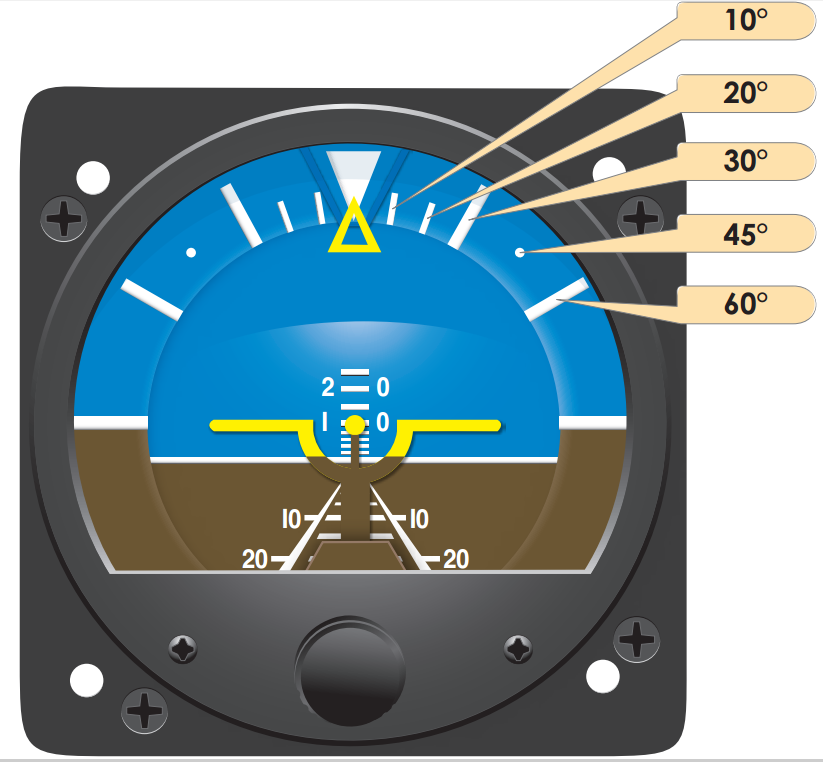
Attitude Indicator
Climbing/Descending, Rolling
Altimeter
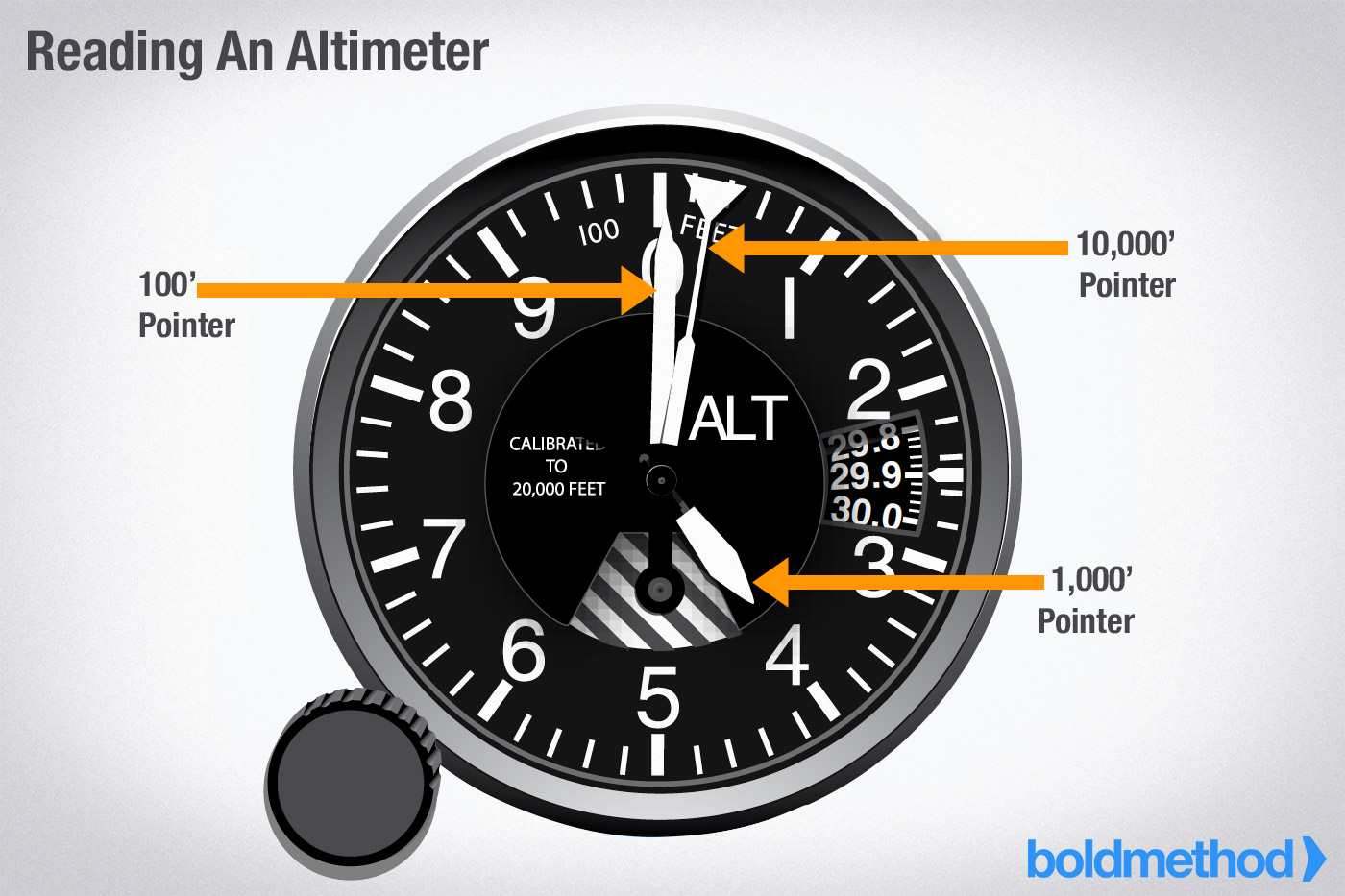
Altitude in FT
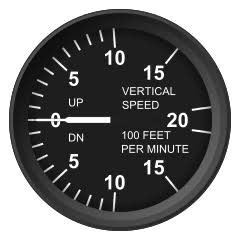
Vertical Speed Indicator (VSI)
Speed rising or falling
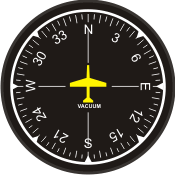
Heading Indicator
Compass
Turn Coordinator
Shows if plane is flying most efficient path while turning
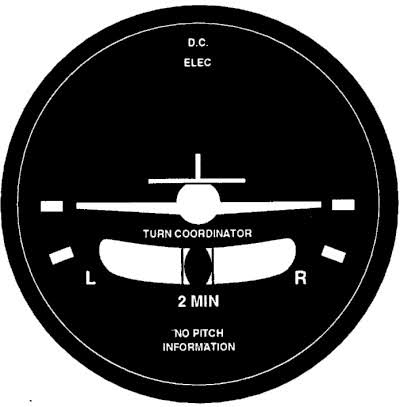
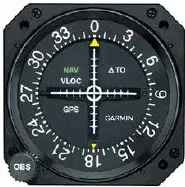
VOR (VHF Omnidirectional Range)
Used for navigation, being replaced with GPS
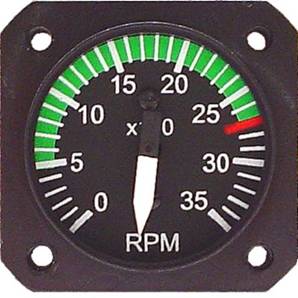
Tachometer
Measures RPM
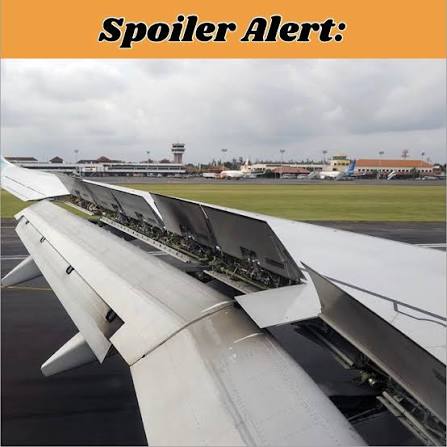
Spoilers
Used on larger aircraft, increase rate of descent without increasing airspeed
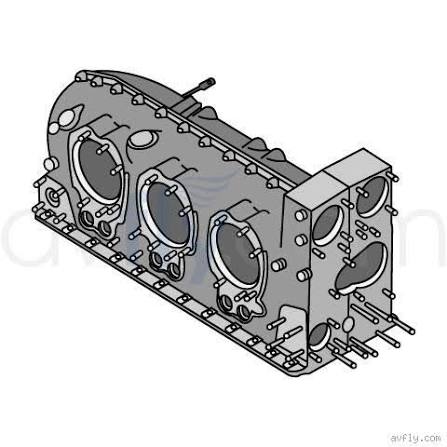
crank case
Foundation, what holds everything together and what you see first
Connecting arm
attaches piston to crank shaft
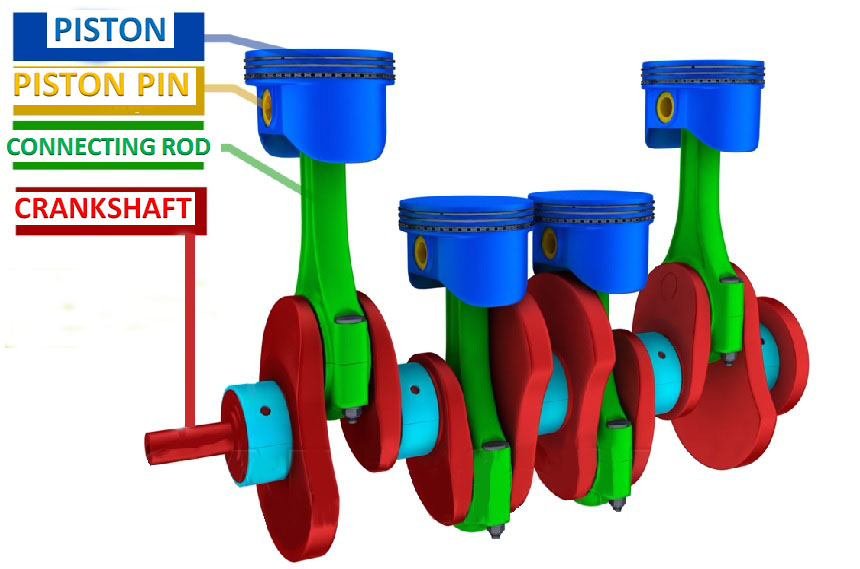
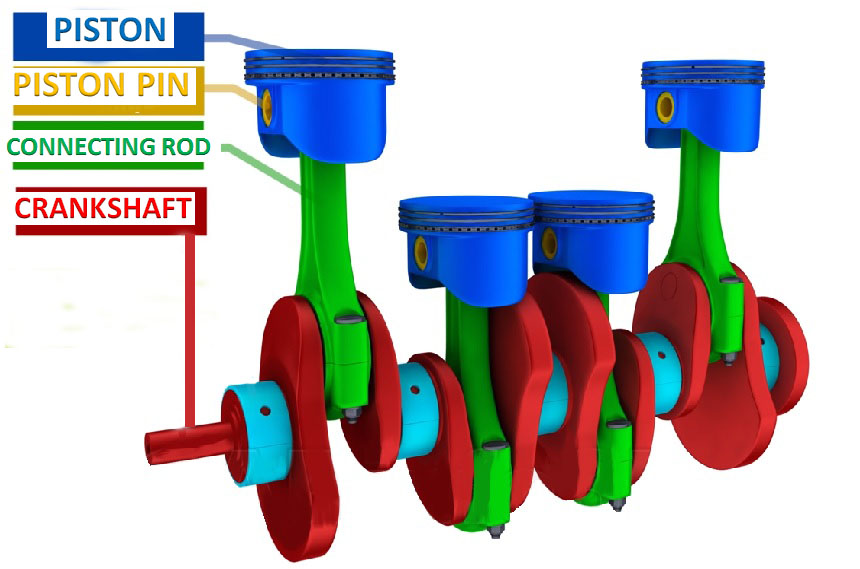
crank shaft
Connects to Propeller
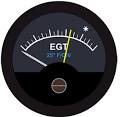
EGT
Exhaust Gas Temperature, measures the heat energy of the burned gases leaving the cylinder a the exhaust manifold. Used to find the optimal leaning of the mixture.
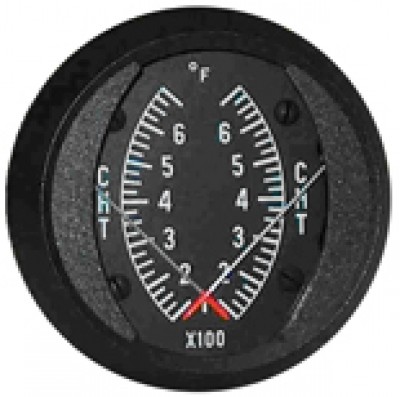
CHT
Cylinder Head Temperature, measures the actual temperature of the metal surrounding the combustion chamber.
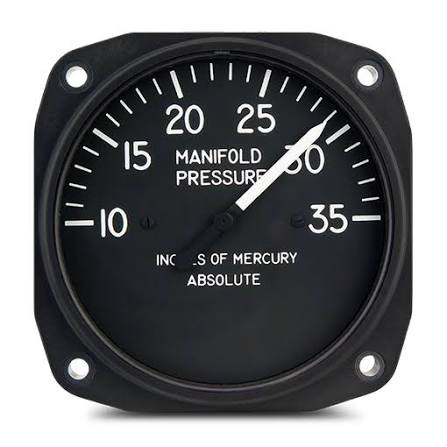
MAP
Manifold Pressure Guage, measures intake manifold pressure
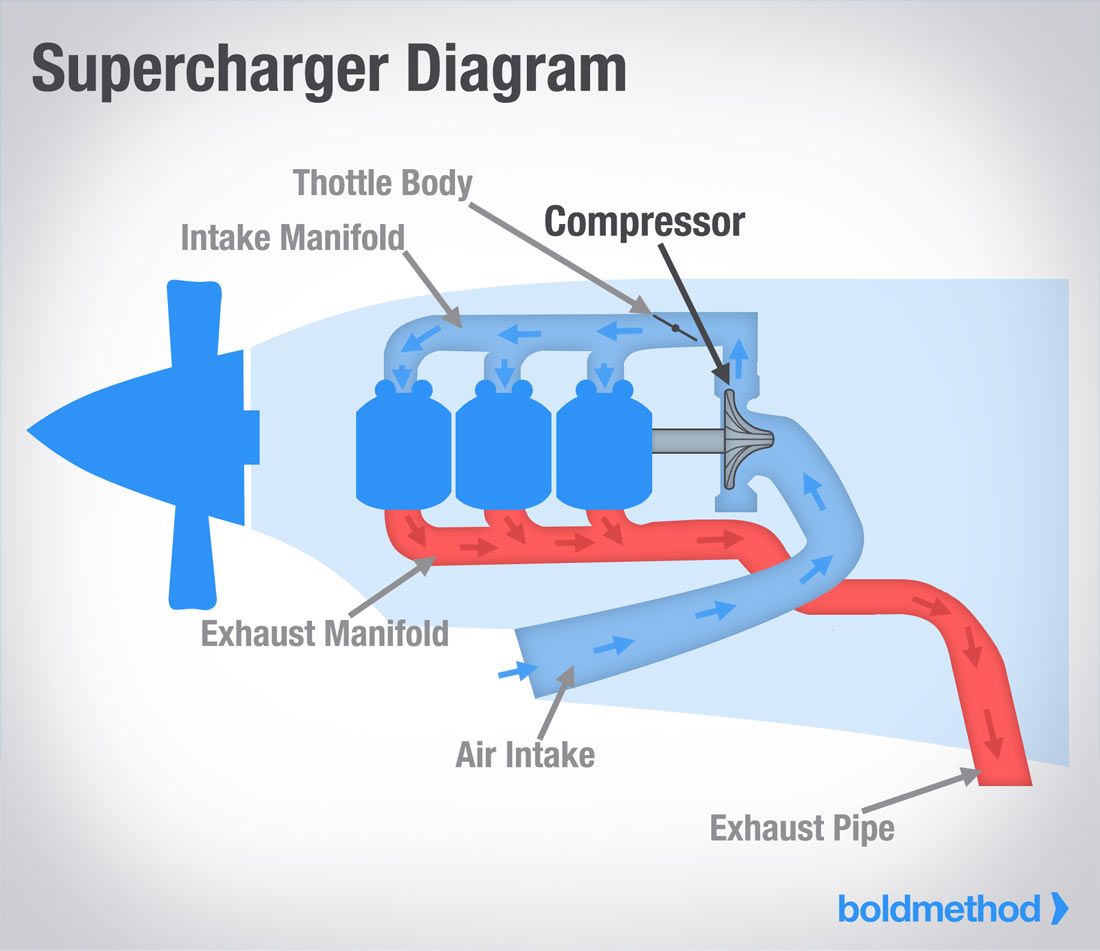
Supercharger
Engine driven air compressor, decreases engine horsepower
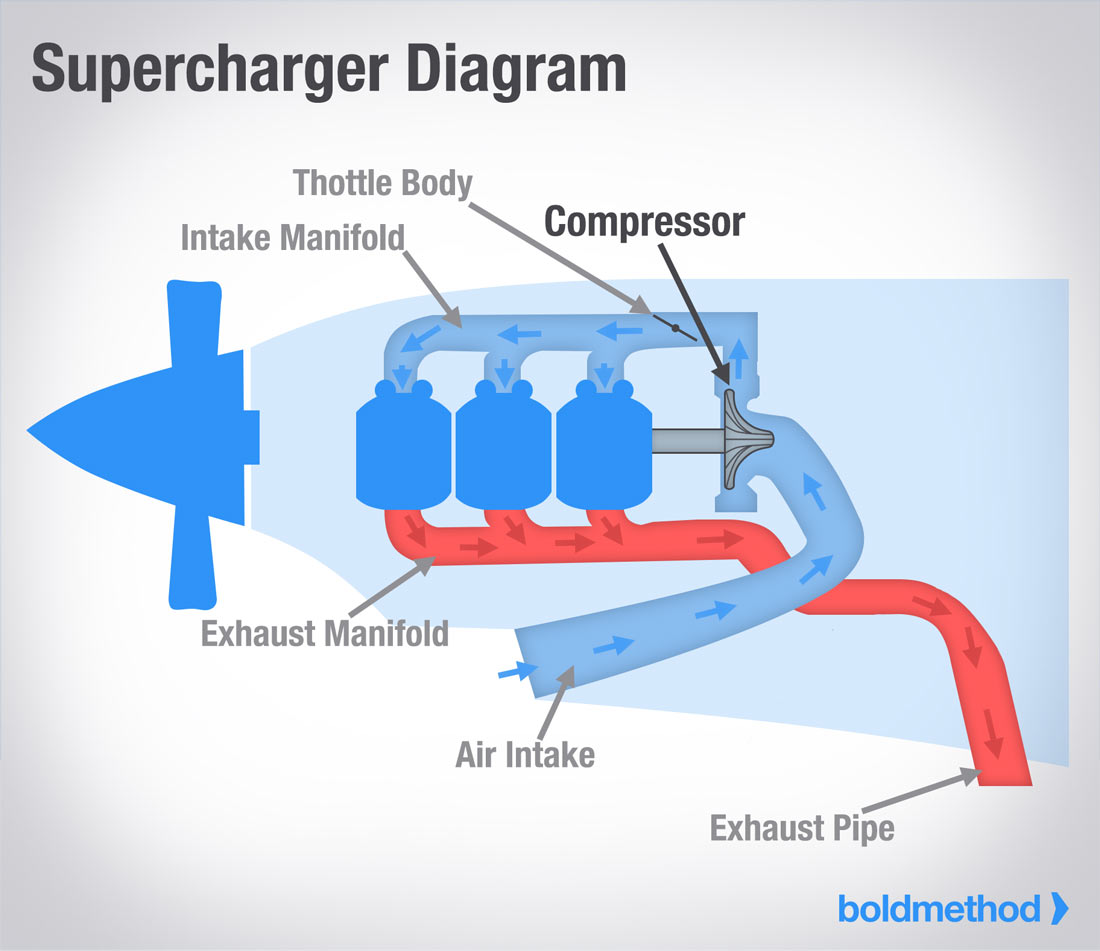
Turbocharger
Turbine that turns as exhaust is pushed past, more efficient air compressor
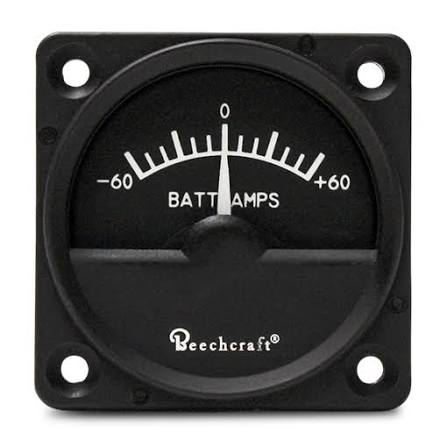
Ammeter
Indicates if there is charge going to the battery or coming from the battery. + means battery is being charged, - means the alternator has failed
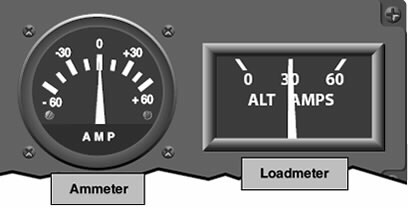
Loadmeter
Shows the load currently being drawn from source of power. Most aircraft don’t have this.
Lights-Landing
Wing light that illuminates runway
Lights- Beacon
Flashing red on tail
Lights-Strobe
Flashing white on wings and tail
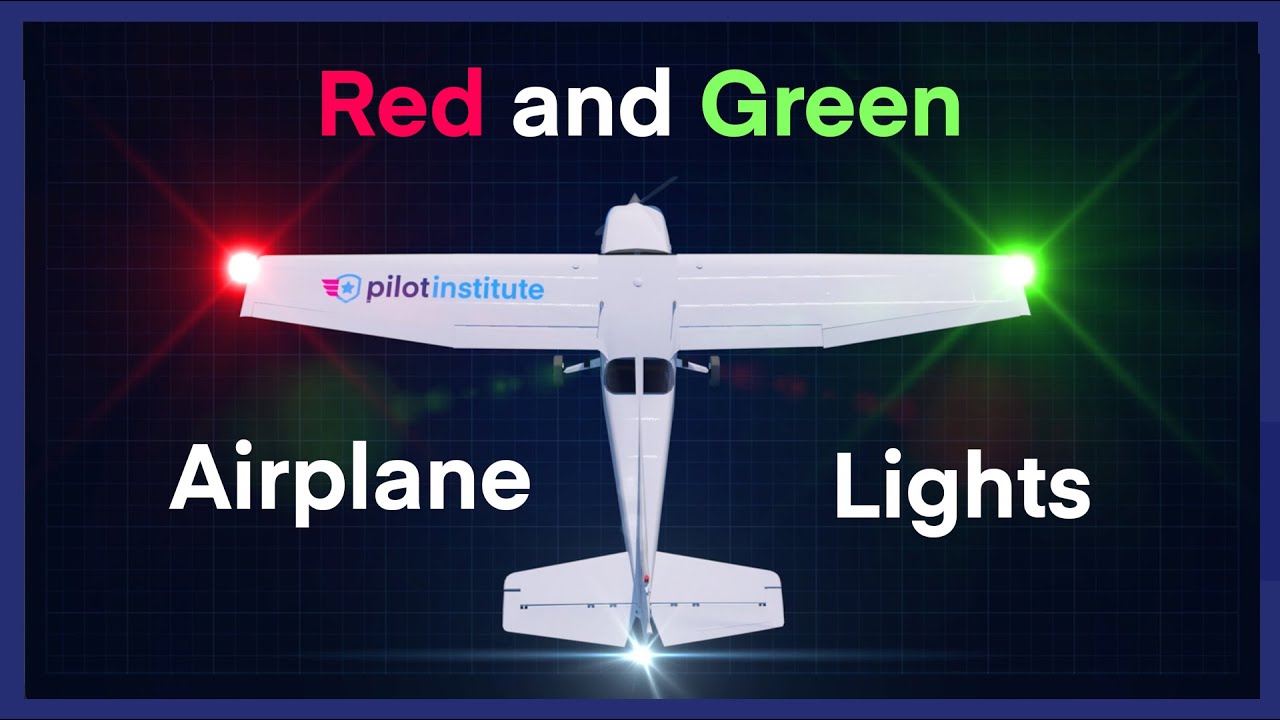
Lights-Navigation
Red on left, Green on right, tail is solid white
1 ATM (Atmosphere) =
14.7 PSI (Pounds per Square inch)
ASI Markings
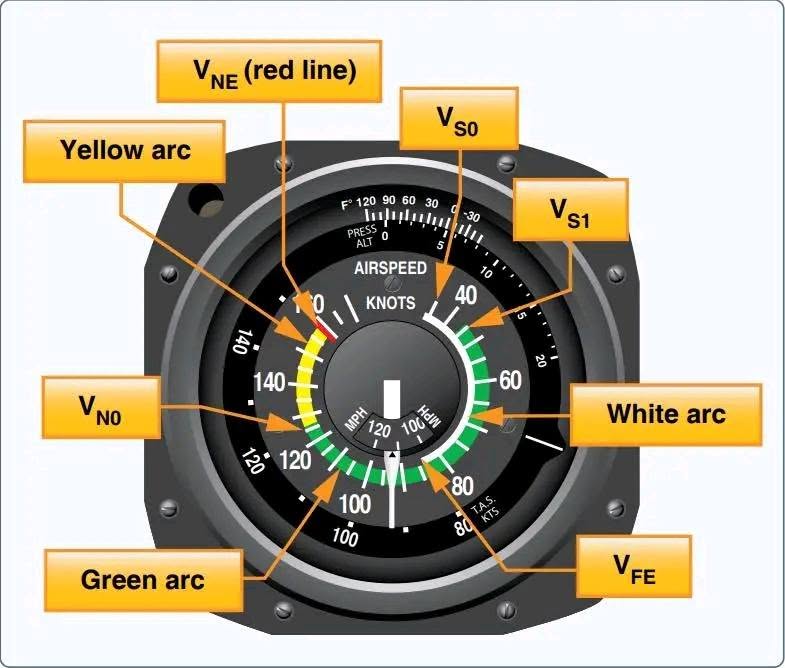
Stall Speed
the minimum airspeed at which an aircraft can maintain controlled, level flight. If the plane drops below this speed, the wings stop generating enough lift to support the aircraft's weight, leading to an aerodynamic stall
MSL
Mean Sea Level (Above Sea Level-as opposed to above Ground Level)
AGL
Above Ground Level (Specific to obstacle, Constantly changing)
Kollsman Window
Small dial on altimeter to change local barametric pressure, need to adjust so your altimeter reads correct reference point
Indicated Altitude
Altitude shown on Altimeter
True Altitude
Vertical distance of plane above sea level, expressed as feet above MSL
Absolute Altitude
Vertical difference above ground (AGL)
Pressure Altitude
Indicated altitude when set to standard day, AKA Altitude corrected for non-standard pressures
Density Altitude
Pressure Altitude corrected for non standard temperatures. How a plane “feels” performance-wise
Indicated Airspeed (IAS)
Displayed speed on ASI
Calibrated Airspeed (CAS)
IAS corrected for installation speed, found in calibration chart in plane’s manual, every plane is different.
True Airspeed (TAS)
CAS corrected for altitude and non-standard temperature. For a given CAS, as altitude increases so does TAS
Ground Speed
Actual speed over ground. Without wind, it is the same as TAS, with headwind it will decrease, tailwind increase
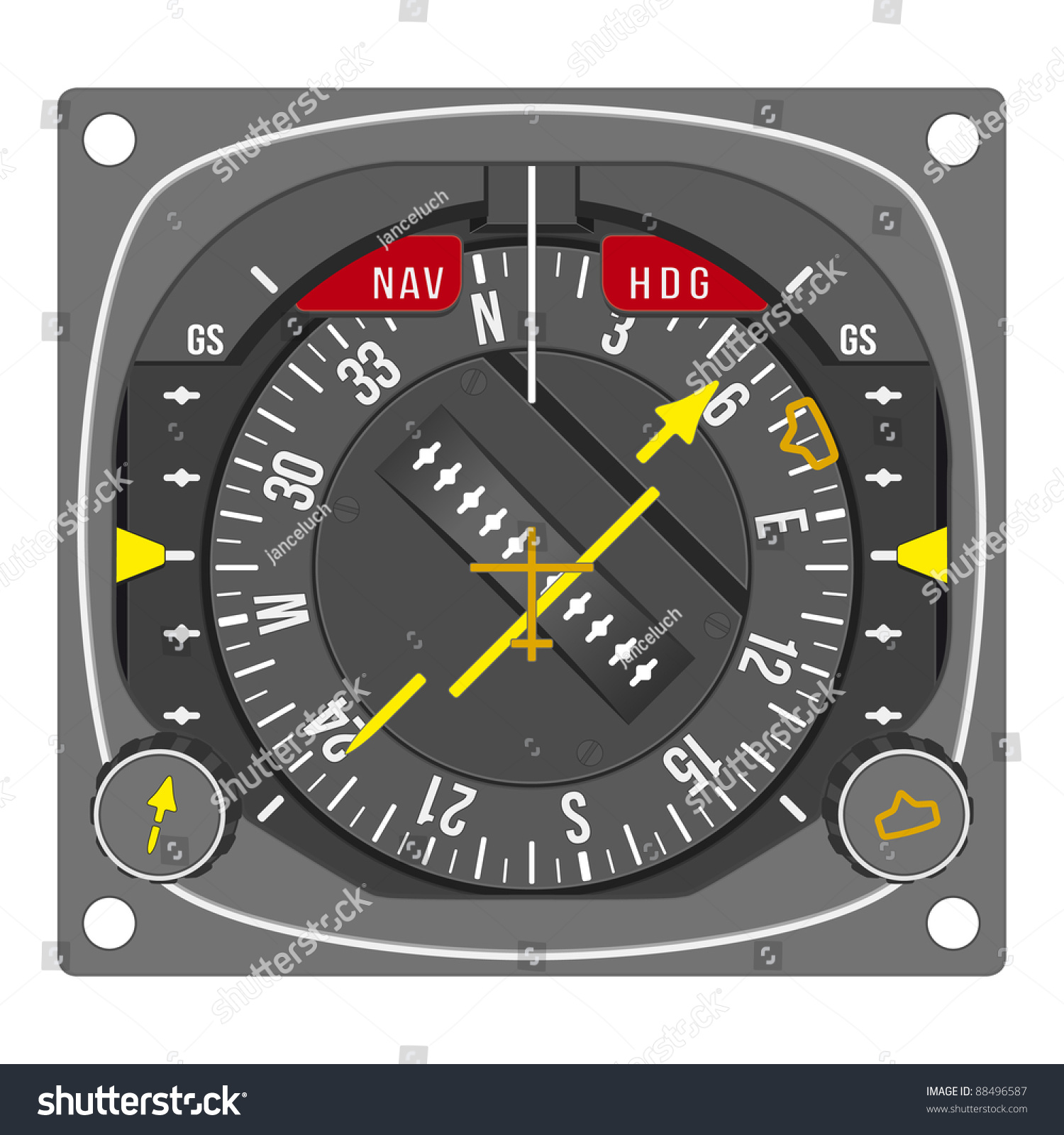
HSI
Horizontal Situation Indicator, receive magnetic info and don’t need to be reset like a Heading indicator
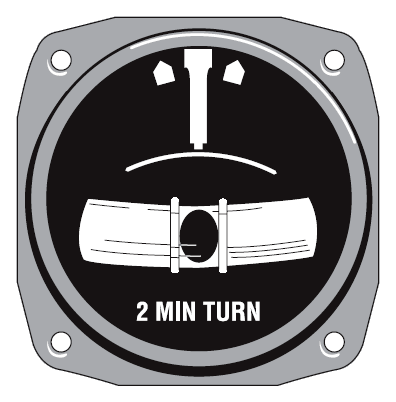
Turn and Slip Indicator
Old School, indicates only rate of yaw in degrees per second, uses inclinometer
Inclinometer
The small ball on the bottom of a turn coordinator or Turn and Slip indicator. Depicts yaw of plane, must kick the ball to maintain the most efficient flight path
Slip in vs Skid out
Just like drifting in a car, for every turn there is a most efficient path. However, if the rudder is out of place, the yaw will cause the plane to overshoot (Skid out) or undershoot (slip in) the correct trajectory.
EFD
Electronic Flight Display, another acronym encompassing both PFD and MFD
Variation
Compass error showing the difference between True North and Magnetic North measured in degrees. The Further away from Magnetic North = Greater Variation
Deviation
Compass Error- Depends on the magnetic field generated by the aircraft, reported on the compass correction card
Turning Error - North/South Heading
When turning into a north or south heading, the Compass will Lag (North) or lead (South), Remember OSUN
OSUN
Overshoot South, Undershoot North
Acceleration Error- East / West Heading
When Accelerating / Decelerating on E / W heading, compass is affected. Remember ANDS
ANDS
Accelerate North / Decelerate South, when on an E/W heading, changing the speed accordingly will turn the compass to either N/S
CG
Center of Gravity, the point at which if a string were attached the object would be at equilibrium
Relative wind
the direction of airflow created when an object moves through the air. It travels parallel to and in the exact opposite direction of the object's flight path, regardless of which way the object's nose is pointed.
leading edge, trailing edge
front of airfoil, back of airfoil
Mean chamber line
Line through middle of wing (Curved)
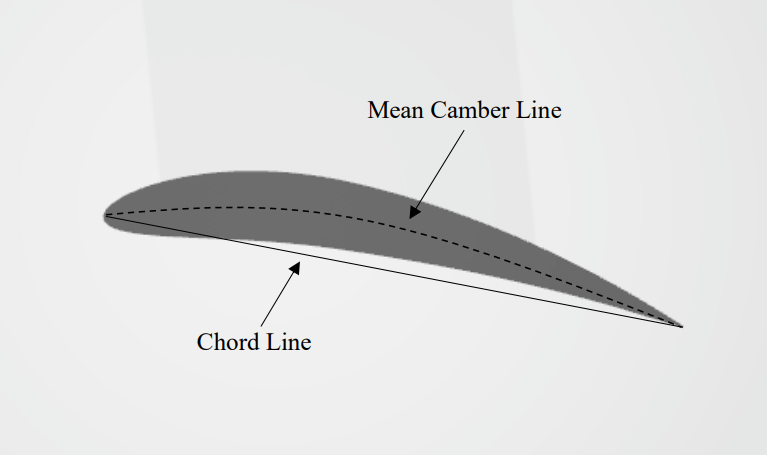
Chord Line
Straight line connecting the leading edge to the trailing edge
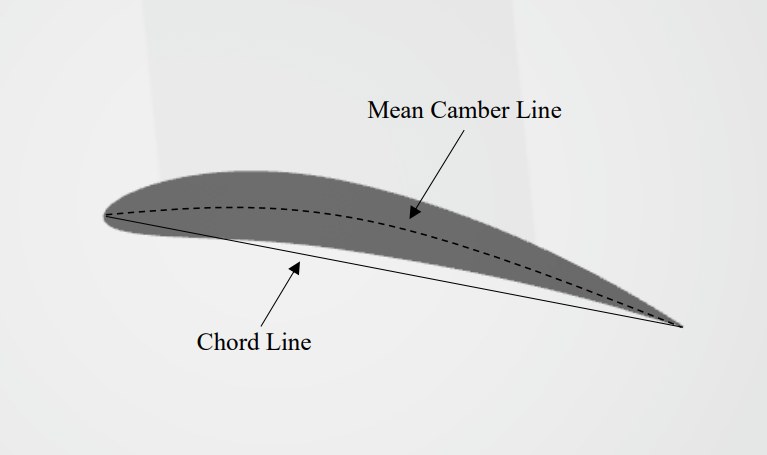
Angle of Attack
angle between chord line and relative wind, affects amount of lift and drag
Critical angle of attack
Stall angle
resultant force
perpendicular line to chord line
Blade angle
degree between chord line and plane of rotation
Parasite drag
Byproduct of flying through air, will increase with speed. 3 types (Form, Interference, skin)
Form Drag
Drag based on the shape of the object, such as a SUV vs a Ferrari
Interference Drag
Wing and Fuselage generate drag on their own, but combined they will generate more drag than the sum of their parts due to the nature of the connection. This is mitigated using farings
Skin Drag
Interference from air hitting the aircraft surface
Induced Drag
Increases as Airspeed Decreases, or angle of attack increases (naturally follows, since higher angle of attack will reduce speed)
V-glide
Commonly denoted as VG or VBG is the best glide speed. It is the specific airspeed at which an airplane covers the maximum horizontal distance forward for every unit of altitude lost in unpowered flight, providing the greatest gliding range during an engine failure or emergency
Wingtip Vortices
swirling, tornado-like masses of air that trail from the tips of an aircraft's wings. They form as an unavoidable byproduct whenever a wing generates lift, driven by high-pressure air below the wing spilling over the tip into the low-pressure area above.
Ground effect
That Cushion of air resulting from interference of the surface of the earth and airflow patterns about the airplane.