chem 2
 Call Kai
 Learn
 Practice Test
 Spaced Repetition
 Match
 Flashcards
 Knowt Play
1/61

There's no tags or description
Looks like no tags are added yet.
62 Terms
↑ Temperature → Speed
↑
↑ Pressure → Volume
↓
↑ Temperature → Volume
↑
↑ Temperature → Pressure
↑
↑ Moles → Volume
↑
↑ Mass → Speed
↓
Molecule speed formula

Effusion Formula

2 speed & temp formula

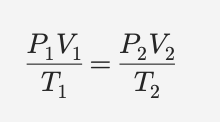
combined gas law
Molar Volume
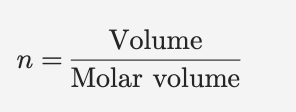
at the same temperature and pressure, the sample with the has the largest volume
most moles
density gas

real gases behave most ideally at
high temp low pressure
irl molecules take up space
p increase
Liquid Pressure
P = dgh
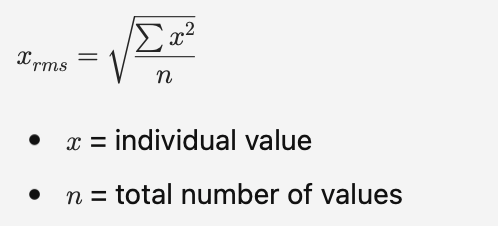
RMS Formula
Van der Waals equation

Average Kinetic Energy Formula
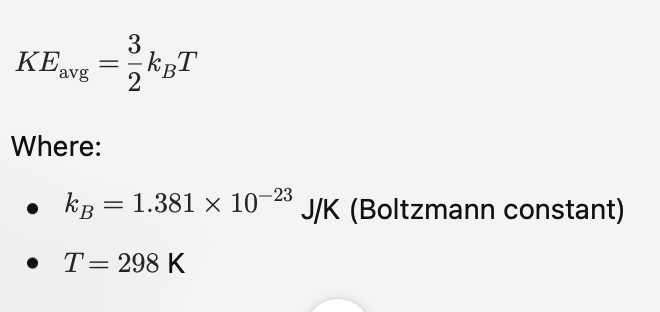
Same temperature =
same average kinetic energy
Ideal gas density
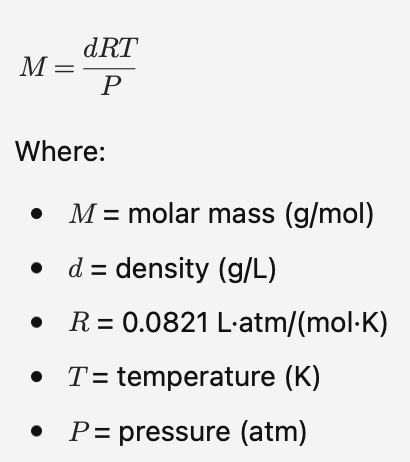
dynamic equilibrium
forward rate = reverse rate
K equilibrium constant and Q reactant quotient
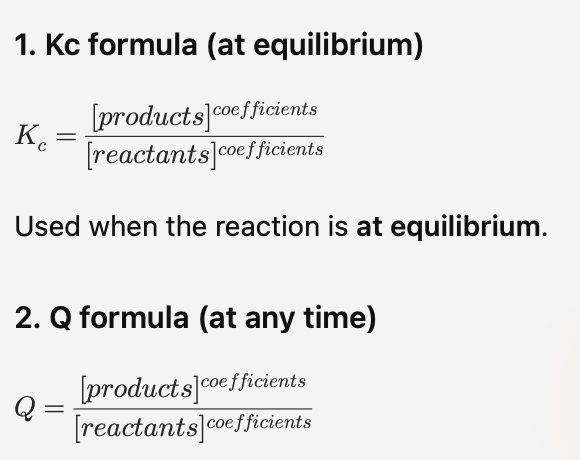
K value

Equilibrium constant pressure & concentration
n = moles p - moles r
r: 0.08206

Q vs K

Le Chatelier’s Principle
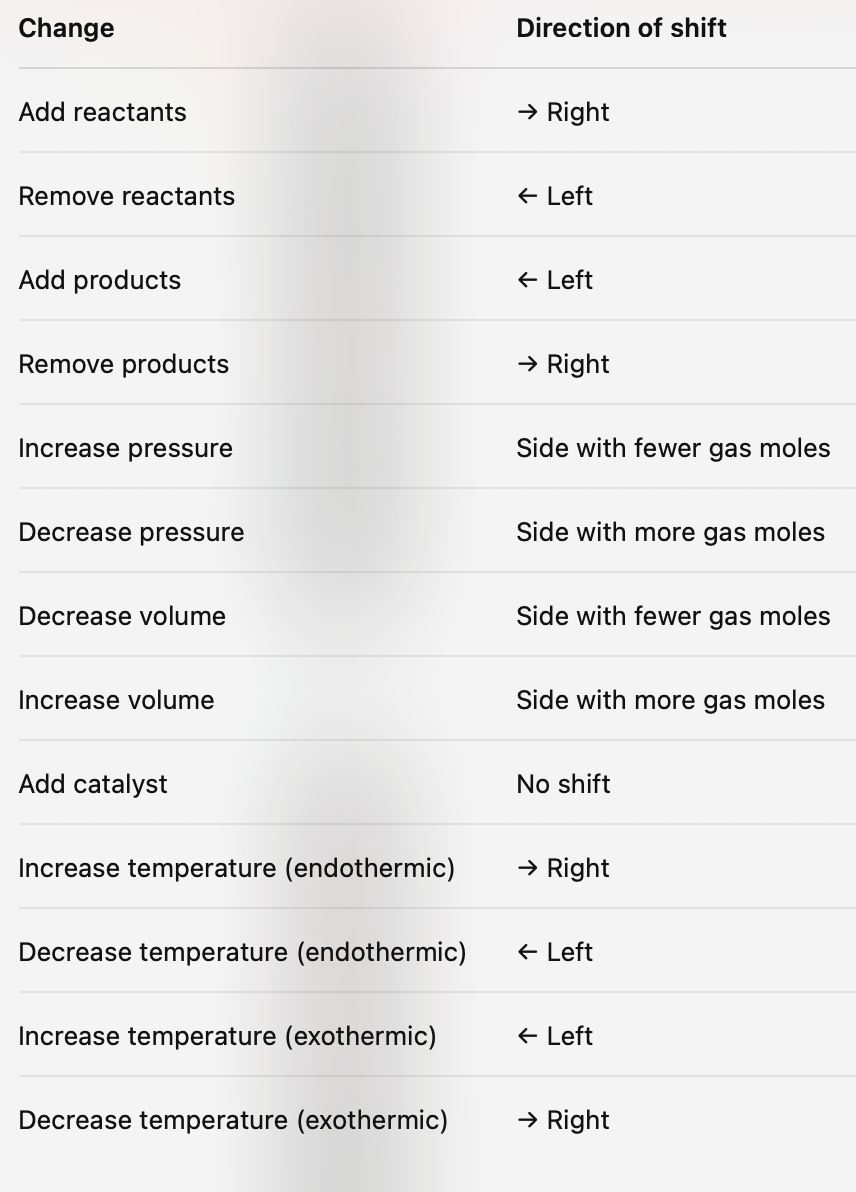
quadratic formula
use the non neg x value
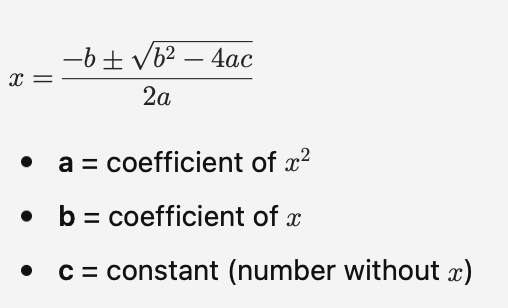
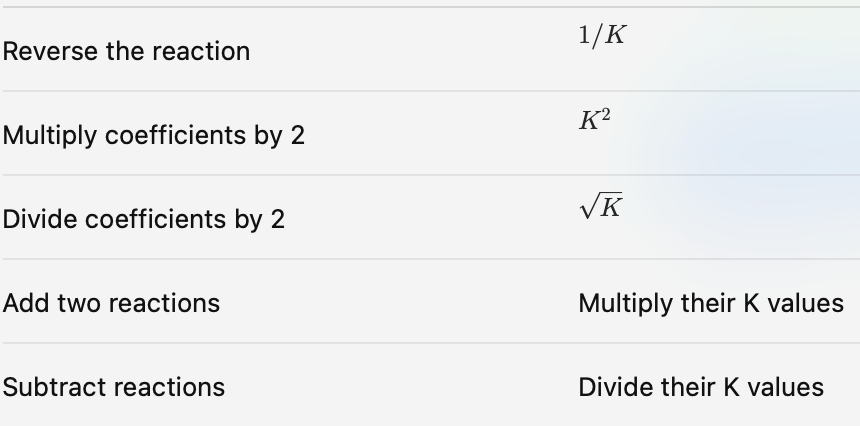
Changing Reaction
Kp

Exo Endo
go in same direction = K increase

Neutralization
Acid + base = water
Strong acid + strong base = neutral (pH 7)
Weak acid + Strong base = Basic (pH > 7)
Strong acid + Weak base = Acidic (pH < 7)

Brønsted-Lowry theory
acid = H+ donor, remains = conjugate base
base = H+ acceptor, remaining acid = conjugate acid
SA

SB

Ka

Kb

Kw

pH & pOH

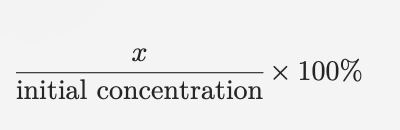
percent ionization

Conjugate Bases
Strong acid = neutral conjugate base, X Reverse reaction
Weak acid = stronger conjugate base, Y Reverse reaction
conjugate weak acid-base pair


Factors Affecting Acid Strength
1. Atomic Size
Down a group ↓ → Atomic size increases → Acidity increases.
2. Electronegativity
Across a period (left → right) → Electronegativity increases → Acidity increases.
Number of oxygen atoms increases → Stronger acid.
+ F, Cl, or Br (electron-withdrawing atoms) → stronger acid
Autoionization
two solvent molecules collide = H transferred
5% rule
less than 5 = valid
Diffusion
spreading/mixing of gases
Effusion
gas escaping through a tiny hole
Kinetic Molecular Theory
Always moving randomly in straight lines.
Particles take up almost no space.
No attraction between particles.
Collisions are elastic (no energy lost).
Higher temperature = higher average kinetic energy = faster particles.
corrections
Volume correction (b) = gas molecules take up space.
Pressure correction (a) = molecules attract each other.
total P
partial pressure has coe of coe in balanced eq
Arrhenius theory
Arrhenius acid: Produces H⁺ (or H₃O⁺) in water.
Arrhenius base: Produces OH⁻ in water.
Lewis acid base
Lewis base = donates electron pair.
Lewis acid = accepts electron pair.
Lone pairs available to donate → Lewis base.
Electron-deficient atom looking for electrons → Lewis acid.
acid less than 10^-7
[H+]= 1.e-7 M
verify x

units


only gas

M= kg/ mol
KE per mol vs particle

Resonance stabilization
increases acidity
More stable conjugate base =
stronger acid.
If the negative charge can spread across multiple atoms through resonance,
acidity increases.