EENT FHS Structure Function
 Call Kai
 Learn
Learn Practice Test
 Spaced Repetition
 Match
Match Flashcards
 Knowt Play
1/31

There's no tags or description
Looks like no tags are added yet.
Name | Mastery | Learn | Test | Matching | Spaced | Call with Kai | Chat |
|---|
No analytics yet
Send a link to your students to track their progress
32 Terms
Sclera
tough outer coat that protects the eye, maintains its shape, and anchors the eye muscles

Iris
adjusts pupil size to control how much light enters the eye

Cornea
transparent front surface that protects the eye and provides most of its light refraction
Corneal epithelium
forms a protective barrier against microbes and injury
Bowman’s Layer
tough layer that supports and protects the corneal surface
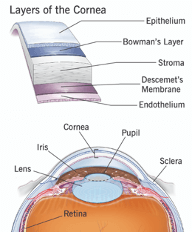
Corneal stroma
provides corneal strength and transparency through organized collagen

Descemet’s membrane
supports the corneal endothelium as its basement membrane

Corneal endothelium
pumps fluid out of the cornea to keep it clear

Lens
changes shape to focus light onto the retina for near and distant vision
Conjunctiva
lubricates and protects the inner eyelids and anterior sclera

Retina
converts light into electrical signals for vision

Choroid
supplies blood to the outer retina and absorbs scattered light

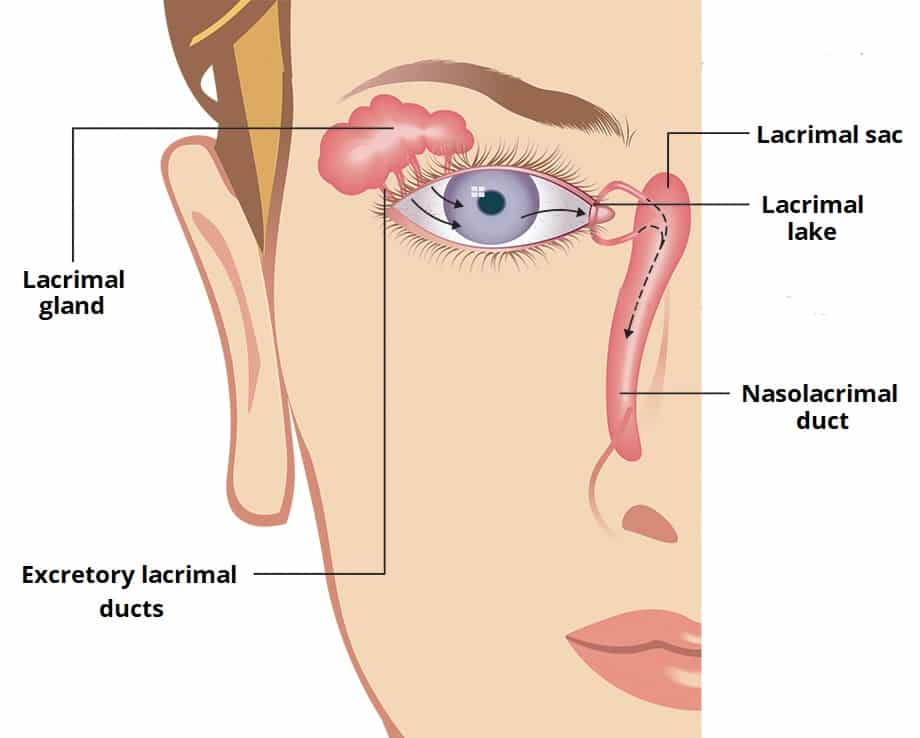
Lacrimal gland
produces tears that lubricate, protect, and clean the eye

Lacrimal ducts
carry tears from the lacrimal gland onto the eye’s surface

Nasolacrimal duct
drains tears from the lacrimal sac into the nasal cavity
Vitreous humor
clear gel that maintains eye shape and supports the retina

Anterior chamber
space between the cornea and the iris containing circulationg aqueous humor

Posterior chamber
space behind the iris and in front of the lens that receives newly produced aqueous humor

Canal of Schlemm
collects aqueous humor from the trabecular meshwork and drains it toward the vein

Optic disc
exit point for the optic nerve; lacks photoreceptors and creates the blind spot

Macula
provides detailed central vision, with greatest acuity at its central fovea

Eyelids
protect the eye and spread tears across its surface during blinking
Eyelashes
intercept debris and trigger protective blinking when touched
Glands of Moll
modified sweat glands associated with eyelashes that contribute to eyelid secretions

Glands of Zeis
secrete oil into eyelash follicle to lubricate the lashes

Meibomian glands
produce the oily tear-film layer that reduces tear evaporation

Tarsal plate
dense connective tissue that supports eyelid shape and houses meibomian glands

Optic nerve
carries visual signal from retina to brain (CN II)
Cones
provide color vision and sharp detail in bright light
Rods
provide dim-light vision and help detect peripheral movement
Aqueous humor
nourishes the cornea and lens and helps maintain intraocular pressure
Drainage angle
junction of cornea and iris where aqueous humor enters the trabecular drainage system
