Lecture 15 - Secondary Growth
 Call Kai
 Learn
 Practice Test
 Spaced Repetition
 Match
 Flashcards
 Knowt Play
1/43

There's no tags or description
Looks like no tags are added yet.
44 Terms
Secondary growth
From secondary meristems
Increase in girth
Plant types that secondary growth occurs in
Woody plants
No monocots / herbaceous eudicots
What plant parts does secondary growth occur in?
Primarily stems and roots, rarely leaves
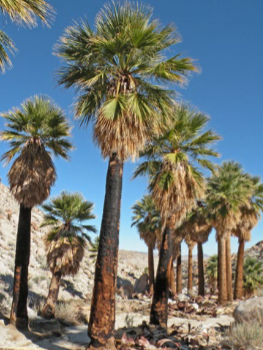
Girth growth in palms / woody monocots
Occurs due to adding more parenchyma and vascular bundles
NO secondary meristem

Banana tree pseudostem
Sheath of leaves
Two types of secondary meristem
Vascular cambium
Cork cambium

Vascular cambium
Forms secondary vascular tissue, major girth expansion
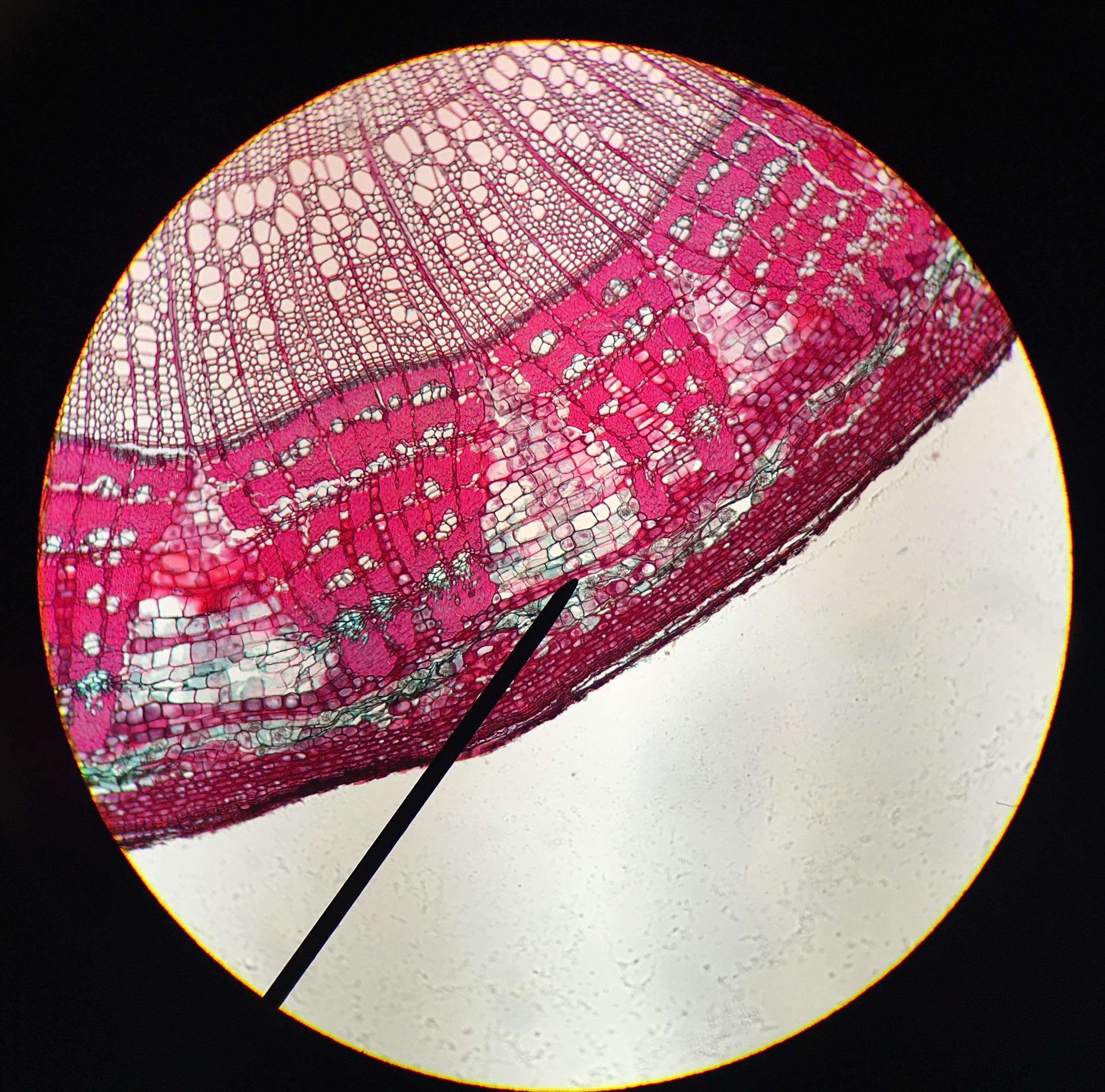
Cork cambium
Forms new dermal protective layer / periderm
When is the vascular cambium formed?
During primary growth


Label


Label

Vascular cambium initial types
Fusiform
Ray


Label

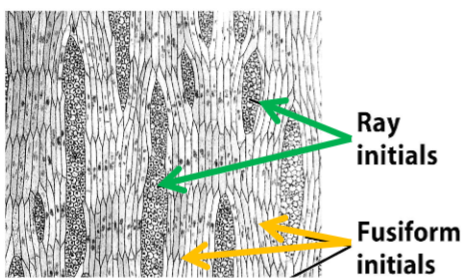
Ray initials
Produces radial or lateral transport system cells, isodiametric in spokes

Fusiform initials
Produces axial or vertical vascular transport cells
Flat, elongated, highly vacuolar

Label


Label

Two regions that form vascular cambium
Fascicular cambium
Interfascicular cambium
Fascicular cambium
Meristem cells within vascular bundle
Interfascicular cambium
Meristem cells between vascular bundles
How does vascular cambium form?
Joining of fascicular and interfascicular cambia
Vascular cambium division directions
Inwards - Secondary xylem
Outwards - Secondary phloem

Label


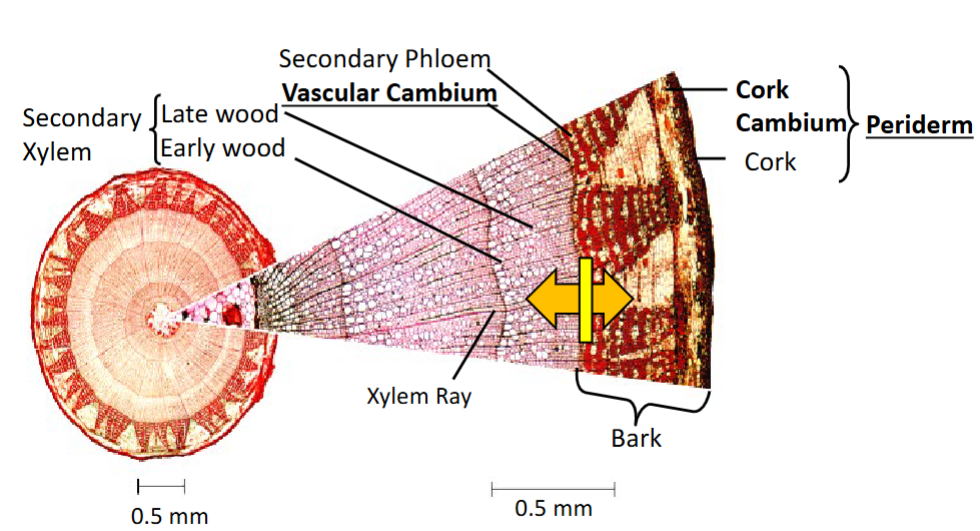
Label annual growth rings
When is the vascular cambium active?
Spring to fall, larger xylem

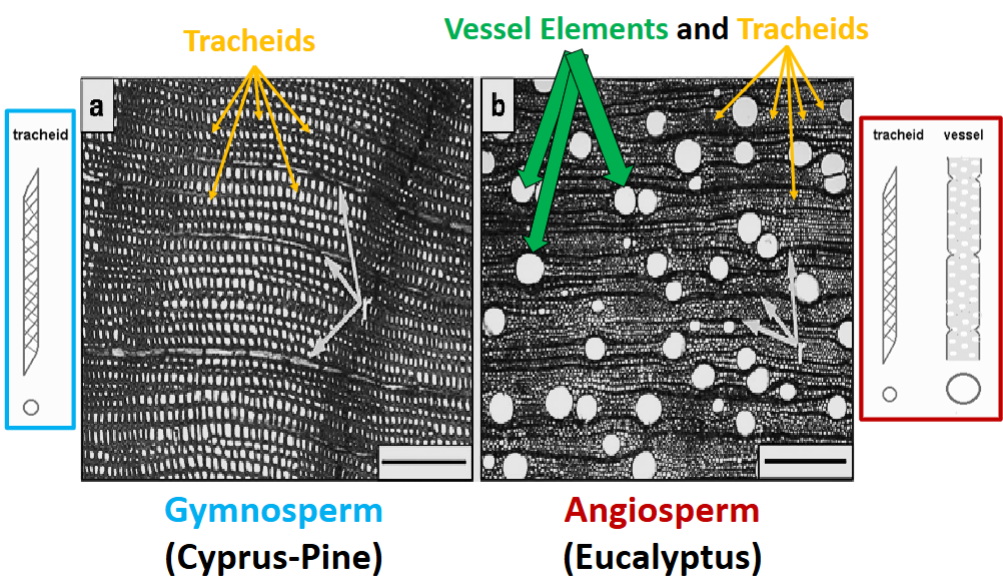
Label Gymnosperm vs. Angiosperm wood
Annual ring paleobiology significance
Used to determine ancient climate conditions

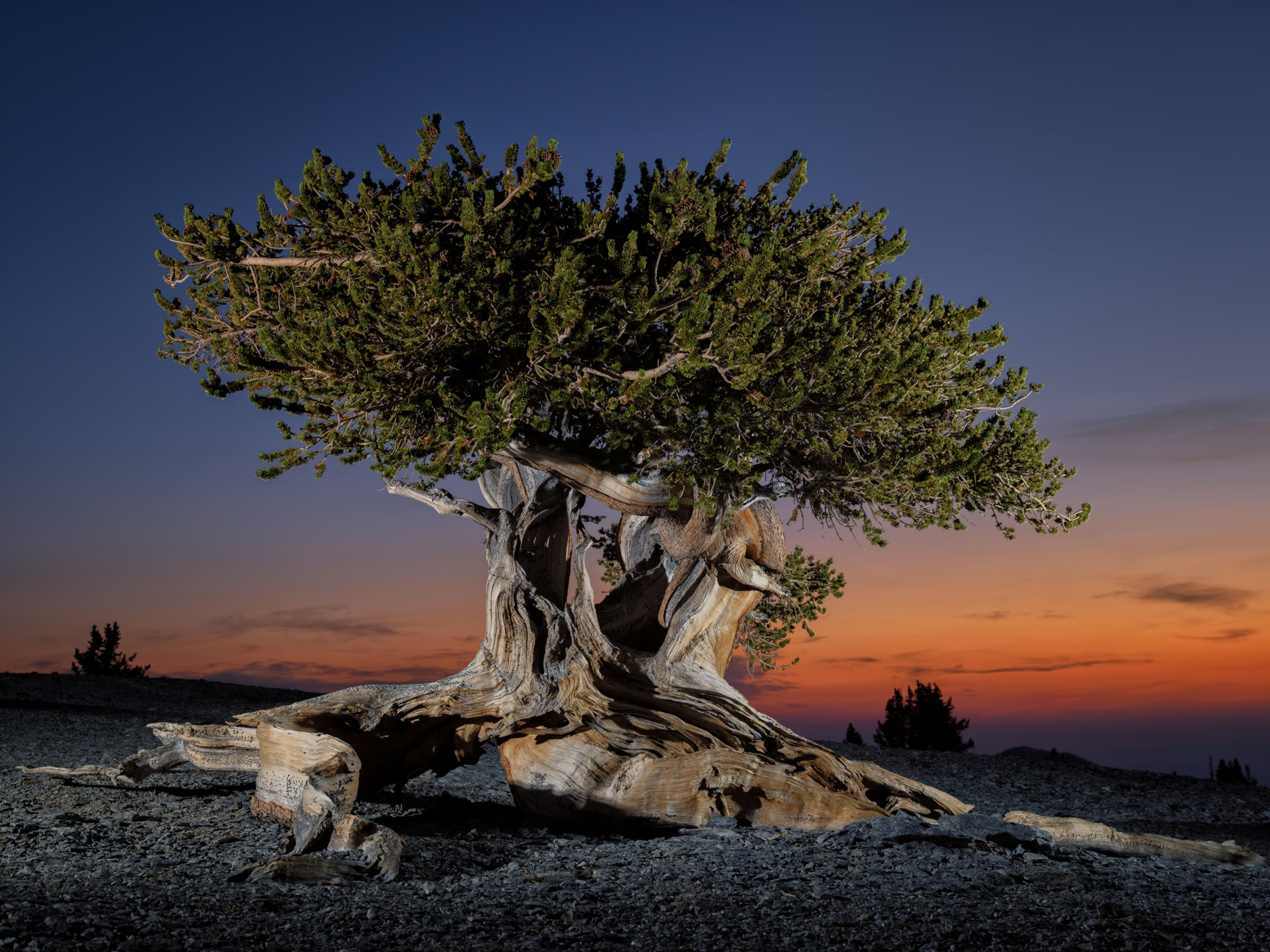
Oldest living tree?
Debated, but most evidence points to around ~5,000 years old
(Methuselah)
What does cork cambium produce
Cork to the outside
Phelloderm to the inside
What does the cork cambium give rise to
Periderm
Periderm
Consists of cork cambium plus the layers of cells it produces
Bark
Consists of all tissues external to the vascular cambium including 2P and periderm
What is cork lined with
Suberin + wax
prevents water/gas exchange
Lenticel
Eruptions/gaps in parenchyma for diffusion
Bark
All tissues outside of vascular cambium
Where is (wine) cork from?
Cork oak
Primary & secondary growth occurs…
Simultaneously in different locations
Where does primary growth occur
Apical tips, produces buds and leaves
Secondary growth occurs where?
Internally, expands growth
Heartwood
Older, non-functioning xylem
Dark in appearance due to mineral accumulation
Sapwood
Younger, functioning xylem, exteriorly
Secondary growth in root
similar to stem
Lacking in most herbaceous eudicots and all monocots
Secondary growth in root special event
epidermis and cortex are shed
Anatomy difference in root secondary growth
Formation of vascular cambium that encircles the root