cell cycle
 Call Kai
 Learn
 Practice Test
 Spaced Repetition
 Match
 Flashcards
 Knowt Play
1/64

There's no tags or description
Looks like no tags are added yet.
65 Terms

Order of the cell cycle
Interphase (G1, S, G2), Mitotic phase (Prophase, prometaphase metaphase, anaphase, telophase&cytokinesis)
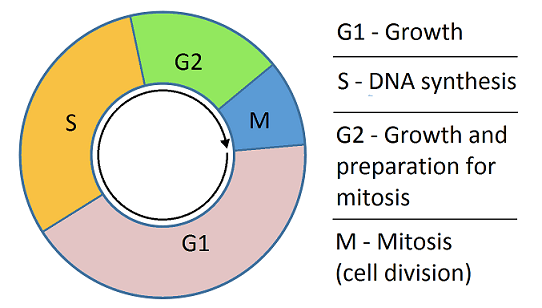
Steps of interphase
G1 (growth, replication, synthesis), S (genome and chromasome replication), G2 (growth, division preparation)
Why is G1 so important
If a cell passes the G1 checkpoint it is likely to pass other checkpoints and enter mitosis
Cell division
Cell reproduction
Key roles of cell division
development, growth, repair

Somatic cells
diploid body cells with two sex chromosomes that replicate via mitosis within the cell

sex cells
haploid gametes that replicate via meiosis in the testes and ovaries
Total chromosomes in somatic cells
46
Total autosomes in somatic cells
44
autosomes
Non-sex chromosomes
# sex chromosomes in somatic cells
2 (XX,XY)
Somatic cell reproduction
Mitosis
Somatic cell genetic description
Diploid (2n)
Total chromosomes in gametes/sex cells
23
#autosomes in gametes
22

Gamete reproduction
Meiosis in testes and ovaries
Gamete genetic description
Haploid (n)
How many chromosomes do gametes have compared to somatic cells
1/2

Chromosomes
Packaged DNA molecules

Chromatin
condensed DNA and protein during prophase, chromosome building material

Sister chromatids
2 identical copies of a chromosome attached at the centromere that form during S phase
Centromere
“Waist” where two chromatids are most closely attached
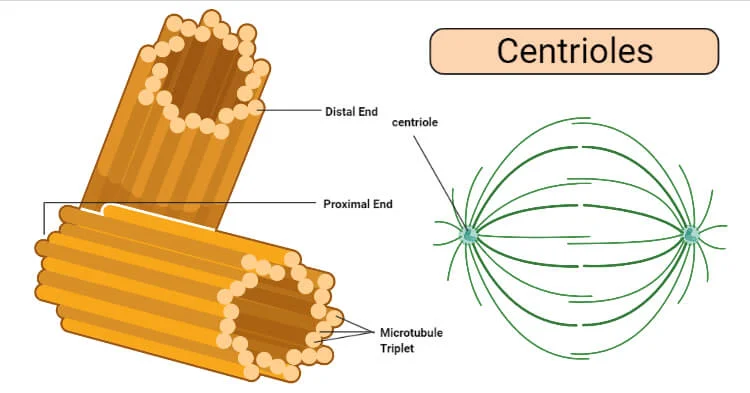
Centriole
Organelle of protein microtubules that pull apart sister chromatids and organize internal cell structure
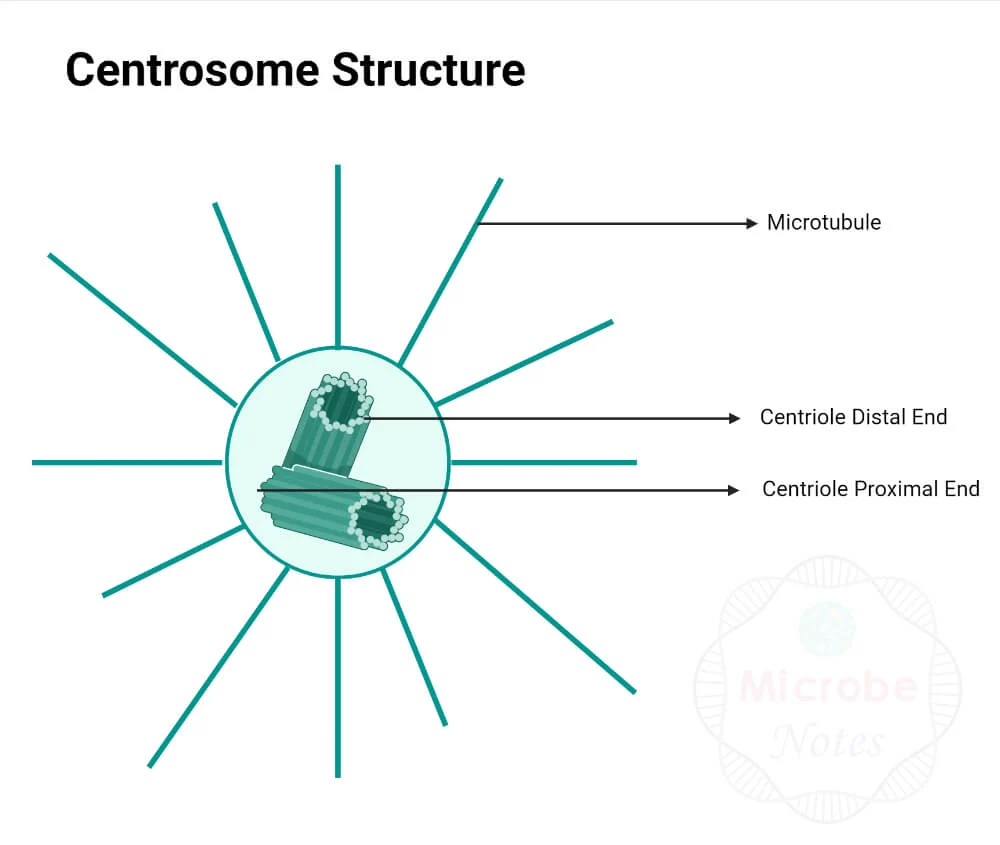
Centrosome
Microtubule synthesis and organizing center that duplicates during S phase, separates during prophase/prometaphase

Homologous chromosomes
Matched pair of maternal and paternal chromosomes in diploid organisms
What do chromatids become after separation
Chromosomes

Two sister chromatids of each duplicated chromosome _______ during anaphase
Separate and move into two different nuclei
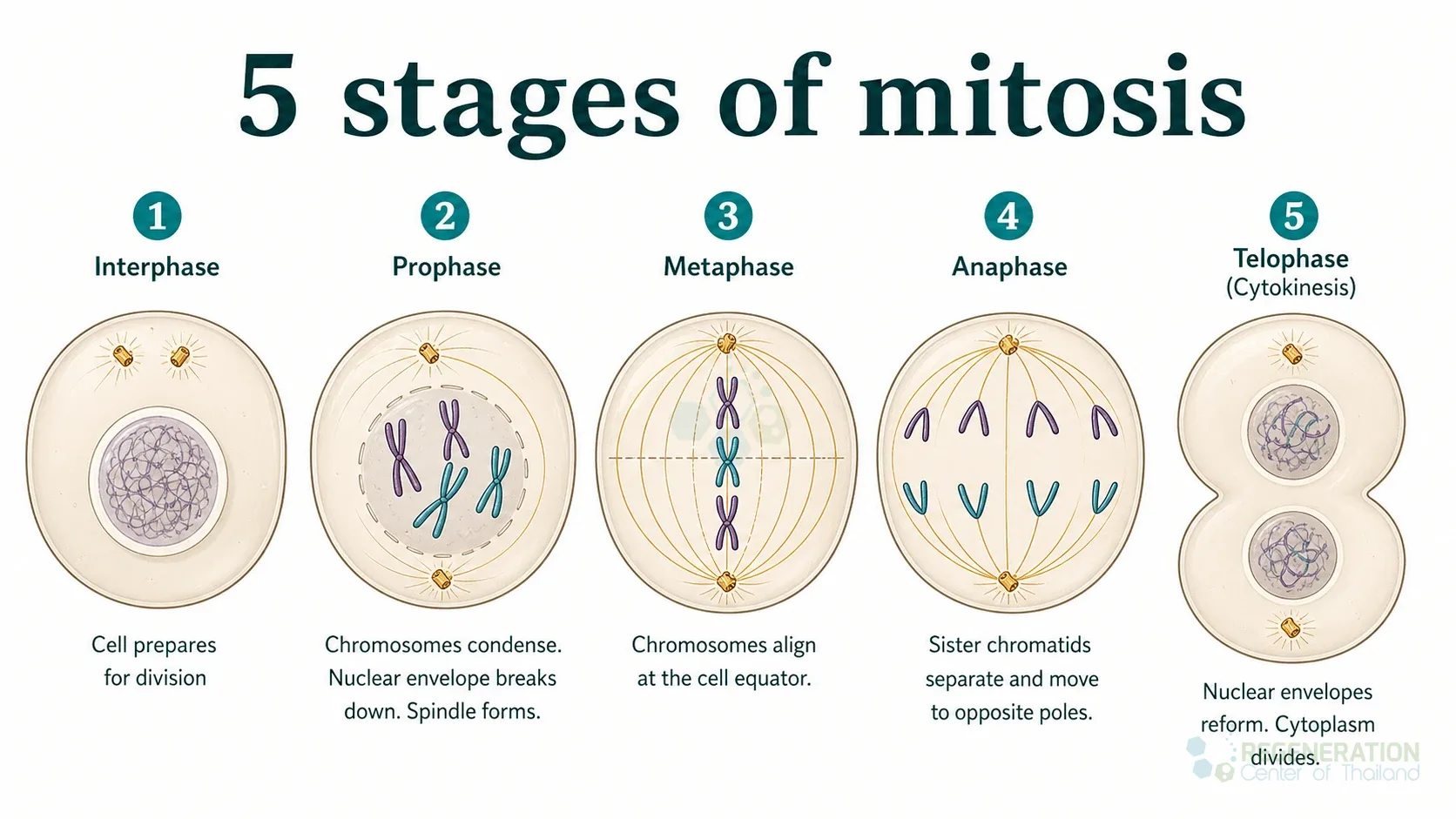
Mitosis (PpmMATC)
Division of nuclear genetic material
Mitosis likely evolved from
Binary fission

Cytokinesis
Final process of cell division, cytoplasm of a parent cell divides into two daughter cells

Cytokinesis in animal cells
Contractile ring forms around cell equator, cleavage furrow forms from pinched plasma membrane, cells eventually separate

Cytokinesis in plant cells
Microtubules guide vesicles to center of the cell, vesicles fuse to form the cell plate, plate grows until it fuses with the cell wall and membrane to separate two daughter cells

chromosome distribution before division
long chromatin fiber

chromatin
long fibers of DNA and proteins

chromosome distribution after division
chromatin fibers coiled and folded to make chromosomes short, thick and visible

homologous chromosomes
matching paternal and maternal inherited chromosomes

mitotic spindle contents
spindle microtubules, centrosomes, asters, kinetochores, kinetochore microtubules, nonkinetochore microtubules

mitotic spindle
microtubules and proteins involved in chromosome movement, formation begins in prophase

kinetochores
protein structure attached to centromeres that attaches sister chromatids to mitotic spindle, 2 per centromere

kinetochore microtubules
spindle microtubules that attach to kinetochores during prometaphase and move chromosomes to opposing cell poles

aster
structure radiating from centrioles

centriole
cylinder shapes organelles that help form mitotic spindle

nonkinetochore microtubules
microtubules that dont attach to kinetochores, extend through cell from either pole to elongate during anaphase

Interphase- growth and replication
G1, S, G2, G0

G1
cell growth, organelle duplication, protein and mRNA synthesis, cell integrity check

S phase
sister chromatid formation and DNA duplication

g2
continued growth and preparation for division, check replicated DNA
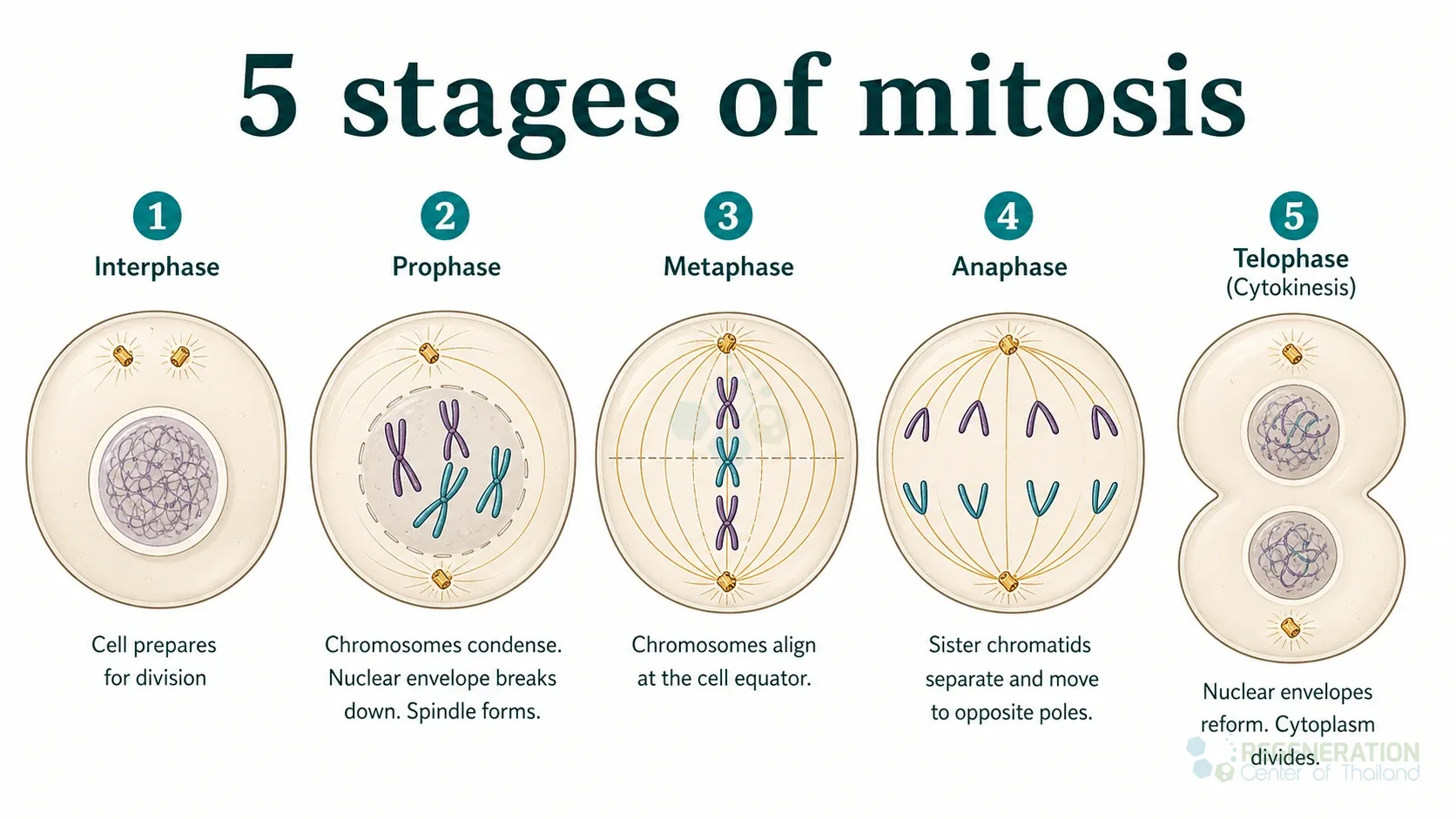
Mitotic (M) phase
cell division

Prophase (split preparation)
chromatin coil and condense to be visible, nucleoli disappear, mitotic spindle formation begins, asters extend, centrosomes migrate

Prometaphase (envelope fragmentation)
nuclear envelope fragments, kinetochores form, nonkinetochores extend from centrosome, kinetochore microtubules pull at chromosomes

metaphase (alignment)
centrosomes migrate to poles, chromosomes align at metaphase plate

anaphase (migration)
sister chromatids separate, daughter chromosomes migrate to opposite poles

telophase (reformation)
daughter nuceli form, nucleoli reform, nuclear envelope reforms, chromosomes decondense into chromatin fiber, spindle microtubules depolymerize
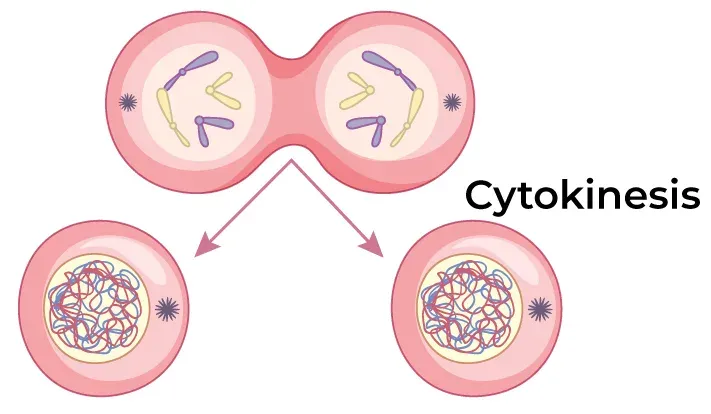
cytokinesis (split, the ass)
contractile ring of myosin proteins and actin filaments constrict to form cleavage furrow until the daughter cells separate
cleavage
process of animal cell cytokinesis
difference between plant and animal cell cytokinesis
vesicles and cell plate v contractile ring and cleavage furrow

binary fission (prokaryotes, bacteria)
origin duplication and migration, elongation, plasma membrane pinch, daughter cells
what makes dinoflagellates and diatoms (unicellular eukaryotes) different
the nuclear envelope remains intact during division
cell cycle control system
eukaryotic cell molecules that trigger and coordinate cell cycle events

growth factors
signaling proteins that stimulate cell division
density dependent inhibition
regulatory mechanism where crowded cells stop dividing
anchorage dependence
normal cells must attach to a substratum (surface) or ECM to divide/grow/survive
What is different about cancer cells
Do not exhibit either type of division regulation and have no checkpoints in their cell cycle, allowing mutations and uncontrolled replication to occur
transformation
method of cancer cell development, cells acquire mutations that drive uncontrolled reproduction and malignant behavior
metastasizing
spread of cancer