Software Engineering Principles Midterm
 Call Kai
 Learn
 Practice Test
 Spaced Repetition
 Match
 Flashcards
 Knowt Play
1/71

There's no tags or description
Looks like no tags are added yet.
72 Terms
Requirements
Descriptions of a system services and constraints produced during the requirements engineering process
User requirements
High-level, natural language statements describing expected services and operating constraints for users
System requirements
Detailed description of the system’s functions, services, and operational constraints
Functional requirements
Describes services the system provides, it’s reactions to inputs, behaviors in situations, and sometimes what it must not do
Non-functional requirements
Specify overall constraints such as timing, development process, or standards, typically applying to the whole system
Domain requirements
Constraints that come from the specific domain where the system operates
Functional
“The system should send an email confirmation after a user successfully registers” is a __________ requirement
Functional requirement
“The system shall lock a user’s account after five consecutive failed login attempts” is a __________ requirement
Non-functional
“The website shall load the home page within 2 seconds under normal network conditions” is a __________ requirement
Non-functional
“The software shall comply with ISO security standards” is a __________ requirement
Domain
“The system shall calculate tax rates according to the state’s current tax laws” is a __________ requirement
Domain
“The application should support standards for exchanging healthcare information” is a __________ requirement
True
Ambiguity can lead to different interpretations of functional requirements by users and developers (True/False)
Complete and consistent
Functional requirements need to be __________ and __________
As a _ I want _ so that _
User story format
Unified modeling language
__________ is a visual way to specify and communicate system requirements
Use case diagram
__________ helps identify the system’s actors and the functions the system must provide
Include
«__________» is used for mandatory, shared behaviors that a base use case needs to be complete
Extend
«__________» is used for optional or conditional behaviors that enhance a base use case without changing its independent nature
Use case diagram
What type of diagram is this?

Structure diagram
A type of diagram that depicts the elements of a specification that are irrespective of time. This includes class, composite structure, component, and deployment
Component diagram
Shows a set of components and their relationships and represents the static view of a system. Can map to one or more classes, interfaces, or collaborations
Port
A __________ (square) is an interaction point between the component and its environment
Provided
__________ interface symbols are notated with a complete circle
Required
__________ interface symbols are notated with only a half circle at their end
Provided interface
__________ represent an interface that the component provides
Required interface
__________ represent an interface that the component requires
Ports
__________ are used to expose required and provided interfaces of a component
Component diagram
What kind of diagram is this?

Behavioral diagram
A type of diagram that illustrates how its components interact, change state, and collaborate to perform specific functions
Class
Box with class name at the top, attributes, and operations
Association
__________ is a general connection between classes
Directed association
__________ is a general connection between classes with a specific direction
Multiplicity
__________ indicates how many objects can participate in a relationship
Inheritance or generalization
__________ or __________ represents an “is-a” relationship
Realization
__________ is when a class implements an interface
Aggregation
__________ is a weak whole-part relationship; parts can exist independently
Composition
__________ is a strong whole-part relationship; parts depend on the whole
Dependency
__________ is when one class uses or depends on another. Think, “does one class temporarily use another?”
Association
What kind of relationship is this?
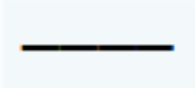
Directed association
What kind of relationship is this?

Multiplicity
What kind of relationship is this?

Inheritance or generalization
What kind of relationship is this?

Realization
What kind of relationship is this?

Aggregation
What kind of relationship is this?
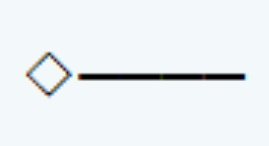
Composition
What kind of relationship is this?

Dependency
What kind of relationship is this?

Association
What kind of relationship is this?

Directed association
What kind of relationship is this?

Multiplicity
What kind of relationship is this?

Inheritance or generalization
What kind of relationship is this?

Realization
What kind of relationship is this?

Aggregation
What kind of relationship is this?
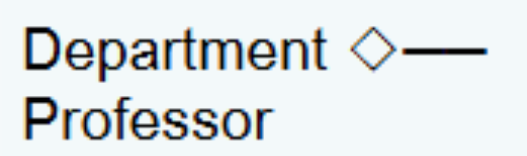
Composition
What kind of relationship is this?

Dependency
What kind of relationship is this?

Class diagram
What kind of diagram is this?

Software development life cycle
A series of phases that describe the activities performed at each stage of a software development project
Methodology
A set of techniques that work well together
Plan-driven
__________ software development is where all progress activities are planned and progress is measured against the plan
Agile
__________ software development is where planning is incremental to reflect changing customer requirements
Feasibility study
A __________ is an estimate of a budget, developers, client(s), benefits, resources, etc. before a project continues
Code-and-fix
__________ is a plan-driven SDLC where the developers write some code, debugs it, and repeat
Waterfall
__________ model is a plan-driven SDLC with standard phases in order and is the most traditional and best known (requirements, design, code, test). All requirements are known upfront and well-understood
Sprial
__________ model is a plan-driven SDLC that assess risks at each step and does the most critical action first. It is oriented towards phased reduction of risks
Iterative/incremental
__________ model describes the process of defining a complete system as as a series of smaller incremental releases with reduced function. Each release adds a function to the previous release
Re-use oriented
__________ software engineering is when other software is used to develop new software. It reduces costs and results in faster delivery, but may not meet the needs of users
Scrum
__________ is a lightweight, simple to understand agile process framework where there are product backlogs, sprint backlogs, daily meetings, and product shipments
XP
__________ agile development emphasizes technical practices such as pair programming and continuous integration
Product backlog
A list of ‘to do’ items which the Scrum team must tackle
Potentially shippable product increment
The software increment that is deliverable from a sprint
Sprint
A development iteration that is typically 2-4 weeks long
Velocity
__________ is an estimate of how much product backlog effort that a team can cover in a single sprint