biochem topic 2
 Call Kai
 Learn
 Practice Test
 Spaced Repetition
 Match
 Flashcards
 Knowt Play
1/53

There's no tags or description
Looks like no tags are added yet.
54 Terms
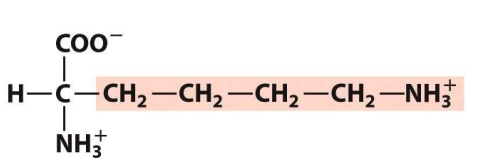
Lysine (Lys,K)

Arginine (Arg, R)

aspartate (Asp, D)

glutamate (Glu, E)

histadine (His, H)

cysteine (Cys, C)
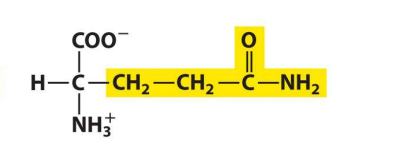
glutamine (Gln, Q)

asparagine (asn, N)
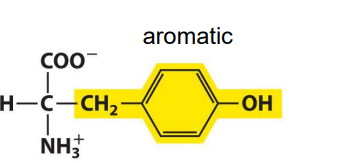
tyrosine (tyr, Y)

threonine (thr, T)

serine (Ser, S)

proline (Pro, P)

methionine (Met, M)

tryptophan (Trp, W)

phenylalanine (Phe, F)

isoleucine (Ile, I)

leucine (Leu, L)

valine (val, V)
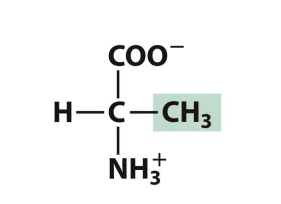
alanine, ala, A

glycine ( gly, G)
amphoteric
substance that can act as both an acid and base
zwitterion
A neutral molecule with localized positive and negative formal charges that cancel each other out
What is Biochemistry?
“A thorough understanding of each molecule’s physical structure and chemical reactivity helps to lead to an understanding of how molecules cooperate and combine to form larger functional units and, ultimately, the intact organism
4 classes of biomolecules
amino acids, carbs, nucleotides, lipids
biological polymers
nucleic acid, polysaccharides, polypeptide
central dogma of molecular biology
dna (transcription) rna (translation) protein
pka of arginine (Arg, R)
12.5
pka of lysine (lys, K)
10.5
pka of coo-
3.5
pka of n term
9
pka of histidine
6
becomes basic
under very low ph
pka of cysteine
8.4
becomes acidic at very high ph > 8
pka of tyrosine (tyr, Y)
10.5
becomes acidic at high pH
pka of aspartate (asp, D)
3.4
acidic properties
negative charge
pka of glutamate (glu, E)
4.1
acidic properties
ligand
a compound that binds to a protein
When the ligand binds to its target, it forms a complex, which often triggers a specific biological response or changes the protein's shape and function
ex. hormones, neurotransmitters
zwitterion
molecule with side chains of negative and positve charges that cancel each other other
ex. amino acid in physiological conditions
achiral amino acid
glycine
aliphatic
lacking aromatic ring
imidazole ring
5-sided ring in histidine
ionization
process where neutral atom gains or loses electrons causing it to aquire net electric charge
when pH increases, acidic compounds _________ in ionization
increases
more able to donate proton and gain - charge
when pH decreases, basic compounds _____ in ionization
increase
can gain proton and charge
amphoteric
have both basic and acidic groups
amino acids have ____ acids and bases, so ionization ___ change based on pH
weak, CAN
in contrast, strong acids and bases ___ ionize
completely ionize even if pH changes, its irreversible
NH that’s in the peptide backbone is called
amide
lower pKa side chains are usually
deprotonated (higher pH acts basic so they donate)
higher pka side chains are usually
protonated (lower pH acts acidic)
imino acid
amino acid with nitrogen bonded to 2 carbons
proline
amino vs amide
amino is bonded to single carbon , amide is bonded to a carbonyl