A & P Speech and Hearing Exam #2
 Call Kai
 Learn
 Practice Test
 Spaced Repetition
 Match
 Flashcards
 Knowt Play
1/23

There's no tags or description
Looks like no tags are added yet.
24 Terms
Velum (Soft Palate) Movement:
The primary movements of the velum are: directing airflow
up & back
down & forward
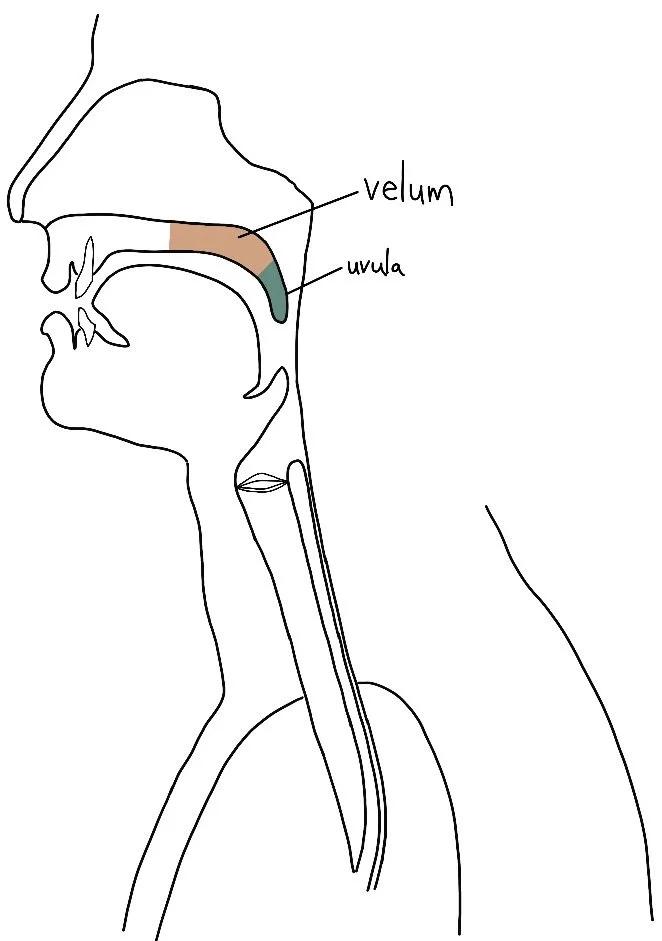
Palatal Levator: This muscle is primarily responsible for drawing the velum ________.
Drawing the velum UP & BACK!

What is the function of the Uvulus Muscle?
This is the only intrinsic muscle of the velum.

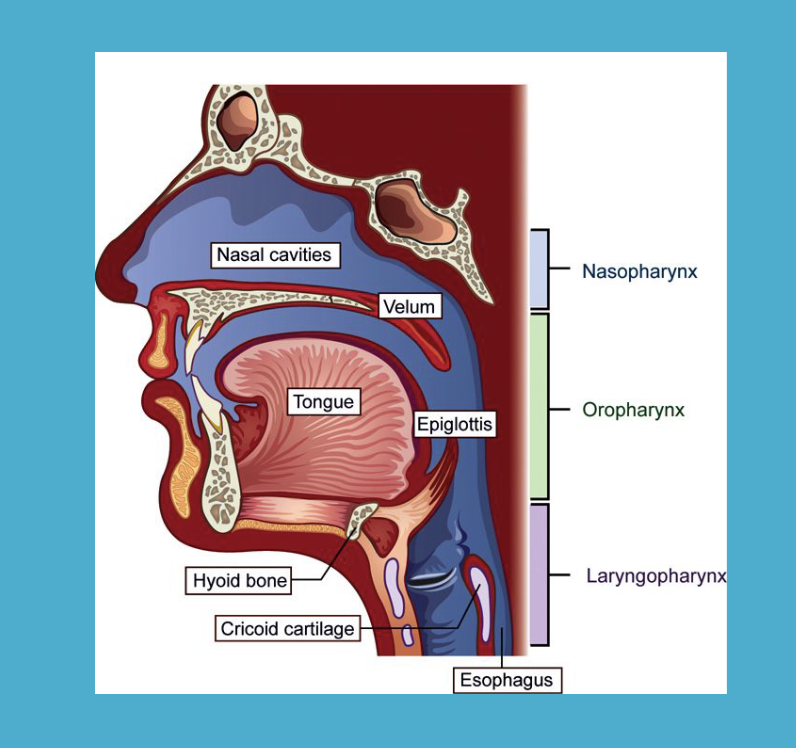
What is the Nasopharynx?
Remains open
Located above the velum.

Pharyngeal divisions (top to bottom):
TOP: Nasopharynx
MIDDLE: Oropharynx
BOTTOM: Laryngopharynx
What is the maxilla?
upper jaw (facial bone)
forms the floor of the nasal cavities

What is the mandible?
elevation (close jaw)
depression (open jaw)
protrusion (stick out)
retraction (draw back)
side to side

Temporomandibular joint (TMJ) with the ligaments:
-Temporomandibular
-Sphenomandibular
-Stylomandibular
*stabilize and limit movement

Pharyngeal-oral lumen:
LENGTH and WIDTH changes impact sound
boundaries
anterior: lips
posterior: anterior facial pillars
superior: hard palate (nasopharynx)
inferior: epiglottis (laryngopharynx)
lateral: cheeks

Where is the Buccal cavity:
-lies to the sides of the oral cavity
-constitutes the space between the gums & teeth (gingivae) internally
-lips & cheeks (buccae) externally

Intrinsic muscles of the tongue:
superior longitudinal
inferior longitudinal
transverse
vertical
*both ligaments within change SHAPE

What are the extrinsic muscles of the tongue?
-genioglossus
-hyoglossus
-styloglossus
-palatoglossus
Oriented OUTSIDE & INSERTS within
CHANGES POSITION
moves tongue as a whole

Orbicularis oris:
-forms sphincter around mouth
-moves lips towards each other and forward
-moves corners of the mouth in several directions
-forces lips/corners of mouth against the teeth

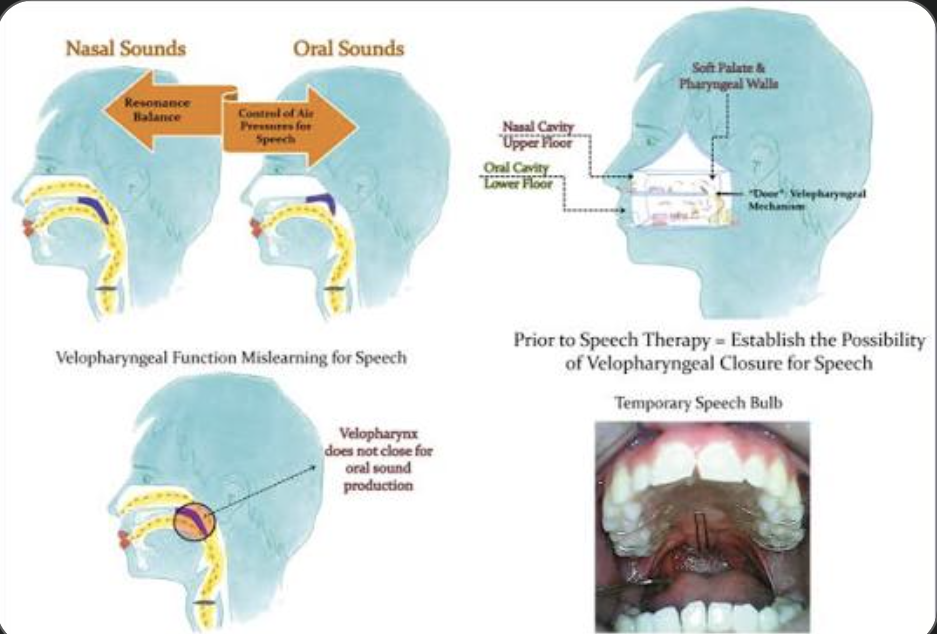
What are the primary roles of Velopharyngeal-nasal function?
regulate airflow
control separation between oral and nasal cavities
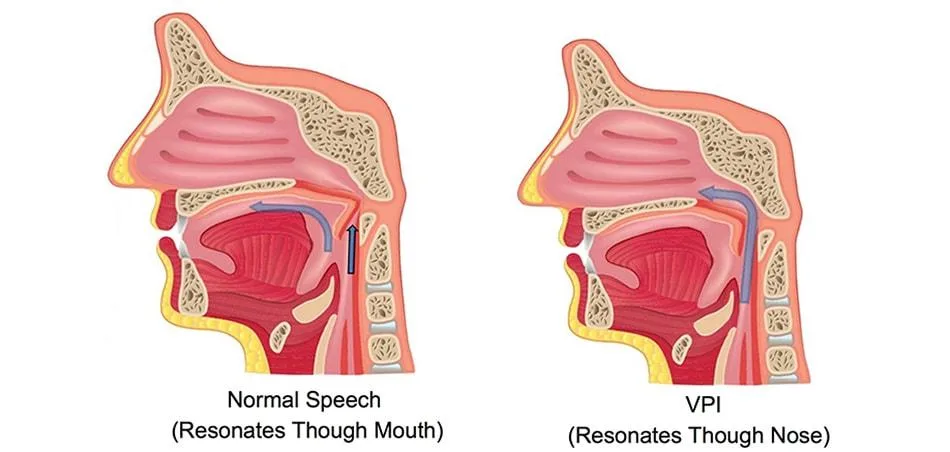
Velopharyngeal closure for speech:
OPEN: for nasal sounds
CLOSED: for stop-plosives
Airway resistance:
-airflow influences resonance
airflow ^ = resistance ^

Velopharyngeal-nasal acoustic impedance:
-opposition to the flow of sound

Coarticulation:
-influence of the articulatory movements of one sound on another
-support the idea that speech is NOT produced through fixed, segmented movement
Consonant Description:
-PLACE
-MANNER
-VOICING
Passive forces:
-recoil of structures
-surface tension
-gravity
-aeromechanical force
Pharyngeal-oral lumen size and configuration:
Changes occur by adjusting positions of structures that line airway
(The space in your mouth and throat changes size and shape when parts of your mouth and throat move)

Pharyngeal-oral structural contact pressure:
-how hard articulator are being pressed against each other
-most important contributor: muscular pressure
Pharyngeal-oral airway resistance:
greatest contributor-change in cross-section (width or size) of airway (where air passes through)
Pharyngeal-oral acoustic impedance:
main contributor: change in cross-section of airway