Biology Unit 6 - Endocrine System
 Call Kai
 Learn
 Practice Test
 Spaced Repetition
 Match
 Flashcards
 Knowt Play
1/571

Earn XP
Description and Tags
400 flashcards here i come. lets see if all my flashcards for test 2 total to 1.2k 😃
572 Terms
What is the endocrine system?
Consists of glands and hormone-producing cells in the body.
Does the posterior pituitary gland produce or secrete?
Secrete
What are the two types of hormones?
Steroid and nonsteroid
What are the functions of the endocrine system?
Produce hormones that coordinate and regulate different functions in the body, which are released into the interstitial fluid, diffuse into the bloodstream, and travel to act on specific target cells and organs.
What are target organs?
A destination organ for a specific hormone.
What is ovulation?
Where the ovary releases an egg.
What is luteinization?
Transforming ruptured leftover ovarian follicles into the corpus luteum.
Which other system does the endocrine system coordinate with?
Nervous system
What do the cells of the endocrine system produce?
Molecular signals called hormones.
What are hormones?
Chemical messengers that coordinate different functions in the body through the bloodstream to target organs and cells.
How many hormones have scientists identified in the human body so far?
Over 50.
What are the general functions of hormones?
Communication and control.
What is the difference between exocrine and endocrine glands in terms of delivery method?
Exocrine glands release substances through ducts onto a surface or into a cavity, while endocrine glands release hormones into interstitial fluid and they then diffuse into the blood.
What is the difference between exocrine and endocrine glands in terms of ducts?
Exocrine glands contain ducts while endocrine are ductless.
What is the difference between exocrine and endocrine glands in terms of released substances?
Exocrine release enzymes, sweat, saliva, mucus, oil or tears and endocrine release hormones.
What is the difference between exocrine and endocrine glands in terms of target area?
Exocrine glands act directly at the site of release while endocrine target distant organs and tissues.
What are the main exocrine glands?
Salivary, sweat, sebaceous, mammary, lacrimal, ceruminous, gastric, intestinal, exocrine pancreas, liver, prostate, bulbourethral and reproductive tract glands.
What are the main endocrine glands?
Hypothalamus, pituitary, pineal, thyroid, parathyroid, thymus, adrenal, pancreatic islets, ovaries, testes and placenta during pregnancy.

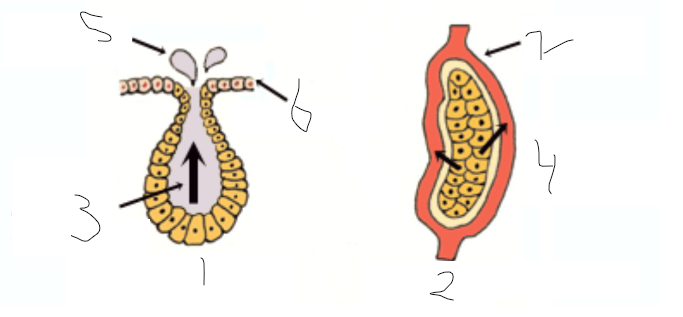
What is 1?
Exocrine gland
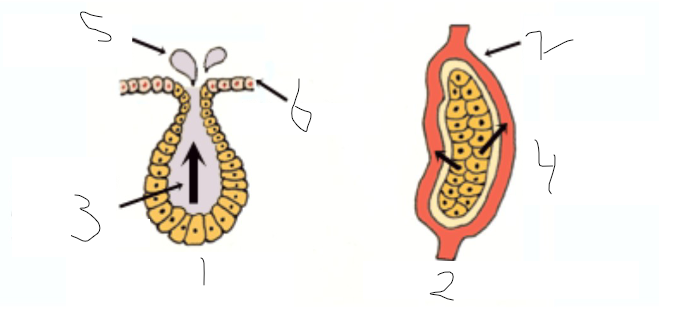
What is 2?
Endocrine gland

What is 3?
Chemicals are produced by the exocrine gland.

What is 4?
Hormones are produced by the endocrine gland and released into the blood.
What is 5?
Chemicals are secreted onto a surface.

What is 6?
Skin surface

What is 7?
Blood in the capillaries.
Where are endocrine cells found?
In endocrine glands, tissues, or organs that have other functions besides hormone production.
How do hormones reach their target cells?
Circulate throughout the body through the blood stream and bind to receptors on specific target cells, stimulating a response.
How do hormones affect the body?
They affect the functioning of the organ system to which the receiving cells belong.
How do the nervous and endocrine systems work together?
The endocrine system secretes hormones in response to signals sent from the nervous system.
Which organs have endocrine functions but aren’t considered endocrine glands?
Heart, kidneys, intestines and adipose tissue.
What is another name for ovaries and testes?
Gonads
What is the control of hormones like compared to nerve impulses?
Slower and lasts longer.
What are cells acted on by hormones called?
Target organ cells.
What are the relationships between the nervous and endocrine system?
Several chemicals function as both hormones and neurotransmitters, both systems can have overlapping effects on the same target cells and they regulate each other.
Which chemicals function as both hormones and neurotransmitters?
Epinephrine, norepinephrine, dopamine, oxytocin and antidiuretic hormone.
What is another name for antidiuretic hormone?
Vasopressin.
How do the nervous and endocrine systems affect the heart?
Sympathetic nerves and epinephrine both increase heart rate.
How do the nervous and endocrine systems affect blood vessels?
Nerves and hormones such as epinephrine and vasopressin can constrict blood vessels.
How do the nervous and endocrine systems affect the liver?
Norepinephrine released by sympathetic nerves and the hormones glucagon and epinephrine stimulate the release of glucose into the blood, a process known as glycogenolysis.
What is another name for glycogen hydrolysis?
Glycogenolysis.
What is glycogenolysis?
A breakdown of stored glycogen being turned into glucose to raise blood sugar levels and provide energy.
How do the nervous and endocrine systems affect fat tissue?
Norepinephrine and epinephrine stimulate fat breakdown.
How do the nervous and endocrine systems affect the kidneys?
Sympathetic nerves reduce blood flow and promote renin release while vasopressin increases water retention and aldosterone increases sodium retention.
How do the nervous and endocrine systems affect the digestive tract?
Autonomic nerves and hormones regulate digestive movement and digestive secretions.
How do the nervous and endocrine systems affect the pancreas?
Autonomic nerves influence insulin and glucagon production while these hormones regulate blood sugar.
How do the nervous and endocrine systems affect reproductive organs?
Nerves contribute to sexual responses while sex hormones regulate reproductive functions.
How do the nervous and endocrine systems affect the uterus?
Autonomic nerves influence uterine activity while oxytocin stimulates uterine contractions.
How do the nervous and endocrine systems work together during breastfeeding/affect the mammary glands?
Nerve signals from suckling trigger oxytocin release while oxytocin causes milk ejection and prolactin stimulates milk production.
How do the nervous and endocrine system regulate each other?
Neurons can trigger hormone secretion and hormones can stimulate or hinder neurons.
What term is used to describe overlapping functions of nervous and endocrine tissues?
Neuroendocrine
What are the differences between the nervous system and endocrine system?
Means of communication, how fast they respond and how long the effect stays.
How do the means of communication differ between the nervous and endocrine systems?
Nervous system has both ionic voltage potential and chemical methods while the endocrine only has chemical methods.
How does the speed of response differ between the nervous and endocrine systems?
Nervous system reacts quickly while the endocrine system reacts slower.
How long can hormone release take?
Seconds or days.
How does the persistence of response differ between the nervous and endocrine systems?
Nervous system effects stop quickly while the effect of hormones can continue for weeks.

What is 1?
Pineal gland

What is 2?
Hypothalamus

What is 3?
Pituitary gland

What is 4?
Thyroid or Adam’s apple
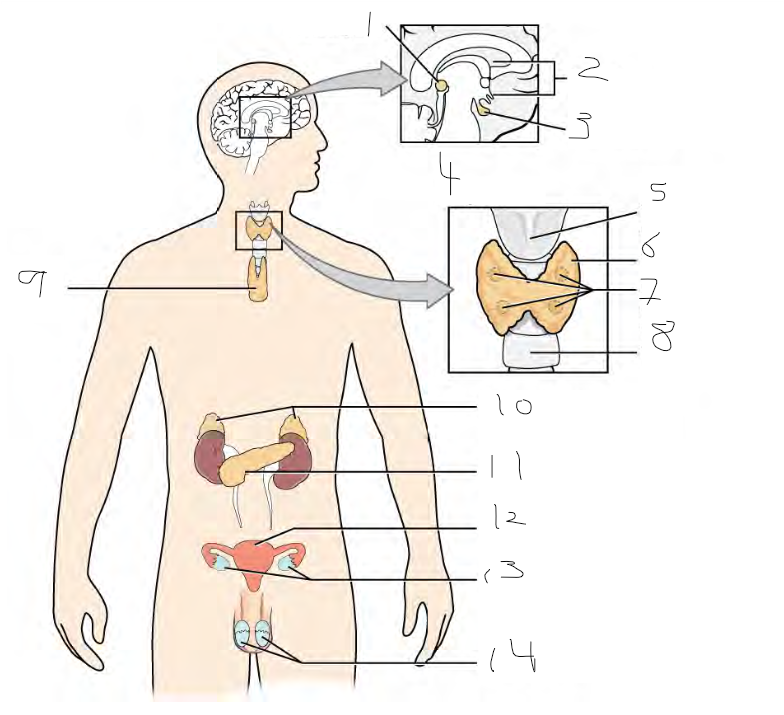
What is 5?
Thyroid cartilage of the larynx
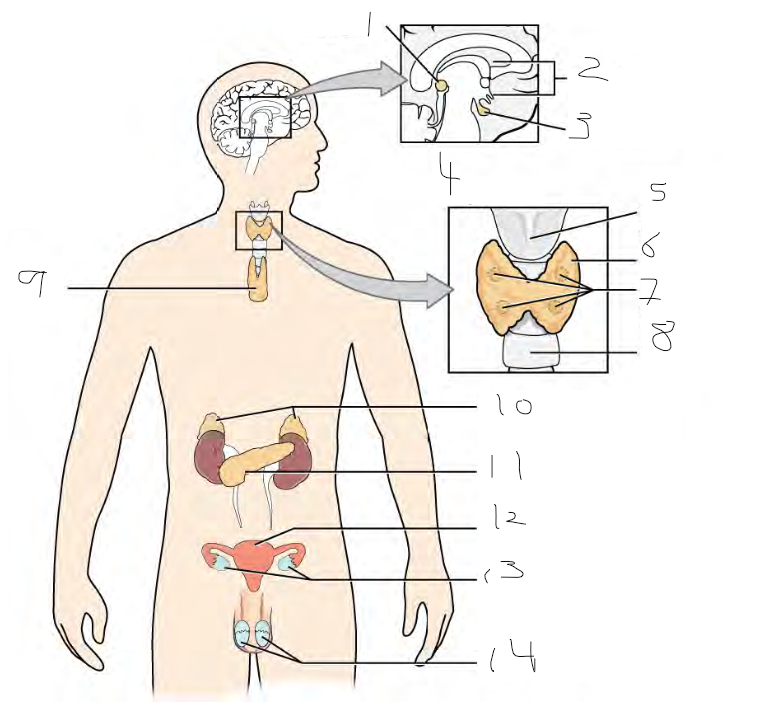
What is 6?
Thyroid gland

What is 7?
Parathyroid glands located on the posterior/back side of the thyroid.

What is 8?
Trachea

What is 9?
Thymus gland
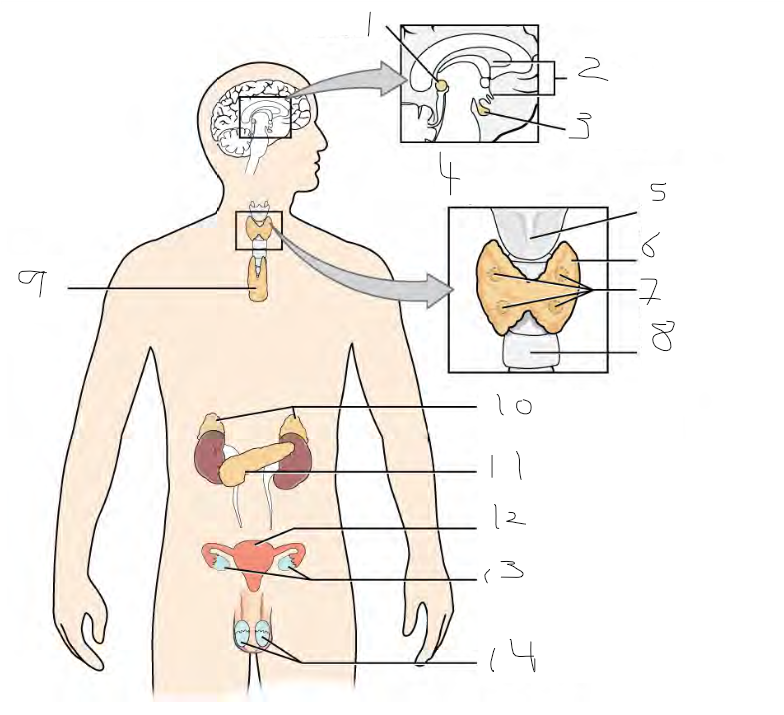
What is 10?
Adrenal glands

What is 11?
Pancreatic islets

What is 12?
Uterus

What is 13?
Ovaries

What is 14?
Testes

What is 1?
Cholesterol
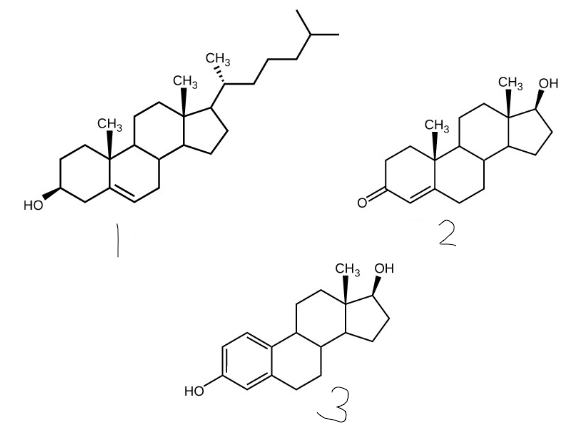
What is 2?
Testosterone, a steroid hormone.

What is 3?
Estradiol, a steroid hormone.

What is 4?
Tyrosine, an amino acid.

What is 5?
Epinephrine, a nonsteroid hormone.

What is 6?
Tryptophan, an amino acid.

What is 7?
Melatonin, a nonsteroid hormone.
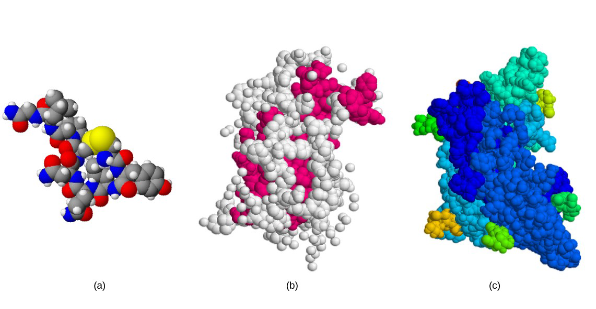
Which hormone structure does A show?
Oxytocin, a peptide hormone.

Which hormone structure does B show?
Growth hormone, a peptide hormone.

Which hormone structure does C show?
Folliclestimulating hormone, a peptide hormone.
What is the hormone epinephrine derived from?
Tyrosine.
What is the hormone melatonin derived from?
Tryptophan.
What are steroid hormones made from?
Cholesterol
What are nonsteroid hormones made from?
Amino acids or proteins
What is the solubility of steroid hormones?
They are lipid soluble, so they diffuse through the cell membrane.
What is the solubility of nonsteroid hormones?
Typically water soluble, so they are unable to readily pass the cell membrane.
What is the receptor location of steroid hormones?
Inside the target cell nucleus.
What is the receptor location of nonsteroid hormones?
On the target cell membrane.
What is the mechanism of steroid hormones?
They bind to receptors in the target cell nucleus and affect cell activity by changing gene expression or DNA.
What is the mechanism of nonsteroid hormones?
They bind to receptors on the outside of the target cell membrane and activate second messengers to affect the cells activities.
Do steroid hormones need second messengers?
No
What is the acting speed of steroid hormones?
Usually slower
What is the acting speed of nonsteroid hormones?
Usually faster
What is the duration of response of steroid hormones?
Usually longer lasting.
What is the duration of response of steroid hormones?
Usually shorter lasting.
What are the steriod hormones?
Cortisol, aldosterone, testosterone, progesterone, estrogen and estradiol.
What are the nonsteroid hormones?
Epinephrine, norepinephrine, dopamine, growth hormone, prolactin, thyroid-stimulating hormone, adrenocorticotropic hormone, follicle-stimulating hormone, luteinizing hormone, antidiuretic hormone, oxytocin, thyroxine, triiodothyronine, calcitonin, parathyroid hormone, melatonin, insulin, glucagon, human chorionic gonadotropin, human placental lactogen and relaxin.
What are the different chemical classes of hormones?
Steroid, protein, peptide, glycoprotein and amine.
Define the steroid chemical class.
Made from cholesterol.
Define the protein chemical class.
Larger chains of amino acids.
Define the peptide chemical class.
Shorter chains of amino acids.