Corticosteroids
 Call Kai
 Learn
 Practice Test
 Spaced Repetition
 Match
 Flashcards
 Knowt Play
1/19

There's no tags or description
Looks like no tags are added yet.
20 Terms


Describe ADRENAL CORTEX
Difference between the 3 Zones
Describe the STEROIDOGENESIS & REGULATION
ADRENAL CORTEX
Zones:
Zona glomerulosa
Aldosterone (mineralocorticoid)
Controlled mainly by RAAS + K⁺
Zona fasciculata
Cortisol (glucocorticoid)
Controlled by ACTH (HPA axis)
Zona reticularis
Androgens (DHEA/androstenedione)
ACTH-influenced
STEROIDOGENESIS & REGULATION
Cholesterol → pregnenolone via CYP11A1
Glomerulosa:
Lacks CYP17
-> Aldosterone via CYP21A2/CYP11B2
Fasciculata
Produces cortisol via CYP17, CYP21A2, and CYP11B1.
Reticularis
favors CYP17/17,20-lyase activity → DHEA & adrenal androgens.
What are the PHYSIOLOGIC ACTIONS OF CORTISOL (4)
Anti-inflam. mechs? (6)
Immunosuppresive effects? (6)
PHYSIOLOGIC ACTIONS OF CORTISOL
Maintains vascular responsiveness and supports BP
↑ Gluconeogenesis
↑ Protein catabolism
↑ Lipolysis
ANTI-INFLAMMATORY MECHANISMS
↓ NF-κB and AP-1–mediated inflammatory gene transcription
↓ Pro-inflammatory cytokine production
↓ COX-2 expression and inflammatory mediator synthesis
↓ Prostaglandins and leukotrienes
↓ Leukocyte migration into inflamed tissues
↓ Capillary permeability, edema, and tissue inflammation
IMMUNOSUPPRESSIVE EFFECTS
↓ T-cell activation and proliferation
↓ Pro-inflammatory cytokine production
↓ Macrophage antigen presentation and activity
↓ Eosinophil number and survival
Redistribution of lymphocytes → ↓ circulating lymphocytes
Neutrophil demargination → neutrophilic leukocytosis despite reduced inflammation

What is the PK (ADME)?
PHARMACOKINETICS
Absorption:
Oral, IV/IM, or local routes;
Local therapy may still be systemically absorbed.
Distribution:
Bound mainly to CBG and albumin;
free drug is active.
Metabolism:
Primarily hepatic, often via CYP3A4;
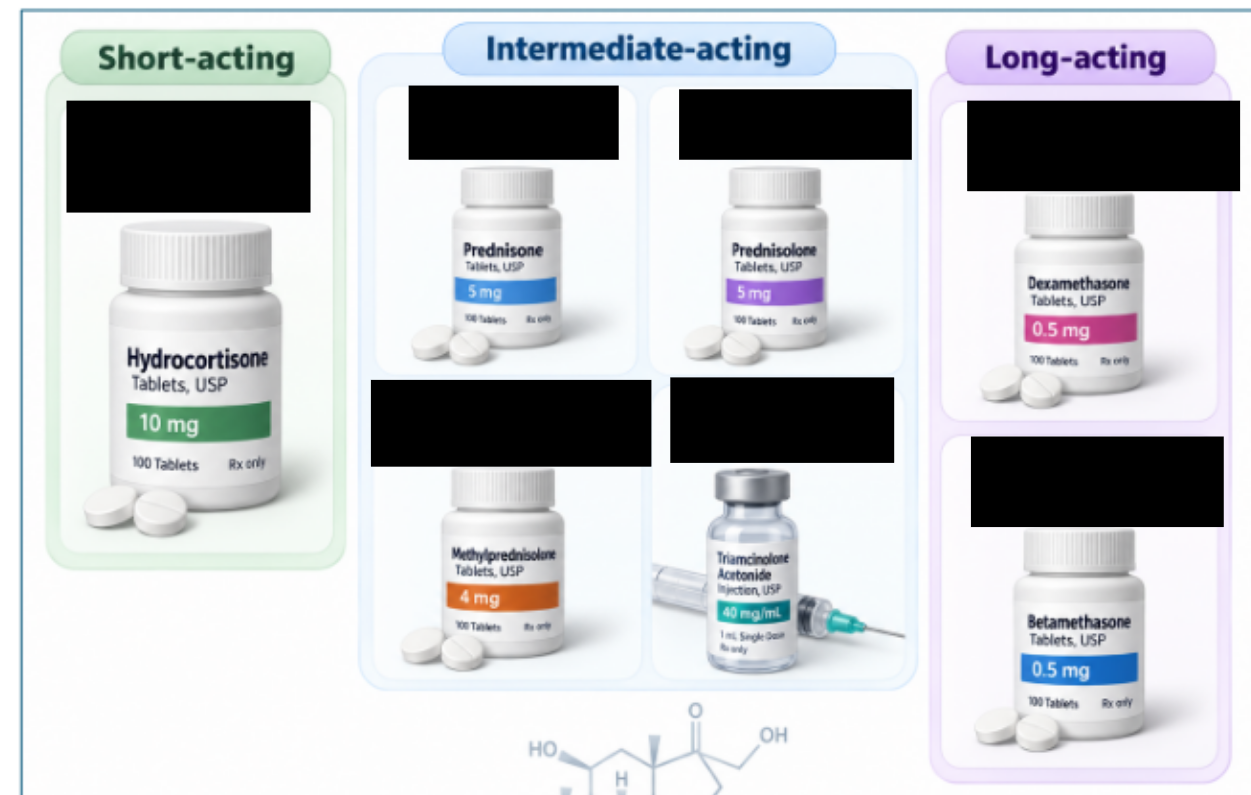
prednisone → prednisolone.
Excretion:
Mainly renal elimination of inactive/conjugated metabolites.
What is the Relative Potency of Glucocorticoids

PREDNISONE vs. PREDNISOLONE
PREDNISONE vs. PREDNISOLONE
Prednisone = prodrug (hepatic)
Prednisolone = active form
Both provide similar glucocorticoid effects after activation
Prednisolone may be preferred when hepatic conversion is impaired
Describe the CORTISOL-CORTISONE SHUNT
11β-HSD1 vs 11β-HSD2
Fx
Location
Describe the importance of 11β-HSD2 in PHYSIOLOGIC “CORTISOL RESISTANCE”
Describe the Placental Gate
MOA?
Drugs if target is Mother vs Child?
CORTISOL-CORTISONE SHUNT
11β-HSD1
cortisone → cortisol → regenerates active glucocorticoid
In liver, adipose tissue, & CNS
11β-HSD2
cortisol → cortisone → local glucocorticoid inactivation
kidney, colon, salivary glands, & placenta
PHYSIOLOGIC “CORTISOL RESISTANCE”
Importance of 11β-HSD2
Prevents cortisol from activating MR (mineralocorticoid receptor)
↑ Na⁺ and H₂O reabsorption
↑ K⁺ and H⁺ excretion
Loss = hypertension and hypokalemia
NOTE: essentially mimics aldosterone
PLACENTAL GATE
MOA:
Placental 11β-HSD2 limits fetal exposure to some maternal glucocorticoids
Drug Targets:
Mother:
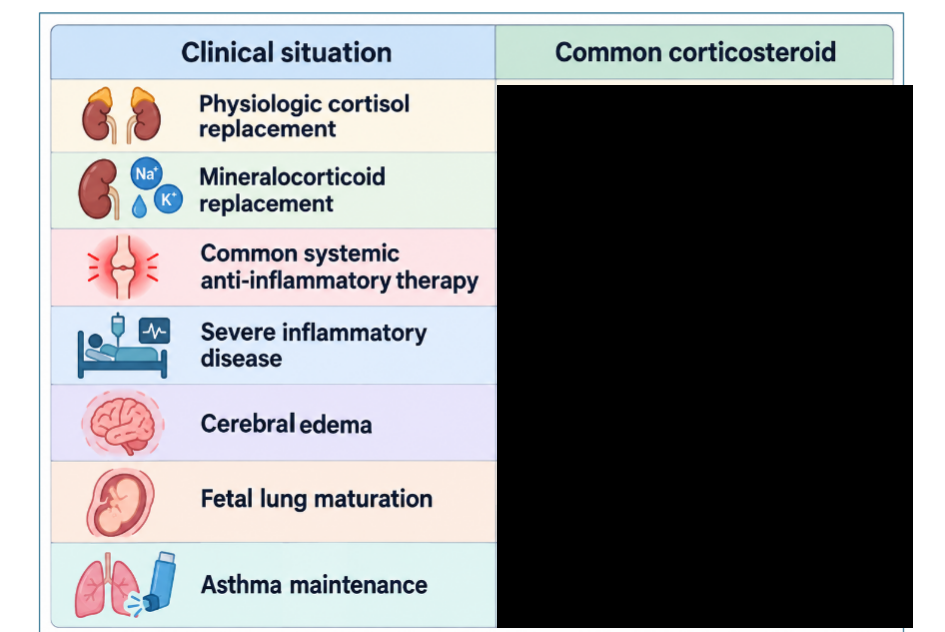
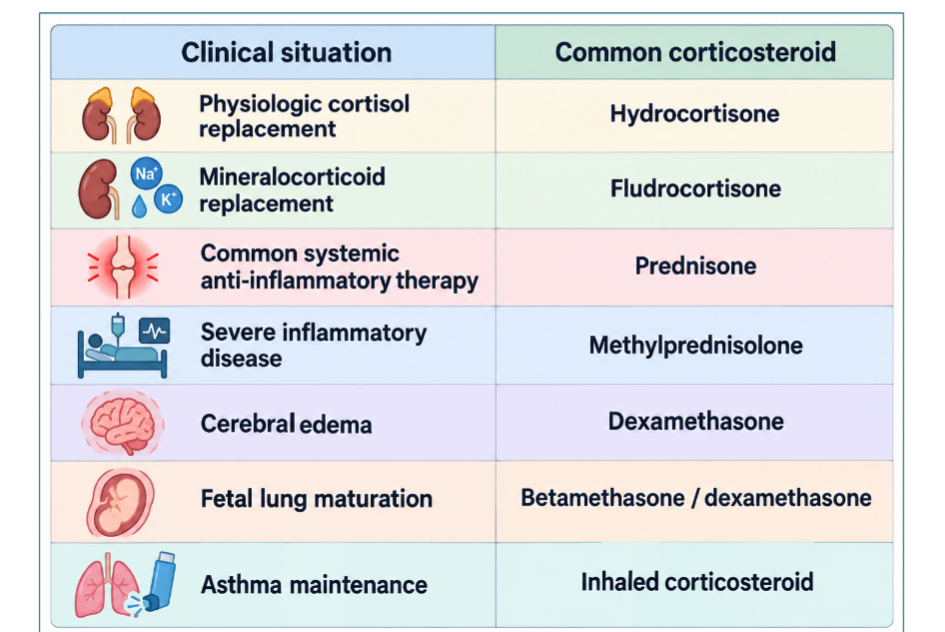
Prednisone/prednisolone
Placental metabolism reduces transfer of active prednisolone to fetus
Baby:
Dexamethasone and betamethasone
For fetal lung maturation and surfactant production
Describe Fludrocortisone
Class
Effects
Clinical Usage
Fludrocortisone
Class:
potent mineralocorticoid
Effects:
↑ Na⁺ and water retention → expands ECV
↑ K⁺ excretion in the distal nephron
Clinical Usage:
mineralocorticoid replacement,
especially in primary adrenal insufficiency
Describe ADRENAL INSUFFICIENCY
Primary vs Secondary
Tx for both?
How to treat Adrenal Crisis (4 step)
ADRENAL INSUFFICIENCY
Primary:
↓ cortisol and ↓ aldosterone
Tx:
Replace glucocorticoid w/ hydrocortisone
Replace mineralocorticoid fludrocortisone
Secondary:
↓ ACTH → ↓cortisol
Tx: Needs glucocorticoid replacement only
ADRENAL CRISIS TREATMENT
Give IV hydrocortisone promptly
glucocorticoid and some mineralocorticoid activity
Start IV isotonic saline to restore volume and blood pressure
Correct hypoglycemia and electrolyte abnormalities
Identify + treat underlying trigger
Describe AUTOIMMUNE & INFLAMMATORY DISORDERS
Usefulness of Corticosteroids
Indications
Mech
AUTOIMMUNE & INFLAMMATORY DISORDERS
Usefulness of Corticosteroids
Rapid anti-inflammatory + immunosuppressive effects
For acute flares and symptom control
Long term = sig. AEs
Use lowest Dose for Shortest Duration
Indications:
RA,
SLE,
vasculitis,
PMR,
IBD
Severe skin disease
Mech:
Decrease cytokine production and immune activation
Describe ASTHMA & COPD
Usefulness of Corticosteroids
Effect
Drugs Examples (3)
ASTHMA & COPD
Usefulness of Corticosteroids
Inhaled corticosteroids (ICS) = key medication
Used regularly for long-term control
Systemic CS = reserved for severe exacerbations
Goal = improve airflow while minimizing systemic steroid exposure
Effect:
airway inflammation + hyperresponsiveness
Drug Examples:
Budesonide,
Fluticasone,
Beclomethasone
Describe LOCAL CORTICOSTEROID THERAPY
What is it?
Pros/Cons
What is it?
delivers drug directly to target tissue
inhaled, intranasal, topical, intra-articular, and ophthalmic
Pros/Cons
Pros:
Allows higher local [] @ site
Con:
Systemic absorption can still occur
Esp. w/ higher doses or prolonged use
Describe CEREBRAL EDEMA
Drug of choice
Why?
CEREBRAL EDEMA
Drug of choice:
Dexamethasone (for vasogenic)
Exp for brain tumors and metastases
Why?
potent, long-acting glucocorticoid activity + minimal mineralocorticoid effect
Describe HEMATOLOGY & ONCOLOGY
Usefulness of CS (3)
Indications (3)
Specific Drug
HEMATOLOGY & ONCOLOGY
Usefulness of CS:
Induce lymphoid/plasma cells apoptosis
Suppress immune-mediated destruction in ITP and autoimmune hemolytic anemia
Prevent chemotherapy- related N/V
Indications:
ALL,
lymphomas,
multiple myeloma regimens
Specific Drug:
Dexamethasone
List the AE of CORTICOSTEROID
Metabolic (2)
CV (2)
MSK (3)
Immune/Endo (3)
Neuropsych/Opth (3,2)
List the features of CUSHINGOID EFFECTS (3; 3,3,1)
CORTICOSTEROID TOXICITY
Metabolic:
hyperglycemia + weight gain
CV:
hypertension + fluid retention
Musculoskeletal:
Osteoporosis
osteonecrosis
myopathy
Immune/Endocrine:
infection risk,
HPA suppression,
Cushingoid changes
Neuropsychiatric/Ophthalmic:
mood changes,
insomnia,
psychosis,
cataracts,
glaucoma
CUSHINGOID EFFECTS
Weight Gain
Central
Moon facies
dorsocervical fat deposition
Derm effects:
Thin skin,
Easy bruising
Purple striae
Muscle Wasting:
Protein catabolism
Describe the Physiologic Effects of glucocorticoids:
Metabolic
Bone/Muscle
Infection
GI
Derm.
NEUROPSYCHIATRIC
OCULAR
Growth
METABOLIC EFFECTS
Increase hepatic GNG + insulin resistance = hyperglycemia
Prolonged exposure = steroid-induced diabetes
Protein catabolism
Redistribution of Fat
BONE & MUSCLE EFFECTS
Increases risk of Osteoporosis/Osteonecrosis (femoral head)/Fractures
Decrease osteoblast activity + bone formation
Increase bone resorption
Reduce intestinal Ca²⁺ absorption
INFECTION RISK
Suppress immune and inflammatory responses
Susceptible to common,opportunistic, and latent infections
Fever and other inflammatory signs = masked
NOTE: Avoid certain live vaccines during substantial immunosuppression
GI
Gastric irritation
Increases Ulcer Risk
Exp when + NSAIDS
DERMATOLOGIC EFFECTS
Chronic = skin thinning + easy bruising
Reduced collagen synthesis = poor wound healing
Acne and striae
NEUROPSYCHIATRIC EFFECTS
Insomnia + irritability
Euphoria or mood elevation
Higher doses = mania or psychosis
Depression (during or in withdrawal)
OCULAR EFFECTS
Posterior subcapsular cataracts
↑ Intraocular pressure -> glaucoma
GROWTH SUPPRESSION
Chronic systemic glucocorticoids may slow linear growth
Describe glucocorticoids effect on the HPA Axis; Consequences?
HPA-AXIS SUPPRESSION
Exogenous glucocorticoids suppress CRH and ACTH
↓ ACTH → adrenal cortical atrophy
↓ Endogenous cortisol production
Consequence:
HPA recovery = slow after prolonged therapy
Abrupt withdrawal = adrenal insufficiency
Describe the effects of Abrupt withdrawal (5)
Describe Tapering:
Benefits (2)
When to use
Describe Stress-dosing:
Why use?
When? (4)
Goal?
ABRUPT WITHDRAWAL EFFECTS:
Adrenal insufficiency/crisis
Fatigue and generalized weakness
Hypotension and dizziness
Hypoglycemia
N/V
TAPERING
Benefits
Permits gradual HPA-axis recovery
Helps prevent adrenal insufficiency after withdrawal
When to use:
Short course = unnecessary
Prolonged/High Dose = req.
STRESS-DOSE STEROIDS
Why use?
Significant HPA suppression can blunt normal stress response
Patients may be unable to produce enough endogenous cortisol
When to use?
Surgery
Severe Infection
Truama
Other major physiologic stress
Goal:
prevent adrenal insufficiency or adrenal crisis during stress