American Indian History to 1877 - BYU - Midterm 1 - Pulsipher
 Call Kai
 Learn
Learn Practice Test
 Spaced Repetition
 Match
Match Flashcards
 Knowt Play
1/49

Earn XP
Description and Tags
Fall 2026
Name | Mastery | Learn | Test | Matching | Spaced | Call with Kai | Chat |
|---|
No analytics yet
Send a link to your students to track their progress
50 Terms
Logic of elimination
In early US survey, historians teach that early American needs for labor in the south transformed from a system of indentured servitude from the British Isles to race-based African slavery in the 1600s
Settler-colonial approach: The desire to displace Natives from their land rather than exploit their labors for colonial profit
Hunger for land drove the logic of elimination
Settler colonialism
A type of European expansion that resulted not in overseas empires but in “societies in which Europeans have settled, where their descendants have [become and] remained politically dominant over indigenous peoples, and where a heterogeneous society has developed in class, ethnic and racial terms”
They had much more elaborate and political economic infrastructures
It is misleading to refer to Settler Colonialism in the past tense
Extractive colonialism
There to just take resources rather than having the intent to take land
Gold, resources, people, spices, furs
Oral history
Narratives/Myths/Stories passed down through oral tradition
Some are still not written down, this is because of oral traditions
Native origin stories
The Book of Mormon narrative
“the Lamanites, and they are among the ancestors of the American Indians”
“Among” is important!!!!
Have some Lamanite ancestry
Room for additional diversity
Better aligns with science and its own doctrines
Native Accounts
Sacred stories and creation stories “provide the authority for existing social institutions” - William Simmons
They have meaning and purpose to cultural life, connected people to a place and a community
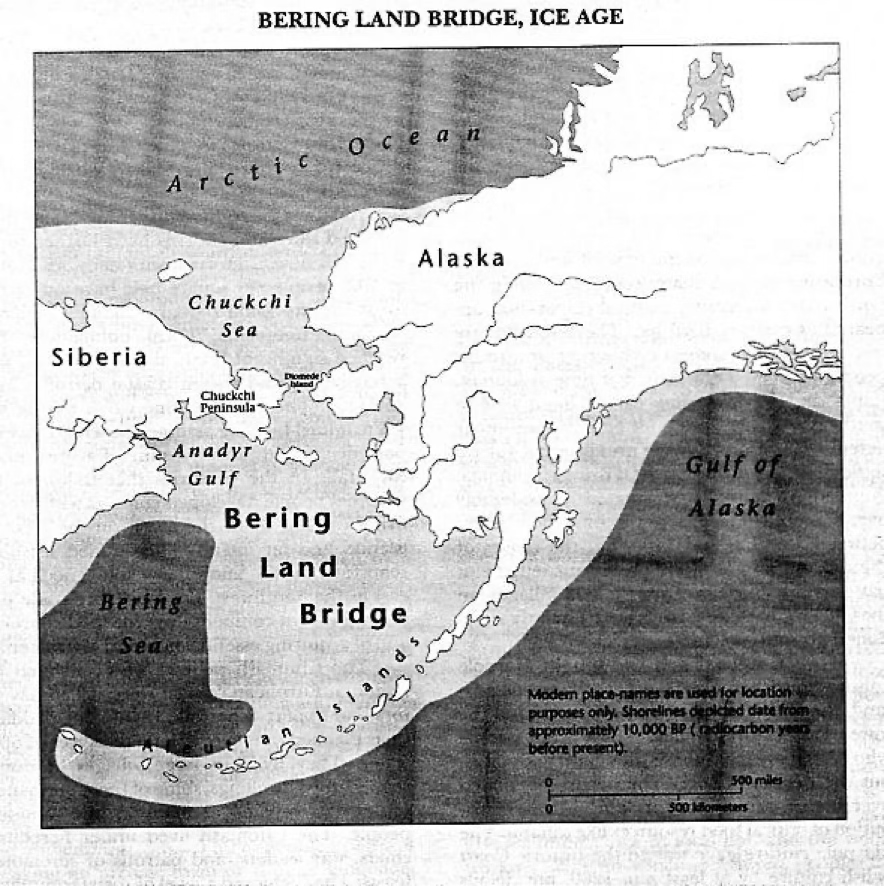
Bering land bridge
first proposed in 1590
Theory that Natives came from Asia through Alaska

Kennewick man
Discovered in 1996 in Washington
Anthropologist’s reconstruction of Kennewick man’s appearance
Native American Graves Protection and Repatriation Act (NAGPRA)
Competing explanations for origin
Umatilla Indians’ response: This is decoration of the body and a violation of our most deeply held religious beliefs. We have always been here
Can these ideas coexist?
Both sides have to give up something, which is not easy to do
What happened to Kennewick man?
We got better at DNA testing
Found a connection between the man and natives
Find ways for natives to talk to scientists and vice versa
NAGPRA (Native American Graves Protection and Repatriation Act, 1990)
Requires federal agencies (museums, universities, local government) to return Native American human remains and significant cultural items to their rightful communities
DNA testing
controversial because of ideas of percentages
Some tribes take membership not based off of DNA
DNA testing is not good enough to distinguish one tribe from another
Native views of DNA testing: Scientists (not really Native) want to turn history into another immigrant narrative -> “We’re all immigrants, we’re equal, you have no special claims to anything”
DNA won’t solve the blood requirements
Brigham Young was in favor of learning science and religion and one not overtaking the other.

Cahokia
near present-day St. Louis MO
Estimated population 20,000
Estimated time period 900-1550 AD
Suddenly abandoned
Cahokia was unique, there was no city this large and dense at the time
Andrew Jackson’s opinion of Ancient American mound:
“Memorials of a once powerful race, which was exterminated or has disappeared to make room for the existing savage tribes”
Purpose for the flat top pyramids?
We don’t really know, maybe the center of a ceremonial complex
Ask the native peoples - oral histories!

Huhugam (Hohokam)
One of the castles in Arizona
part of their cities
Based agriculture from the monsoon season
Irrigation systems
Great Law of Peace
Grand council of chiefs that managed inter-tribal affairs while leaving individual nations to run their own local matters (not from notes or slides)
Tadodaho
Leader of the Onondaga Nation before the formation of the Haudenosaunee Confederacy (Great law of Peace) (not from notes or slides)
Degonawidah
Indigenous prophet and spiritual leader credited with founding the Haudenosaunee Confederacy (not from the notes or slides)
Jikonsaseh
Mother of Nations
co-founder of the Haudenosaunee (Iroquois) Confederacy
(not from the notes or slides)

Las Casas
Was for the Natives
His thoughts:
Indians are fully human and rational
have an advanced civilization
have natural rights, including liberty, so cannot be enslaved
should be treated kindly to encourage conversion
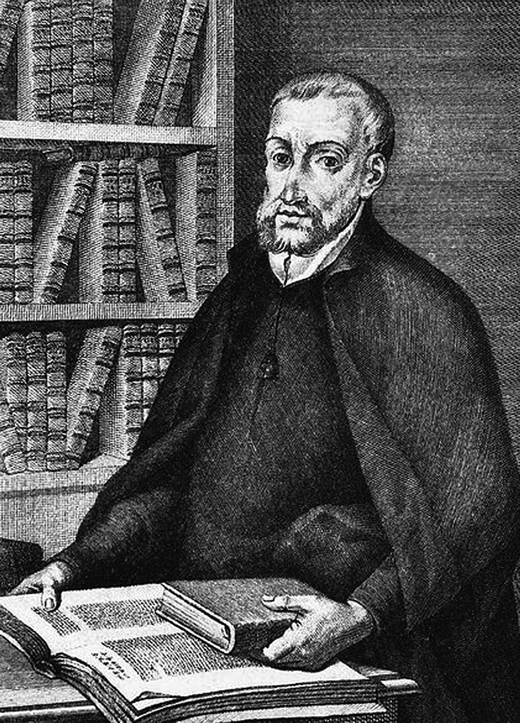
Sepulveda
NOT for the Natives
His thoughts:
Indians are inferior
are uncivilized
violate natural law through cannibalism, they also have tyranny so they have no rights
Encomienda necessary to raise Indians from “beasts” into men
Stadial Theory (or theory of "stages")
How to attain “civilization”:
Stages of Social Evolution
Hunting and gathering
Pastoralism/nomadism
Agriculture, permanent settlements
Commerce, cities
Doctrine of Discovery
an international legal and religious principle that gave Christian European nations the right to claim land, sovereignty, and ownership over territories occupied by non-Christian Indigenous peoples (pased from AI)
Universal natural law/Law of nations
European concept
Uncivilized nations were incapable of just rule
Misrule (tyranny, cannibalism) should be opposed
International Law of Nations:
Freedom of trade,
Freedom of the seas
Land on enemy shore, they have to give me water and food
Vacuum Domicilium
English justification for settlement
“The land is idle so therefore we can take it”
Columbian Exchange
Americas TO Europe, Africa, and Asia (lots of foods and agriculture)
Europe, Africa, and Asia TO Americas (foods, grains, livestock, diseases)
Deskilling
Losing the ability to do certain practices (linked to Economic Exchange)
Biological exchange
Europeans gave TO New World
Domesticated Animals
Grains, plants, weeds
Diseases: smallpox, measles, influenza, typhus, diphtheria, bubonic plague, etc
Native Americans gave TO Europe
Plants: corn, potatoes, cassava, tomatoes, tobacco, etc
Disease: syphilis
Economic exchange
Fur trade
Wampum revolution: Drew from preexisting Native tradition, European metal technology
Benefits of economic exchange:
Metal cooking pots could be placed directly on fire
People treasured it
Metal tools allowed greater complexity of arts and crafts
Firearms made hunting easier
Competition for Indian market gave Natives leverage with Europeans
Drawbacks of economic exchange:
Deskilling
Lose the ability to do certain practices
Overhunting
Better than Europeans at using firearms
They don’t really hunt anymore
Dependency on European trade goods
Competition > intertribal war
Spread of diseases
Shift from ritual/diplomatic trade pattern (rate items, gifts) to commercial trade pattern (giving one thing for another things, not much spiritual or symbolic meaning)
Diplomatic exchange
Native-Euroepan alliances
Why allies?
Trade and military power
European adoption of “international Native Diplomatic Protocol”
“Beaver Wars” and intensification of “Mourning Wars”
Good relations to bad
Marriage of Pocahontas and John Rolfe
Attempt to solidify relations (diplomatic event)
Return of Indian messengers from England
He gave me nothing (interaction with King James)
Miscommunication
1622 massacre
By law of Nations we can attack back
Native American International diplomatic protocol
the sovereign customs, ceremonies, council procedures, and consensus-driven rules that Indigenous nations used to manage relations, trade, alliances, and conflicts with European powers and the early United States (pasted from AI)
Mourning Wars
Someone in your family was killed, so you pay them back (take captive of enemies as a replacement of the people they lost) because you're mourning

Roanoke
Colony that got founded and then disappeared
People began to die fast, disease was fast and had no cure
People fleeing
Sense of panic, breakdown of social norms
Gift-giving
a sacred and central practice used to build kinship, sustain alliances, demonstrate generosity, and establish social or economic reciprocity (pasted from AI)
Virgin soil epidemic
Pathogens frozen in arctic migration or developed in Asia after migration
No adaptive immunity from previous exposure
Limited or absent natural (genetic) resistance, normally developed through natural selection
Utility of the Virgin Soil thesis
There was a 90% depopulation as a result of lack of immunity (not really anyone’s fault) maybe appealing
Reasons for the depopulation: Natives were unsophisticated, they couldn’t fight those Europeans, put the blame on native people for their own demise
Adaptive immunity
a specialized branch of the immune system that targets specific foreign invaders, builds immunological memory through T and B cells, and provides long-lasting protection after exposure to an antigen (pasted from AI)
Immunologic determinism
Idea that based on your race/ethnicity you have certain immunity to disadvantages
Treaty of Tordesillas
a 1494 agreement between Spain and Portugal that divided the non-European world along an imaginary meridian to resolve competing colonial claims after Christopher Columbus's voyages (pasted from AI)
Chiefdom
a ranked, centralized political unit where multiple towns or communities are united under the permanent authority of a single hereditary leader, known as a chief or paramount chief (pasted from AI)
Redistributional society
a system of economic and social organization where wealth, food, and resources are brought to a central authority—such as a chief, clan leader, or village council—and then reallocated throughout the community (pasted from AI)
Wampum
revolution
Drew from preexisting Native tradition, European metal technology
Calumet
a long-stemmed, highly decorated ceremonial tobacco pipe used by many Native American tribes (Pasted from AI)
Fictive kinship
a constructed “family” of unrelated individuals who have family-like bonds
“chosen family” idea
Reciprocity
Responsibility
Give and receive
Medieval warm period
a naturally occurring era of warmer and drier conditions that roughly spanned from 950 CE to 1250 CE (or about 800 to 1300 CE depending on the region) (Pasted from AI)
Himdag
New way of life that was more equality and reciprocity based - “a peaceful life”, gift giving, tied to universal law (adopted christianity, adapted to new ways of life while keeping tradition)
Liminal experiences
a transitional state of being "betwixt and between" two distinct stages of life, social roles, or cultural worlds (pasted from AI)
Shaman
a spiritual practitioner who enters altered states of consciousness to act as an intermediary between the physical world and the spirit realm (Pasted from AI)
Reducciones
settlements established by Spanish and Portuguese colonial authorities and Roman Catholic missionaries to forcibly relocate and concentrate indigenous populations in Latin America and the Philippines (pasted from AI)
Catholic vs Protestant approach
Catholic:
emphasized ritual, syncretism, and living among indigenous communities to pursue mass conversion
Protestant:
favored cultural assimilation, literacy in English, and separating or displacing populations to align them with European-style civilization
(Pasted from AI)
Separate creations
Native responses to European religion
Rejection/cultural relativism
You have your ways, we have ours
Separate creations of Native people and Europeans (your god made you this way, our god made us this way)
Reasons for Native conversion
Material
Promises of trade good or food
Cultural
Response to cultural breakdown
Revival of ancient practices
Confluent with cultural patterns (dreams, visions)
Self or Community Interest
Connection to a powerful ally
Protection of Native rights, land
Spiritual
Belief
Inclusivist approach
Selective borrowing/syncretism
Civility before conversion paradigm
“They need to be like us before they can accept christianity”
Common descent from Adam

John Eliot
You have to understand and accept it.
Have to abandon their practices