elasticity
 Note
 Call Kai
 Learn
 Practice Test
 Spaced Repetition
 Match
 Flashcards
 Knowt Play
1/68

There's no tags or description
Looks like no tags are added yet.
Name | Mastery | Learn | Test | Matching | Spaced | Call with Kai | Chat |
|---|
No analytics yet
Send a link to your students to track their progress
69 Terms
what does price elasticity of demand show?
Price elasticity of demand (PED) measures how responsive quantity demanded is to a change in the good's own price.
how do you calculate PED?
%change in QD divided by %change in price
what are the 5 types of PED?
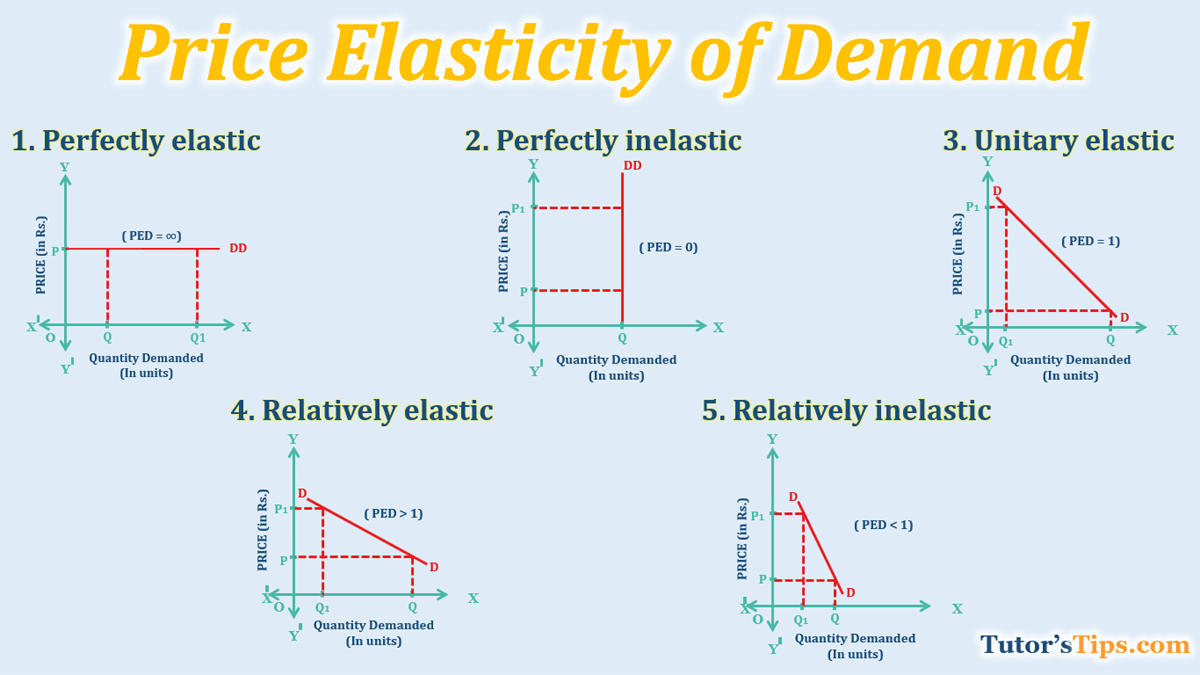
Perfectly inelastic,Relatively inelastic,Unit elastic,Relatively elastic and Perfectly elastic
what’s the value of perfectly elastic?
Infinity
what’s the value of perfectly inelastic?
0
what’s the value of relatively elastic?
Greater than 1
what’s the value of relatively inelastic?
Between 0 and 1
what’s the value of unit elastic?
1
when quantity demanded doesn’t change as the price changes, it is..
Perfectly inelastic
define perfectly elastic
Consumers will buy at one price but none at a higher price
when quantity demanded changes proportionately less than the price it is…
Relatively inelastic
define relatively elastic
QD changes proportionately more than price
when quantity demanded changes by the same percentage as price it is…
Unit elastic
draw a perfect elastic, inelastic and unitary elastic graph
how does the availability of substitutes affect PED?
more substitutes → demand tends to be more elastic.
what else affects PED?
Necessity: necessities tend to have more inelastic demand.
Proportion of income spent: expensive purchases taking up a larger share of income may be more elastic.
Time period: demand often becomes more elastic over time as consumers find alternatives.
Habit or addiction: can make demand more inelastic.
Brand loyalty: can make demand more inelastic.
PED and total revenue
define total revenue
is the money a firm receives from sales
how do we calculate TR?
TR= price x quantity sold
which type of demand shows total revenue rising when the price rises?
Inelastic
what happens to total revenue when inelastic demand price falls?
TR falls
which type of demand has the TR remain unchanged when the price rises?
Unit elastic
what happens to total revenue when unit elastic price falls?
TR unchanged
what happens to total revenue when prices fall and rise?
when prices fall, TR rises, and when prices rise, TR falls
define cross-price elasticity (XED)
measures the responsiveness of the quantity demanded of 1 good to a change in the price of another related good
its useful for…
particularly useful in analysing relationships between substitute and complementary goods
what’s the formula for cross-price elasticity?
(A to B)= (%change in the quantity of A) divided by (%change in the price of B)
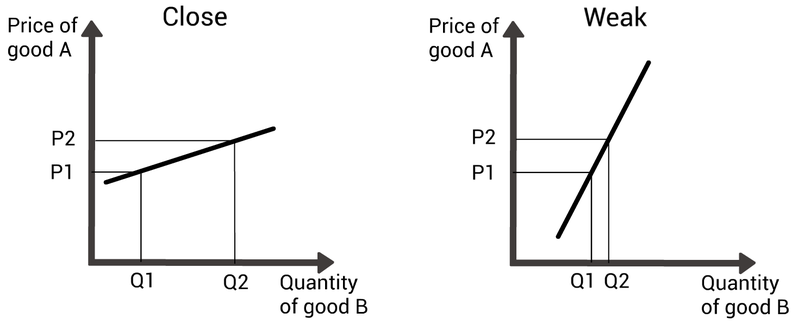
how are substitutes in XED?
substitutes are goods that can be used instead of each other.
example: tea and coffee.
Price of coffee ↑
Demand for tea ↑
XED is positive.
The goods are substitutes because consumers switch towards tea when coffee becomes more expensive.
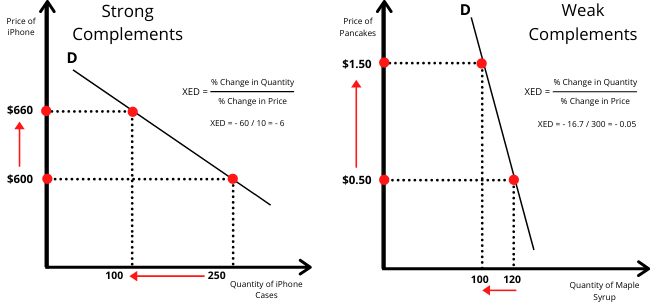
how are complements in XED?
complements are goods consumed together.
example: printers and ink.
Price of printers ↑
Demand for printers ↓
Demand for ink may also ↓
XED is negative.
The goods are complements because consumers tend to use them together.
draw a strong and weak substitue relationship
draw a strong and weak complement relationship
when the cross price elasticity of demand is positive, what’s the relationship?
Substitutes
when the cross price elasticity of demand is negative, what’s the relationship?
Complements
when the cross price elasticity of demand is 0, what’s the relationship?
No relationship
define YED
Income elasticity of demand (YED) measures how responsive quantity demanded is to a change in consumers' income.
formula for YED?
YED=%change in QD divided by %change in income
what’s the value of YED when income increases, demand decreases? and what good is this?
Negative (−) , Inferior good
what type of good is it when YED value is between 0 and 1 and demand rises proportionately less than income?
Necessity (typically)
what’s the meaning of a normal good when the YED value is positive?
Income ↑ → demand ↑
what’s the YED value when luxury good had demand rising proportionately more than income?
Greater than +1
define PES
Price elasticity of supply (PES) measures how responsive quantity supplied is to a change in the good's own price.
what’s the formula for PES?
%change in QS divided by %change in price
which type of supply’s value is 1?
Unit elastic supply
what value is perfectly inelastic supply?
0
which type of supply’s value is between 0 and 1?
Relatively inelastic supply
what value is perfectly elastic supply?
Greater than 1
which type of supply’s value is infinity?
Perfectly elastic supply
write down on your whiteboard the factors afecting price elasticity of supply (there’s 6)
Time period: supply is usually more elastic in the long run because firms have more time to adjust.
Spare capacity: more spare capacity makes it easier to increase production.
Stocks: firms with available stock can respond more quickly to higher prices.
Availability of factors of production: readily available labour and raw materials make supply more elastic.
Production time: goods that take a long time to produce, such as crops, often have more inelastic supply in the short run.
Mobility of factors of production: if labour and capital can move easily between uses, supply tends to be more elastic.
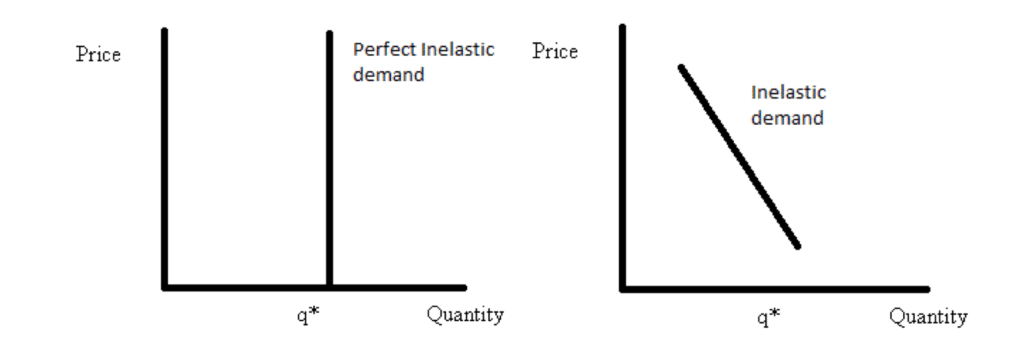
define price inelastic demand (PED)
Price inelastic demand occurs when the percentage change in quantity demanded is smaller than the percentage change in price.
the absolute value of PED is..
less than 1
why is demand price inelastic?
because consumers reduce their purchases by a smaller percentage than the price increase
but why might demand be inelastic?
The good is a necessity.
There are few close substitutes.
Consumers are loyal to a brand.
The good takes up a small proportion of income.
Consumers have little time to change their habits.
as a result what happens to total revenue?
When demand is price inelastic:
Price rises → total revenue tends to rise.
Price falls → total revenue tends to fall.
draw a graph of inelastic demand
define market equilibrium
Market equilibrium is the point at which quantity demanded equals quantity supplied.
QD=QS
At equilibrium, there is no excess demand or excess supply.
draw a graph representing equilibrium

define equilibrium price
the price at which QD = QS.
define equilibrium quantity
the quantity bought and sold at the equilibrium price.
define disequilibrium
when quantity demanded and quantity supplied are not equal.
define excess demand
(shortage): QD > QS.
define excess supply
(surplus): QS > QD.
what are the ways a market returns to equilibrium?
excess demand, and excess supply
how does a market return to equilibrium with excess supply?
Imagine a shop charges too much for a product.
Firms supply more than consumers want to buy.
There is a surplus.
Unsold stock puts downward pressure on price.
As price falls, quantity demanded rises and quantity supplied falls.
The market moves towards equilibrium.
Chain: QS > QD → surplus → price falls → QD rises and QS falls → equilibrium.
how does a market return to equilibrium with excess demand?
Imagine concert tickets are priced too low.
Consumers want more tickets than firms supply.
There is a shortage.
Consumers compete to buy the limited tickets, putting upward pressure on price.
As price rises, quantity demanded falls and quantity supplied rises.
The market moves towards equilibrium.
Chain: QD > QS → shortage → price rises → QD falls and QS rises → equilibrium.
what happens to equilibrium price + quantity when demand decreases?
EP= decreases and EQ= decreases
when supply increases?
EP= decreases and EQ= increases
when demand increases?
EP= increases and EQ= increases
when supply decreases?
EP= increases ad EQ= decreases
define functions of the price mechanism
The price mechanism is the process through which demand and supply determine prices, helping to allocate scarce resources in a market economy.