Brain Hemispheres
 Call Kai
 Learn
 Practice Test
 Spaced Repetition
 Match
 Flashcards
 Knowt Play
1/38

There's no tags or description
Looks like no tags are added yet.
39 Terms
ventricles in brain filled with
cerebrospinal fluid (CSF)
CSF does what
protects brain from physical shocks and removing waste from neural tissue in brain
3 regions of brain
cerebellum, brainstem, cerebrum

cerebellum
coordinates body movements, posture and balance

brainstem
located between thalamus and spinal cord, connects brain and spinal cord, breathing, heart rate, blood pressure
cerebrum
largest part of forebrain, interprets touch, speech, language, reasoning, emotions and fine motor control
cerebral cortex
gray matter that surrounds cerebrum

cerebral cortex divided into
L & R hemispheres

gyri
ridges on cerebral cortex

sulci
grooves on cerebral cortex

fissures
very large grooves on cerebral cortex
4 lobes of brain
frontal, parietal, temporal, occipital
frontal lobe
high level cognitive skills, reasoning, concentration, motor skills , language, control center of emotion
parietal lobe
visual perception, sensory info, touch, pain and pressure

temporal lobe
organized sound, processes language, memories, speech perception, language skills

occipital lobe
interprets visual stimuli and info
thalamus and limbic system
sensory, motor and interneurons
sensory neurons
afferent nerve cells, send info towards cns ,info is sensed using the 5 senses
motor neurons
efferent nerve cells, carry impulse away from cns to effectors
interneurons
nerve cells that bridge b/w motor and sensory neurons, form neural circuits
limbic system control
emotions and memory
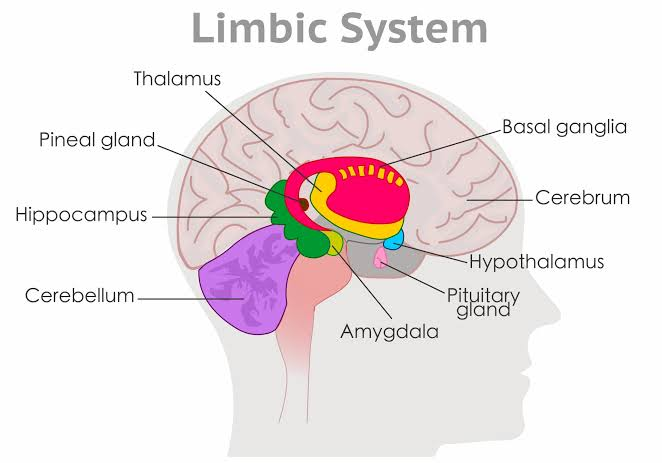
4 major structures of limbic system
hypothalamus, amygdala, thalamus and hippocampus
hypothalamus
concerned w homeostasis, regulates hunger, anger, response to pain
amygdala
aggression center, anger, violence, fear and anxiety
thalamus
sense of smell bypass this
hippocampus
convert short term memory to long term
hippocampus is damaged what happens
can not make new memories but old memories are attained
Cerebrum
brains largest part
cerebrum divided into different parts-control conscioness
Frontal lobe
planning-reasoning-imagining; problem solving, speech production
pariental lobes
located: posterior of sensory cortex, anterior of occipital cortex
-general interpretation area, understanding, ability use of words, spelling
temporal lobe
LOCATED: laterally sides of the brain cerebrum
FUNCTION: memory, language, understanding
occipital lobe:
LOCATION: posterior/dorsal of the skull
FUNCTION: vision
parts of the brain stem
midbrain, pons, medulla oblongata
medulla oblongata
FUNCTIONS: Regulate breathing and heart rate
*centers for respiration and circulation
Pons
breathing
parts of the diencephalon
middle of the brain
HYPOTHALAMUS AND THALAMUS
hypothalamus
-link nervous system to endocrine system via pituitary gland
- TEMPERATURE REGULATION
Thalamus
consciousness, seep,
hippocampus
memory: short and long term