Skull, face, cranial nerves
 Call Kai
 Learn
 Practice Test
 Spaced Repetition
 Match
 Flashcards
 Knowt Play
1/73

There's no tags or description
Looks like no tags are added yet.
74 Terms
two parts of the skull
cranial skeleton (neurocranium)
facial skeleton (viscerocranium)

what does the cranial skeleton contain and what is it made up of
Contain:
Brain
Cranial meninges
Cranial nerves
Blood vessels
Made up of
Frontal bone (1)
Parietal bones (2)
Temporal bones (2)
Occipital bone (1)
Sphenoid bone (1)
Ethmoid bone)

what bone is this
frontal bone


what bone is this and what are its features
parietal bone
one on each side
superior and inferior temporal lines (ridges)
divided by a suture

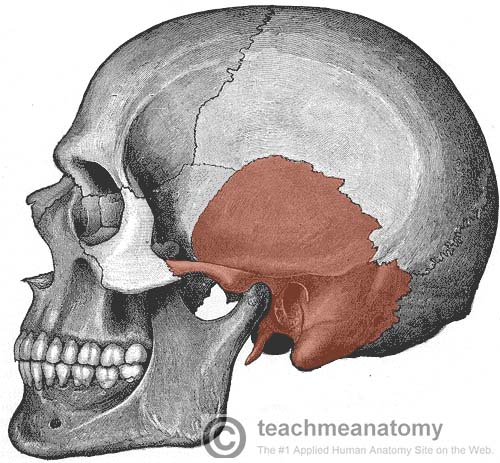
temporal bone landmarks
mastoid process
styloid process
external acoustic meatus
zygomatic protuberance


what bone is this
temporal bone
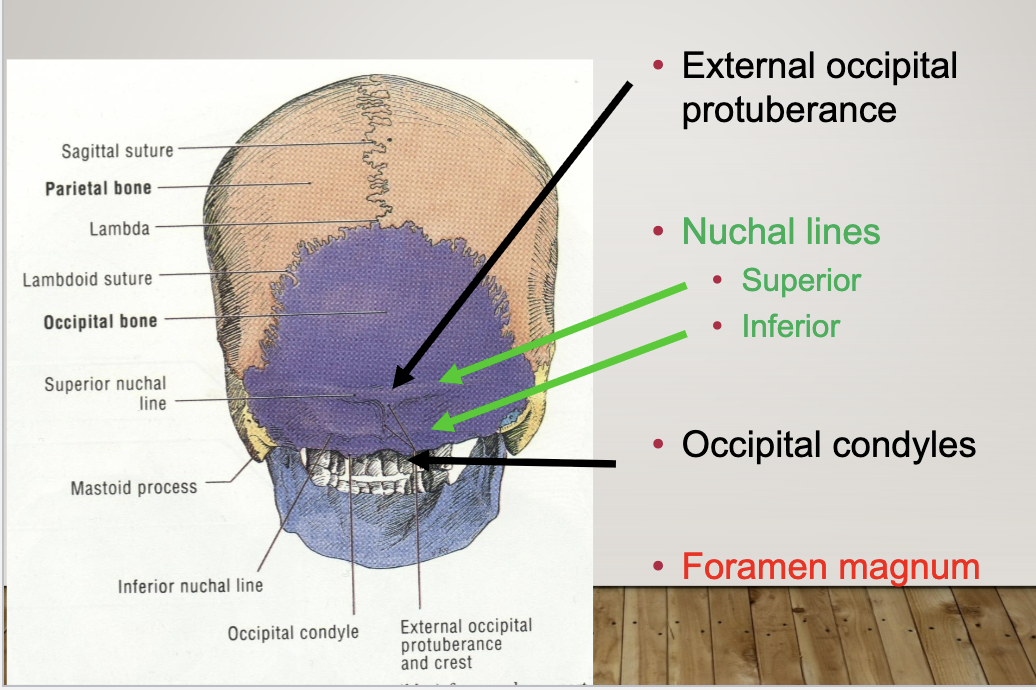
occipital bone landmarks
external occipital protuberance
nuchal lines
superior
inferior
occipital condyles
foramen magnum
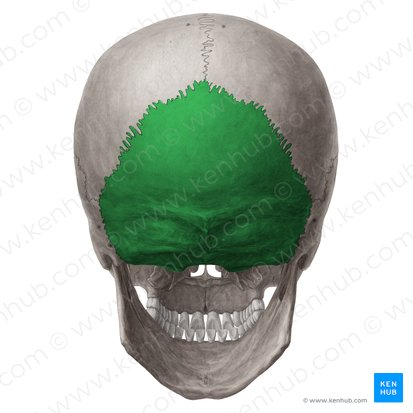
what bone is this
occipital bone

Foramen magnum function and contents
Passageway from skull to spinal column
Contain:
spinal cord & meninges
vertebral arteries
anterior and posterior spinal arteries
spinal accessory nerve (XI)


what is this
foramen magnum
sphenoid bone features
“bat bone”
unpaired bone in neurocranium
forms the base of the cranium
behind eye and below the front part of the brain
contains two air-filled sinuses

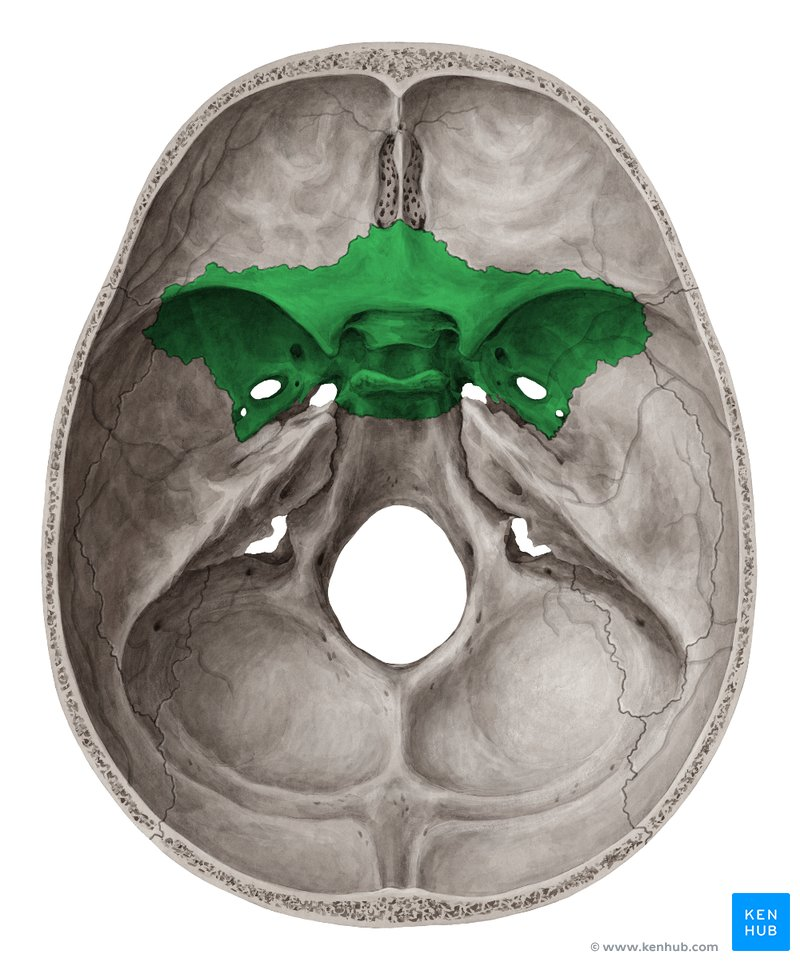
what bone is this
sphenoid bone


what bone is this
ethmoid bone
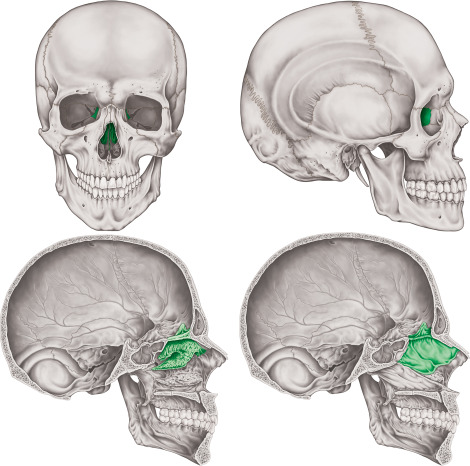
ethmoid bone features
sits anterior to the sphenoid
at the roof of the nose & between the 2 orbits
separates the nasal cavity from the bone

Facial skeleton (viscerocranium) bones
lacriminal bones (2)
nasal bones (2)
maxillae (2)
zygomatic bones (2)
palatine (2)
nasal conchae (2)
mandible (1)
vomer(1)

lacriminal bone features and articulations
smallest bone in face
located on medial side of the orbit
articulates with the inferior nasal concha, ethmoid, frontal, and maxillary bones
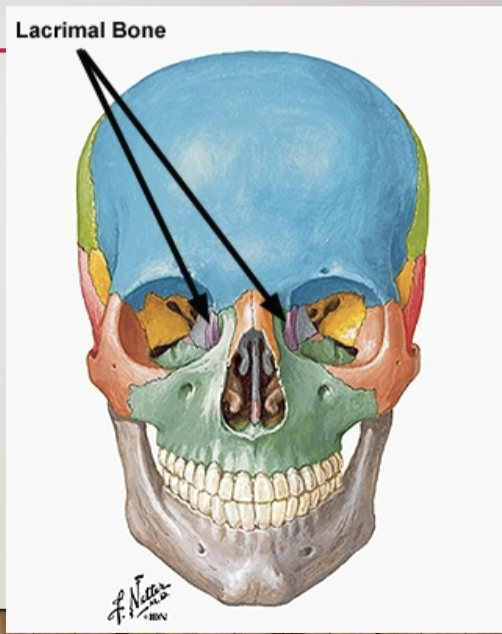

waht bone is this
lacriminal bone


nasal bone features and articulations
forms the bridge of the nose
articulates with the frontal bone superiorly, ethmoid, and frontal process of the maxilla posteriorly
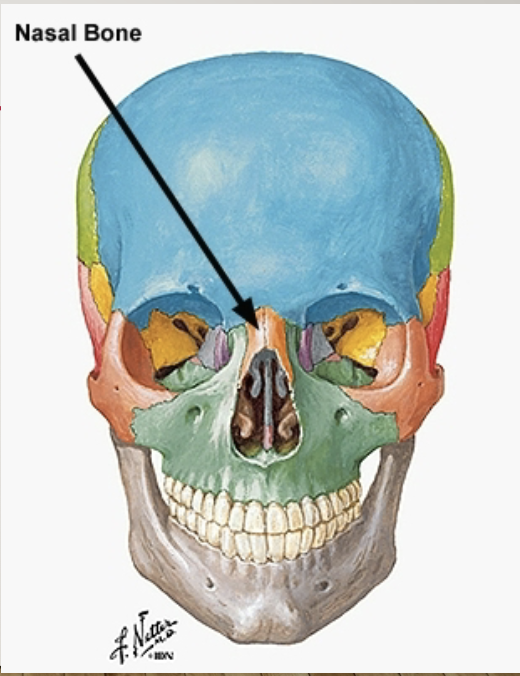

what bone is this
nasal bone
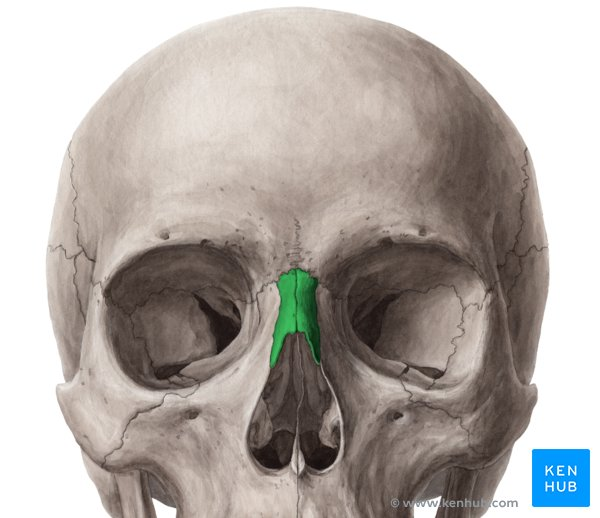
maxilla features
alveolar processes (maxillary sinus)
sockets for the upper teeth
forms the floor of the orbits, the sides and lower walls of the nasal cavities, and the hard palate
Infraorbital foramen
neurovascular passageway


what bone is this
maxilla

zygomatic bone features and articulations
cheek bones
make up part of the eye orbit
articulates with the maxilla, temporal bone, sphenoid bone, and frontal bone


what bone is this
zygomatic bone

palatine bone features and articulation
pair of bones that make up the upper palate
articulates with the maxillae to form hard palate
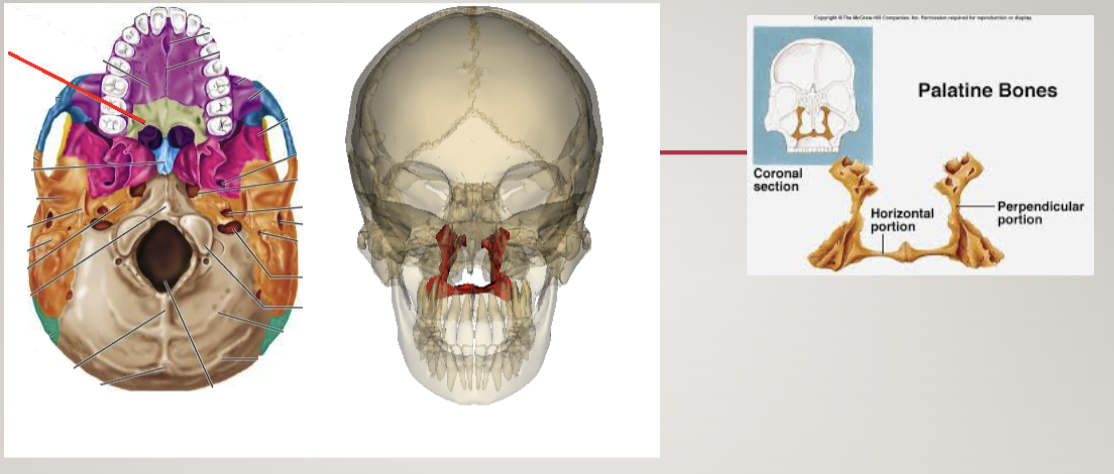

what bone is this
palatine bone

nasal conchae features
also called turbinate or turbinal
scroll-shaped bony elements forming the upper chambers of the nasal cavities
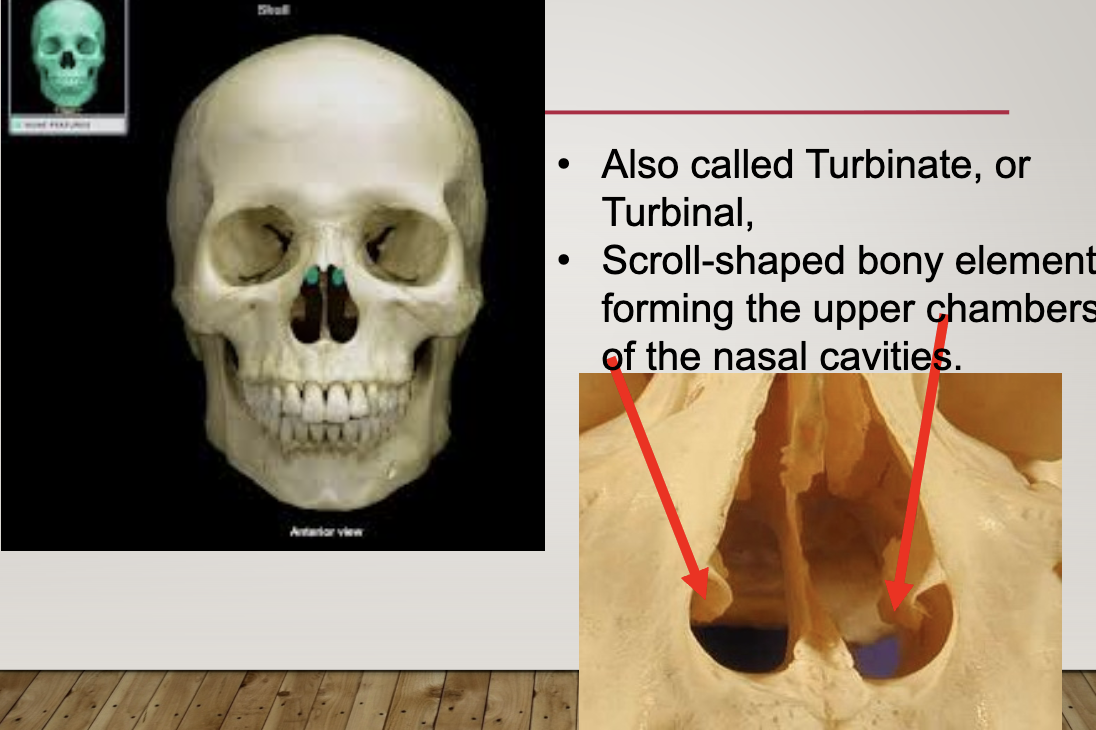

what are the unlabeled structures
nasal conchae


vomer bone features and articulation
forms the inferior part of the nasal septum
articulates with ethmoid superiorly and palatine inferiorly


what bone is this
vomer

mandible landmarks
mandibular condyle
ramus of mandible
coronoid process
alveolar margin (where teeth go in)
body of mandible

bones that make up the orbit of the eye
frontal
zygomatic
maxilla
lacriminal
ethmoid
sphenoid
palatine

bones of the inner ear
malleus (hammar)
incus (anvil)
stapes (stirrup
tympanic membrane (eardrum)
semicircular canal

joints of the skull
coronoal suture
saggital suture
lambdoid suture

temporomandibular joint features
only voluntarily moveable joints of the skull
hinge joints
articular discs (moves during elevation and depression)
motions available
elevation/depression
protrusion/retrusion
lateral excursion
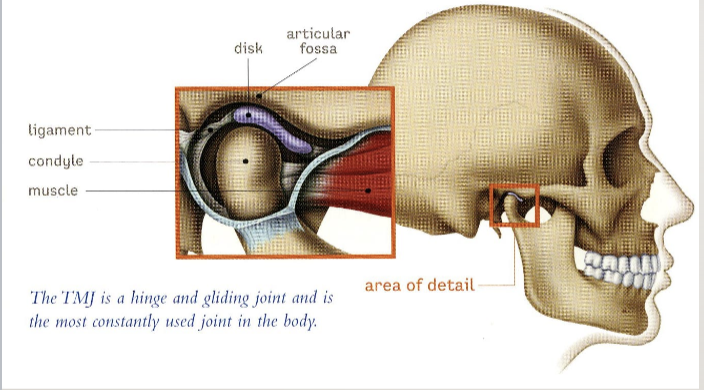
muscles of mastication
temporalis
masseter
lateral pterygoid
medial pterygoid
temporalis origin/insertion/action/innervation
o: temporal line
i: cornoid process of mandible
a: elevation/retrusion
n: trigeminal nerve

masseter origin/insertion/action/innervation
o: zygomatic arch
i: lateral angle/ramus of mandible
a: elevate/protrusion
trigeminal n

lateral pterygoid origin/insertion/action/innervation
o: sphenoid-greater wing/lateral pterygoid plate
i: condyle of mandible/TMJ
a: protrusion/depress; lateral
n: trigeminal

medial pterygoid origin/insertion/action/innervation
o: maxilla/lateral pterygoid plate
i: medial angle/ramus of mandible
a: elevate/protusion; lateral
n: trigeminal n.

facial muscles
facial expression
hewing and moving food in mouth
closing eyelids
neck movement

scalp layers
Skin
Connective tissue
Aponeurosis
Loose connective tissue
Pericranium (periosteum)

meninges of brain
dura mater
connects bone and rest of layers
arachnoid mater
pia mater

meningeal spaces of the brain
epidural space
middle meningeal artery
subdural space
veins
subarachnoid space
cerebrospinal fluid

organization of the brain
cerebral hemisphere
diencephalon
cerebellum (baby brain)
brain stem
midbrain
pons
medulla oblongata

cerebrum features and divided by what
largest part of brain
hemispheres divided by diencephalon

cerebral cortex function
highest mental and behavioral activities controlled here
conscious and unconscious skeletal muscle contraction

what are the cerebral lobes
frontal lobe
parietal lobe
temporal lobe
occipital lobe

frontal lobe function
Primary motor cortex
conscious control of skeletal muscles
Planning behavior
language production
parietal lobe function
primary sensory cortex
conscious perception of touch, pressure, vibration, pain, temperature, and taste
spatial orientation
language comprehension
occipital lobe funtion
visual cortex
conscious perception of visual stimuli
temporal lobe function
auditory and olfactory cortices
conscious perception of auditory and olfactory stimuli

cerebellum function
coordination of movement
regulate posture and reflexes


what part of the brain is this
cerebellum
diencephalon function and contents
thalamus (mailroom)
relaying/processing sensory information
hypothalamus
control of autonomic functions and hormone regulation
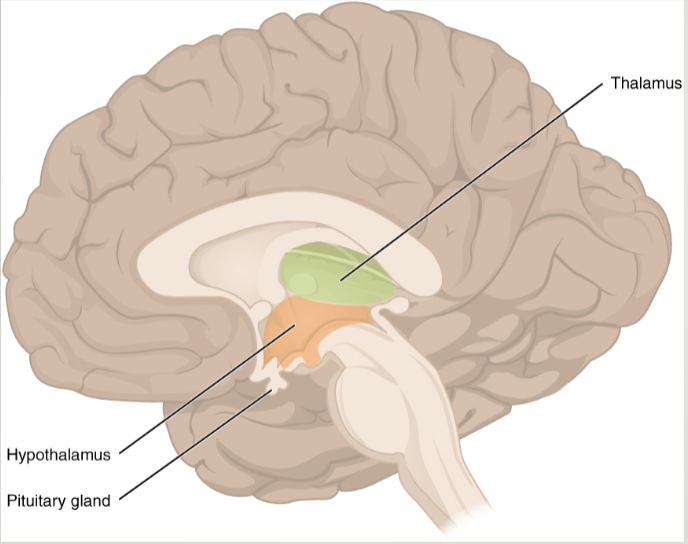
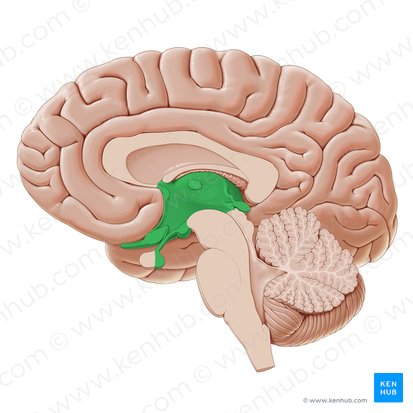
what part of the brain is this
diencephalon
brain stem function and contents
most inferior part of brain
autonomic control of respiration, heart rate
3 parts
midbrain
pons
medulla oblongata

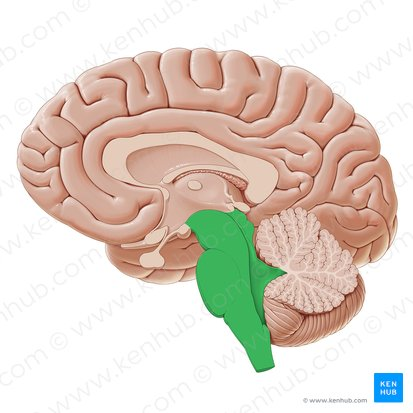
what part of the brain is this
brain stem

label the parts of the brain stem
mid brain
pons
medulla oblongata
cranial nerves: how many and types
12 pairs
3 types
motor
sensory
both
cranial nerves
Oh, Oh, Oh To Touch And Feel Very Good Velvet, Ah Heaven
olfactory
optic
occulomotor
trochelar
trigeminal
abducens
facial
vestibulocochlear
glossopharyngeal
vagus
accessory
facial
Cranial Nerve I: name/type/function
Olfactory
sensory
smell

Cranial Nerve II: name/type/function
Optic
sensory
vision

Cranial Nerve III, IV, & VI: name/type/function
Occulomotor, trochlear, & abducens
motor
eye movement
occulomotor: pupil dilation
trochlear: superior oblique (diagonal - up and to the sides)
abducens: abduction

Cranial Nerve V: name/type/function
trigeminal
motor & sensory
face movement and sensation (mastication muscles)

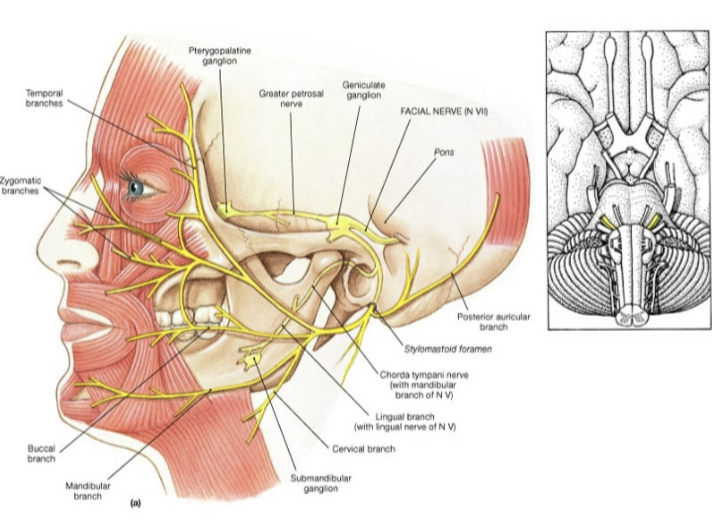
Cranial Nerve VII: name/type/function
facial
motor & sensory
face movement and sensation
Cranial Nerve VIII: name/type/function
vestibulocochlear
sensory
hearing & vestibular sensation (balance)

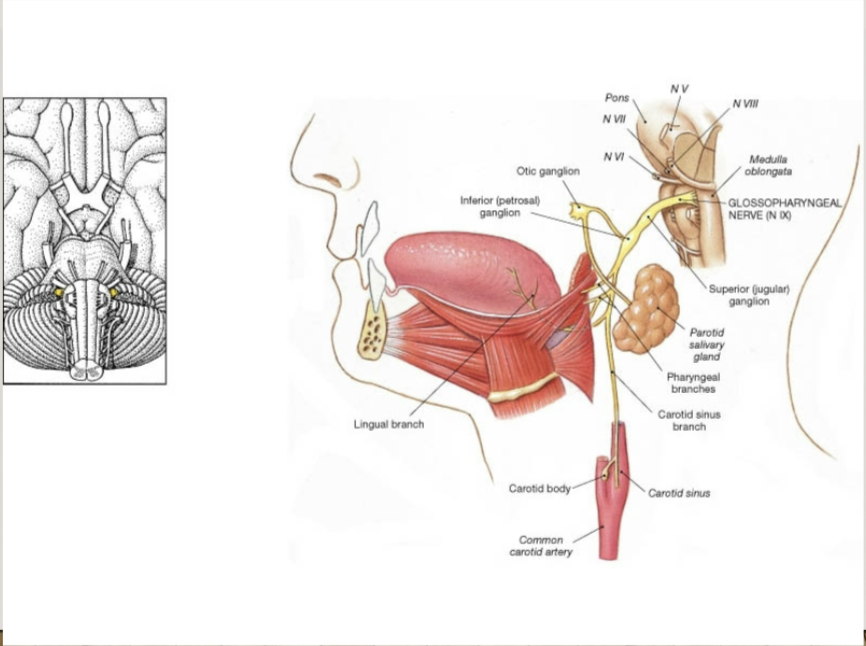
Cranial Nerve IX: name/type/function
Glossopharyngeal
motor & sensory
taste and speech
Cranial Nerve X: name/type/function
Vagus
motor & sensory
taste, speech, visceral function (slow heart rate)

Cranial Nerve XI: name/type/function
Accessory
motor
head and neck muscles (shoulder elevation)

Cranial Nerve XII: name/type/function
Hypoglossal
motor
tongue movement - speech & swallowing

Sensory cranial nerves
Taste: VII, IX, X
Hearing and balance: VIII
Sensation - external ear: VII, IX, X
Sensation - carotid body & sinus, pharynx, larynx: IX, X
Motor cranial nerves
Eye muscles: III, IV, VI
Tongue: XII
SCM and trapezius: XI
mm. mastication: V
mm. facial expression VII
mm. speech and swallowing: IX, X
Parasympathetic
Pupillary constriction and lens accommodation: III
Lacrimal gland, nasal mucosa, submandibular and sublingual glands: VII
Parotid gland: IX
Upper gastrointestinal tract: X
Cranial Nerve type mnemonic
Some Say Marry Money, But My Brother Says Big Brains Matter More
Sensory - olfactory
Sensory - optic
Motor - oculomotor
Motor - trochlear
Both - trigeminal
Motor - abducens
Both - facial
Sensory - vestibulocochlear
Both - glossopharyngeal
Both - vagus
Motor - accessory
Motor - hypoglossal