NON COLORED BRAIN (copy)
 Call Kai
 Learn
 Practice Test
 Spaced Repetition
 Match
 Flashcards
 Knowt Play
1/62

There's no tags or description
Looks like no tags are added yet.
63 Terms
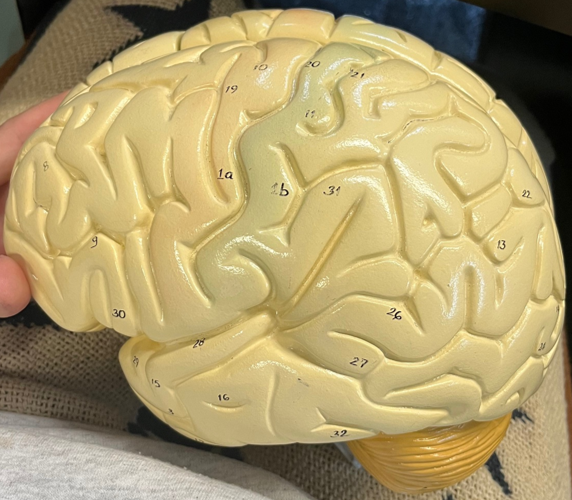
1a
primary motor cortex, voluntary skeletal muscle control
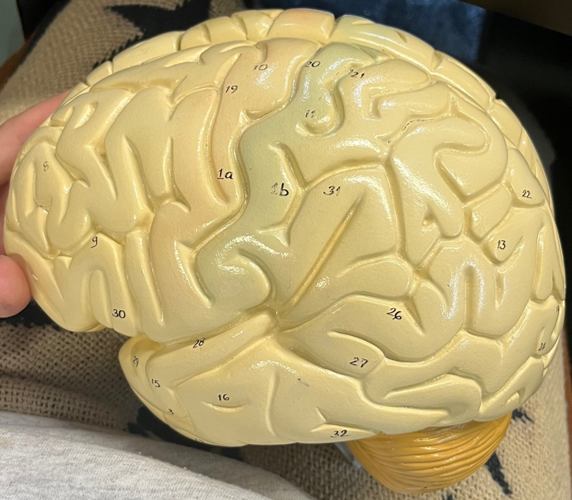
1b
primary somatosensory cortex, processes somatic sensory information
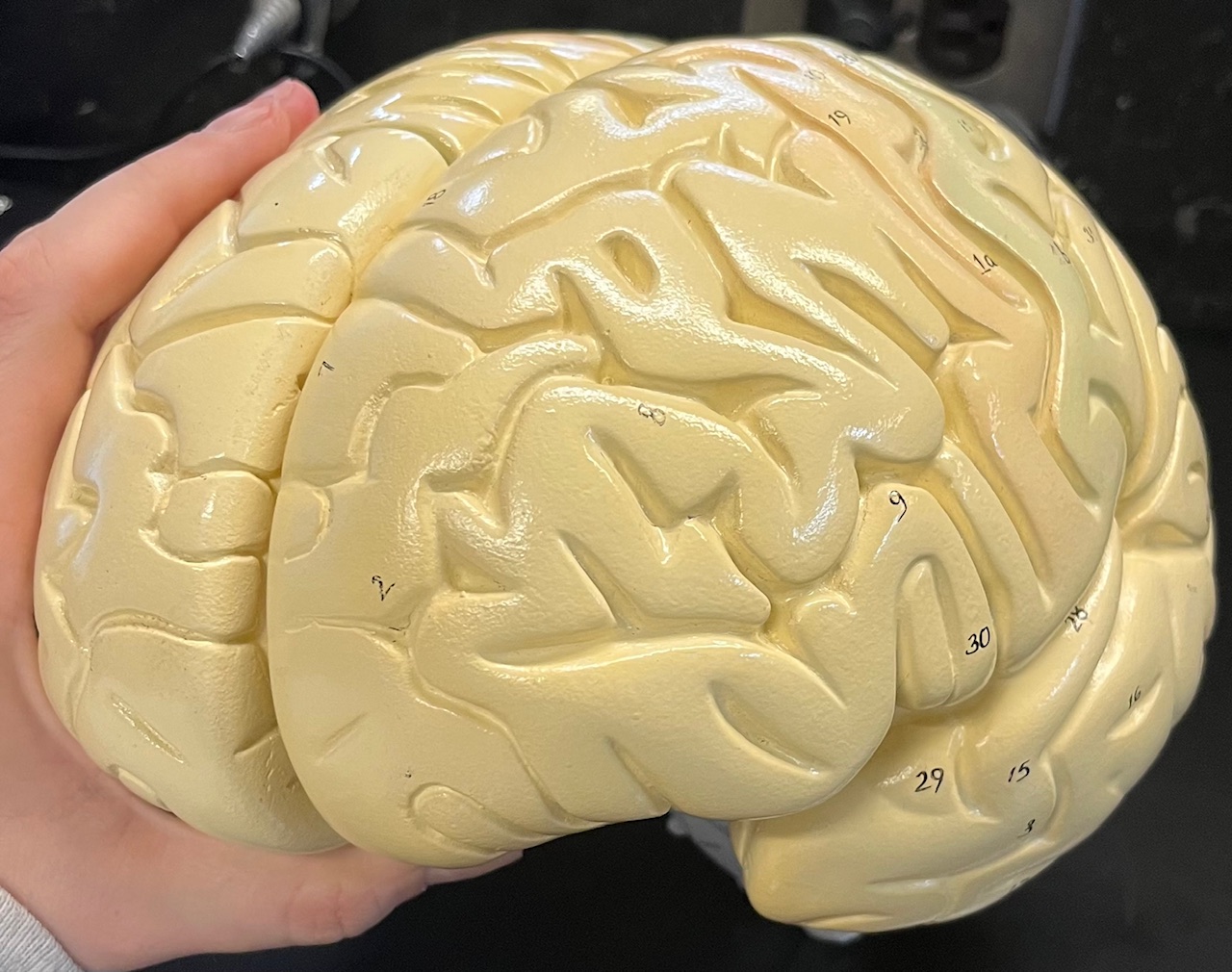
2
frontal lobe, complex reasoning
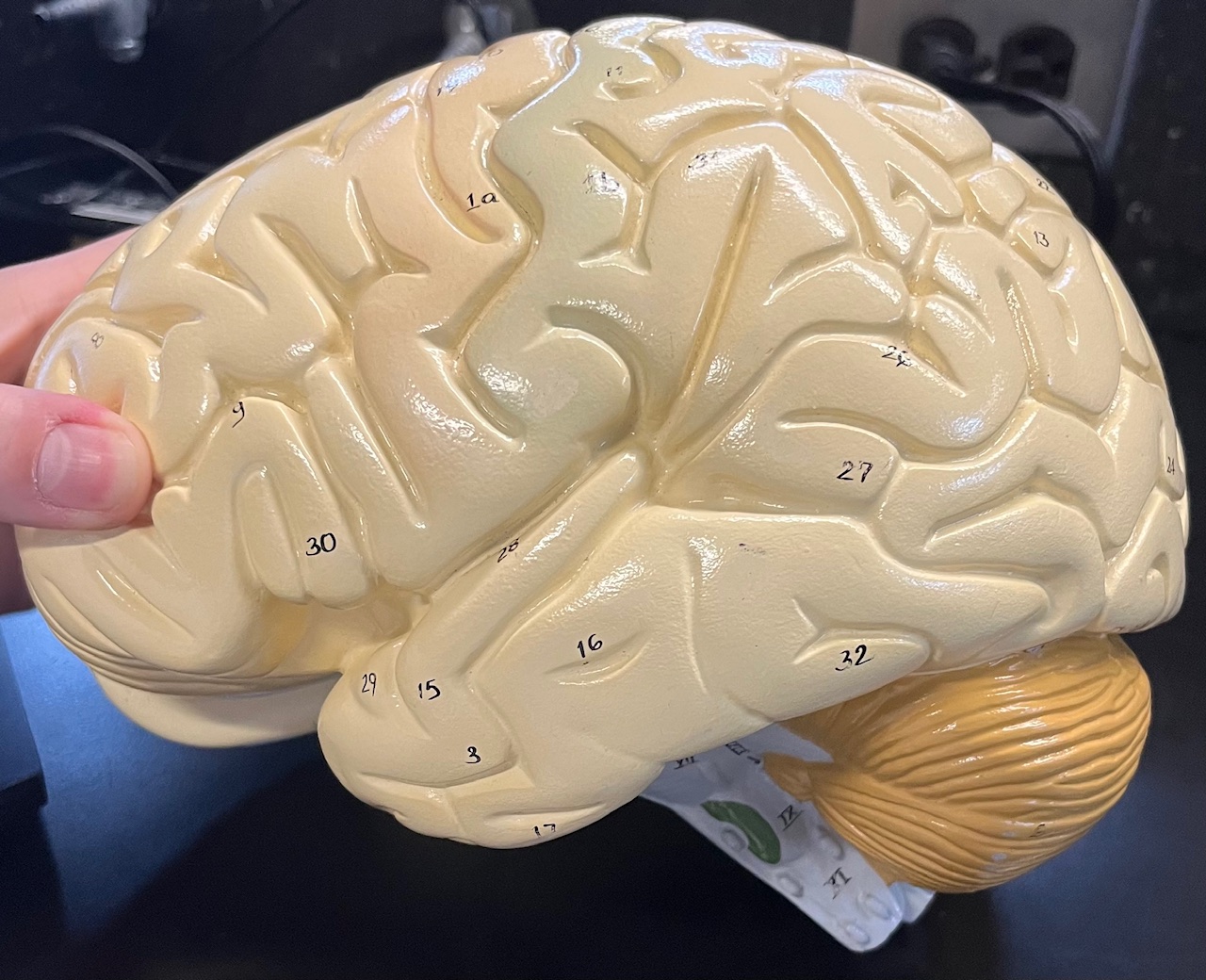
3
temporal lobe, processes auditory information
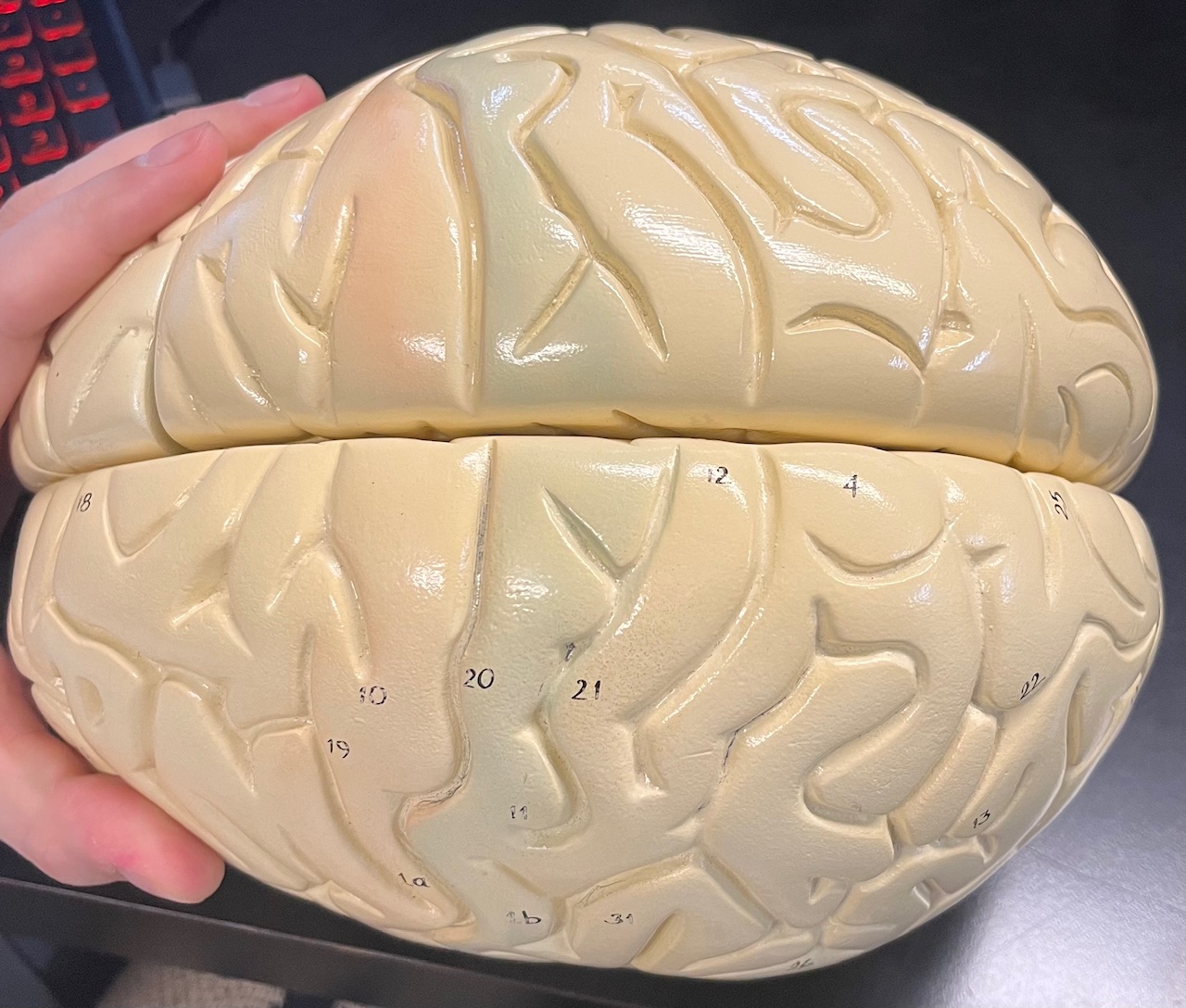
4
parietal lobe, processes sensory information
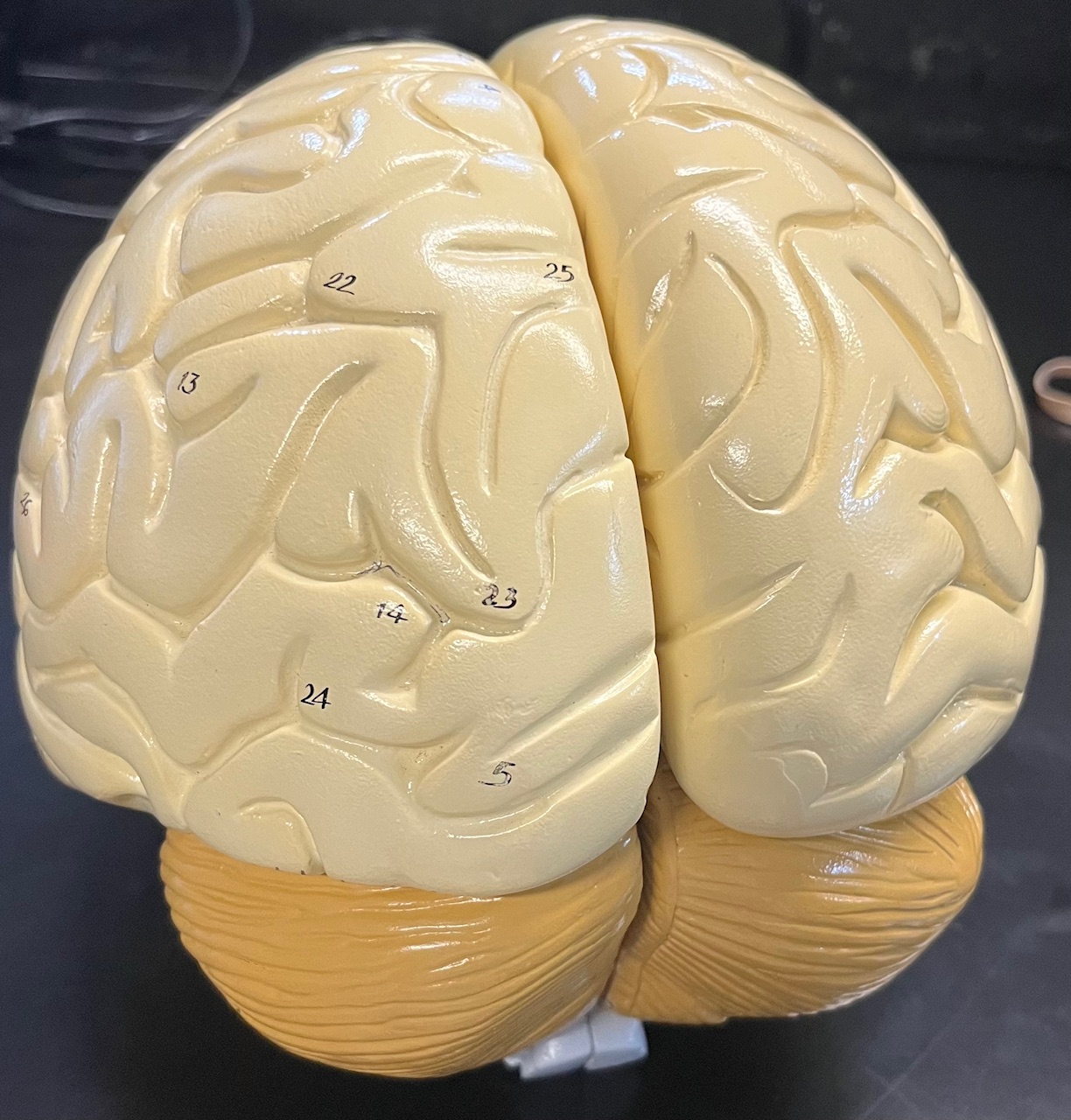
5
occipital lobe, processes visual information
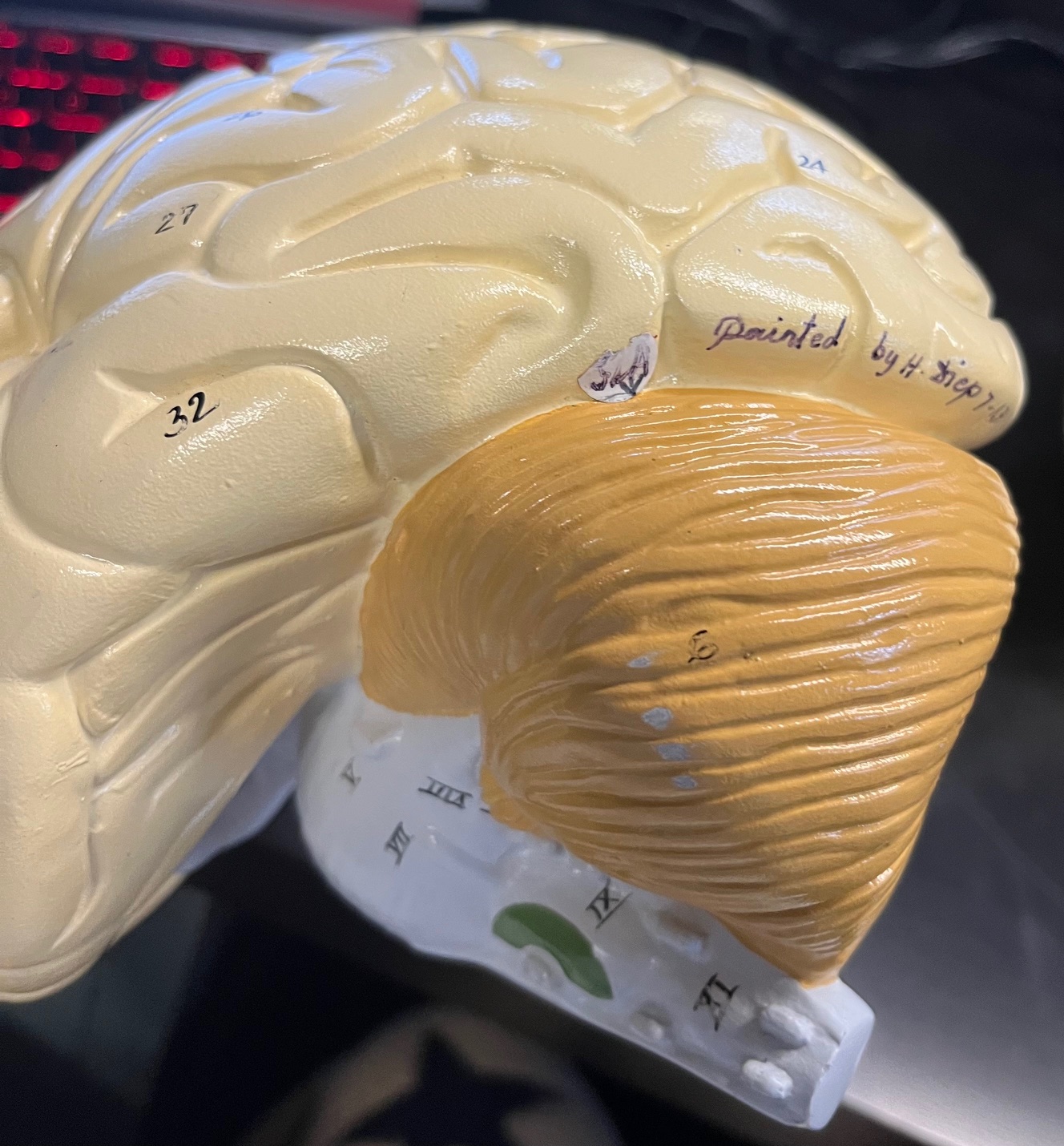
6
cerebellum, balance and equilibrium
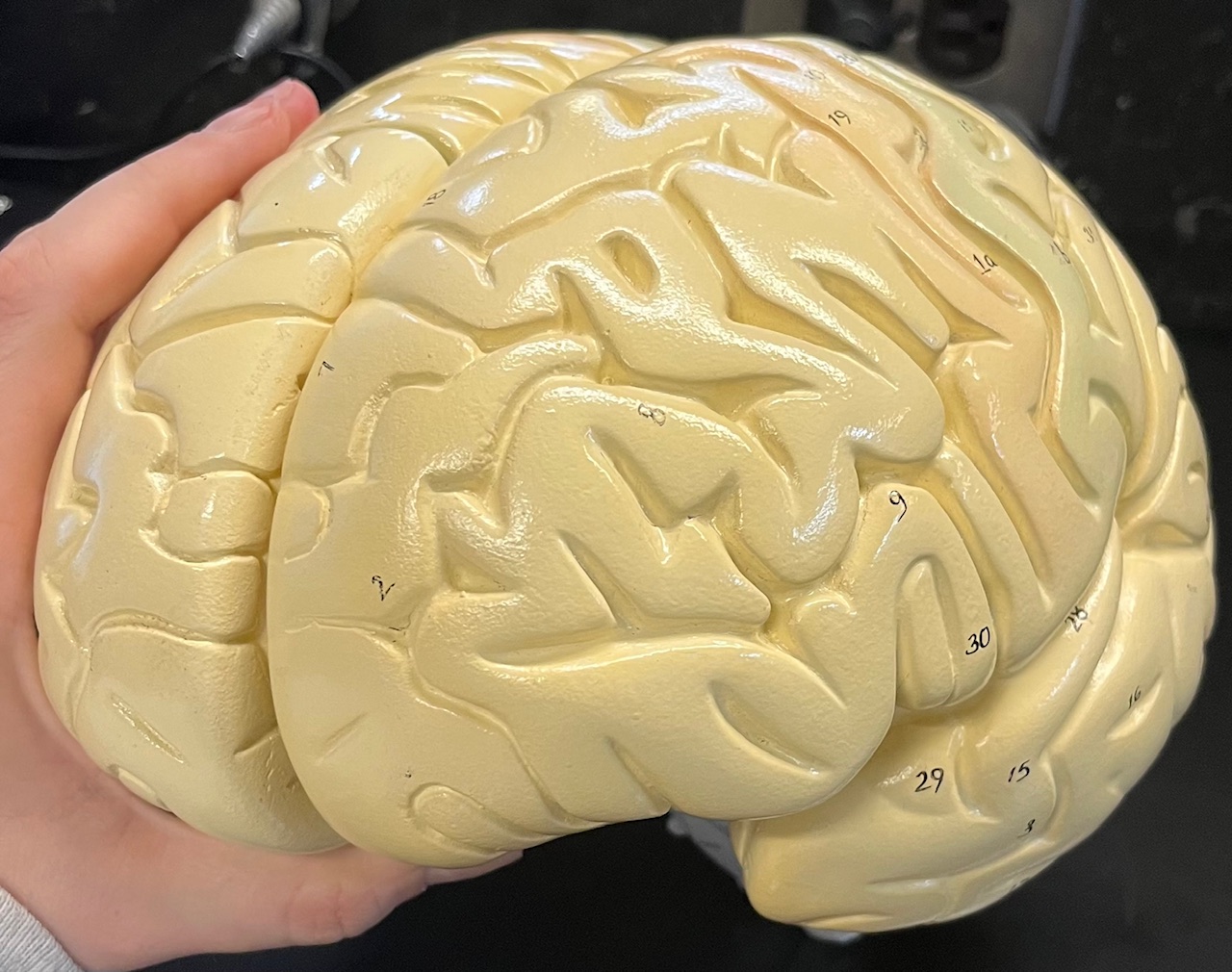
8
gyrus, increase brain surface area
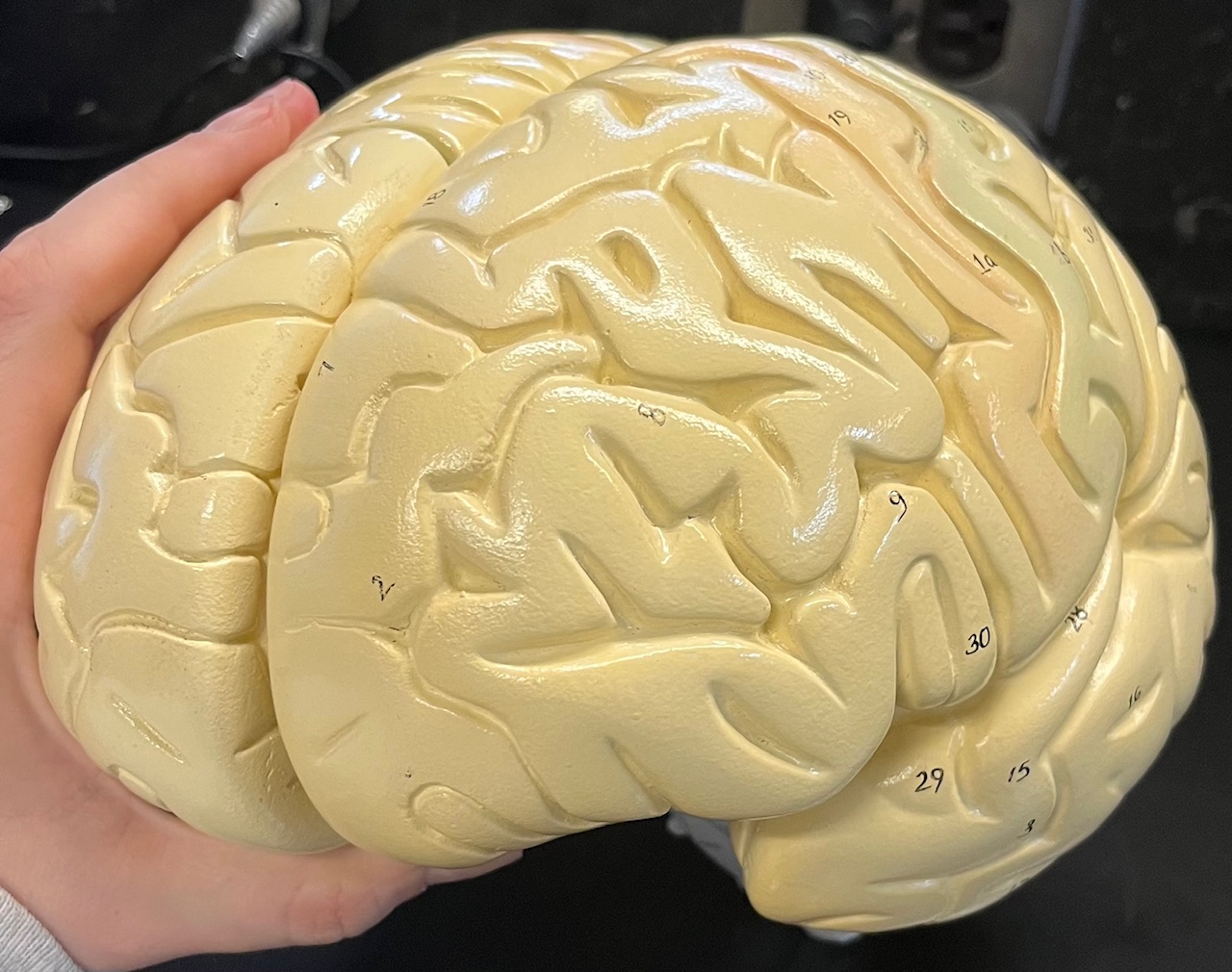
9
sulcus, increase brain surface area
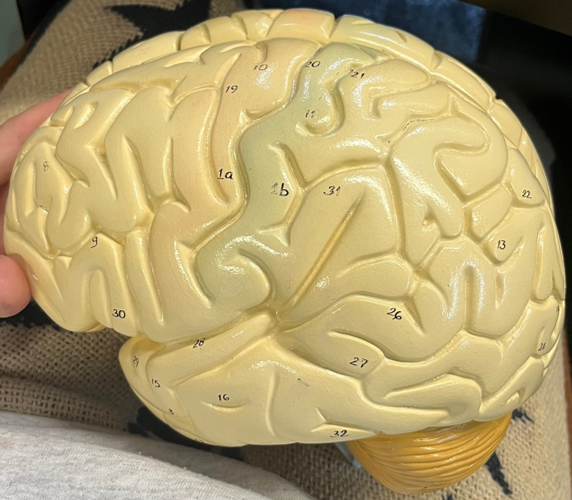
10
precentral gyrus, voluntary skeletal muscle control
11
postcentral gyrus, processes sensory information
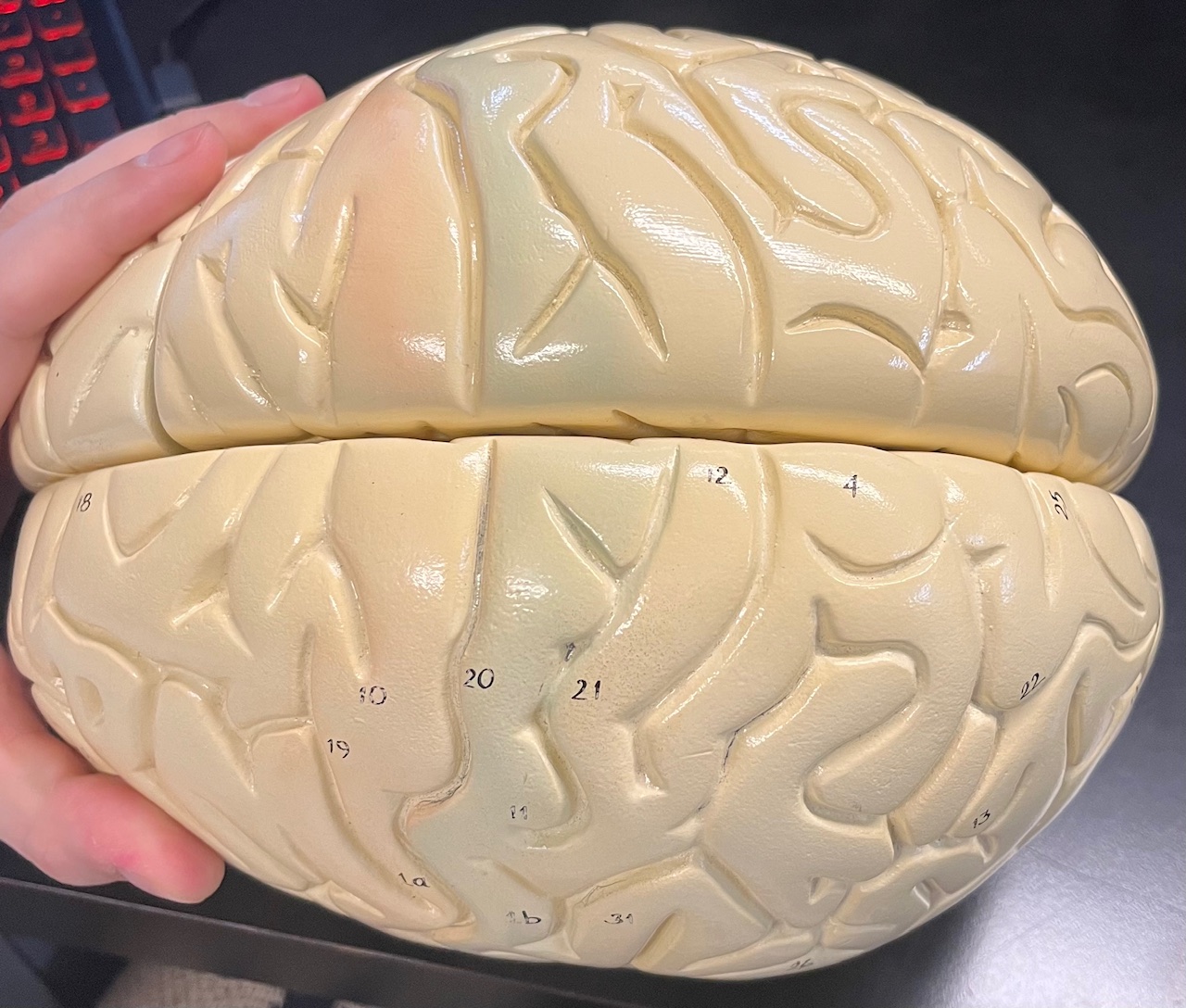
20
central sulcus, separates frontal lobe from parietal lobe
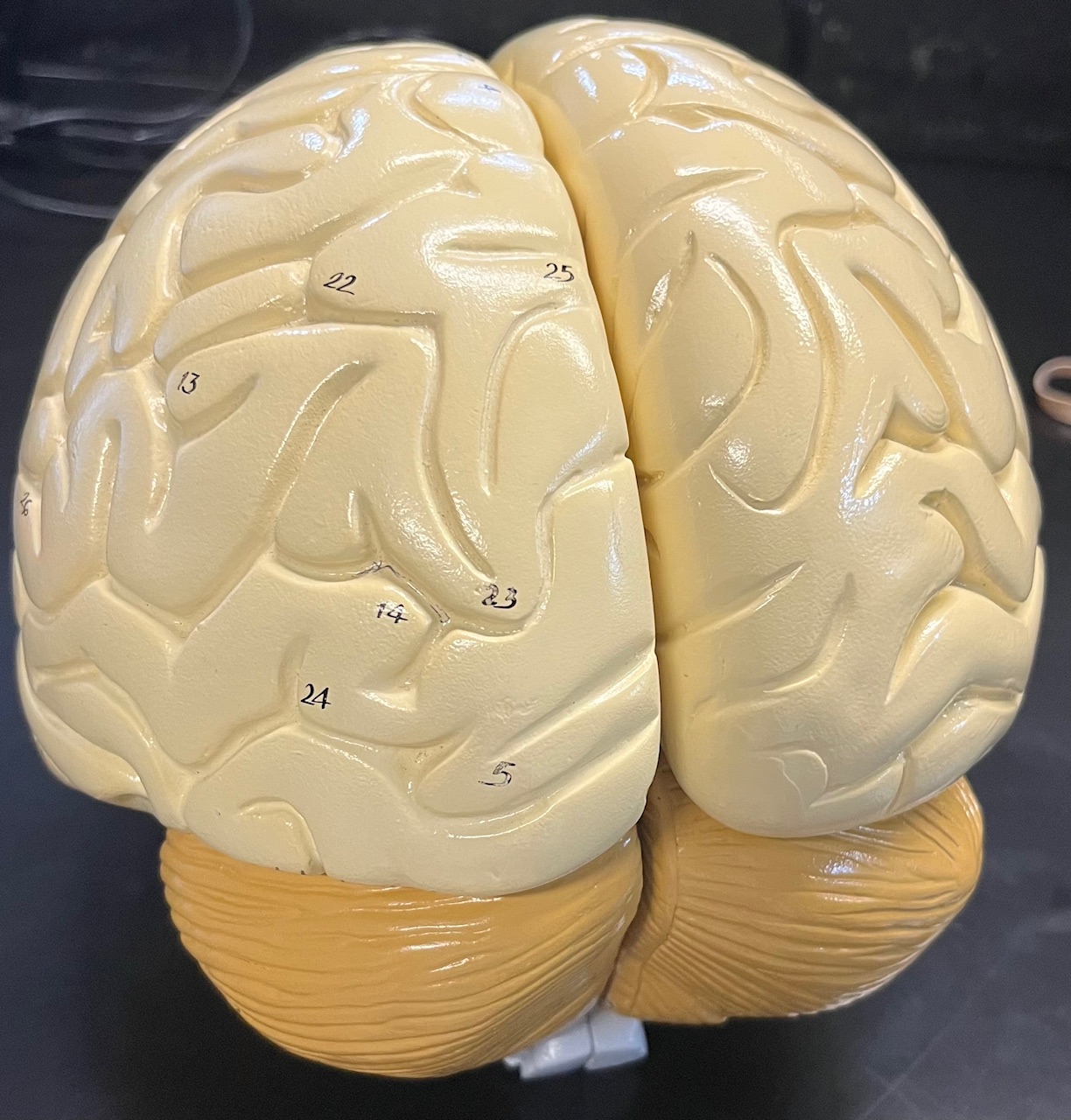
25
parieto-occipital sulcus, separates parietal lobe from occipital lobe
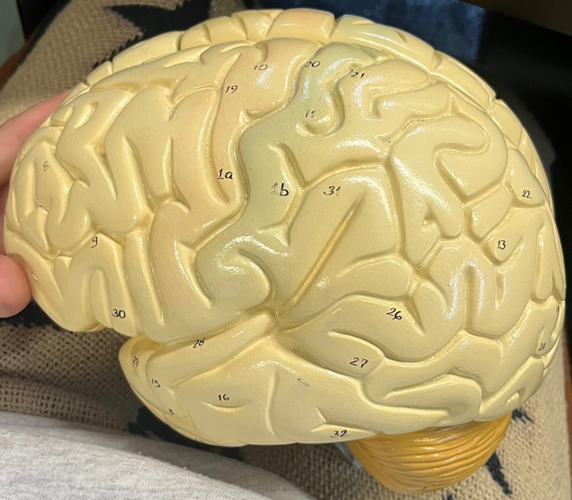
28
lateral sulcus, separates temporal lobe from parietal lobe
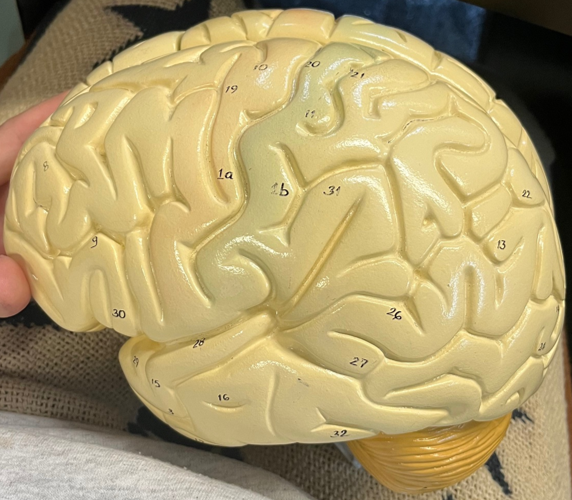
31
left cerebral hemisphere, language
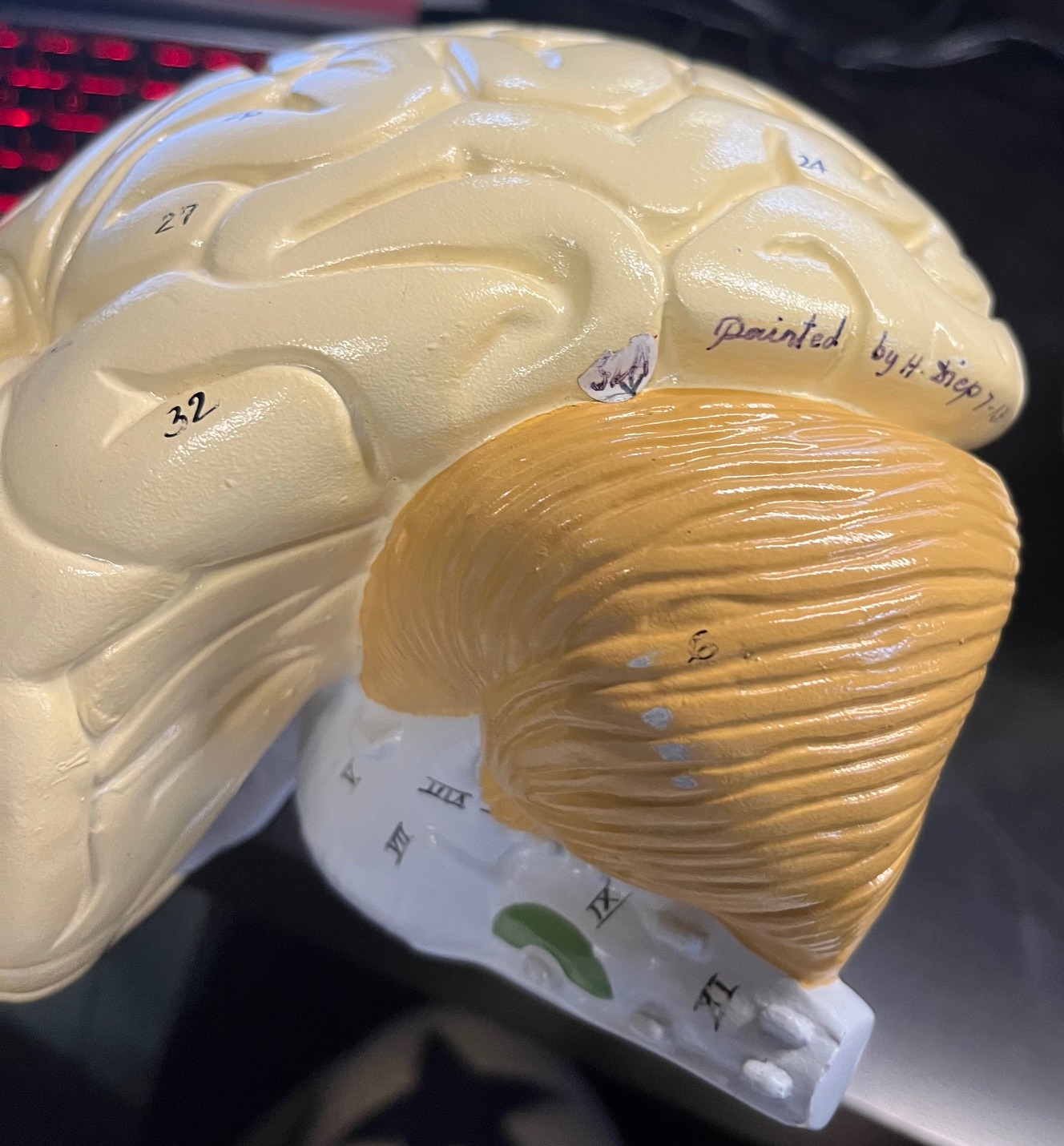
32A (white sticker)
transverse fissure, separates cerebral hemispheres from cerebellum
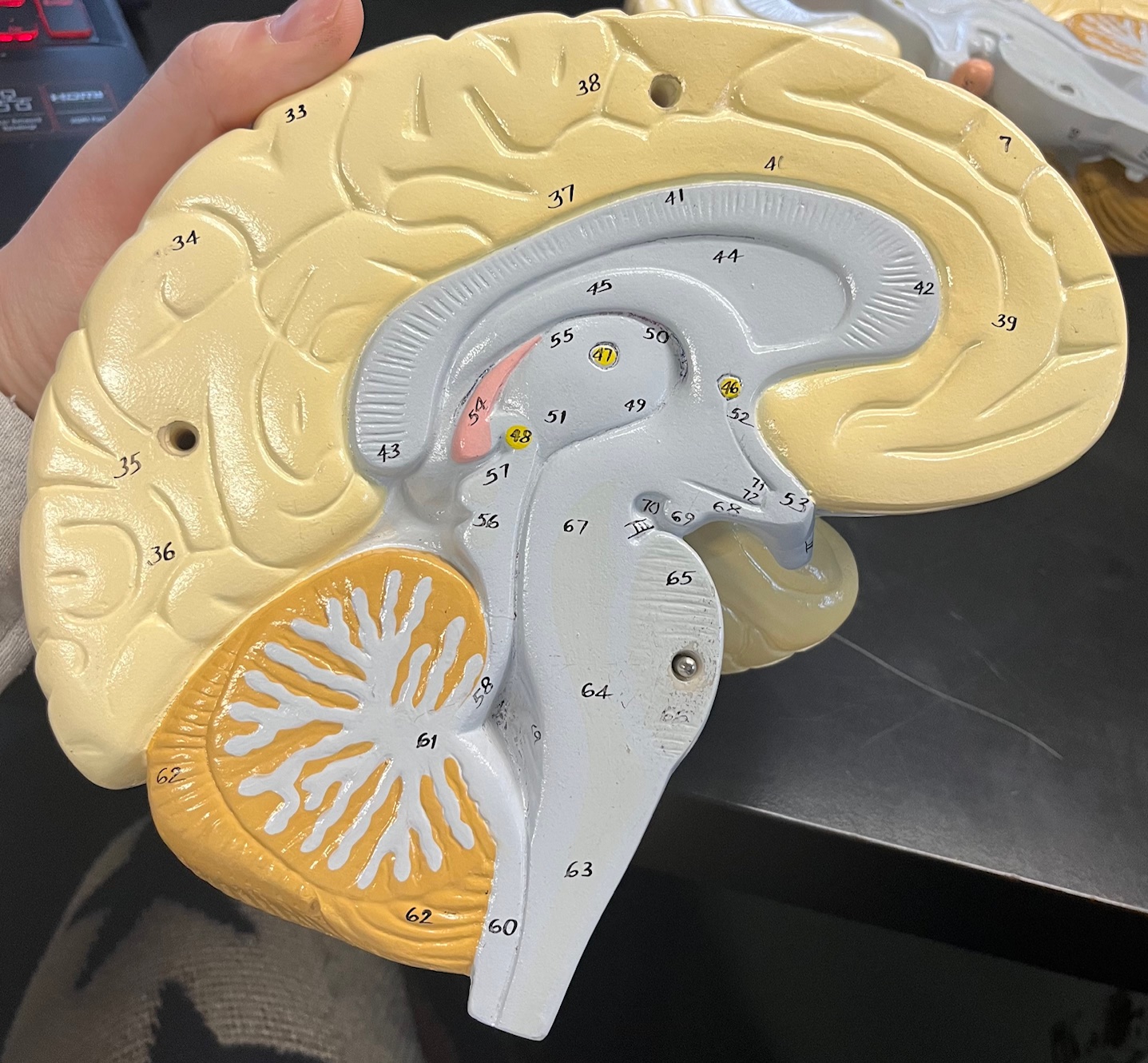
33
longitudinal fissure, separates cerebral hemispheres
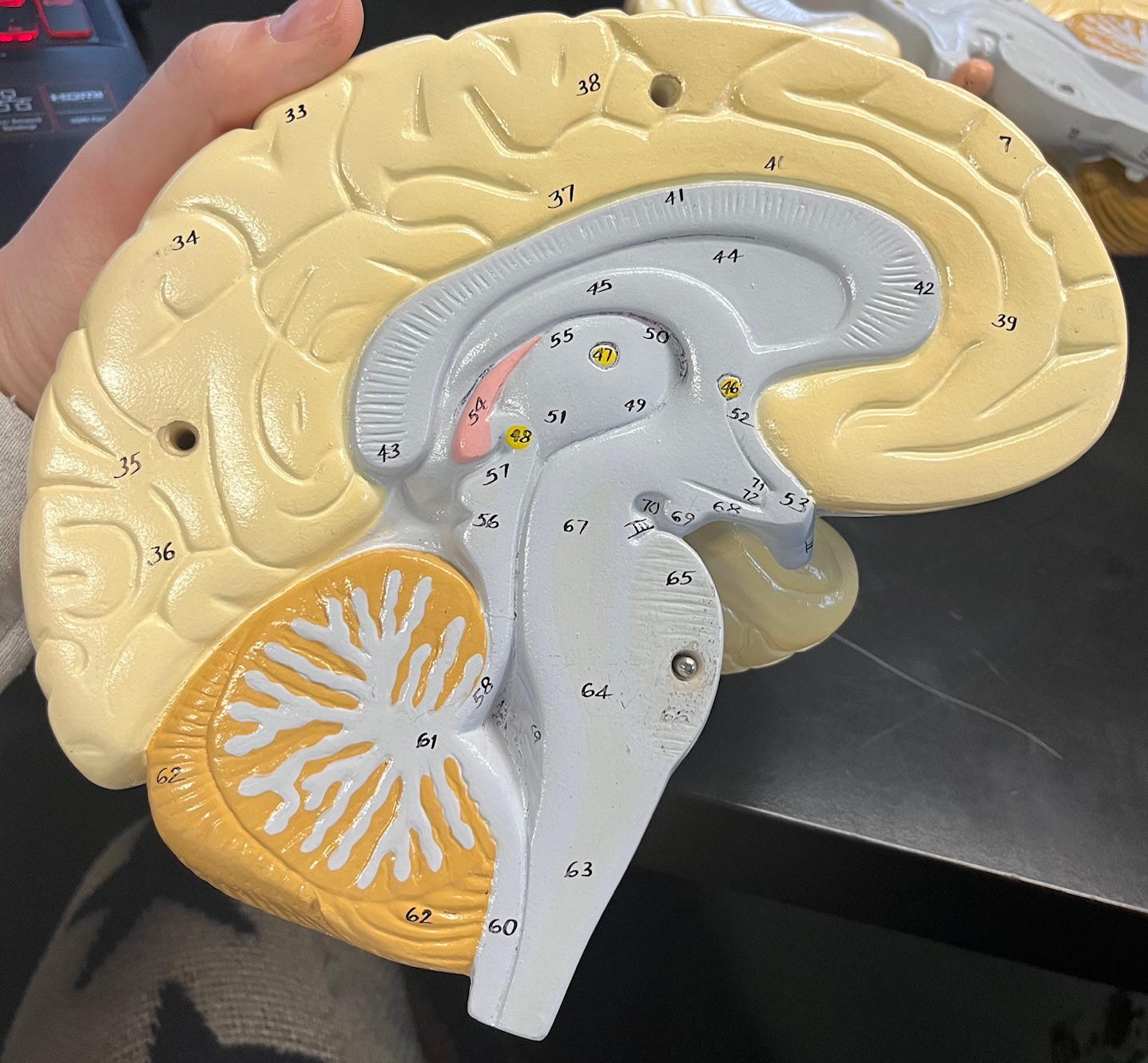
41
corpus callosum, allows communication between cerebral hemispheres
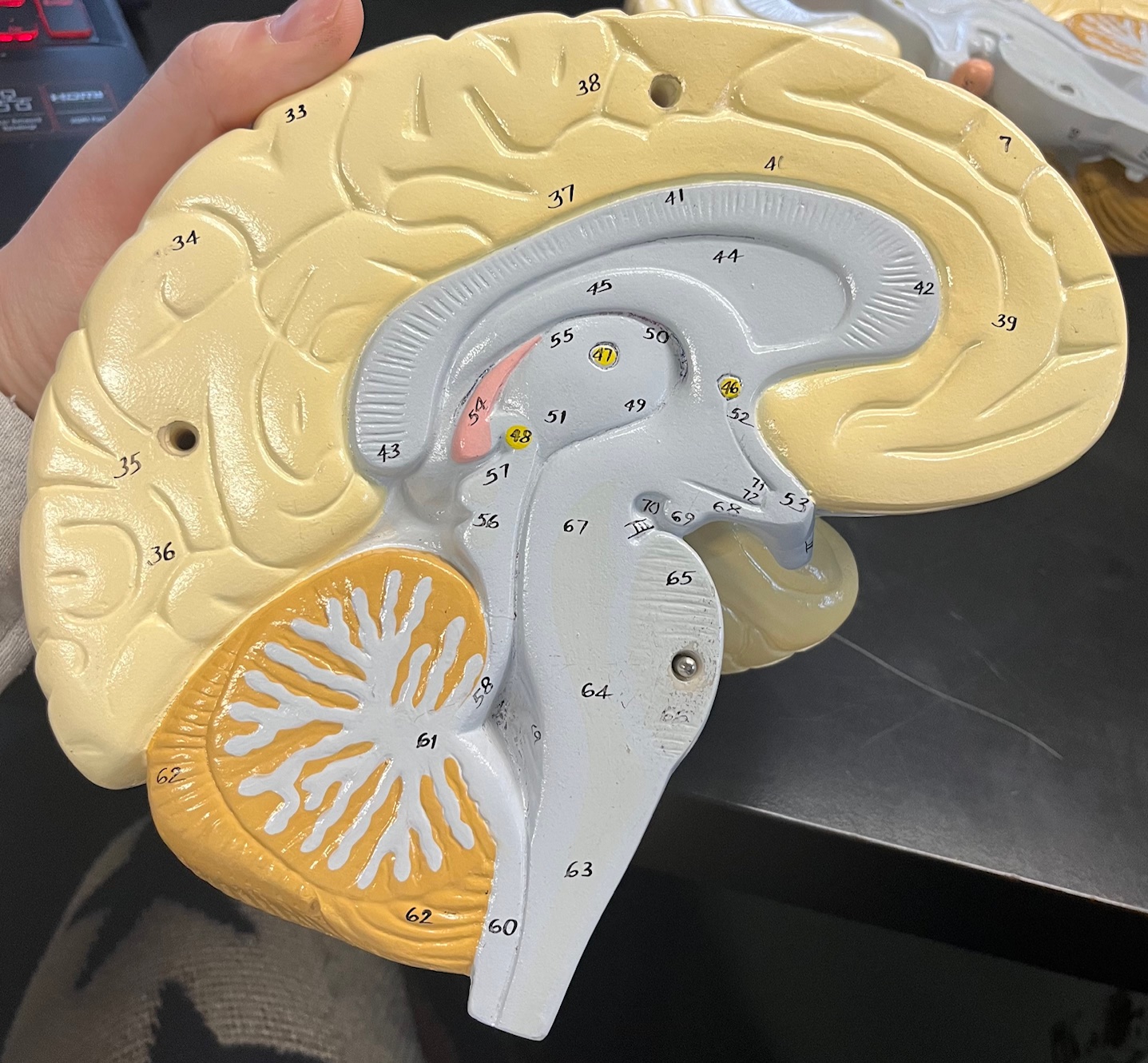
44
septum pellucidum, separates lateral ventricles
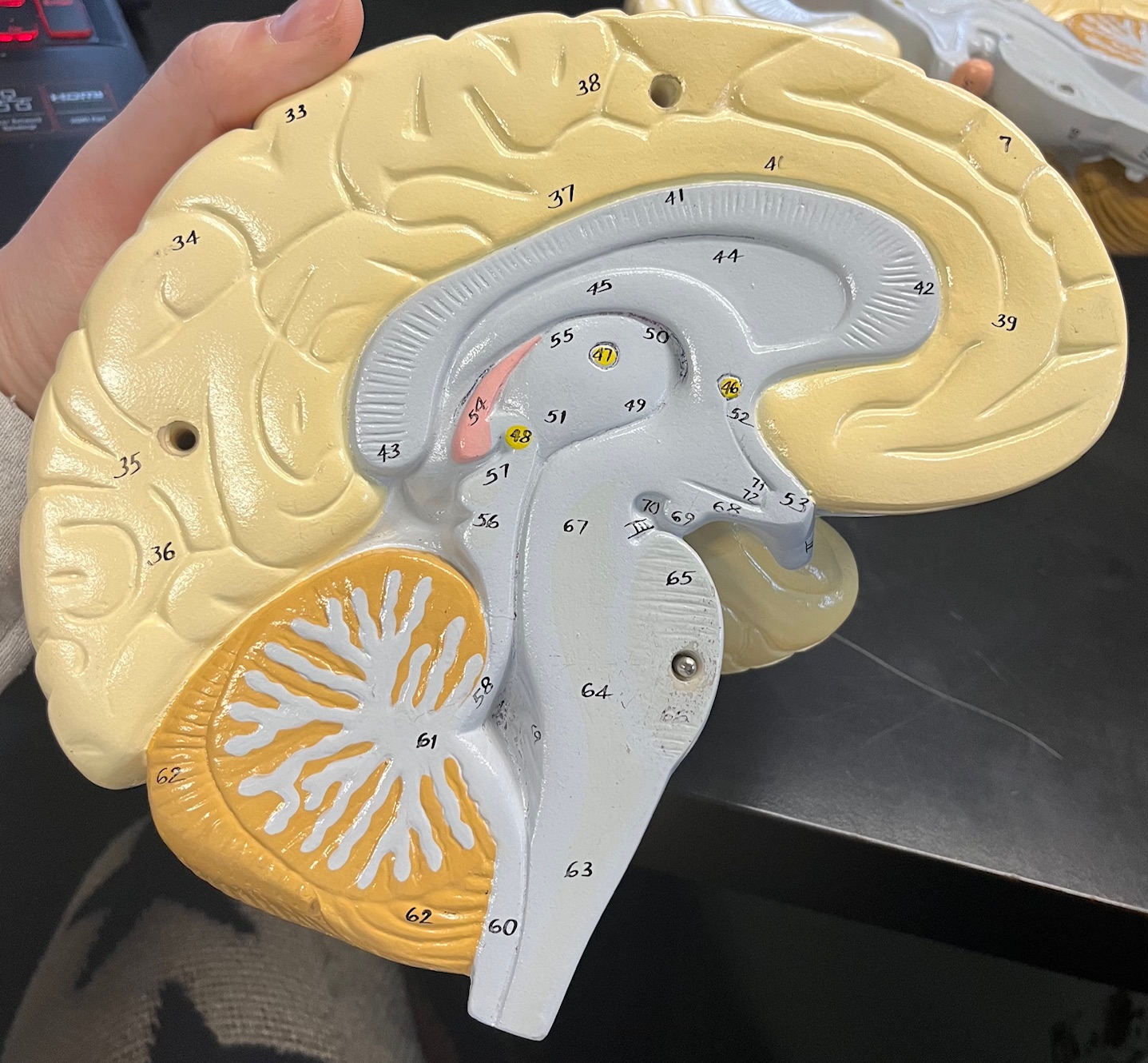
45
fornix, concerned with olfaction
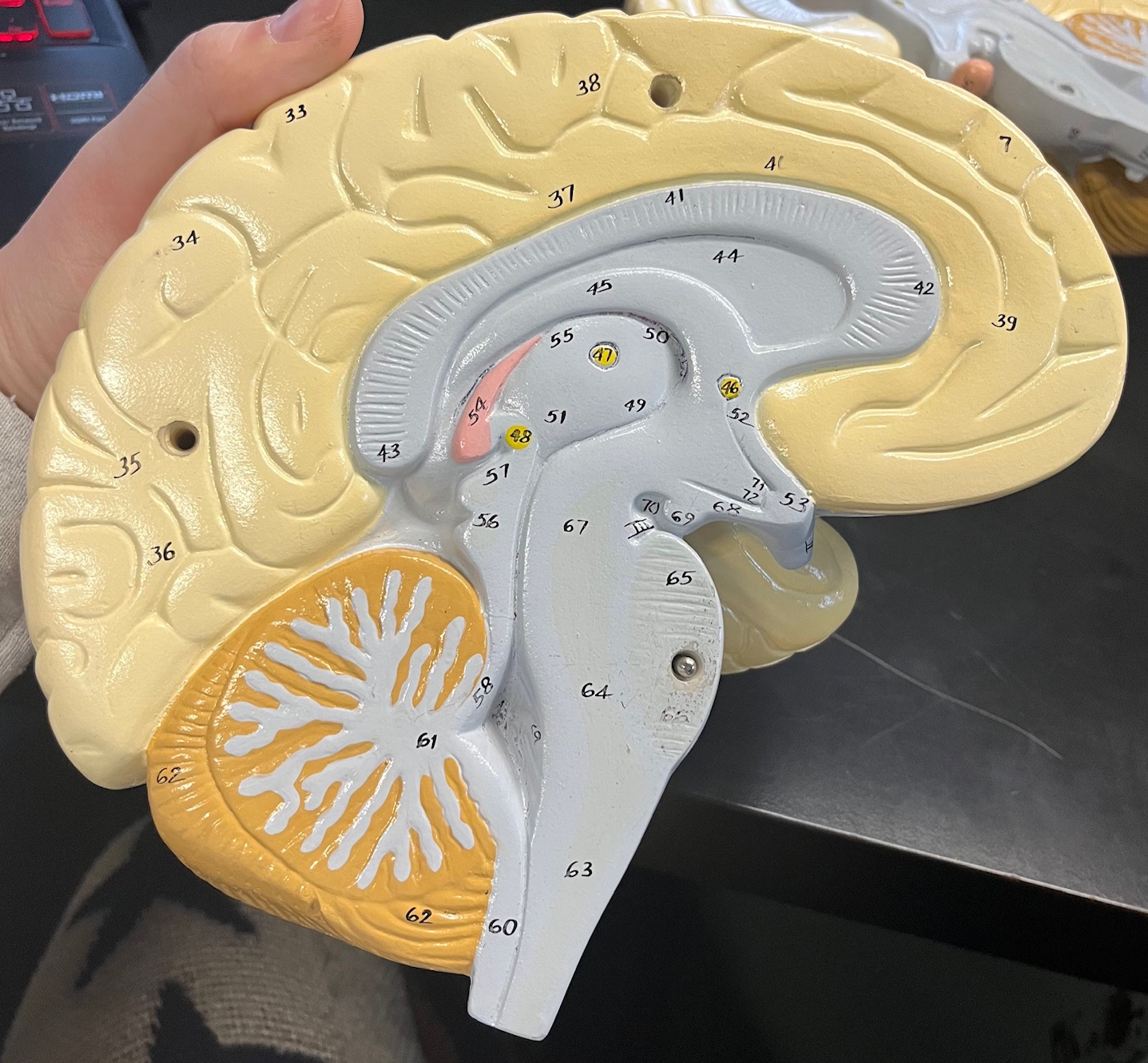
46 (yellow dot)
anterior commissure, allows communication between cerebral hemispheres
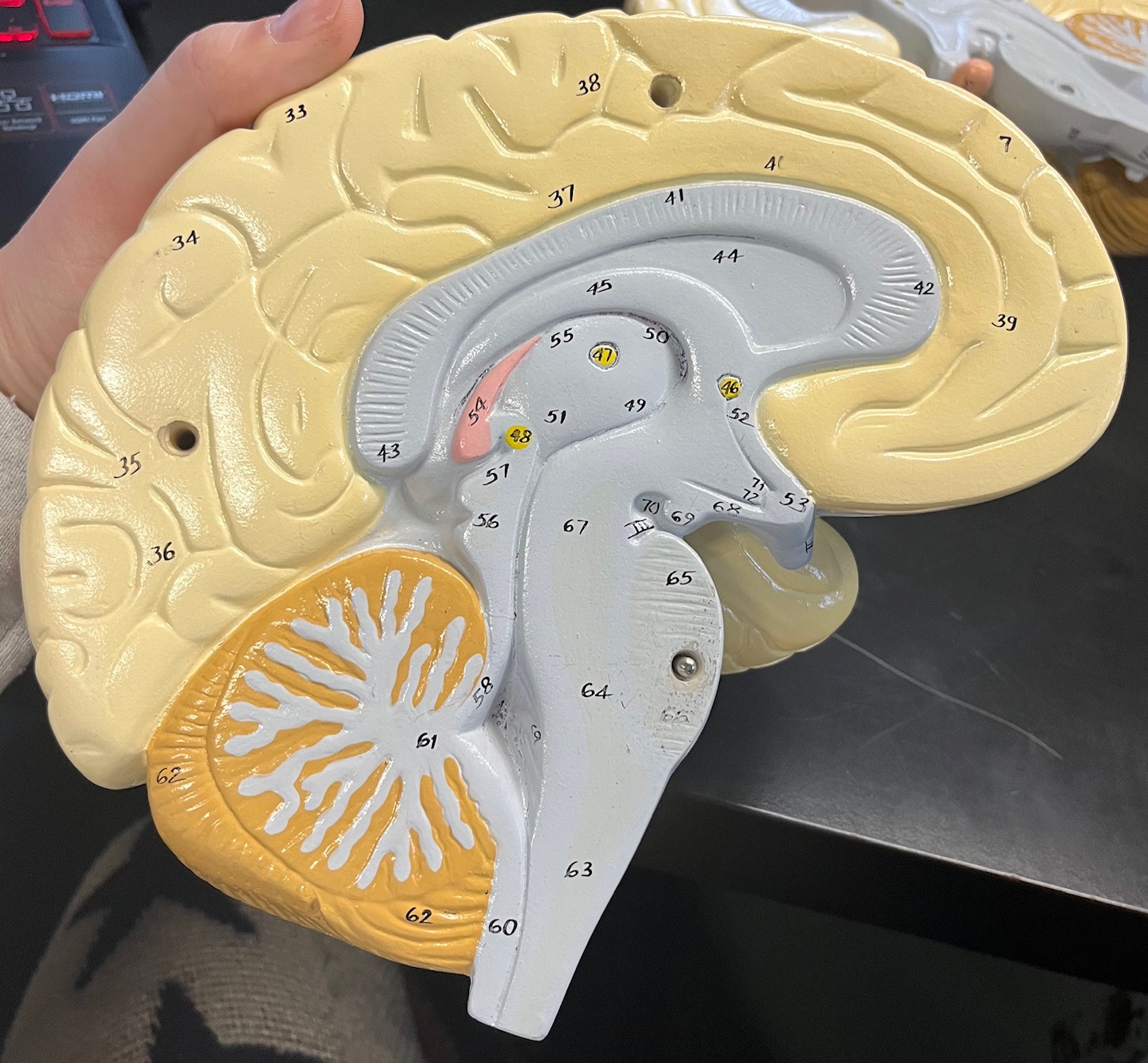
47 (yellow dot)
intermediate mass of thalamus, connects thalamic lobes
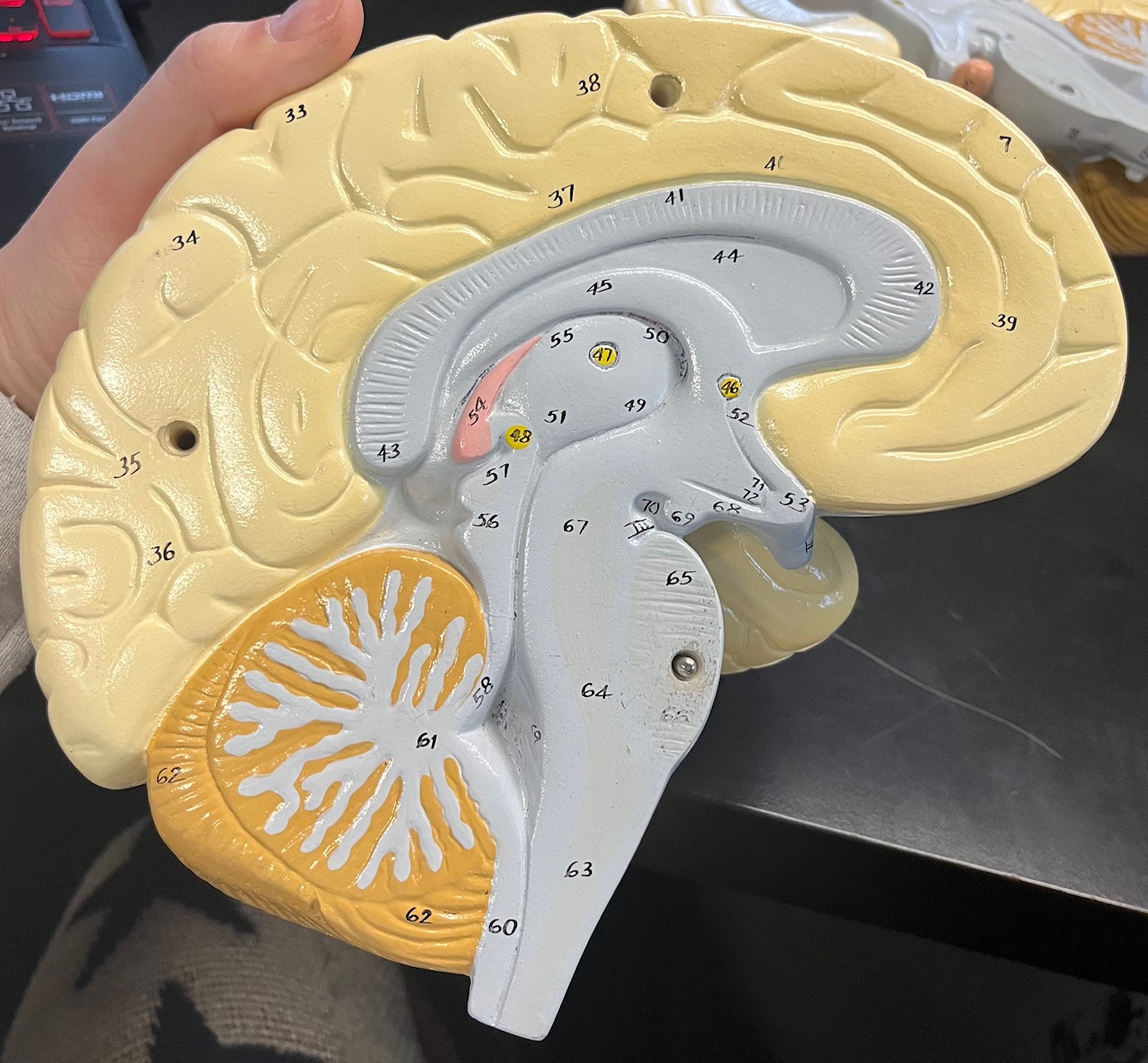
49
thalamus, relay station for sensation except smell
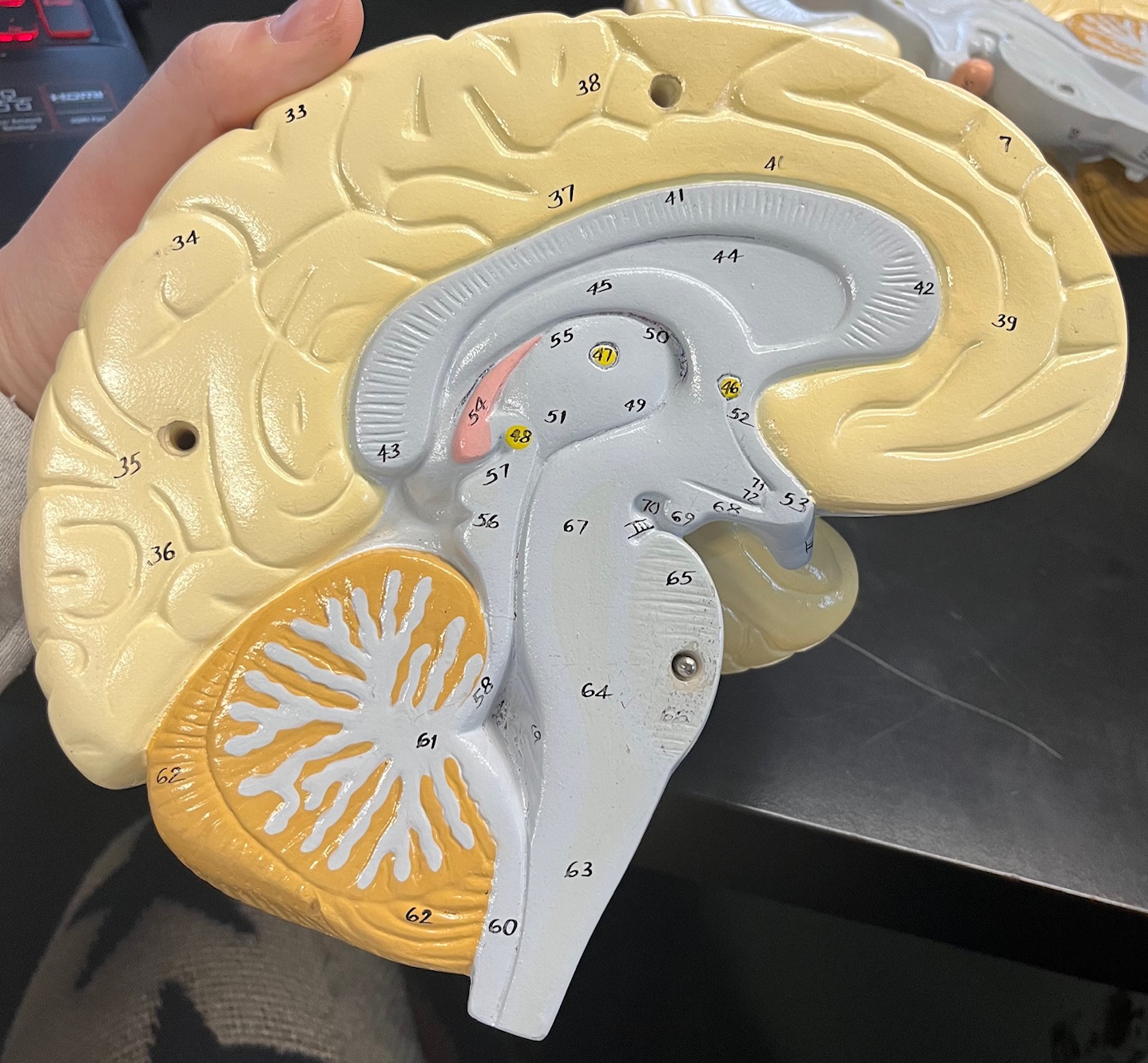
50
interventricular foramen, takes CSF from lateral ventricles to third ventricle
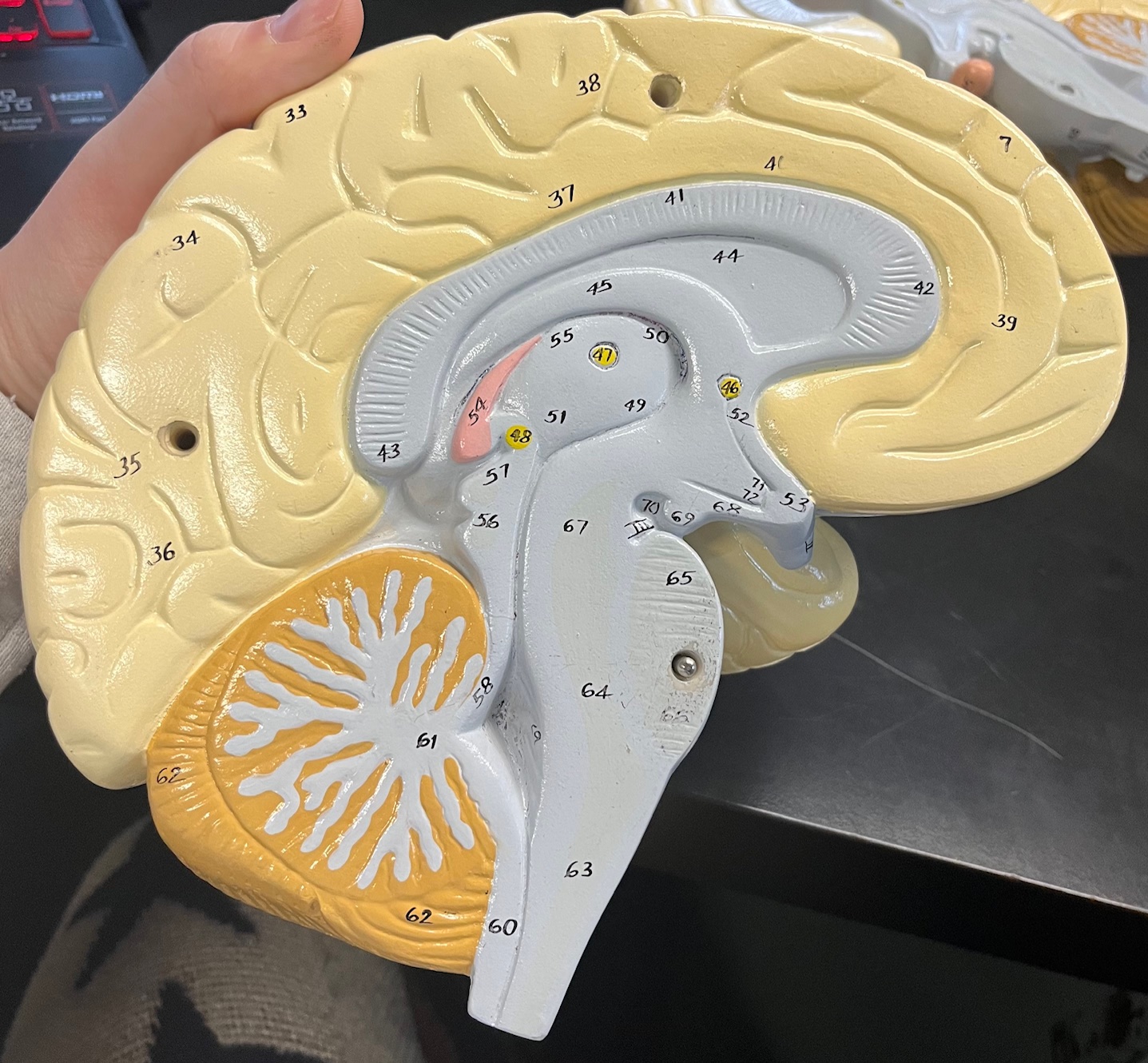
53
optic chiasma, area where medial portion of optic nerves cross
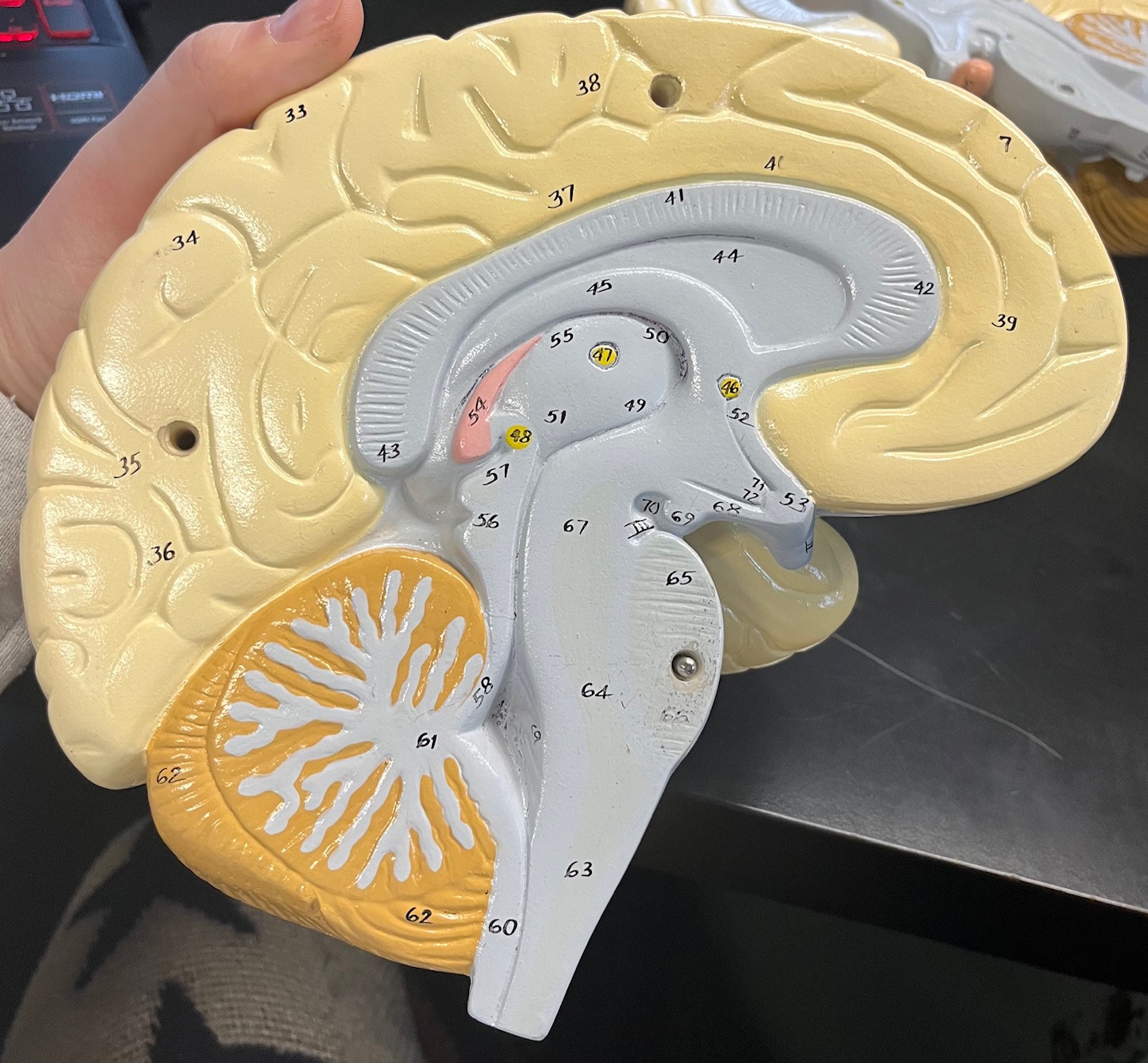
48 (yellow dot)
posterior commissure, allows communication between cerebral hemispheres
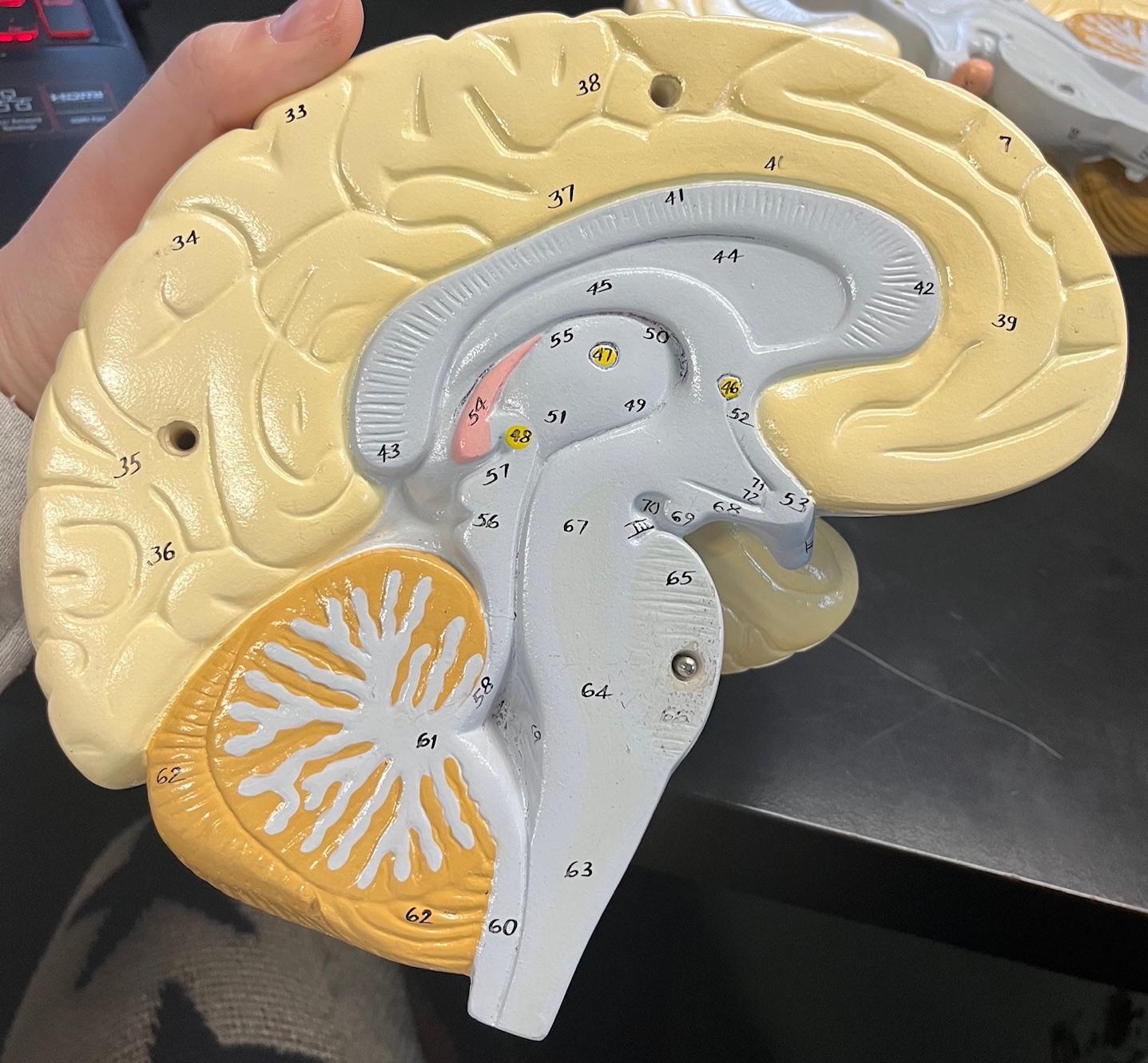
54
choroid plexus, makes CSF
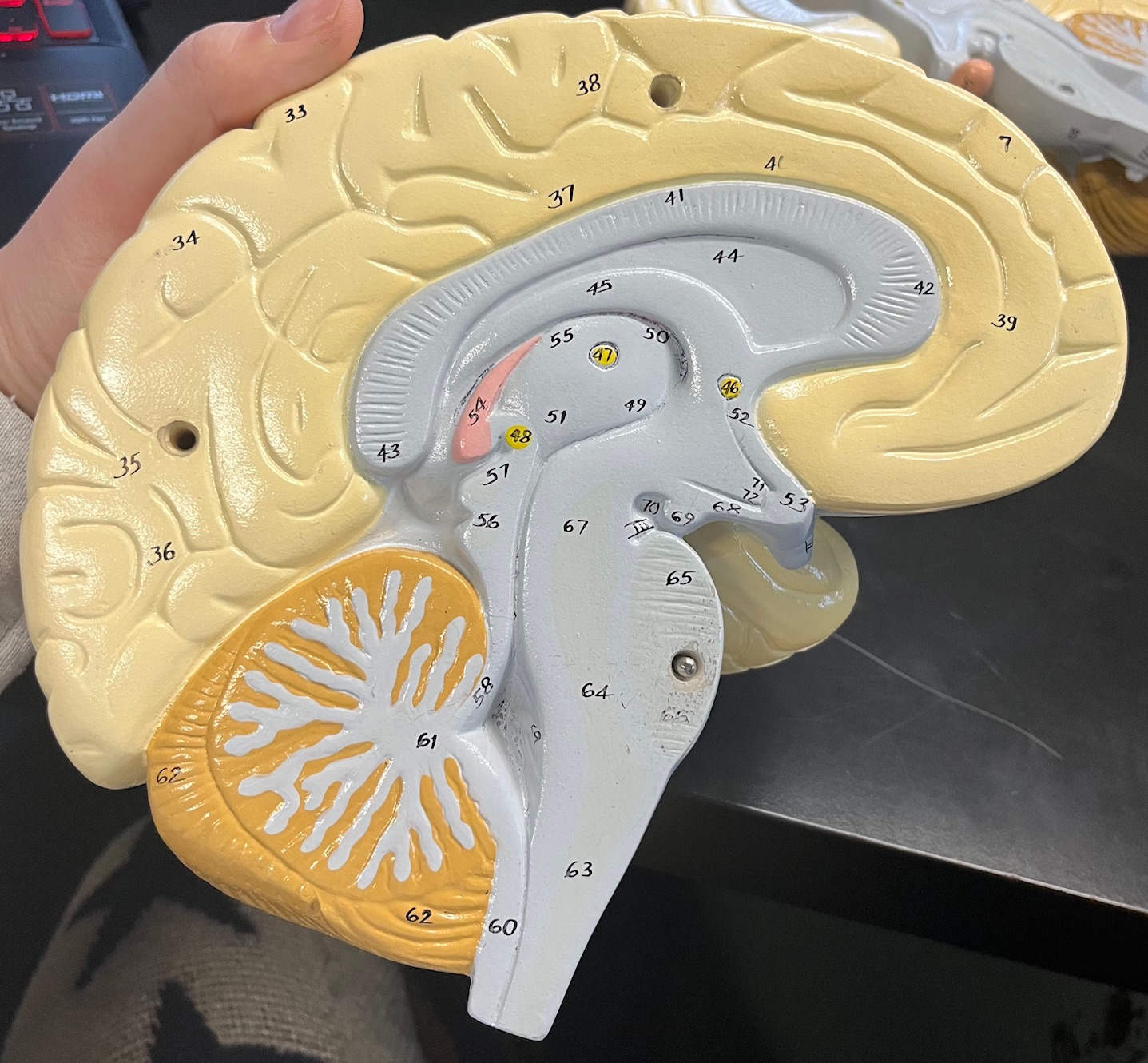
56
inferior colliculi of corpora quadrigemina, contains auditory reflex center
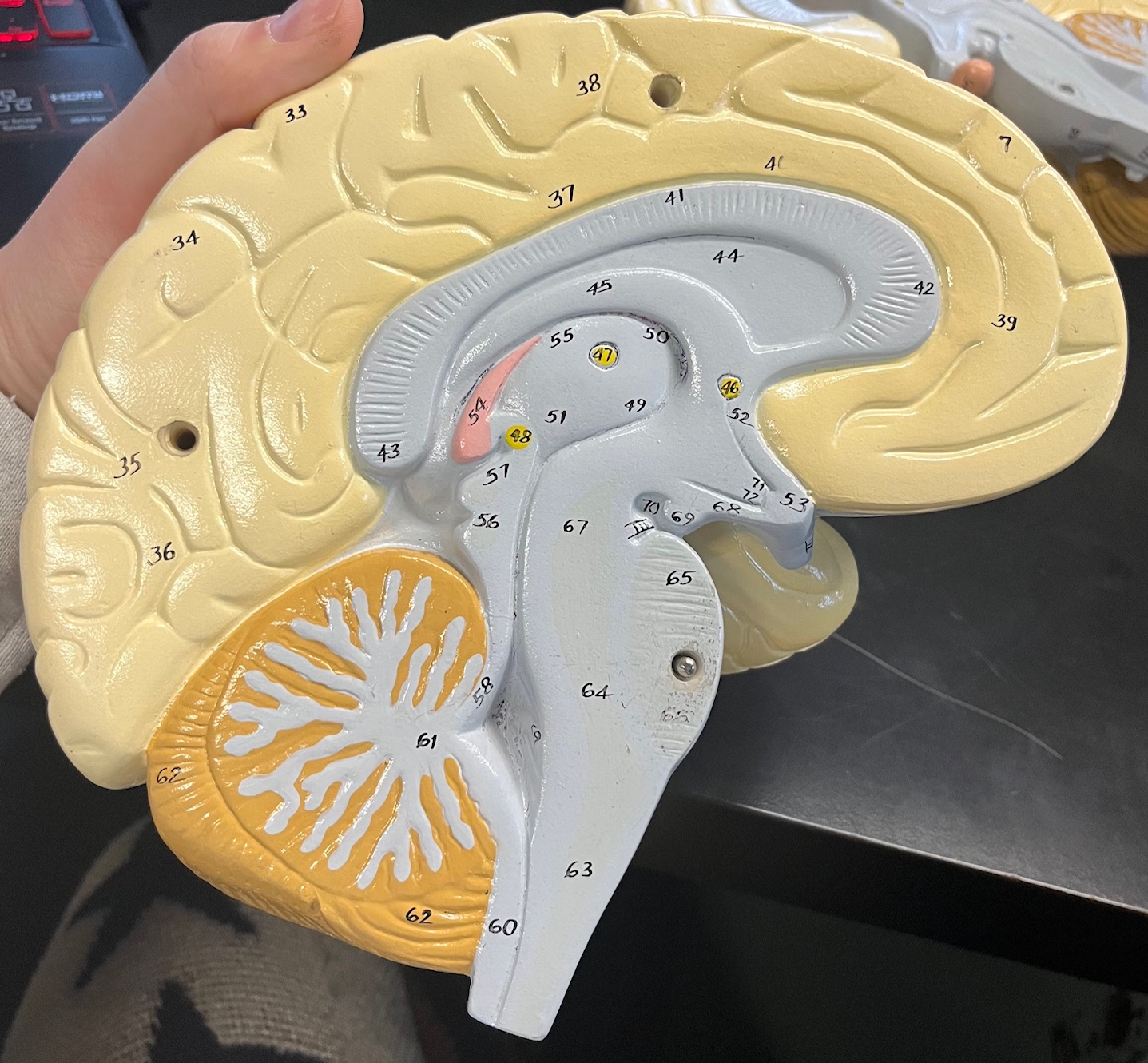
57
superior colliculi of corpora quadrigemina, contains visual reflex center
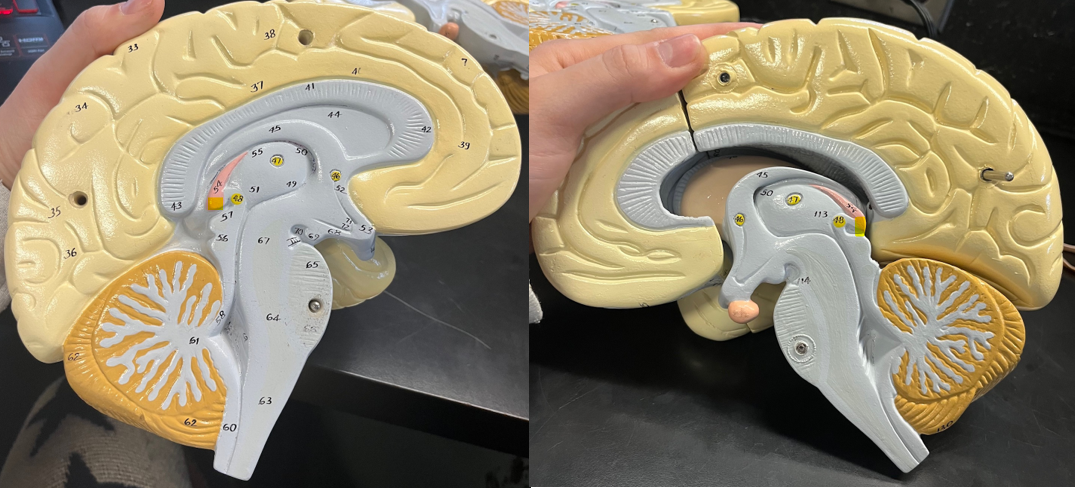
What’s highlighted?
pineal gland, produces melatonin
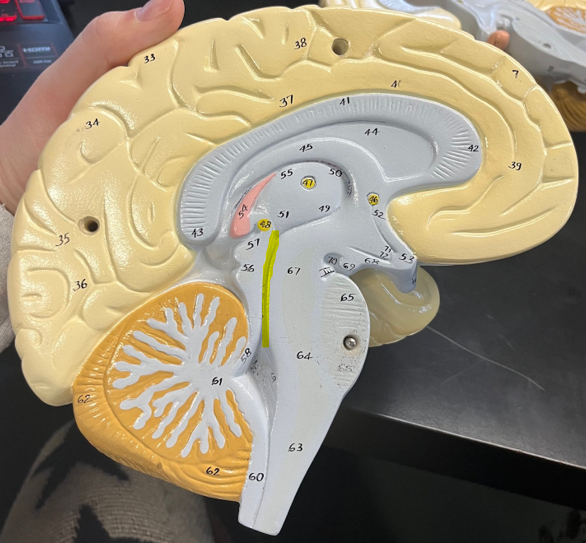
What’s highlighted?
cerebral aqueduct, takes CSF from third to fourth ventricle
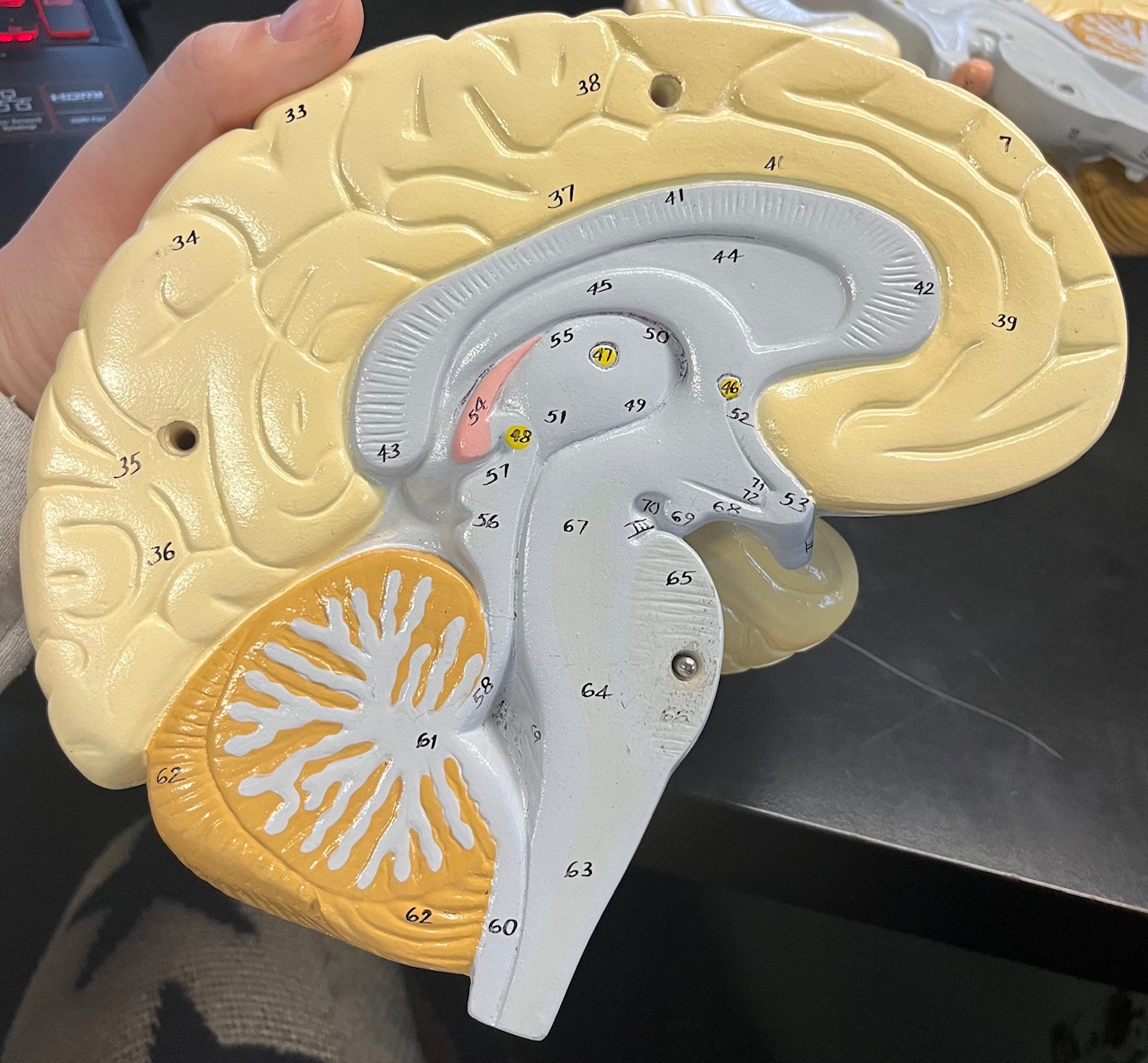
58
cerebellar cortex, balance and equilibrium
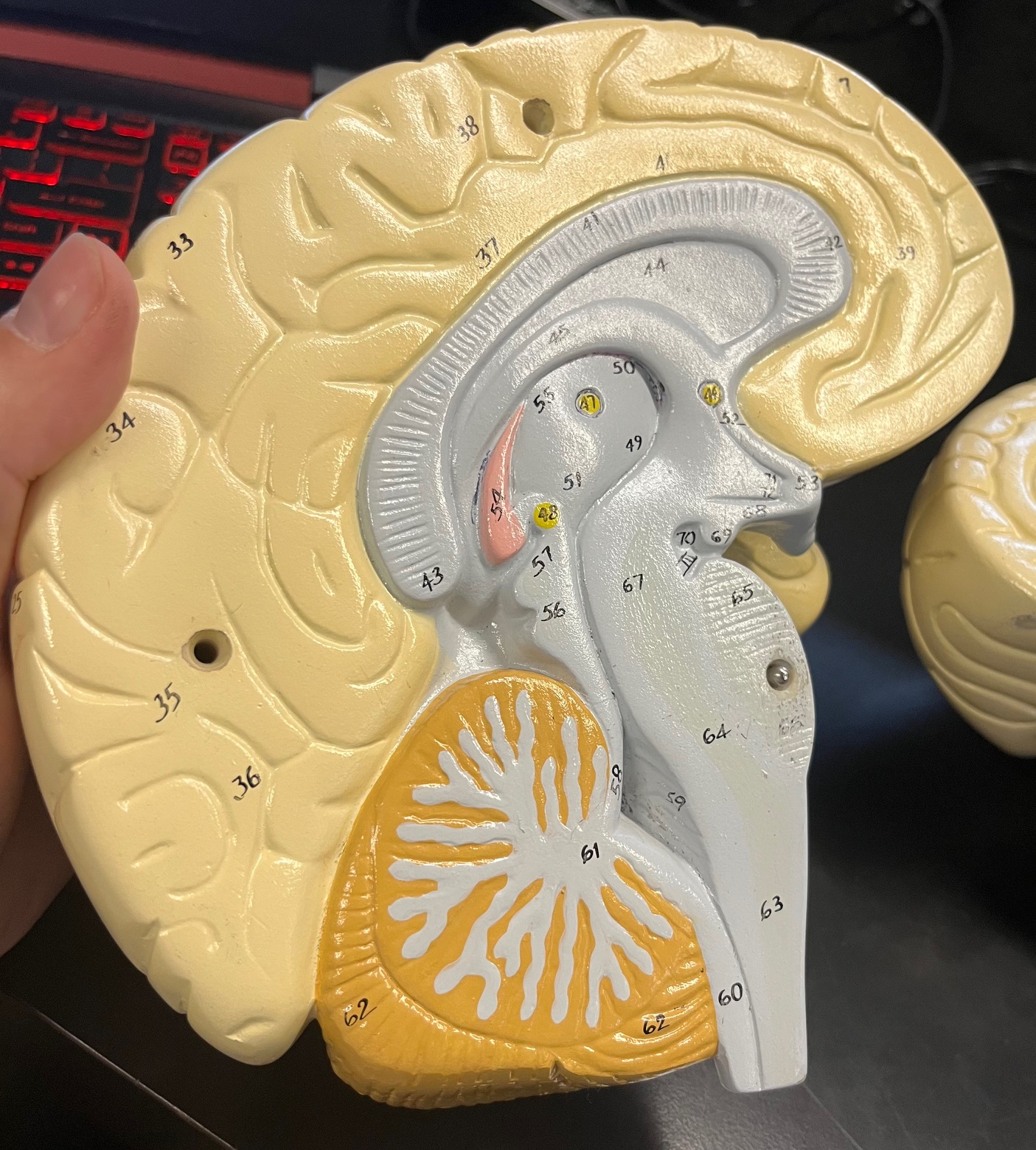
59 (inside little pit)
fourth ventricle, takes CSF from cerebral aqueduct to central canal
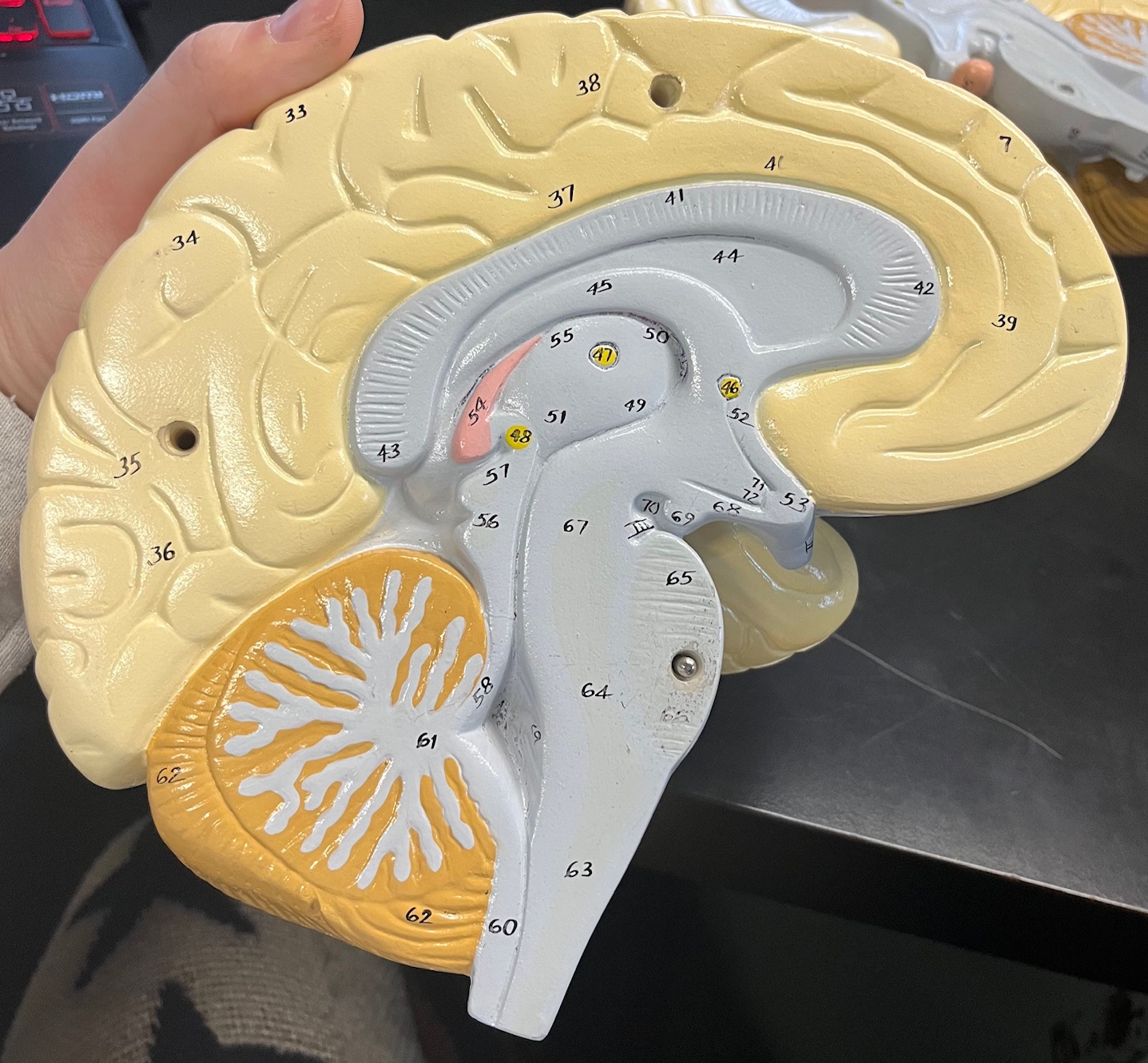
60
spinal cord with central canal, reflex area
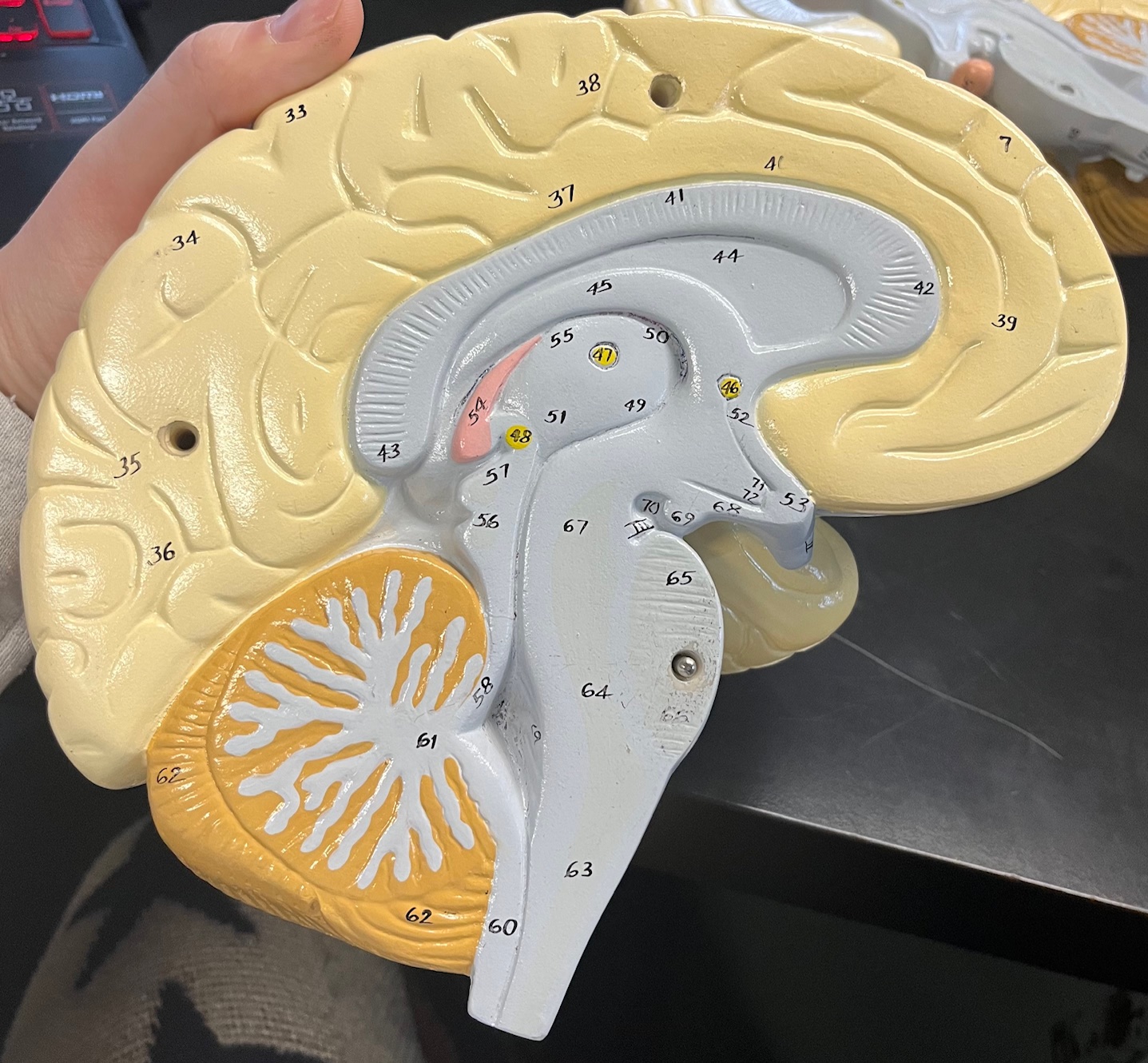
61
arbor vitae, conducts impulses concerned with equilibrium
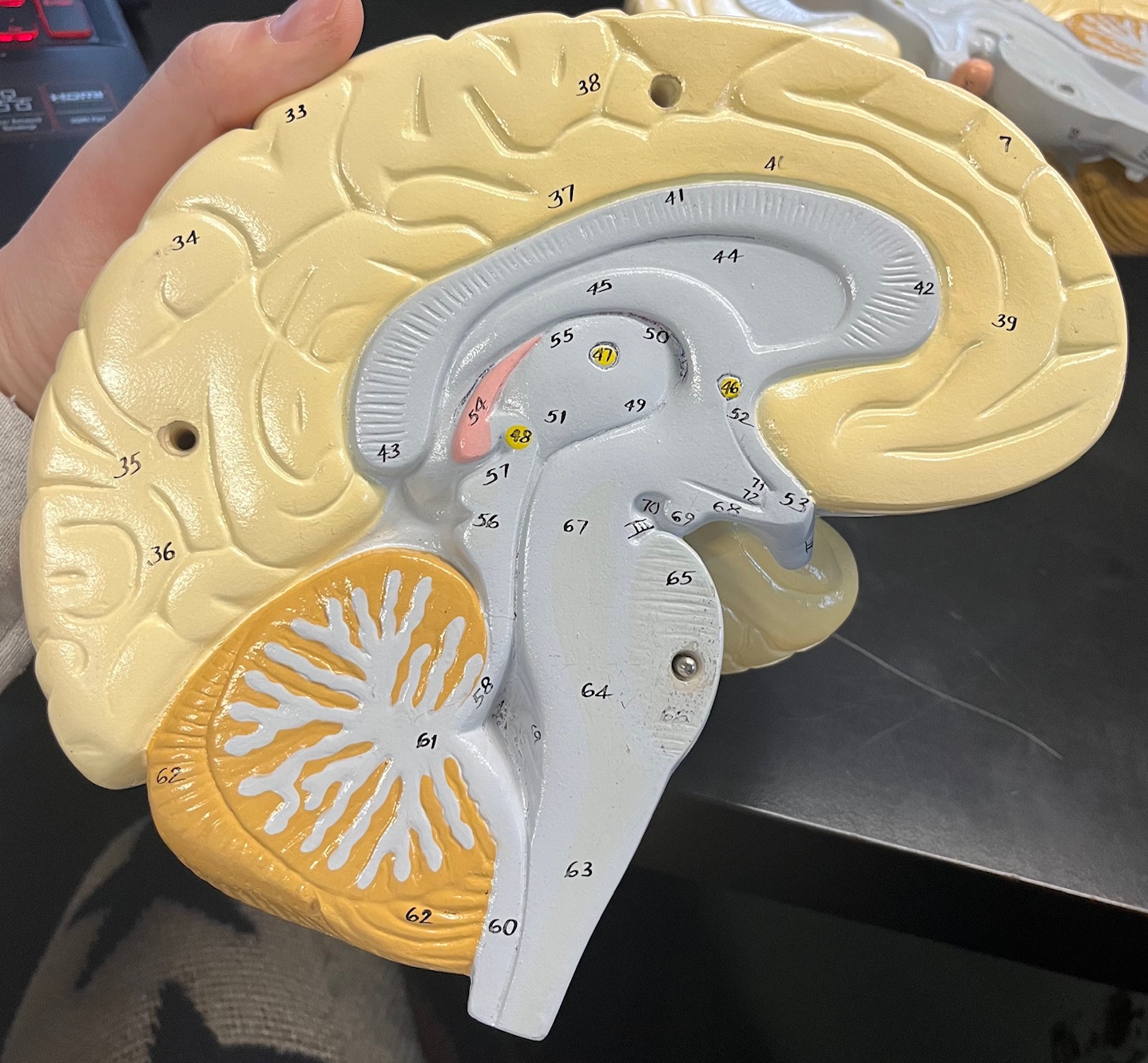
62
vermis, coordinates posture and trunk movements
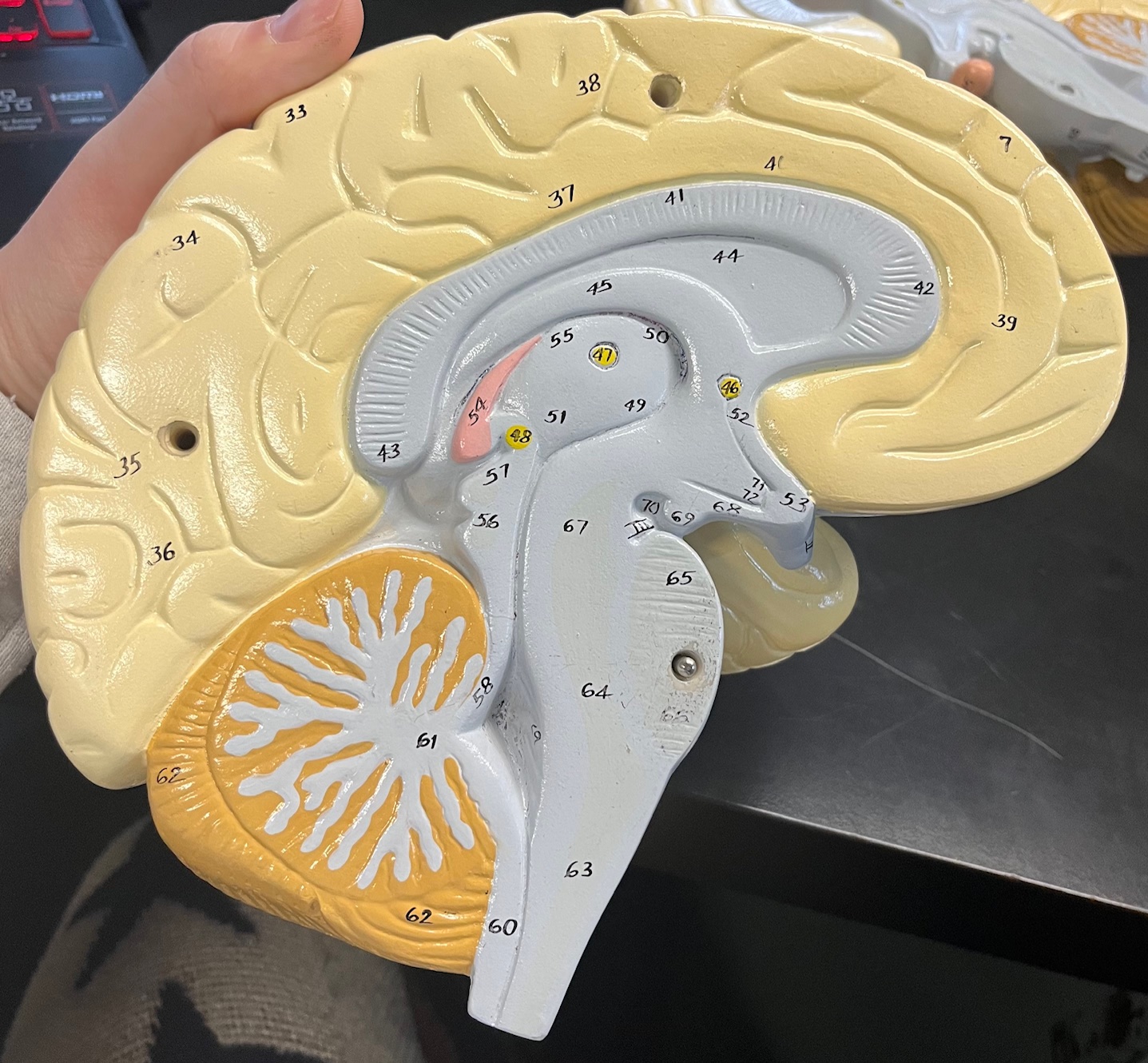
63
medulla oblongata, controls vital autonomic functions like heart rate
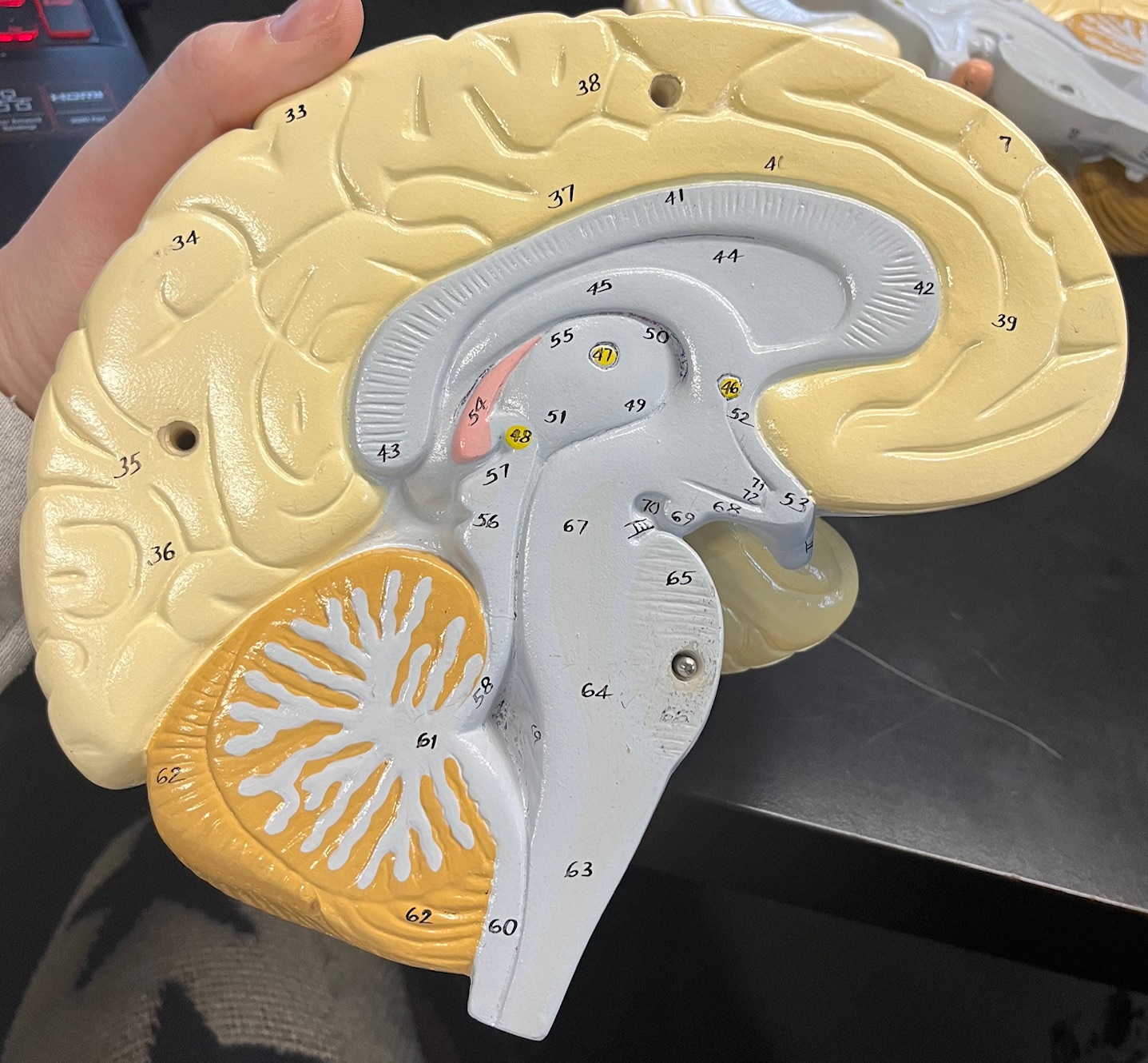
65
pons, connects brain with lower CNS centers
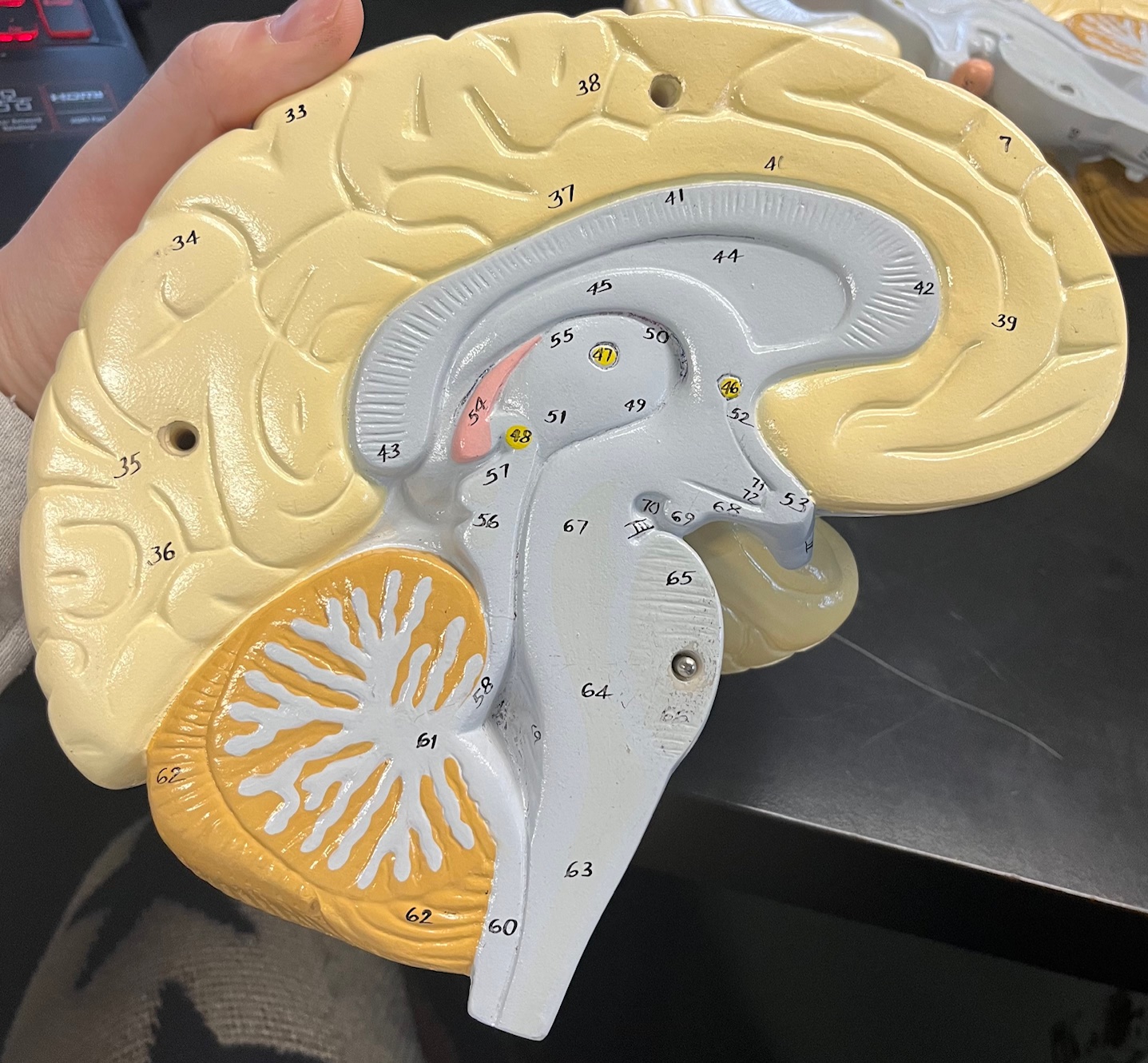
67
cerebral peduncle, connects cerebrum to pons
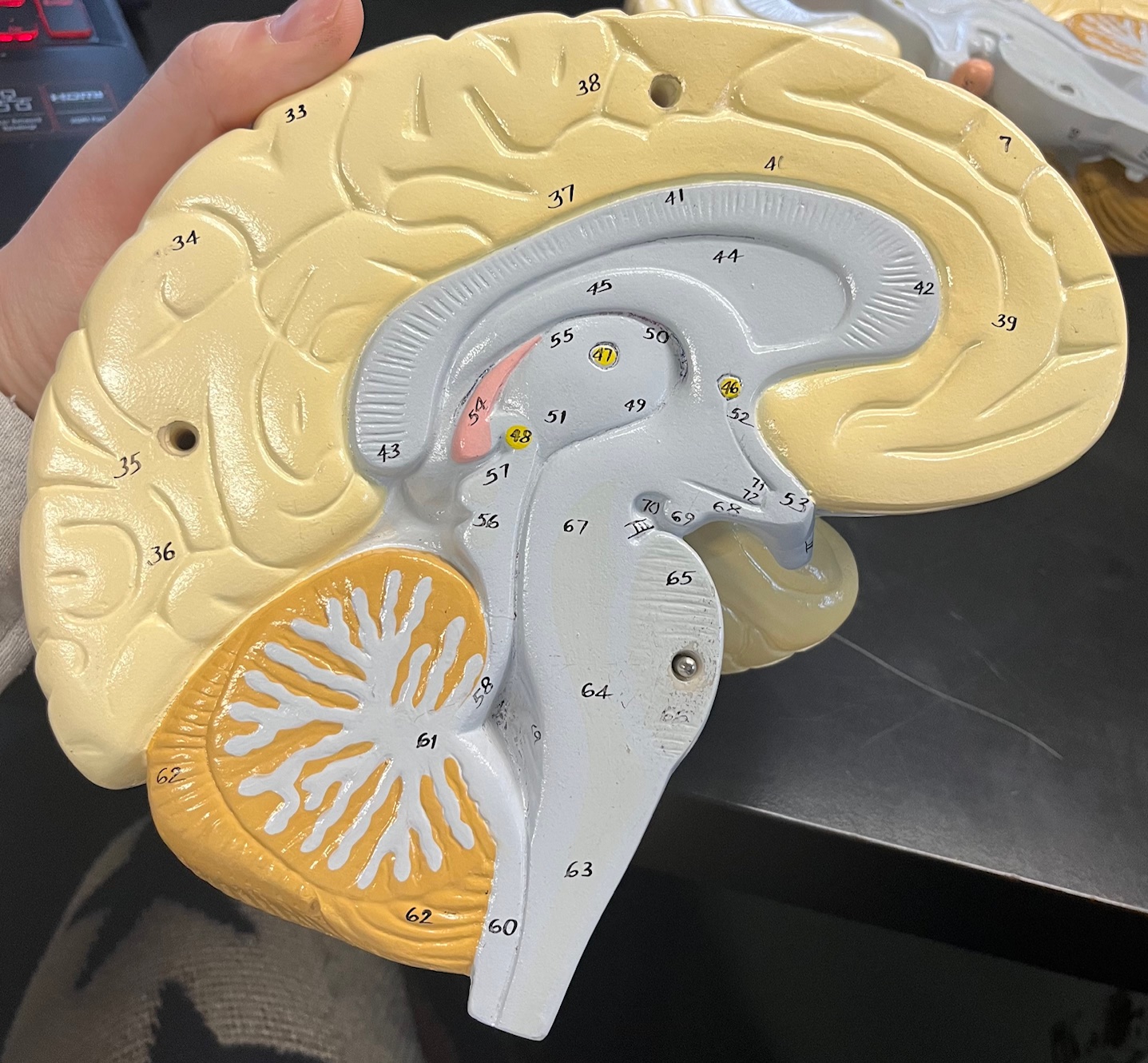
69
mammillary body, relay station for olfaction
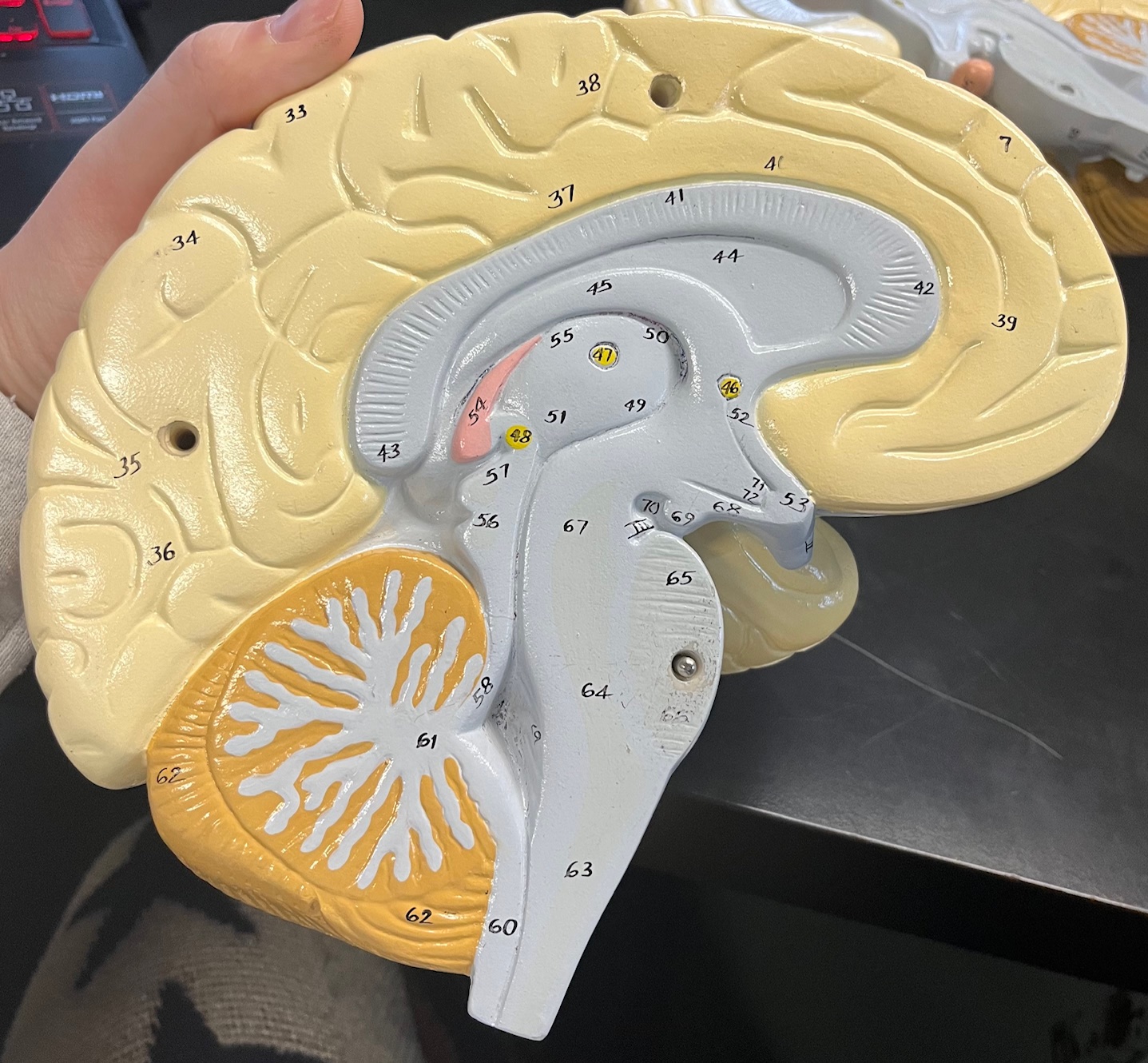
72
hypothalamus, drives (sex, hunger, thirst)
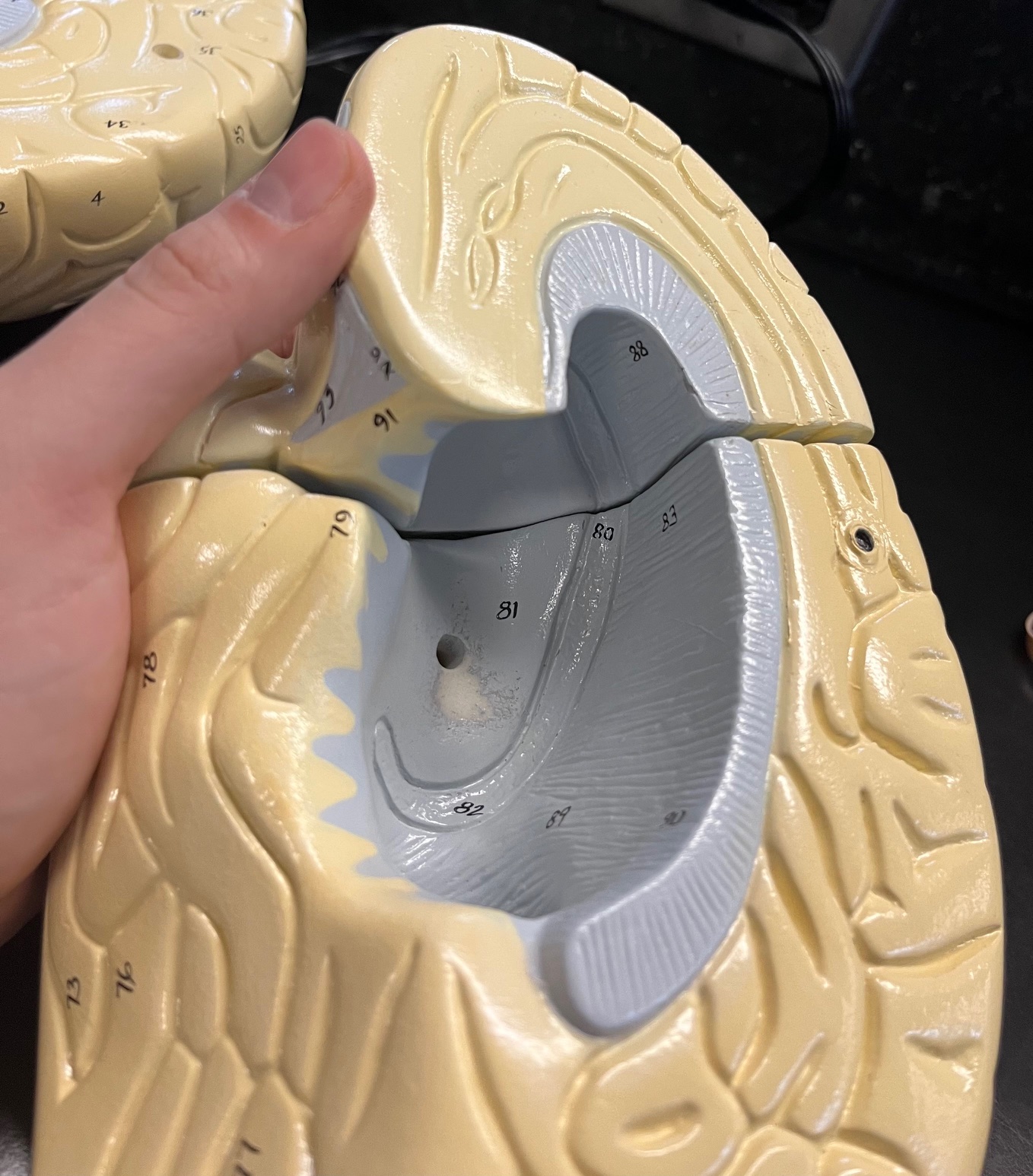
88
anterior horn of lateral ventricle, contains CSF
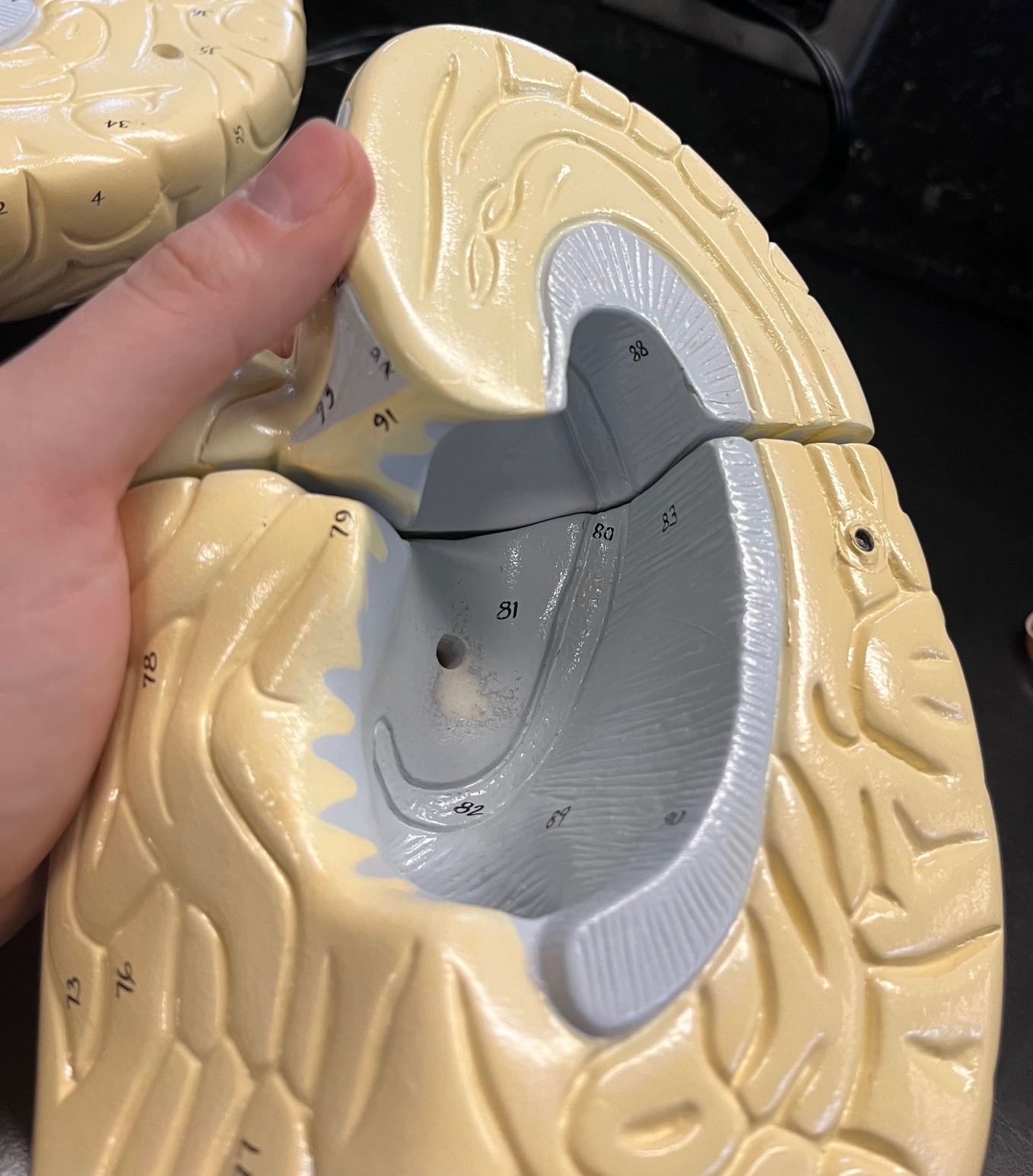
89
posterior horn of lateral ventricle, contains CSF
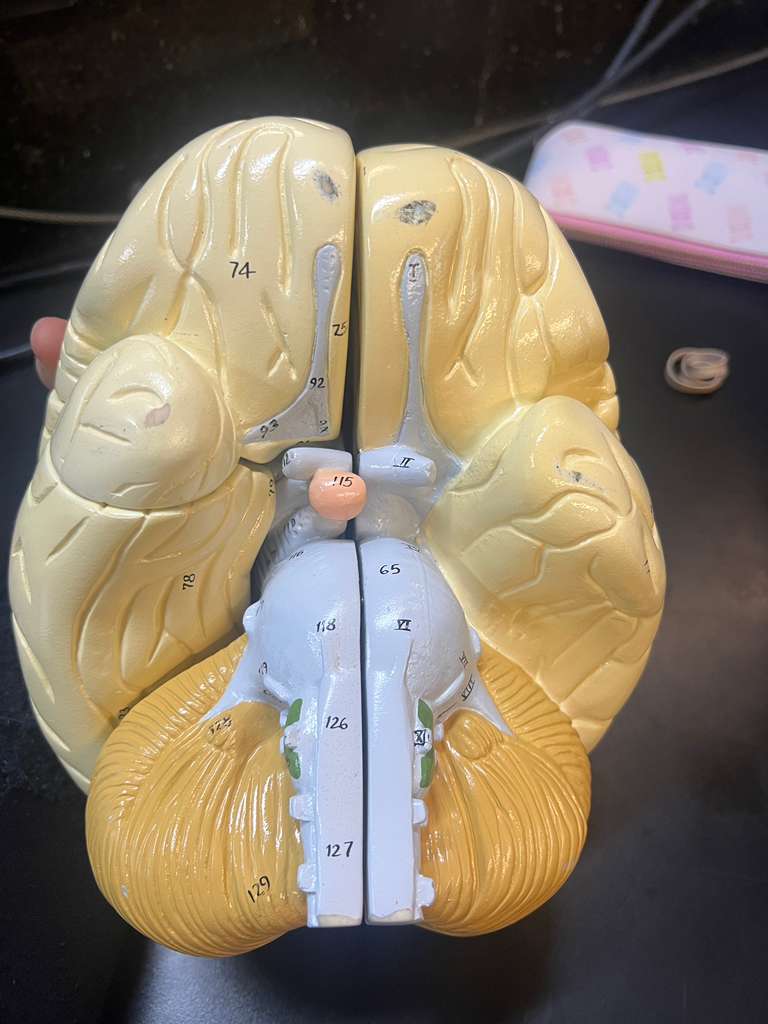
92
olfactory tract, carries impulses associated with sense of smell to the brain
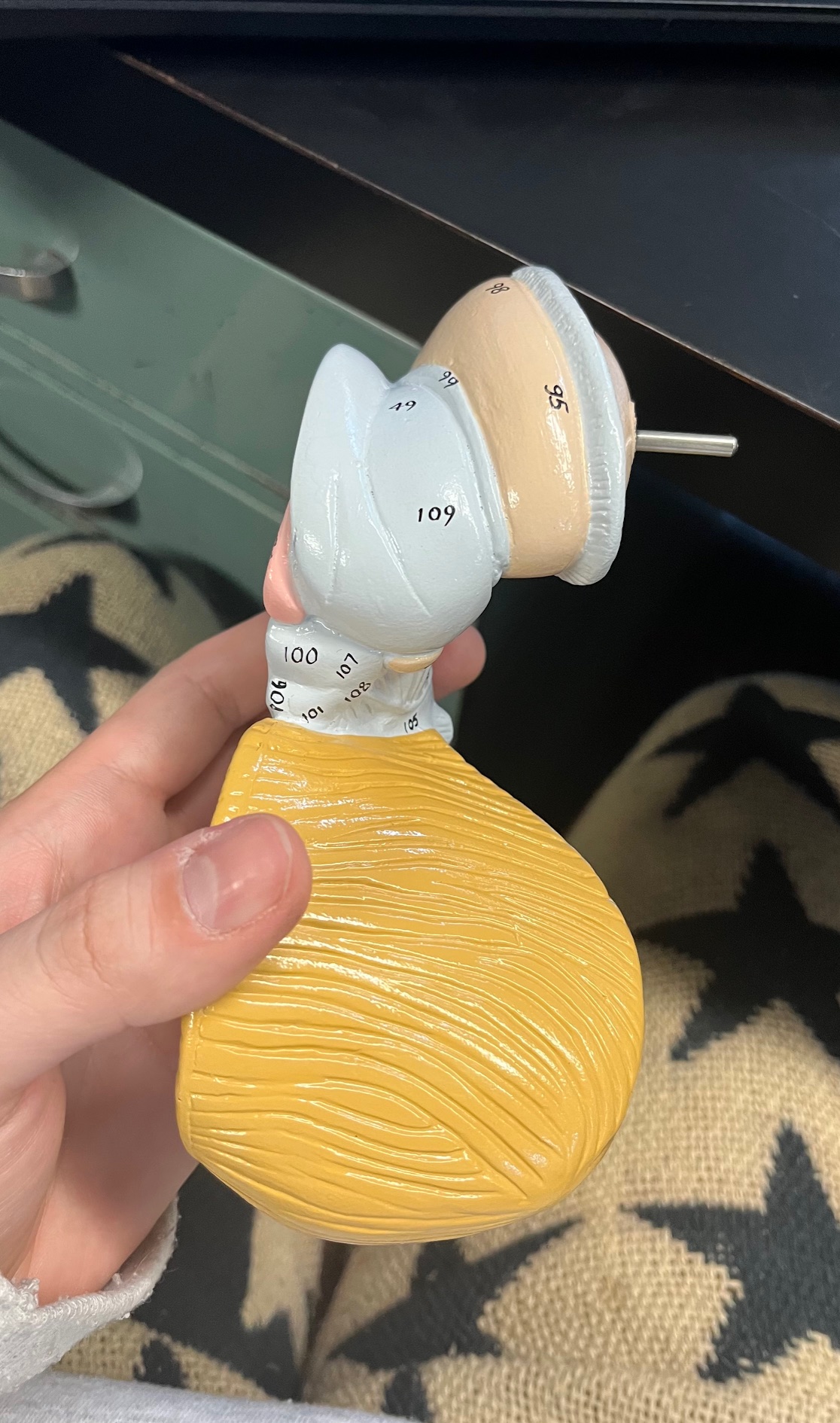
100
superior colliculi of corpora quadrigemina, contains visual reflex center
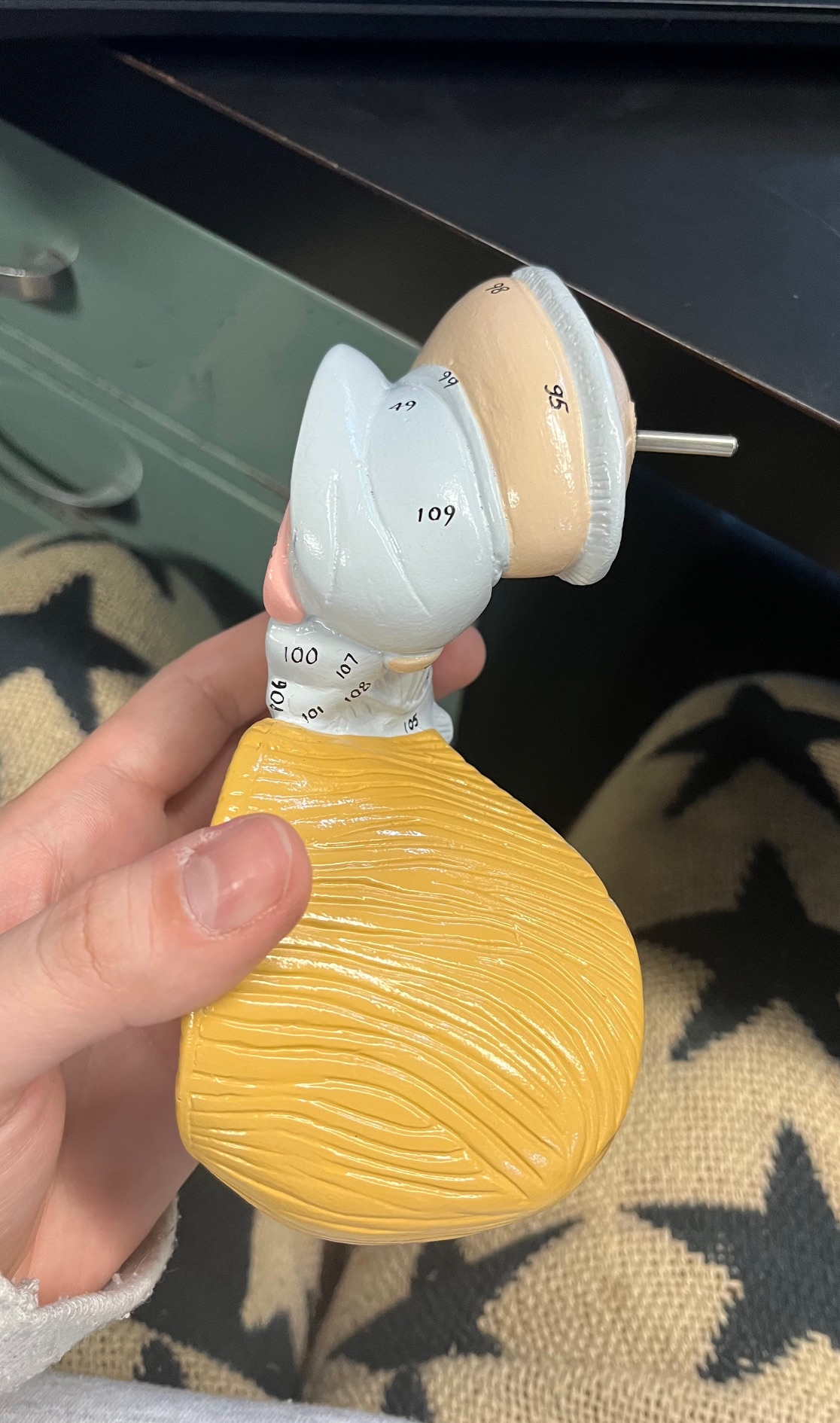
101
inferior colliculi of corpora quadrigemina, contains auditory reflex center
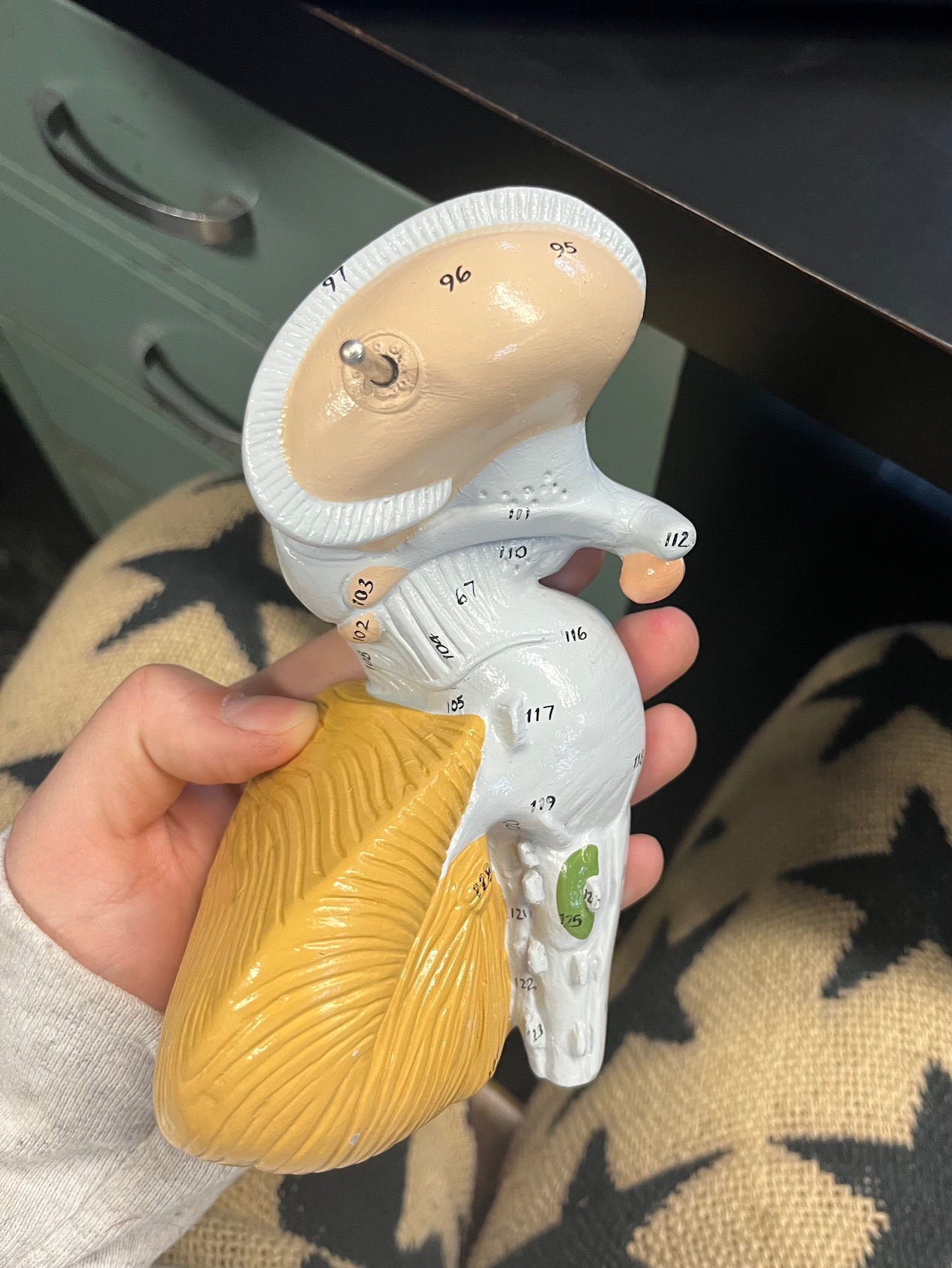
111
optic tract, carries visual impulses from optic chiasma that ultimately end up in visual cortex
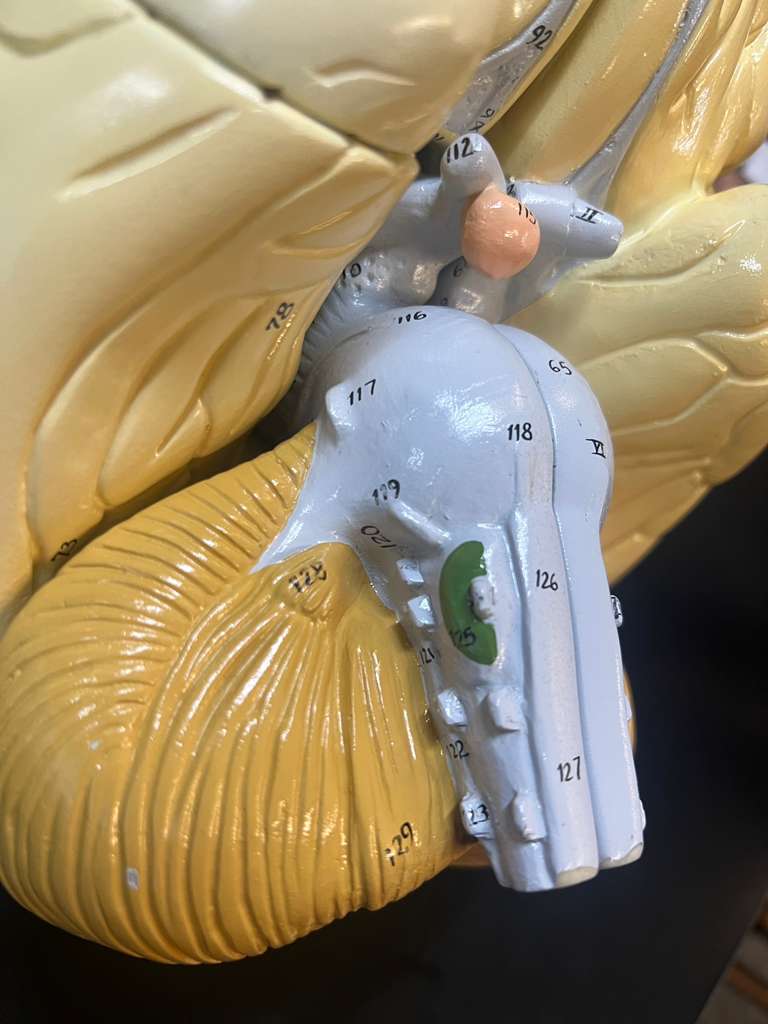
112
optic nerve, CN2, vision
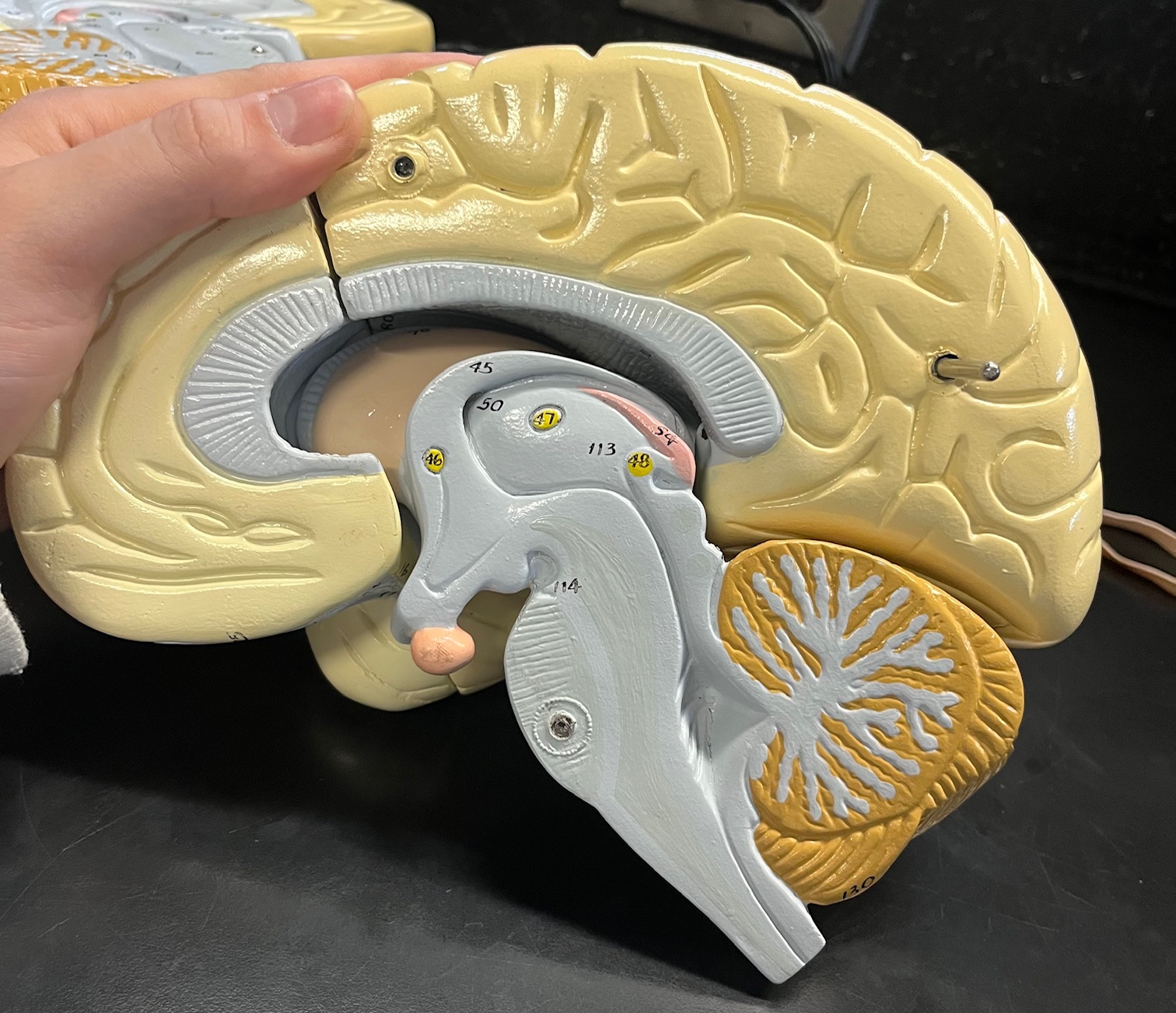
113
third ventricle, takes CSF from interventricular foramen to cerebral aqueduct
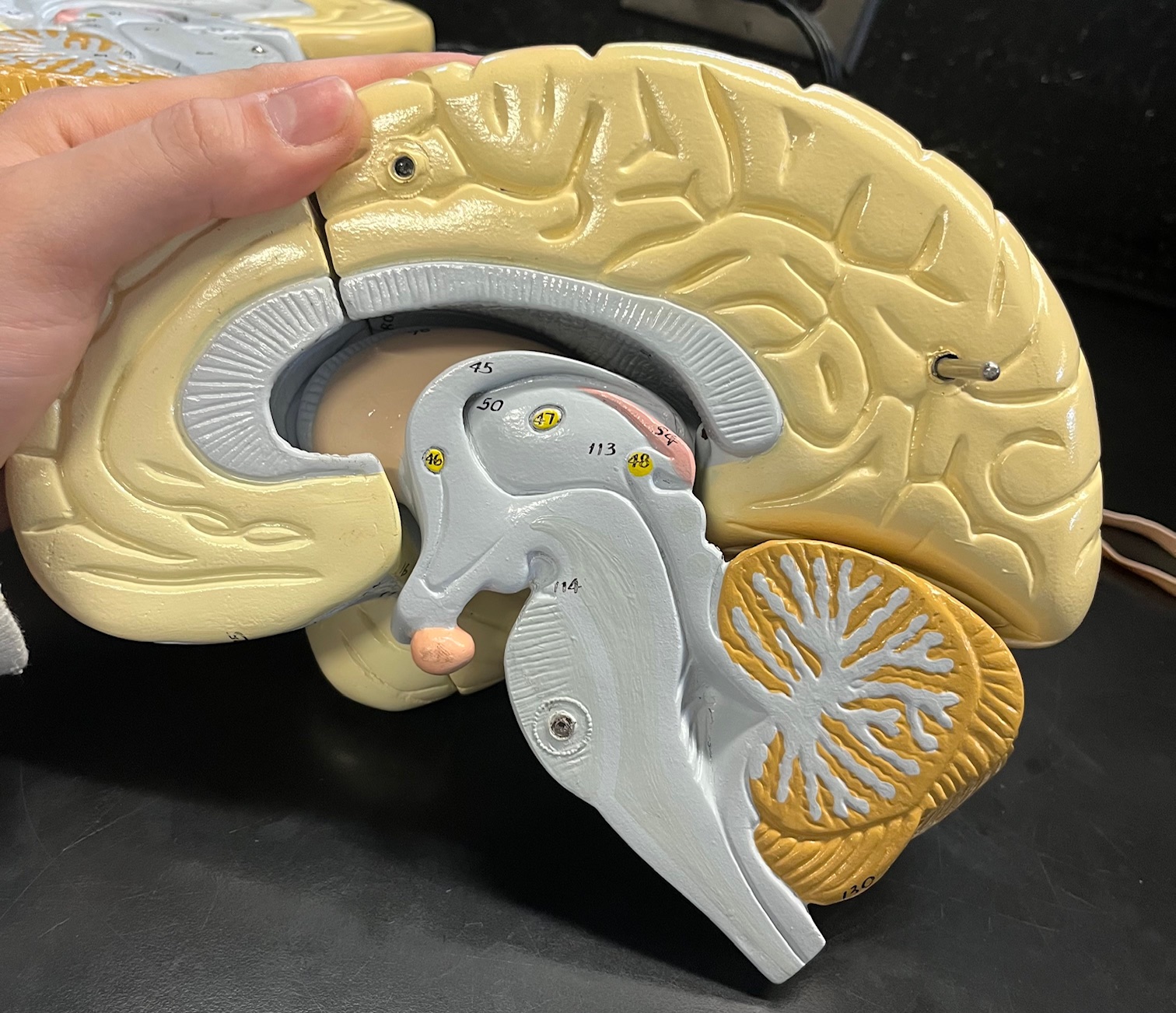
114
oculomotor nerve, CN3, eye muscle control
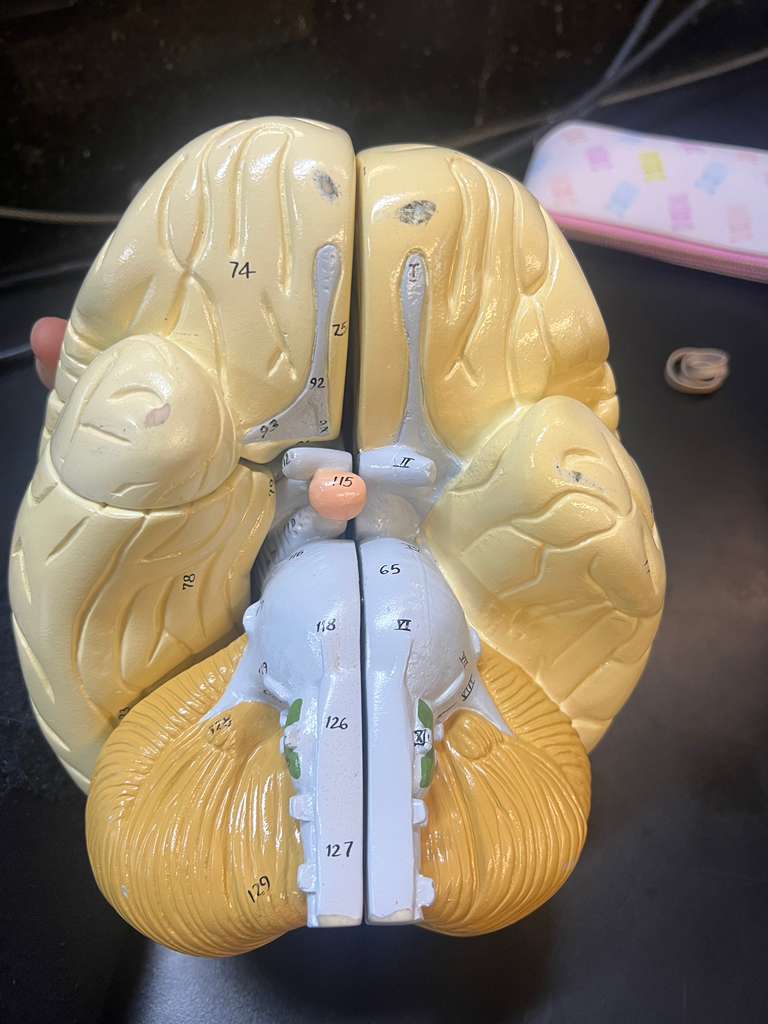
115
pituitary gland, produces hormones
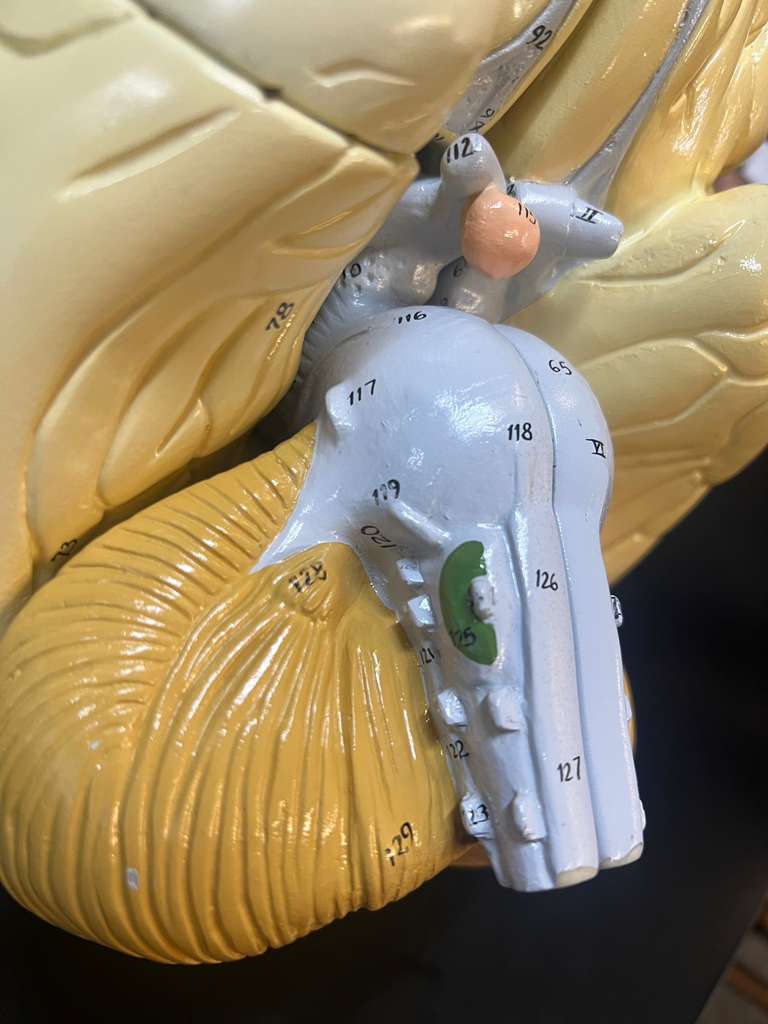
116
trochlear nerve, CN4, eye muscle control
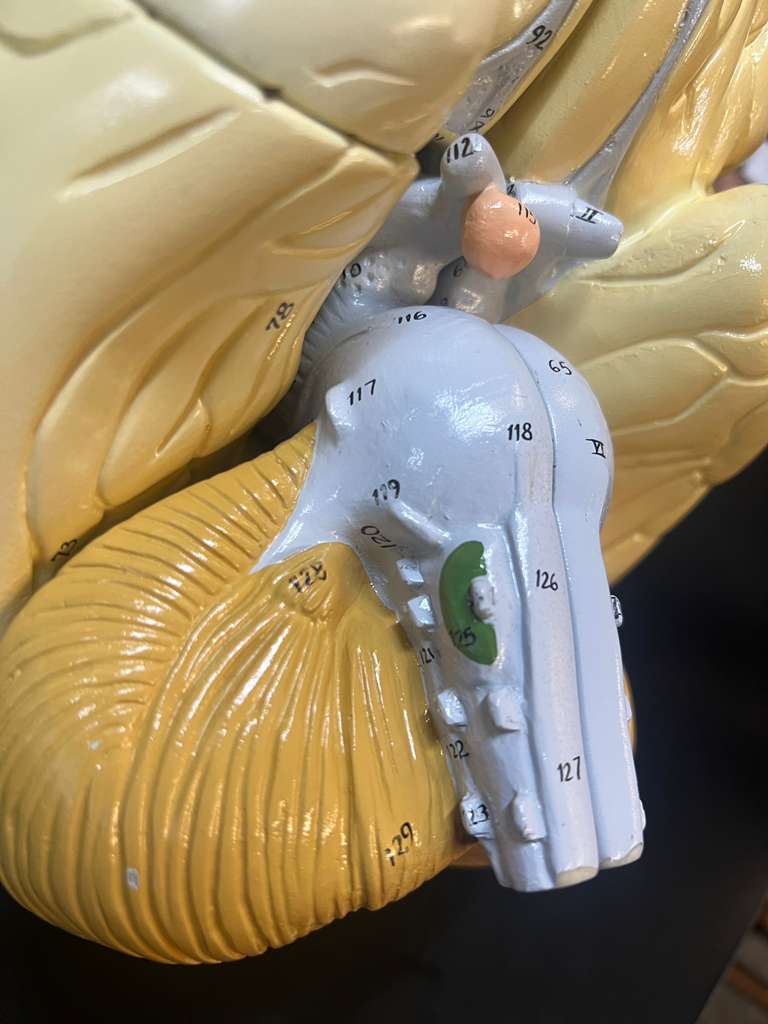
117
trigeminal nerve, CN5, motor control of jaw muscles
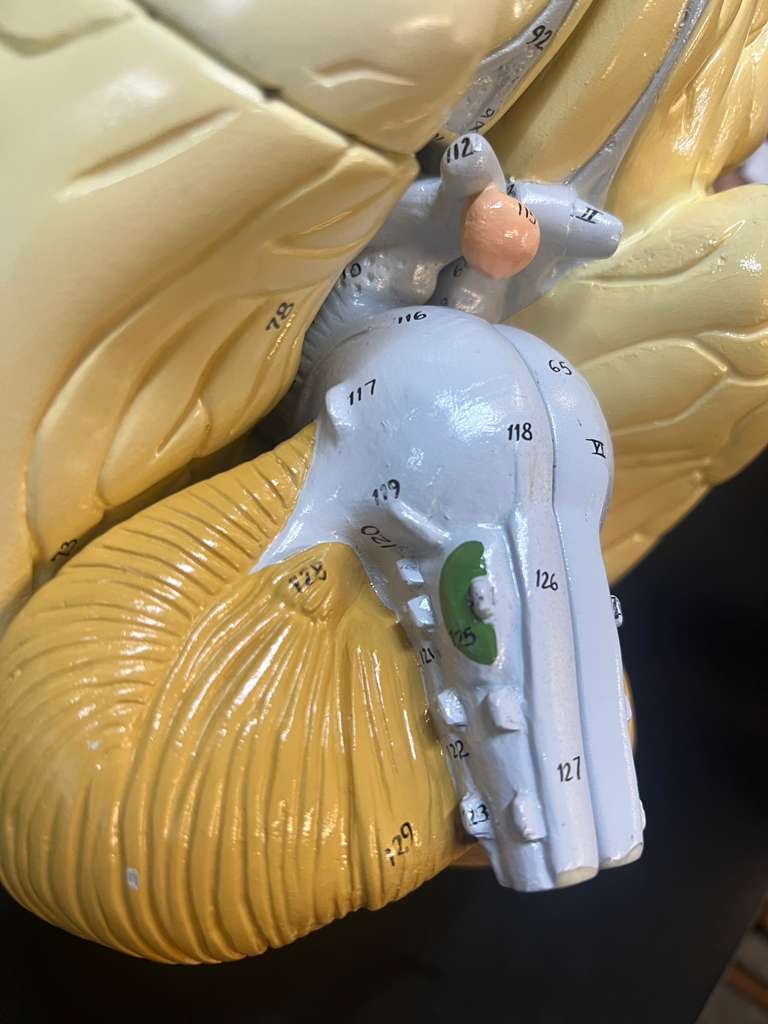
118
abducens nerve, CN6, eye muscle control
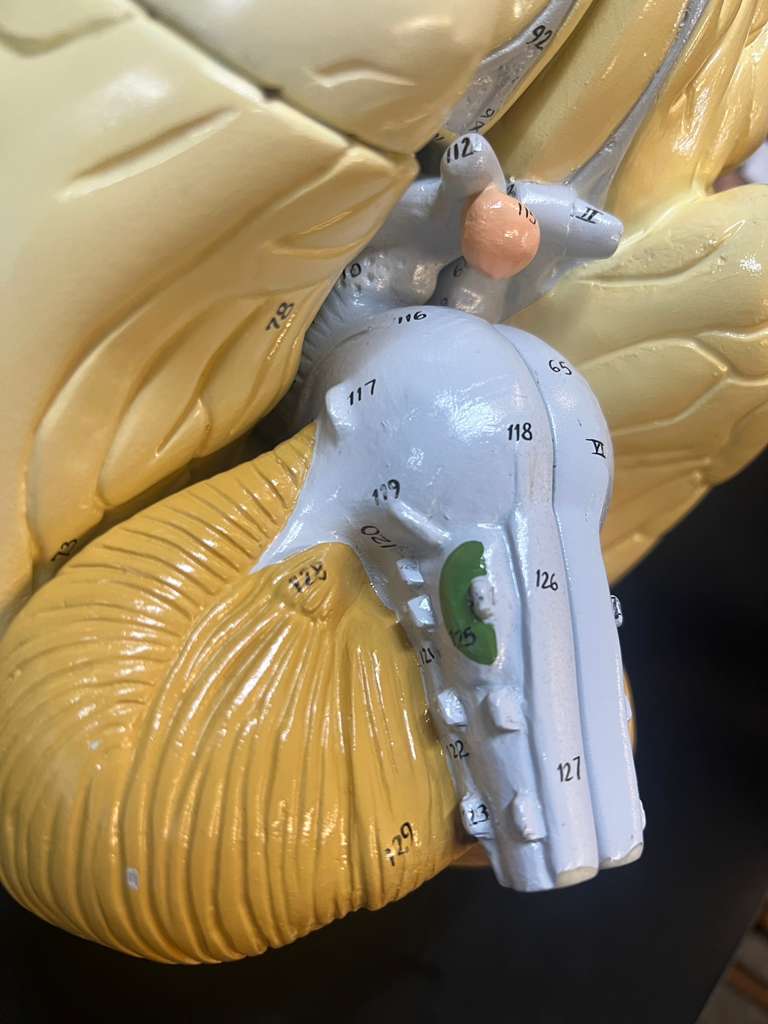
119
facial nerve, CN7, facial expression
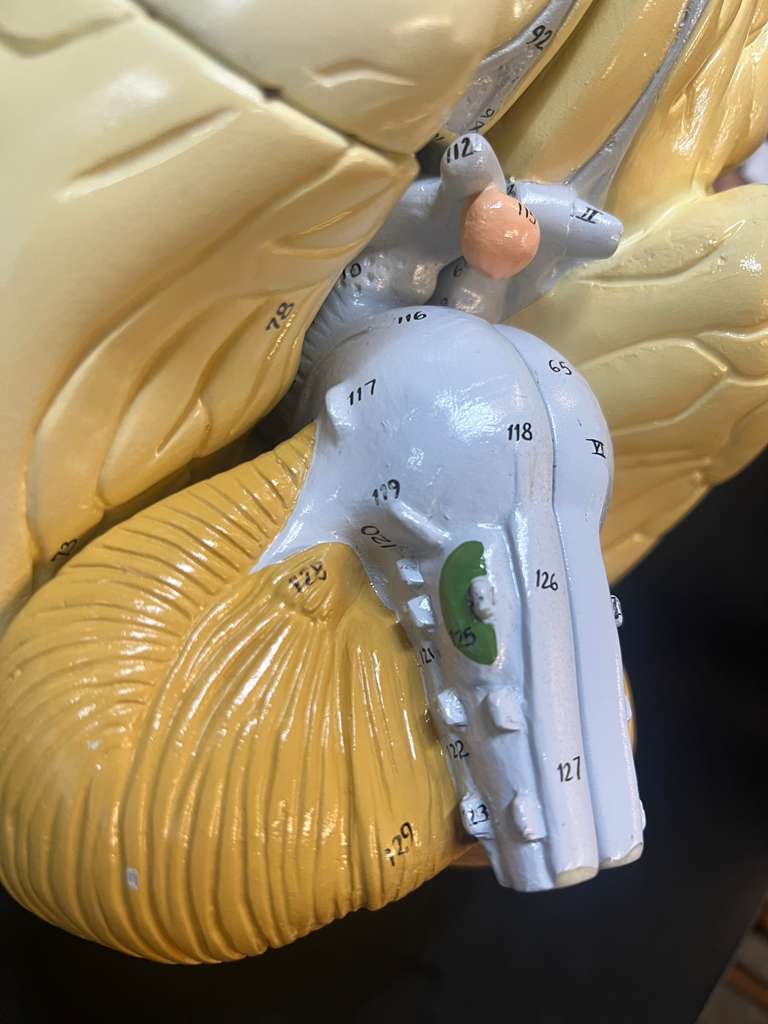
120
vestibulocochlear nerve, CN8, hearing
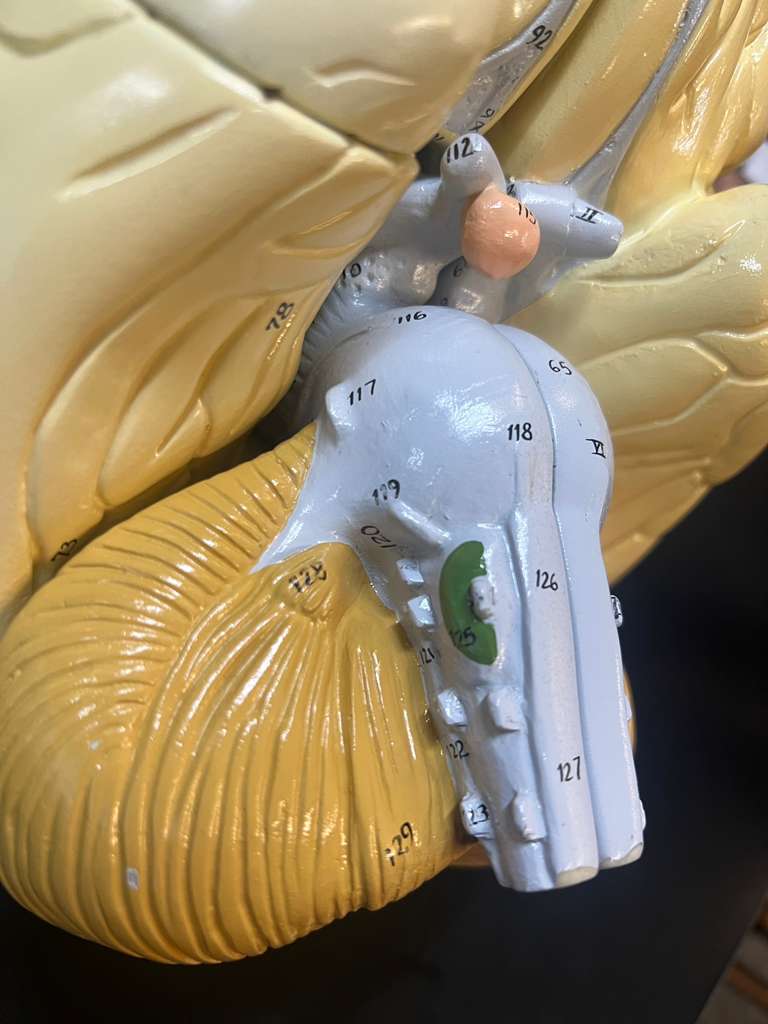
121
glossopharyngeal nerve, CN9, swallowing
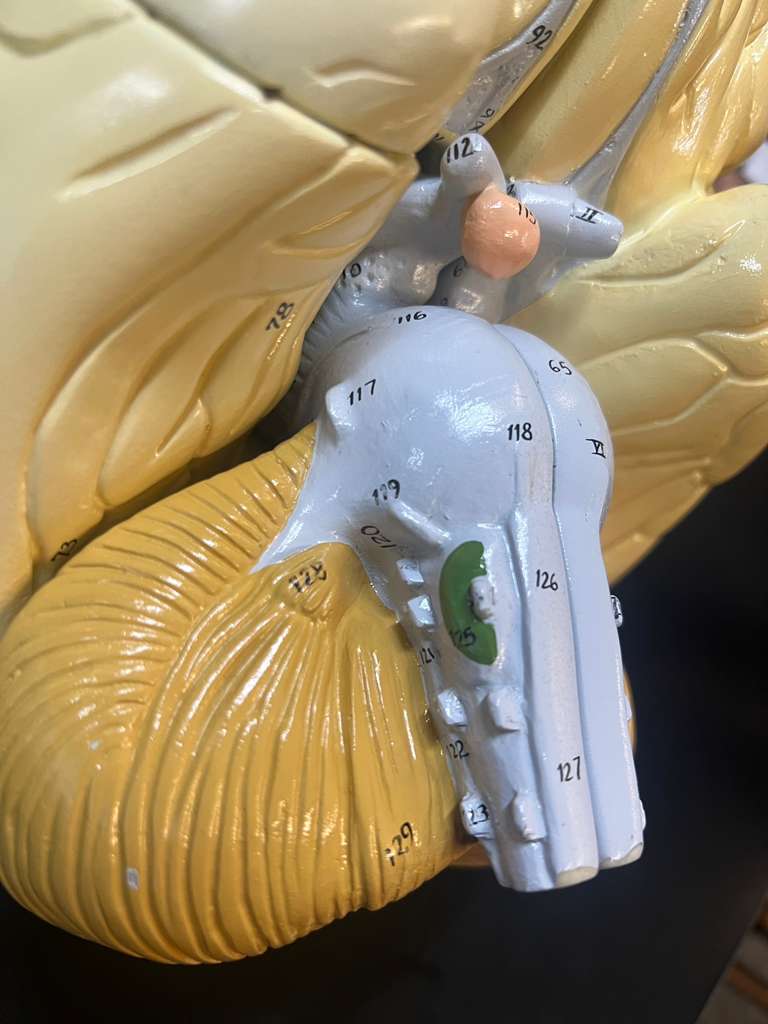
122
vagus nerve, CN10, parasympathetic control of heart, lungs, digestive tract
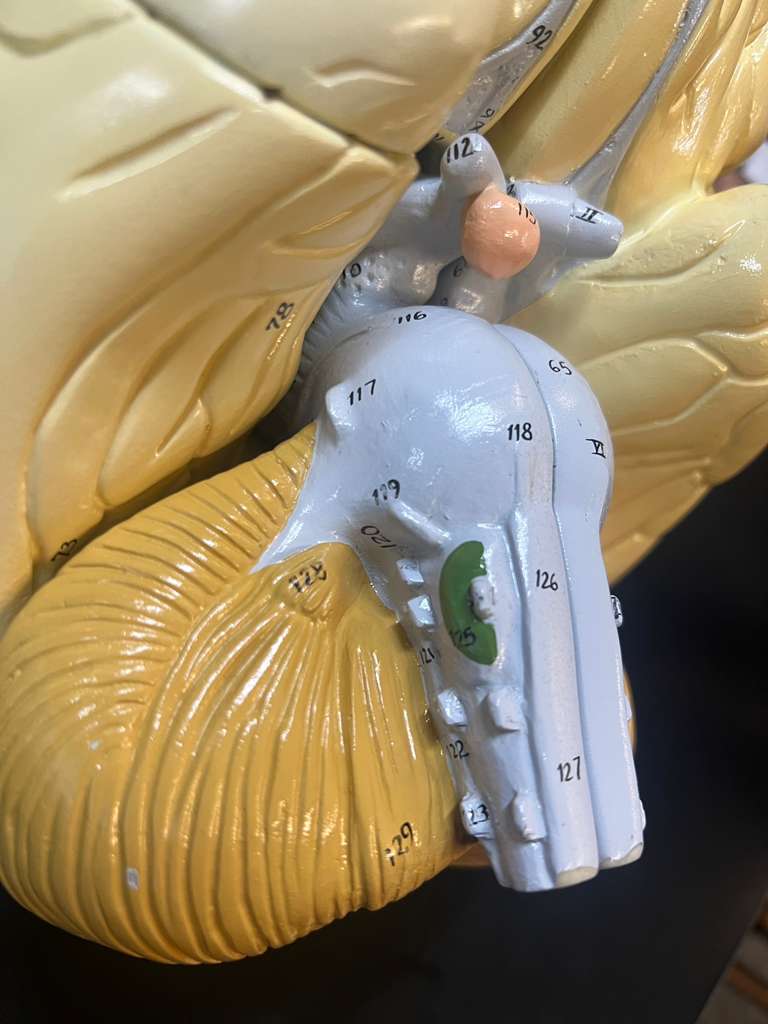
123
accessory nerve, CN11, head and shoulder movement via sternocleidomastoid and trapezius
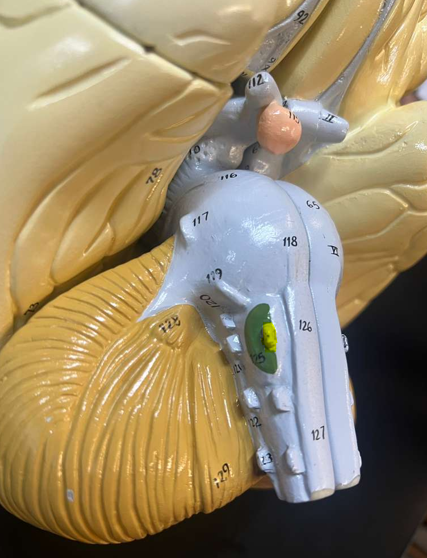
What’s highlighted in yellow? (124)
hypoglossal nerve, CN12, tongue movement
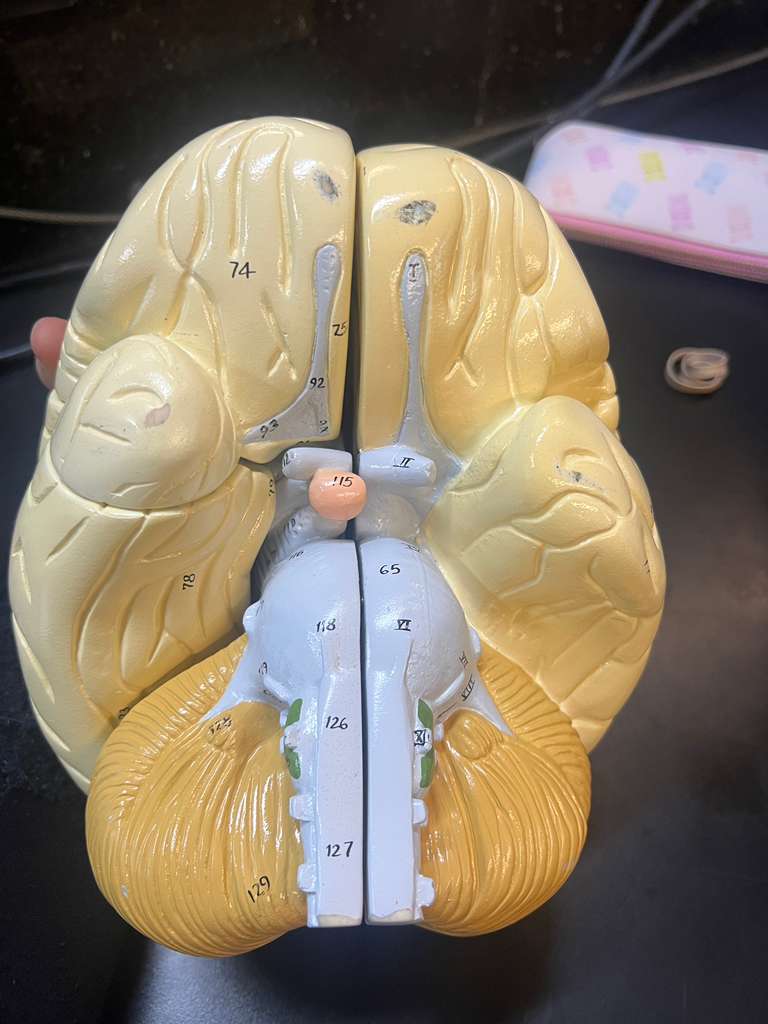
Ⅰ
olfactory bulb, houses synpases of olfactory nerve fibers, CN1, olfaction
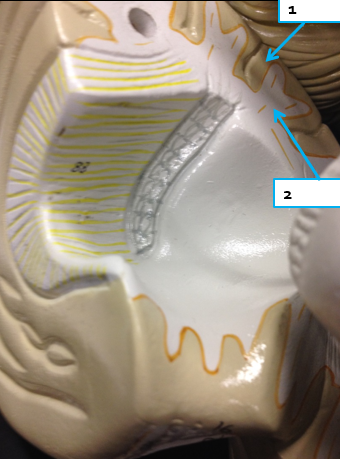
1
cerebral cortex, complex reasoning
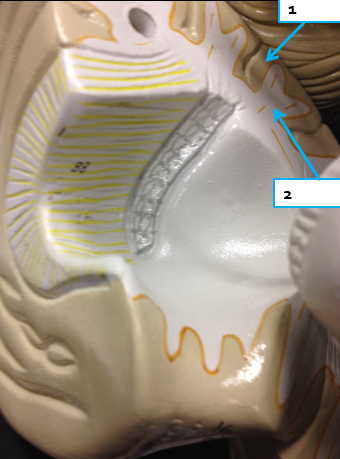
2
white matter, propagates nerve impulses within brain