Biochemistry PDH and TCA Cycle (Ch.18&19)
 Call Kai
 Learn
 Practice Test
 Spaced Repetition
 Match
 Flashcards
 Knowt Play
1/27

There's no tags or description
Looks like no tags are added yet.
28 Terms
What does the pyruvate dehydrogenase complex (PDH) do?
This reaction links glycolysis to other metabolic pathways
Recall under aerobic conditions, pyruvate enters the mitochondria, where it is converted into acetyl CoA (coenzyme A)

Describe the structure of acetyl CoA and explain its relationship to glycolysis and the TCA cycle.
Acetyl CoA is the fuel for the citric acid cycle,
which processes the two-carbon acetyl unit into 2 molecules of CO2 while generating high-energy electons that can be used to form ATP
Coenzyme molecule contains a nucleotide base, pentose sugar, multiple phosphates, a Pantothenate unit derived from vitamin B5 and B-mercaptoethylamine

Explain the role of the PDH complex in overall cellular metabolism
The pyruvate dehydrogenase complex converts pyruvate into acetyl CoA and is located in the mitocondrial matrix
Note under anerobic conditions lactate fermentation produces lactate. This cannot be directly converted to acetyl CoA
How does pyruvate from the cytoplasm get into the mitochondrial matrix for this reaction?
By a specific pyruvate-H+ symport embedded in the mitochondrial membrane
A symport simulatneously transports two molecules in the same direction
What are the three enzymes involved in PDH
E1 - Pyruvate dehydrogenase
E2 - Dihydrolipoyl transacetylase
E3 - Dihydropoyl dehydrogenase
List the five coenzymes employed in the PDH complex, and indicate the B vitamins from which they are derived.
Nicotinamide adenine dinucleotide (NAD+)
Made from niacin (vitamin B3)
Flavin adenine dinucleotide (FAD)
Made from riboflavin (vitamin B2)
Thiamine pyrophosphate (TPP)
made from thiamine (Vitamin B1)
Coenzyme A (CoA)
made from pantothenic acid (vitamin B5)
Lipoamide
Made from lipoic acid
Draw the PDH cycle. Label the 3 enzymes and their steps. Define what it means to be irreversible in this case

Define what the irreversible step in the PDH complex is
The formation of acetyl CoA from pyruvate is an irreversible step in animals
Therefore acetyl CoA cannot be converted into glucose
What are the two fates of the carbons of acetly CoA?
Oxidation to CO2 by the TCA cycle (energy)
Incorperation into lipids (storage0

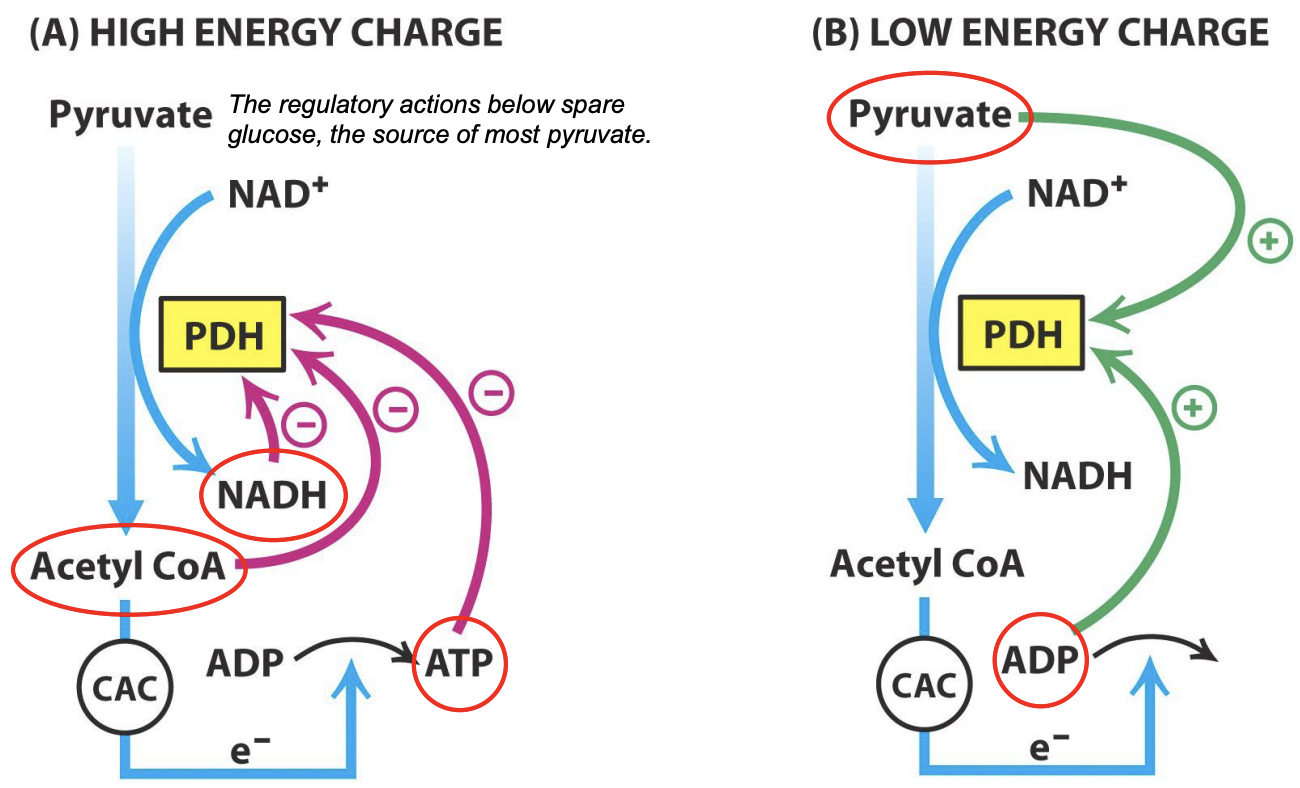
What are the two mechanisms in PDH regulation?
High concentrations of products (allosterism)
Post-translational modification
What controls the activity of the PDH complex?
Phosporylation of pyruvate dehydrogenase on the E1 component controls the activity of the complex

Explain the mechanism of PDH complex regulation by PDH kinase in the context of the body’s metabolic state.
Define the characteristics of the Citric Acid Cycle (TCA Cycle)
Part of the aerobic processing of glucose that generates greater than 90% of the energy used by aerobic cells in humans
fairly efficient
Common final pathway for the oxidation of fuel molecules (carbohydrates, fatty acid, and amino acids)
Also a supplier of precrusors for building amino acids, nucleotides, and bases
“The metabolic hub of the cell”
Takes place in the matrix of the mitochondria
Describe the TCA Cycle’s role in energy production
The TCA cycle is a common pathway for metabolism of all fuels: carbohydrate, fat, and protein
electrons are stipped from these fuels in the process of oxidation, and they are used to make acetyl CoA
The TCA cycle produces a bonus ATP equivalent
The electrons/protons from NADH and FADH2 are used to produce ATP through the electron transport chain and oxidative phosphorylation

What is the important relationship between the TCA cycle and the electron transport chain?
The TCA cycle can only occur if the electron transport chain is using up the electrons and protons from NADH and FADH2 to regenerate NAD+ and FAD
What is the first reaction of the citric acid cycle?
Citrate synthesis - catalyzes the condensation of acetyl-CoA and oxaloacetate to form citrate
Since the this condensation initiates the citric acid cycle, wasteful side reactions such as hydrolysis of acetyl CoA must be prevented

What is the second reaction in the citric acid cycle
Aconitase: Isomerizes citrate into isocitrate
What is the third reaction of the Citric Acid Cycle?
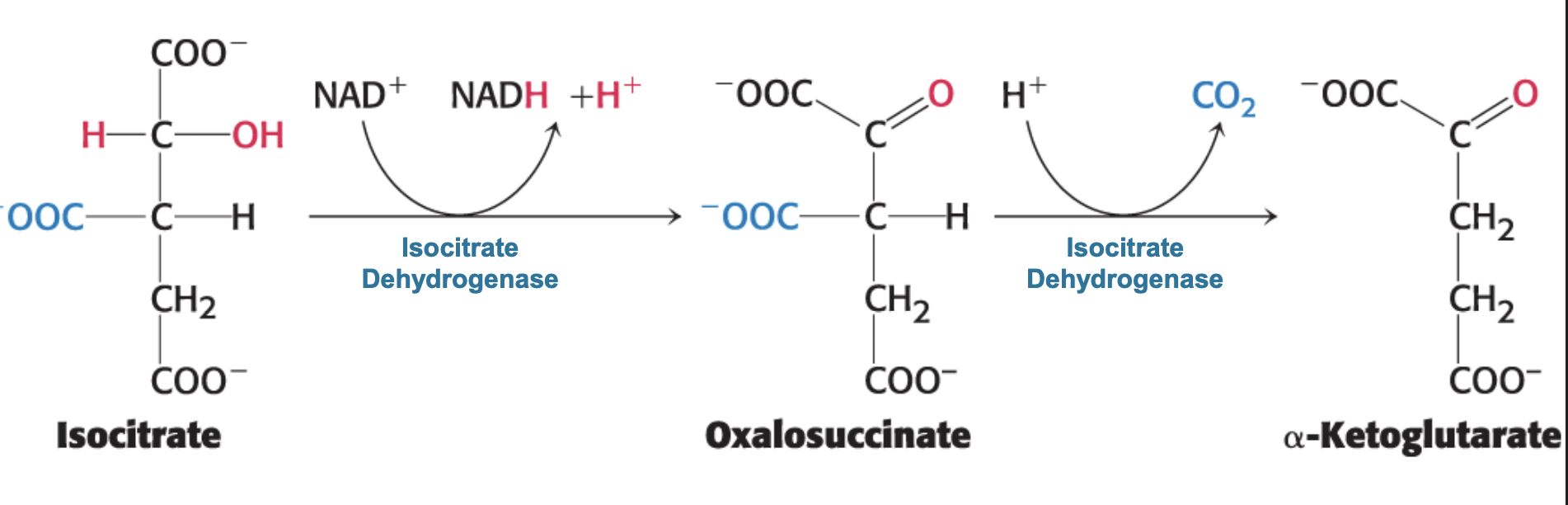
Isocitrate Dehydrogenase: Catalyzes the oxidative decarboxylation of isocitrate to a-ketoglutarate, producing NADH and CO2
What is the fourth reaction in the Citrate Acid Cycle?
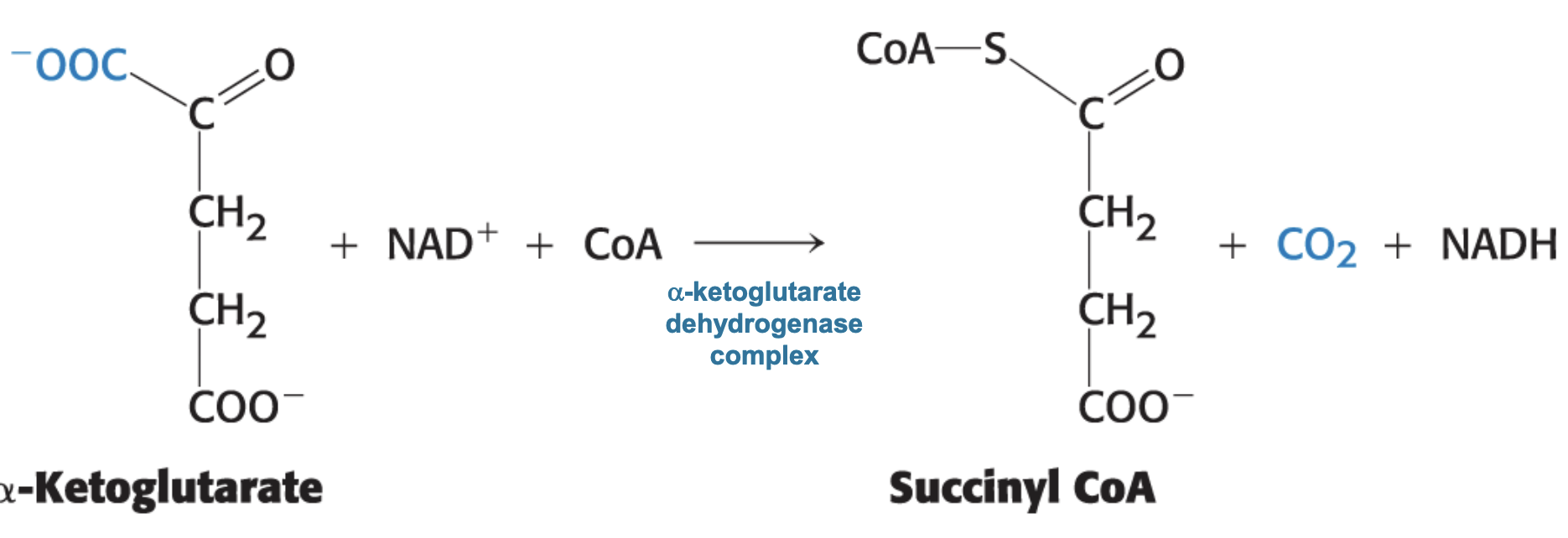
a-ketoglutarate Dehydrogenase Complex
Converts a-ketoglutarate into succinyl-CoA, producing a second NAHD and Co2
What is the fifth reaction of the TCA cycle
Succinyl-CoA Synthetase:
Converts succinyl-CoA to succinate and generating a molecule of ATP or GTP.

What is the 6th-8th reactions of the TCA do?
They carry out oxidative phosphorylation
The dehydrogenase reactions (6-8) demonstrate the simultaneous oxidation of a carbon atom coupled to the reduction of a nucleotide cofactor (NAD+ or FAD)

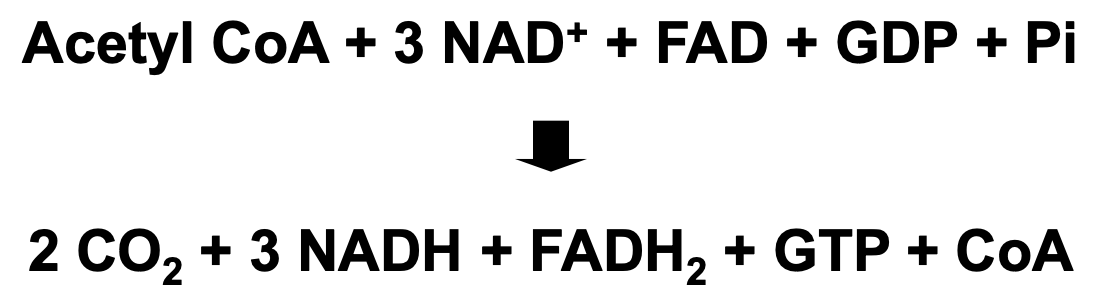
Write out the net reaction of the TCA cycle
What is the first regulation of the TCA Cycle?
The citric acid cycle is first regulated by the availability of acetyl-CoA, thus, is dependent on the pyruvate dehydrogenase complex regulation
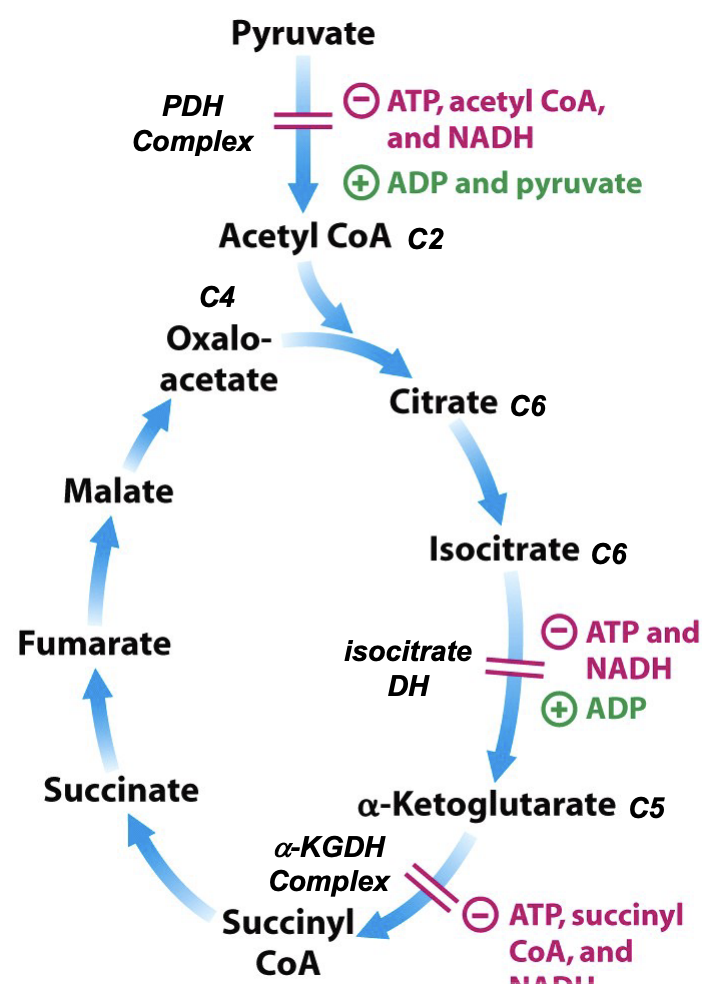
What are the two control points of the citric acid cycle?
Isocitrate dehydrogenase
a-ketoglutarate dehydrogenase
These control points are important for integrating the citric acid cycle with other pathways
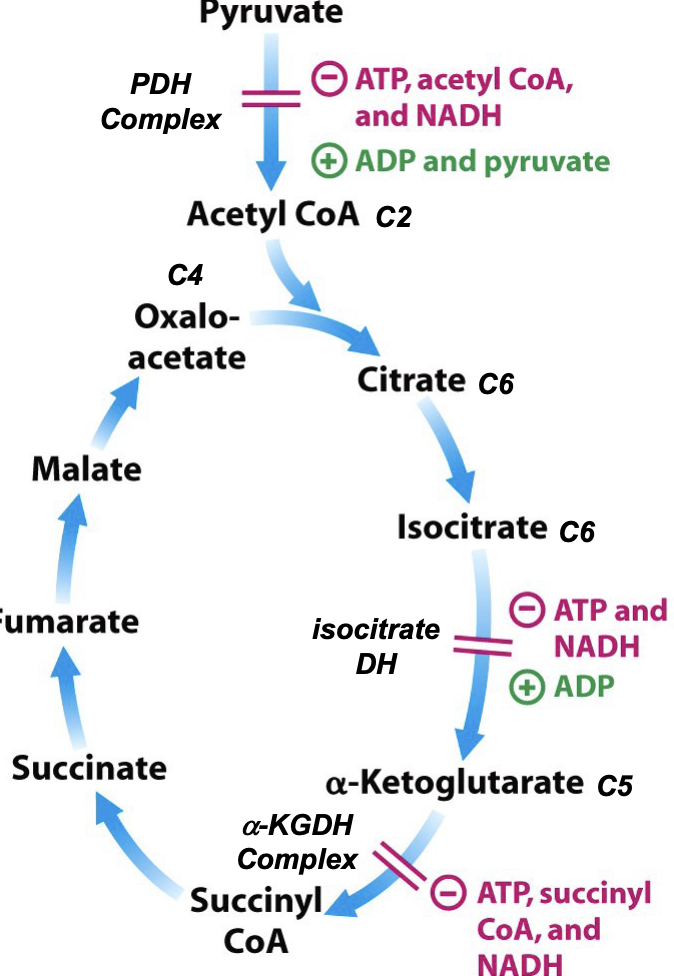
What features do these control points have in common?
Generation of high energy electrons captured by NAD+
Relase of CO2
Negative delta G0’
What is the role of ADP in the regulation of the TCA cycle? What about ATP?
ADP (energy charge is low) enhances the enzyme’s affinity for substrates
ATP (energy charge is high) is inhibitory and NADH directly displaces NAD+
What is the role of Succinyl CoA in the regulation of the TCA cycle?
Succinyl CoA exhibits product inhibition
Define the terms "amphibolic" and its relationship to the TCA cycle
Amphibolic: operates catabolically and anabolically
This allows it to be a major source of materials for biosynthesis (anabolic) and be the major degradative (catabolic) pathway in the cell