Seed plants study guide
 Call Kai
 Learn
 Practice Test
 Spaced Repetition
 Match
 Flashcards
 Knowt Play
1/47

There's no tags or description
Looks like no tags are added yet.
48 Terms
Evolutionary order of green algae
1 (Oldest)
Evolutionary order of lycophytes
2nd
Evolutionary order of bryophytes
3rd
Evolutionary order of ferns
4th
Evolutionary order of gymnosperms
5th
Evolutionary order of angiosperms
6 (Youngest)

Alternation of generation with protected embryo emerges
b
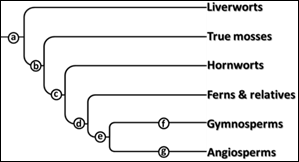
Flowers emerge
g
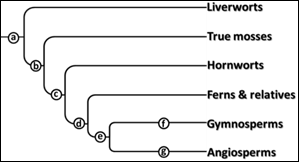
Pollen emerges
g

Seeds emerge
e

Stomata emerge
c

Vascular tissue emerges
d
Shared ancestral characters: Seeds
allow for the dispersal of offspring over space and time.
Shared ancestral characters: Pollen
contain a tube cell and a generative cell.
Shared ancestral characters: Microspores
give rise to the male gametophyte found in pollen grains.
Which of the following are shared ancestral characters of both angiosperms & gymnosperms?
Pollen grains contain a tube cell and a generative cell., Seeds allow for the dispersal of offspring over space and time., Microspores give rise to the male gametophyte found in pollen grains.
Which of the following are shared derived characters of angiosperms (but not gymnosperms)?
There is a double fertilization event, leading to the formation of the diploid embryo., Reproductive structures are located in a flower., After fertilization, the ovary thickens and forms a fruit.
What is the ploidy of the following structures: gametophyte, seed, spore, sporophyte?
1n, 2n, 1n, 2n
Angiosperm derived character: Flowers
Reproductive structures are located
Angiosperm derived character: Double fertilization
event leading to the formation of the diploid embryo.
Angiosperm derived character: Fruit
After fertilization, the ovary thickens and forms this
Division consisting of 3 genera (which include Ephedra) and have a few characteristics similar to that of an angiosperm, including wider leaves & vessel elements
Gnetophyta
Division consisting of cone-bearing evergreen trees that are photosynthetic year round
Coniferophyta
Division consisting of fruit-producing plants (e.g., coconut & orange trees, tomato & corn plants)
Anthophyta
Division consisting of one surviving species and is characterized by bi-lobed leaves
Ginkgophyta
Division consisting of palm-like trees with naked seeds and flagellated sperm
Cycadophyta
Which of the following are NOT a fruit (banana, acorn, potato, cucumber, cabbage, apple, walnut, coconut, rice)?
potato and cabbage, the rest are
Flowers that contain carpels, but NOT stamina (plural of stamen) are _______.
incomplete, imperfect, dioecious
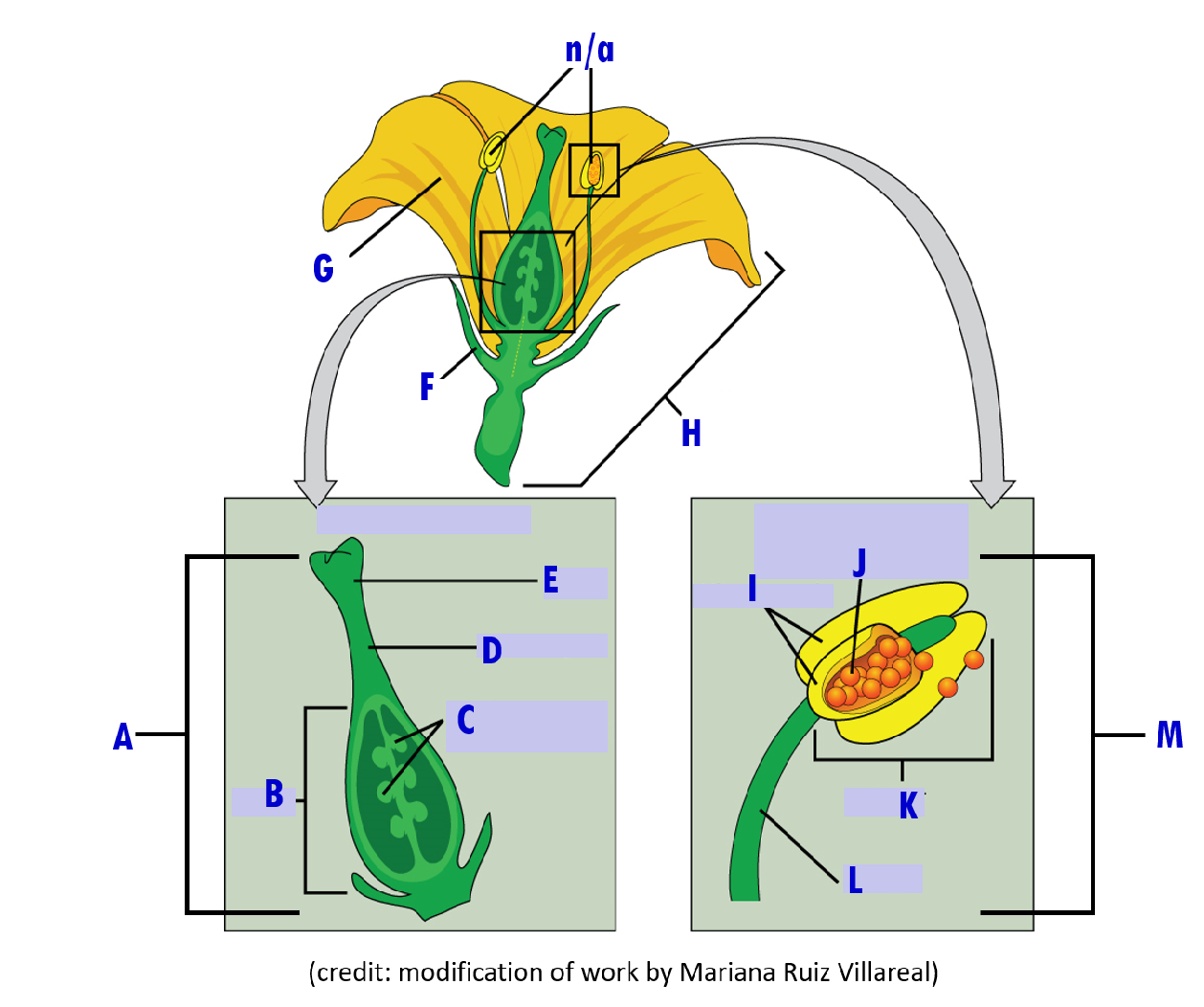
anther
K

Carpel
A

filament
L
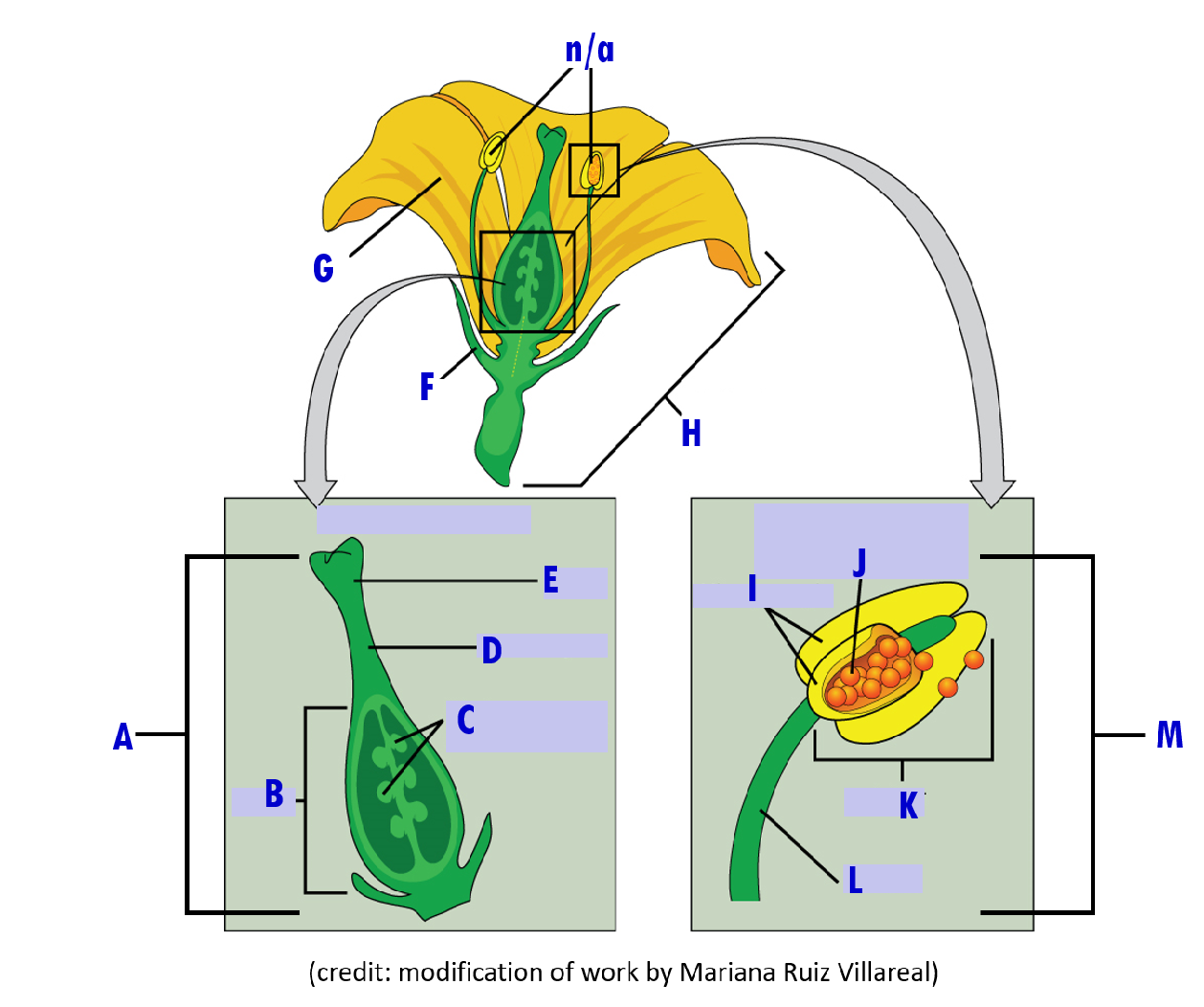
ovary
B

ovules (megasporangia)
C
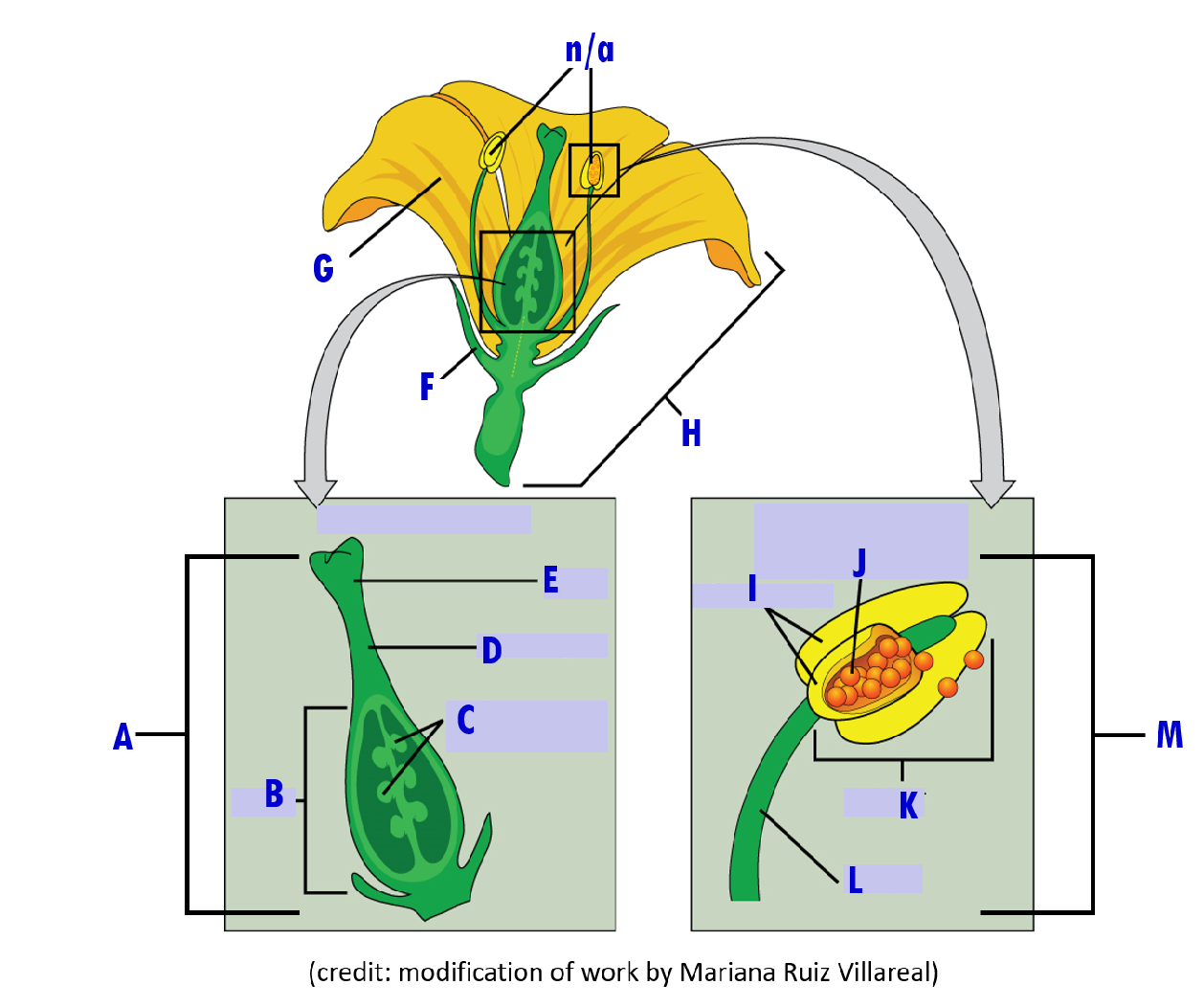
perianth (corolla composed of petals & calyx composed of sepals)
H
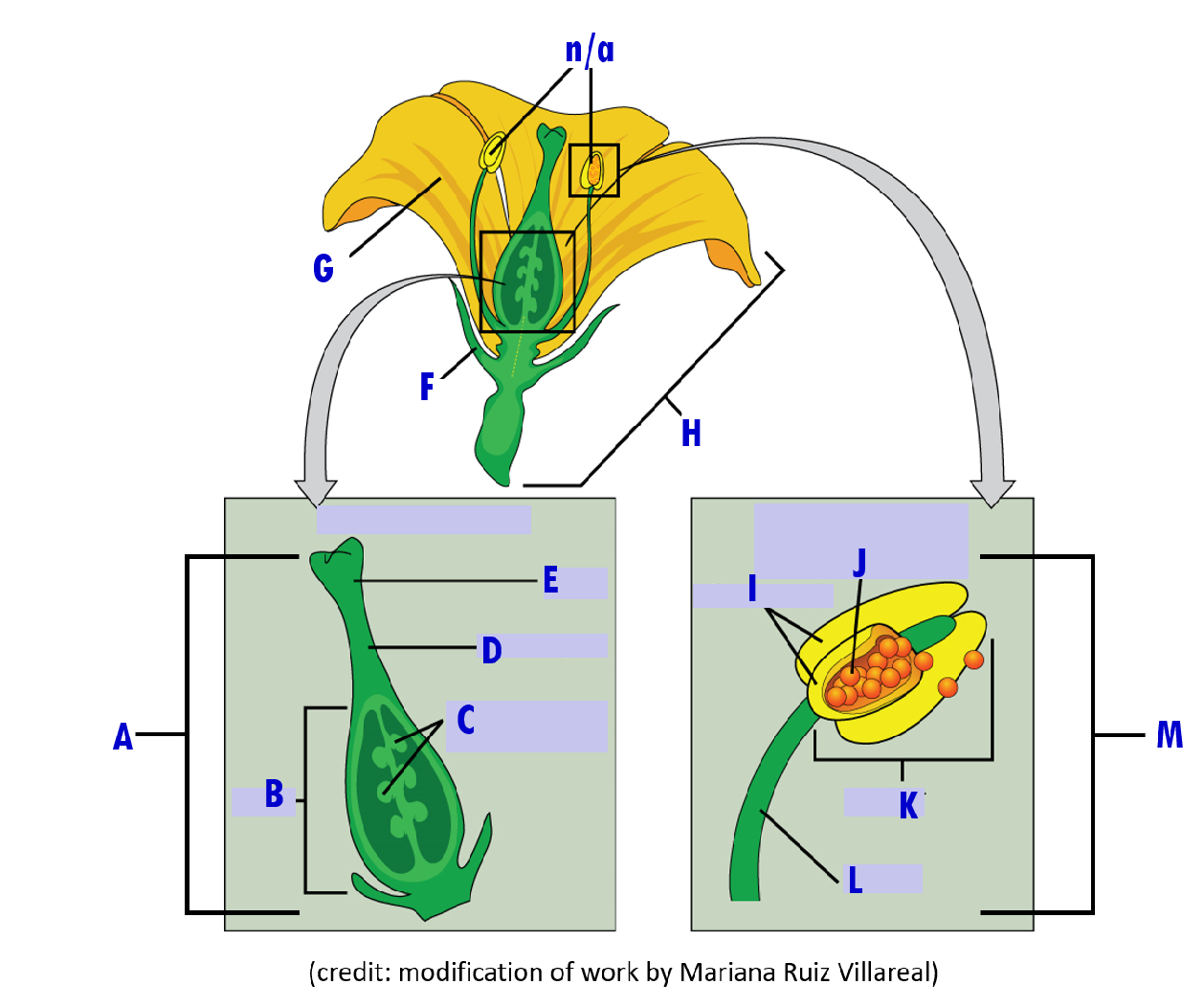
pollen grains
J

sepal
F

stamen
M

stigma
E

style
D

Referring to the image above, which flowers display bilateral symmetry?
C

Referring to the image above, which flowers display radial symmetry?
B,A,D

Referring to the image above, which flowers are inflorescent?
B, D
In gymnosperms & angiosperms, the female gametophyte consists of ____ cells.
7
Hibiscus shrubs develop from a seedling with two cotyledons, displays netted veins on its leaves, and its flowers have 5 petals. It is most likely a _______.
eudicot
A banana develops from a seedling with a single cotyledon, displays parallel veins on its leaves, and produces flowers with three petals. It is most likely a _______.
monocot
Which of the following is NOT true of seeds?
The embryonic plant is able to photosynthesize
Which of the following is NOT true of pollen?
Able to remain viable up to tens to thousands of years
Shared traits of seeds and pollen
Both are able to withstand desiccation and be dispersed via water, air, or animals.