BIO III Exam 2
 Call Kai
 Learn
Learn Practice Test
 Spaced Repetition
 Match
Match Flashcards
 Knowt Play
1/98

There's no tags or description
Looks like no tags are added yet.
Name | Mastery | Learn | Test | Matching | Spaced | Call with Kai | Chat |
|---|
No analytics yet
Send a link to your students to track their progress
99 Terms
Indeterminate growth
A pattern of growth in which an individual continues to increase its overall body size throughout its life.
Apical meristems
A group of undifferentiated plant cells, at the tip of a shoot or root, that is responsible for primary growth.

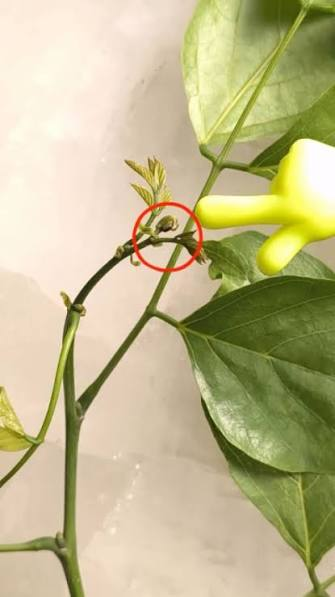
Axillary (or lateral) buds
A bud that forms at a node and may develop into a lateral (side) branch.
Middle lamella
pectin-rich layer that cements adjacent plant cell walls together (formed first)
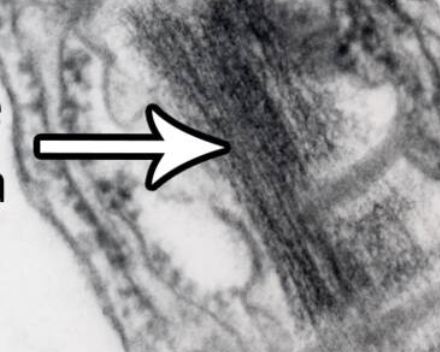
Primary Cell Wall
formed mainly of cellulose microfibrils bounded together by cross-linking polysaccharides and accessory hydrocarbons (pectins and hemicelluloses)

Secondary Cell Wall
deposited inside primary cell wall in specialized cells; it is heavily lignified (contains lignin)

Plasmodesmata
membrane-lined channels passing through cell walls that connect cytoplasm of adjacent cells

Dermal tissue system
The tissue forming the outer layer of a plant; covering in roots, absorptive
Ground tissue system
Most common of the tissue systems; includes the following tissues/cell types parenchyma, collenchyma, and sclerenchyma—tissues other than the epidermis and vascular tissue. Used for storage, structure, photosynthesis, etc.
Vascular tissue system
In plants, tissues that transport water, nutrients, and sugars. Made up of the complex tissues xylem and phloem, each of which contains several cell types.
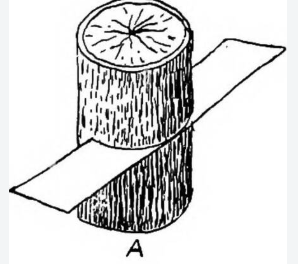
Radial longitudinal section
type of longitudinal section, which is a lengthwise cut through a structure to reveal its internal organization

Transverse cross section
a cross-sectional view made by cutting an object across its length, so that the cut surface is perpendicular to the long axis
Xylem
A plant vascular tissue that conducts water and ions from roots to shoots; contains tracheids and/or vessel elements.

Phloem
A plant vascular tissue that conducts sugars between roots and shoots; contain sieve-tube elements and companion cells.

Primary phloem
phloem develops from the procambium of apical meristems

Secondary phloem
phloem develops from the vascular cambium

Primary xylem
xylem develops from the procambium of apical meristems

Secondary xylem
xylem, or wood, from the vascular cambium.

Parenchyma
Can refer to tissue or cell type. In plants, a general type of cell with a relatively thin primary cell wall. These cells, which form a simple tissue found in leaves, the centers of stems and roots, and fruits, are involved in photosynthesis, storage, and transport. Alive at maturity and totipotent (can become all cell types)
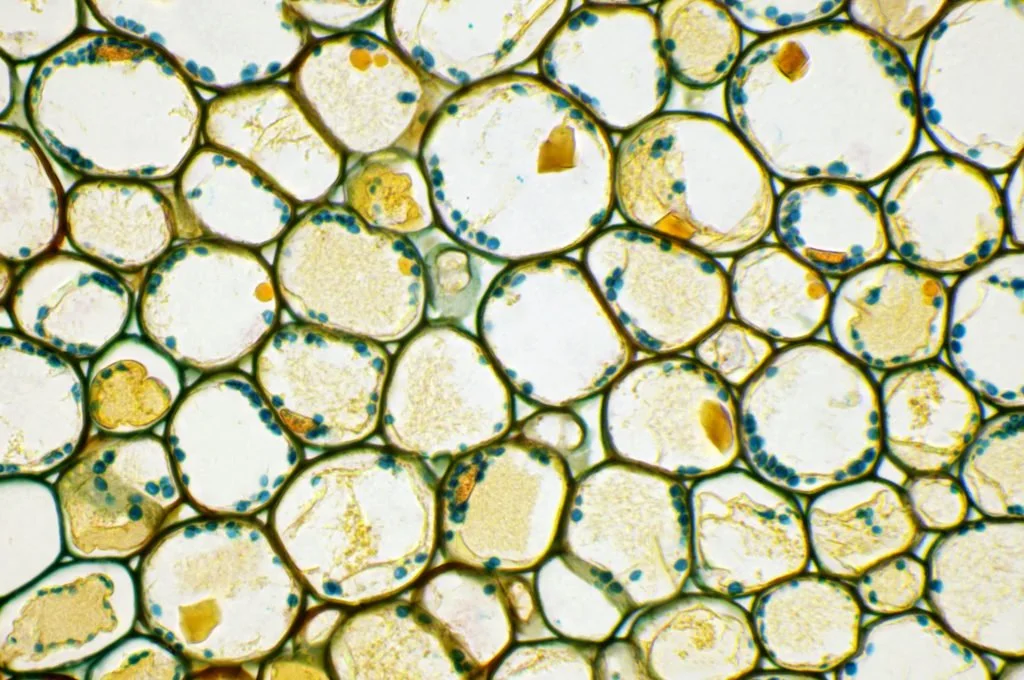
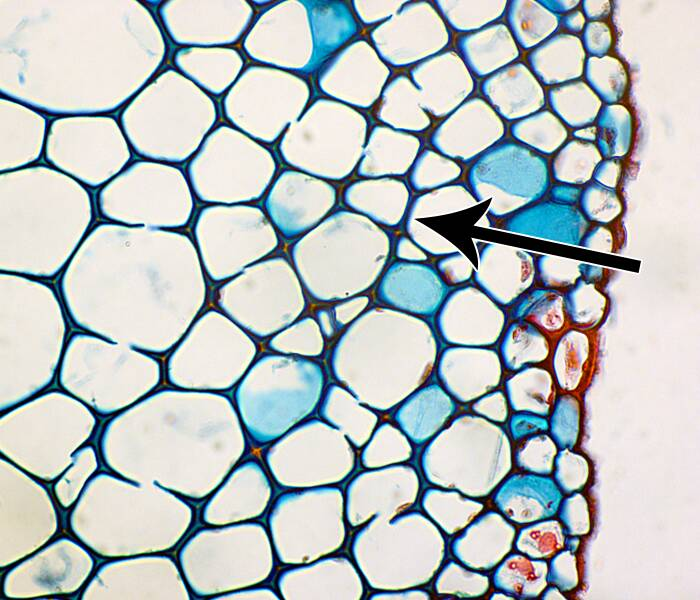
Collenchyma
Can refer to tissue or cell type. In plants, an elongated cell with primary cell walls thickened at the corners that provides support to growing plant parts; usually found as a simple tissue in strands along leaf veins and stalks. Alive at maturity
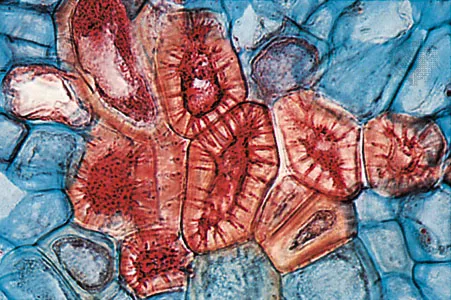
Sclerenchyma
Can refer to tissue or cell type. In plants, a cell that has a thick secondary cell wall and provides support; forms a simple tissue that typically contains the tough structural polymer lignin and usually is dead at maturity. Includes fibers and sclereids.
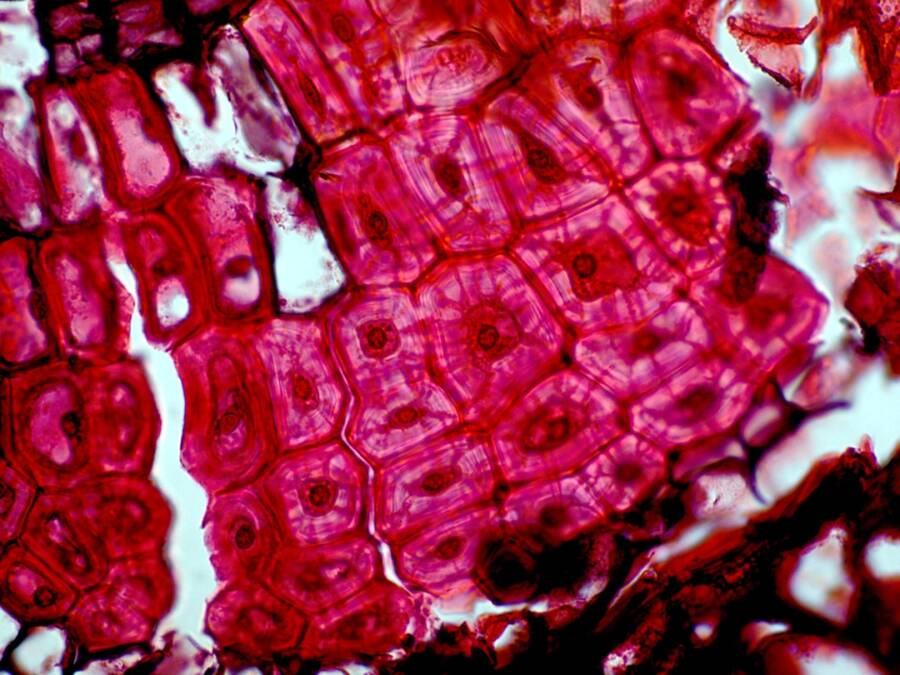
Fibers
a type of elongated sclerenchyma cell; long, slender cells providing supporting in stems/leaves (used in textiles)

Sclereids
In plants, a relatively short type of sclerenchyma cell that usually functions in protection, such as in seed coats and nutshells.
Chlorenchyma
parenchyma specialization; contains chloroplasts

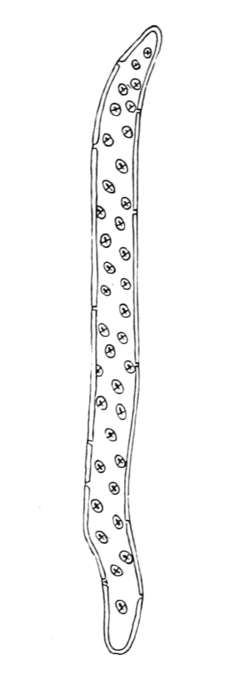
Tracheids
long, tapered water-conducting cells in xylem that transfer water and dissolved mineral nutrients from roots leaves while providing structural support. found in ALL vascular plants. highly thick lignified secondary wall with pits. dead at maturity
Vessel element
cell in xylem with highly thick secondary walls with perforations and pits; efficient long-distance transport of water and mineral nutrients upward through xylem tissue. dead at maturity

Sieve tube elements
In plants, an elongated sugar-conducting cell in phloem that lacks nuclei and has primary cell wall perforated into sieve plates at both ends, allowing sap to flow to adjacent cells. translocates carbohydrates, amino acids, and hormones throughout plant body within phloem tissue

Companion cells
In plants, a cell in the phloem that is connected via many plasmodesmata to adjacent sieve-tube elements; provide materials to maintain sieve-tube elements and function in the loading and unloading of sugars into sieve-tube elements. alive at maturity

Dicot root structure
vascular tissue form central vascular cylinder (stele) where xylem creates “x” at center, surrounded by phloem arms with no central pith

Monocot root structure
vascular bundles arranged in distinct ring around central pith composed of parenchymatous ground tissue

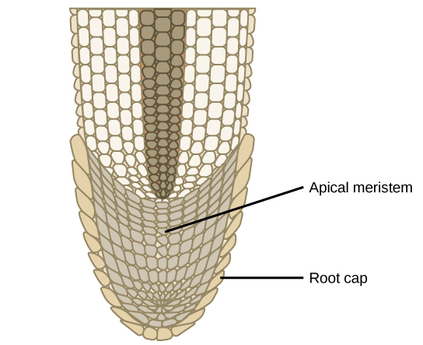
Zone of cellular division
located at the root tip, containing apical meristem that actively produces new cells beneath protective root cap
Zone of cellular elongation
located behind division zone, where newly produced cells expand and lengthen to push root tip through soil

Zone of cellular maturation
located further up the root, where cells differentiate into distinct tissue types and produce root hairs and lateral roots

Tap roots
A large, vertical main root of a plant’s root system; one axis (dicots)

Fibrous roots
monocot root system; multiple axes

Root cap
A small group of cells that covers and protects the root apical meristem. Senses gravity and determines the direction of root growth.
Pith
In the shoot systems of plants, ground tissue located to the inside of the vascular bundles. Monocot roots have; dicot stems have
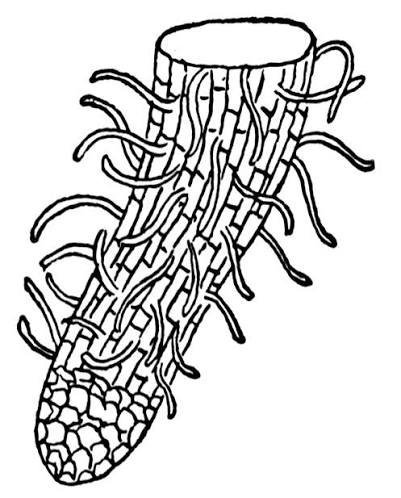
Root hairs
A long, thin outgrowth of the epidermal cells of plant roots, providing increased surface area for absorption of water and nutrients.

Casparian strip
In plant roots, a waxy layer containing suberin, a water-repellent substance that prevents movement of water through the walls of endodermal cells, thus blocking the apoplastic pathway of water and ion movement into the vascular tissue.

Endodermis
innermost cell layer of the cortex forming boundary around stele

Stele
vascular tissue (xylem and phloem), surrounded by pericycle and endodermis

Pericycle
layer of cells located just inside the endodermis surrounding the xylem and phloem; branch (lateral) roots initiate here

Apoplastic route
water and solutes move through porous cell walls and intracellular spaces outside plasma membrane

Symplastic route
water moves through continuous cytoplasm of adjacent cells connected by plasmodesmata

Transmembrane Route
water crosses cell membranes directly via water channels (aquaporins) as it moves from cell to cell

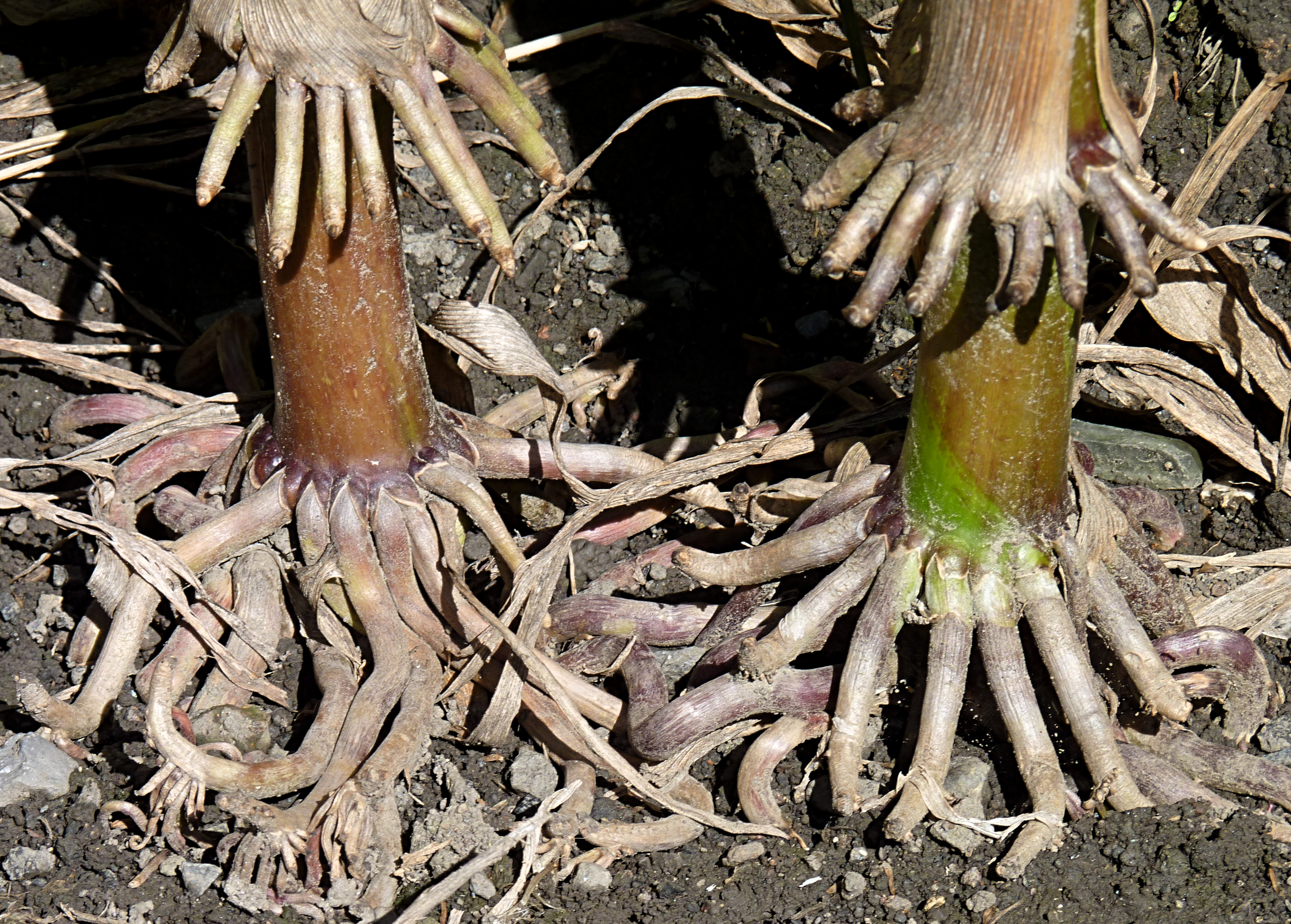
Prop roots
adventitious roots extending from stem into ground to stabilize stem
Aerial Roots
outer multi-layer spongy tissue on epiphytic roots (like orchids) that absorbs aerial moisture

Storage roots
thickened roots adapted for storing starch and water (e.g., carrots, beets, radishes)
Symbiotic roots
roots involved in mutualistic associations, such as mycorrhizae and nitrogen-fixing root nodules
Ectomycorrhizal fungi (EMF)
fungi hyphae form sheaths around roots and penetrate between root cells; carbon from plant, plant nutrients (primarily phosphorous) from fungi

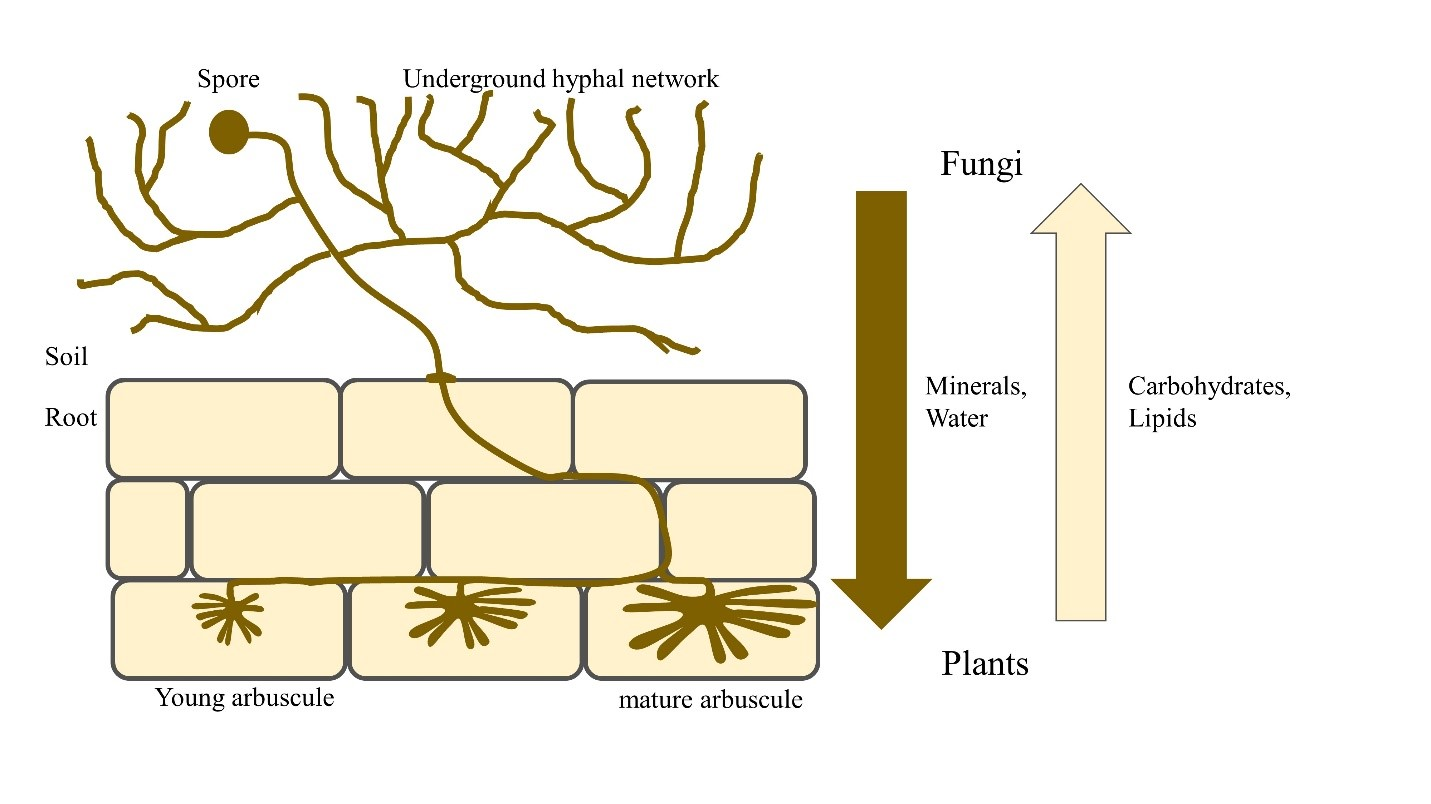
Arbuscular mycorrhizal fungi (AMF)
penetrate root cells walls and contact plasma membrane to form highly branched tree-like structures inside plants and fungie
Leghemoglobin
An iron-containing protein similar to hemoglobin. Found in infected cells of legume root nodules where it binds oxygen, preventing it from poisoning a bacterial enzyme needed for nitrogen fixation.
Root Nodule System
mutualism between plant roots (legumes) and nitrogen-fixing bacteria (rhizobia) houses within specialized root nodules; bacteria convert atmospheric nitrogen into usable forms while plant provides carbohydrates and uses leghemoglobin to regulate
Dicot Stem Structure
vascular bundles arranged in a neat ring; lack endodermis or pericycle ring

Monocot Stem Structure
vascular bundles scattered throughout

Vascular cambium
cylinder of meristematic cells that produces secondary xylem inward and secondary phloem outward
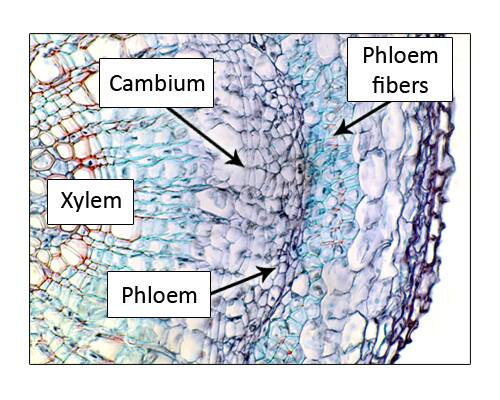
Cork cambium
produces protective cork cells outward to replace expanding epidermis

Sapwood
outer, lighter region of secondary xylem containing active water-conducting xylem

Heartwood
the older inner region of secondary xylem that provides structural support but no longer transports water

Bark
consists of all tissues located outside vascular cambium; cork, cork cambium, and secondary phloem
Water-storage stems
thickened stems (e.g., cacti) that store water, where leaves are reduced to spines
Tubers
underground storaged stems (e.g., potatoes) adapted for carbohydrate/starch storage
Stolons (runners)
above ground horizontal stems (e.g., strawberries) that produce new plant at nodes
Rhizomes
underground horizontal stems (e.g., irises, ginger) that store nutrients and produce new plants at nodes

Thorns
sharp, modified stems that protect plants against herbivores
Alternate Leaf Arrangement

Opposite Leaf Arrangement

Rosette Leaf Arrangement

Whorled Leaf Arrangment

Simple Leaf Structure

Compound Leaf Structure

Doubly Compound Leaf Structure

Needle Leaf Structure

Dicot Leaf Structure
netted; typically feature petiole attaching broad blade to stem, mesophyll differentiated into spongy and palisade layers
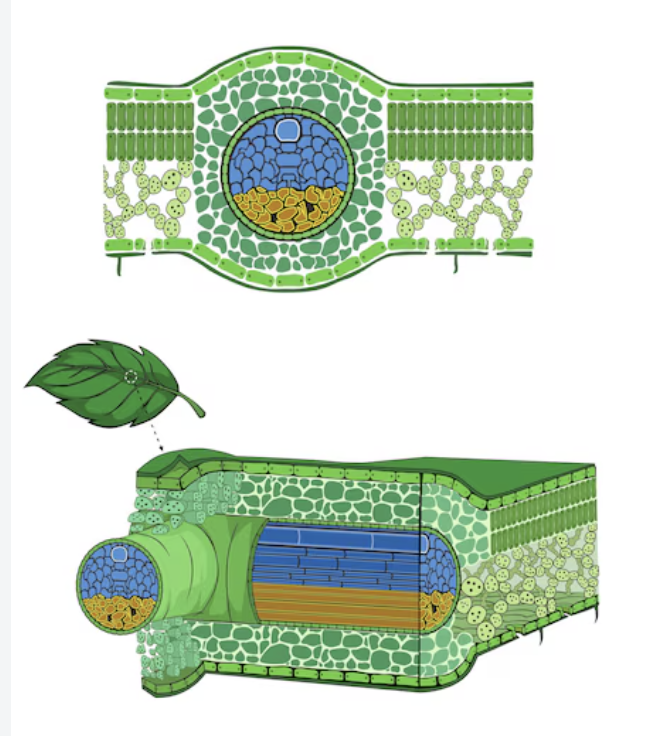
Monocot Leaf Structure
veins; parallel vennation, typically feature leaf sheath wrapping around stem (e.g., grasses)

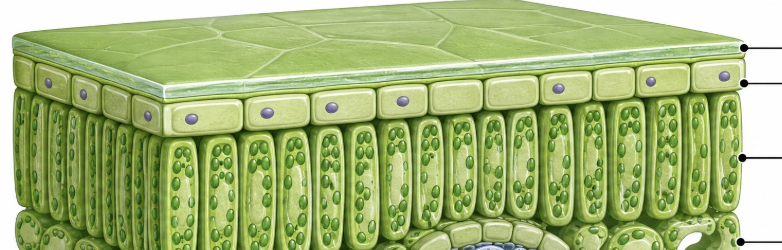
Spongy parenchyma
irregularly shaped located beneath palisade layer; features extensive air spaces to facilitate gas exchange (CO2, O2, and water vapor)
Palisade Parenchyma
closely filled in, organized at top trying to maximize light harvesting
Lenticel
pores where stems break open and oxygen can be let in

Trichomes
slow the rate of water loss by increasing boundary layer of still air around leaf

Light-capturing reactions
use light energy and H2O to produce O2 (byproduct), ATP, and NADPH
Calvin Cycle
uses ATP, NADPH, and CO2 to synthesize sugars
Rubisco
catalyzes the fixation of CO2 to RuBP, producing two 3-phosophoglycerate (3 PGA) molecules in the Calvin Cycle. It can also bind O2 during photorespiration, consuming ATP and releasing CO2
C3 Plants
Fix CO2 directly via Rubisco in mesophyll cells to form 3-carbon compounds (3 PGA); prone to photorespiration under hot and dry conditions when stomata clos
C4 Plants
initially fix CO2 using PEP carboxylase in mesophyll cells to form a 4-carbon organic acid. This 4-carbon acid is transported to bundle-sheath cells, where CO2 is concentrated and released directly to Rubisco for Calvin Cycle, significantly minimizing photorespiration and increasing drought resistance
Bulbs
example modified leaves (ex: onion leaves store food)
Floral mimics
example modified leaves (ex: red poinsettia leaves modified to attracted pollinators)
Succulent leaves
example modified leaves (ex: aloe vera leaves modified to store water)
Tendrils
example modified leaves; modified to store water (ex: peas)

Traps
example modified leaves (ex: pitcher plant leaves modified to trap and digest insects)
Auxin
synthesized in shoot apical meristem, young leaves, and developing fruits/seed; promotes cell elongation, maintains apical dominance, mediates phototropism, and stimulates vascular differentiation (xylem/phloem)
Acid-growth hypothesis
The hypothesis that auxin triggers elongation of plant cells by increasing the activity of proton pumps, making the cell wall more acidic and leading to expansion of the cell wall and an influx of water.
Cytokinins
synthesized in root tips and actively dividing tissues; promotes cell division, stimulate chloroplast development, break lateral bud dormancy, and delay leaf senescence (aging). Combined with auxin in tissue culture, regenerate whole plants from callus tissue
Gibberlines (GAs)
synthesized meristems, immature seeds, and anthers; stimulate stem elongation and cell division, promote seed germination (by inducing alpha-amylase to break down stored endosperm strach into sugars), and promote seedless fruit development
Ethylene
synthesized in most tissues, especially in response to environmental stress; exists as gas, induces fruit ripening, leaf and flower senescence, and leaf/fruit abscission
Abscisic Acid (ABA)
synthesized in roots during drought stress (and found in almost all cells); primarily “stress hormone”; travels to leaves to induce stomatal closure (preventing water loss) and inhibits seed germination and bud growth
Reception
external stimulus is detected when a signal molecule or light binds a receptor protein (located in plasma membrane, cytoplasm, ER, or nucleus)
Transduction
receptor activation triggers intracellular relay cascade (e.g., protein phosphorylation cascades/second messengers like Ca2+) amplifying signal
Response
target cells alter this activity (e.g. changes in gene expression, enzyme activity, ion flux, or cell elongation)
Plant hormone
small organic molecule that acts at low concentrations to coordinate growth, development, and environmental response