Cell Physiology, Part 2: Nucleus, Ribosomes, and Central Dogma
 Call Kai
 Learn
Learn Practice Test
 Spaced Repetition
 Match
Match Flashcards
 Knowt Play
1/40

There's no tags or description
Looks like no tags are added yet.
Name | Mastery | Learn | Test | Matching | Spaced | Call with Kai | Chat |
|---|
No analytics yet
Send a link to your students to track their progress
41 Terms
Erythrocytes
Carry O2
Neurons
Fire (action potentials)
Muscle Cell
Contract
Cancer Cells
Grow
The Nucleus
Usually the largest cell component
double-layered nuclear envelope (or membrane)
Contains cell’s genetic material, DNA
DNA Functions
Direct protein synthesis
Serve as genetic blueprint during cell replication
Nucleotides
Deoxyribonucleic acid
Nucleotide function
blueprint for protein assembly
DNA is made from ____
millions of nucleotides
Nucleotide parts
Sugar, phosphate, base
4 bases in DNA
adenine (A), guanine (G), cytosine (C), thymine (T)
What are the nucleotides held together by?
Hydrogen bonds
Base pairing
A with T, C with G
Purines
adenine and guanine
Pyrmadines
cytosine, thymine
What is a gene?
a stretch of DNA that codes for the synthesis of a given polypeptide or protein.
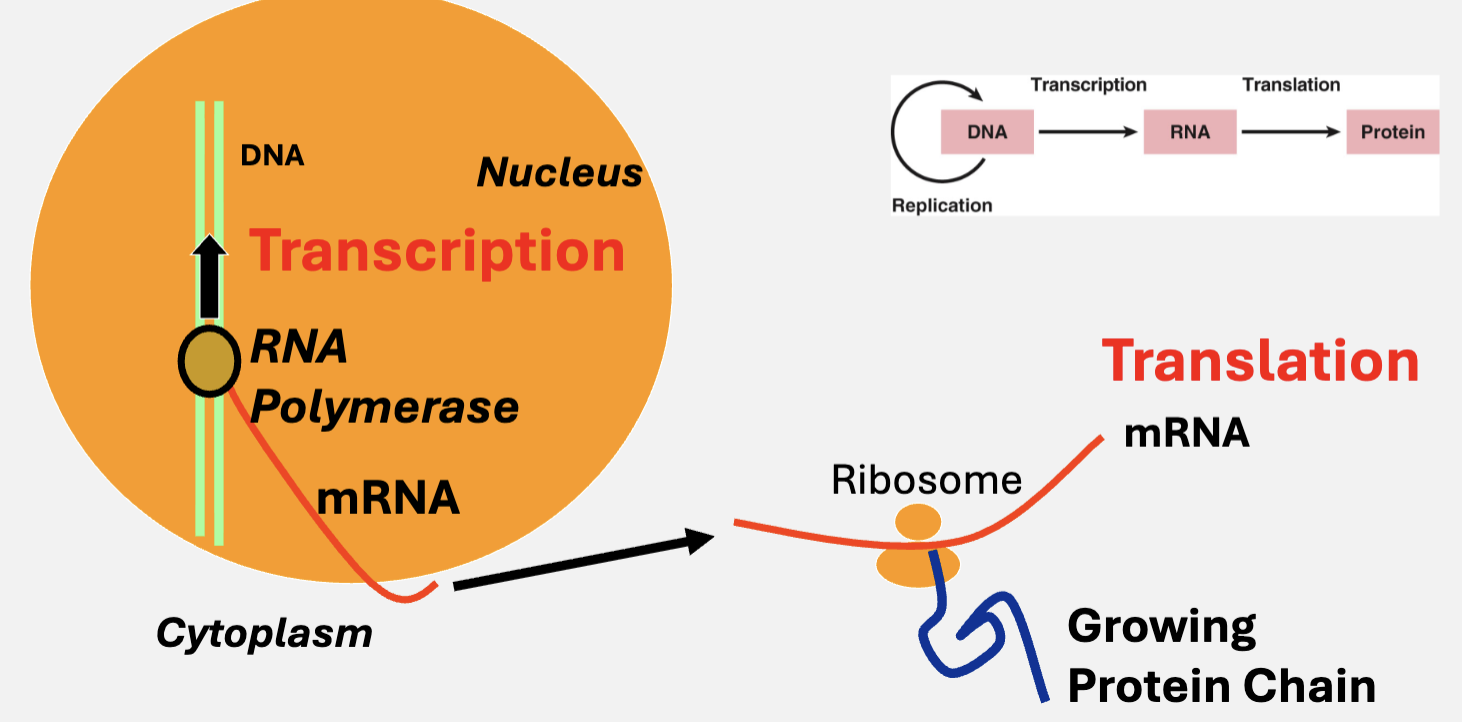
The Central Dogma of Biology
DNA is transcribed to RNA which is translated to protein
Transcription (general info)
Sequence of bases (ACTG) that make up the gene (in the DNA) determines the protein that will be made, ie the amino acid sequence of the protein

How are bases organized in transcription?
triplets
To make protein, the gene first needs to be ____ (actually the process of transcription)
transcribed from DNA to mRNA
What does transcription
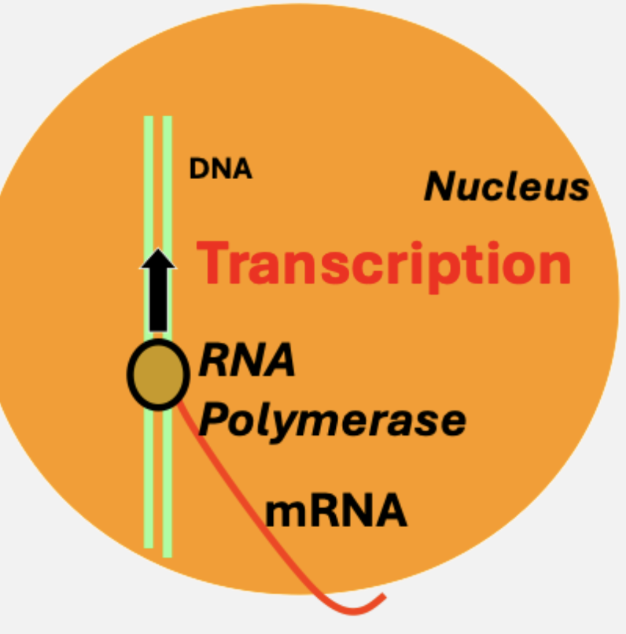
RNA Polymerase
Where is Ribonucleic Acid (RNA) produced
the nucleus through transcription of the DNA code by RNA polymerase
mRNA makes up ___
~1.5% of total RNA.
mRNA
coding RNA, codes for proteins
Non-coding RNA
tRNA, rRNA, siRNA/miRNA
tRNA
delivers amino acids to ribosomes for translation
rRNA
component of the ribosome
siRNA and miRNA
regulatory RNAs that silence gene expression by interfering with translation
How is the mRNA code organized
codons, which are complementary to the DNA’s triplet code

Template strand broken into _____, mRNA broken into ______
triplets, codons
What is the different nucleic base in rna?
U (uridine)
A codon codes for an ___
amino acid
Each 3-base codon in mRNA codes for
one amino acid

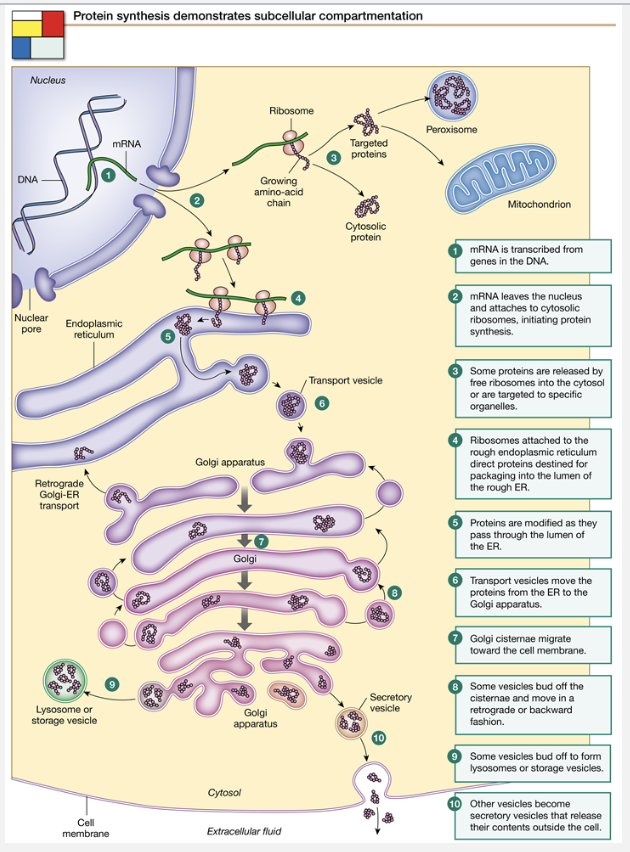
Ribosomes:
site of protein synthesis as directed by mRNA

Where do you find ribosomes?
rough ER, nucleus, and unattached (free in cytosol)
What are ribosomes made of
rRNA and protein
Endoplasmic reticulum
Elaborate fluid-filled membranous system distributed throughout the cytosol
ER primary function
protein and lipid synthesis
Two types of ER
Rough (protein synthesis)
Smooth (lipid and steroid synthesis, protein modification)

The Leader Sequence (AKA signal sequence)
determines where the newly translated protein will go (ER? mitochondria? Nucleus? Peroxisome?)

Post Translational processing