Chemistry test/exam Y10T4
 Call Kai
 Learn
 Practice Test
 Spaced Repetition
 Match
 Flashcards
 Knowt Play
1/54

There's no tags or description
Looks like no tags are added yet.
55 Terms
History of the atom 1
Leucippus and Democritus
Matter could be cut into smaller and smaller pieces until it was “uncuttable”.
These pieces were called atomos.
History of the atom 2
John Dalton
“billiard ball”

History of the atom 3

History of the atome 4
“nuclear model”

History of he atom 5
Niels Bohr “Planetary model”

Atom diagrams over the years

difference between atomic number and mass number

organisation of the Periodic Table, arose from 4 major principles.
1.Atomic number, rather than atomic mass, determines the order of elements.
2.Electrons around the nucleus are arranged by repeating patterns of electron configuration.
3.Valence electrons (outer shell) determines chemical properties.
4.Recurrence of similar properties in groups are observed.
Other Important groupings in the periodic table
•Alkaline Earth Metals (Group 2): Reactive metals that form +2 ions and are essential in biological and structural materials.
•Transition Metals: Dense, conductive metals with variable oxidation states (ions of different charges [Fe2+/Fe3+]) and colorful compounds.
•Chalcogens (Group 16): Reactive nonmetals like oxygen and sulfur that commonly form -2 ions and are vital in biological and environmental processes.
•Halogens (Group 17): Extremely reactive nonmetals that form -1 ions and are used in disinfection and lighting.
•Noble Gases (Group 18): Inert, colorless gases with full outer shells, used in lighting and as non-reactive environments.
Groups and rows in the epriodic table
Early ordering of the periodic table discovery
John Dalton (1808) Proposed Atomic Theory:
All matter made of indivisible atoms.
Atoms of same element identical.
Suggested a list of elements and symbols, but no periodic arrangement.
Johann Dobereiner (1829) Law of Triads:
Groups of 3 elements with similar chemical properties (e.g., Li, Na, K).
Middle element had properties between the other two.
Limit: Only worked for a few triads.
John Newlands (1864) Law of Octaves:
Arranged known elements by atomic mass. Found that every 8th element had similar properties. Limit: Only worked up to calcium.
Didn’t leave space for new elements → criticized.
Acids vs bases
arrhenius theory
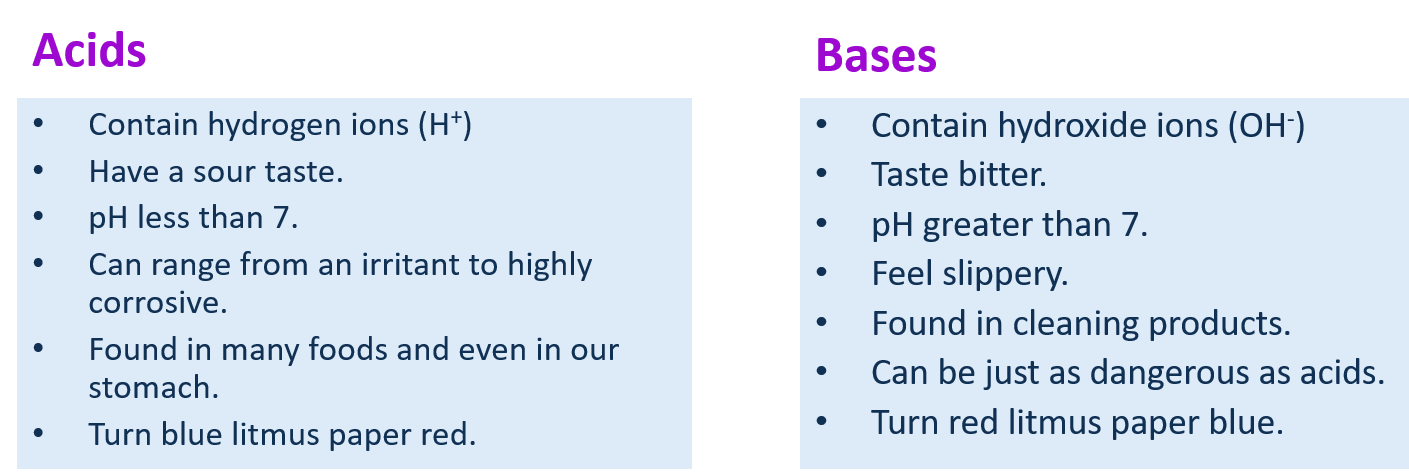
Arrhenius theory defines acids and bases in aqueous solutions.
Acids are substances that ionise (dissolve) in water to form hydrogen ions.
bases dissociate (dissolve) in water to form hydroxide ions.

arrhenius theory limitations

Bronsted Lowry Theory
Acid = Proton donor à Acids are substance that give away a hydrogen ion (H⁺).
Base = Proton acceptor à Bases are substance that accept a hydrogen ion (H⁺).

conjugate acid/base pairs

acids ad bases you need to know

Acid reactions

what is a salt
The “salt” that is produced as a product in the above chemical reactions is always an ionic compound. That is, it is a cation and an anion bonded together.
Types of reactions (Simple)
combination A + B = AB
decomposition AB = A+B
single displacement A+BC = AC + B
Double displacement AB + CD = AD + CB
Combustion reactions release CO2 and H20
types of reactions
Combination (or synthesis) reactions.
This is when two separate chemicals are combined together to form one compound.
A + B ® AB
Example:
Nitric Oxide + oxygen ® Nitrogen dioxide
2NO + O2 ® 2NO2
Decomposition reactions.
This is when one compound breaks down (or decomposes) into two separate substances. This decomposition can be due to heat, or it can occur naturally at standard temperatures.
AB ® A+B
Example:
Sodium Carbonate ® Sodium Oxide + Carbon Dioxide
Na2CO3 ® Na2O + CO2
Single displacement reactions
Single displacement reactions occur when a single element in placed into an ionic compound solution, and the element replaces one of the parts of the solution.
It can be:
a metal displacement reaction- placing solid metal into an ionic solution, with the added metal switching places with the metal ion
halogen displacement reaction - placing a halogen (diatomic elemental molecule) into an ionic solution, and the halogen replacing the anion (non-metal ion) in the solution.
Both of these types follow the following general formula.
A + BC ® B + AC
Examples:
Metal displacement
Calcium added to Copper(II) Sulfate to produce Calcium sulfate and copper
Ca(s) + CuSO4(aq) ® CaSO4(aq) + Cu(s)
Note: it is important to include state symbols.
Halogen Displacement
Fluorine added to sodium iodide to form sodium fluoride and iodine.
F2(g) + 2NaI(aq) ® 2NaF(aq) + I2 (aq)
Double Displacement (precipitation reactions)
Two ionic solutions are mixed, the ions interact with each other and produce an insoluble ionic solid in an ionic solution.
These were studied in last terms Chemistry unit
A table to show the solubility of ionic solids can be found in the Resources tab
Example:
Silver nitrate is added to sodium iodide
AgNO3 (aq) + NaI (aq) ® AgI (s) + NaNO3 (aq)
Combustion Reactions
All hydrocarbons will combust when set alight in the presence of oxygen. This will produce carbon dioxide and water.
Example:
Methane + Oxygen ® Carbon Dioxide + water
CH4 + 2O2 ® CO2 + 2H2O
Guess reactions type
Mg + O₂ → MgO
Na + Cl₂ → NaCl
Fe + S → FeS
CaCO₃ → CaO + CO₂
H₂O → H₂ + O₂
Ag₂O → Ag + O₂
Zn + CuSO₄ → ZnSO₄ + Cu
Mg + 2HCl → MgCl₂ + H₂
Fe + CuSO₄ → FeSO₄ + Cu
Cl₂ + 2KBr → 2KCl + Br₂
AgNO₃ + NaCl → AgCl + NaNO₃
BaCl₂ + Na₂SO₄ → BaSO₄ + 2NaCl
Pb(NO₃)₂ + 2KI → PbI₂ + 2KNO₃
HCl + NaOH → NaCl + H₂O
CH₄ + O₂ → CO₂ + H₂O
C₃H₈ + O₂ → CO₂ + H₂O
C₄H₁₀ + O₂ → CO₂ + H₂O
Al + O₂ → Al₂O₃
KClO₃ → KCl + O₂
Cu + 2AgNO₃ → Cu(NO₃)₂ + 2Ag
H₂ + Cl₂ → HCl
HgO → Hg + O₂
Ca + 2H₂O → Ca(OH)₂ + H₂
Na₂CO₃ + CaCl₂ → CaCO₃ + 2NaCl
C₂H₆ + O₂ → CO₂ + H₂O
Mg + O₂ → MgO → ✅ Combination (A + B → AB)
Na + Cl₂ → NaCl → ✅ Combination
Fe + S → FeS → ✅ Combination
CaCO₃ → CaO + CO₂ → ✅ Decomposition (AB → A + B)
H₂O → H₂ + O₂ → ✅ Decomposition
Ag₂O → Ag + O₂ → ✅ Decomposition
Zn + CuSO₄ → ZnSO₄ + Cu → ✅ Single Displacement (A + BC → AC + B)
Mg + 2HCl → MgCl₂ + H₂ → ✅ Single Displacement
Fe + CuSO₄ → FeSO₄ + Cu → ✅ Single Displacement
Cl₂ + 2KBr → 2KCl + Br₂ → ✅ Single Displacement
AgNO₃ + NaCl → AgCl + NaNO₃ → ✅ Double Displacement (AB + CD → AD + CB)
BaCl₂ + Na₂SO₄ → BaSO₄ + 2NaCl → ✅ Double Displacement
Pb(NO₃)₂ + 2KI → PbI₂ + 2KNO₃ → ✅ Double Displacement
HCl + NaOH → NaCl + H₂O → ✅ Double Displacement
CH₄ + O₂ → CO₂ + H₂O → ✅ Combustion (produces CO₂ and H₂O)
C₃H₈ + O₂ → CO₂ + H₂O → ✅ Combustion
C₄H₁₀ + O₂ → CO₂ + H₂O → ✅ Combustion
Al + O₂ → Al₂O₃ → ✅ Combination
KClO₃ → KCl + O₂ → ✅ Decomposition
Cu + 2AgNO₃ → Cu(NO₃)₂ + 2Ag → ✅ Single Displacement
H₂ + Cl₂ → HCl → ✅ Combination
HgO → Hg + O₂ → ✅ Decomposition
Ca + 2H₂O → Ca(OH)₂ + H₂ → ✅ Single Displacement
Na₂CO₃ + CaCl₂ → CaCO₃ + 2NaCl → ✅ Double Displacement
C₂H₆ + O₂ → CO₂ + H₂O → ✅ Combustion
Types of observable changes
•Colour Change: E.g. "Orange solution turns green" (acidified sodium dichromate).
•
•Temperature Change: E.g. "Test tube becomes warm to touch" (exothermic reaction).
•
•Gas Formation: E.g. "Effervescence/bubbling observed"; "bubbles of gas are produced".
•
•Precipitate Formation: E.g. "Cloudy white solid forms in clear solution" (precipitate).
•
•Other Observations: E.g. Smell (e.g. "pungent odour"), sound (e.g. "pop" when hydrogen burns), or solid melts
go back to colour sheet

look at metal displacement reactions


redox equations
simple term -
oxidise, gains and becomes a compound
reduce, was a compound then reduced
does not work if lone one is lower than compound metal on chart

collison theory
Chemical reactions occur when reactant particles collide. For a reaction to occur reactant particles must:
1.Collide
2.Collide with sufficient energy to overcome the activation energy
3.Collide with appropriate orientation
actibation energy
“Sufficient energy” is needed to be able to break and form new bonds when they collide. Sufficient energy is also called activation energy.
collisions must be sufficiently energetic (kinetic energy) to break chemical bonds; this energy is known as the
factors affecting ror
1.Temperature
2.Concentration of the reactants
3.Surface area
4.Pressure
5.Catalysts
temperature
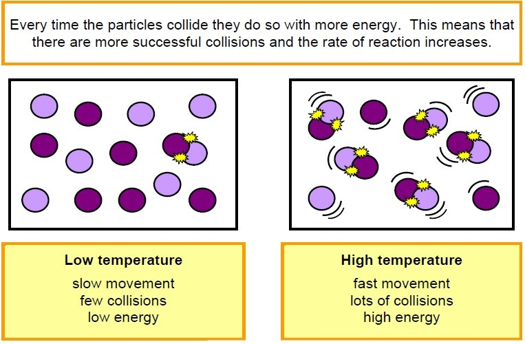
•Increasing temperature increases reaction rate.
•Temperature is a measure of average kinetic energy therefore an increase in temperature increases average kinetic energy.
•Particles now move faster and with more energy.
•This results in collisions that have more energy; therefore, a greater proportion of the reactant collisions will have the appropriate activation energy, resulting in more successful collisions and a faster rate of reaction.
Particles move faster as they have more kinetic energy, therefore they will collide more often, which will result in more successful collisions and therefore an increased rate of reaction.
concentration
Concentration refers to the amount of reactants present in a particular volume of liquid or gas during the reaction.Increasing the concentration of the reactants increases the rate of reaction. Particles are more likely to collide and react when they are highly concentrated. Only for liquid reactants

Surface area
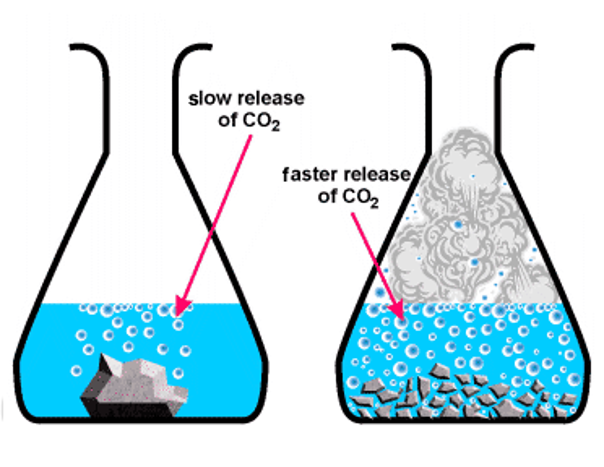
The rate of a chemical reaction can be raised by increasing the surface area of a solid reactant. This is done by cutting the substance into small pieces or grinding it into a powder.
If a solid reactant is broken into small pieces or ground into a powder:
•Its surface area increases
•More particles are exposed to the other reactant
•There are more collisions
•The rate of reaction increases
pressure
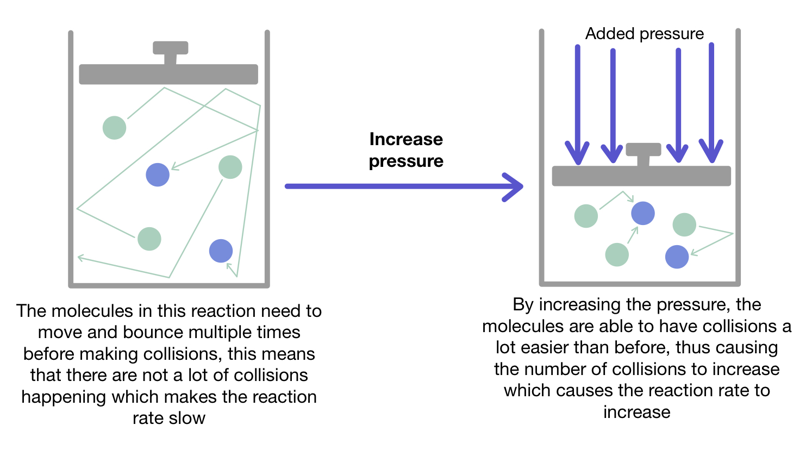
•An increase in pressure due to a decrease in volume or adding in more of a reactant gas will affect the rate of reaction.
•Increase in pressure indicates that you have an increase in the amount of reactant particles per unit volume.
•This means particles collide more often, resulting in more successful collisions and an increased rate of reaction.
Catalysts
Catalysts are chemicals that speed up reactions but are not consumed (used up) during the reaction. They can be considered ‘chemical helpers’ that help the reactants to form the products.They do this in two ways:
1.They reduce the amount of energy required to convert the reactants into products.
2.They make it easier for reactant molecules to collide and form products.

enzymes as catalysts
Enzymes are biological catalysts, meaning they speed up chemical reactions in living organisms without being used up.
They work by bringing reactant molecules together, allowing reactions to happen more easily and quickly.
Enzymes are involved in many important body processes, including digestion, protection against viruses, and DNA processing.
Example: Amylase is an enzyme found in saliva, the pancreas, and the small intestine.
Amylase breaks down starch in foods such as bread and potatoes into simple sugars, making them easier for the body to absorb and use for energy.
chemical energy
•Energy stored in the chemical bonds of a substance.
energy changes
•Chemical reactions always involve energy changes.
•
•Making bonds and breaking bonds involve energy changes
exothermic vs endothermic
A reaction is EXOTHERMIC if more energy is RELEASED from reactant bonds than is Used to form product bonds.
If more energy is Needed to form product bonds than is RELEASED from breaking reactant bonds then the reaction is ENDOTHERMIC

Endothermic
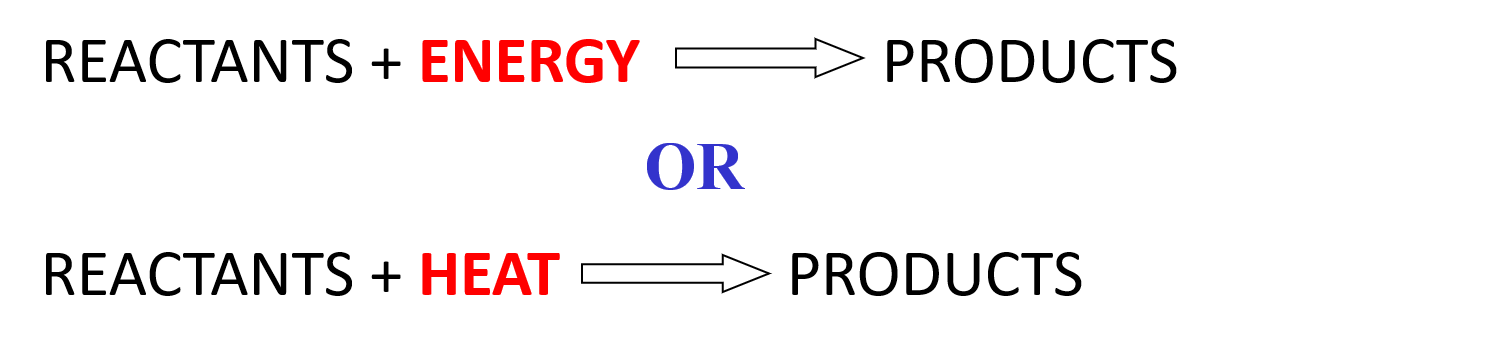
Endothermic – more energy is needed to make product bonds than the energy released when you break the reactant bonds, therefore energy is absorbed.
•Heat (energy) taken in
•Temperature of the substance drops
•Products feel COLD

endothermic reactions
exothermic
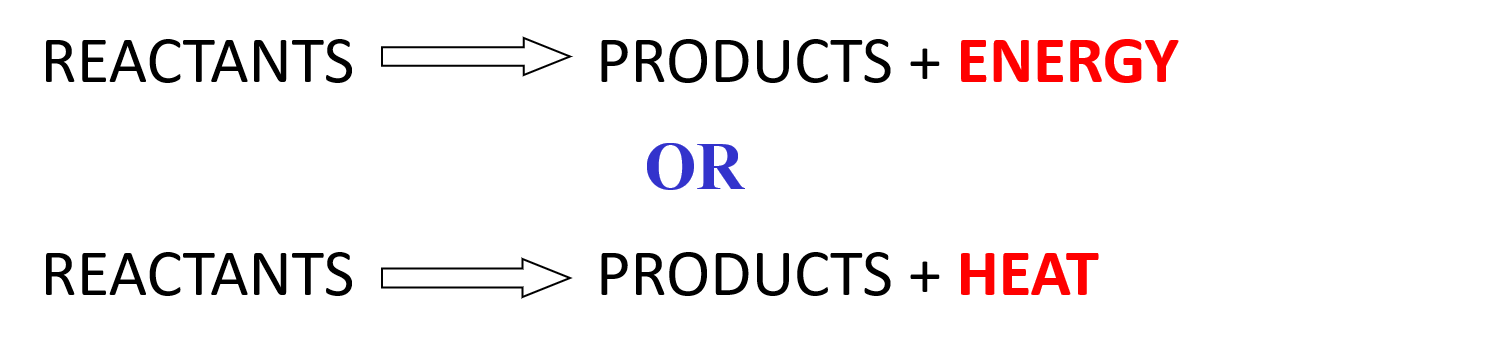
The forming of product bonds requires less energy than what was released when breaking the reactant bonds, therefore a net release of energy occurs.
•Heat (energy) given off
•Temperature of the substance rises
•Products feel HOT
dxo
exothermic reactions
examples of endothermic and exothermic

what is the mole
The mole (n) is a number that chemists use to count large numbers of particles
unit and symbol of mole

what is avogadro’s number
1 mole of a substance = 6.02 x 10²³ particles of that substance
how to calcukate molar mass
•To calculate the molar mass of molecules and compounds, add together the atomic mass of each element.
•If there is a subscript, then times the atomic mass by that number.
Molecular mass (M) = the mass of one mole of molecules of an element or compound
Formula mass (M) = the mass of one mole of formula units of an ionic compound
Eg:
M(H20) = 2 x Ar(H) + 1 x Ar(O)
= (2 x 1.008) + 16.00
= 18.016 g/mol
M(AgNO3) = 1 x Ar(Ag) + 1 x Ar(N) + 3 x Ar(O)
= 107.9 + 14.01 + (3 x 16.00)
= 169.9 g/mol
molar mass formulas

molar mass examples

stoichiometry
the study of ratios of moles of substances
law of conservation of mass
in a chemical reaction - the total mass of all products is equal to the total mass of all reactants