RADT 206 - PATHOLOGY
 Call Kai
 Learn
 Practice Test
 Spaced Repetition
 Match
 Flashcards
 Knowt Play
1/138

There's no tags or description
Looks like no tags are added yet.
139 Terms
Is PAGET’S DISEASE additive or destructive
Additive
Is EMPHYSEMA additive or destructive
Destructive
Is ACROMEGALY additive or destructive
Additive
Is OSTEOPETROSIS additive or destructive
Additive
Is DEGENERATIVE ARTHRITIS additive or destructive
Destructive
Is OSTEOPOROSIS additive or destructive
Destructive
Define IATROGENIC
Caused by treatment
Define IDIOPATHIC
Unknown cause
Define HYPEREMIA
Increased blood flow to injury - heat
Define CATHARTIC
Cleansing agent (castor oil, laxative, enema, etc)
Define EXTRAVASATION
Leakage of fluid into tissue (IV)
Define PARENTERAL
Injection of medication (outside of introducing it via GI tract)
Define PARALYTIC (ADYNAMIC) ILEUS
No peristalsis due to a paralytic agent such as anesthesia (system not working causing blockages)
Define DYNAMIC ILEUS
No peristalsis due to obstruction (physical blockage)
Define EXUDATE
Fluid leaking out of vessels (due to infection/injury/inflammation)
Define PHAGOCYTOSIS
Cellular process to engulf large molecules such as particles (white blood cells)
Define NECROSIS
Dying tissues
Define EPISTAXIS
Nose blood
Define HAI/NOSOCOMIAL
Hospital borne infections
Define FIBROUS ADHESIONS
Internal scarring
Define KELOID
Tumor-like scar
Define URTICARIA
Hives
Define PYOGENIC
Pus producing
Define SUPPURATIVE
Secretion of pus
Define ABSCESS
Pocket of pus
Define EDEMA
Swelling due to excess fluid
Define ISCHEMIA
Low blood flow to a part of the body
Define INFARCT
Tissue death to a part of the body due to low blood flow
Define HEMATOMA
Swelling due to trapped (accumulated) blood
Define ECCHYMOSIS
Bruise
Define HYPOPLASIA
Failure of normal development
Define APLASIA
No normal development
Define HYPERTROPHY
Increase in size
Define HYPERPLASIA
Increase in cells causing increased size in organ
Define DYPHASIA
Trouble speaking
Define DYSPHAGIA
Trouble swallowing
Define NEOPLASM
Tumor
Define CACHEXIA
Diminished size due to pathology
Define INFILTRATE
Abnormal fluids in organs (lungs)
Is GOUT additive or destructive
Destructive
Is EMPYEMA additive or destructive
Additive
Is OSTEOMALACIA additive or destructive
Destructive
What is a SIGN for INTERSTITIAL PNEUMONIA
shaggy border of the heart (“Shaggy Heart” sign)
Primary TB is the initial infection that occurs when a person first breathes in microscopic droplets containing the bacteria (T/F)
T
What is PRIMARY HISTOPLASMOSIS caused by
Fungus-endemic around the Mississippi Valley and Ohio River Valleys
Describe RESPIRATORY SYNCTIAL VIRUS (RSV)
pediatric pathology affecting all children by age 2
less than 2% require hospitalization
fomites carry the virus from the nose or throat
What causes CHRONIC BRONCHITIS
long-term exposure to air pollution or cigarette smoking
90% due to cigarette smoking
appearance is sometimes referred to as a “dirty” chest due to increase in bronchovascular markings
For a PERICARDIAL EFFUSION, greater than _______ of fluid is usually required to become radiographically visible
200 mL
What is a SIGN for PERICARDIAL EFFUSION
globular enlargement of the cardiac shadow (gives a water bottle configuration)
What is a SIGN for EMPHYSEMA
“barrel” chest
What is a SIGN for PULMONARY METASTASES
multiple opacities
What is a SIGN for OBSTRUCTIVE ATELECTASIS
platelike streaks caused by mucus, aspiration, puncture
Describe Adult Respiratory Distress (ARDs)
AKA “shock lung”
severe, unexpected and life threatening respiratory distress
What is a SIGN for SUBCUTANEOUS EMPHYSEMA
“rice krispies” appearance (due to puncture, pathology or pneumo)
What is a SIGN for PNEUMOTHORAX
hyperlucent area with little or no vasculature seen
What is a SIGN for PLEURAL EFFUSION
blunting of costophrenic angles
Patient’s who have a HEMOTHORAX, will have a probable _______
pneumothorax
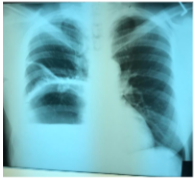
identify pathology
Atelectasis

identify pathology
Emphysema

identify pathology
Metatasis

identify pathology
Interstitial pneumonia

identify pathology
Neoplasm

identify pathology
Neoplasm
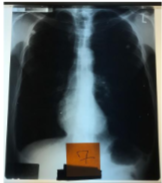
identify pathology
Emphysema
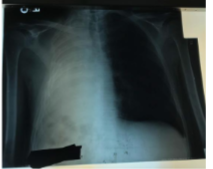
identify pathology
Hemothorax
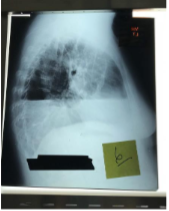
identify pathology
Pleural effusion

identify pathology
Pneumothorax

identify pathology
Subcutaneous emphysema

identify pathology
Pleural effusion

identify pathology
Miliary TB
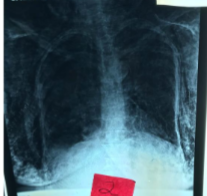
identify pathology
Subcutaneous emphysema
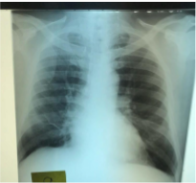
identify pathology
Atelectasis

identify pathology
Histoplasmosis

identify pathology
Pneumothorax

identify pathology
Pleural effusion
What is a SIGN of TRANSITIONAL VERTEBRA
takes on the characteristic of vertebra on both sides of major division of spine
What is the appearance of SPINA BIFIDA OCCULTA
absence of laminae
What is a SIGN for OSTEOPOROSIS
picture frame pattern (associated with post-menopausal women)
What is a SIGN for OSTEOPETROSIS
AKA marble bones (bones look really thick, increased density)
hereditary condition
What is a SIGN of OSTEOGENESIS IMPERFECTA
brittle bones, easily broken, careful when positioning
blue color of white sclera of eye
What is a SIGN of OSTEOCHONDROMA
benign projection of the bone (benign tumor)
Describe EWING’S TUMOR
primary malignant tumor in children and young adults
Describe BONY METASTASIS
PET usually demonstrates this condition
on radiographs, it may appear as increased densities and ill defined
Describe RHEUMATOID ARTHRITIS
chronic systemic disease
on images, looks like darkening towards joint areas
Describe OSTEOARTHRITIS
degenerative
non-inflammatory
gross deformities of small joint of hand/feet
looks like joints overlapping on images
What is the difference between SPONDYLOLYSIS and SPONDYLOLISTHESIS
Spondylolysis = fracture of scotty dog neck
Spondylolisthesis = + slippage of the body of the vertebra
Describe OSTEOMYELITIS
inflammation and bony destruction often involving the entire bone
What is a SIGN of ANKLOSING SPONDYLITIS
bamboo spine looks
originates in the SI joints
affects men more than women
What is PAGET’S DISEASE
Late-onset chronic disorder of skeleton in which bone turnover is accelerated in localized areas
may be asymptomatic or can cause gradual onset of bone pain or deformity
normal matrix of bones is replaced with softened and enlarged bone

identify fracture
Incomplete fracture

identify fracture
Transverse fracture

identify fracture
Oblique fracture

identify fracture
Spiral fracture

identify fracture
Comminuted fracture

identify fracture
Avulsion fracture
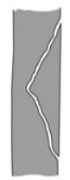
identify fracture
Butterfly fracture

identify fracture
Segmental fracture

identify fracture
Greenstick fracture
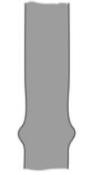
identify fracture
Torus fracture
What is SNAT
Suspected Non-Accidental Trauma